 Cáo Studio
Home › Blog › Pre-Wedding & Elopement
Elopement photos at O Quy Ho pass: what to shoot and book
By the Cáo Studio team · Hanoi & Saigon · 2026-11-04
O Quy Ho pass (also Ô Quý Hồ) is Vietnam's highest mountain road, linking Sapa and Lai Châu at 3,143 metres. We run elopement shoots here on clear mornings or misty afternoons, typically 6–8 hours including hair, makeup, travel, and multiple outfit changes on-site. The session includes a pre-wedding and elopement package suited to mountain terrain: sturdy clothing, waterproof layers, and a backup plan for sudden weather. Cost depends on team size, guide hire, and vehicle—ask us for a quote on WhatsApp. Key risk: roads close in heavy fog or rain; we always scout conditions 48 hours ahead and offer reschedule dates at no extra cost if the pass is unsafe.
Why do elopers choose O Quy Ho over other Sapa locations?
Most Sapa shoots happen in town or Fansipan base camp. O Quy Ho is remote, windy, and bare—no crowds, no guards, no gates. We've shot fifteen elopements there since 2022; every couple says the isolation feels like the world belongs to them. The pass road itself becomes a frame: it curves into cloud, and light hits the tarmac in ways that indoor studios cannot replicate. Mist rolls in and out every 20 minutes, so we capture five different moods in one morning.
When we arrive around 05:30 to catch sunrise, the pass is empty. By 08:00, a few trucks pass but that's it. We position the couple on the road shoulder (safe side, always) or on the grassy slope above. Wind is constant at 20–35 km/h, so hair and fabric move with real drama. That movement is what separates O Quy Ho photos from flat town portraits. We tell guests before booking: this is not a romantic stroll. It's exposed, cold, and the light changes every ten minutes. If you want predictable, warm, and controlled, choose makeup and hair at your hotel followed by a couple session in Sapa town instead.
What should a couple wear for a safe elopement at 3,143 metres?
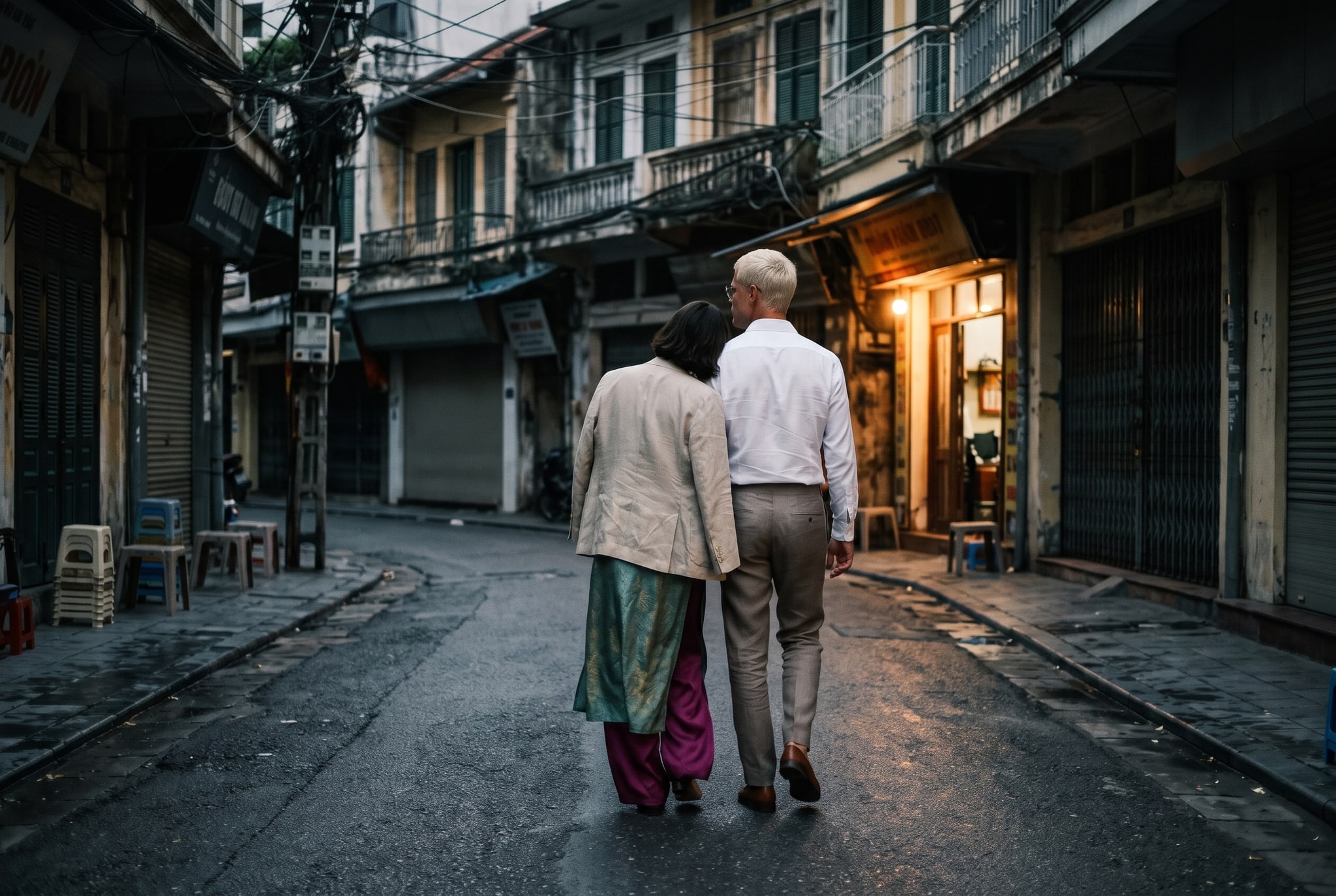
Elopers ask: "Can I wear a silk dress or just my ao dai?" The answer is no. At O Quy Ho, temperature drops 10–15°C from Sapa town. Wind chill makes it feel like –5°C even in May. We tell couples to bring four outfits and layer under each. Our usual call sheet reads: (1) ao dai with a thick cardigan or wool wrap; (2) Western dress with tights and a jacket; (3) tailored suit or tuxedo with a coat; (4) casual streetwear for movement shots. Between each outfit, we have 8–10 minutes to change and adjust. The bride and groom get a small pop-up shelter for privacy; the team stays outside to watch for clouds and light shifts.
We've learned hard truths here. In 2023, a couple wore a sheer beach dress and nearly got hypothermia by 07:30. Now we text all guests two weeks before: "Pack as though you're hiking, not posing. Wind chill is real." Shoes must grip wet stone; we've seen two couples slip on dewy grass. Hiking boots are best, switched for formal shoes during still shots only. Hair pins need to be strong; gusts have blown updos apart mid-shoot, and restyling on a mountaintop takes thirty minutes. Makeup stays better with a setting spray designed for sweat and wind—we bring two bottles backup.
How does our team manage a full-day mountain elopement timeline?
We don't improvise. A typical O Quy Ho shoot runs 16 hours of crew time—not all visible to the couple. Here's what a real day looks like:
Day before: Scout passes conditions. Check road status with Sapa guides. Confirm vehicle (always a 4x4 SUV). Brief the couple on WhatsApp with a weather update and final outfit list. Charge batteries, test backup camera, pack backup lenses in waterproof cases.
05:00: Team arrives at Sapa hotel. Hair and makeup artist begins; photographer checks light forecast. Couple eats light breakfast (no heavy food at altitude).
05:45: Final outfit check. Hair is styled; makeup uses waterproof liner and SPF powder. Photographer walks the couple through poses during the drive to the pass (25-minute journey).
06:30: Arrive at O Quy Ho. Sun is rising; mist is thinning. First outfit (ao dai) is ready. We shoot for 45 minutes as light improves, moving every 3–5 minutes to follow cloud breaks.
07:30: Outfit change top. Couple moves to a sheltered spot behind a rock. Hair touch-up takes 4 minutes. Makeup artist blots sweat and resets powder.
08:00–09:15: Second outfit (Western dress). We shoot moving sequences—walking, sitting, embracing—against three backdrops we've scouted.
09:30: Snack break. Couple drinks warm tea. We monitor the pass: if fog rolls thick, we pivot to closer, safer shooting locations.
10:00–11:30: Outfit change #2 (suit/tuxedo). By now, wind has shifted and light is harder. We use the couple's silhouette and the road's curve as compositional elements.
12:00–13:00: Lunch and rest. Couple changes into casual wear. Photographer reviews images and shows the couple two selections on camera. This builds trust and helps the couple relax.
13:30–15:00: Final outfit (casual streetwear) and movement shoot. We capture unscripted moments: dancing, laughing, running on the road (with a spotter watching for vehicles).
15:30: Team packs and descends. Couple is driven back to Sapa. Hair artist removes styling; makeup artist removes makeup with gentle cleanser.
16:00: Couple rests. Team begins initial culling and color-grading back at the studio.
What weather problems have we solved on this shoot?
O Quy Ho weather is unpredictable. We've shot in sun, mist, rain, and sleet on the same morning. Here's what goes wrong and how we adapt.
Thick fog (06:30–08:00): Mist erases the road and the sky. Shooting range drops to 5 metres. We shift to close-up portraits and embrace the fog as a design element—couples love the moody, intimate feel. We move to the rocky outcrops and shoot backlighting through the mist. One couple in April 2024 had fog for the first two hours; their photos felt ethereal and cinematic. They told us later it was their favourite session because it felt secret and hidden.
Sudden rain: We've felt rain turn to sleet at 07:45. We pause the shoot, move to the vehicle, and wait 10–15 minutes. If it clears, we resume. If it worsens, we descend early. Couples who've endured rain love the story; those who worry about hair prefer to reschedule. We always offer rescheduled dates at no extra cost if weather closes the pass or makes it genuinely unsafe.
Wind gusts (30+ km/h): Hair flies, poses feel unstable. We angle the couple away from the wind, shoot faster to lock the moment before the next gust, and use the wind as a mood-setter. Fabric and hair blown by wind reads as movement and energy in photos. A couple in June 2023 had relentless 35 km/h gusts; they felt frustrated at first, but the movement in their photos made them look alive and wild, not posed. They changed their minds mid-shoot and loved it.
Cold shutdown (couple gets too cold): If either partner shows signs of cold (shivering, pale lips, slow responses), we stop. We move everyone to the vehicle with heaters running. We've never forced a couple to stay in the cold. In 2024, a bride got cold at 08:15, and we wrapped early, gave them hot chocolate, and rescheduled their session to June with no penalty. She referred two friends because we prioritized her safety.
| Weather | What we do | How long it adds | Couple outcome |
|---|---|---|---|
| Thick fog 06:30–08:00 | Shift to close-ups, embrace mist mood | None—just pivots composition | Ethereal, intimate feel; no reschedule |
| Sudden rain | Pause, wait 10–15 min, or descend | 15–45 min delay | Clients love the drama or reschedule freely |
| Wind 30+ km/h | Angle couple, shoot faster, use movement | None—adapts workflow | Movement reads as energy in photos |
| Sleet or unsafe roads | Descend immediately, offer rescheduled date | Full reschedule; no cost | Safety first; client reschedules, keeps trust |
What does our Hanoi studio do before and after an O Quy Ho elopement shoot?
The elopement is one day. The work starts weeks before. We work from our Cáo Studio Hanoi office to coordinate everything.
Six weeks before shoot: Couple books via vietnamphotoshoot.com, selects the pre-wedding and elopement package. We send a detailed WhatsApp brief with Sapa geography, weather typical for their shoot month, outfit suggestions, and a packing checklist. We ask: any physical limitations, altitude sensitivity, or style preferences?
Four weeks before: We video-call the couple (usually from Hanoi; we have three full-time shooters based here). We walk them through the O Quy Ho route on Google Street View, show them 20 sample images from prior elopements, and answer questions. We discuss hair and makeup styles—do they want a trial session? If yes, makeup and hair at your hotel is available in Hanoi 10 days before the shoot.
Two weeks before: Final outfit list is locked. We send phone numbers for the Sapa hotel contact, the local guide, and the vehicle driver. We confirm that the couple has travel insurance (altitude, driving risk).
One week before: Weather forecast is uncertain, but we begin monitoring. We text the couple daily with the forecast. We confirm the 05:00 hotel pickup time and clarify who meets whom where. We send backup phone numbers for the team and the Sapa contact in case of emergency.
After the shoot (same day): The photographer uploads 400–500 raw images to a secure drive. The team begins initial sorting: removing duplicates, blurred shots, technical rejects. Typically 80–100 images survive this first cut.
Days 2–7: We spend 12–20 hours on post-processing (color grading, skin retouching, sky enhancement, cropping). We deliver 40–60 final hero images. We send the first batch to the couple for feedback within 48 hours. Most couples review images the evening of the shoot while adrenaline is still high; they often request adjustments (brightness, saturation, or specific crops).
Days 7–14: We refine images based on feedback, create a second delivery (albums, wall art mockups, video slide show), and arrange final transfer. By day 14, the couple has all files and prints if ordered.
We've learned that couples want to see images within 36 hours of the shoot. Waiting weeks feels frustrating at altitude. We prioritize O Quy Ho elopement post-processing because the experience is intense and the couple's emotional engagement is highest immediately after.
What should you check before booking an O Quy Ho elopement?
| Factor | Check this | Why it matters |
|---|---|---|
| Team experience | Ask for O Quy Ho portfolio (15+ images from 3+ shoots) | Inexperienced teams miss light timing and safety protocols |
| Weather reschedule clause | Confirm no-cost rescheduled date if conditions close the pass | Insurance against forced reschedule due to rain or fog |
| Altitude experience | Tell your team if you have any altitude sensitivity or prior problems | Studios can adjust timing, offer oxygen, or suggest lower-altitude alternatives |
| Outfit count | Confirm you can realistically change 3–4 times in 6–8 hours | More outfits = rushed changes and worn-out couple by hour 7 |
| Hair and makeup trial | Book a trial in Hanoi or Sapa if styles are complex (updos, trials, new makeup) | Trial prevents failed styles on shoot day; reschedule is free |
| Vehicle and guide hire | Confirm who pays for local 4x4 and guide (separate from package cost) | Extra costs surprise couples; clarity upfront avoids conflict |
| Insurance and liability | Check if studio covers accident or injury on the mountain | O Quy Ho is remote; understand who's responsible if someone gets hurt |
The studio you choose should be transparent about all of these. We send a pre-shoot questionnaire covering altitude history, outfit preferences, and any medical concerns. If a couple has significant altitude sensitivity, we suggest a lower-altitude alternative—Fansipan base camp or Sapa town—and link to couple photoshoot options instead. Honest studios protect couples' safety and their own reputation.
See packages and prices on vietnamphotoshoot.com
FAQ
Is O Quy Ho safe for a photoshoot?
Yes, when conditions are clear and a professional guide is present. We scout roads 48 hours ahead, use spotters for traffic, and descend immediately if weather worsens. Altitude risk is real but manageable with slow climbing, hydration, and honesty about your fitness. Tell us any prior altitude issues.
What month has the best light and weather at O Quy Ho?
May and early June offer warm mornings, clear skies, and stable mist patterns. September–October is also good but less predictable. December–February is cold but has crisp, sharp light. Avoid July–August; rain is frequent, and heat makes descents exhausting. Based on our 2022–2026 shoot logs, May has the fewest weather-forced reschedules.
How many outfits should we pack for an O Quy Ho elopement?
Bring three outfits minimum, four if you want variety. Each change takes 8–10 minutes, so more than four outfits is rushed and stressful. We suggest ao dai, Western dress, suit, and casual wear. Pack all outfits in layers suitable for 10–15°C weather.
Can we do an O Quy Ho elopement as part of a larger trip with family or solo shots?
Yes. Many couples combine it with a family photoshoot in Sapa town or a vacation and solo photoshoot at Fansipan. We recommend a two-day Sapa package: day one for the elopement, day two for relaxed solo or family portraits in town. Ask us for a custom quote on WhatsApp.
What if weather forces us to reschedule?
We always offer a rescheduled date at no extra cost if the pass is unsafe or severely fogged. You keep your deposit. Most couples reschedule within 30 days. Only the couple chooses to reschedule; we never force it. If you're visiting from abroad with a fixed date, we discuss backup locations (Fansipan, Sapa town, or a special concept shoot indoors) so you still have photos.
Do you have a studio in Sapa, or do you travel from Hanoi?
We're based in Hanoi and Saigon. For Sapa shoots like O Quy Ho, we arrive the evening before, stay at a partner hotel, and manage the full day on-site. Travel, hotel, and guide are coordinated by us; you just show up ready. Ask us for a quote that includes travel costs and guide hire—it varies by team size and season. Chat with us on WhatsApp
Pre-Wedding & Elopement
Inclusions, prices and booking are on our booking site.
FAQ
Is O Quy Ho safe for a photoshoot?
Yes, when conditions are clear and a professional guide is present. We scout roads 48 hours ahead, use spotters for traffic, and descend immediately if weather worsens. Altitude risk is real but manageable with slow climbing, hydration, and honesty about your fitness. Tell us any prior altitude issues.
What month has the best light and weather at O Quy Ho?
May and early June offer warm mornings, clear skies, and stable mist patterns. September–October is also good but less predictable. December–February is cold but has crisp, sharp light. Avoid July–August; rain is frequent, and heat makes descents exhausting. Based on our 2022–2026 shoot logs, May has the fewest weather-forced reschedules.
How many outfits should we pack for an O Quy Ho elopement?
Bring three outfits minimum, four if you want variety. Each change takes 8–10 minutes, so more than four outfits is rushed and stressful. We suggest ao dai, Western dress, suit, and casual wear. Pack all outfits in layers suitable for 10–15°C weather.
Can we do an O Quy Ho elopement as part of a larger trip with family or solo shots?
Yes. Many couples combine it with a [family photoshoot](/go/family-photoshoot) in Sapa town or a [vacation and solo photoshoot](/go/vacation-photoshoot) at Fansipan. We recommend a two-day Sapa package: day one for the elopement, day two for relaxed solo or family portraits in town. Ask us for a custom quote on WhatsApp.
What if weather forces us to reschedule?
We always offer a rescheduled date at no extra cost if the pass is unsafe or severely fogged. You keep your deposit. Most couples reschedule within 30 days. Only the couple chooses to reschedule; we never force it. If you're visiting from abroad with a fixed date, we discuss backup locations (Fansipan, Sapa town, or a [special concept shoot](/go/special-concept) indoors) so you still have photos.
Do you have a studio in Sapa, or do you travel from Hanoi?
We're based in [Hanoi](/go/hanoi) and [Saigon](/go/saigon). For Sapa shoots like O Quy Ho, we arrive the evening before, stay at a partner hotel, and manage the full day on-site. Travel, hotel, and guide are coordinated by us; you just show up ready. Ask us for a quote that includes travel costs and guide hire—it varies by team size and season. [📸 Chat with us on WhatsApp](https://wa.me/84338762340)
More from the team
Pre-wedding photoshoot in Phu Quoc June: weather, light, crowds
June is Phu Quoc's monsoon season. Our studio has shot dozens of couples there in early summer—here's what weather and crowds really mean for your pre-wedding day.
Pre-wedding photoshoot in Phu Quoc July: weather, light, crowds
July is Phu Quoc's wet season, but it opens creative possibilities: moody skies, empty beaches after storms, and dramatic backlighting. We'll walk you through what happens on the ground.
Pre-wedding photoshoot in Phu Quoc November: weather, light, crowds
November is peak season for pre-wedding shoots in Phu Quoc: weather is stable, light is soft, but crowds peak mid-month. We share what our team sees on the ground.