 Cáo Studio
Home › Blog › Pre-Wedding & Elopement
Elopement photos at Ta Phin village: our shoot schedule and what works
By the Cáo Studio team · Hanoi & Saigon · 2026-11-04
Ta Phin is a Black Hmong village in the Hoang Lien Son range near Sapa, about 1,400 m elevation, famous for dense rice terraces and traditional stilt houses. Elopement shoots there run 4–6 hours; we start before 7 a.m. to catch cool light and avoid midday heat. The package includes our photographer, hair and makeup at your hotel or on-site, styling consultation, and typically 40–60 final edited photos. Cáo Studio books these via our pre-wedding and elopement package. Cost depends on season, number of outfit changes, and whether you need local transport arranged—ask us for a quote on WhatsApp. Avoid booking in August (peak rain) or on Sundays (village foot traffic peaks). Chat with us on WhatsApp
Why Ta Phin works for mountain elopement couples?
Ta Phin draws couples because the landscape feels untouched: stacked rice paddies slope downward in geometric lines, stone walls frame narrow paths, and morning mist clings to ridges until 8:30 a.m. The Black Hmong houses, with dark timber frames and pitched roofs, add cultural authenticity that feels more genuine than studio backdrops. We've noticed couples who want "somewhere quiet with no tourists" often choose Ta Phin over Sapa town itself—the village is accessed by foot or motorbike, so most day-trippers skip it. Light quality is exceptional: 6:00–8:00 a.m. gives soft, directional sun hitting terraces at a shallow angle, creating shadow depth without harsh contrast. By 10 a.m., diffusion from cloud cover can also work, though we prefer the early window.
The trade-off: you'll hike. Terraces slope 20–40 degrees, paths are uneven, and an ao dai or flowing skirt means careful footing. We brief couples on footwear (we recommend breathable hiking shoes for the trek, then swap to dress heels for posing once we reach a stable terrace). Weather shifts fast—we've had rain begin at 7:45 a.m. on a forecast-clear day, so backup locations and quick shelter plans matter.
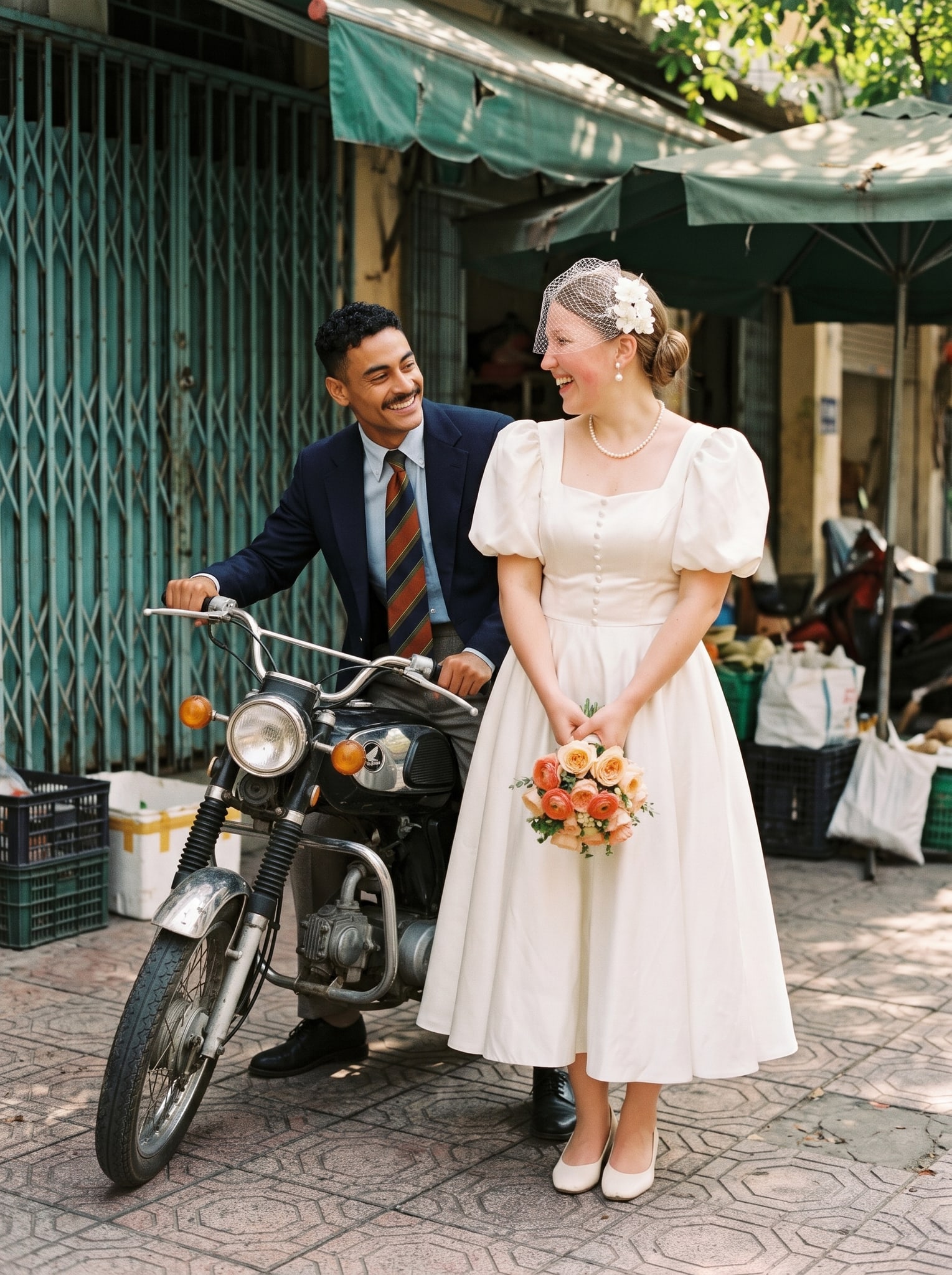
How does our team structure a Ta Phin shoot day?
We start the night before. Couples stay in Sapa town (our makeup artist and photographer drive up separately or stay overnight). At 5:30 a.m., we meet at your hotel; our makeup artist begins hair and makeup (1 hour to 1.5 hours for traditional ao dai look). While that runs, our photographer scouts the vehicle route and checks with local guides about water levels or recent landslides.
By 6:45 a.m., we're in the motorbikes or a hired van heading to the village entrance. The drive is 20–25 minutes. We arrive by 7:15 a.m., when light is still diffuse and soft. Our photographer does a 10-minute scout of the main terraces and any small structures (old storage huts, family shrines) that add framing. We brief the couple: stay on the worn paths, move slowly downslope, rest on level terraces for posing. Our team (photographer + makeup artist + a local guide if booked) moves with you, repositioning for angles and light.
We shoot in 3–4 locations across roughly 2.5 hours (allowing 30–45 minutes per location for outfit changes and pose variety). By 10:00–10:30 a.m., we wrap; light is harsher and villagers are more active. We hike back and return to your hotel by noon. Editing happens over 5–7 days; we deliver via secure link.
See packages and prices on vietnamphotoshoot.com
What's different between Ta Phin and other Sapa elopement spots?
| Location | Best for | Light window | Hike level | Crowd risk |
|---|---|---|---|---|
| Ta Phin village | Terraces + culture | 6:30–8:00 a.m. | Steep (20–40°) | Low |
| Sapa town center | Town + mountain mix | 6:00–7:00 a.m. | Flat | Very high |
| Silver Waterfall | Drama + water | 7:00–8:30 a.m. | Moderate | Moderate |
| Cat Cat village | Different minority group | 6:00–7:30 a.m. | Steep | Moderate |
Ta Phin wins on authenticity and solitude, but requires stronger fitness. We choose Ta Phin for couples who prioritize landscape mood over ease; Sapa town for those wanting fewer steps and faster turnaround. Waterfall shoots offer drama but need water-safe styling (tricky with silk ao dai). We let couples decide based on their fitness and the mood they want—ask us for a detailed comparison on WhatsApp.
What can go wrong and how we prevent it?
Rain. August through early October sees afternoon downpours. We check 3-day forecasts and reschedule if rain probability exceeds 60%. If light rain starts mid-shoot, we shift to darker locations (under tree cover or near houses) and adjust our flash setup. We always carry a large umbrella for the couple, not the camera.
Pace and fatigue. New couples often underestimate hike effort in heels or ao dai. We build rest stops into our timeline and position ourselves for shooting while couples stand still—we move to frame, not the other way. If someone is struggling, we shorten the route and concentrate on 2 locations instead of 4.
Outfit changes. Changing clothes on a hillside is awkward. We identify a sheltered terrace near a house or tree line the night before and ask the local guide if we can use a family's small storage space as a screened area. Never rely on finding this on the day.
Villagers in shot. Families work their fields early. We scout path timing and position ourselves to shoot into the light, placing the couple between the camera and the rising sun—villagers working lower terraces become silhouettes or fall out of frame. We've learned not to ask villagers to move (disrespectful); we work around them.
Permit confusion. Ta Phin has no formal permit system, but respecting village customs is non-negotiable. We brief couples: no loud music, no drones (they can disturb livestock), dress respectfully during changes, and greet any local elders. This earns goodwill and faster access.
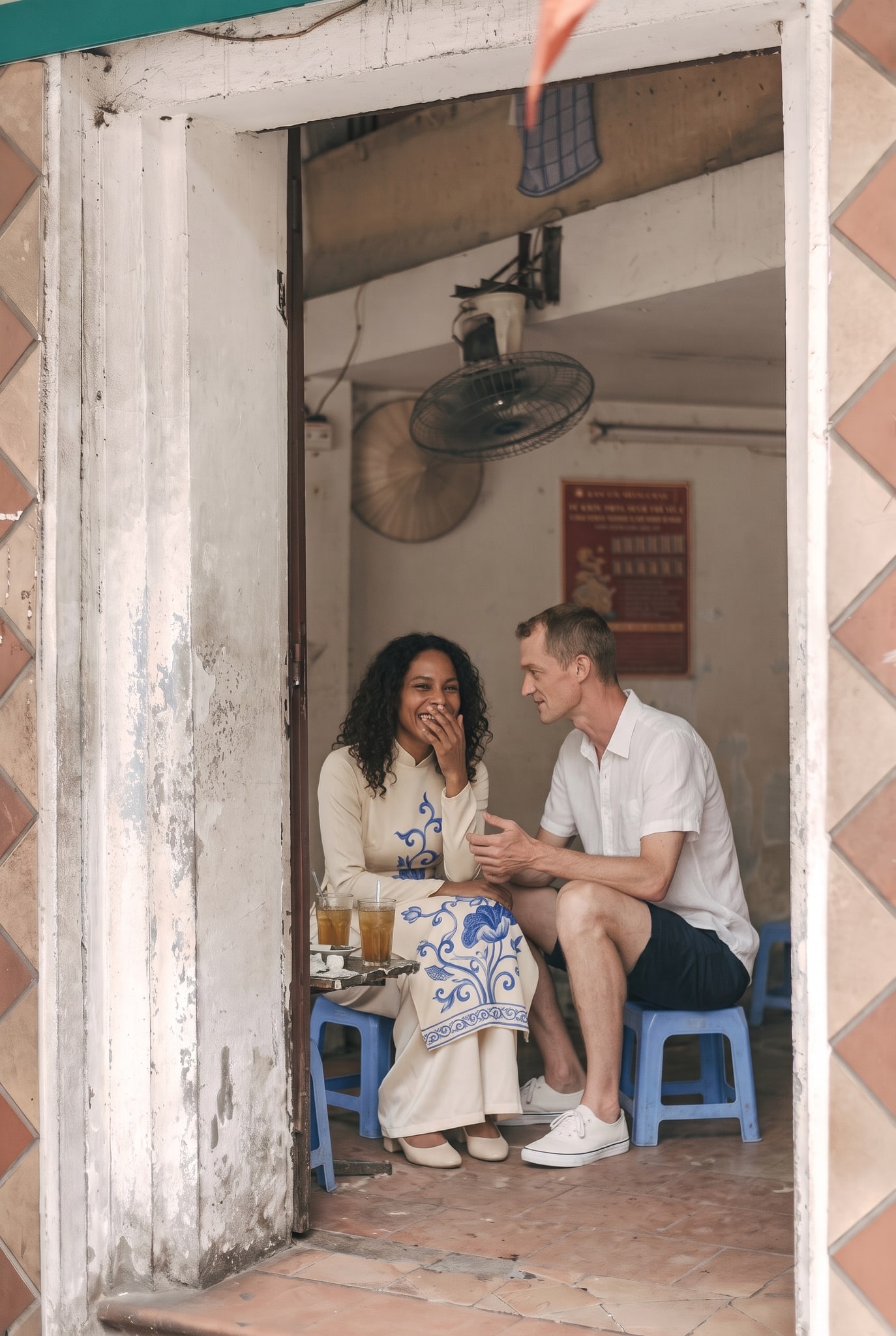
What do we include in the Ta Phin elopement package?
Our pre-wedding and elopement package includes the full day: photographer, hair and makeup (we do this at your Sapa hotel), styling advice for the terrain, transportation coordination, and 40–60 retouched digital photos delivered via secure link. If you want a second outfit change or a videographer, those are add-ons. We also offer makeup and hair at your hotel as a standalone service if you're arranging your own photographer.
Some couples ask about printed albums or canvas prints—those are post-shoot decisions and not part of the package. We guide couples toward digital-first delivery so they can print or share however they like. Ask us for a quote on WhatsApp if you want printed products included.
What to check before you book a Ta Phin elopement shoot
- Fitness level. Can you walk downhill over uneven ground for 2+ hours in your wedding clothes? If not, choose Sapa town or a different location.
- Weather tolerance. Rain happens. Are you comfortable rescheduling or pivoting to a backup plan if a storm rolls in?
- Outfit choice. Traditional ao dai is stunning but requires careful footing. Trousers or a western dress may be easier if you're less experienced on steep terrain.
- Timing flexibility. We need a 5:30 a.m. start. If you're jet-lagged or a late riser, consider a midday shoot in town instead.
- Budget for transport. If we're hiring a van or extra guide, confirm costs upfront via WhatsApp.
- Local respect. This is an active village, not a theme park. Commit to respecting work schedules and customs.
Pages from our team you may need
FAQ
Can we shoot Ta Phin if we're not in an ao dai?
Yes. We see couples in western wedding dresses, trousers, and jumpsuits. Avoid long trains and stiff fabrics; wear secure footwear during the hike and keep heels for posing on level terraces. Ask us for outfit suggestions based on your fitness and comfort.
How early do we really need to start?
5:30 a.m. hotel pickup, 7:15 a.m. village arrival. This locks in soft light and fewer villagers. Starting later means harsh midday sun and busier paths—image quality and couple comfort both drop.
What if bad weather hits during the shoot?
We have a backup plan scouted the night before. Usually we shift to a location with natural shelter (tree cover, stone walls) and adjust lighting. If storms are severe, we reschedule within 7 days at no extra charge.
Do we need a local guide, or can your photographer lead?
Our photographer knows the main paths and light spots, but hiring a local guide (negotiated the day before) helps with village relations and finding family gathering spaces for outfit changes. It's optional but we recommend it.
How many outfit changes can we fit into 4–6 hours?
Typically 2–3 changes (1 per location), depending on hike difficulty and how much time you want for posing. Each outfit change costs 15–20 minutes. More changes mean less time per location and faster-paced shooting; ask us to tailor the schedule.
Pre-Wedding & Elopement
Inclusions, prices and booking are on our booking site.
FAQ
Can we shoot Ta Phin if we're not in an ao dai?
Yes. We see couples in western wedding dresses, trousers, and jumpsuits. Avoid long trains and stiff fabrics; wear secure footwear during the hike and keep heels for posing on level terraces. Ask us for outfit suggestions based on your fitness and comfort.
How early do we really need to start?
5:30 a.m. hotel pickup, 7:15 a.m. village arrival. This locks in soft light and fewer villagers. Starting later means harsh midday sun and busier paths—image quality and couple comfort both drop.
What if bad weather hits during the shoot?
We have a backup plan scouted the night before. Usually we shift to a location with natural shelter (tree cover, stone walls) and adjust lighting. If storms are severe, we reschedule within 7 days at no extra charge.
Do we need a local guide, or can your photographer lead?
Our photographer knows the main paths and light spots, but hiring a local guide (negotiated the day before) helps with village relations and finding family gathering spaces for outfit changes. It's optional but we recommend it.
How many outfit changes can we fit into 4–6 hours?
Typically 2–3 changes (1 per location), depending on hike difficulty and how much time you want for posing. Each outfit change costs 15–20 minutes. More changes mean less time per location and faster-paced shooting; ask us to tailor the schedule.
More from the team
Pre-wedding photoshoot in Phu Quoc June: weather, light, crowds
June is Phu Quoc's monsoon season. Our studio has shot dozens of couples there in early summer—here's what weather and crowds really mean for your pre-wedding day.
Pre-wedding photoshoot in Phu Quoc July: weather, light, crowds
July is Phu Quoc's wet season, but it opens creative possibilities: moody skies, empty beaches after storms, and dramatic backlighting. We'll walk you through what happens on the ground.
Pre-wedding photoshoot in Phu Quoc November: weather, light, crowds
November is peak season for pre-wedding shoots in Phu Quoc: weather is stable, light is soft, but crowds peak mid-month. We share what our team sees on the ground.