 Cáo Studio
Home › Blog › Pre-Wedding & Elopement
Elopement photos at Thanh Ha pottery village: what to expect
By the Cáo Studio team · Hanoi & Saigon · 2026-11-02
Thanh Ha pottery village, 15 km south of central Hanoi, specializes in elopement and pre-wedding shoots because its narrow brick lanes, firing kilns, clay dust, and family pottery studios create naturally textured, moody frames. A session runs 2–4 hours depending on outfit changes and couple pacing. Cáo Studio handles permits (informal; we know the craftspeople), recommend visiting 7–9 a.m. to avoid crowds and heat, and bring spare shoes since clay sticks to soles. The village suits intimate couples who value handmade, earthy aesthetics over polished resort backdrops. Typical shoots include 3–5 outfit changes across different workshop interiors and exterior clay grounds. This is not a premium package—it's a concept shoot built on location scouting, crew timing, and raw light work. Chat with us on WhatsApp
Why do potters and clay dust matter for elopement mood?
Pottery workshops emit a lived-in, honest energy that feeling-first couples crave. Potters in Thanh Ha have worked same wheels and clay beds for decades; their hands, tools, and studio walls carry that history. We noticed early shoots felt sterile when we posed couples facing the camera—the moment they leaned into a potter's workspace or held unfired clay, the light and their expressions aligned. Clay dust in air creates soft diffusion on overcast mornings; we've stopped using diffusion filters for dawn sessions here. Kiln heat radiating on cool mornings produces visible steam that frames faces without added effects. The texture works because Thanh Ha isn't a theme park; it's functional craft that predates Instagram. Couples who pick this village often want their story, not a filtered fantasy.
How long should we block for a pottery village elopement?
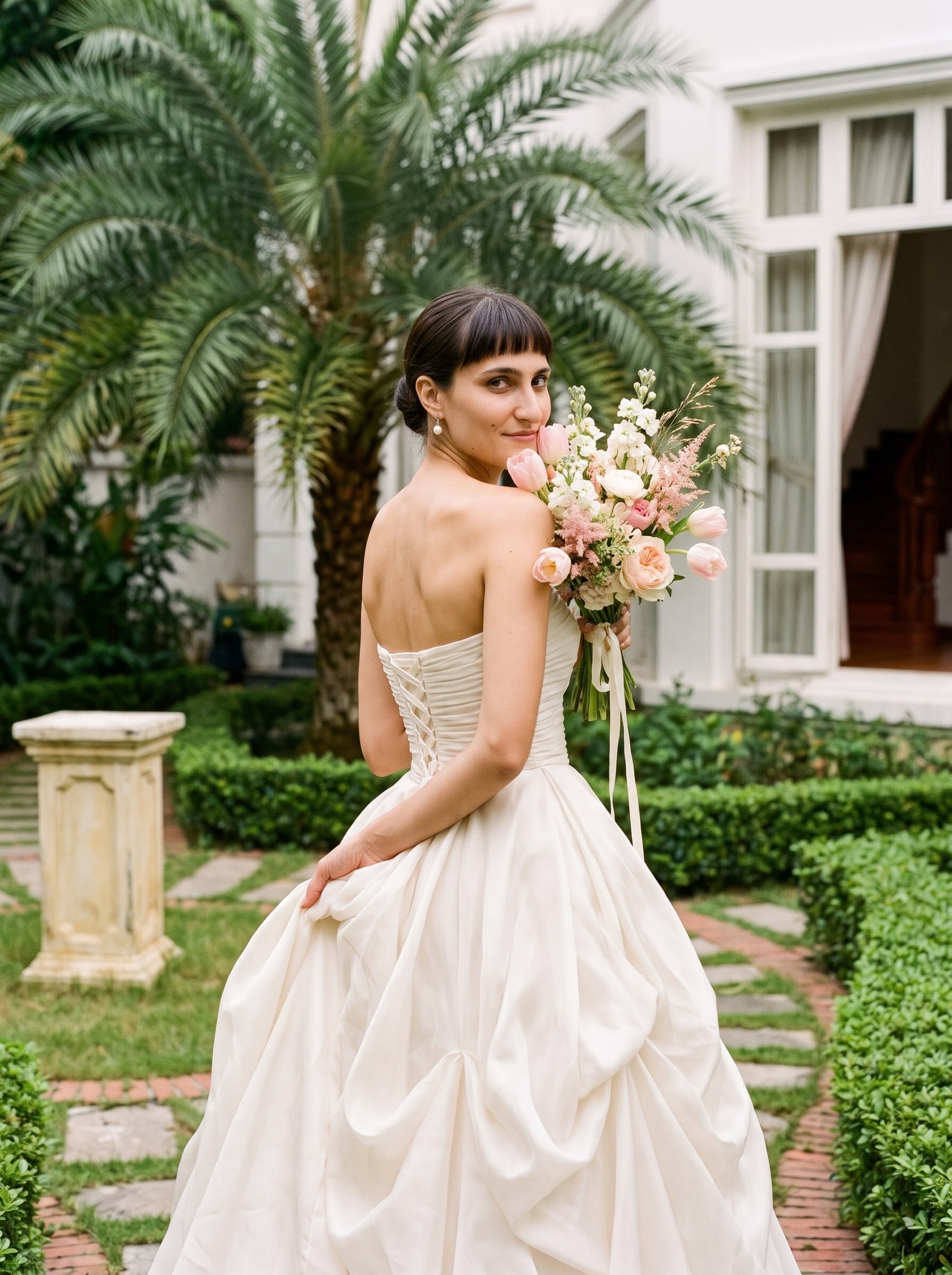
Two hours is minimum for one outfit; three to four hours lets you change and breathe between locations. In our 2–hour sessions, we arrive by 7:30 a.m., pose in two workshops (15–20 min each), capture the couple walking lanes and sitting in a potter's rest area, and finish by 9:30 a.m. We lose time to: potters stopping work to watch (not a problem—we incorporate them), couples needing bathroom access (nearest café is two blocks away), and navigating narrow lanes with tripods. A 3–hour block adds a second outfit change, longer individual portraits, and time to explore quieter back alleys where light hits brick walls directly. Four hours works if the couple wants to do a costume shift (e.g., áo dài to western dress) or if we're shooting pre-dawn golden hour into mid-morning. Beyond four hours, potters' activity slows, light flattens, and crew fatigue shows in frame composition.
See packages and prices on vietnamphotoshoot.com
What outfit changes and styling work best in a craft environment?
The pottery village rewards texture over polish, so we steer clients toward:
| Outfit type | Who it suits | Studio recommendation | Why it works |
|---|---|---|---|
| White or cream linen | Romantic, minimal couples | First outfit—contrast against dark clay and kiln brick | Catches light in shadows; shows dust beautifully |
| Deep jewel tones (emerald, navy) | Couples wanting drama | Second outfit for covered workshop interiors | Pops against pale clay and cream walls; hides dust |
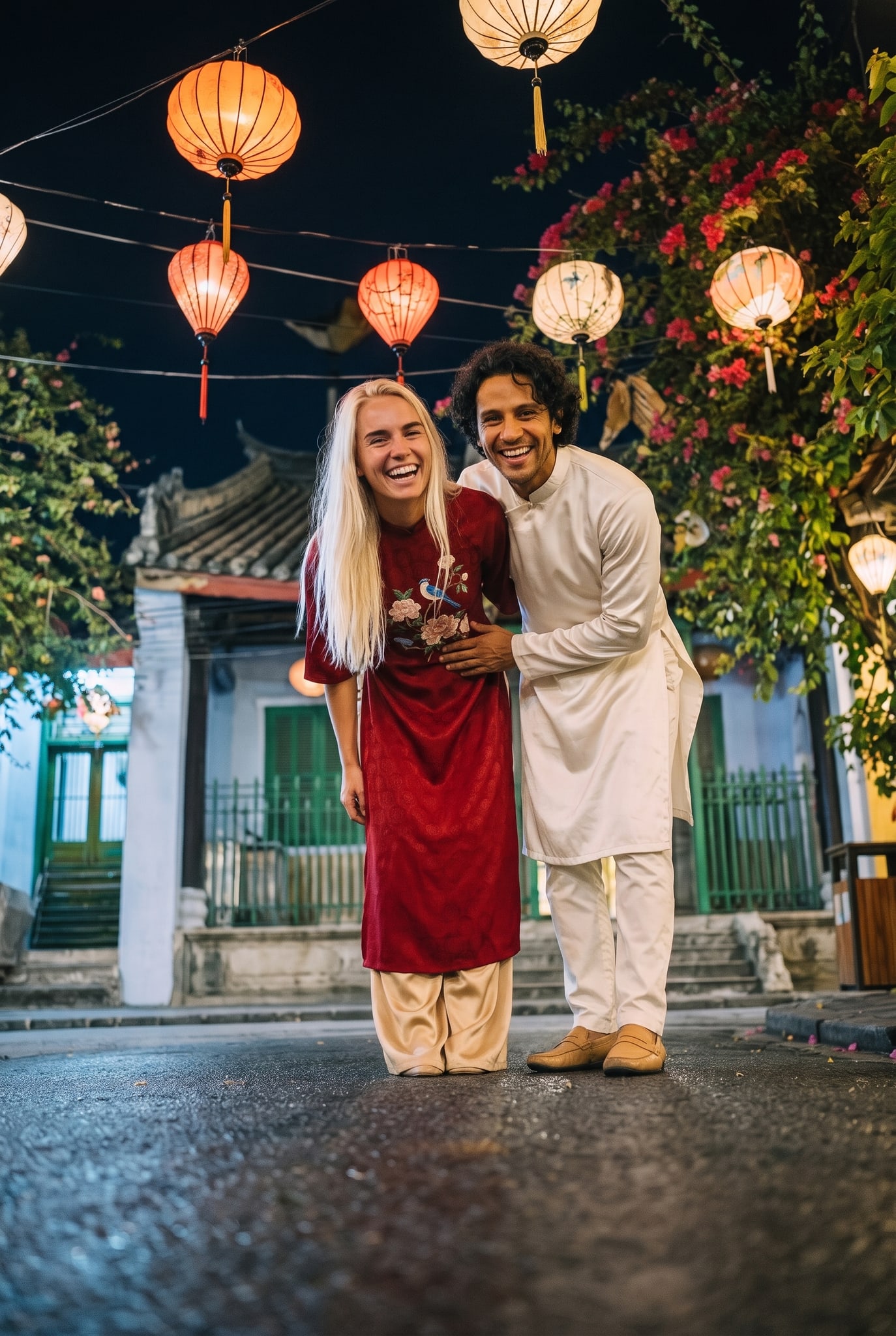
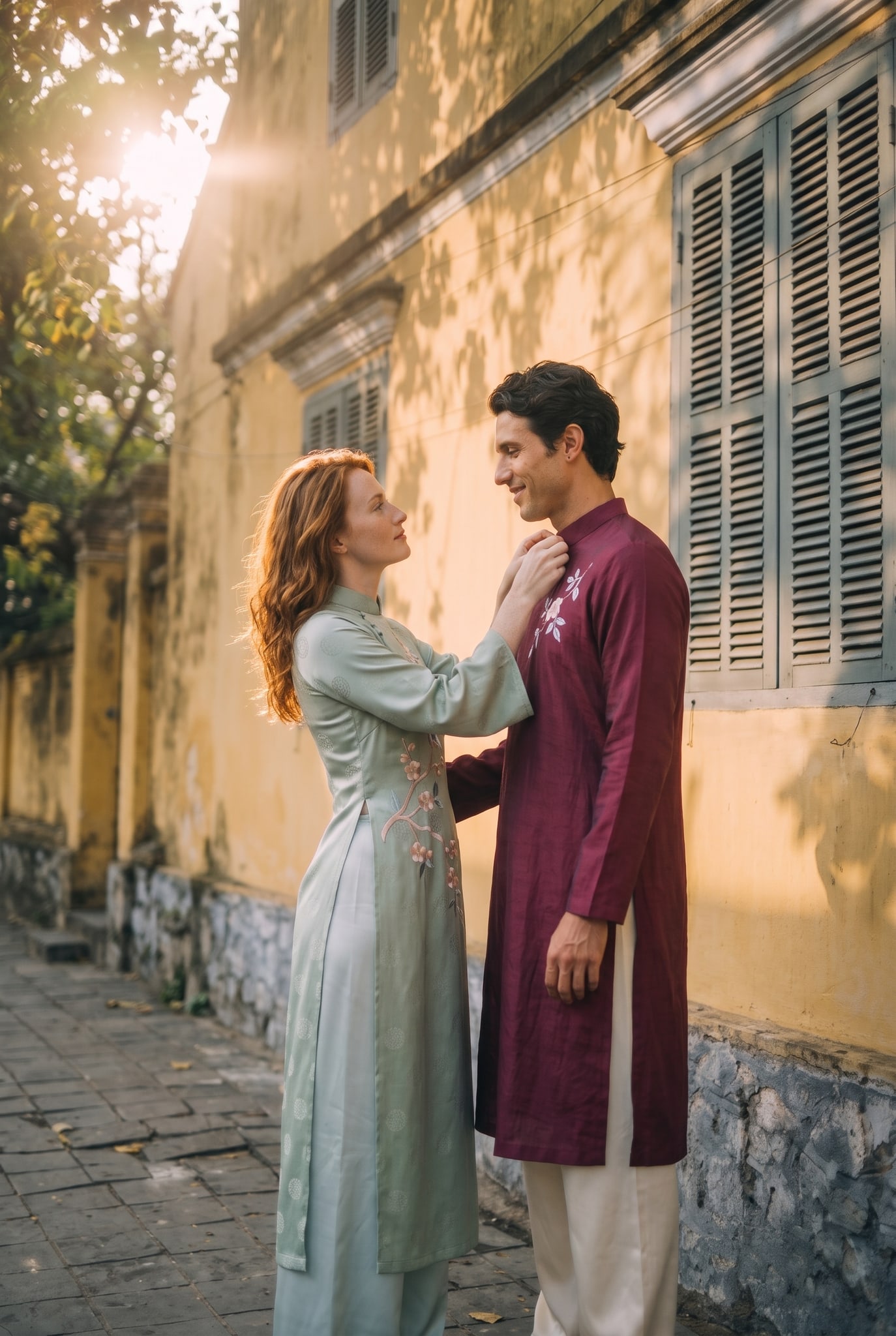
| Áo dài (silk or cotton) | Cultural, transitional couples | Any slot—pottery workshops have high ceilings for fabric movement | Silhouette reads on film; sleeves catch kiln light |
| Denim or canvas | Casual, candid-first couples | Final outfit for exterior lanes and rest areas | Durable; clay mud doesn't show; pairs with brick |
We avoid sequins, beading, or heavy makeup because dust settles visibly and potters may touch the couple's hands mid-pose. Loose, natural waves outperform tight updos—the village wind carries clay particles, and loose hair catches directional light better. Footwear is critical: potters wear rubber clogs; we tell couples to bring actual shoes for walking, then switch to barefoot or sandals only in posed shots. One couple wore heels on stone—they slipped, we lost 10 minutes, and frame sharpness dropped. Flats, canvas sneakers, or wedding-ready sandals prevent accidents and permit natural movement across uneven ground.
Which Cáo Studio team member should lead your pottery elopement?
Each of our Hanoi photographers brings different instincts to craft environments. One prioritizes candid moments between potters; another stages tableaus using kiln glow. We match couples to crew based on: do you want documentary (photographer leads, captures as it unfolds) or directional (stylist and photographer design each frame)? Couples who booked our couple photoshoot package often started with documentary framing, then realized mid-session they wanted more composed shots—our crew adjusted, which is standard. Pottery village light is tricky: kiln glow is warm but uneven; exterior morning light is cool and flat until 9 a.m. A photographer experienced in mixed-color temperatures will use white balance locks and exposure compensation to hold shadow detail in workshop corners. Equally, our makeup and hair at your hotel team can prep you in town (saves time, reduces dust on makeup before we shoot), then join us at the village if you want touch-ups between outfits.
What logistical surprises do we manage on the morning of a pottery shoot?
Real issues we've solved:
- Potters working through sessions: We schedule 7–8 a.m. precisely because older craftspeople arrive early, finish key tasks by 9 a.m., and are most relaxed mid-morning. A 10 a.m. start means competing for workshop light and potter attention.
- Muddy lanes after rain: Hanoi rainy season (May–Sept) floods pottery village paths. We scout the day before, mark slippery zones on WhatsApp to the couple, and bring backup lint rollers for white outfits.
- Phone signal and crew communication: Village center has weak 4G. We text location waypoints and backup rally points (the café) to everyone and stick to verbal confirms, not real-time app pings.
- Couple energy at 8 a.m.: Exhaustion shows in frame. We build a 15-minute arrival buffer, offer coffee (from the café), and shoot couple portraits first—when they're most alert—before group/contextual shots.
- Permits and potter rights: Thanh Ha is not a closed set. Informal agreement with local potters (we've shot here 40+ times) means they know us and allow access. We never post-tag individual potters without permission and always ask before photographing someone's work in close-up.
Read more about planning your pre-wedding shoot.
When should you book a pottery village elopement instead of a resort or studio?
| Choice | Best for | Booking window | Vibe |
|---|---|---|---|
| Pottery village (Thanh Ha) | Couples valuing craft, texture, artisanal story | 2–4 weeks out (permits easier, weather clearer) | Raw, intimate, unglamorous |
| Resort or garden venue | Couples wanting curated beauty, manicured grounds | 4–8 weeks (venue holds dates) | Polished, aspirational, managed |
| Studio or indoor backdrop | Weather safety, lighting control, quick turnaround | 1–2 weeks (no weather dependency) | Controlled, repeatable, fast edits |
Book Thanh Ha if: you've visited the village, know the rough aesthetic appeals, and want to embed your story in a real place rather than a constructed set. Don't book it if you need guaranteed perfection, dislike crowds (there will be other tourists by mid-morning), or prefer polished backdrops. Our Hanoi studio location is 20 minutes' drive from Thanh Ha, so we build in travel time and scout updates into your quote. Saigon-based couples should know we also operate from our Saigon studio, with concept shoots available in nearby Mekong Delta craft villages if the pottery aesthetic appeals but you're based in the south.
What to check before you book a pottery village elopement shoot
- Season and weather: November–February (cool, dry) is ideal. April–May brings heat haze; June–Sept means mud and humidity. Check the forecast 48 hours prior—if heavy rain, we reschedule at no penalty (built into booking terms).
- Outfit count and change logistics: Confirm outfit changes with your stylist via WhatsApp before the day. Bring a separate bag with second outfit; we'll stash your first at the café.
- Crew size: A pottery village shoot uses 1 photographer + 1 stylist/assistant. Extra crew (second camera, videographer) adds cost and congestion in narrow lanes. Most couples stick to core two.
- Shot list: Ask yourself what one non-negotiable image is (e.g., holding clay together, silhouette against kiln glow, walking a lane). Tell your photographer early. We've found couples who name one anchor shot feel more relaxed because they trust we'll deliver it.
- Footwear and backup: Bring actual walk-on shoes plus backup soles or sandals. Do not wear heels. One couple forgot backup shoes; we cut the session short because they couldn't navigate safely. Preventable.
- Photo release and potter consent: We'll ask permission to photograph individual potters and their work. You own the images of yourselves; we own the right to use your session as portfolio/promotional content (e.g., on our blog and Instagram). Confirm this matches your privacy wishes.
FAQ
Do we need a permit to shoot at Thanh Ha pottery village?
Formal government permits are not required for photography. We work informally with potters and village elders who know our team. Respect working spaces, ask before entering studios, and never photograph someone's hands or face without consent. We handle introductions on the morning of your shoot.
Can we bring our own makeup artist or stylist to Thanh Ha?
Yes, but the village has no climate control and limited shelter. If you hire external makeup, prep at your hotel, then join us at Thanh Ha. Our team can do hotel makeup via our makeup and hair service, saving time and reducing dust-settling issues on fresh makeup.
What time of year has the best light at Thanh Ha?
November–February (cool season) gives soft morning light without haze. April–May has heat shimmer; June–Sept brings humidity and unpredictable clouds. We schedule sessions for 7–9 a.m. year-round to catch directional light before the village heats up and crowds arrive. Early booking (2–4 weeks out) lets us scout weather trends.
How many outfits can we realistically change into during a 3-hour session?
Two outfits comfortably (one per 90 minutes). A third outfit (e.g., áo dài after western dress) is possible if the couple moves fast and we skip some location transitions. Most couples feel rushed with three changes; two lets you breathe between shoots and still feel unhurried.
Will there be other tourists or photographers at Thanh Ha when we shoot?
Pottery village is a working craft area, not a private venue. Tourists and independent photographers visit daily. We schedule early (7–9 a.m.) to minimize crowds, but you may see 5–10 other visitors. If exclusivity is critical, book a private resort concept shoot instead.
What happens if it rains on our pottery village shoot day?
Light rain adds moody atmosphere and texture (water on brick, covered workshop interiors). Heavy rain makes lanes unsafe and potters close shops. We monitor the forecast and offer a free reschedule if weather is severe 24 hours before. Backup dates should be flexible within a 2-week window.
Pre-Wedding & Elopement
Inclusions, prices and booking are on our booking site.
FAQ
Do we need a permit to shoot at Thanh Ha pottery village?
Formal government permits are not required for photography. We work informally with potters and village elders who know our team. Respect working spaces, ask before entering studios, and never photograph someone's hands or face without consent. We handle introductions on the morning of your shoot.
Can we bring our own makeup artist or stylist to Thanh Ha?
Yes, but the village has no climate control and limited shelter. If you hire external makeup, prep at your hotel, then join us at Thanh Ha. Our team can do hotel makeup via [our makeup and hair service](/go/makeup-and-hair), saving time and reducing dust-settling issues on fresh makeup.
What time of year has the best light at Thanh Ha?
November–February (cool season) gives soft morning light without haze. April–May has heat shimmer; June–Sept brings humidity and unpredictable clouds. We schedule sessions for 7–9 a.m. year-round to catch directional light before the village heats up and crowds arrive. Early booking (2–4 weeks out) lets us scout weather trends.
How many outfits can we realistically change into during a 3-hour session?
Two outfits comfortably (one per 90 minutes). A third outfit (e.g., áo dài after western dress) is possible if the couple moves fast and we skip some location transitions. Most couples feel rushed with three changes; two lets you breathe between shoots and still feel unhurried.
Will there be other tourists or photographers at Thanh Ha when we shoot?
Pottery village is a working craft area, not a private venue. Tourists and independent photographers visit daily. We schedule early (7–9 a.m.) to minimize crowds, but you may see 5–10 other visitors. If exclusivity is critical, book a [private resort concept shoot](/go/special-concept) instead.
What happens if it rains on our pottery village shoot day?
Light rain adds moody atmosphere and texture (water on brick, covered workshop interiors). Heavy rain makes lanes unsafe and potters close shops. We monitor the forecast and offer a free reschedule if weather is severe 24 hours before. Backup dates should be flexible within a 2-week window.
More from the team
Boho pre-wedding photoshoot in Vietnam: Hanoi, Saigon, Hoi An
Boho pre-wedding shoots mix romantic, free-spirited aesthetics with Vietnam's landscapes and heritage sites. We run full-day sessions in three cities, handling styling, makeup, location scouts and edits.
Avoid crowds at Hoang Su Phi rice terraces: timing for wedding shoots
Hoang Su Phi's terraced landscape draws couples and tour buses in equal measure. We show how to shoot there alone, when to arrive, and what to arrange with us before you go.
Photography rules at Con Dao beaches: permits, drones and what to check
Con Dao's beaches demand prep before you shoot—permits, drone zones and tide timing all affect your day. We share what the Cáo Studio team verifies on every booking.