 Cáo Studio
Home › Blog › Pre-Wedding & Elopement
Film camera wedding photos in Vietnam: how we shoot them
By the Cáo Studio team · Hanoi & Saigon · 2026-11-02
Film camera wedding photography in Vietnam means shooting analog (35mm, 120mm, or large format) during your pre-wedding session instead of digital capture. At Cáo Studio, we offer film options for couples wanting that aesthetic—the grain, color cast, and organic look—during shoots in Hanoi, Saigon, Hoi An, and Ninh Binh. The process differs significantly: we expose physical film on-site, send rolls to our lab partners for chemical development, then digitally scan the negatives for your final gallery. Sessions typically run 2–4 hours; film stock cost, lab development, and scanning are factored into our package pricing. Film is slower to deliver—expect proofs 10–14 days after shoot—and cannot be instantly reviewed or retaken. We recommend film for couples who value the aesthetic over speed and understand that results are final, unpredictable grain included. Chat with us on WhatsApp | See packages and prices on vietnamphotoshoot.com
Film camera wedding photos in Vietnam: how we shoot them
Film photography at Vietnamese pre-wedding shoots creates timeless, grain-textured images that digital cannot replicate. We process and scan on-site; delivery takes longer but results feel irreplaceable.
Why do couples choose film over digital for pre-wedding shoots?
Digital dominates speed and consistency. Film couples want the opposite: texture, unpredictability, and a look that feels permanent because it literally is. We've noticed that couples who shoot film often prioritize the final gallery over the behind-the-scenes process. They accept we cannot "fix" exposure in post; the image exists as the film captured it. Film also forces intentionality—we shoot fewer frames, meter carefully, and trust the moment. Many couples tell us afterward that knowing the image was singular, not one of two hundred digital options, made the photograph feel heavier, more meaningful. At Cáo Studio, film sessions attract couples comfortable with risk and excited by grain, color rendering unique to each stock, and that analog warmth.
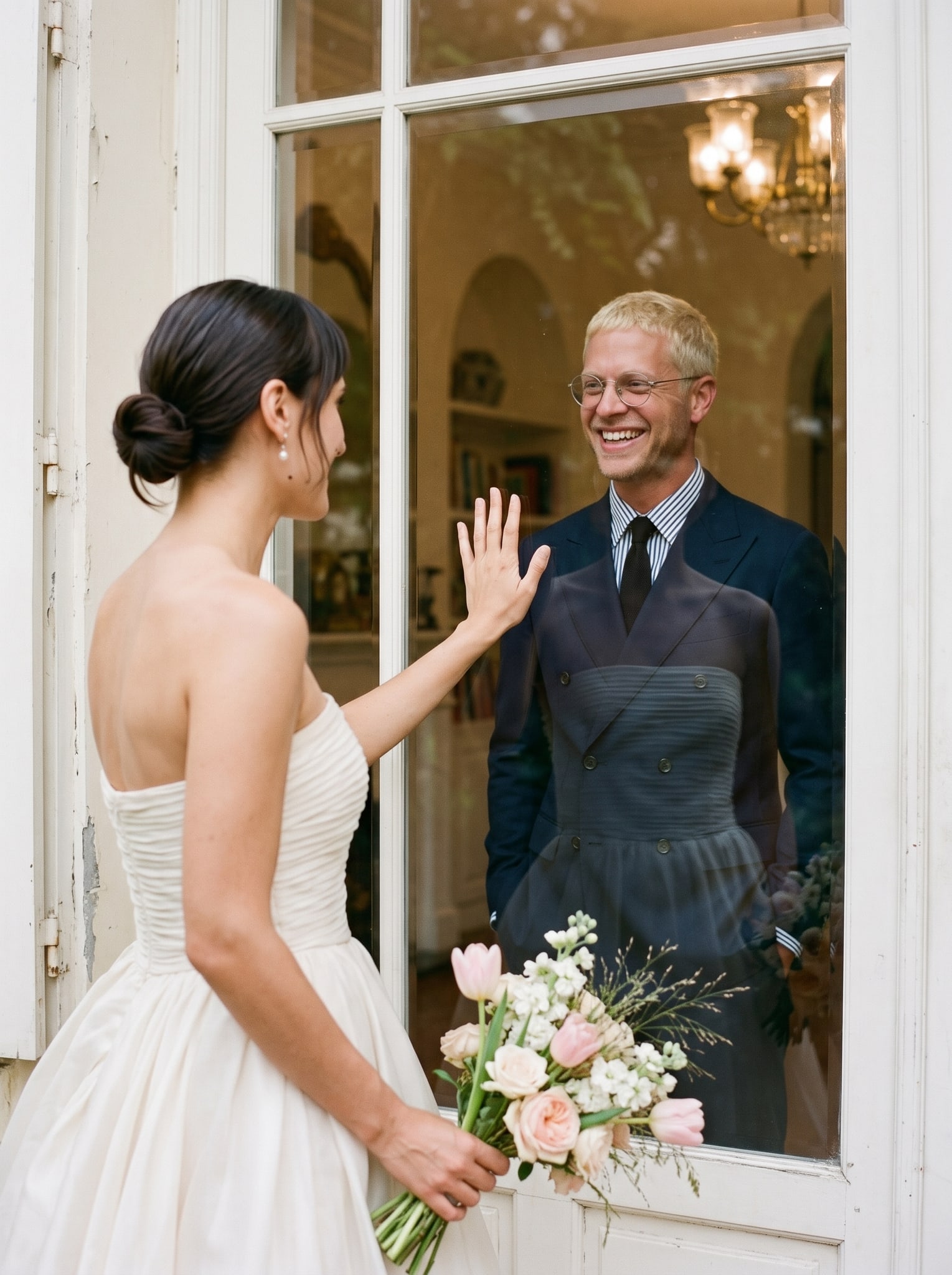
What film stocks do we load into our cameras during your session?
We carry Kodak Portra (warm, forgiving, skin-tone gold), Fujifilm Superia (saturated, punchy color), Ilford HP5 (black-and-white, deep contrast), and Kodak Gold (vintage aesthetic, richer shadows). Portra is our default for weddings—its latitude handles Vietnam's harsh noon sun and soft overcast light equally. We do not mix stocks mid-session; we commit to one type to ensure consistent color and grain across your gallery. Before your shoot, our team discusses which stock matches your vision: tropical saturation, muted tones, or monochrome drama. We load fresh rolls from sealed canisters; expired stock is never used. Once exposed, rolls go directly to our trusted lab partners in Hanoi and Saigon for development within 24–48 hours. Scanning happens at 2400 DPI minimum, capturing every detail and grain structure. You receive high-resolution JPEGs and TIFF files suitable for printing large.
How does film processing work and when do we deliver your images?
Development is chemical, non-digital. Film rolls are opened in a lightproof tank, soaked in developer (Kodak D-76 or Ilfosol for B&W, C-41 chemistry for color), rinsed, fixed, and dried. This cannot be rushed. Our lab processes rolls within 24 hours of drop-off; scanning follows immediately. We deliver your scanned gallery (contact sheet, selected proofs, and full-resolution files) between 10–14 days after your shoot. This delay frustrates couples accustomed to digital's same-day previews. We are transparent about it: film is slow by design. You cannot see results on the back of the camera or approve shots in real time. What you gain is the final image—grain, color, tonality—exactly as the film rendered it. No digital trickery, no filter applied in software. We cannot retouch away blown highlights or lift crushed shadows the way digital workflows allow. This honesty separates film from digital and why couples must genuinely want film, not settle for it.
Which film camera types produce different looks in Vietnam's light?
Camera Type | Format | Best For | Grain Visible | Workflow at Cáo ---|---|---|---|--- 35mm SLR (Pentax, Canon AE-1) | 35mm | Flexibility, portability, fast lensing | Medium | Loaded fresh; 36 exposures per roll 120mm medium format (Hasselblad, Mamiya RB67) | Medium (6×6, 6×7) | Sharpness, large prints, fashion feel | Fine at 100 ISO, visible at 400 | Loaded fresh; 12 exposures per roll Large format (4×5 Chamonix, Sinar) | 4×5 inch sheet film | Ultra-detail, editorial, Hoi An architecture | Minimal if low ISO | Single sheets; metered individually; longer per-shot prep Instant film (Fujifilm Instax, Polaroid 600) | Instant prints | Tactile keepsakes, guest book use | High | Instant physical print; no digital file
We load 35mm for speed and lens flexibility. Medium format suits fashion and couple portraits—the 6×6 square format feels timeless. Large format means fewer shots per hour (setup, metering, changing sheets) but unmatched sharpness for Hoi An's French colonial architecture or Ninh Binh's limestone cliffs. Each demands different preparation. Our crew arrives earlier for large format shoots to pre-scout light and pre-calculate exposures.
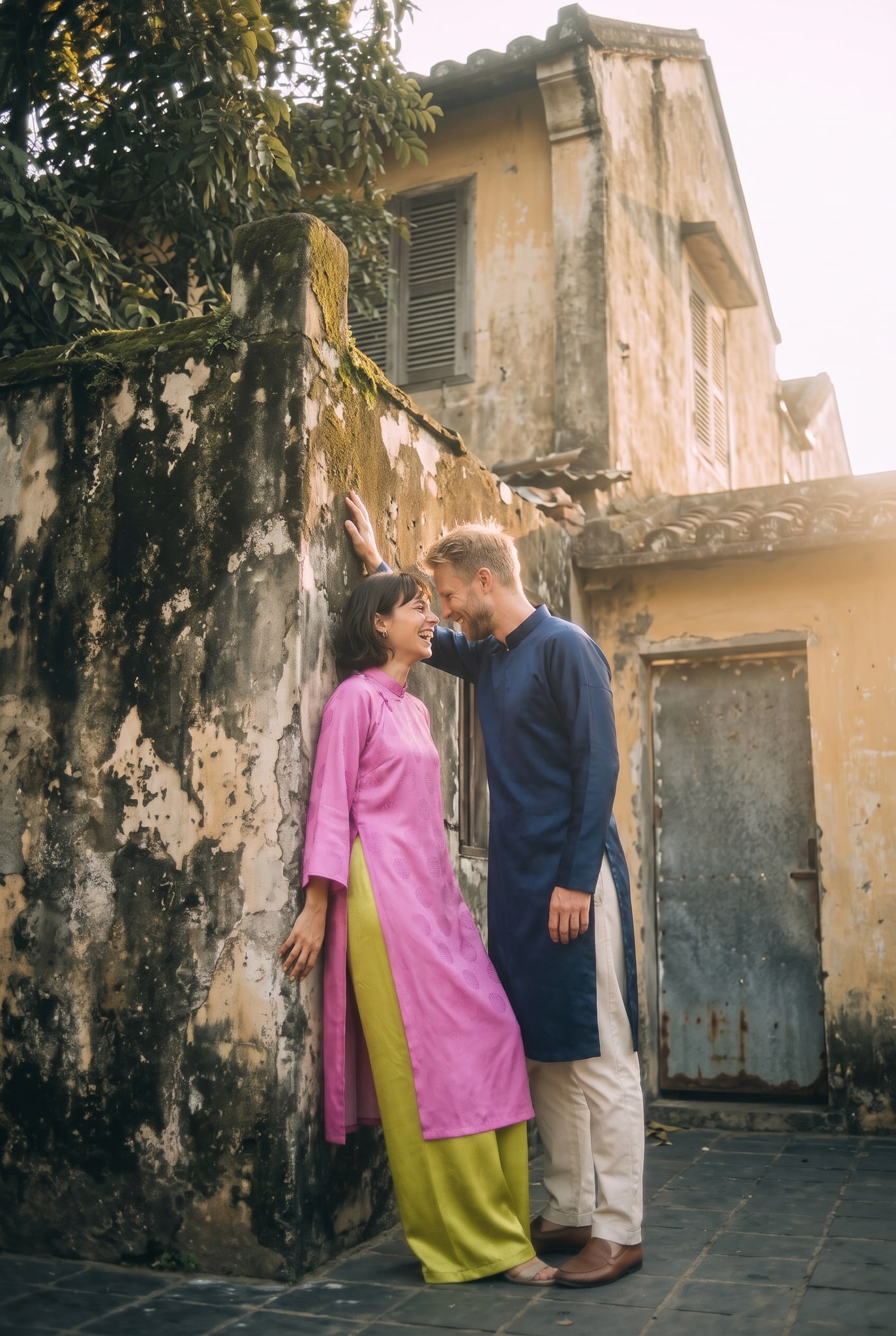
What happens when film underexposes, overexposes, or the meter fails on location?
Film has latitude—Portra tolerates 1–2 stops over; HP5 survives 2 stops under. But mistakes stick. We've shot sessions where Vietnam's equatorial noon sun pushed film into overexposure despite careful metering. The negatives show blown highlights that cannot be recovered. We've also underexposed in Hoi An's shadowed ancient town streets, resulting in grainy, murky images. What we learned: metering is not guess-work. We arrive with a spot meter, not just the camera's built-in meter. We meter skin tone, sky, and shadows separately. We bracket critical shots (shoot at metered exposure, then one stop over and one stop under) to hedge against meter error or unpredicted light shift. On the day, if something feels risky, we communicate immediately: "Light is changing fast; we're bracketing these frames." Couples understand film requires more technical preparation than digital. We also carry backup cameras loaded with the same stock, so if one fails, your session continues without switching film type mid-shoot.
How do we help you decide: film for the whole session, or film plus digital hybrid?
Many couples choose hybrid: film for portraits and key moments, digital as backup and for video. This hedges risk. We load film in one camera, digital in another; our photographer shoots both simultaneously. You receive the film gallery (slower, final, handpicked) and a digital gallery (faster, comprehensive, retouchable). This is popular with couples who love film's aesthetic but need reassurance—if the film underexposes, the digital frame exists as backup. Hybrid costs more in lab work and scanning, but removes the all-or-nothing stress. Some couples commit fully to film: one camera, one stock, no net. This demands trust and usually suits couples who have studied film photography beforehand or have seen a Cáo Studio film portfolio and decided the risk is worth it. We present both options honestly on WhatsApp before booking. We do not push film; we explain what it demands and what it delivers.
Choosing film is a decision framework: ask yourself—do I want every frame to be a singular, permanent capture? Can I tolerate 10–14 days without seeing proofs? Do I love grain and unpredictable color? Am I willing to reframe if the film underexposes (no post-processing salvage)? If yes to all four, film is for you. If any answer is no, digital or hybrid is safer.
What to check before you book a film pre-wedding session
- Ask which specific stocks we have in-house. Portra and Superia are standard; specialty stocks like Ektar or expired film require advance notice.
- Confirm lab turnaround. Hanoi and Saigon have different lab partners; if you're traveling and leaving Vietnam soon, ask if we can expedite scanning or ship files early.
- Understand no digital preview. You will not see images on the camera screen or same-day sneak. This is not a flaw; it is the format.
- Request a hybrid option if unsure. Hybrid removes risk while keeping film aesthetic for key portraits.
- See a film portfolio first. Ask us for links to past film shoots in your preferred location (Hoi An, Ninh Binh, Hanoi, or Saigon). Grain and color are subjective; visual proof matters.
- Ask about bracketing. We bracket critical shots by default, but confirm this happens for your session.
- Clarify what happens if film is damaged in development. Rare, but possible. Ask our policy (we re-shoot or offer credit).
Our pre-wedding photoshoot package covers studio options including film. Couple photoshoots with film create intimate, timeless work. For Hanoi locations and timing, see our Hanoi studio guide. Saigon sessions using film work beautifully in District 1's French colonial backdrops—details here. Film sessions pair well with hotel makeup and hair prep, ensuring your look is fresh before we load the first roll.
FAQ
Can we see a preview of the film before it's developed?
No. Film must be chemically developed before it can be scanned. We cannot preview on the camera back. This is why we meter carefully and bracket critical shots—to reduce underexposure risk without instant feedback.
What if the film underexposes and the images are too dark to print?
Underexposure cannot be fully corrected in post-processing the way digital can be. Scanning at high DPI helps recover shadow detail, but very dark negatives remain limited. This is why we bracket and confirm metering before shooting key moments.
How much does film cost compared to digital for the same session length?
Film stock, lab development, and scanning are included in our package pricing on vietnamphotoshoot.com. We do not charge by-the-frame; your package price is the same whether you shoot digital or film. Costs reflect stock type and lab partner rates, which vary by format.
Can we mix two different film stocks in one session?
We do not switch stocks mid-session. Mixing creates inconsistent color and grain across the gallery, complicating editing. If you want both color and black-and-white, we load film in one camera and digital in another (hybrid), or book a second session.
How long until we get the final digital files to print and share?
Scanned files arrive 10–14 days after your shoot. Lab development takes 24–48 hours; scanning follows. We deliver high-resolution JPEGs and TIFF files suitable for 16×20 and larger prints. Digital backup files are included if you booked hybrid.
Is film a good choice if we're leaving Vietnam in one week?
No. Film turnaround is 10–14 days minimum. If you leave sooner, ask us about expedited lab processing or shipping files to you after you've left. This works but adds cost and complexity. Digital or hybrid is safer for tight timelines.
What happens if our film is damaged during development?
Damage is rare with professional labs, but possible (light leak, chemical error). We re-shoot at no charge or offer a credit toward digital files. Ask about this policy when you book; we confirm it in writing.
Pre-Wedding & Elopement
Inclusions, prices and booking are on our booking site.
FAQ
Can we see a preview of the film before it's developed?
No. Film must be chemically developed before it can be scanned. We cannot preview on the camera back. This is why we meter carefully and bracket critical shots—to reduce underexposure risk without instant feedback.
What if the film underexposes and the images are too dark to print?
Underexposure cannot be fully corrected in post-processing the way digital can be. Scanning at high DPI helps recover shadow detail, but very dark negatives remain limited. This is why we bracket and confirm metering before shooting key moments.
How much does film cost compared to digital for the same session length?
Film stock, lab development, and scanning are included in our package pricing on vietnamphotoshoot.com. We do not charge by-the-frame; your package price is the same whether you shoot digital or film. Costs reflect stock type and lab partner rates, which vary by format.
Can we mix two different film stocks in one session?
We do not switch stocks mid-session. Mixing creates inconsistent color and grain across the gallery, complicating editing. If you want both color and black-and-white, we load film in one camera and digital in another (hybrid), or book a second session.
How long until we get the final digital files to print and share?
Scanned files arrive 10–14 days after your shoot. Lab development takes 24–48 hours; scanning follows. We deliver high-resolution JPEGs and TIFF files suitable for 16×20 and larger prints. Digital backup files are included if you booked hybrid.
Is film a good choice if we're leaving Vietnam in one week?
No. Film turnaround is 10–14 days minimum. If you leave sooner, ask us about expedited lab processing or shipping files to you after you've left. This works but adds cost and complexity. Digital or hybrid is safer for tight timelines.
What happens if our film is damaged during development?
Damage is rare with professional labs, but possible (light leak, chemical error). We re-shoot at no charge or offer a credit toward digital files. Ask about this policy when you book; we confirm it in writing.
More from the team
Boho pre-wedding photoshoot in Vietnam: Hanoi, Saigon, Hoi An
Boho pre-wedding shoots mix romantic, free-spirited aesthetics with Vietnam's landscapes and heritage sites. We run full-day sessions in three cities, handling styling, makeup, location scouts and edits.
Avoid crowds at Hoang Su Phi rice terraces: timing for wedding shoots
Hoang Su Phi's terraced landscape draws couples and tour buses in equal measure. We show how to shoot there alone, when to arrive, and what to arrange with us before you go.
Photography rules at Con Dao beaches: permits, drones and what to check
Con Dao's beaches demand prep before you shoot—permits, drone zones and tide timing all affect your day. We share what the Cáo Studio team verifies on every booking.