 Cáo Studio
Home › Blog › Pre-Wedding & Elopement
Film-Style Pre-Wedding Photos in Hanoi: How Cáo Studio Shoots Them
By the Cáo Studio team · Hanoi & Saigon · 2026-11-04
Film-style pre-wedding photography in Hanoi means we shoot your couple story as a short narrative: soft color palettes, shallow depth of field, and locations that feel like a movie set rather than a photo backdrop. Cáo Studio Hanoi typically books these shoots for 4–6 hours, often at sunrise or golden hour near Old Quarter streets, Lake Hoàn Kiếm, or rural villages outside the city. The process includes makeup and hair styling on-site (we bring a stylist, or clients book our makeup and hair at your hotel option), outfit changes, location moves, and 200–400 edited frames. Pricing depends on locations, team size, and editing depth—ask us for a quote on WhatsApp. To avoid over-booking, lock your date early; many couples compete for weekend slots in autumn and spring. Film-style edits take 1–2 weeks post-shoot because each image is graded individually rather than batch-processed. Chat with us on WhatsApp | See packages and prices on vietnamphotoshoot.com
What does "film-style" actually mean for your Hanoi pre-wedding shoot?
Film-style photography mimics the aesthetic of 35mm cinema: desaturated tones, warm shadows, and a narrative flow between frames. When we plan a film-style session, we're not aiming for Instagram brightness or high saturation. Instead, we scout for textured walls, window light, and moments where stillness matters more than action. Our Hanoi team often shoots in manual mode, expose for skin tone rather than highlights, and compose for depth rather than symmetry. The edit happens in Lightroom and Capture One—we lift blacks, add grain, and apply subtle color casts (often a teal or amber bias) that feel cohesive across 300+ images. This consistency is harder than it sounds: it means testing LUTs (lookup tables) on every couple's skin tone and wardrobe before the main day, then adjusting on-the-fly if lighting changes mid-session. Couples who choose film-style often already own the mood they want—they've pinned Fujifilm-shot references or studied indie wedding films. Our job is to translate that feeling into a coherent edit without oversaturating or faking it.
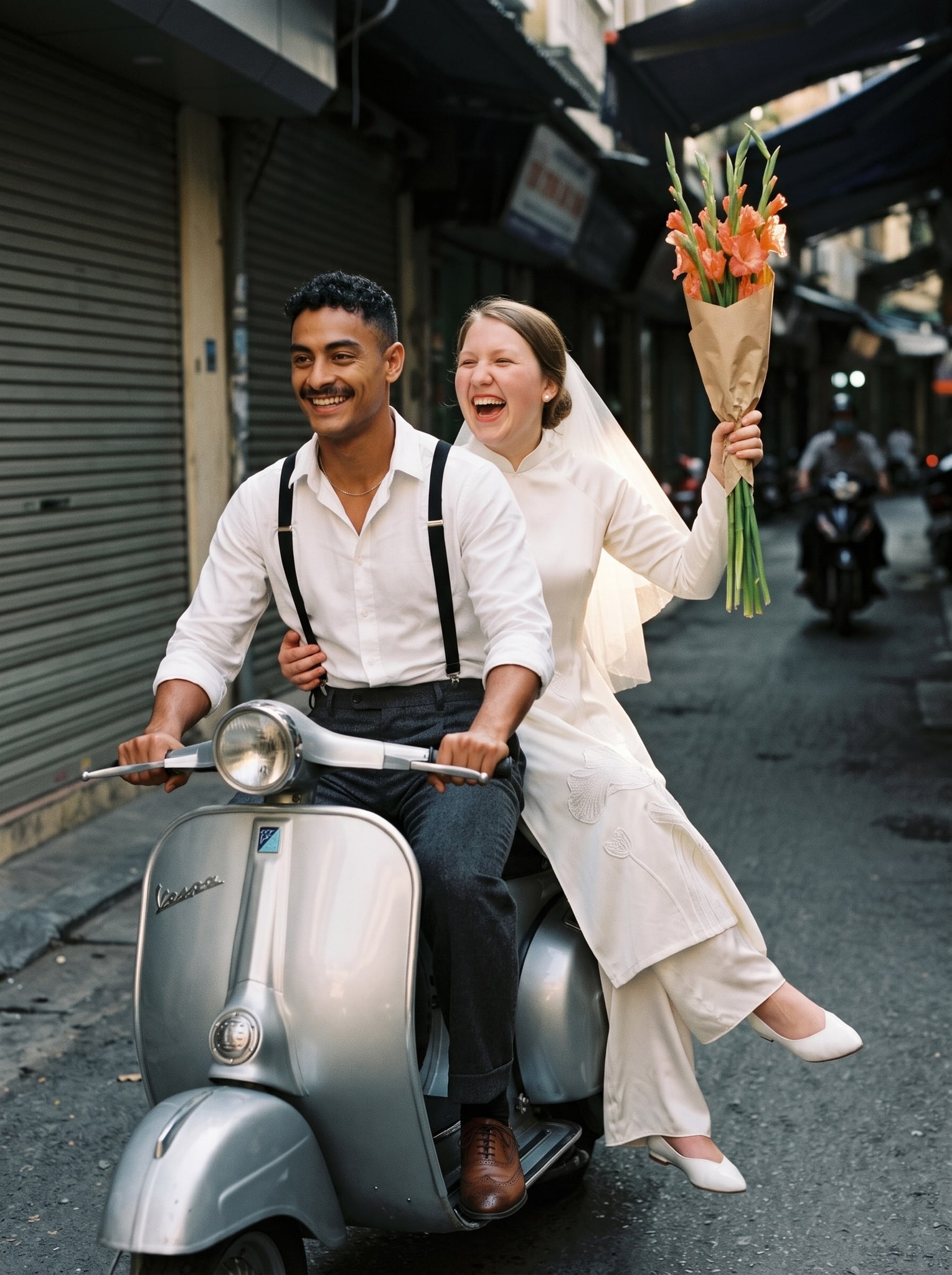
Why do couples in Hanoi choose film over digital-bright aesthetics?
Film-style work suits couples who value intimacy over spectacle. In Hanoi, where we shoot year-round in tropical humidity and intense midday sun, the film aesthetic actually solves a problem: harsh light looks less jarring when you lower contrast and warm the shadows. We've noticed that clients booking film-style are often older (late 20s to early 30s), prefer smaller venues, and plan intimate weddings rather than hotel ballroom affairs. The muted palette also photographs beautifully in Hanoi's colonial architecture—French shutters, moss-covered courtyards, and ochre-painted townhouses read as more intentional under a film grade. Where a bright, crisp edit might flatten these details, film-style rendering adds dimension. We also see couples choose this aesthetic when their engagement story involves quiet moments: late-night walks around Cáo Studio Hanoi neighborhoods, coffee shop meetings, or countryside trips. Film stock naturally suits those narratives; digital-bright suits adventure and celebration. Neither is better—they're different tools for different stories.
How does location scouting change when you're shooting film in Hanoi?
For film-style shoots, we look for texture and shadow rather than iconic landmarks. Our Hanoi scouts walk neighborhoods like the Old Quarter, Tây Hồ, and rural Sơn Tây—not hunting for the "prettiest" spot, but for places where light behaves predictably. A whitewashed wall catches diffused morning light beautifully; a narrow alley creates natural framing; a lake reflection adds depth without needing a drone. When we brief couples on WhatsApp before the shoot, we explain: film-style locations often look "boring" in daylight iPhone photos, but transform under proper lighting and grading. We also factor in foot traffic, weather patterns, and the logistics of moving a stylist and two cameras in Hanoi heat. If a couple wants the French colonial feel, we'll book the Water Puppet Theatre area or Hoan Kiem Lake's northern shore; if they want rural texture, we drive 45 minutes to villages near Ninh Binh where red-brick farmhouses and paddy fields add grain-like atmosphere. The difference between a good film-style location and a mediocre one often comes down to whether we can position the couple with backlit subjects—trees, buildings, or haze—that separate them from the background without needing heavy Photoshop.
| Location Type | Best Time | Film-Style Advantage | Logistics |
|---|---|---|---|
| Colonial Hanoi (Old Quarter, Tây Hồ) | 5:30–7:00 a.m., 4:30–6:00 p.m. | Warm stonework + window light | 15 min travel, busy streets |
| Lake Hoàn Kiếm | 6:00–7:30 a.m. (mist) | Soft backlit silhouettes, reflections | Central, but crowded by 7:30 a.m. |
| Rural villages (Sơn Tây, Hà Đông) | 5:30–7:30 a.m., 4:00–6:00 p.m. | Texured walls, golden hour depth | 45 min–1 hour drive, no WiFi |
| Hotel room or rooftop | Anytime (backlit against window) | Window light control, intimate scale | No commute, smaller crew |
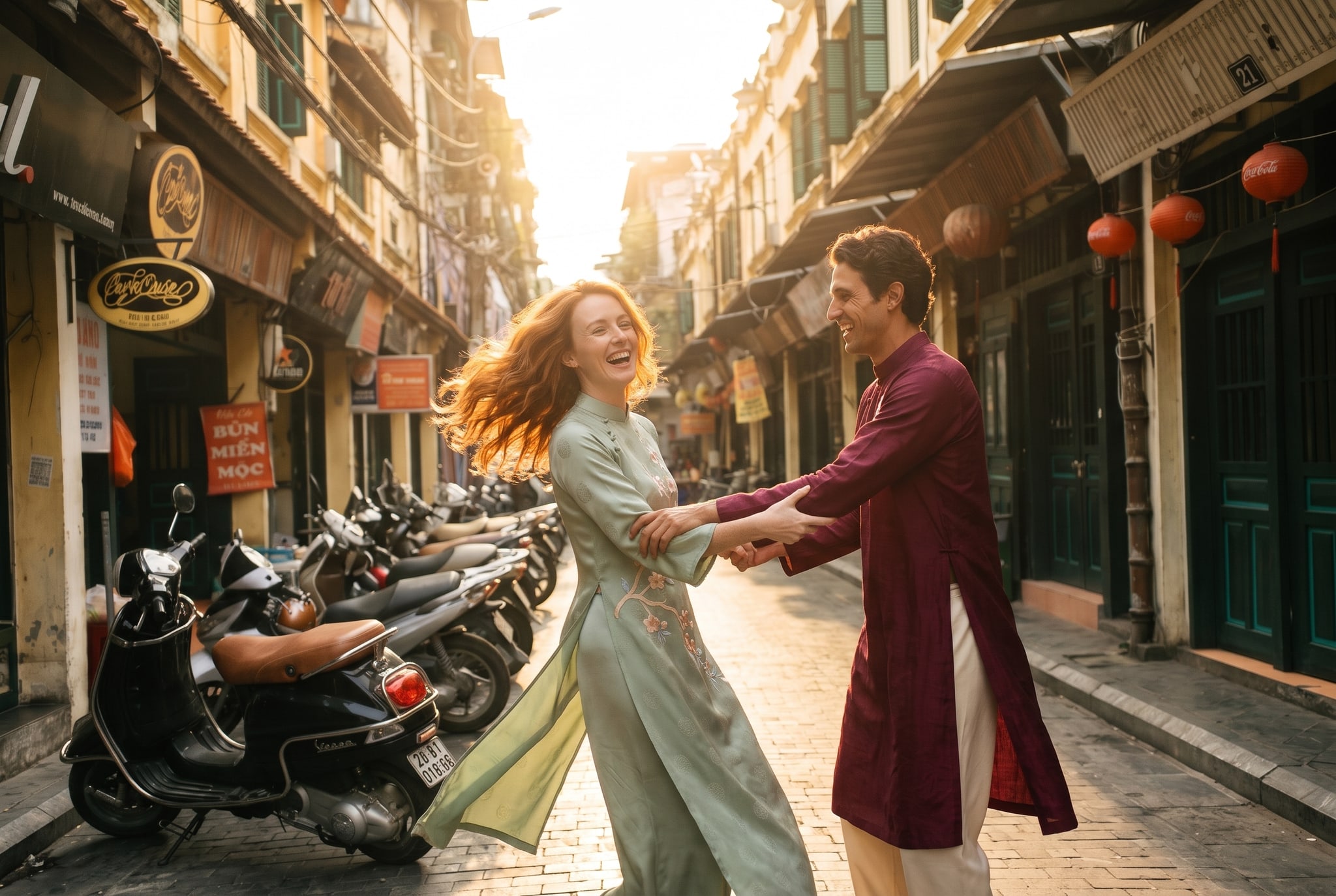
What goes wrong on film-style shoots and how we fix it mid-day?
Film-style is unforgiving when light changes or mood breaks. We've learned three common failures: Flat shadows in midday sun. If we book a noon slot (which we discourage for film-style), we end up fighting blown-out sky and murky subject shadows. Fix: we'll move to a shaded alley, use a reflector to lift face detail, or schedule a longer rest and reposition for late afternoon. Inconsistent edit feel. When we grade 300 images, a handful always look off—one location has slightly cooler light, one outfit has unexpected undertones. Fix: we batch-edit by location and time block, then compare color cards to catch anomalies before final delivery. Stylist's makeup melting in humidity. Hanoi's summer humidity wrecks matte lipstick and powder base. Fix: we brief the stylist to use long-wear foundations and minimal powder, bring blotting papers, and schedule 10-minute touch-ups between locations. Couple fatigue. Film-style shoots often take 5–6 hours because we prioritize light timing over convenience. By hour four, expressions flatten. Fix: we build in a 20-minute café break with water and snacks, and we batch shoot (two outfit changes, 40 frames each, then rest) rather than continuous motion.
Which couple should book a film-style shoot vs. other pre-wedding packages?
Film-style suits couples who have a specific mood in mind and patience for the edit. If you're unsure whether this is you, compare:
Film-style is for you if: you love moody, indie wedding films; you've pinned 20+ reference images with warm, muted tones; you want your photos to look cohesive across 300+ frames rather than varied in style; you're booking 4–6 hours (not a rushed 2-hour session); you plan a smaller wedding or intimate ceremony. Book our pre-wedding and elopement package and request "film aesthetic" on WhatsApp.
You might prefer bright, saturated digital instead if: you want maximum colors and dramatic contrast; you're booking under 3 hours; you like variety between frames (different edits per location); you want fast delivery (bright edits process in 5–7 days). Still book pre-wedding sessions, but note "natural bright" in your brief.
You might want a concept shoot instead if: film-style feels too subtle for you; you want fantasy, color-graded drama, or themed outfits (e.g., 1920s, fairy-tale). Book our special concept shoot to explore bolder palettes and storytelling.
The key signal we listen for: clients describe how the photos should feel, not just what they want to wear or where they want to stand. Film-style couples talk about mood, memory, and cinema. If that's you, we're aligned.
Chat with us on WhatsApp | See packages and prices on vietnamphotoshoot.com
What to check before you book a film-style pre-wedding shoot in Hanoi
Before committing, confirm these with us on WhatsApp:
- Edit timeline. Film-style grading takes 2–3 weeks (not 5 days). Confirm the delivery date works for your wedding timeline.
- Outfit and color. We'll ask: what colors do you wear? Film-style edits work best with jewel tones, neutrals, or pastels; neon or bright patterns can clash with the grade. Send outfit photos.
- Reference images. Show us 5–10 films, photographers, or Pinterest boards you love. We'll confirm whether the mood is achievable in Hanoi's light in your chosen season.
- Stylist and makeup. Do you want us to provide a stylist (extra cost), or will you bring your own? Confirm on the booking form.
- Location contingency. Hanoi rains in summer and autumn. We'll offer two backup locations by the day before the shoot.
- Sunrise vs. golden hour. Early shoots (5:30–7:00 a.m.) capture softer light but require an earlier wake-up. Confirm your preference.
Ask us for a quote on WhatsApp, and we'll detail all inclusions and timeline before you book.
FAQ
Is film-style pre-wedding photography the same as shooting on a film camera?
Not necessarily. Film-style refers to the aesthetic (muted colors, grain, soft contrast), which we achieve digitally in post-processing. We shoot on digital cameras and then grade the images to emulate film stock. Some photographers also shoot on actual film (35mm or 120mm), but that's slower, more expensive, and riskier in Hanoi humidity.
How long does a film-style shoot take in Hanoi, and why is it longer than other sessions?
We typically book 4–6 hours, compared to 2–3 hours for bright or fast-turnaround sessions. Film-style relies heavily on golden hour light and precise timing, so we include travel between locations, longer styling breaks, and slower posing to capture genuine moments. Rushed shoots don't work well with this aesthetic.
Can you shoot film-style in midday sun or overcast weather?
Yes, but the results differ. Midday sun is harsh, so we move to shade or reschedule for late afternoon. Overcast days are actually ideal for film-style—soft, even light minimizes shadows and works beautifully with the muted palette. Rainy weather is harder; we'll suggest backup dates or indoor locations.
What if I don't like the film-style edit after I see the proofs?
Film-style is a commitment—it requires communication before the shoot, not after. We'll show you 2–3 sample edits from reference images before booking to confirm you love the mood. During the edit, you'll receive a contact sheet so you can flag any outliers. Once we deliver, we don't re-edit an entire session in a different style, but we can adjust 10–15 frames if they feel genuinely inconsistent.
How much more expensive is film-style compared to standard pre-wedding photography?
The main cost difference is time: longer shoot hours and more detailed editing. Some couples also add a makeup artist and stylist, which is an additional service. Ask us for a quote on WhatsApp with your specific requirements, and we'll explain the cost breakdown.
Can we do a film-style couple shoot in a different season, like winter?
Absolutely. Hanoi winters (November–January) are ideal for film-style work—cool light, clearer skies, and no humidity. Spring (February–April) is also excellent. Summer heat and autumn rain are more challenging but still workable with planning.
Pre-Wedding & Elopement
Inclusions, prices and booking are on our booking site.
FAQ
Is film-style pre-wedding photography the same as shooting on a film camera?
Not necessarily. Film-style refers to the *aesthetic* (muted colors, grain, soft contrast), which we achieve digitally in post-processing. We shoot on digital cameras and then grade the images to emulate film stock. Some photographers also shoot on actual film (35mm or 120mm), but that's slower, more expensive, and riskier in Hanoi humidity.
How long does a film-style shoot take in Hanoi, and why is it longer than other sessions?
We typically book 4–6 hours, compared to 2–3 hours for bright or fast-turnaround sessions. Film-style relies heavily on golden hour light and precise timing, so we include travel between locations, longer styling breaks, and slower posing to capture genuine moments. Rushed shoots don't work well with this aesthetic.
Can you shoot film-style in midday sun or overcast weather?
Yes, but the results differ. Midday sun is harsh, so we move to shade or reschedule for late afternoon. Overcast days are actually ideal for film-style—soft, even light minimizes shadows and works beautifully with the muted palette. Rainy weather is harder; we'll suggest backup dates or indoor locations.
What if I don't like the film-style edit after I see the proofs?
Film-style is a commitment—it requires communication before the shoot, not after. We'll show you 2–3 sample edits from reference images before booking to confirm you love the mood. During the edit, you'll receive a contact sheet so you can flag any outliers. Once we deliver, we don't re-edit an entire session in a different style, but we can adjust 10–15 frames if they feel genuinely inconsistent.
How much more expensive is film-style compared to standard pre-wedding photography?
The main cost difference is time: longer shoot hours and more detailed editing. Some couples also add a makeup artist and stylist, which is an additional service. Ask us for a quote on WhatsApp with your specific requirements, and we'll explain the cost breakdown.
Can we do a film-style couple shoot in a different season, like winter?
Absolutely. Hanoi winters (November–January) are ideal for film-style work—cool light, clearer skies, and no humidity. Spring (February–April) is also excellent. Summer heat and autumn rain are more challenging but still workable with planning.
More from the team
Pre-wedding photoshoot in Phu Quoc June: weather, light, crowds
June is Phu Quoc's monsoon season. Our studio has shot dozens of couples there in early summer—here's what weather and crowds really mean for your pre-wedding day.
Pre-wedding photoshoot in Phu Quoc July: weather, light, crowds
July is Phu Quoc's wet season, but it opens creative possibilities: moody skies, empty beaches after storms, and dramatic backlighting. We'll walk you through what happens on the ground.
Pre-wedding photoshoot in Phu Quoc November: weather, light, crowds
November is peak season for pre-wedding shoots in Phu Quoc: weather is stable, light is soft, but crowds peak mid-month. We share what our team sees on the ground.