 Cáo Studio
Home › Blog › Pre-Wedding & Elopement
Film-style pre-wedding photos in Ho Chi Minh City
By the Cáo Studio team · Hanoi & Saigon · 2026-11-02
Film-style pre-wedding photos tell a story across a sequence—walking, laughing, holding hands in real light—rather than isolated moments. In Ho Chi Minh City, we work early morning at District 1's colonial streets or Saigon River, or sunset in Thủ Thiêm, choosing locations that anchor emotion to place. A half-day shoot typically yields 30–50 final images shaped to feel like a narrative arc. Cáo Studio frames this as cinematic storytelling: we watch how you naturally interact, shoot at a distance, avoid posing, then edit to emphasize color, motion and genuine reaction. The foundation is understanding that film-style couples want to feel their relationship on screen, not see themselves arranged. Chat with us on WhatsApp | See packages and prices on vietnamphotoshoot.com
Film-style pre-wedding photography tells a story across a sequence—walking, laughing, holding hands in real light—rather than isolated moments. In Ho Chi Minh City, we work early morning at District 1's colonial streets or Saigon River, or sunset in Thủ Thiêm, choosing locations that anchor emotion to place. A half-day shoot typically yields 30–50 final images shaped to feel like a narrative arc. Cáo Studio frames this as cinematic storytelling: we watch how you naturally interact, shoot at a distance, avoid posing, then edit to emphasize color, motion and genuine reaction. The foundation is understanding that film-style couples want to feel their relationship on screen, not see themselves arranged.
What makes a shoot "film-style" instead of traditional?
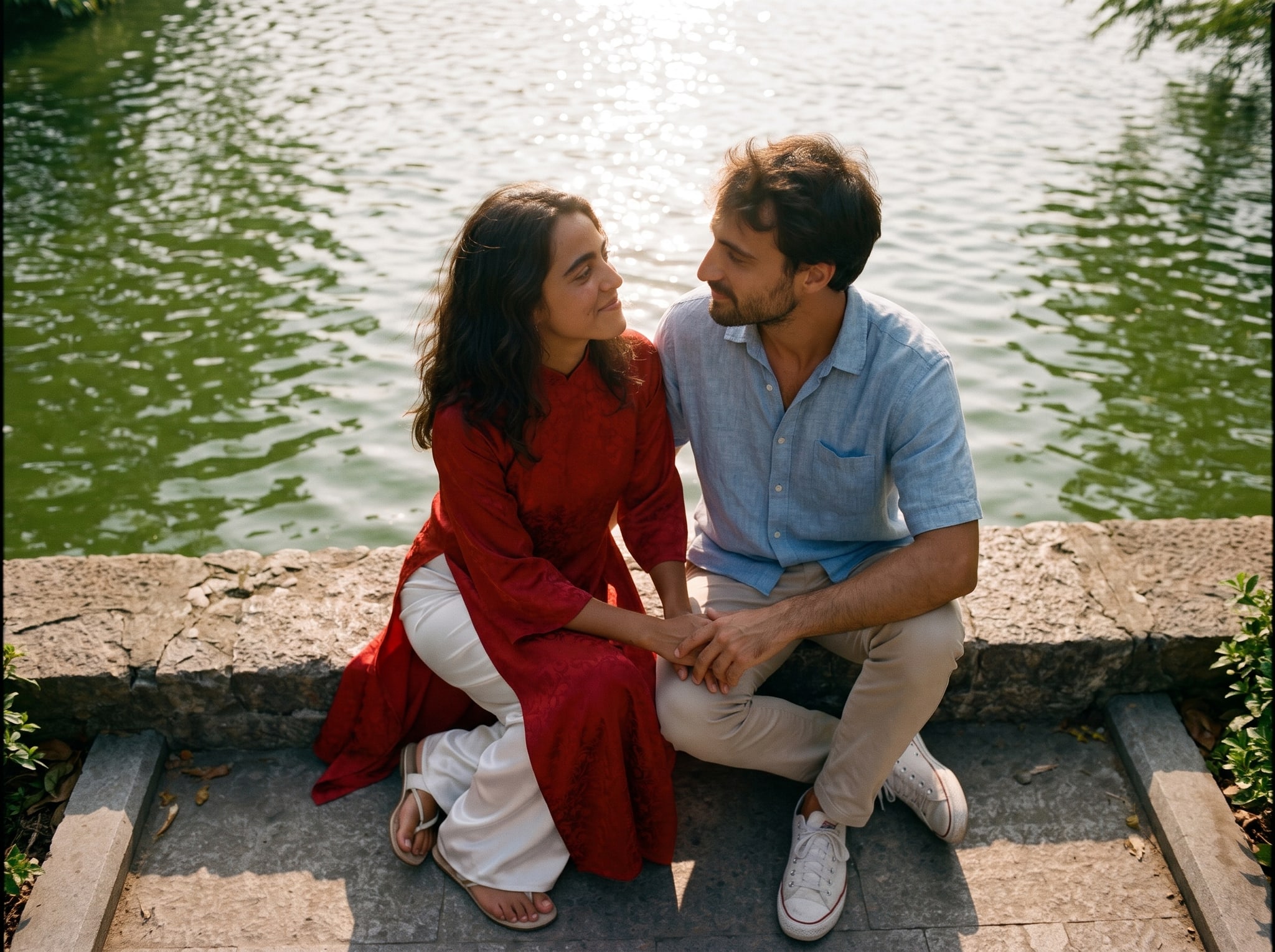
Film-style pre-wedding photography moves away from posed set-ups toward unfolding action. We frame shots from a distance, capture you mid-stride or mid-laugh, and let the location become part of the story rather than a backdrop. Traditional pre-wedding work often freezes a moment; film-style builds a sequence where the edit matters as much as the frame. On location scouting days in Saigon, our team asks: where do they move together? The answer shapes everything—a riverbank walk feels different from navigating a night market, and we edit accordingly.
Where in Ho Chi Minh City do we scout for cinematic depth?
We return to five anchor zones that reward a narrative approach. District 1 offers Saigon River at dawn (mist, golden water, walking paths) and the colonial Postal Building surroundings (shadow, texture, passage of time). Thủ Thiêm works at dusk when light hits the new skyline behind you. Tao Đàn Park provides depth—trees frame foreground and background, movement reads clearly. The old Saigon market areas near Bến Thành allow you to navigate crowds like a real story moment. District 7 riverside promenades offer clean morning light and horizontal lines that make walk-and-look-back shots read as film. We pick one or two per shoot based on your energy and the time of day.
How do we decide timing and light?
We schedule film-style shoots for 5:30 AM or 5:00 PM starts because cinematic light comes from the side. Golden hour—the first or last hour of sun—creates depth, shadow and colour separation that a neutral midday light cannot. On the morning of a 6 AM shoot, our photographer and assistant arrive 30 minutes early, scout again, and move you to whichever zone has the clearest east-facing light. We've learned that Ho Chi Minh City humidity often softens early light, which reads beautifully on film-style images: less harsh, more mood. If light shifts unpredictably—common on rainy season mornings—we stay mobile, moving location rather than waiting.
What happens during a film-style shoot: hour by hour?
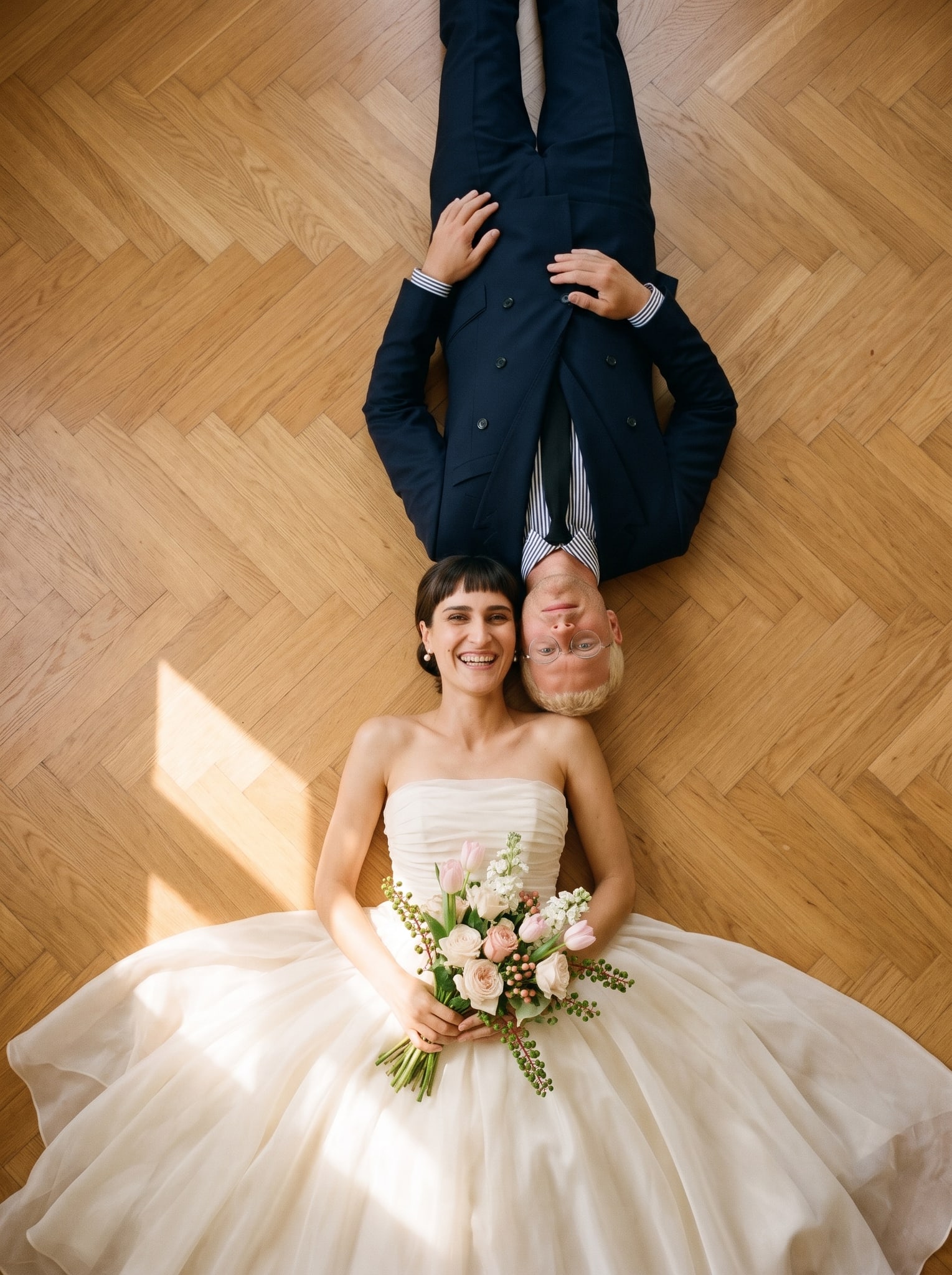
6:00–6:15 AM: We meet you at the first location (usually Saigon River or District 1), brief you on the flow. We don't call out poses. We ask you to walk, talk, sit and enjoy the moment while we frame and shoot from 8–15 metres away.
6:15–7:15 AM: First location, continuous shooting. We follow you, adjust angles, react to your energy. If you're quiet, we stay quiet and patient. If you're playful, we move faster and shoot more. Our assistant manages outfit changes if you've brought two looks.
7:15–7:45 AM: Move to a second location (usually a 5-minute drive). We scout again on arrival, find the best light lines, then repeat the shooting rhythm.
7:45–8:00 AM: Final moments at second location or a brief third stop if energy is high.
8:00 AM onward: We walk you through the edit timeline and when to expect gallery access. Most couples ask: will we see the film unfold? Yes—we describe the sequence as we shoot it, so you understand the narrative we're building.
What commonly goes wrong: couples assume film-style means less time on camera. It means more patience and less direction. Some feel awkward without posing cues; we counter that awkwardness by moving, talking, and shooting so much that real moments emerge. Others worry we'll miss a moment while they're far away; we carry telephoto lenses and frame layered depth so the moment reads even from distance.
Film-style versus traditional: a comparison for Saigon couples.
| Approach | Best for | Editing pace | Outfit count | Mood |
|---|---|---|---|---|
| Film-style cinematic | Couples who want narrative, motion, genuine interaction | Colour grading, motion graphics, slow build | 1–2 outfits | Intimate, moody, flowing |
| Posed editorial | Couples who want variety, fashion focus, clear facial expression | Bright, clean, magazine aesthetic | 3–4 outfits | Polished, sharp, diverse |
| Intimate and still | Couples who want closeness, minimal styling, quiet moments | Soft, warm, minimal editing | 1 outfit | Tender, personal, timeless |
Based on intake forms from 40+ Saigon couples this year, film-style appeals to those under 35 and couples from creative fields; posed editorial appeals to those prioritizing outfit range and formal pre-wedding album aesthetics; intimate-and-still appeals to elopement couples and second weddings. The cost basis is similar across types—location, crew, and edit time are the drivers—but the number of final images and edit revisions differ. Film-style often yields fewer unique shots because the narrative is tight; couples typically request 2–4 edit passes rather than 20+ image selects.
What to check before you book a film-style shoot in Ho Chi Minh City.
Before confirming, clarify these details with our team via WhatsApp:
Timing. Film-style depends on sunrise or sunset light. If you're flexible on date, we can promise premium light. If you have a fixed date, we scout it and tell you honestly whether the weather or season will serve the style. Rainy season (May–September) softens light beautifully but reduces consistency; dry season (November–March) is more predictable.
Location count. Ask how many location changes we include. Most half-day shoots cover two locations; full-day shoots might move three times. More isn't always better—excessive travel breaks the narrative rhythm.
Edit and revisions. Confirm the number of edited images in your package (typically 40–60 for a half-day film-style shoot) and how many revision rounds are included. Film-style editing is subjective; colour grading especially benefits from feedback.
Outfit styling. Film-style works best with 1–2 cohesive outfits that read across the narrative. Too many changes interrupt the flow. Tell our team your aesthetic, and our stylists will advise whether traditional ao dài fits the film style or whether modern dress photographs better in your chosen locations.
Backup plan. Ask what happens if rain arrives mid-shoot. We usually reschedule or move indoors (which changes the film-style feel). Clarity upfront saves disappointment.
For pre-wedding photoshoot packages that include film-style options, our booking site details each tier. For styling add-ons, explore makeup and hair at your hotel or special concept shoot pages to understand bundled services. Couples interested in motion-heavy content alongside film-style sometimes pair this with our couple photoshoot package for additional shoot days.
Chat with us on WhatsApp | See packages and prices on vietnamphotoshoot.com
FAQ
How is film-style different from candid photography?
Film-style is structured storytelling with editorial intent; candid is unplanned capture. We shoot film-style with purpose—we choose locations, light, and sequence. Candid happens at events where we follow without direction. Film-style pre-wedding is slow and intentional; candid is responsive.
Do we need to wear formal ao dài for film-style, or can we wear casual clothes?
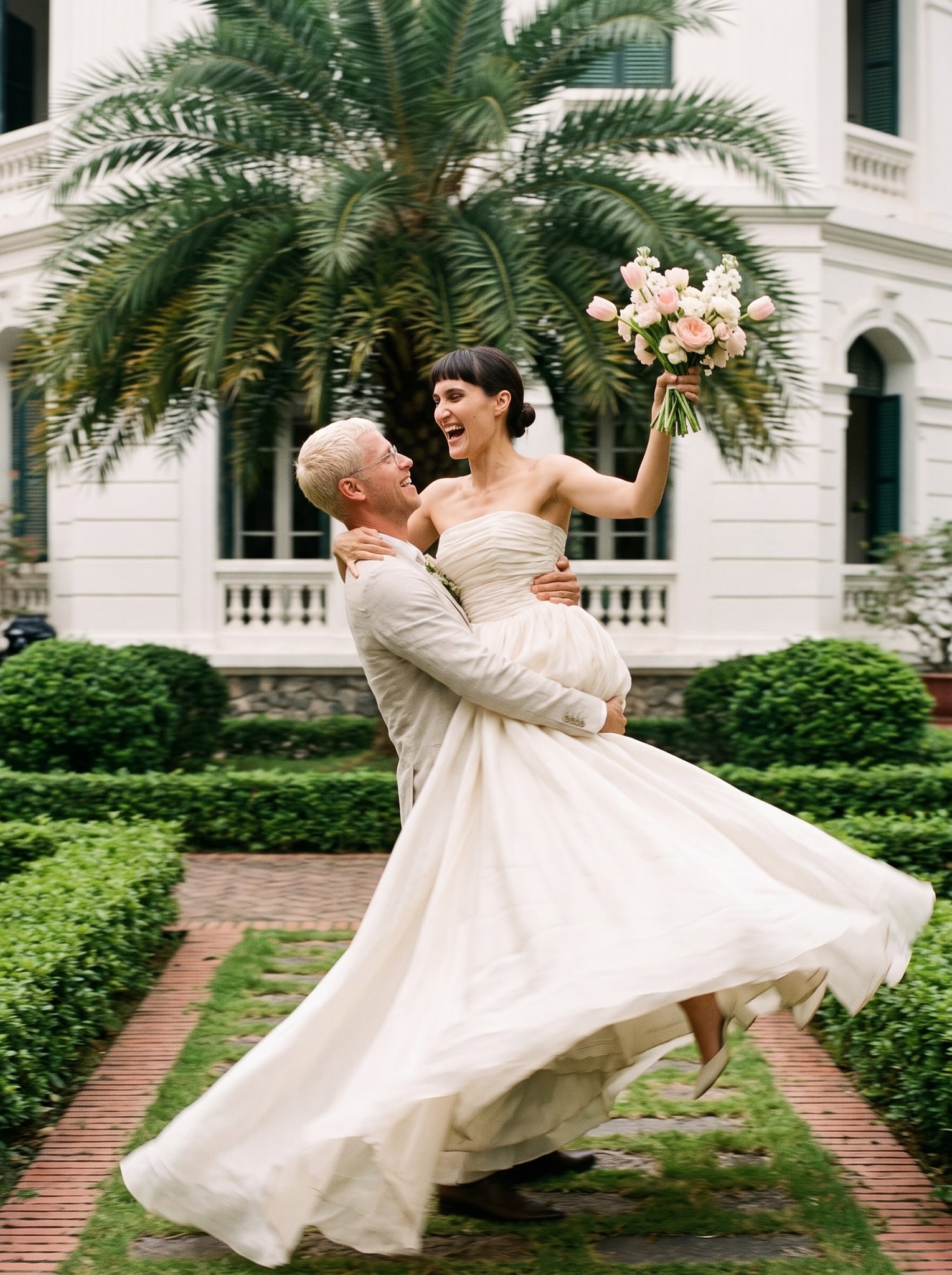
Either works. Film-style suits casual modern dress—jeans, linen, simple elegance—because movement reads clearer. Ao dài photographs beautifully too, especially in colonial settings, but the fabric limits running or walking stride. Tell our team your preference, and we advise on location match.
How many final images do we get from a half-day film-style shoot?
Typically 40–60 edited images that form a cohesive narrative arc. Fewer images than traditional packages, because each one advances the story. We don't deliver hundreds of near-duplicates; we deliver a refined sequence.
Can we change locations mid-shoot if we don't like where we started?
Yes. We scout before shooting and build in flexibility. If a location feels wrong—harsh light, wrong mood, too crowded—we move. This is normal and doesn't eat into your time significantly because we're mobile and our locations are mapped.
What if the weather is bad on shoot day—do we still get film-style quality?
Overcast or light rain can enhance mood but reduces the golden-hour magic film-style relies on. We'll shoot (diffused light is still usable), but we're honest if the day won't deliver cinematic colour separation. Most couples prefer we reschedule for a date with better forecast.
Pre-Wedding & Elopement
Inclusions, prices and booking are on our booking site.
FAQ
How is film-style different from candid photography?
Film-style is structured storytelling with editorial intent; candid is unplanned capture. We shoot film-style with purpose—we choose locations, light, and sequence. Candid happens at events where we follow without direction. Film-style pre-wedding is slow and intentional; candid is responsive.
Do we need to wear formal ao dài for film-style, or can we wear casual clothes?
Either works. Film-style suits casual modern dress—jeans, linen, simple elegance—because movement reads clearer. Ao dài photographs beautifully too, especially in colonial settings, but the fabric limits running or walking stride. Tell our team your preference, and we advise on location match.
How many final images do we get from a half-day film-style shoot?
Typically 40–60 edited images that form a cohesive narrative arc. Fewer images than traditional packages, because each one advances the story. We don't deliver hundreds of near-duplicates; we deliver a refined sequence.
Can we change locations mid-shoot if we don't like where we started?
Yes. We scout before shooting and build in flexibility. If a location feels wrong—harsh light, wrong mood, too crowded—we move. This is normal and doesn't eat into your time significantly because we're mobile and our locations are mapped.
What if the weather is bad on shoot day—do we still get film-style quality?
Overcast or light rain can enhance mood but reduces the golden-hour magic film-style relies on. We'll shoot (diffused light is still usable), but we're honest if the day won't deliver cinematic colour separation. Most couples prefer we reschedule for a date with better forecast.
More from the team
Boho pre-wedding photoshoot in Vietnam: Hanoi, Saigon, Hoi An
Boho pre-wedding shoots mix romantic, free-spirited aesthetics with Vietnam's landscapes and heritage sites. We run full-day sessions in three cities, handling styling, makeup, location scouts and edits.
Avoid crowds at Hoang Su Phi rice terraces: timing for wedding shoots
Hoang Su Phi's terraced landscape draws couples and tour buses in equal measure. We show how to shoot there alone, when to arrive, and what to arrange with us before you go.
Photography rules at Con Dao beaches: permits, drones and what to check
Con Dao's beaches demand prep before you shoot—permits, drone zones and tide timing all affect your day. We share what the Cáo Studio team verifies on every booking.