 Cáo Studio
Home › Blog › Pre-Wedding & Elopement
Getting to O Quy Ho pass on photoshoot day: transport, timing and logistics
By the Cáo Studio team · Hanoi & Saigon · 2026-11-04
O Quy Ho pass (also called Heaven's Gate) is a mountain pass 15 km from Sapa town, reachable by jeep or motorbike in 45–60 minutes from town. For a Cáo Studio photoshoot there, you arrange your own transport to Sapa; we coordinate timing, location scouting and light with your driver once you arrive. Most guests hire a private driver or jeep for the full day (typically 7–8 hours); costs vary by operator. The road is paved but narrow and steep—not suitable for rental scooters for photography. We scout the location 30 minutes before your shoot start time, confirm road conditions and tell you via WhatsApp if weather or traffic changes your timeline. Altitude, wind and cold are real; plan extra layers and arrive 90 minutes early to acclimatize. Chat with us on WhatsApp
O Quy Ho pass sits 3,300 metres above sea level in Sapa. We've shot there dozens of times and learned exactly what guests need to know before booking.
How do we actually get a crew and guests up there on shoot day?
We don't drive guests ourselves. You book your own transport from Sapa town—either a hired private jeep with driver (most common) or a guided tour operator. We meet you at the pass or at a pre-agreed checkpoint lower down, depending on weather and time. We travel light: two to four of us (photographer, makeup artist or stylist, sometimes an assistant) arrive by separate motorbike or shared ride. On the morning of your shoot, we WhatsApp you a timeline: meet at Sapa central market by 6:30 a.m., depart town by 7:00 a.m., arrive pass by 8:00 a.m. for golden light. If your jeep is late or the road is closed (rare, but happens in heavy rain), we reschedule the pass section for another day and shoot an alternate location in Sapa town instead—we always have a backup. We've learned the hard way that trying to rush to the pass puts guests and drivers at risk; we'd rather delay than compress the schedule.
What should you expect during the 45-minute drive to the pass?
The road from Sapa town climbs steeply, winds through pine forest and switchbacks, and opens onto rocky ridges with dramatic valley views. Most guests feel motion sickness, cold or both halfway up. Your driver will stop once or twice for photos or to let you adjust. Tell your driver you have a photoshoot crew meeting you—they'll radio ahead or confirm the plan. We text you updates every 15 minutes after 7:30 a.m.: "Road clear, on time," or "Heavy mist, visibility 20 metres, we're waiting lower down." If visibility drops below 5 metres, the pass becomes unusable for any shoot, and we'll guide you back to town. Don't assume the road is always open; in August–October monsoon season, landslides occasionally close it for 1–3 days. We check local Sapa tourism reports every morning and tell you immediately if the pass is inaccessible.
Why does altitude and cold mess with makeup, hair and poses?
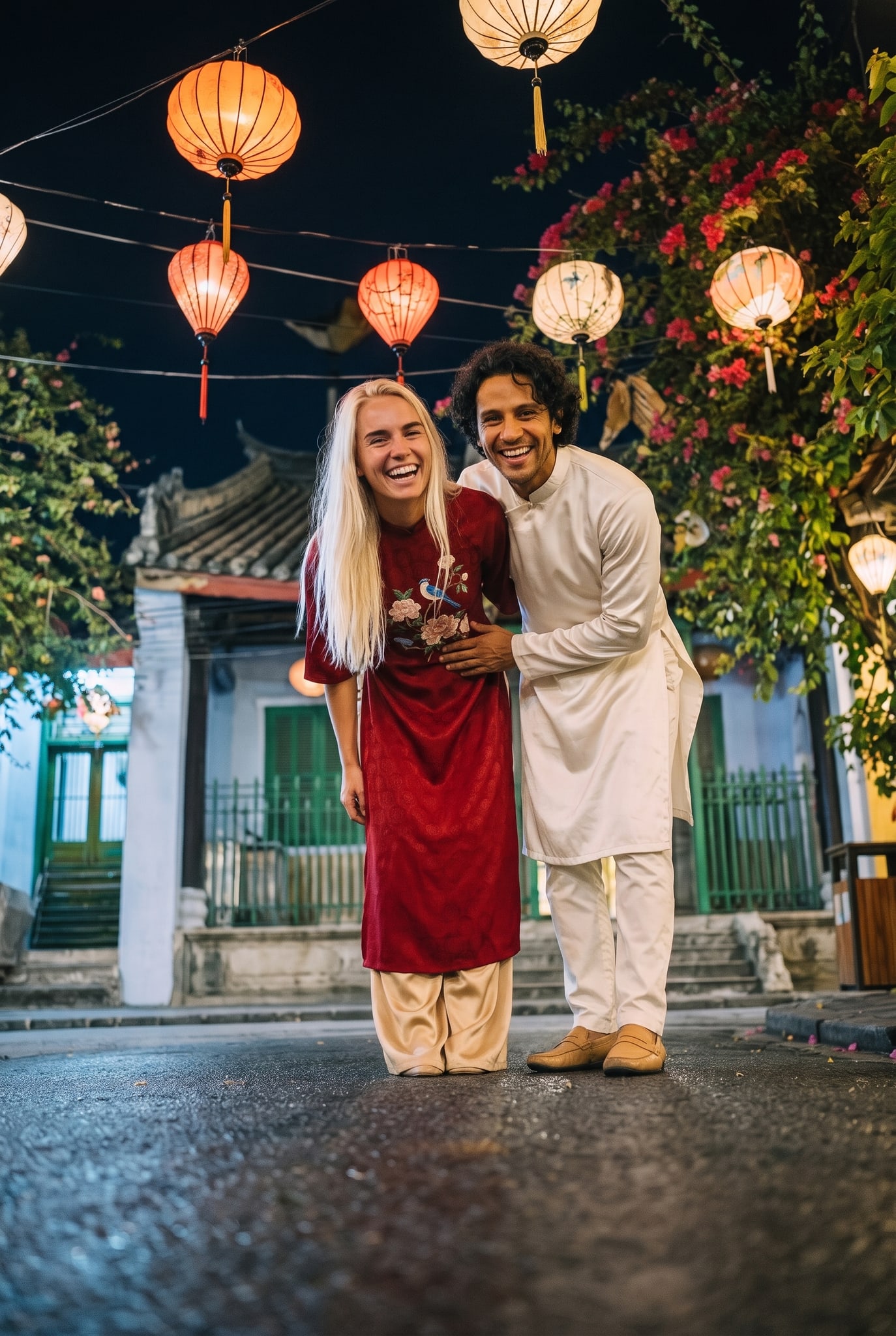
At 3,300 metres, air is thin, skin dries fast, and makeup sets unevenly. Wind gusts up to 40 km/h (based on our shoot logs from June–September). Our makeup artist arrives 10 minutes before you to reapply powder and lip colour after the drive. We use long-wear formulas and set spray; standard makeup fails within 30 minutes. Your stylist will pin ao dai hems to prevent wind blow and double-check belt knots. Guests often shiver visibly in photos—genuine cold, not pose tension. We bring a windbreaker for you to wear between shots; remove it 10 seconds before we shoot. Hair tangles fast in wind. We style you in the jeep just before arrival so you step out camera-ready. If you're doing hair and makeup at your hotel beforehand, expect to redo lips and base once you reach the pass. Many guests book makeup and hair at your hotel the morning of the shoot, which gives us control over the final look and timing.
What's the real timeline from 6:30 a.m. to sunset?
| Time | What happens | What you do |
|---|---|---|
| 6:30 a.m. | Meet at central Sapa or hotel | Bring ID, snacks, water, extra layers |
| 7:00 a.m. | Depart town in jeep | Sit back, rest, expect motion sickness |
| 7:45 a.m. | 15 min below pass (we radio ahead) | Text us a photo so we know you're coming |
| 8:00–8:15 a.m. | Arrive pass, find flat rock setup | We scout light and wind direction |
| 8:20–8:40 a.m. | Makeup touch-up, hair check, wardrobe | You change into ao dai or formal wear |
| 8:45 a.m.–12:30 p.m. | Main photoshoot (3.75 hours) | Poses, walks, close-ups, outfit changes |
| 12:30–1:30 p.m. | Lunch in jeep or descend to town | Rest, eat, hydrate |
| 1:30–4:00 p.m. | Second location (nearby pass or Sapa town) | Lighter outfit, softer light, candid shots |
| 4:00–5:30 p.m. | Return to town, final touch-ups | Debrief, collect keychains or prints (if ordered) |
We stick to this frame even if clouds roll in; bad light means we shift to silhouette shots or black-and-white and keep shooting. Sunset at O Quy Ho is 5:45 p.m. in December and 7:15 p.m. in June, so timing varies. We always depart the pass by 5:00 p.m. to avoid dark descent.
See packages and prices on vietnamphotoshoot.com
How do you choose between hiring a private jeep, tour operator or shared ride?
Private jeep with driver: You hire a Sapa-based driver for the full day (7–8 hours). They wait at the pass for us and drive you to secondary locations. Cost depends on vehicle size and operator; ask a hotel concierge or Sapa tour desk for referrals. Advantage: flexibility, no rush, your pace. Disadvantage: higher cost, you manage the booking. Tour operator (guided group): A local company picks you up and takes 8–15 people to the pass in a van or minibus. Cheaper per person but crowded, fixed schedule, hard to reschedule. We've shot with guest groups on paid tours; we wait for your group and shoot when others are resting. Not ideal for intimate couple shoots. Shared jeep: 4–6 tourists in one jeep, usually booked the night before. Middle-ground cost and flexibility. We recommend shared jeep if you're solo or a couple on a tight budget; private jeep if you're a family or want a full day without strangers. Ask us on WhatsApp which option fits your pre-wedding photoshoot package and we'll give you Sapa operator contacts.
What goes wrong most often and how do we fix it?
Weather closes the pass (1–2 days per season). Mist rolls in after 11:00 a.m., visibility drops, and the road becomes unsafe. We reschedule for the next clear day at no extra cost and shoot a backup location in Sapa town (churches, waterfalls, rice terraces). Guest arrives too late. They sleep in or their jeep breaks down. We wait up to 30 minutes; after that, light is lost and we move to town. Always set a 6:15 a.m. alarm. Makeup runs in cold wind. We use waterproof mascara and primer; standard cosmetics don't last. If your makeup artist in town used non-long-wear products, tell us immediately and we'll redo it free at the pass. Altitude sickness. Rare, but headaches and nausea happen. Sit down, drink water, breathe slowly. If severe, descend 200 metres and we continue there. Jeep driver doesn't know where to meet us. We send GPS coordinates (Sapa town marker, not the pass itself for safety) and a backup phone number. Share this with your driver the night before. Outfit is too light or wrong colour. Dark colours absorb cold and look heavy; pastels blow in wind and lose shape. Bring thick fabrics (silk blend, structured cotton) and a jacket for between shots. We tell you this 5 days before in our WhatsApp brief.
What should you check before you book a shoot at O Quy Ho?
Before committing to an O Quy Ho session, confirm with us:
- Your fitness level: can you walk on uneven rocky terrain for 3 hours without rest? If no, we suggest vacation and solo photoshoot in Sapa town instead.
- Outfit: do you have long dresses or formal ao dai that won't tear on rocks? Bring two options, one heavy and one light.
- Dates: avoid August–October if heavy rain is a concern (passes close 2–5 times that season based on local reports). November–May is most reliable.
- Transport budget: ask your hotel for jeep rates and factor it into your pre-wedding photoshoot planning.
- Acclimatization time: arrive in Sapa one day early if you live at sea level; altitude hits hard at 3,300 metres.
- Insurance: confirm your jeep or tour operator carries liability coverage.
Message us on WhatsApp with these details and we'll tell you if O Quy Ho is right for your vision, or if special concept shoot locations in Ninh Binh, Hoi An or Hanoi suit you better.
FAQ
Can we do the O Quy Ho shoot in winter (December–February)?
Yes, and light is often clearest then. Bring heavy coats and thermal layers; it freezes at night and wind is fierce. Morning shoots (7:00–11:00 a.m.) are best. Confirm with us that we have a heated transport option because our team feels it too.
What if our jeep driver doesn't speak English?
Provide him with our WhatsApp number, the pass GPS coordinate (21.3437, 103.8396), and a printed photo of our team. We'll call or text him directly. We speak Vietnamese and English; communication is always possible.
Do you offer transport as part of the photoshoot package?
No. You arrange your own jeep or tour. We meet you at the pass. This keeps costs transparent and lets you choose comfort level and timing. We can recommend drivers after you book.
How many outfit changes can we fit into a 4-hour pass session?
Two outfit changes maximum. Changing clothes on a windy exposed pass takes 10–15 minutes per outfit, and we lose daylight fast. Plan one formal ao dai and one casual or ethnic wear look. Bring both in the jeep.
Will our ao dai get damaged on the rocky terrain?
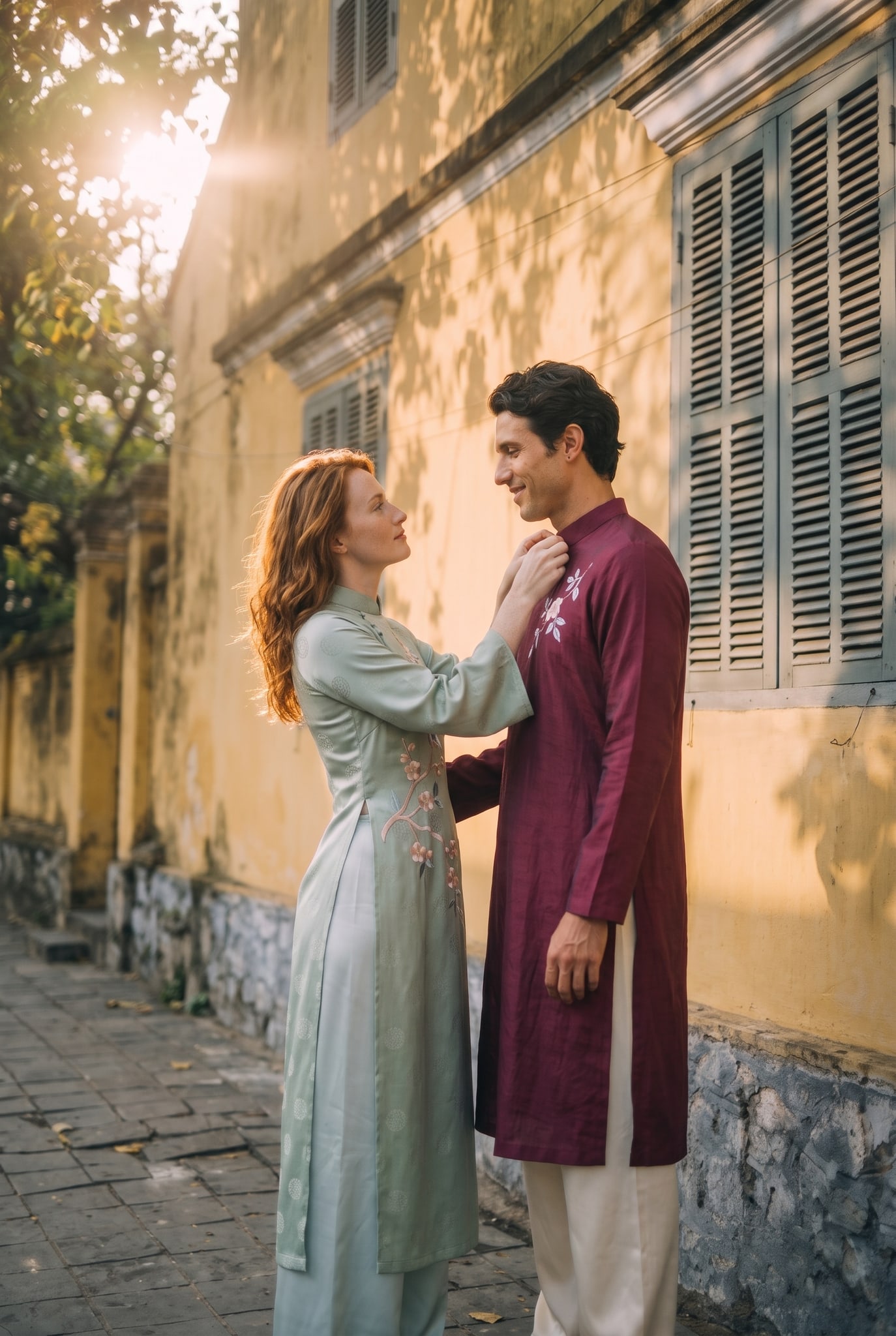
Minor snags happen. Bring needle and thread or a small repair kit. Avoid white or pale silk; they show dirt instantly. Darker ao dai or structured cotton fabrics hold up better. We'll pin hems and check seams before each shot.
What happens if we arrive at the pass and hate the location?
It happens—cloud cover, crowds, weather. We have three backup rock formations on the same ridge (5 minutes' walk apart) and can pivot within 10 minutes. If all feel wrong, we descend to Sapa town and reshoot that afternoon. Flexibility is built into our timeline.
Pre-Wedding & Elopement
Inclusions, prices and booking are on our booking site.
FAQ
Can we do the O Quy Ho shoot in winter (December–February)?
Yes, and light is often clearest then. Bring heavy coats and thermal layers; it freezes at night and wind is fierce. Morning shoots (7:00–11:00 a.m.) are best. Confirm with us that we have a heated transport option because our team feels it too.
What if our jeep driver doesn't speak English?
Provide him with our WhatsApp number, the pass GPS coordinate (21.3437, 103.8396), and a printed photo of our team. We'll call or text him directly. We speak Vietnamese and English; communication is always possible.
Do you offer transport as part of the photoshoot package?
No. You arrange your own jeep or tour. We meet you at the pass. This keeps costs transparent and lets you choose comfort level and timing. We can recommend drivers after you book.
How many outfit changes can we fit into a 4-hour pass session?
Two outfit changes maximum. Changing clothes on a windy exposed pass takes 10–15 minutes per outfit, and we lose daylight fast. Plan one formal ao dai and one casual or ethnic wear look. Bring both in the jeep.
Will our ao dai get damaged on the rocky terrain?
Minor snags happen. Bring needle and thread or a small repair kit. Avoid white or pale silk; they show dirt instantly. Darker ao dai or structured cotton fabrics hold up better. We'll pin hems and check seams before each shot.
What happens if we arrive at the pass and hate the location?
It happens—cloud cover, crowds, weather. We have three backup rock formations on the same ridge (5 minutes' walk apart) and can pivot within 10 minutes. If all feel wrong, we descend to Sapa town and reshoot that afternoon. Flexibility is built into our timeline.
More from the team
Pre-wedding photoshoot in Phu Quoc June: weather, light, crowds
June is Phu Quoc's monsoon season. Our studio has shot dozens of couples there in early summer—here's what weather and crowds really mean for your pre-wedding day.
Pre-wedding photoshoot in Phu Quoc July: weather, light, crowds
July is Phu Quoc's wet season, but it opens creative possibilities: moody skies, empty beaches after storms, and dramatic backlighting. We'll walk you through what happens on the ground.
Pre-wedding photoshoot in Phu Quoc November: weather, light, crowds
November is peak season for pre-wedding shoots in Phu Quoc: weather is stable, light is soft, but crowds peak mid-month. We share what our team sees on the ground.