 Cáo Studio
Home › Blog › Pre-Wedding & Elopement
Groom ao dai rental in Hanoi: What to check before you order
By the Cáo Studio team · Hanoi & Saigon · 2026-11-02
A groom ao dai rental in Hanoi is a formal tunic-and-trouser set you hire for 1–3 days, usually for pre-wedding photography or ceremonies. Cáo Studio sources rental pieces from Hanoi tailors in the Old Quarter and Hoan Kiem district; most rentals run 24–48 hours and include steaming and minor repairs. Cost varies by fabric (silk damask, cotton jacquard, embroidered detail) and fit level (off-rack vs. custom alteration). The key difference is whether you rent ready-to-wear or commission a made-to-measure piece with lead time. Most grooms rent traditional navy or black ao dai with matching trousers; some pairs add hand-embroidered panels or family-heritage motifs. Before ordering, confirm chest and shoulder measurements, check the steaming and alteration timeline, and ask if your rental includes a turban or accessory set. Cáo Studio coordinates rentals as part of pre-wedding photoshoot bookings; our team handles fitting at our Hanoi studio or your hotel. Chat with us on WhatsApp | See packages and prices on vietnamphotoshoot.com
Why renting beats buying for a one-time shoot
Buying a new ao dai ties up budget and storage space. Renting lets you choose heritage fabrics—Dong Xuan silk damask, hand-woven linen from Hue—without the cost of ownership. We've noticed grooms who rent often pick heavier, more photogenic textiles because they're confident the rental includes steaming and fitting. A rental piece shows creases less on camera and arrives fresh; a new purchase sometimes shows fold marks or warehouse dust in close-ups. Rental also means tailors handle all repairs: torn seams, loose buttons, shrunken hems from humidity. One groom in District 5 discovered his personal ao dai had dye bleeding in June heat; the rental backup saved the morning. The rental strategy works best when you book 2–3 weeks ahead so tailors have time to fit and steam properly.
What size and fit checks we do before a shoot
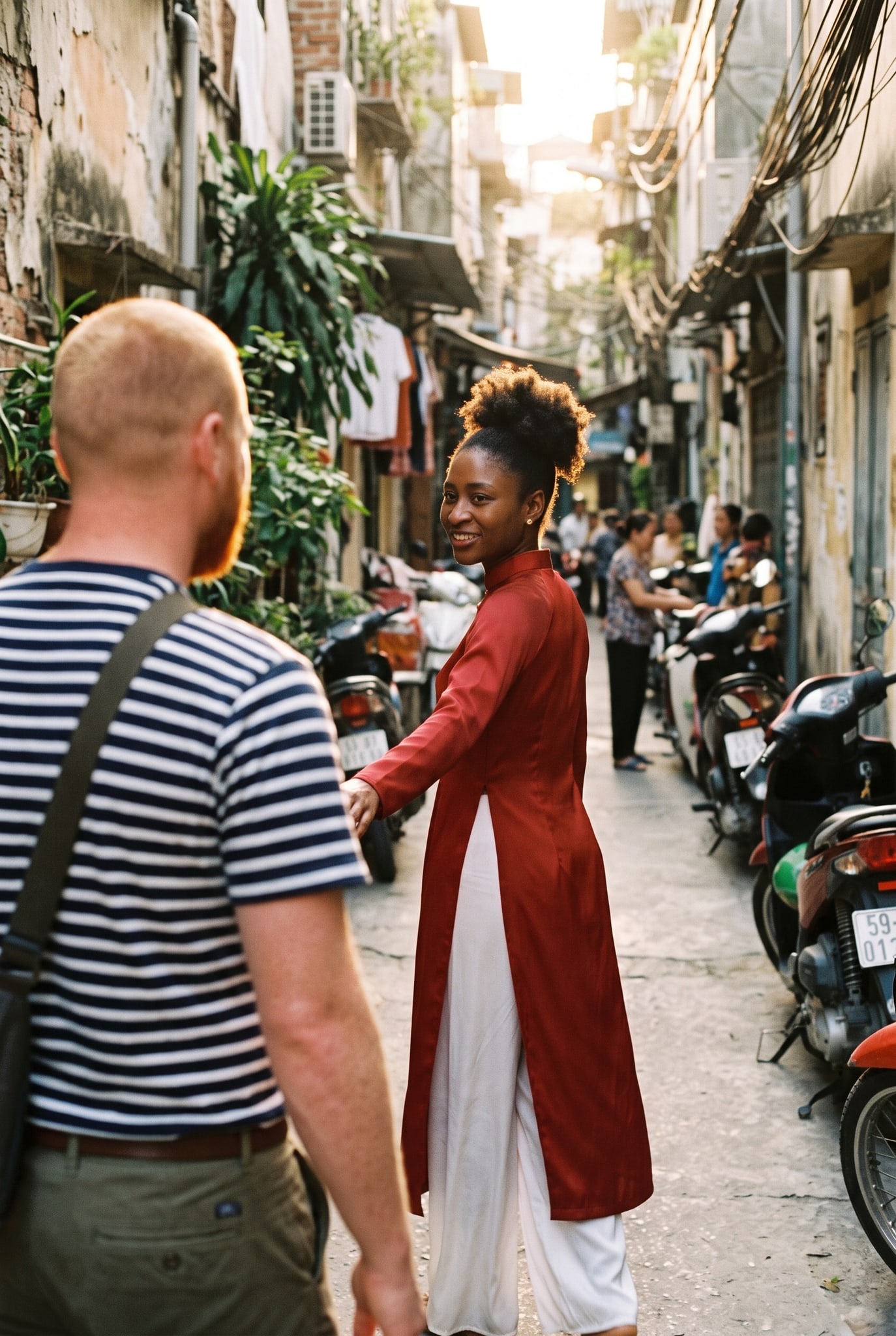
We measure every groom at the first fitting. Chest, shoulder width, sleeve length from neck to wrist, and trouser inseam are non-negotiable. Many Hanoi rental ao dai run narrow in the shoulders—tailored for a 1970s silhouette—so modern grooms often need letting out or a size up. We've had three grooms arrive oversized because they guessed their shirt size instead of measuring; the tailor had only four hours before the shoot. Shoulder width matters most: if too tight, the ao dai restricts arm movement in photos and the groom tenses up. We ask grooms to wear the shoes they'll use in the shoot during the final fitting so inseam stays accurate. Collar fit should let one finger slide under comfortably. Sleeve length stops at the wrist bone, not the palm. One couple booked a formal set with hand-embroidery but didn't mention the groom had broad shoulders; we added 2 cm side seams the day before, but that cost extra time and stress.
Rental timeline: When to book and what happens
Most Hanoi tailors need 10–14 days to fit, alter, and steam a rental ao dai properly. If you book 3–4 weeks before your shoot, you get first pick of fabrics and ample time for a second fitting if the first doesn't fit. Book less than one week out and tailors may have limited stock or rush fees. Here's what the timeline looks like: Week 1, you confirm booking and send measurements; Week 2, the tailor finds a matching piece and does the first fitting; Week 3, alterations and a steam-press happen; 2–3 days before the shoot, you do a final check at the studio or hotel. We once had a groom book five days before his shoot; the tailor had only one silk ao dai in his size, it needed a 3 cm hem, and we couldn't get a second fitting until the morning of the shoot. The groom was nervous about the fit, and it showed in his posture. Build in buffer time: if the tailor is busy or the first piece doesn't fit, you have backup days.
Comparing rental fabrics and styles for photos
Different fabrics photograph differently in natural and studio light. Silk damask (the traditional choice) has a subtle sheen that catches soft morning light beautifully; it's heavy and holds its shape during movement. Cotton jacquard is lighter, cooler in Hanoi humidity, and less reflective—good for outdoor shoots in peak sun. Linen blends look textured up close but wrinkle faster, meaning more steaming between outfit changes. Embroidered ao dai (with silk or rayon thread detail) add cultural richness and photograph with depth, but embroidery catches light unevenly and can read as "busy" in full-body shots; they suit closer, slower poses. We recommend silk damask for classic, timeless photos (best for album covers, wall prints); cotton or linen for relaxed, movement-heavy shoots (good for film-style sequences); and embroidered pieces as accent outfits, not the primary look. One groom chose a three-panel embroidered piece for his first outfit; by the second hour of outdoor shooting, the groom felt the weight and stopped moving naturally. We switched to a plain silk piece for the main portraits, and the difference was visible in every frame.
| Fabric type | Best for | Durability on rental | Photo look | Humidity performance |
|---|---|---|---|---|
| Silk damask | Timeless, formal portraits | High (holds shape) | Deep, rich sheen | Can stick in heat |
| Cotton jacquard | All-day variety, movement | Medium (wrinkles slightly) | Matte, natural | Breathes well |
| Embroidered detail | Heritage, cultural emphasis | Medium (thread tangles) | Textured, bold | Heavy, warm |
| Linen blend | Casual, editorial style | Low (creases easily) | Organic, raw | Very breathable |
Rental extras and what's often forgotten
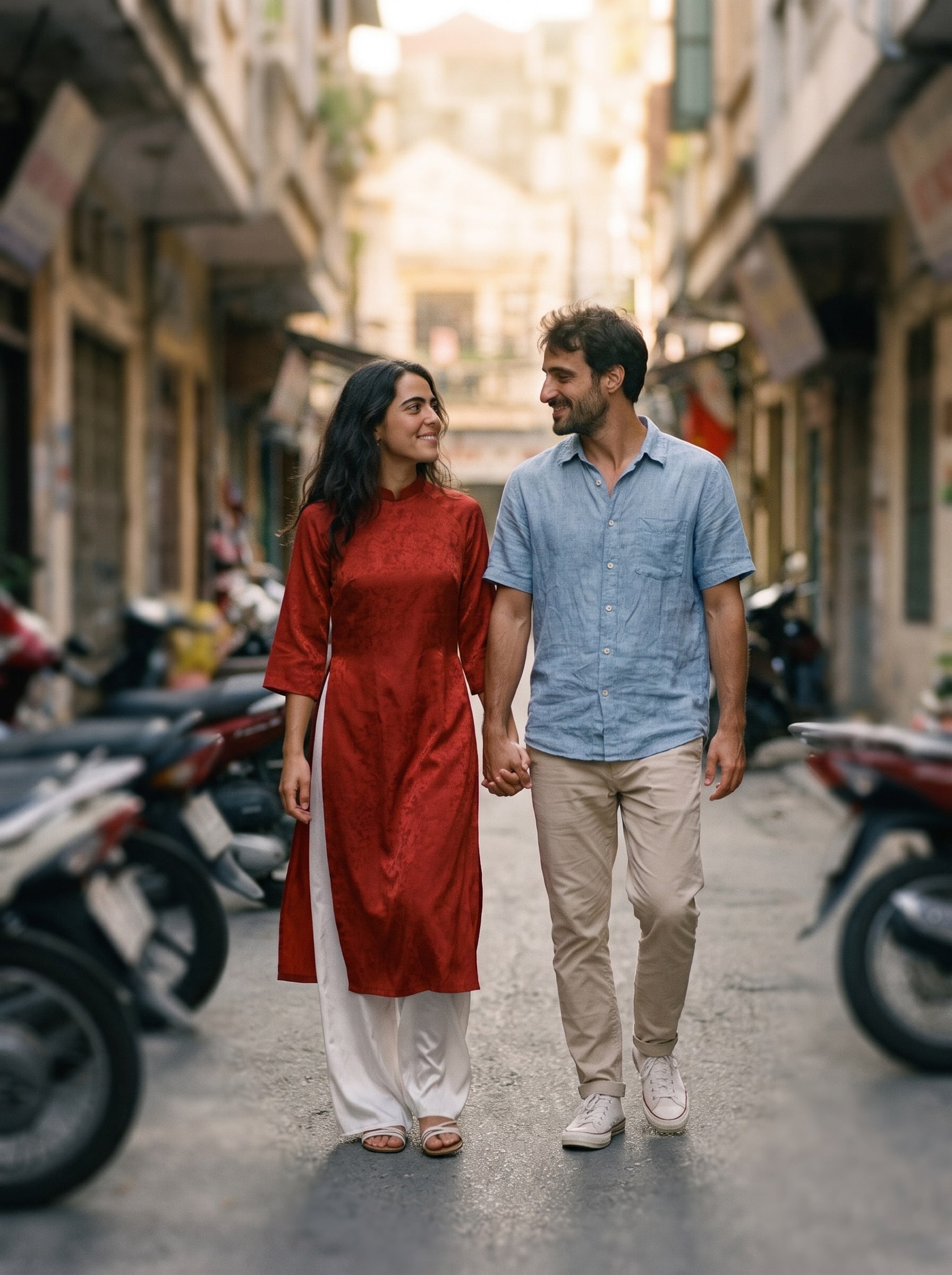
Most Hanoi ao dai rentals include the tunic and matching trousers, steaming, and basic repair. Some include a turban or headwrap (optional for grooms, traditional for formal ceremonies). Few rentals include shoes, socks, or undershirt—confirm before booking. Undershirts matter: a white cotton undershirt under dark silk prevents shine-through on the chest and back, and dark undershirts under light fabrics prevent shadows. We suggest each groom bring his own white undershirt so fit is guaranteed. Shoes should be dark leather (black or burgundy) and already broken in; new shoes photograph stiffly and feel uncomfortable during a 6–8 hour shoot. One groom borrowed formal shoes for the first time on shoot day; by hour four, his posture changed because his feet hurt, and it showed in the photos. We now recommend testing shoes for at least two hours before booking. Belts are usually not worn with ao dai (the tunic sits loose), but if your shoot includes hybrid modern-traditional styling, clarify with the tailor. Accessory packages (turban, decorative pins, family medals) are sometimes available separately; ask your tailor what's standard.
What to check before placing a rental order
Create a checklist before you confirm with the tailor. Write down your chest measurement (measure across the back, armpit to armpit), shoulder width (bone to bone), sleeve length (neck base to wrist bone), trouser inseam (hip to ankle), and shoe size for reference. Confirm the rental period in writing: how many days, what time you pick up, what time you return, and whether late return has fees. Ask if the price covers steaming and minor repairs, or if those are extra. Confirm the fabric type and color (ask for a photo, not just a description). Clarify the fitting schedule: can you do two fittings, and is the second one included? Ask if the tailor has a backup piece in your size in case the first doesn't fit. Request a written alteration list so you know exactly what changes are planned. One couple booked a rental, agreed on "standard fit," and discovered the tailor interpreted that differently; the second fitting was rushed and still felt tight. A written checklist would have caught that mismatch. Finally, ask about cancellation: if your shoot rescheduled, could you move the rental dates, and is there a fee?
Getting your rental ao dai to the shoot location
If you book through Cáo Studio's pre-wedding package, we coordinate with the tailor on delivery. Most tailors in Hanoi deliver to our studio in Hoan Kiem district or to your hotel in District 1, Ba Dinh, or Dong Da (usually within 48 hours of the shoot, no extra charge). If you rent independently, arrange to pick up the ao dai at least one day before the shoot and inspect it fully: check seams, test the fit with shoes, walk around, and confirm all alterations match your notes. If anything is wrong, contact the tailor immediately while they can still make fixes. We've had one rental arrive with a loose shoulder seam that we discovered 30 minutes before shooting; we hand-stitched it in the studio green room, but it was stress we could have avoided. Protect the ao dai during transport: use a cloth garment bag, not plastic (plastic traps moisture and can cause wrinkles or mildew). If your shoot spans two days, ask the tailor if you can return it for overnight cleaning and steaming, or if you should keep it. Most tailors offer overnight steaming for a small fee if you return it the night of day one.
Chat with us on WhatsApp | See packages and prices on vietnamphotoshoot.com
For a comprehensive pre-wedding experience that includes styling, makeup, and photography, explore our couple photoshoot options. If your groom needs makeup and hair coordination at your hotel, we offer on-location makeup and hair services that work seamlessly with rental ao dai. You can also see how groom ao dai looks in context with our ao dai photoshoot gallery.
FAQ
How far in advance should I book a groom ao dai rental in Hanoi?
Book 2–4 weeks ahead. Tailors need 10–14 days for fitting, alterations, and pressing. Booking sooner means limited fabric choices; booking later risks rush fees or unavailable sizes. Work with Cáo Studio, and we coordinate the timeline with our tailor partners.
What's the difference between renting and buying an ao dai for my pre-wedding shoot?
Rental saves cost, guarantees fresh pressing, and includes tailor support on fitting day. Buying ties up budget and requires storage. For a one-time shoot, rental is practical; for multiple formal events, buying may pay off later.
Do I need to bring my own undershirt and shoes for the rental fitting?
Yes. Bring the undershirt and shoes you'll wear in the shoot. This ensures the tailor measures inseam and sleeve length correctly and prevents fit surprises on shoot day.
What happens if the rental ao dai doesn't fit properly on shoot day?
Contact the tailor immediately. If it's minor (loose seams, short cuffs), we can fix it in-studio before shooting. If it's major, you may need a backup piece, which is why booking early and fitting twice is important.
Are shoes, turban, and accessories included in an ao dai rental?
Usually no. Most rentals cover the tunic and trousers, steaming, and basic repair only. Shoes, undershirt, turban, and decorative pins are typically extra or bring-your-own. Confirm with your tailor before booking.
Can I rent an ao dai if I'm not doing a Cáo Studio photoshoot?
Yes, you can rent independently from Hanoi tailors in the Old Quarter and Hoan Kiem. But if you book a shoot with Cáo Studio, we handle rental coordination, fitting, and delivery as part of your package, removing the coordination stress.
What should I do if my pre-wedding shoot gets rescheduled?
Contact the tailor as soon as possible. Most allow date changes if you give notice. Confirm the new rental period, any fees, and whether the ao dai can be held or returned for a credit. Cáo Studio helps manage these conversations.
Pre-Wedding & Elopement
Inclusions, prices and booking are on our booking site.
FAQ
How far in advance should I book a groom ao dai rental in Hanoi?
Book 2–4 weeks ahead. Tailors need 10–14 days for fitting, alterations, and pressing. Booking sooner means limited fabric choices; booking later risks rush fees or unavailable sizes. Work with Cáo Studio, and we coordinate the timeline with our tailor partners.
What's the difference between renting and buying an ao dai for my pre-wedding shoot?
Rental saves cost, guarantees fresh pressing, and includes tailor support on fitting day. Buying ties up budget and requires storage. For a one-time shoot, rental is practical; for multiple formal events, buying may pay off later.
Do I need to bring my own undershirt and shoes for the rental fitting?
Yes. Bring the undershirt and shoes you'll wear in the shoot. This ensures the tailor measures inseam and sleeve length correctly and prevents fit surprises on shoot day.
What happens if the rental ao dai doesn't fit properly on shoot day?
Contact the tailor immediately. If it's minor (loose seams, short cuffs), we can fix it in-studio before shooting. If it's major, you may need a backup piece, which is why booking early and fitting twice is important.
Are shoes, turban, and accessories included in an ao dai rental?
Usually no. Most rentals cover the tunic and trousers, steaming, and basic repair only. Shoes, undershirt, turban, and decorative pins are typically extra or bring-your-own. Confirm with your tailor before booking.
Can I rent an ao dai if I'm not doing a Cáo Studio photoshoot?
Yes, you can rent independently from Hanoi tailors in the Old Quarter and Hoan Kiem. But if you book a shoot with Cáo Studio, we handle rental coordination, fitting, and delivery as part of your package, removing the coordination stress.
What should I do if my pre-wedding shoot gets rescheduled?
Contact the tailor as soon as possible. Most allow date changes if you give notice. Confirm the new rental period, any fees, and whether the ao dai can be held or returned for a credit. Cáo Studio helps manage these conversations.
More from the team
Boho pre-wedding photoshoot in Vietnam: Hanoi, Saigon, Hoi An
Boho pre-wedding shoots mix romantic, free-spirited aesthetics with Vietnam's landscapes and heritage sites. We run full-day sessions in three cities, handling styling, makeup, location scouts and edits.
Avoid crowds at Hoang Su Phi rice terraces: timing for wedding shoots
Hoang Su Phi's terraced landscape draws couples and tour buses in equal measure. We show how to shoot there alone, when to arrive, and what to arrange with us before you go.
Photography rules at Con Dao beaches: permits, drones and what to check
Con Dao's beaches demand prep before you shoot—permits, drone zones and tide timing all affect your day. We share what the Cáo Studio team verifies on every booking.