 Cáo Studio
Home › Blog › Pre-Wedding & Elopement
Groom Outfits for Wedding Photos in Vietnam
By the Cáo Studio team · Hanoi & Saigon · 2026-11-01
Vietnamese wedding photography opens three authentic paths for grooms: the ao dai (long silk tunic, traditionally white, cream or soft pastels for weddings), the khan dong (draped cloth wrap tied at the waist, bold and sculptural), and tailored suits (modern, flexible for mixed couple looks). Ao dai photographs cleanly in soft light and works year-round; khan dong demands confident styling and suits warm-season shoots in studios or formal grounds. Cáo Studio dresses grooms across all three on the same shoot—we build a mood board during the consultation, test fits one week before, and bring a backup set on shoot day because humidity and movement shift how fabric reads. Western couples often pair the groom in suit with bride in ao dai to honor Vietnam's tradition without both matching. Most grooms wear one outfit for 60–90 minutes per location; we've learned that sitting down in silk requires a practice run or wrinkles show in frame. Chat with us on WhatsApp
What makes an ao dai photograph so differently than a Western suit?
The ao dai catches and holds light like no tailored jacket does. Its vertical seams elongate the frame; the fabric drapes without hugging, so it flatters most body types on camera. A suit compresses the torso and reads "formal Western," which anchors the mood to cosmopolitan energy. We've shot the same groom in both on back-to-back days—the ao dai made him look taller and more relaxed, the suit made him look powerful and structured. For soft-focus romantic backdrops (riverside gardens in Hoi An, parks near Tao Đàn in Hanoi), ao dai wins. For sharp architectural backgrounds (hotels, city streets, modern restaurants), suits hold their own. Choose based on the bride's outfit and the location's character, not tradition alone.
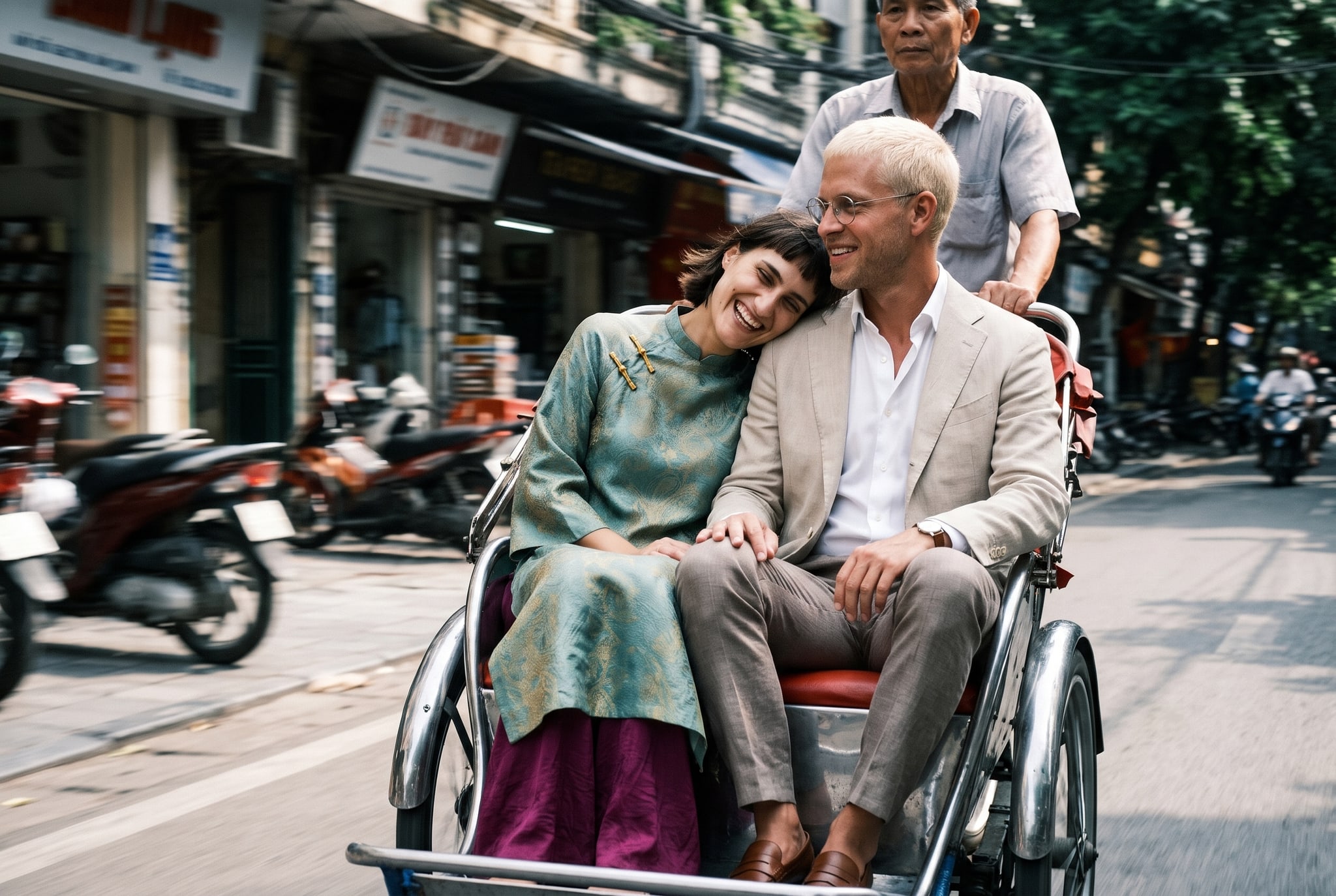
How do you prevent wrinkles and sweat stains during a groom shoot?
We iron the ao dai two hours before the shoot and layer a thin, breathable undershirt beneath it—never bare skin. For suits, we use a tailored lining to wick moisture and bring a steamer in the van. During the shoot, we pause every 20 minutes for a touch-up: our styling team checks the collar, smooths fabric where the groom sat, and dabs his neck with blotting paper, not a cloth. On humid days in Saigon (May–October), we've learned to schedule shoots before 10 a.m. or after 4 p.m., and we position the groom in shade until the camera is ready. Wet patches kill the mood in playback; prevention saves three hours of retouching later.
Should the groom wear traditional khan dong for a pre-wedding shoot?
Khan dong is striking if the groom owns it already or the couple has deep ties to Northern Vietnamese heritage—otherwise, rent one, not buy. We've styled khan dong for maybe 15 % of our groom shoots; it reads powerfully in portraits but limits movement and works best in controlled studio light or morning golden hour. The fabric is stiff and hot; it doesn't suit running, jumping or intimate couple poses. If the couple wants a khan dong portrait, we shoot it first (while the groom is fresh), then change him into an ao dai or suit for the action sequences. One groom in Ninh Binh wore khan dong for a single frame with his bride in traditional áo tài; that shot became their favorite because it was uncommon and tied to their family story.
What's the fastest way to decide between three outfit options?
Create a two-minute mood board: gather five to ten reference images of groom outfits you love (Pinterest, Instagram, Vietnamese wedding blogs), and note the background (garden, beach, urban, temple). Share these with Cáo Studio via WhatsApp during booking. Our stylists will say which fabrics and colors will photograph best in your chosen locations and which fit your bride's look. If you're torn between ao dai and suit, ask yourself: Do I want to feel Vietnamese-rooted or cosmopolitan? The answer usually points the way. We've never had a groom regret switching after seeing a Zoom preview; we've had many regret not renting a second outfit because one became his favorite and he wanted more frames in it.
See packages and prices on vietnamphotoshoot.com
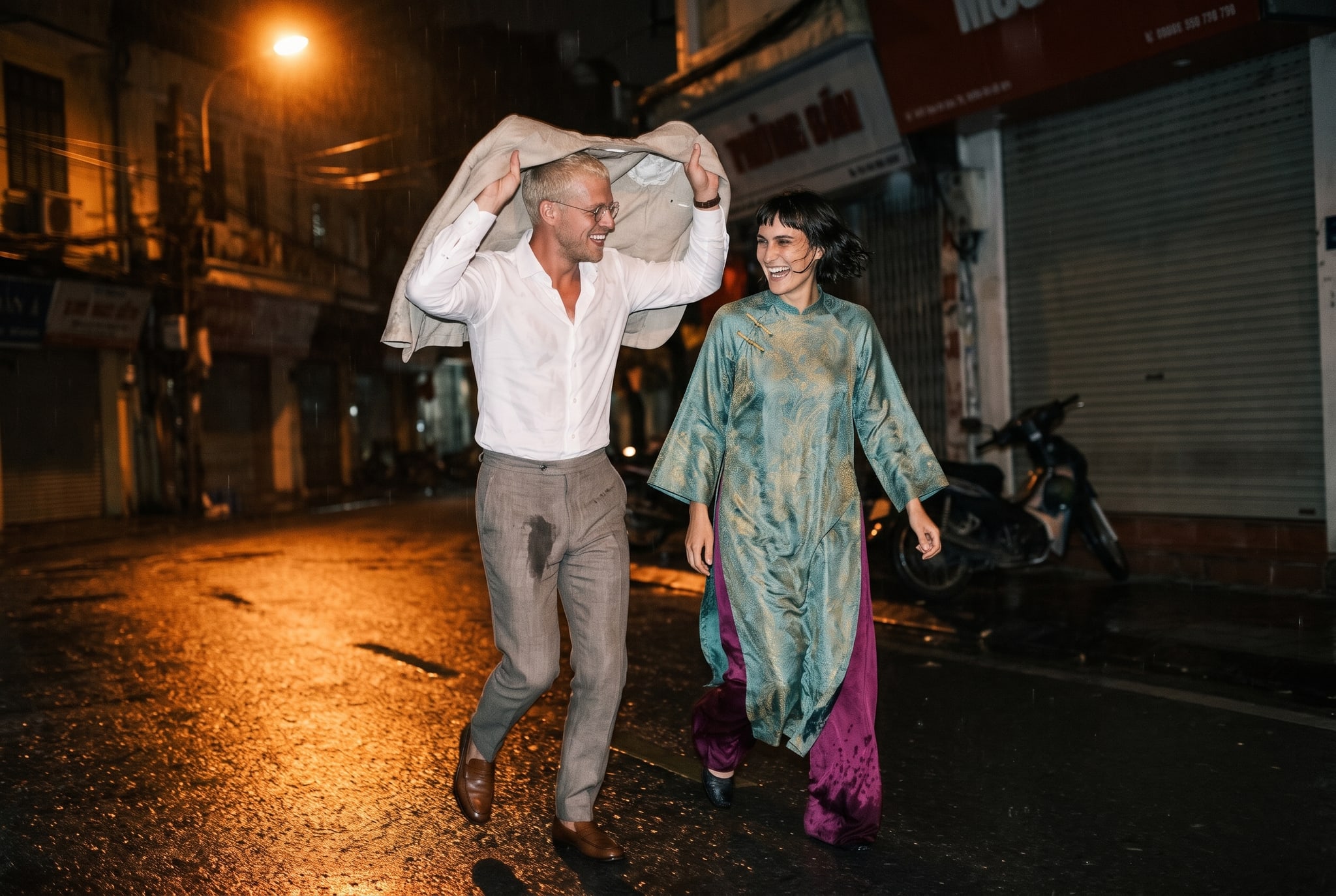
How does the groom outfit choice affect the overall shoot schedule?
Changing clothes eats 10–15 minutes per outfit. If you plan three looks (ao dai, khan dong, suit), budget 30–45 minutes for wardrobe changes, steaming and touch-ups—this compresses shooting time at each location. We often suggest two outfits and four locations instead of three outfits and three locations; you get better light and more frames per mood. For a pre-wedding shoot package, the groom typically wears one or two outfits. If you want three, ask us when you book—we may suggest a longer session or a second day. Switching at a calm spot (hotel room, homestay, restaurant bathroom) beats switching outdoors; we've had ao dai hems snagged on rough stone walls and sweat-soaked suits picked up dust while being re-buttoned in an open courtyard. Plan for quiet, clean transitions.
A Quick Fit and Fabric Comparison
| Outfit Type | Best Light & Season | Movement Range | Wrinkle Risk | Setup Time | Couple Pairing |
|---|---|---|---|---|---|
| Ao dai | All seasons, soft/golden hour | High (long walks, poses) | Medium | 5 min | Bride in ao dai, suit or Western dress |
| Khan dong | Golden hour, sunrise (cool) | Low (portraits, standing) | Low (stiff) | 10 min | Bride in traditional áo tài or ao dai |
| Western suit | Sharp light, studios, noon | Medium (sitting poses best) | High (humidity) | 8 min | Bride in ao dai, white gown, modern dress |
What to check before your groom outfit shoot
- Fit first. Rent or buy one week before and wear it for two hours at home—sitting, standing, walking. If it pinches or shifts, alter it or choose another.
- Fabric source. Silk ao dai wrinkles easily; linen blends breathe better in heat. Ask the rental shop which blend they recommend for your shoot season.
- Color against skin. Cream and white ao dai suit fair and medium skin tones well; pastels suit deeper tones better. Bring a photo of the fabric to your hotel room and check it in natural light.
- Bride's look. Confirm with your bride's outfit before finalizing yours—if she's in white, your ao dai should be soft (cream, pale yellow, pale blue), not bright white.
- Steaming on location. If you're shooting far from central Hanoi or Saigon (Ninh Binh, Mekong Delta, Hoi An), ask us to bring a compact steamer or plan outfit changes during rest breaks.
- Backup footwear. Formal shoes (leather loafers, dress shoes) show in some frames; keep casual shoes in the car for movement shots.
We outfit grooms across couple photoshoots in Hanoi, Saigon, Hoi An and Ninh Binh. Most grooms don't know what they want until they see themselves in a fitting mirror; that's why we require a styling consultation before the shoot day. We pull samples, check skin tone and body type, and propose a primary outfit plus a backup. If the groom is traveling and can't try clothes beforehand, we video-call during fitting and adjust based on real-time feedback. The goal is confidence—a relaxed groom photographs better than a formal one, regardless of what he's wearing.
Start by chatting with our team on WhatsApp with your date, locations and outfit ideas. We'll send you a questionnaire, pull samples, and book your pre-wedding session with enough time for fittings and rental lead time. If you're in Vietnam and need makeup and hair service to pair with your outfit, we offer on-location styling at your hotel or our studio.
Pages from our team you may need
FAQ
Can we rent an ao dai for the groom if we're flying in to Vietnam?
Yes. We partner with rental shops in Hanoi and Saigon that ship ao dai and accessories to your hotel (usually within 48 hours of request). Provide your measurements via email before you arrive, and we'll have a sample ready for a fitting at our studio or your hotel. Backup rentals stay in our studio in case the first fit isn't right.
What's the honest difference in photo quality between an ao dai and a suit?
Ao dai photographs softer and more ethereal; suits photograph sharper and more formal. Neither is "better"—it depends on the mood you want. Ao dai suits romantic, intimate, garden-heavy shoots; suits suit architectural, modern, hotel-venue shoots. Most couples shoot both and love them equally.
How hot is a groom in khan dong during a photo shoot?
Very hot. Khan dong is cotton or silk layered for ceremony, not a day-long shoot. We typically shoot khan dong for 20–30 minutes (one location, one set of poses), then the groom changes. If you love khan dong, plan it as your opening outfit when the groom is fresh, not mid-day.
Should the groom wear the same ao dai color as the bride?
No. If the bride wears white or cream ao dai, the groom wears pale yellow, pale blue, or soft lavender. This creates visual separation and reads as intentional, not accidental matching. We've seen grooms in matching white outfits disappear into overexposed frames.
Can we do a quick outfit change between locations without going back to the hotel?
Yes, if you plan it. We bring a steamer in the van and change the groom in a restaurant bathroom, car, or outdoor restroom (we scout locations beforehand). It takes 10–15 minutes and keeps the shoot flowing. Outdoor changes risk dirt on fabric, so we avoid them unless necessary.
What if the groom sweats through the ao dai during the shoot?
We pause, blot his neck and chest with blotting paper, check the ao dai for wet patches (usually invisible in fabric unless very light), and spray a light setting spray. If sweat is visible, we either move to shade to let it dry, or the groom changes into the backup outfit early. This happens maybe once per 10 shoots, usually in May–September.
Pre-Wedding & Elopement
Inclusions, prices and booking are on our booking site.
FAQ
Can we rent an ao dai for the groom if we're flying in to Vietnam?
Yes. We partner with rental shops in Hanoi and Saigon that ship ao dai and accessories to your hotel (usually within 48 hours of request). Provide your measurements via email before you arrive, and we'll have a sample ready for a fitting at our studio or your hotel. Backup rentals stay in our studio in case the first fit isn't right.
What's the honest difference in photo quality between an ao dai and a suit?
Ao dai photographs softer and more ethereal; suits photograph sharper and more formal. Neither is "better"—it depends on the mood you want. Ao dai suits romantic, intimate, garden-heavy shoots; suits suit architectural, modern, hotel-venue shoots. Most couples shoot both and love them equally.
How hot is a groom in khan dong during a photo shoot?
Very hot. Khan dong is cotton or silk layered for ceremony, not a day-long shoot. We typically shoot khan dong for 20–30 minutes (one location, one set of poses), then the groom changes. If you love khan dong, plan it as your opening outfit when the groom is fresh, not mid-day.
Should the groom wear the same ao dai color as the bride?
No. If the bride wears white or cream ao dai, the groom wears pale yellow, pale blue, or soft lavender. This creates visual separation and reads as intentional, not accidental matching. We've seen grooms in matching white outfits disappear into overexposed frames.
Can we do a quick outfit change between locations without going back to the hotel?
Yes, if you plan it. We bring a steamer in the van and change the groom in a restaurant bathroom, car, or outdoor restroom (we scout locations beforehand). It takes 10–15 minutes and keeps the shoot flowing. Outdoor changes risk dirt on fabric, so we avoid them unless necessary.
What if the groom sweats through the ao dai during the shoot?
We pause, blot his neck and chest with blotting paper, check the ao dai for wet patches (usually invisible in fabric unless very light), and spray a light setting spray. If sweat is visible, we either move to shade to let it dry, or the groom changes into the backup outfit early. This happens maybe once per 10 shoots, usually in May–September.
More from the team
Boho pre-wedding photoshoot in Vietnam: Hanoi, Saigon, Hoi An
Boho pre-wedding shoots mix romantic, free-spirited aesthetics with Vietnam's landscapes and heritage sites. We run full-day sessions in three cities, handling styling, makeup, location scouts and edits.
Avoid crowds at Hoang Su Phi rice terraces: timing for wedding shoots
Hoang Su Phi's terraced landscape draws couples and tour buses in equal measure. We show how to shoot there alone, when to arrive, and what to arrange with us before you go.
Photography rules at Con Dao beaches: permits, drones and what to check
Con Dao's beaches demand prep before you shoot—permits, drone zones and tide timing all affect your day. We share what the Cáo Studio team verifies on every booking.