 Cáo Studio
Home › Blog › Ao Dai Photoshoot
Ha Giang Ao Dai Photoshoot Guide: What We Plan On-Site
By the Cáo Studio team · Hanoi & Saigon · 2026-11-01
Ha Giang ao dai photoshoots capture traditional silk áo dài against dramatic limestone and seasonal rice paddies—one of Vietnam's most photogenic provinces. Cáo Studio runs full-day sessions there using early light on Dong Van plateau and midday mist in Meo Vac valley. Most shoots run 6–8 hours including travel from Hanoi (4.5 hours each way), one outfit change, and 800–1200 edited digital files. Sessions include a stylist coordinating ao dai fit and hair touch-ups on-location, a photographer managing light and composition in high-altitude wind, and a makeup artist doing base refresh every two hours. Cost depends on group size and second outfit; solo travelers often pair with couple or family packages. The main risk: mountain weather shifts in minutes—we always scout backup locations the morning of the shoot and brief guests on WhatsApp which sites we'll use if fog rolls in. Chat with us on WhatsApp
Why we move to Ha Giang early, not mid-morning?
Morning mist in Ha Giang is real only between 5:30 and 7:30 a.m.—after that, limestone peaks emerge but lose the dreamy quality that makes ao dai luminous. We leave Hanoi at 11 p.m. or midnight, arrive by 3:30 a.m., and position at Dong Van karst by 5 a.m. Our photographer is already scouting light angles. By 7 a.m. we've shot 200 frames in soft mist before breakfast. Mid-morning shoots miss this entirely and rely on harsh overhead sun, which flattens ao dai silk and makes guests squint.
How do we manage ao dai wrinkles and wind on a mountain?
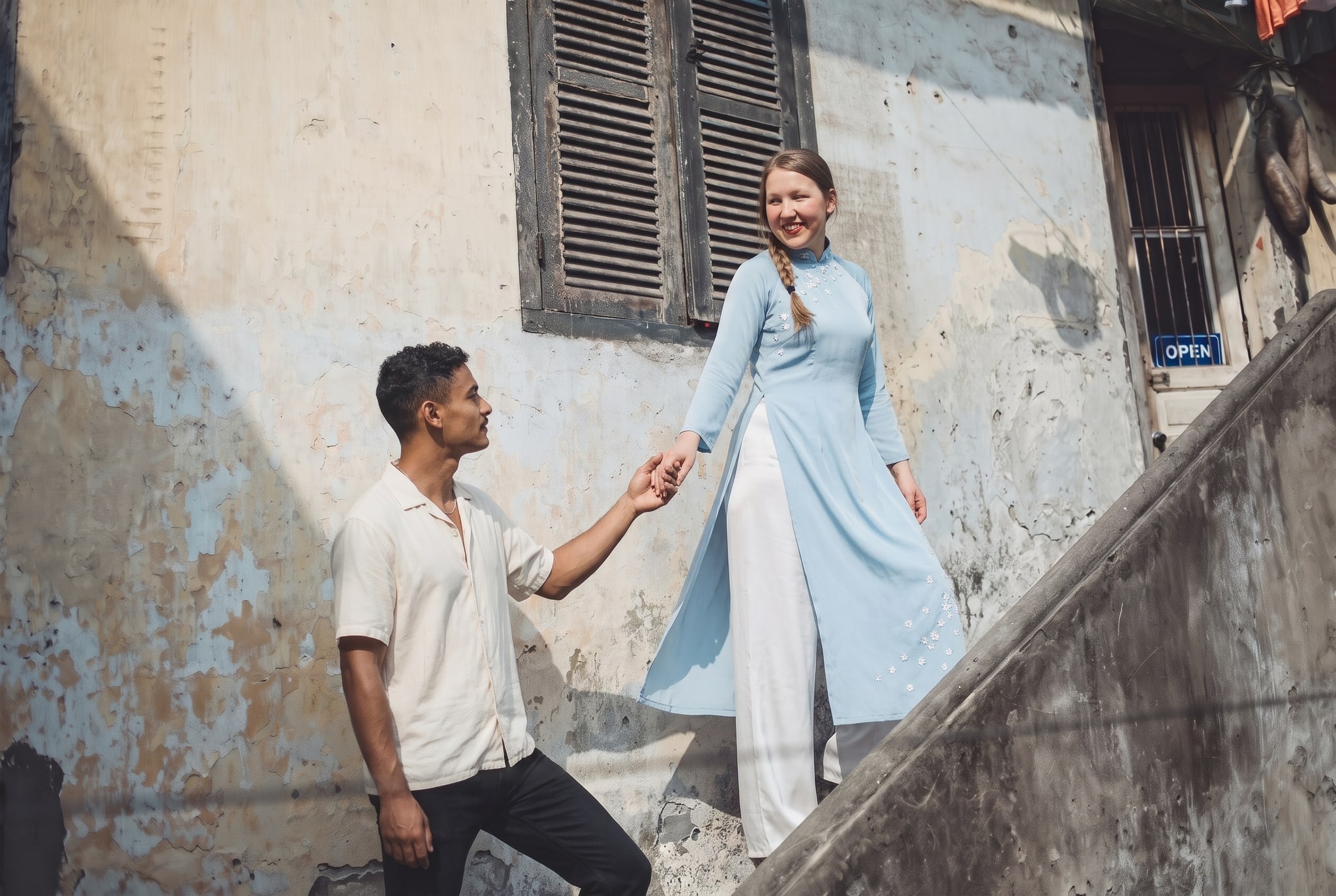
Wrinkles form within 15 minutes in a car seat. Our stylist keeps the ao dai on a hanger until the last moment, then dresses the guest on-location using a portable garment steamer (battery-powered; we've learned the hard way that wind kills any hanging iron). Belts and undergarments are pinned to prevent riding. Hair is set with extra-hold spray because plateau wind gusts 25–35 km/h. We do a final fit check 2 minutes before the photographer calls "ready"—any creases are spot-steamed. The ao dai stays moving (never static poses for more than one minute) so wind becomes an asset: it billows sleeves and captures motion rather than freezing fabric in an unflattering bunch.
| Timing | Light Type | Ao Dai Appearance | Wind Challenge | Our Fix |
|---|---|---|---|---|
| 5:30–7:00 a.m. | Soft mist, backlight | Ethereal, glowing | Gentle | Spray hold, micro-pins |
| 7:30–10:00 a.m. | Clear, angled | Sharp detail | 20–30 km/h | Movement-based poses |
| 10:00 a.m.–2:00 p.m. | Harsh overhead | Flat, squinting | 30–40 km/h | Shade or overhang only |
| 2:00–4:30 p.m. | Side light, warm | Golden tone | 15–25 km/h | Backlit positions |
| 4:30–6:30 p.m. | Golden hour | Glowing edges | Light | Final aesthetic shots |
See packages and prices on vietnamphotoshoot.com
What happens if fog is too thick to shoot?
Complete whiteout happens maybe twice per year in Ha Giang. When forecast or live conditions show visibility under 30 meters, we pivot to a secondary location: Meo Vac town center (lower elevation, clearer) or limestone cavern shoots with ao dai against stone walls and filtered skylight from cave openings. This is not a backup plan—it's a reroute we communicate via WhatsApp the night before. Guests don't lose shooting time; we simply relocate. We've also learned to shoot mist itself as a design element: ao dai silhouettes in fog can be more striking than clarity.
How many outfits realistically fit in one day?
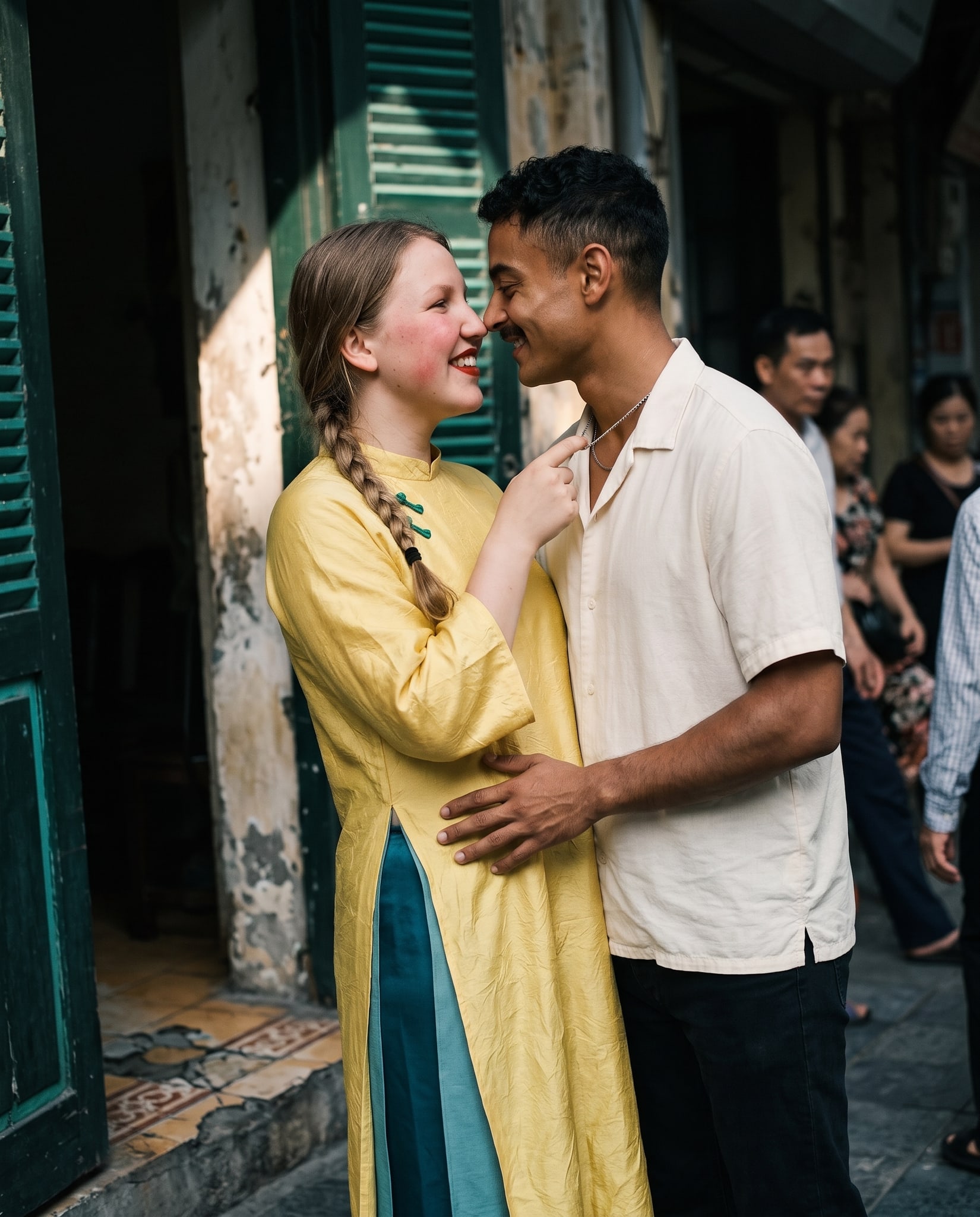
One ao dai per shoot is standard. A second outfit adds 90 minutes (change, touch-up, hair reset, light repositioning). By 2:30 p.m. fatigue and light angle make a third outfit feel rushed and produces weaker images. We recommend guests choose one ao dai in their favorite color and weight (silk drapes better but creases faster; cotton-blend is forgiving). If a couple wants two different colors as an upgrade, we schedule the change during a meal break so neither person feels pressured. Solo travelers on our vacation photoshoot package sometimes add a second outfit; it extends the day to 10 hours, so we factor in morning coffee and a proper lunch break.
What goes wrong most often, and how do we prevent it?
Sunburn and dehydration. Plateau sun is intense even at 9 a.m. We apply SPF 50+ to exposed shoulders and neck 20 minutes before shooting, reapply every 90 minutes, and carry 2 liters of water per guest. Electrolyte powder is mixed in halfway through.
Ao dai hem dragging in mud. Rice paddies look level but aren't. Our stylist hems ao dai 2 cm higher than salon standard and carries gaffer tape to secure hems if mud happens. One guest stepped into a soft patch in 2023; we lifted the hem with tape in four minutes and shot the next two hours without issue.
Phone battery and file storage. No charging stations exist on Dong Van plateau. We carry three external batteries and a backup camera with redundant memory cards. Files are uploaded to cloud storage daily because a 1200-image shoot is irreplaceable.
Guest exhaustion. At 1500 meters altitude, non-acclimatized people feel shortness of breath. We schedule a 20-minute rest at noon, avoid rapid walking between spots, and ask guests to hydrate before the shoot.
Which Cáo Studio location handles Ha Giang shoots?
Our Hanoi studio team leads all Ha Giang sessions because the 4.5-hour drive is manageable from our base. Our Saigon location refers Ha Giang guests to Hanoi; flying south then back north wastes time. A Hanoi session bundles photography with pre-shoot hair and makeup at our studio, so guests arrive mountain-ready.
What to check before booking your Ha Giang ao dai shoot
- Ao dai ownership or rental. Do you own an ao dai, or will you rent in Hanoi? Rental takes 2–3 days if you need custom tailoring. We recommend renting through a studio partner to ensure fit before the shoot date.
- Altitude comfort. Have you spent time above 1000 meters? If not, arrive in Hanoi 1–2 days early to acclimate. Shortness of breath mid-shoot is not dramatic, but it slows your movement.
- Weather forecast window. Book Ha Giang shoots for the dry season (September to April). May–August brings afternoon downpours that end shoots by 1 p.m. We monitor forecasts 72 hours before and offer rescheduling if rain probability exceeds 70%.
- Travel time and comfort. The 4.5-hour drive is early and bumpy. Guests with back or knee issues should let us know—we arrange cushioning and adjust rest breaks.
- Digital file expectations. Edited files arrive in 2–3 weeks. Raw files are available upon request but are unedited (white balance may vary). Video add-ons require a second camera operator and must be booked separately.
Interested in an ao dai shoot tailored to Ha Giang's landscape? Our team plans every detail based on light, weather, and your comfort. Reach out on WhatsApp, and we'll walk you through the day hour by hour.
For other sessions—couple shoots, pre-wedding, or family portraits in different regions—see our full ao dai photoshoot options, couple and anniversary packages, or family photography.
FAQ
Can we do a Ha Giang ao dai shoot in July or August?
Yes, but afternoon thunderstorms often force us to wrap by 1 p.m. Mist is less dramatic in summer humidity. We recommend September–November or January–March for clearer skies, better light, and lower risk of rain delays.
Do we need our own ao dai, or can we rent in Ha Giang town?
Rent in Hanoi before the shoot—quality and fit are better, and tailoring is fast. Ha Giang town has limited options and no tailors for quick fixes. We can refer you to a rental partner near our Hanoi studio.
How fit do we need to be for a Ha Giang shoot?
Moderate fitness helps. You'll walk 1–2 km total across uneven terrain, climbing maybe 100 meters elevation. We pace shoots around your comfort, include breaks, and move slowly. Tell us if you have knee or back concerns so we adjust locations and timing.
What happens if the forecast shows rain the day before?
We monitor 72 hours ahead and reschedule if rain probability exceeds 70%. If rescheduling is impossible, we pivot to lower-elevation sites (Meo Vac town, cavern shoots) with covered or sheltered backdrops. You keep your shoot; location shifts.
Can we add a second outfit on the day, or does it need to be booked in advance?
Book it in advance so we reserve time and bring a steamer. Adding a second outfit mid-day eats 90 minutes and shortens golden-hour shooting. Pre-booking also lets us help you choose complementary colors and weights.
How many edited photos do we get, and when?
Typically 800–1200 edited digital files delivered in 2–3 weeks via cloud link. Raw files (unedited, white balance variable) are available separately if you want to edit further. We always deliver edited versions first because they're camera-ready.
Ao Dai Photoshoot
Inclusions, prices and booking are on our booking site.
FAQ
Can we do a Ha Giang ao dai shoot in July or August?
Yes, but afternoon thunderstorms often force us to wrap by 1 p.m. Mist is less dramatic in summer humidity. We recommend September–November or January–March for clearer skies, better light, and lower risk of rain delays.
Do we need our own ao dai, or can we rent in Ha Giang town?
Rent in Hanoi before the shoot—quality and fit are better, and tailoring is fast. Ha Giang town has limited options and no tailors for quick fixes. We can refer you to a rental partner near our Hanoi studio.
How fit do we need to be for a Ha Giang shoot?
Moderate fitness helps. You'll walk 1–2 km total across uneven terrain, climbing maybe 100 meters elevation. We pace shoots around your comfort, include breaks, and move slowly. Tell us if you have knee or back concerns so we adjust locations and timing.
What happens if the forecast shows rain the day before?
We monitor 72 hours ahead and reschedule if rain probability exceeds 70%. If rescheduling is impossible, we pivot to lower-elevation sites (Meo Vac town, cavern shoots) with covered or sheltered backdrops. You keep your shoot; location shifts.
Can we add a second outfit on the day, or does it need to be booked in advance?
Book it in advance so we reserve time and bring a steamer. Adding a second outfit mid-day eats 90 minutes and shortens golden-hour shooting. Pre-booking also lets us help you choose complementary colors and weights.
How many edited photos do we get, and when?
Typically 800–1200 edited digital files delivered in 2–3 weeks via cloud link. Raw files (unedited, white balance variable) are available separately if you want to edit further. We always deliver edited versions first because they're camera-ready.
More from the team
Ao Dai Photos at Hoi An Lantern Street at Night
Hoi An Lantern Street (Nguyen Hoan) glows at dusk with silk lanterns and reflected light. Our team shoots ao dai here after dark, navigates tight vendor spaces, and handles the low-light challenge with experience from 100+ night sessions.
Ao dai for wedding photos in Quy Nhon: renting, fitting and styling
Quy Nhon's coastal backdrops pair beautifully with traditional ao dai. We walk through rental choices, fitting logistics and how our team coordinates styling on shoot day.
Vietnam Pre-Wedding Photoshoot: What We Book at Cáo Studio
Pre-wedding shoots in Vietnam mean morning light in Hoi An's Old Town, cyclos in Saigon, or terraced fields near Ninh Binh. We walk you through what a session actually costs, how we schedule it, and what goes wrong on the day.