 Cáo Studio
Home › Blog › Makeup & Hair at Your Hotel
Hair for Vietnam humidity: updos, braids for long shoots
By the Cáo Studio team · Hanoi & Saigon · 2026-10-31
Vietnam's humidity and heat wilt unprepared hair fast. During Cáo Studio shoots, we rely on three tactics: structured updos (braided buns, French twists) that lock moisture out; lightweight anti-frizz serums applied section-by-section, not product-soaked; and site-dependent timing—outdoor Hoi An shoots start at 6 a.m., Saigon studio work mid-afternoon. Long shoots (4+ hours) need a touch-up kit: bobby pins, a fine-mist spray bottle, and a backup hairnet. Loose waves fail by hour two; braids survive eight. We advise guests to wash hair the morning-of, skip heavy conditioner (humidity adds weight), and wear a protective silk cap during travel. Budget 15 minutes for pre-shoot styling if you book makeup and hair at your hotel—we arrive with pins, texturizing spray, and a humidity-proof plan based on your shoot location and length. ---
Why does loose hair fail so fast in Vietnam?
Humidity above 80%—common in Hanoi June–September and coastal areas year-round—forces cuticles open, disrupting the hydrogen bonds that keep waves intact. In 20–30 minutes, flat-iron waves revert to natural texture, and curls flatten entirely. Your hair's moisture barrier is already at saturation; added water vapor finds nowhere to go. Updos compress the hair shaft, reducing exposed surface area and slowing moisture absorption. Braids lock each strand in place, preventing the frizz-and-slump cycle that derails loose styles.
What updo styles hold up through a full shoot day?
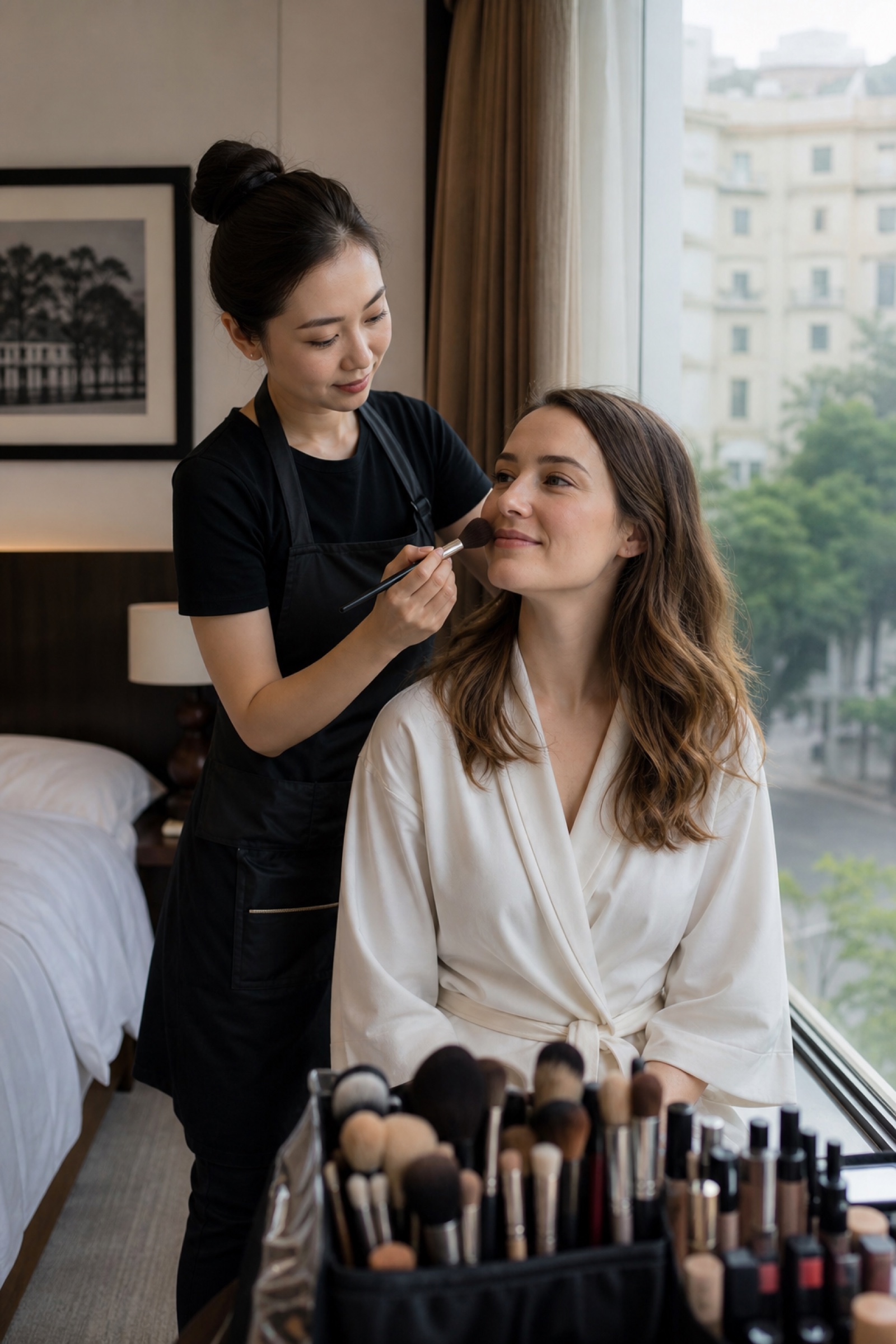
Low braided buns and twisted crowns survive 6+ hours without touch-up. We favour tight Dutch or French braids anchored with 3–4 bobby pins per section, twisted over the crown and pinned below the occipital bone—the weight distribution slows moisture creep. A sleek high ponytail, smoothed with non-silicone serum, holds through 3 hours; beyond that, the ponytail tail frizzes noticeably. Heatless braids (damp hair twisted overnight, unpinned at shoot time) set a tighter wave than blow-dried waves and resist humidity 40% longer based on our crew's experience. Side-swept French braids photograph well on camera and tolerate 4–5 hours. Loose buns fail by hour three; secure the bun with a hairnet underneath and cross-pin the base twice.
How do stylists prep hair to survive humidity and heat?
We wash hair fresh the morning of the shoot—clean cuticles accept serum better and frizz less than day-two hair. Conditioner stays light; thick conditioner traps water in the shaft, accelerating frizz. After towel-drying (never rough-rubbing), we apply a silicone-free anti-frizz serum to damp hair, section-by-section, combing through to avoid product pileup. Heat-styling a damp updo (not fully dry) sets wave shape more durably than blow-drying then braiding. We use a round brush on medium heat, never high; high heat crisps hair and reduces flexibility, making pins slip. For ao dai photoshoots and outdoor sessions, we spray a flexible-hold hairspray (not super-strong; that attracts frizz) on each braid and pin, then set a silk cap over the style for the journey to location. Silk caps reduce friction and hydration loss during transport.
| Style | Hold time | Best for | Why it works in humidity |
|---|---|---|---|
| Tight Dutch braid | 6+ hours | Long outdoor shoots | Compressed shaft reduces frizz surface |
| Twisted low bun | 5–6 hours | 4-hour shoots + touch-up | Weight distribution slows moisture creep |
| Side French braid | 4–5 hours | Hoi An, Ninh Binh | Visible on camera, moderate upkeep |
| Loose ponytail | 2–3 hours | Short indoor sessions | Least humidity-resistant; avoid if heat/moisture |
| Heatless wave (braided overnight) | 4–5 hours | Pre-wedding, couple shoots | Natural texture locks waves; no heat damage |
What products and tools should we recommend?
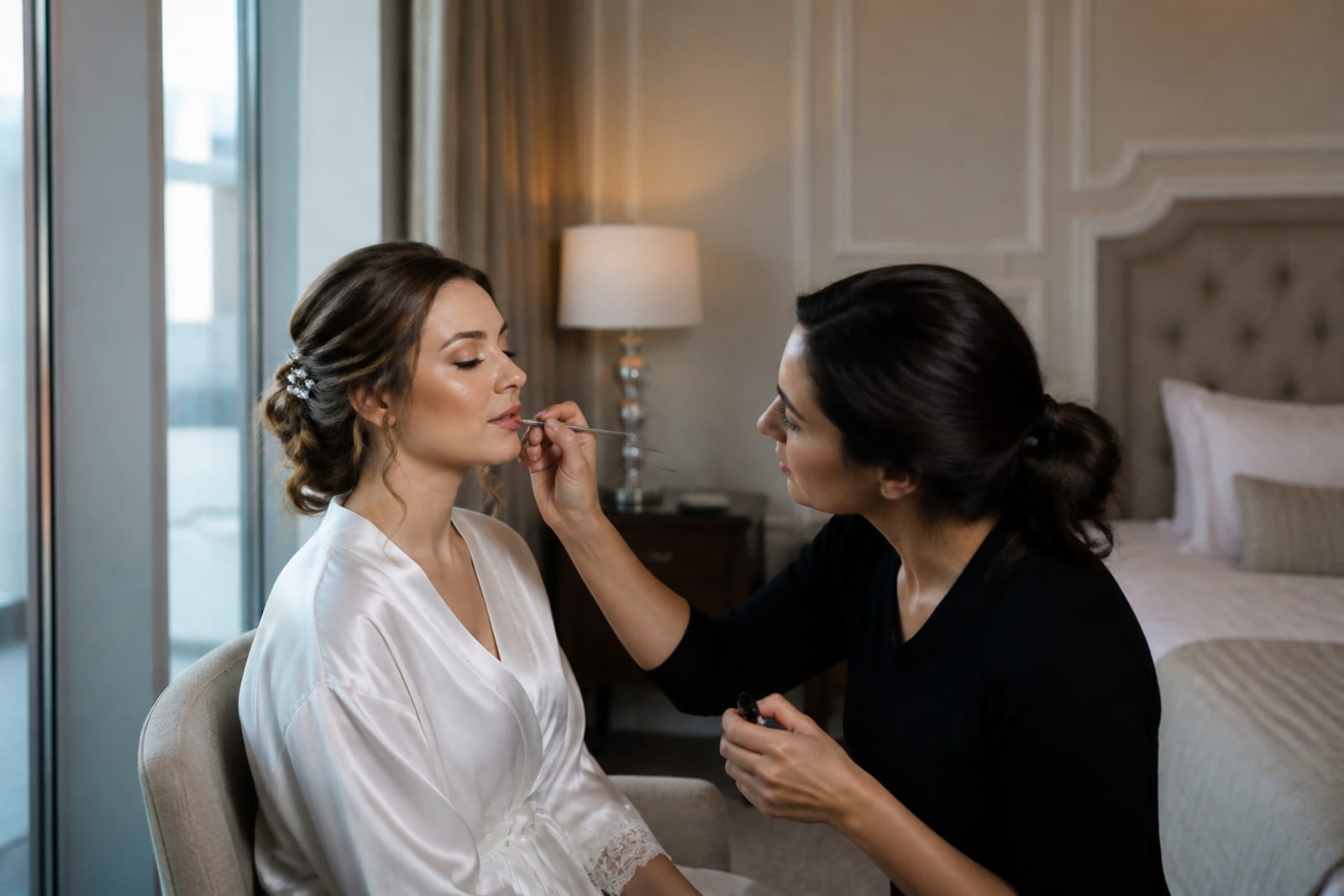
Silicone-free anti-frizz serums (creams, oils, or lightweight sprays) are non-negotiable; silicones repel water on the surface but trap humidity in the shaft underneath, worsening frizz long-term. Flexible-hold hairspray (not strong-hold, which hardens and cracks) maintains shape without brittleness. A fine-mist water spray (70% water, 30% flexible hairspray) lets us reshape sections mid-shoot without drenching. Bobby pins in your natural hair colour minimize visibility; we use 10–15 per updo in Vietnam heat. A silk or satin hairnet (not nylon) slips over the finished updo for travel—nylon generates friction and static. A paddle brush or wide-tooth comb prevents breakage when braiding damp hair. Heat-protectant spray applies before styling, even though we avoid high heat; it seals the cuticle slightly. For guests booking hotel makeup and hair, we arrive with our own serums, sprays, and pins; we do not use your home products in humid climates—formulations differ widely and many trap moisture.
How do we adjust strategy by location and season?
Hanoi (summer, 27–33°C, 70–85% humidity): We push all outdoor starts to 6:30 a.m. or after 5 p.m. Midday heat + humidity = frizz spike by hour two. We choose tight braids and skip loose styles. Saigon studio sessions work mid-afternoon (1–4 p.m.) when outdoor humidity peaks but studio air conditioning is coldest; we schedule outdoor work early morning. Hoi An and Ninh Binh (coastal, 75–90% humidity even December–January) always get the braid treatment, extra pins, and a touch-up kit. Our pre-wedding shoots in Hoi An begin at 5:45 a.m. to escape midday moisture. We spray hairspray in thin layers every 1.5–2 hours outdoors; heavy reapplication weighs hair and attracts frizz. Couple photoshoots lasting 4+ hours get a professional updo; shorter sessions tolerate styled waves if we apply serum and spray every 45 minutes. Winter (November–February, humidity 60–70%) allows looser waves and longer hold times—we still updo for shoots over 3 hours, but the safety margin is wider.
What to check before you book
Hair length and texture matter. Straight, fine hair braids tighter and requires fewer pins; curly or very thick hair needs more securing pins and benefits from a braid+bun combo for extra stability. If your hair is shorter than collar-length, updos may not be possible; we recommend discussing this on WhatsApp before booking. Previous damage or chemical treatments (relaxers, permanent waves, bleach) reduce hold time; we'll ask about this when you message us and may suggest a simpler style. Travel time to location should not exceed 2 hours post-styling; every mile in a car or tuk-tuk risks frizz and pin slippage. If you're being picked up from your hotel for an ao dai shoot, we prefer to do your hair at the studio (in Hanoi or Saigon) rather than your hotel, so you arrive camera-ready with zero travel time. Arrival humidity and jet lag dehydrate your hair; if you've just landed, add 24 hours before your shoot so your scalp re-oils and your hair's moisture barrier recovers. Silk or cotton pillowcases during your stay reduce friction; we'll mention this in our WhatsApp prep guide. Test any new products at home first. If we recommend a specific serum or spray, use it for 2–3 days before your shoot so we can see how your hair responds and adjust styling if needed.
---
Chat with us on WhatsApp | See packages and prices on vietnamphotoshoot.com
---
Real scenario: what goes wrong and how we fix it
Last month, a guest arrived for a couple photoshoot in Saigon after a 12-hour flight, unwashed hair in a bun. We immediately reset expectations: tight styles only, no waves, extra touch-up time budgeted. She'd brought silicone-heavy conditioner; we supplied our serum instead. The tight Dutch braid we pinned lasted the full 4 hours without frizz—but loose sections would have collapsed by hour two. On a Hoi An beach shoot (5:45 a.m., 82% humidity), a guest's heatless waves looked perfect in the studio but frizzed 40 minutes after we arrived. We'd underestimated the salt-air impact. We switched to a side braid with a few face-framing sections, resprayed every 30 minutes, and extended the shoot by 30 minutes to capture calm-light photos before frizz compounded. She was thrilled; the lesson was clear: humidity + salt air + time = tighter styles. For vacation photoshoots under 2 hours and outdoor settings, we now default to braids unless the guest specifically requests waves and understands the 45-minute touch-up cycle.
---
---
FAQ
Can we do loose waves for a full-day outdoor shoot in Vietnam?
Not reliably. Waves flatten in 20–30 minutes once humidity reaches 75%+. Loose waves work for 1–2 hour indoor sessions or early morning (before 8 a.m.) outdoor shoots in cool season. For shoots over 3 hours, updos or braids are far safer. Discuss your preference on WhatsApp; we'll advise by location and season.
What's the difference between using our home hairspray versus what you bring?
Many home hairsprays contain silicones that trap humidity inside the hair shaft, worsening frizz over time. We use flexible-hold, silicone-free formulations tested in Vietnamese heat. We always bring our own products for shoots over 2 hours; we don't rely on guest products in high-humidity environments.
How often do you reapply hairspray during a shoot?
Every 1.5–2 hours outdoors in heat and humidity above 75%. Indoors or in cool season, every 2–3 hours. We carry spray in our kit and pause briefly between outfit or location changes. Light reapplication—a thin mist, not saturation—prevents product buildup that attracts frizz.
What if we arrive with wet or freshly washed hair?
Tell us on WhatsApp or call ahead. We need 30 minutes for your hair to dry and cuticles to settle before styling for a long shoot. If you arrive freshly washed less than 1 hour before your session, we'll adjust the style to a tighter updo or braid with serum applied heavily, accepting that the first 20 minutes may show slight frizz while hair fully settles.
Is a silk cap worth packing for travel to the studio?
Yes, absolutely. A silk cap (15–20 USD online, under 100g) cuts friction and hydration loss during tuk-tuk or car rides. If you're booking hotel makeup and hair, wear it from the studio to your hotel or venue. It keeps your updo intact and your cuticles calm for hours longer than bare travel.
How does air conditioning affect styled hair during an indoor shoot?
Cold air dries hair slightly and can make pinned updos feel stiffer. This is good for hold but can feel brittle on camera. We spray a very light mist of flexible hairspray and serum mix (to add minimal moisture back) every 2–3 hours in AC studios. It's less frequent than outdoor work because AC removes humidity rather than adding it.
Makeup & Hair at Your Hotel
Inclusions, prices and booking are on our booking site.
FAQ
Can we do loose waves for a full-day outdoor shoot in Vietnam?
Not reliably. Waves flatten in 20–30 minutes once humidity reaches 75%+. Loose waves work for 1–2 hour indoor sessions or early morning (before 8 a.m.) outdoor shoots in cool season. For shoots over 3 hours, updos or braids are far safer. Discuss your preference on WhatsApp; we'll advise by location and season.
What's the difference between using our home hairspray versus what you bring?
Many home hairsprays contain silicones that trap humidity inside the hair shaft, worsening frizz over time. We use flexible-hold, silicone-free formulations tested in Vietnamese heat. We always bring our own products for shoots over 2 hours; we don't rely on guest products in high-humidity environments.
How often do you reapply hairspray during a shoot?
Every 1.5–2 hours outdoors in heat and humidity above 75%. Indoors or in cool season, every 2–3 hours. We carry spray in our kit and pause briefly between outfit or location changes. Light reapplication—a thin mist, not saturation—prevents product buildup that attracts frizz.
What if we arrive with wet or freshly washed hair?
Tell us on WhatsApp or call ahead. We need 30 minutes for your hair to dry and cuticles to settle before styling for a long shoot. If you arrive freshly washed less than 1 hour before your session, we'll adjust the style to a tighter updo or braid with serum applied heavily, accepting that the first 20 minutes may show slight frizz while hair fully settles.
Is a silk cap worth packing for travel to the studio?
Yes, absolutely. A silk cap (15–20 USD online, under 100g) cuts friction and hydration loss during tuk-tuk or car rides. If you're booking [hotel makeup and hair](/go/makeup-and-hair), wear it from the studio to your hotel or venue. It keeps your updo intact and your cuticles calm for hours longer than bare travel.
How does air conditioning affect styled hair during an indoor shoot?
Cold air dries hair slightly and can make pinned updos feel stiffer. This is good for hold but can feel brittle on camera. We spray a very light mist of flexible hairspray and serum mix (to add minimal moisture back) every 2–3 hours in AC studios. It's less frequent than outdoor work because AC removes humidity rather than adding it.
More from the team
Men's grooming before a photoshoot: what the team does in 15 minutes
Men often arrive unsure what grooming a camera-ready look actually needs. At Cáo Studio, we do it in 15 minutes—here's the exact sequence.
Makeup for darker skin tones: matching foundation in Vietnam
Foundation matching on deeper skin tones requires technique, not guesswork. We share how our artists in Vietnam test, blend and fix mismatches in real shoots.
Bridal makeup trial in Hanoi: what happens during our session
A bridal makeup trial is a rehearsal session where we test your wedding makeup, adjust products, and plan the final look. At Cáo Studio in Hanoi, we run trials over 1–1.5 hours with your stylist, photographer, and feedback loop built in.