 Cáo Studio
Home › Blog › Pre-Wedding & Elopement
Hanoi or Mui Ne for pre-wedding photos: which fits your vision
By the Cáo Studio team · Hanoi & Saigon · 2026-11-04
Both destinations work for pre-wedding shoots, but they demand different decisions. Hanoi offers colonial architecture, water temple reflections, and dense urban texture—best November to February when light is soft and crowds thin. Mui Ne gives you golden-hour beaches, red dunes, and expansive empty space—ideal October to April when winds are gentler and the sea calm. Hanoi shoots typically run 4–6 hours within the city; Mui Ne shoots need 6–8 hours including travel between locations. Cáo Studio operates in both, and we see couples choose Hanoi for intimate, layered backdrops and Mui Ne for drama and isolation. Budget, outfit count, and whether you want urban grit or natural vastness drive the real choice. Neither is objectively "better"—it's which story you want to tell.
What makes Hanoi's light and streets unique for couples?
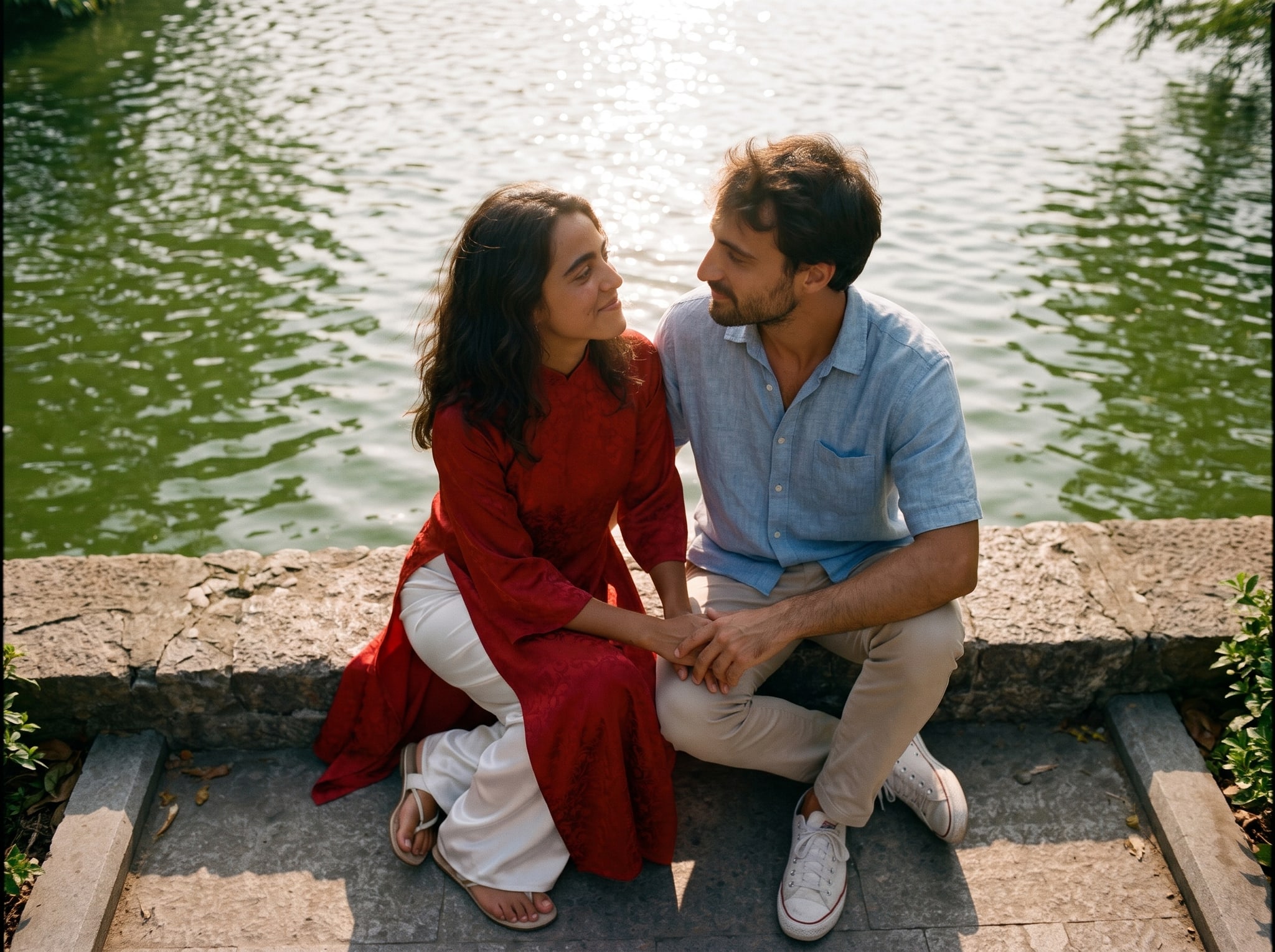
Hanoi's Old Quarter and French Quarter give you textured walls, shuttered windows, and narrow streets where light breaks in strips. We shoot there November through February—the light stays low and golden for 4–5 hours after 2 p.m. Morning shoots compete with foot traffic and open shutters; afternoon light hits the red doors of temples with almost-painted clarity. The surprise: rain puddles in the Old Quarter (especially December) reflect sky and architecture, giving you free compositions. The catch is managing crowds and permissions—some temple grounds require monk approval or closed-hours booking. We've learned to scout locations 24 hours prior and brief couples on which spots need early starts.
Why do couples choose Mui Ne's beaches and red dunes?
Mui Ne's appeal is simplicity: empty stretches of sand, wind-carved dunes, and a sunset that runs 45 minutes without buildings blocking it. We rarely see other tourists in the dunes at 4–5 p.m. October through March. Couples love the vastness—two figures against infinite sand feels cinematic without trying. The red dunes photograph warm and alive; the white dunes at sunrise are soft and almost dreamlike. What we tell couples: wind is constant. Hair and fabric move; that's part of the look, not a problem. The real cost is logistics—you need 45 minutes from Phan Thiết town to the main dunes, so a full Mui Ne day includes 2–3 hours in a car. Many couples do a hybrid: 2 hours Mui Ne dunes, then 1.5 hours beach or fishing village.
How do outfit counts and wardrobe changes differ between the two?
In Hanoi, we typically shoot 2–3 outfits in a 4-hour session because location moves eat time and weather is unpredictable. A traditional áo dài works beautifully against temple walls; a modern suit pops against the red doors of Hoan Kiem Lake's Turtle Tower. We see couples do one formal outfit, one casual (jeans + shirt), sometimes one áo dài. Changing rooms? The Old Quarter has no good options—we use alleyways, a friend's apartment, or have couples arrive pre-dressed.
Mui Ne allows 1–2 outfits comfortably because there's one main location (or dunes + beach). The remoteness means no quick changes—you pick one signature look. Lighter fabrics work better (white, cream, pastels) because the light is harsher and the landscape is monochrome. Wet sand or dune footprints show in photos, so avoid anything you'll trip on.
| Aspect | Hanoi | Mui Ne |
|---|---|---|
| Outfit changes | 2–3 per 4 hours | 1–2 per 6 hours |
| Best wardrobe | Formal, áo dài, layered colors | Light, flowing, monochrome-friendly |
| Changing logistics | Urban alleyways, nearby shops | None—arrive ready |
| Light quality | Low, textured, morning/afternoon | High, even, magic hours only |
| Weather risk | Rain (Dec–Jan), humidity | Wind daily, intense sun midday |
What do we see go wrong, and how do we prevent it?
Hanoi: couples underestimate walking distance (3–4 km across 4 hours) and arrive in heels. We tell them: comfortable shoes, then change near the end. We've also missed shots because street vendors or cyclos blocked angles unexpectedly—we now do 5-minute location scouts with the couple before the formal shoot. Rain in December is common; we brief on weather and keep shoot timings flexible.
Mui Ne: couples expect flat sand and discover dunes are steep. We brief them on comfortable walking and bring water and a parasol. Wind tangles hair despite styling—we carry clips and spray, and we time shoots for lower-wind windows (usually late afternoon). One couple arrived assuming the beach would be empty at 3 p.m.—it wasn't. We now confirm the day before and shift times if needed.
The honest pattern: communication 24–48 hours before prevents 80% of surprises.
How do you decide: north or south, Hanoi or Mui Ne?
Ask yourself three things:
- Narrative: Do you want to tell a story of place (Hanoi's history, layers, texture) or a story of intimacy isolated from the world (Mui Ne's expanse)? Hanoi feels like a love story set somewhere. Mui Ne feels like you and your partner are the only somewhere.
- Logistics: Can you spend 1 day or 2? Hanoi works in a single afternoon. Mui Ne demands a full day (driving, location shooting, contingency). Couples on tight schedules default to Hanoi.
- Outfit and formality: Do you want to wear áo dài? Hanoi is its home. Are you imagining white linen and barefoot? Mui Ne is the backdrop. This choice often decides it.
We see 60% of our Hanoi couples choose it for the áo dài + temple combination and surprise urban intimacy. 70% of Mui Ne couples are aiming for something visually "big"—the sky, the dunes, solitude. Both decisions are equally valid.
See packages and prices on vietnamphotoshoot.com
Timeline: what a typical day looks like in each city
Hanoi (4-hour afternoon shoot, Nov–Feb):
- 1:00 p.m. – Meet at your hotel. Style final touches, brief on light and crowd flow.
- 1:30 p.m. – First location (temple or water view). 45 minutes, 80–100 shots.
- 2:30 p.m. – Walk to second location. Outfit change if you're doing one (15 min).
- 3:00 p.m. – Second location. 45 minutes, similar volume.
- 3:50 p.m. – Third location or bonus shots at prime light spot.
- 4:30 p.m. – Wrap. Editing and gallery delivery in 7–10 days.
Mui Ne (8-hour full day, Oct–Mar):
- 9:00 a.m. – Pick you up from hotel or meet in town. 45-min drive to dunes.
- 10:00 a.m. – Location scout, 20-min photos at red dunes (sun is harsh, but we use it).
- 10:30 a.m. – Drive to white dunes or beach. Light breakfast/water break.
- 12:00 p.m. – Rest at hotel or café. You can swim.
- 3:30 p.m. – Return for sunset window (4:00–5:00 p.m. is prime). 60 minutes, 150+ shots.
- 5:15 p.m. – Wrap. Drive back to town by 6:30 p.m.
Honesty: Hanoi fits tighter schedules and gives you more edits per day. Mui Ne feels slower and more cinematic, but you're committed to one full day.
What to check before you book
- Season: Hanoi is best Nov–Feb (dry, cool). Mui Ne is best Oct–Apr (manageable wind). Both are viable year-round, but summer is humid in Hanoi and hot in Mui Ne.
- Outfit plan: If you want to wear áo dài, Hanoi is the natural fit. Both cities work for Western formal wear.
- Physical comfort: Hanoi = 3–4 km walking. Mui Ne = dune climbing + vehicle time. Neither is strenuous, but inform us of any concerns.
- Budget: Ask us for a quote on WhatsApp. Both cities have similar base rates; Mui Ne includes transport and longer hours. Hanoi is faster, Mui Ne is more extensive.
- Timeline: Hanoi edits in 7 days. Mui Ne edits in 7 days. Both can rush to 3 days if needed—ask about availability.
We've shot 200+ pre-wedding couples across both cities since 2018. The pattern is clear: choose Hanoi if you're drawn to texture, history, and getting multiple angles fast. Choose Mui Ne if you want space, drama, and time to breathe between poses. Neither wrong. One just matches your vision better.
For a full view of what we offer in Hanoi and across Vietnam, browse our pre-wedding photoshoot package details or explore our Cáo Studio Hanoi location and Saigon studio galleries. Many couples also pair a pre-wedding shoot with a couple photoshoot package for a second creative day.
FAQ
Can we do both Hanoi and Mui Ne in one trip?
Yes. We've done 2-day shoots: day 1 Hanoi (afternoon, 4 hours), day 2 Mui Ne (full day, 8 hours). It's ambitious but works if you have 3+ days in Vietnam. Ask us on WhatsApp about multi-day pricing and logistics.
What's the best month to shoot in Hanoi?
November to February. Light is golden, weather is dry, and humidity is low. December and January are coldest (perfect for layered outfits). February is transitional—still clear, but crowds arrive. We avoid June–September due to heat and rain.
Is Mui Ne better for sunset than Hanoi?
Yes. Mui Ne's beaches and dunes face west unobstructed—you get 45 clean minutes of golden hour. Hanoi's sunsets are blocked by buildings in most locations. If sunset is non-negotiable, Mui Ne is the better choice.
Do we need to hire a guide in Mui Ne?
No. We handle navigation, location scouting, and vehicle management. You just show up. We book transport and timing; you don't arrange it separately.
Can we do an áo dài shoot in Mui Ne?
Yes, but it's less common. Áo dài works beautifully against the red dunes, but the fabric catches wind and sand easily. If you want áo dài in Mui Ne, plan for 1–2 hours at dunes early, then change to lighter clothes for beach shots. Most couples do áo dài in Hanoi instead for texture and cultural fit.
How many hours should we book?
Hanoi: 4 hours gives you 2–3 solid locations and outfit changes. Mui Ne: 6–8 hours is standard (half travel, half shooting). Shorter sessions (3 hours) work but feel rushed. Longer sessions (8+ hours Hanoi) mean repetitive angles. Ask us for guidance based on your outfit and location count.
Pre-Wedding & Elopement
Inclusions, prices and booking are on our booking site.
FAQ
Can we do both Hanoi and Mui Ne in one trip?
Yes. We've done 2-day shoots: day 1 Hanoi (afternoon, 4 hours), day 2 Mui Ne (full day, 8 hours). It's ambitious but works if you have 3+ days in Vietnam. Ask us on WhatsApp about multi-day pricing and logistics.
What's the best month to shoot in Hanoi?
November to February. Light is golden, weather is dry, and humidity is low. December and January are coldest (perfect for layered outfits). February is transitional—still clear, but crowds arrive. We avoid June–September due to heat and rain.
Is Mui Ne better for sunset than Hanoi?
Yes. Mui Ne's beaches and dunes face west unobstructed—you get 45 clean minutes of golden hour. Hanoi's sunsets are blocked by buildings in most locations. If sunset is non-negotiable, Mui Ne is the better choice.
Do we need to hire a guide in Mui Ne?
No. We handle navigation, location scouting, and vehicle management. You just show up. We book transport and timing; you don't arrange it separately.
Can we do an áo dài shoot in Mui Ne?
Yes, but it's less common. Áo dài works beautifully against the red dunes, but the fabric catches wind and sand easily. If you want áo dài in Mui Ne, plan for 1–2 hours at dunes early, then change to lighter clothes for beach shots. Most couples do áo dài in Hanoi instead for texture and cultural fit.
How many hours should we book?
Hanoi: 4 hours gives you 2–3 solid locations and outfit changes. Mui Ne: 6–8 hours is standard (half travel, half shooting). Shorter sessions (3 hours) work but feel rushed. Longer sessions (8+ hours Hanoi) mean repetitive angles. Ask us for guidance based on your outfit and location count.
More from the team
Photography rules at Ta Phin village: permits, drones and what to check
Ta Phin village in Sapa draws photographers for its Hmong culture and layered mountain light. We've shot dozens of sessions there—here's what actually works and what stops shoots cold.
Pre-Wedding Photo Ideas and Poses at O Quy Ho Pass
O Quy Ho Pass sits on the Hanoi–Sapa border at 1,200 metres. Our couples shoot there for its curves, mist and isolation—but the weather and logistics demand a different approach than valley shoots.
Is O Quy Ho Pass Good for Pre-Wedding Photos? Pros, Cons, Alternatives
O Quy Ho pass in Sapa draws couples seeking high-altitude drama, but tight timelines, unpredictable fog, and logistics make it risky for pre-wedding shoots. We've scouted it; here's what actually works. #