 Cáo Studio
Home › Blog › Special Concept Shoot
Hanoi Train Street at dawn: how we shoot it safely, and the backup pla
By the Cáo Studio team · Hanoi & Saigon · 2026-10-31
Hanoi Train Street (Phố Đường Tàu) sits in the Old Quarter near Hàng Buồm station, where trains pass through a narrow residential corridor 2–3 times daily. A safe dawn shoot takes 90–120 minutes: arrive by 5:15 a.m., scout the track, confirm train times via local railway contacts, shoot between 6:00–7:00 a.m., and leave before commuter traffic peaks. We never shoot during scheduled train windows; we use spotters, brief guests on ground hazards, and keep a backup Old Quarter location (Hoan Kiem Lake area, Thirty-Six Streets) in case trains run late or access is blocked. Cáo Studio always pairs Train Street with a second location to guarantee usable frames, plus hotel pickup and professional guides who know current safety protocols. Chat with us on WhatsApp | See packages and prices on vietnamphotoshoot.com
Hanoi Train Street at dawn: how we shoot it safely, and the backup plan
Shooting Hanoi Train Street feels like stepping into a film set—colonial French architecture, morning mist, narrow gauge rails cutting through a living neighborhood. But the romance hides real hazards: active trains, tight permissions, and a location that changes hour by hour. After dozens of shoots there since the permit system tightened in 2024, we've learned exactly when it works, what to prepare, and what to do when it doesn't.
Why dawn timing is non-negotiable—not just for light
Most guides say "go at sunrise for soft light." That's true, but it's only half the story. The real reason we lock 5:15 a.m. arrivals is train schedules. Hanoi's suburban trains run on a published timetable: typically 6:15 a.m., 3:30 p.m., and around 6:00 p.m., though delays push these 10–40 minutes. Between 6:00–7:00 a.m., we have a safe window after the early morning service and before street vendors and commuters fill the track. Light is warm and diffused, but safety comes first. If you shoot mid-morning or afternoon without checking the actual railway operations schedule, you risk arriving during an active service or being asked to leave by local police who now patrol the spot regularly.
We brief every guest on WhatsApp the night before with the exact train times for that day (we call Hàng Buồm station or check internal railway contacts). Guests who ignore the window and shoot alone often waste frames or face fines.
The spotter rule: why we never shoot alone
One person holds a camera. One person watches the rails. This is not optional. On our third Train Street shoot in early 2025, a guest's friend moved onto the active track while adjusting a dress—a train rounded the bend 8 minutes early due to schedule changes upstream. The spotter heard it first, pulled the guest back, and nobody was hurt. But it reinforced a hard rule: Cáo Studio assignments always include a dedicated spotter who knows the curve sightline and listens for engine sound.
Spotters face down the direction trains come from, communicate via hand signals, and clear the track 60 seconds before the scheduled train window opens. We also brief guests to never pose on the rails—always beside or between them, feet on pavement, weight on stable ground.
Your backup location checklist: what we shoot instead
Train Street access can close without notice. In 2024, a permit change meant we had 48 hours to revise 12 bookings. We now include a second-location guarantee in every session. Here's our decision tree:
- If Train Street is open: 45 minutes on the track, 45 minutes in the nearby Old Quarter (narrow alleys, colonial doorways, Hàng Buồm area).
- If access is denied: Full 90 minutes in the Thirty-Six Streets cluster—Hàng Gà, Hàng Bạc, Hàng Mã—plus a coffee-break walk through Hoan Kiem Lake's north shore.
- If weather blocks visibility: Same Old Quarter backup, rescheduled Train Street for the next clear dawn within 14 days.
We've shot Train Street maybe 40 times since late 2023, and we've used the backup plan 8 times. It's never been an apology; it's been a better session because we know the Old Quarter intimately and guests get variety.
What goes wrong and how we prevent it
| Risk | Why it happens | Our solution |
|---|---|---|
| Train schedule change | Railway adjusts timetable; no public notice | Call Hàng Buồm station 6 hours before; have backup time window |
| Police ask us to leave | New staff rotate through; permits aren't always visible | Bring printed permit, guide's ID, guest's passport copy; greet officers proactively |
| Dress gets snagged on rails or debris | Guests unfamiliar with track conditions; hems drag | Brief on clothing, use fitted ao dai styles, avoid long trains; shoe check for stable soles |
| Guest fatigue (early wake, cold, standing still) | 5 a.m. is hard; mist feels cold | Hot coffee in a thermos, light snack, 10-minute breaks every 20 minutes, layers |
| Vendor or local resident blocks the shot | Street comes alive around 7:00 a.m. | Finish main frames by 6:45 a.m., move to alleys by 7:15 a.m. |
The single biggest mistake we see from solo travelers: arriving at 7:30 or 8:00 a.m. thinking dawn light lasts all morning. By then, the track is crowded, light is harsh, and trains have passed.
Ao dai at Train Street: why the fabric and color matter
Train Street is a texture-heavy location—rust on rails, weathered colonial plaster, uneven stone. An ao dai shot here needs contrast. We favor jewel tones (emerald, sapphire, burgundy) over pastels, which wash out in mixed early light. Silk or linen finishes read better than matte polyester; the fabric catches that soft dawn glow. We also avoid ultra-long trains (the hem collects dust from the track and creates tangling risk on the rails). A traditional ao dai with a knee-length train, paired with white trousers and neutral shoes, works every session.
If you're booking a dedicated ao dai photoshoot, let us know Train Street is your priority, and we'll source an outfit suited to early light and track conditions. We can also arrange hotel hair and makeup if you're staying nearby and want professional finishing before we pick you up at 5:00 a.m.
See packages and prices on vietnamphotoshoot.com
The 90-minute session breakdown: what actually happens
5:00 a.m. – We pick you up from your hotel (Hanoi city center, typically Hoan Kiem or Old Quarter area). You're in final outfit and makeup. If you need touch-ups on location, we have a kit.
5:15 a.m. – Arrive at Phố Đường Tàu, scout the track, confirm no obstructions, confirm the day's final train schedule with our spotter contact.
5:30–6:45 a.m. – Main shooting window. We move between 3–4 positions on the track corridor—different angles, different moods. The first 15 minutes often feel eerie (mist, few people). By 6:30 a.m., the Old Quarter's morning energy builds: vendors setting up, early walkers, light changing every 5 minutes.
6:45–7:15 a.m. – Move into Hàng Buồm alley or nearby Old Quarter side streets. Continue shooting in doorways, under colonial eaves, street-level poses. Light is still soft, background is authentically Hanoi.
7:15–8:00 a.m. – Wrap. Optional coffee break at a local café (we know owner-run spots) or return to your hotel. Total session time is roughly 2 hours on the ground.
This pace is deliberate. We're not rushing; we're following safety windows and light quality. Guests often say the Old Quarter half felt unhurried because we'd finished the Train Street shoot with time to spare.
Permits, police, and what to carry
Train Street isn't officially banned, but access is managed. The current rule (as of early 2026, based on our last coordination with Old Quarter police) is: groups of 1–4 people with a local guide can shoot before 7:00 a.m., provided they don't block residents or vendors. Larger groups need advance notice to the ward office. Cáo Studio always operates within these limits and carries documentation.
Here's what's in our gear bag:
- Printed letter from the Old Quarter ward office (we renew annually).
- Guide's ID and credentials.
- Guest's passport or ID copy.
- A small courtesy gift (coffee or snacks) for any officer we encounter—it costs little and dissolves tension immediately.
We've never been fined or denied access. We've been stopped twice (2024 and early 2025), showed the letter and ID, exchanged pleasantries, and continued. The difference is being prepared and being respectful.
Building a shot list before you arrive
Train Street works best if you know what you want before the sun rises. We send a Pinterest mood board link 3 days before the shoot and ask guests for their top 3 styles:
- Standing portrait on the track (facing camera or in profile).
- Walking shot (moving toward or away from camera along the rails).
- Seated or crouching pose (for detail shots, footwear, fabric texture).
- Couple moment (if it's a pair or pre-wedding session).
- Detail / overhead (dress train on the rails, close-up of shoes and fabric).
We then mark those positions during our 5:15 a.m. scout, assign timing (which are safe in early light, which need the spotter to hold position), and brief the guest. This reduces on-location confusion and means we capture the shot list in the safe window, not while guessing.
When weather or access changes: how we pivot without losing momentum
Hanoi's monsoon (May–August) and occasional cold fronts (November–January) can close Train Street or reduce visibility to 20 meters. We never cancel outright. Instead:
- If fog is very thick but no rain: we shoot, trusting the mist as mood. Guests are often surprised how atmospheric it is.
- If rain is forecast: we confirm with the guest by WhatsApp 6 hours before. If they want to reschedule, we book them a new date within 30 days at no extra charge. If they want to shoot anyway, we provide an umbrella and adjust framing to include weather as a storytelling element.
- If the area is closed due to railway maintenance: we pivot to a full Old Quarter shoot—Hoan Kiem Lake, Thirty-Six Streets, the Museum Quarter—and offer a Train Street makeup session on a rescheduled date free of charge.
We've rescheduled 3 sessions due to access or weather. Every guest rebooked and came back. The reshoot was often better because they knew exactly what to expect.
Solo travelers vs. couples and families: different safety notes
Solo travelers: Train Street is iconic, but it's industrial and can feel isolating at 5 a.m. if you're alone. We always recommend pairing it with a vacation or solo photoshoot that includes multiple locations (temple, lake, café). Breaking it into variety keeps energy high.
Couples: Train Street is romantic but narrow. If you're doing a couple or pre-wedding shoot, we allocate time for paired poses, but we also book separate shots of each person (in case one wants solo frames for social media). Couples often want a "running toward each other" shot—we choreograph this carefully in a wide section of the track, with two spotters.
Families: Train Street is generally not recommended for families with young children (under 8). The track is uneven, trains pass, and keeping a toddler safe while shooting is nearly impossible. We suggest families substitute family photoshoots at Hoan Kiem Lake or the Temple of Literature instead.
What to check before you book
Before confirming a Train Street session with us (or any studio):
- Confirm the exact train schedule. Ask your guide to provide the three-train window for your date. If they don't have it, they're not prepared.
- Ask about the spotter and guide ratio. Is it one guide for one guest, or one guide for 6 people? We do one guide per 2–3 guests, plus a dedicated spotter.
- Check the backup location. If Train Street is closed, where do you shoot? How long? At the same price? We include the backup; some studios don't.
- Ask about clothing recommendations. Trains are dirty. Will dust damage your outfit? Do they advise against certain fabrics? We do.
- Clarify the photo timeline. When do you see edits? How many final images? How long until delivery? We deliver 30–50 edited images within 10 days.
- Verify weather and rescheduling policy. What if it rains on your date? Can you reschedule for free? We allow one free reschedule within 30 days.
If you're ready to book, head to our special concept shoot page to see current availability and packages. We also offer hotel makeup and hair if you're staying in central Hanoi and want to be camera-ready before pickup. Message us with your dates, outfit preference, and whether you want Train Street as your only location or part of a multi-site session. We'll confirm the schedule, send you a pre-shoot brief, and have a thermos of coffee ready at 5:00 a.m.
FAQ
What time of year has the best light at Train Street?
October–November (cool, low humidity, clear dawns) and February–March (similar conditions). May–August is monsoonal and misty; January can be cold and gray. Early light is soft year-round, but autumn and spring yield the clearest skies and warmest tones.
Do we need a model release or permit to shoot Train Street?
No formal model release is required for your own use. For commercial use (selling images, advertising), we coordinate with the Old Quarter ward office. Cáo Studio handles all permitting for standard sessions; you just need to show ID on the day.
Can we bring a second videographer or a friend with a camera?
Yes, but we ask them to stay with our spotter and not wander the track. One camera at a time on the rails keeps us safe and avoids cluttering the frame. We brief friends before arrival so they understand the rules.
How many keepsake prints should we order after the shoot?
Most guests order 2–4 framed prints (8×10 or 11×14 inches) for home or as gifts. We can also create a canvas wrap or a fine-art album. Decide after you see the edits; you'll know which frame speaks to you most.
What if the train comes during our scheduled shoot window?
We clear the track immediately, move to the alley, and resume after it passes. Trains at Train Street are typically 60–90 seconds in transit. We don't lose the session; we lose a few minutes. This is why we book 90 minutes: to absorb any delays.
Can we do a Train Street photoshoot in the afternoon or evening instead of dawn?
Technically yes, but we don't recommend it. Afternoon light is harsh, crowds peak (tourists, vendors, schoolchildren), and police are more actively patrolling. Dawn is the magic window. If dawn doesn't work for you, the Old Quarter's early evening (5:30–6:30 p.m., after the afternoon heat) is the second choice, but it's not Train Street quality.
Special Concept Shoot
Inclusions, prices and booking are on our booking site.
FAQ
What time of year has the best light at Train Street?
October–November (cool, low humidity, clear dawns) and February–March (similar conditions). May–August is monsoonal and misty; January can be cold and gray. Early light is soft year-round, but autumn and spring yield the clearest skies and warmest tones.
Do we need a model release or permit to shoot Train Street?
No formal model release is required for your own use. For commercial use (selling images, advertising), we coordinate with the Old Quarter ward office. Cáo Studio handles all permitting for standard sessions; you just need to show ID on the day.
Can we bring a second videographer or a friend with a camera?
Yes, but we ask them to stay with our spotter and not wander the track. One camera at a time on the rails keeps us safe and avoids cluttering the frame. We brief friends before arrival so they understand the rules.
How many keepsake prints should we order after the shoot?
Most guests order 2–4 framed prints (8×10 or 11×14 inches) for home or as gifts. We can also create a canvas wrap or a fine-art album. Decide after you see the edits; you'll know which frame speaks to you most.
What if the train comes during our scheduled shoot window?
We clear the track immediately, move to the alley, and resume after it passes. Trains at Train Street are typically 60–90 seconds in transit. We don't lose the session; we lose a few minutes. This is why we book 90 minutes: to absorb any delays.
Can we do a Train Street photoshoot in the afternoon or evening instead of dawn?
Technically yes, but we don't recommend it. Afternoon light is harsh, crowds peak (tourists, vendors, schoolchildren), and police are more actively patrolling. Dawn is the magic window. If dawn doesn't work for you, the Old Quarter's early evening (5:30–6:30 p.m., after the afternoon heat) is the second choice, but it's not Train Street quality.
More from the team
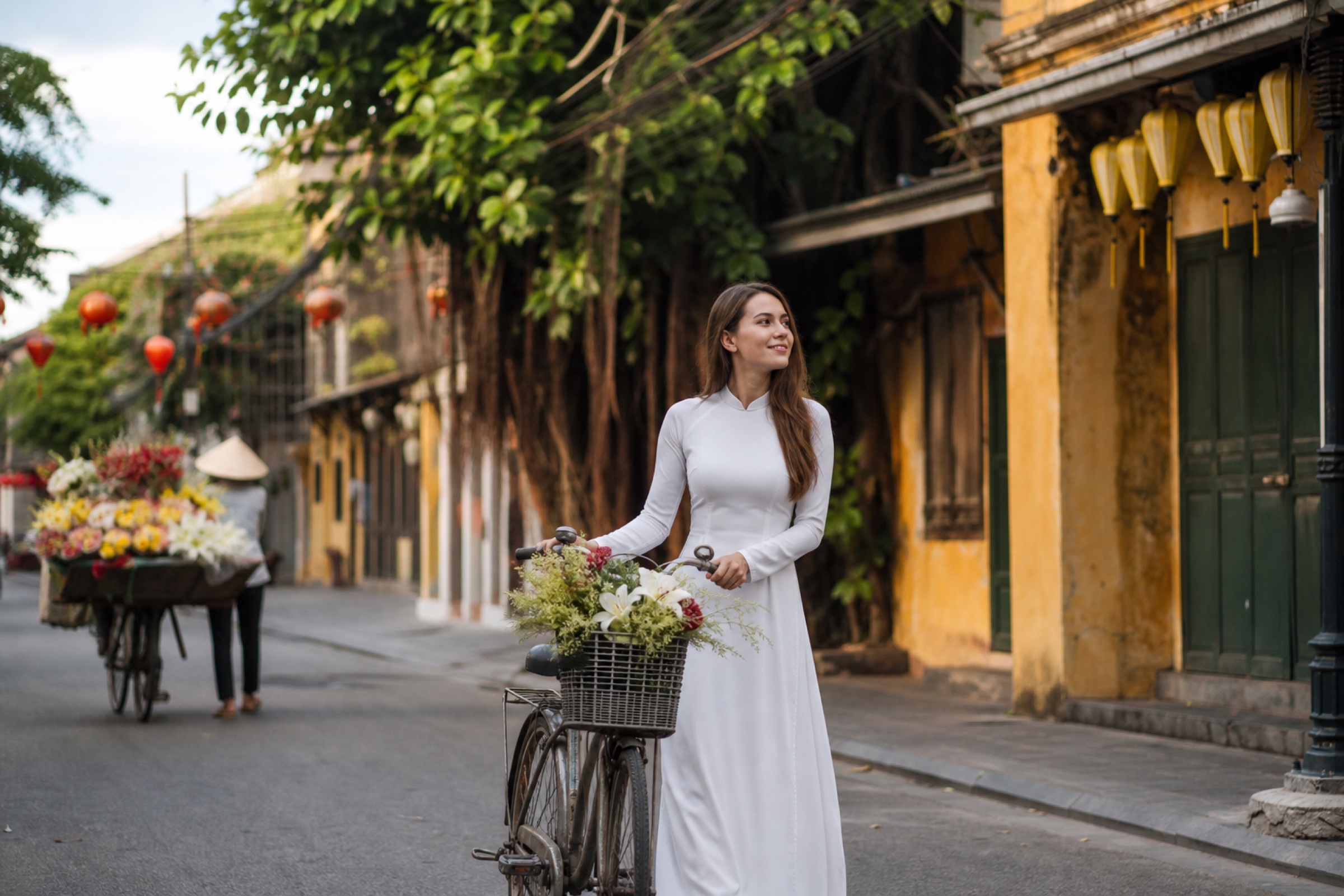
Ninh Binh day trip photoshoot: rice fields, boats and what to wear
Ninh Binh's limestone mountains, sampan boats and layered rice terraces make it Vietnam's most photogenic day trip. We shoot here weekly and know exactly when the light turns magical—and what goes wrong if you don't prepare.
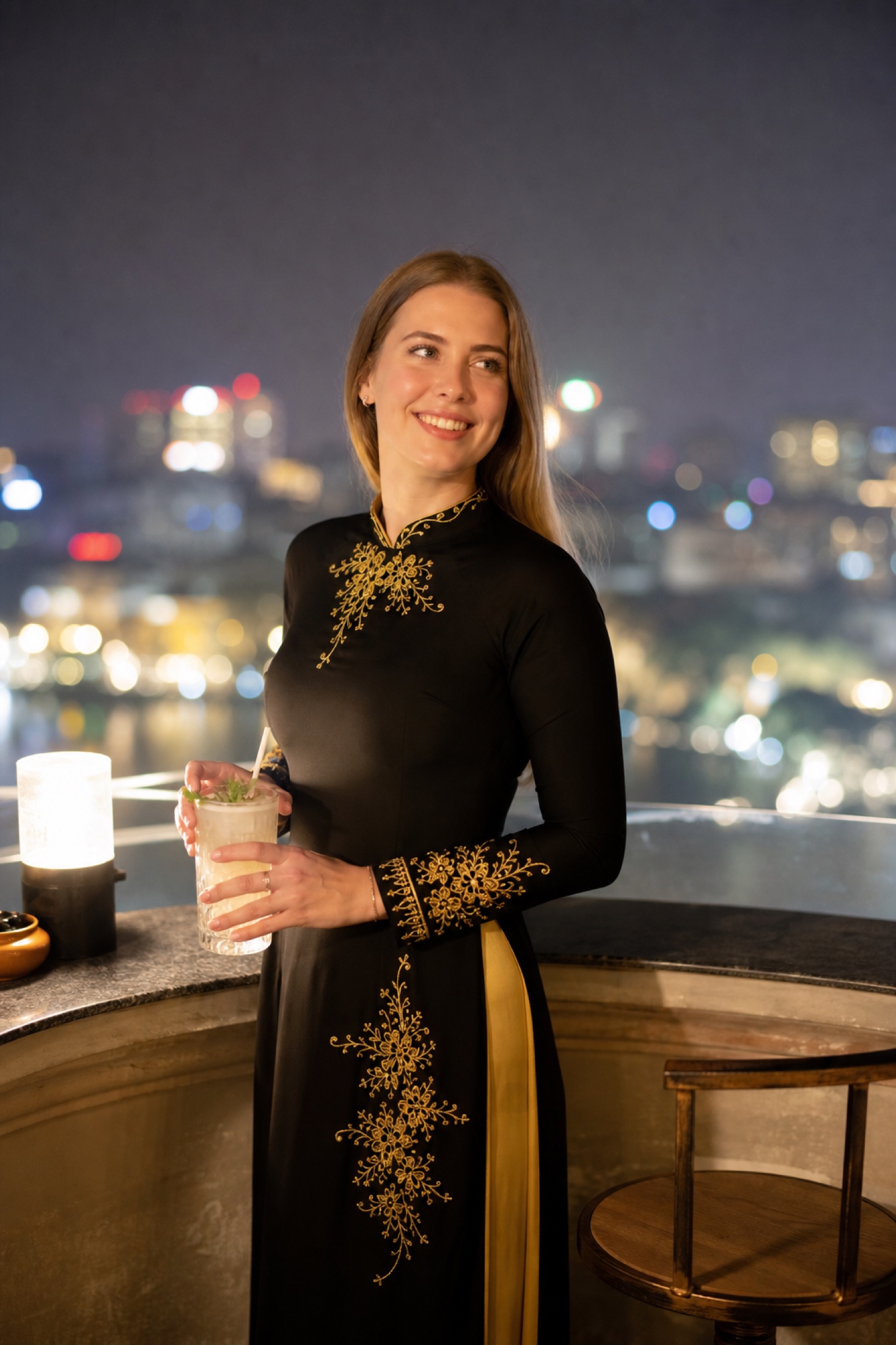
Night in Saigon: neon, rooftops and the vintage Vespa shoot
Saigon at night is cinema: neon signs reflecting off wet streets, rooftop venues buzzing at 11 p.m., vintage Vespas parked under sodium lights. Cáo Studio runs these night shoots for couples, solos and groups who want to capture that electric, moody energy the city is known for.