 Cáo Studio
Home › Blog › Pre-Wedding & Elopement
Hidden photo corners near Cat Cat village for couples
By the Cáo Studio team · Hanoi & Saigon · 2026-11-04
Cat Cat village near Sapa sits on a steep mountainside, and couples often ask us where to find quiet backgrounds beyond the main terraces. We work here year-round and scout angles the day before each shoot: narrow stone paths between homestays, rice paddies lit gold at 4 p.m., and a small stone bridge where mist clings at sunrise. Most photo corners hide 50–200 metres from the main walking route—far enough for privacy, close enough to walk in 15 minutes with your gear. Cáo Studio books these spots with local guides; we pay a small access fee and never shoot during peak hours (10 a.m.–2 p.m.). A couple photoshoot here runs four hours. Avoid the rainy season (May–September) unless you want moody grey skies—light is flattest then, and paths turn slippery. Chat with us on WhatsApp
Where do you actually find these hidden corners?
We don't keep one secret list—we build a new route each season. Stone lanes between H'Mong homestays near the village centre have soft morning light and textured walls that frame faces well; we walk guests up and let them pick a doorway. A second cluster sits on the eastern rim, where terraces drop steeply and offer wide valley vistas behind; the path narrows here, so only two or three photo spots work, but the depth feels cinematic. Below the main village square, a smaller terrace catches late-afternoon sun and has fewer tourists. We always visit the night before to check light angles, puddles, loose stones, and whether locals are using the space. If a homestay owner is working nearby, we introduce ourselves and ask permission. This respect keeps these spots open for future couples.
What time of day gives you the best light?
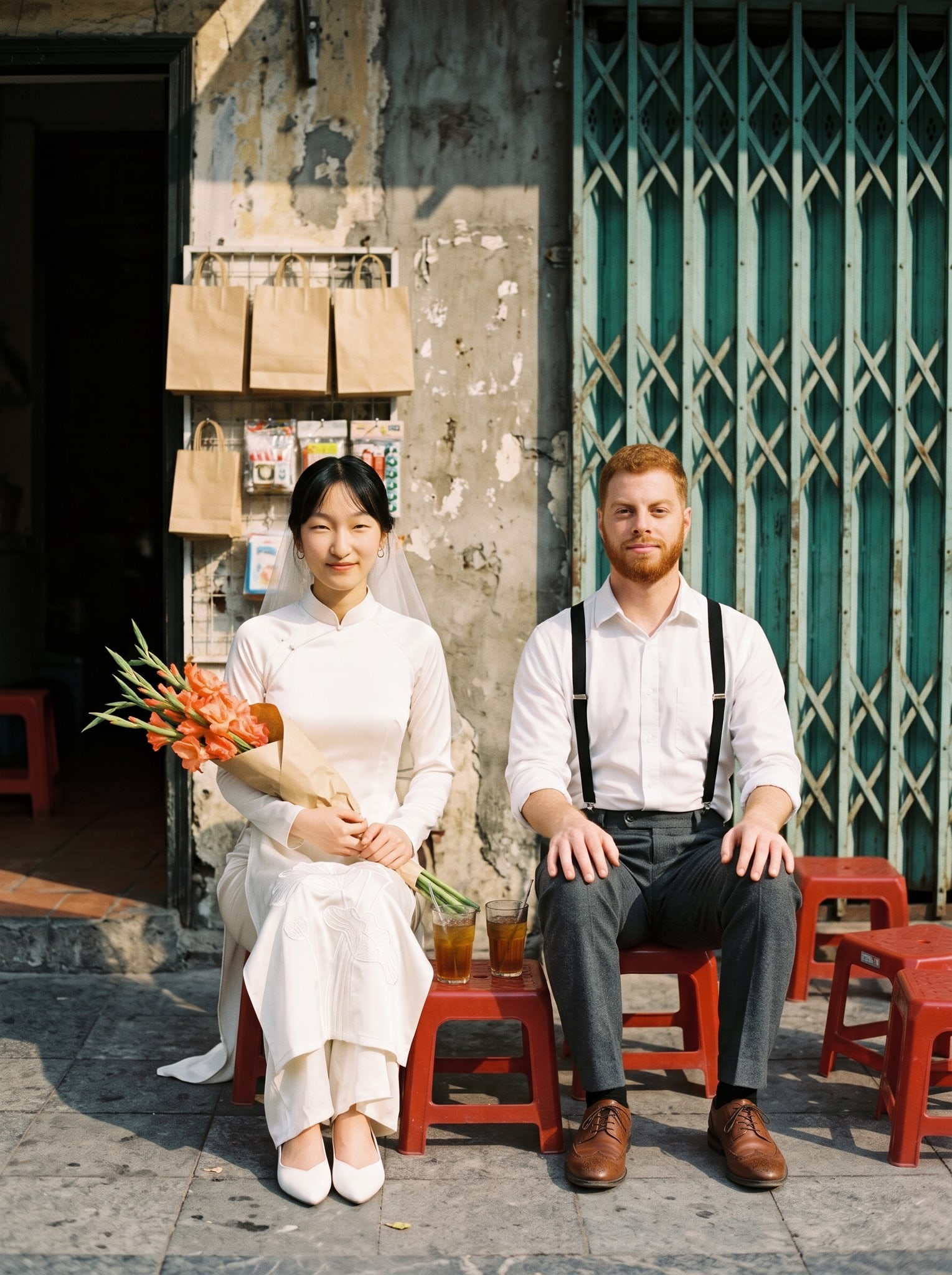
Light changes everything at Cat Cat. Early morning (6–7 a.m.) brings soft, diffused gold before clouds roll in; shadows are gentle and skin tones sit warm. By 9 a.m., overcast skies flatten colour and erase contrast—fine for detail shots, flat for romance. Late afternoon (3–5 p.m.) is our favourite window: side-light grazes the terraces, mist starts to pool in the valley below, and couples' silhouettes become dramatic against the landscape. We time pre-wedding photoshoots to hit this window, which means starting at 1 p.m., hiking slowly, and shooting between 3:30 and 4:45 p.m. Rain can arrive fast; if clouds thicken mid-shoot, we pivot to covered spots (homestay interiors, bridges) and shoot moody close-ups instead. Golden hour here lasts roughly 45 minutes before light falls cold and grey.
See packages and prices on vietnamphotoshoot.com
Which corners work best for which couple styles?
Our couples fall into a few patterns, and we match them to spots accordingly. Romantic, intimate couples thrive on narrow stone paths with close walls—we frame them tight, use natural doorways, and let the village wrap around them. Adventure-focused couples want wide valley shots and dramatic height; we take them to the eastern terrace rim, even though the walk is steeper. Playful couples love the lower terraces where H'Mong children sometimes walk by; we capture genuine reaction and movement, not posed stillness. Couples who speak Vietnamese often request homestay interiors—sitting by a fire, hands over tea—because it feels lived-in and authentic. Each style needs different timing, paths, and patience. We ask during WhatsApp planning which mood fits your story, then scout that specific route the day before.
| Corner Type | Best For | Light Window | Walk Time | Why It Works |
|---|---|---|---|---|
| Stone lanes (village centre) | Intimate, framed shots | 6–8 a.m. or 3:45–5 p.m. | 10 min | Textured walls, soft shadows, privacy |
| Eastern terrace rim | Wide landscape drama | 3:30–5 p.m. | 25 min | Valley depth, mist, silhouettes, exposure |
| Lower working terrace | Movement, candid moments | 4–5:30 p.m. | 15 min | Active village life, warm side-light, human scale |
| Homestay interior + bridge | Moody, intimate, rainy backup | Any time | 5 min | Authentic interiors, covered shelter, close framing |
What do you need to know before booking a shoot here?
Altitude matters more than most couples expect. Cat Cat sits at roughly 1,400 metres; couples arriving from sea level often feel breathless after a 20-minute hike, and we slow the pace. We ask guests to arrive acclimatised or to let us know in advance so we plan extra rest stops. Homestay owners sometimes expect a small tip if we shoot near their doors—nothing formal, but 50,000–our current quote is courteous. Paths can be wet and loose even when it hasn't rained; we bring hiking boots and ask couples to wear shoes with grip (not sandals). Phone signal drops in certain valleys, so we brief guests beforehand: we stay in contact via radio, and you won't see real-time images until we return to the village. Weather shifts fast—we always have a backup indoor plan. If you arrive during peak tourist season (December–February), morning light is our only quiet window, so we book 6 a.m. starts.
How does Cáo Studio prep and execute these shoots differently?
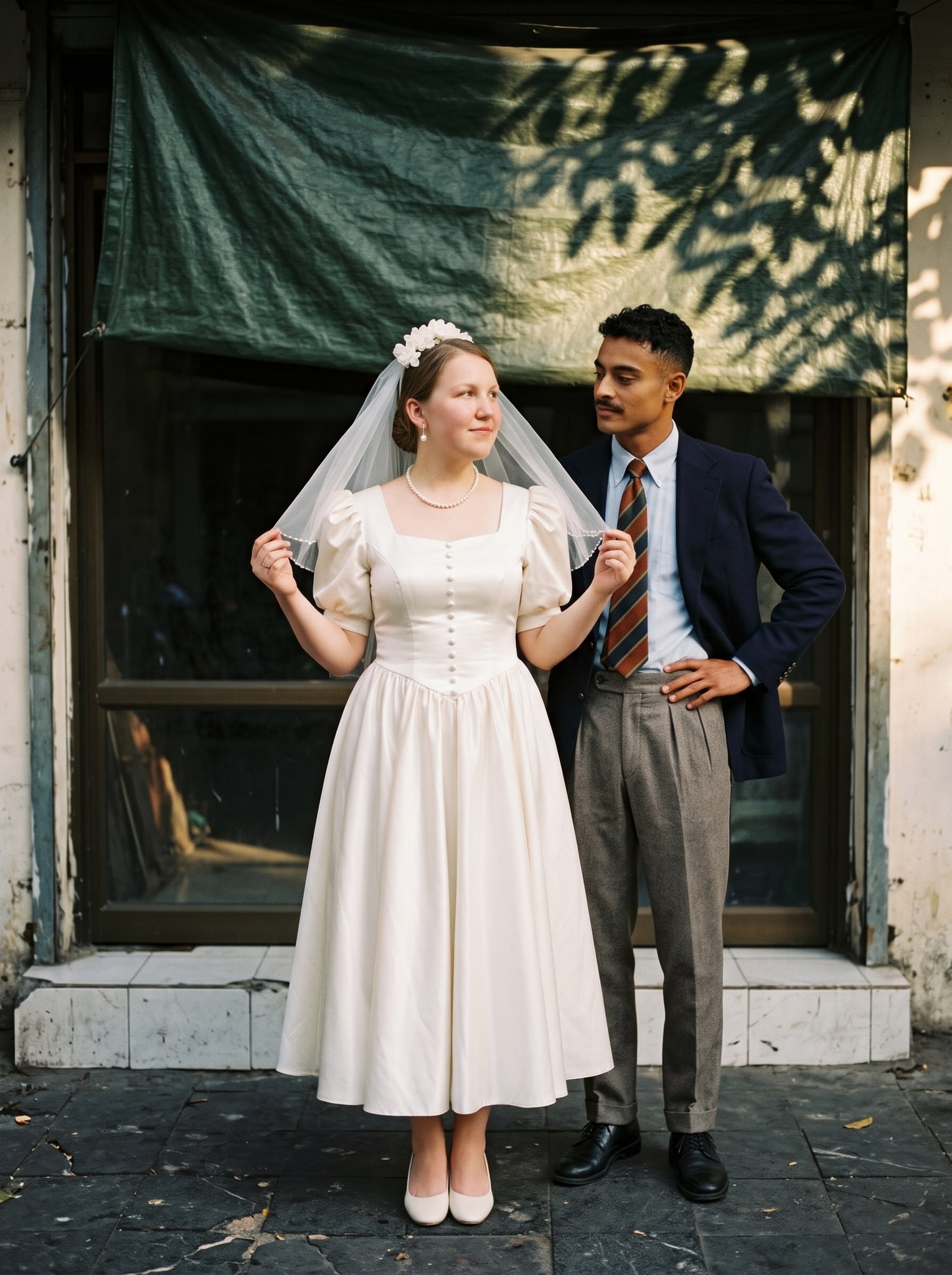
We don't treat Cat Cat as a scenic drive-through—it's a four-hour immersion. The night before, our photographer and a local guide hike all corners, photograph the light, and mark the safest paths on our phones. Hair and makeup happen in your Sapa hotel at 4 a.m., so you're camera-ready before we leave (we offer makeup and hair at your hotel as an add-on). We arrive at Cat Cat by 5:45 a.m., walk to our first corner by 6:15 a.m., and shoot in that one spot for 45 minutes before moving. We've learned that couples rush if we jump between corners; stillness and repetition yield better frames. By late afternoon, we've covered three or four locations, shot 800–1,200 images, and exhaustion is real. We factor in a tea or water break midway, usually in a homestay, where the owner offers shelter and stories. Most couples tell us later that the quiet time on the paths mattered more than the photos themselves. That's the point we aim for at Cáo Studio Hanoi—we're not rushing; we're collecting moments.
What could go wrong and how do we fix it?
Weather surprises us often. Dense fog rolled in at 7 a.m. last February while we were shooting near the rim; we pivoted immediately to the stone lanes where mist stayed atmospheric rather than obscuring faces. A couple's makeup artist forgot powder, so we used blotting paper and a dry cloth—not ideal, but the images still glowed. One guest's hiking boots weren't broken in; her heels blistered by 2 p.m., so we moved closer to the village and finished via close-up portraits. We've had locals ask us to move because a wedding ceremony was starting in a courtyard—we went elsewhere without complaint and actually found better light two minutes' walk away. A photographer's camera battery drained faster in the cold; now we carry four batteries instead of two. We once scheduled a sunset shoot without checking the calendar—locals were harvesting rice, and paths were too busy. We now cross-check seasonal activities with our local guides before confirming dates. Mishaps are solved by patience, local relationships, and backup plans we build into every itinerary.
See our couple packages now
What to check before you book
- Fitness level: Can you walk 1–2 hours uphill with rest stops? Tell us honestly; we adjust routes accordingly.
- Acclimatisation: If flying from low altitude, arrive at least one day early to adjust.
- Shoes: Wear hiking boots with grip, not sandals or city shoes.
- Weather window: Dry season (October–April) offers clearer skies; May–September means mist and occasional rain, which we can use creatively.
- Timing: Request early starts (5:30–6 a.m.) if you want quiet; mid-morning crowds are heavy.
- Backup indoor plans: Ask us what we do if heavy rain arrives mid-shoot.
FAQ
Can we shoot at Cat Cat if we're not staying overnight in Sapa?
Yes. We've worked with couples staying in Sapa town and driving up at 5:30 a.m. Makeup and hair happen at your hotel, so you're ready by the time the car arrives. It's a full day, but doable without staying in the village itself.
How many images do we get from a Cat Cat shoot?
We deliver 800–1,200 raw images, with 150–250 edited final photos selected and retouched. Exact counts depend on light and how many locations we cover. Ask us for details when you message on WhatsApp.
Is it safe to walk these paths in the dark for sunrise shots?
We always hire a local guide who walks ahead with a headlamp. Paths are uneven but not exposed or dangerous if you move slowly. We've never had an accident, but we take two hours to walk what takes locals 30 minutes.
What's the weather like in December versus April?
December is coldest (5–15°C), clearer skies, occasional frost on grass—stunning light but bring layers. April is warmer (15–25°C), more cloud cover, but still mostly dry. Both are excellent. May onwards brings rain and thick mist, which we can use but it's less predictable for light.
Can we bring family or a friend to watch the shoot?
Yes, but not on narrow paths where spacing matters. We recommend family or friends wait in a homestay with tea, and we bring them into the final 30 minutes of shooting for candid reunion shots. Ask us about proposal and anniversary package if you want a surprise reveal moment.
Do you work with other photographers or studios at Cat Cat?
No—we book corners exclusively during your shoot time and work only with our own team. This means you won't see strangers in your frames and we control the pace and safety. It's part of what Cáo Studio Saigon team and our Hanoi photographers include in the experience.
Pre-Wedding & Elopement
Inclusions, prices and booking are on our booking site.
FAQ
Can we shoot at Cat Cat if we're not staying overnight in Sapa?
Yes. We've worked with couples staying in Sapa town and driving up at 5:30 a.m. Makeup and hair happen at your hotel, so you're ready by the time the car arrives. It's a full day, but doable without staying in the village itself.
How many images do we get from a Cat Cat shoot?
We deliver 800–1,200 raw images, with 150–250 edited final photos selected and retouched. Exact counts depend on light and how many locations we cover. Ask us for details when you message on WhatsApp.
Is it safe to walk these paths in the dark for sunrise shots?
We always hire a local guide who walks ahead with a headlamp. Paths are uneven but not exposed or dangerous if you move slowly. We've never had an accident, but we take two hours to walk what takes locals 30 minutes.
What's the weather like in December versus April?
December is coldest (5–15°C), clearer skies, occasional frost on grass—stunning light but bring layers. April is warmer (15–25°C), more cloud cover, but still mostly dry. Both are excellent. May onwards brings rain and thick mist, which we can use but it's less predictable for light.
Can we bring family or a friend to watch the shoot?
Yes, but not on narrow paths where spacing matters. We recommend family or friends wait in a homestay with tea, and we bring them into the final 30 minutes of shooting for candid reunion shots. Ask us about [proposal and anniversary package](/go/proposal-and-anniversary) if you want a surprise reveal moment.
Do you work with other photographers or studios at Cat Cat?
No—we book corners exclusively during your shoot time and work only with our own team. This means you won't see strangers in your frames and we control the pace and safety. It's part of what [Cáo Studio Saigon](/go/saigon) team and our [Hanoi](/go/hanoi) photographers include in the experience.
More from the team
Photography rules at Ta Phin village: permits, drones and what to check
Ta Phin village in Sapa draws photographers for its Hmong culture and layered mountain light. We've shot dozens of sessions there—here's what actually works and what stops shoots cold.
Pre-Wedding Photo Ideas and Poses at O Quy Ho Pass
O Quy Ho Pass sits on the Hanoi–Sapa border at 1,200 metres. Our couples shoot there for its curves, mist and isolation—but the weather and logistics demand a different approach than valley shoots.
Is O Quy Ho Pass Good for Pre-Wedding Photos? Pros, Cons, Alternatives
O Quy Ho pass in Sapa draws couples seeking high-altitude drama, but tight timelines, unpredictable fog, and logistics make it risky for pre-wedding shoots. We've scouted it; here's what actually works. #