 Cáo Studio
Home › Blog › Pre-Wedding & Elopement
Hidden photo corners near Cholon and Thien Hau Pagoda for couples
By the Cáo Studio team · Hanoi & Saigon · 2026-11-02
Cholon (District 5) and Thien Hau Pagoda sit within walking distance and offer texture most tourists miss: narrow shop-lined alleys with soft morning light, incense-filled temple courtyards, red lantern passages, and weathered wooden storefronts that frame couples naturally. We've shot here across seasons and found that 6–7 a.m. beats mid-morning for clean light and fewer vendors; the pagoda interior allows photos before 9 a.m. if you're respectful of worshippers. Couples usually spend 2–3 hours in the zone. Our team books these as part of pre-wedding and elopement packages, mixing Cholon's street character with the pagoda's spiritual weight. Expect tight alleys, uneven pavement, and crowds after 8 a.m.—plan accordingly or shoot earlier. Chat with us on WhatsApp | See packages and prices on vietnamphotoshoot.com
Why Cholon feels different on camera than guidebook photos
Cholon's reputation rests on its Chinese-Vietnamese heritage, but most visitors photograph only the obvious: the front gate of Thien Hau Pagoda, the main market corridor. We've learned that couples' sessions shine in the side streets—Nguyen Hue, Tran Hung Dao, the tiny alley behind the old herbalist quarter near Chau Van Liem street. The light is softer there; buildings crowd closer, creating natural frames. Walls fade from ochre to rust-brown. Motorbikes pass less often. We notice Vietnamese couples themselves scout these spots before their own shoots—locals know the light works best before the sun clears the five-story shophouses. One detail: the alley where an elderly woman sells soup from a wooden cart (near the corner of Chau Van Liem and Nguyen Hue) becomes almost empty by 6:45 a.m., and the golden hour reflection on the wet pavement shoots beautifully then. By 9 a.m., it's crowded and the light is flat.
Our decision: if a couple books with us for Cholon, we arrive by 6:30 a.m., even if it means the couple joins us in their áo dài still groggy from the hotel. The first 90 minutes yield 40 % of the day's keepers. After 8 a.m., we shift to the pagoda courtyard (which opens earlier than most realize) or move to less-trafficked passages inside the market itself.
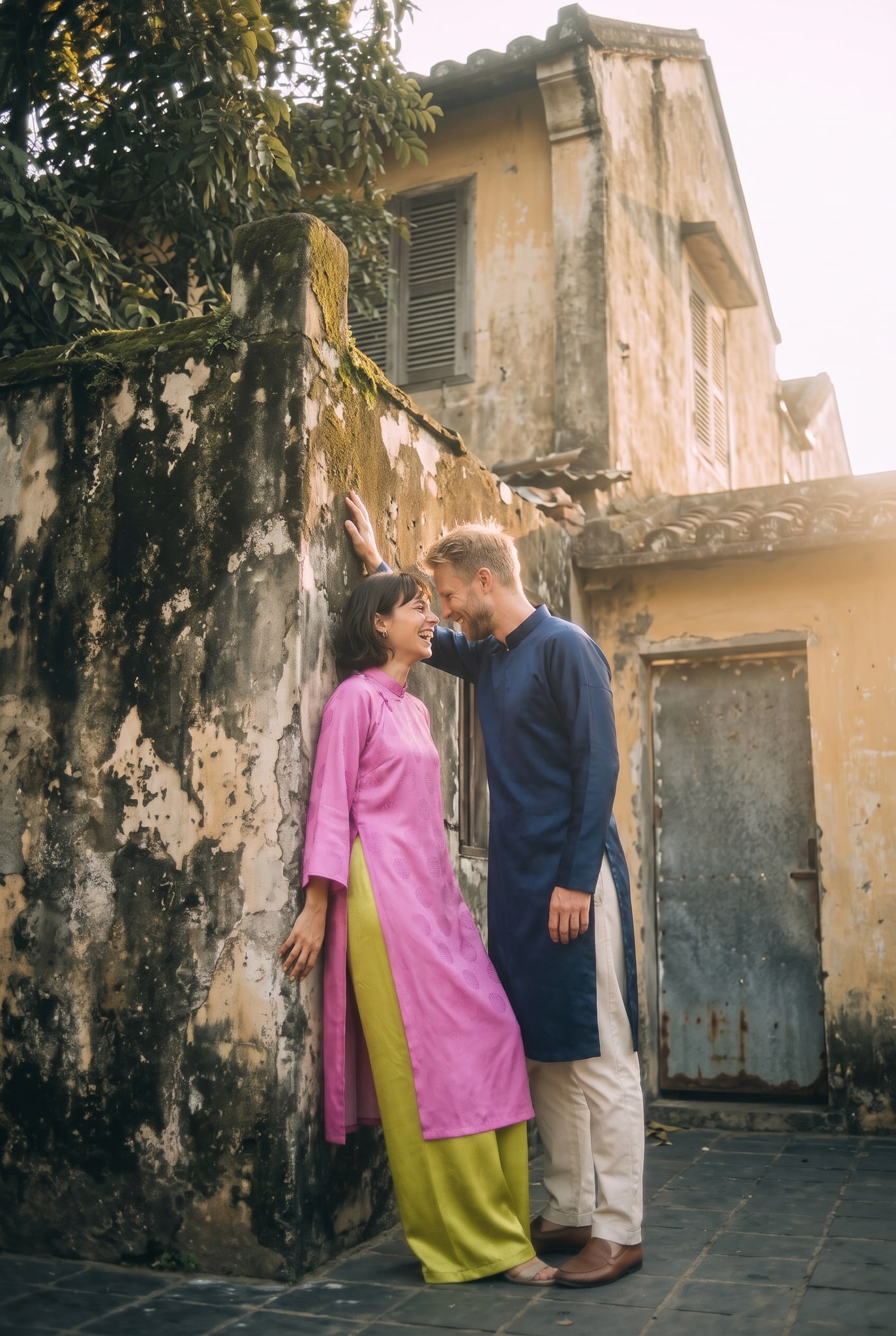
How Thien Hau Pagoda's interior compares to outdoor Cholon shots
Thien Hau's courtyard is sacred space—incense, prayer, ritual—and it demands a different approach than street photography. Inside, we shoot sparingly, respecting the rhythm of morning prayers. The light here is moody: shafts through high windows, shadows from carved wooden screens, the glow of altar candles. Couples often feel the reverence of the place and their poses become more genuine, less performative. We've found that a quiet moment under the pagoda's eaves, with the couple framed against red lanterns and the main altar visible soft in the background, reads as more intimate than any Cholon alley photo. The challenge is permission and timing: we brief couples that phones and cameras are allowed but we remain quiet, and we never ask anyone to "perform" prayer or light incense for the camera. If a couple wants a moment inside the main prayer hall, we ask the monks—sometimes yes, sometimes no, and we accept either answer without negotiating.
The comparison matters for pre-wedding photoshoots: some couples want the grit and energy of Cholon streets (warmer, more documentary feel); others want the contemplative, almost meditative quality of the pagoda interior. A few want both, and that's fine—we just protect the timing. Pagoda first (6:30–7:30 a.m.), then Cholon alley work (7:45–9:00 a.m.), then we move to the market itself or a nearby café for lighter, airier frames as the sun climbs.
What goes wrong in Cholon and how we fix it
We've learned the hard way. Early sessions: we arrive with a couple in full áo dài at 8 a.m., expecting quiet. The market is already open, vendors are setting up, the light is overhead and unflattering, and a minor procession of worshippers walks past us every 90 seconds. Couple gets tired, photographer rushes, poses feel stiff. Now we tell couples on WhatsApp 48 hours before: arrive by 6:30 a.m., bring a light jacket, expect narrow alleys and uneven pavement, and wear shoes you can walk in (not heels on wet stone). We also scout the exact alleys the week before if weather has been heavy rain—flooded passages or stacked sandbags block ideal corners sometimes.
Another issue: respectful distance from worshippers inside Thien Hau. One couple wanted a photo in front of the main altar while prayers were happening. We said no, and redirected them to a side courtyard where the light was actually better and no one's practice was interrupted. The couple understood. That's the boundary we hold.
Vendor haggling also happens—shop owners sometimes want a small fee for us to shoot outside their storefront. We negotiate quietly (never in front of the couple), pay if asked (a small amount, no cameras rolling), and move on. It's faster and kinder than arguing about rights. Our couples never see this; it's our job to solve.
| Corner Type | Best Time to Shoot | Light Quality | Crowd Level | Vibe for Couples |
|---|---|---|---|---|
| Herbalist alley (near Chau Van Liem) | 6:30–7:15 a.m. | Golden, soft | Very low | Intimate, textured |
| Thien Hau courtyard | 6:45–7:45 a.m. | Dappled, moody | Low (prayers only) | Contemplative, sacred |
| Market main passage | 7:30–8:30 a.m. | Warm side-light | Moderate | Vibrant, energy |
| Red lantern alley (Tran Hung Dao side) | 6:45–7:30 a.m. | Golden reflections | Very low | Romantic, heritage |
| Wet stone courtyards (after rain) | 7:00–8:00 a.m. | Mirror-like, dramatic | Low | Moody, cinematic |
The table above shows where we send couples for each mood and what hour locks in the light. We choose the corners based on their áo dài color (bright silk reads best in soft morning light; navy or black can handle more contrast), their comfort with crowds, and whether they want documentary energy or romantic stillness.
Chat with us on WhatsApp | See packages and prices on vietnamphotoshoot.com
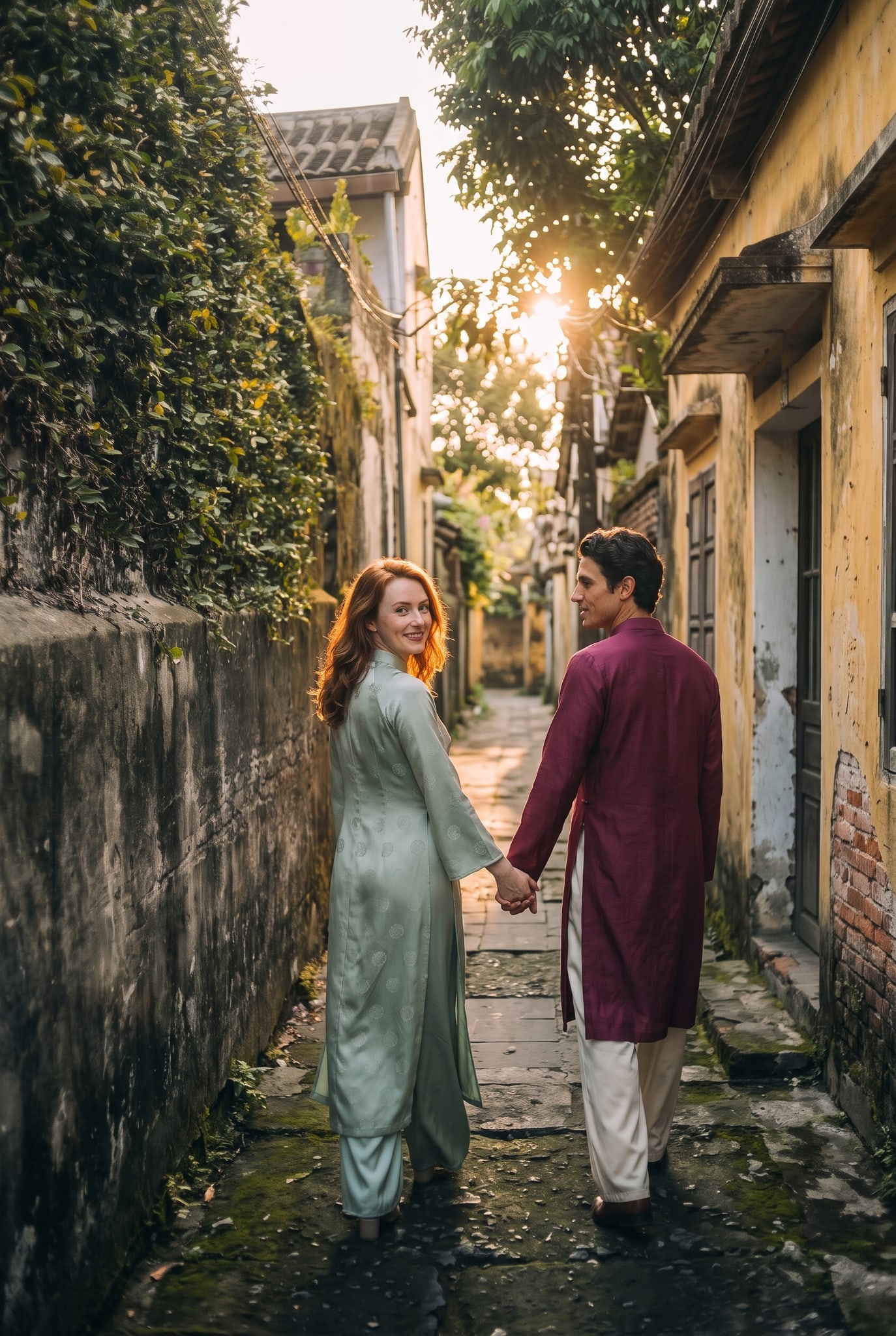
How to prepare your couple session in Cholon before you book
Before you commit to a Cholon + Thien Hau shoot, check three things. First: do you and your partner want early morning (yes, we mean 6:30 a.m.)? If sleep-in is non-negotiable, Cholon doesn't work well—we'd pivot to an afternoon session elsewhere or a later 8 a.m. compromise with adjusted locations. Second: can you walk 2+ km over 3 hours on uneven pavements? The alleys are narrow, some streets are cobbled or broken asphalt, and there are steps in and out of courtyards. Comfortable shoes matter; heels don't work. Third: áo dài or regular clothes? Áo dài photographs beautifully here (it's heritage-appropriate and the fabric moves in alleys), but it restricts movement. If you choose it, tell us so we adjust poses—no climbing, no crouching, more standing and walking. We include áo dài rental in our packages, so that's already sorted if you want it.
One more: if you're booking this as part of a broader pre-wedding story, build in time for hair and makeup. A 6:30 a.m. shoot means hair and makeup at your hotel by 5:15 a.m. We can provide makeup and hair at your hotel, so the couple doesn't have to travel. That removes stress and ensures you're camera-ready when we meet on the street.
Choosing between Cholon, Thien Hau, and a blended session
Some couples ask: should we shoot just Cholon, just the pagoda, or split the day? Here's our honest read. Cholon alone (2 hours) is vibrant but can feel shallow if you're looking for emotional depth—it's a visual feast but lacks the spiritual pause. Thien Hau alone (1.5 hours) is intimate and meaningful but runs short and feels incomplete without the street texture of Cholon. A blended session (3–4 hours total, which is what we typically frame in our pre-wedding package) gives you both: the documentary energy of Cholon streets, the reverence of the pagoda, and enough variety that the couple sees themselves in multiple "characters"—spontaneous in the alleys, tender in the courtyard, playful near the lanterns. We've found blended sessions yield the most memorable photos because the couple's mood shifts naturally across locations, and each shift feels earned.
The trade-off is stamina. If you're tired, emotionally drained, or on a tight schedule, split your shoot: Cholon and Thien Hau on one day (earlier, lighter), and a second location elsewhere on another day. It costs more but protects quality. Some couples do exactly that with our couple photoshoot package booked across multiple days.
Chat with us on WhatsApp | See packages and prices on vietnamphotoshoot.com
Real details from our last five Cholon sessions
In January, a couple arrived at 6:35 a.m. in their áo dài and found the street wet from overnight cleaning. We pivoted: instead of the usual alley, we shot the reflection of the lanterns on the wet pavement—some of the most striking images of the day came from that accident. The couple loved the moody feel, and we learned to check the weather report and plan a backup idea for rain. In March, a couple's grandmother came along and wanted to be in a few shots. We said yes, and some of the best frames were the three of them laughing in the herbalist alley—it added a layer of family story we hadn't expected. Last month, a vendor outside a fabric shop recognized us (we'd shot there before) and waved us into his courtyard for a private moment; we got 10 minutes of uninterrupted golden-hour light in a space no guidebook mentions. These aren't anomalies; they're what happens when you're on the ground early, moving slowly, and respecting the place.
One couple wanted their 3-year-old daughter in a few frames during a Cholon session. We said yes carefully: we added 30 minutes to the timeline, chose the quietest alley, and let the girl move freely while we captured the parents' joy watching her explore. It changed the story from "couple shoot" to "family moment in a heritage place." If you're thinking of bringing kids or elders, tell us early so we plan for their pace and comfort.
FAQ
Can we shoot Thien Hau Pagoda interior if we're not Buddhist?
Yes. The pagoda welcomes respectful visitors. We ask you to dress modestly (long sleeves or covered shoulders), remove shoes in prayer halls, and step aside if monks or devotees are praying. We never ask you to perform rituals for the camera.
What if we don't want to wake up at 6 a.m.?
We can shift to 8 a.m., but light and crowds change significantly—the mood becomes brighter, busier, more touristy. Some couples prefer that energy. Tell us your preference, and we'll design the locations around it.
Do we have to wear áo dài, or can we wear regular clothes?
Either works. Áo dài reads as culturally rooted and photographs beautifully in heritage settings, but it limits movement. Regular clothes are easier to move in and feel more personal. We've shot both and the best photos come from whichever you're most comfortable wearing.
How long does a Cholon + Thien Hau session actually take?
Plan 3–4 hours including walking, waiting for light, and maybe a café break. We usually deliver 200–300 photos from that time. If you only have 2 hours, we focus on one zone (Cholon or pagoda, not both).
Is Cholon safe for a couple photoshoot, especially early morning?
Yes. Cholon is a residential and working neighborhood; early morning is actually the safest and most peaceful time. We've never had a safety incident. Stay with your photographer, don't flash expensive jewelry, and keep phones secure—same common sense as anywhere urban.
What if the weather is bad on our shoot day?
Rain is common in Saigon. Light rain can be beautiful (wet reflections, moody light), but heavy rain makes the alleys unsafe and unpleasant. We monitor the forecast, and if severe weather is predicted, we reschedule. We give you options 48 hours before.
Pre-Wedding & Elopement
Inclusions, prices and booking are on our booking site.
FAQ
Can we shoot Thien Hau Pagoda interior if we're not Buddhist?
Yes. The pagoda welcomes respectful visitors. We ask you to dress modestly (long sleeves or covered shoulders), remove shoes in prayer halls, and step aside if monks or devotees are praying. We never ask you to perform rituals for the camera.
What if we don't want to wake up at 6 a.m.?
We can shift to 8 a.m., but light and crowds change significantly—the mood becomes brighter, busier, more touristy. Some couples prefer that energy. Tell us your preference, and we'll design the locations around it.
Do we have to wear áo dài, or can we wear regular clothes?
Either works. Áo dài reads as culturally rooted and photographs beautifully in heritage settings, but it limits movement. Regular clothes are easier to move in and feel more personal. We've shot both and the best photos come from whichever you're most comfortable wearing.
How long does a Cholon + Thien Hau session actually take?
Plan 3–4 hours including walking, waiting for light, and maybe a café break. We usually deliver 200–300 photos from that time. If you only have 2 hours, we focus on one zone (Cholon *or* pagoda, not both).
Is Cholon safe for a couple photoshoot, especially early morning?
Yes. Cholon is a residential and working neighborhood; early morning is actually the safest and most peaceful time. We've never had a safety incident. Stay with your photographer, don't flash expensive jewelry, and keep phones secure—same common sense as anywhere urban.
What if the weather is bad on our shoot day?
Rain is common in Saigon. Light rain can be beautiful (wet reflections, moody light), but heavy rain makes the alleys unsafe and unpleasant. We monitor the forecast, and if severe weather is predicted, we reschedule. We give you options 48 hours before.
More from the team
Boho pre-wedding photoshoot in Vietnam: Hanoi, Saigon, Hoi An
Boho pre-wedding shoots mix romantic, free-spirited aesthetics with Vietnam's landscapes and heritage sites. We run full-day sessions in three cities, handling styling, makeup, location scouts and edits.
Avoid crowds at Hoang Su Phi rice terraces: timing for wedding shoots
Hoang Su Phi's terraced landscape draws couples and tour buses in equal measure. We show how to shoot there alone, when to arrive, and what to arrange with us before you go.
Photography rules at Con Dao beaches: permits, drones and what to check
Con Dao's beaches demand prep before you shoot—permits, drone zones and tide timing all affect your day. We share what the Cáo Studio team verifies on every booking.