 Cáo Studio
Home › Blog › Pre-Wedding & Elopement
Hidden photo corners near O Quy Ho pass for couples
By the Cáo Studio team · Hanoi & Saigon · 2026-11-02
O Quy Ho pass (Heaven's Gate) sits at 2,000m elevation on the road between Ninh Binh and Thai Nguyen, delivering Alpine scenery without the crowds of Sapa. The pass itself is a 10–20 minute stop for photo ops at the main overlook and stone gateway, but hidden corners—abandoned tea terraces, mist-filled ravines, stone walls overgrown with moss—lie 5–15 minutes walk uphill or along service roads. We scout these spots in pre-dawn or late afternoon when light is soft and tourists thin. A full pre-wedding photoshoot at O Quy Ho typically runs 3–4 hours including travel from Hanoi (2.5 hours each way) and location changes. Couples choose this pass for drama and isolation; bring layers, sturdy shoes, and expect uneven terrain. We handle styling, makeup at your hotel in Hanoi beforehand via hotel makeup and hair, or on-site if weather holds. Chat with us on WhatsApp
Why couples pick O Quy Ho over famous Vietnam passes
O Quy Ho stays quiet compared to Sapa or Fansipan because it's not a tourism destination—it's a pass that locals use. Most visitors see only the main gate and overlook, shoot their photos in 15 minutes, and leave. We've noticed over dozens of shoots there that couples who arrive early (5:00–6:30 am) or late (4:00–5:30 pm) find mist clinging to the valleys, light hitting old stone terraces at an angle that reads magical in film. The pass lacks crowds, souvenir stands, and tour groups, so your couple's session feels private. We chose to work there because the terrain itself—steep, layered, with rock outcrops and grass—naturally frames poses without needing props. The downsides: weather changes fast (rain, fog, wind), roads are narrow and sometimes slick, and altitude affects energy. Our team arrives 30 minutes early to assess light, wind, and footing.
What the three main hidden corners actually look like
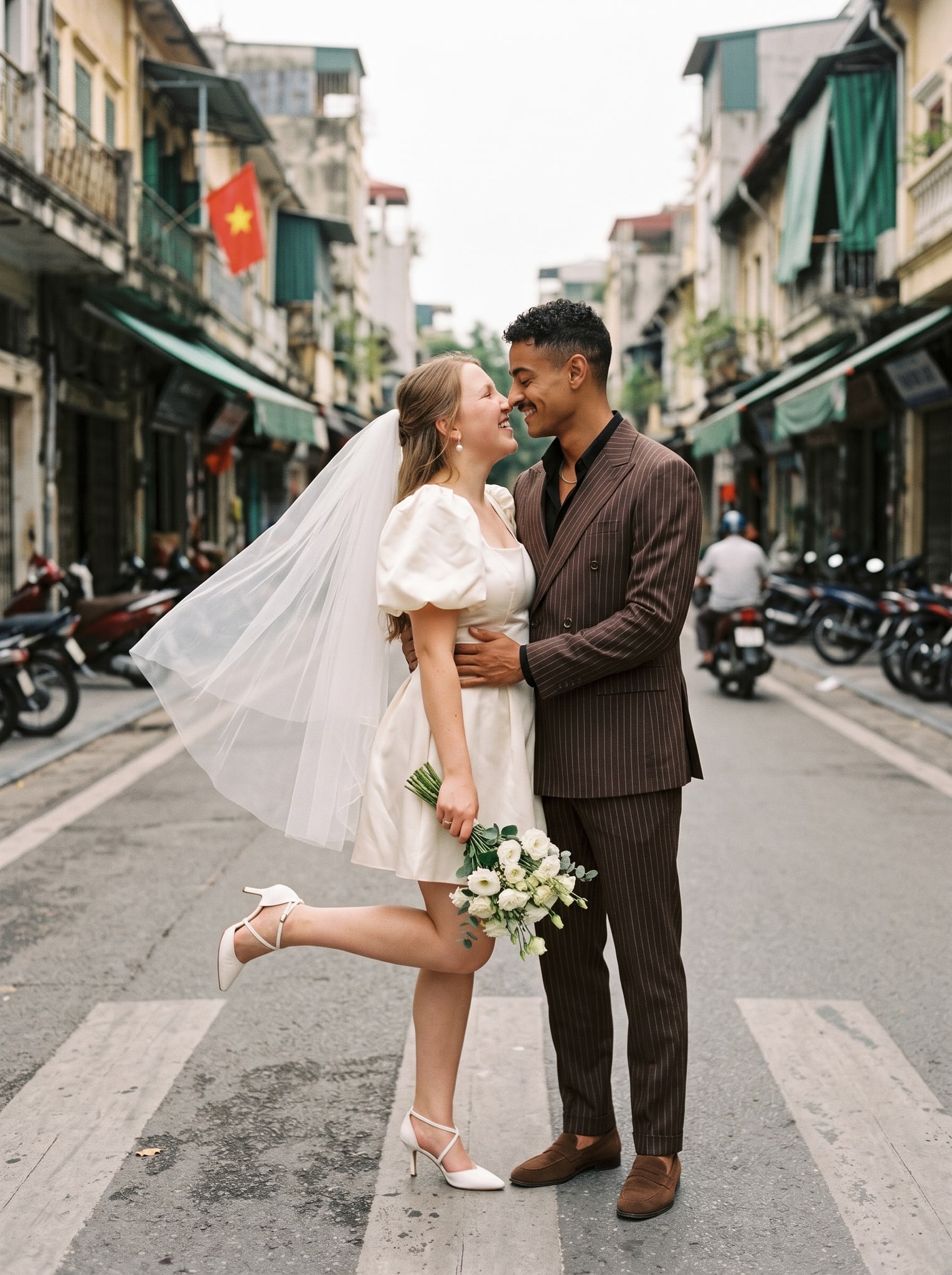
We return to three zones at O Quy Ho when we have time and weather on our side. Zone 1: the eastern stone wall sits 8 minutes' walk downhill from the main gate, hidden behind a utility building. It's an old checkpoint or military structure, maybe 4 metres high, covered in lichen and small plants. The wall catches morning light from the left, and the drop-off behind it frames the valley below. We use this for intimate, editorial-style shots—one partner against the stone, the other in the valley view behind. Zone 2: the overgrown tea terraces occupy the southern slope, accessible by a service road that's barely marked. Stepped stone walls run in curves, now soft with moss and small shrubs. Morning mist pools in the hollows. We've shot here on five sessions; each time the mist pattern was different. This zone is best 5:30–6:45 am. Zone 3: the ravine overlook is a flat rocky area 12 minutes uphill from the gate, with a sheer drop to the valley and no barrier. It's exposed, dramatic, and risky—we use it only for standing poses with secure footing, never movement. Each zone takes 20–30 minutes to shoot properly, so a full session hits two zones if timing and fitness allow.
| Hidden corner | Best light window | Terrain | Suit best for | Walk time from gate | Risk to watch |
|---|---|---|---|---|---|
| Eastern stone wall | 6:00–7:30 am | Steep descent, slick rocks | Editorial, intimate poses | 8 min | Wet moss, ankle roll |
| Tea terraces | 5:30–6:45 am | Uneven steps, overgrown | Movement, flowing dress | 10 min | Twisted ankle, dress snag |
| Ravine overlook | Late afternoon, 4:30–5:15 pm | Exposed, hard ground | Standing, dramatic silhouettes | 12 min | Wind, cliff edge, vertigo |
See packages and prices on vietnamphotoshoot.com
How weather and timing lock or kill your session
We've cancelled or shortened O Quy Ho shoots three times in the past year because wind gusts knocked a light stand, fog dropped visibility to 20 metres, and once a sudden downpour made the stone wall too slick to stand on safely. The pass sits in the cloud layer, so weather changes within 30 minutes and often twice daily. Morning shoots (5:00–7:30 am) give you the best odds: mist clears, light warms, and wind usually hasn't peaked. Afternoon sessions (3:00–5:30 pm) are second-best but rely on clouds breaking by 4:00 pm—if they don't, the ravine overlook becomes unusable and you're confined to lower zones. We tell couples on WhatsApp the night before: "Conditions look 70% for morning, 40% for afternoon. We'll shoot the zones we can and adapt in real time." Cáo Studio builds a flexible itinerary—we have two backup locations (lower terrain, closer to the road) if mist doesn't lift or wind spikes. Pack a windproof light layer (not just a dress), hiking boots or trail shoes (not heels, even for a second wardrobe), and a waterproof bag for the camera. We carry quick-dry cloths, a small tarp, and backup battery packs. If you're doing a couple photoshoot that spans the full day, we schedule O Quy Ho in the morning slot and lower-altitude locations (Ninh Binh towns, Hang Mua base, old pagodas) in the afternoon as fallback.
Preparing your body and wardrobe for the altitude and terrain
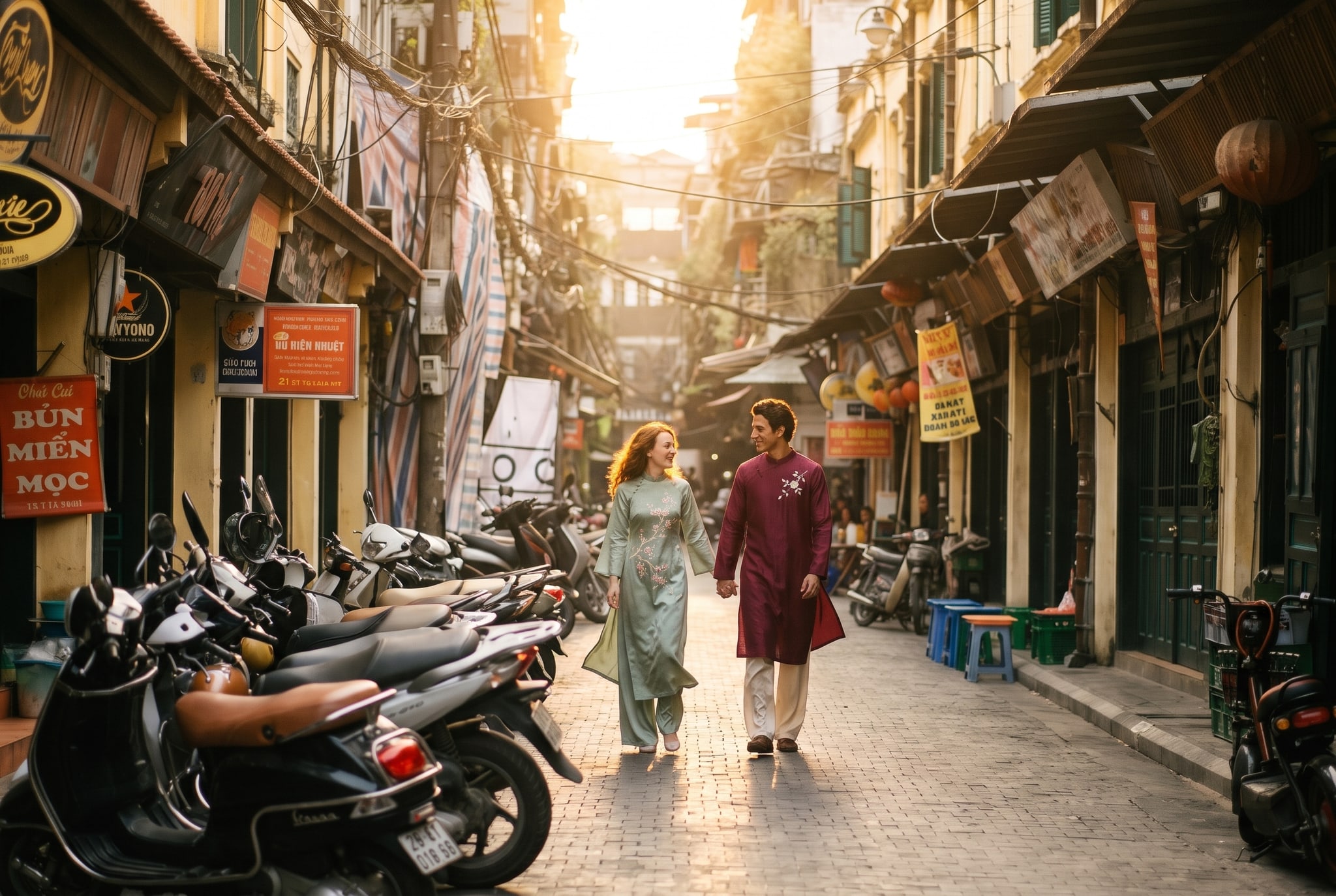
O Quy Ho is 2,000m high; some couples feel light-headed after 30 minutes of walking or feel winded climbing to zone 3. We advise arriving in Hanoi 2–3 days before the shoot to acclimate, drinking extra water, and eating a good breakfast. Couples in their 40s–50s have done fine; it's fitness and pacing, not age. For wardrobe, think layers and texture. A flowing ao dai or silk dress photograph beautifully against the moss-covered stone, but the hemline catches on rocks and steps—we tie the train up with safety pins or a concealed cord. For a Western wedding dress, a simple silhouette works better than heavy beading or long trains; bring a second, simpler outfit for the hike. Wear neutral or muted tones—white, cream, soft grey, champagne—because the landscape is already dramatic. Shoes: we've seen brides in heels slip and twist ankles on zone 1. We tell them to wear hiking boots or trail runners for the walk, change shoes for photos, then change back. Bring two pairs. On our last shoot there, the bride wore a champagne slip dress (no veil, no train) and changed into hiking boots with thick socks—she moved freely and the photos read elegant, not staged. Hair and makeup: morning shoots mean 4:30 am call time if you want hotel makeup and hair in Hanoi first. Wind at the pass unpins updos within 20 minutes, so we do loose waves, a low bun with soft tendrils, or a simple side part. We use long-wear matte makeup, not dewy, because mist and sweat blur it fast.
When to book and what to tell Cáo Studio on inquiry
We schedule O Quy Ho shoots for November–February (cool, clearer skies) and May (spring mist, soft light). March–April are too hot and hazy. June–October see monsoon rains and thick cloud. Book 3–4 weeks ahead so we can monitor weather forecasts and coordinate logistics (your Hanoi hotel, shoot day, backup dates). When you contact us on WhatsApp, tell us: your preferred dates (and 2–3 backup dates), whether you want a pre-wedding photoshoot (full day) or a quicker couple photoshoot (half day), your fitness level, and whether you're doing ao dai, Western dress, or both. If you're proposing at O Quy Ho, mention that upfront—we'll build in a moment at the ravine overlook (most dramatic backdrop) and brief your partner on footing. We'll tell you the cost basis (depends on duration and team size—photographer, makeup artist if needed, transportation, permit for certain zones), what's included, and payment options (online link, bank transfer, or cash in Hanoi). We also send you a WhatsApp guide the week before with a packing list, weather forecast, and a link to the story behind O Quy Ho so you know what to expect.
What to check before you commit to an O Quy Ho session
Before booking, ask yourself: Can I hike 30 minutes uphill in layers without getting winded? Do I have 4–5 hours free on my shoot day (including drive from Hanoi)? Am I okay with weather that might change in 20 minutes and force a pivot to lower zones? Do I own or can I borrow sturdy hiking shoes? Am I ready to wake at 4:00–4:30 am if we're shooting at dawn? If you answer yes to all five, O Quy Ho is a strong choice for a pre-wedding or couple session. If you have mobility issues, bad knees, or fear of heights, we recommend special concept shoots at lower-elevation spots around Hanoi—Hang Mua base in Ninh Binh, old French villas in Sapa town, or rice paddies near Hanoim where we can position you safely and still deliver drama without the climb. Ask our team on a call: they'll be honest about whether the pass suits your body and vision. Couples often assume they want O Quy Ho because it looks stunning in photos; it does, but only if you're prepared for the reality of altitude, wind, slippery stone, and early mornings. We've had couples choose it after a call with us and loved every minute. We've also had couples switch to Ninh Binh after learning about the terrain, and they were happier. Either way, we find you the backdrop that matches your body and mindset.
FAQ
How do I know if the weather will be good on my shoot day at O Quy Ho?
We monitor the forecast starting one week before your session and send you an update via WhatsApp 2–3 days ahead. On the morning of the shoot, we check conditions at 5:00 am and decide whether to proceed, adjust timing, or move to a backup location. We do this in real time with you.
Do I need to be fit to shoot at O Quy Ho?
You should be comfortable walking 30 minutes uphill without stopping. We move slowly, pause often, and adapt to your pace. People in their 50s have done the shoots well. If you have knee or ankle issues, tell us—we'll focus on lower zones or recommend a different location.
Can I wear a full wedding dress at O Quy Ho?
Yes, but a simple silhouette (no heavy train, no elaborate beading) works better on uneven ground. We tie up trains with safety pins and you'll change shoes frequently. Many couples wear a slip dress or simple A-line and change into hiking gear for the walk. We'll advise based on your dress style.
What if it rains or fogs out on my shoot day?
Light rain is manageable if it's brief. Heavy rain or thick fog that blocks the valley view means we move to lower zones near the pass gate or switch to a backup location in Ninh Binh (pagodas, Hang Mua base, old French stone). We'll reschedule as needed with you.
How long does a full session at O Quy Ho take?
A pre-wedding photoshoot at the pass runs 3–4 hours on location plus 2.5 hours driving from Hanoi each way. A half-day couple photoshoot is 2–3 hours on location plus drive time. We cover 2–3 hidden corners if timing and weather allow.
What's the best time of year to shoot there?
November–February offer cool weather and clearer skies. May has beautiful spring mist and soft light. Avoid June–October (monsoons) and March–April (heat, haze). Book 3–4 weeks ahead so we can plan around seasonal weather patterns.
Pre-Wedding & Elopement
Inclusions, prices and booking are on our booking site.
FAQ
How do I know if the weather will be good on my shoot day at O Quy Ho?
We monitor the forecast starting one week before your session and send you an update via WhatsApp 2–3 days ahead. On the morning of the shoot, we check conditions at 5:00 am and decide whether to proceed, adjust timing, or move to a backup location. We do this in real time with you.
Do I need to be fit to shoot at O Quy Ho?
You should be comfortable walking 30 minutes uphill without stopping. We move slowly, pause often, and adapt to your pace. People in their 50s have done the shoots well. If you have knee or ankle issues, tell us—we'll focus on lower zones or recommend a different location.
Can I wear a full wedding dress at O Quy Ho?
Yes, but a simple silhouette (no heavy train, no elaborate beading) works better on uneven ground. We tie up trains with safety pins and you'll change shoes frequently. Many couples wear a slip dress or simple A-line and change into hiking gear for the walk. We'll advise based on your dress style.
What if it rains or fogs out on my shoot day?
Light rain is manageable if it's brief. Heavy rain or thick fog that blocks the valley view means we move to lower zones near the pass gate or switch to a backup location in Ninh Binh (pagodas, Hang Mua base, old French stone). We'll reschedule as needed with you.
How long does a full session at O Quy Ho take?
A [pre-wedding photoshoot](/go/pre-wedding-photoshoot) at the pass runs 3–4 hours on location plus 2.5 hours driving from Hanoi each way. A half-day [couple photoshoot](/go/couple-photoshoot) is 2–3 hours on location plus drive time. We cover 2–3 hidden corners if timing and weather allow.
What's the best time of year to shoot there?
November–February offer cool weather and clearer skies. May has beautiful spring mist and soft light. Avoid June–October (monsoons) and March–April (heat, haze). Book 3–4 weeks ahead so we can plan around seasonal weather patterns.
More from the team
Boho pre-wedding photoshoot in Vietnam: Hanoi, Saigon, Hoi An
Boho pre-wedding shoots mix romantic, free-spirited aesthetics with Vietnam's landscapes and heritage sites. We run full-day sessions in three cities, handling styling, makeup, location scouts and edits.
Avoid crowds at Hoang Su Phi rice terraces: timing for wedding shoots
Hoang Su Phi's terraced landscape draws couples and tour buses in equal measure. We show how to shoot there alone, when to arrive, and what to arrange with us before you go.
Photography rules at Con Dao beaches: permits, drones and what to check
Con Dao's beaches demand prep before you shoot—permits, drone zones and tide timing all affect your day. We share what the Cáo Studio team verifies on every booking.