 Cáo Studio
Home › Blog › Pre-Wedding & Elopement
Hidden photo corners near Thanh Ha pottery village for couples
By the Cáo Studio team · Hanoi & Saigon · 2026-11-02
Thanh Ha sits 3 km west of Hoi An's old town and spreads across riverside craft workshops, kilns, and family studios that have shaped pottery for generations. Hidden corners—weathered brick passageways, overgrown clay-yard gates, workshops lit by kiln glow—offer texture and intimacy that polished temples cannot. A couple shoot here typically runs 2–3 hours and costs less than high-traffic tourist spots because the location feels exclusive without a permit fee. Cáo Studio scouts these spots year-round; we time sessions for soft light (early morning or late afternoon) to avoid harsh shadows on clay dust and plan backup indoor studio shots if monsoon rain hits. What to avoid: peak midday heat, vendor crowds on weekends, and assuming every kiln-owner welcomes cameras—we always ask permission first and often bring a small gift. Chat with us on WhatsApp
What makes Thanh Ha different from Hoi An's main photoshoot zones?
Thanh Ha's working pottery district sits apart from the crowded riverside cafes and silk lantern stalls. Most couple shoots cluster in the old town itself—lantern-lit streets, Japanese bridge, wooden shop-houses—which can mean waiting in crowds for a clear frame. We've found that couples who want intimacy and texture prefer Thanh Ha's actual workshops: clay-splattered floors, wood-fired kiln mouths, stacks of unglazed bowls catching side-light. The difference is authenticity. You're not posing near pottery; you're moving through a living maker's space. Photographer's decision: we shoot Thanh Ha couples in early morning or 4–5 p.m., when kiln-workers are active and natural light rakes across raw clay—that glow is free and unrepeatable.

Which hidden corners photograph best for couples?
We've mapped five consistent spots we return to: the clay-yard alley behind the main village entrance (narrow brick walls, dappled shade), the kiln-house courtyard at the village center (exposed timber, heat-shimmer for drama), the riverside path with overturned pottery stacks (texture and depth), the small workshop with the blue-painted door (intimate framing), and the kiln-side porch where potters rest (unguarded moments). Each works for different couple energy. The blue-door workshop suits quiet, tender shots; the riverside stack area suits playful, movement-heavy frames. We scout on foot the day before or arrive 30 minutes early to check light angle and ask the owner's permission. What goes wrong: we once assumed a kiln-yard was public and had to backtrack when the owner appeared—now we always knock and introduce ourselves, sometimes with a quick translation via our team member who speaks local dialect.
What time of day gives you the best light for pottery-village couple shoots?
Early light (6:30–7:30 a.m.) gives cool, directional rays that separate subject from clay-dust and kiln-brick without burning whites. By 9 a.m., sun climbs harsh and fast; we move couples into shaded workshop interiors or behind kiln structures. Golden hour (4:30–5:30 p.m.) returns warm, low angle that sets clay glowing—our favorite window for romantic, editorial frames. Mid-day heat also means fewer tourists and workers resting indoors, so we have more open access. We always check the weather forecast and plan for rain: Thanh Ha's workshops offer backup shelter, and we've learned which studio-owners let us move inside for a session. Late afternoon in monsoon season (May–September) can mean sudden downpours, so we schedule buffer time and keep a dry-bag for lenses.
How do you compare a Thanh Ha pottery-focused shoot to a broader Hoi An pre-wedding session?
| Focus | Thanh Ha pottery-only | Hoi An combined (old town + village) | Best for |
|---|---|---|---|
| Duration | 2–2.5 hours | 4–5 hours | Quick, cohesive story |
| Locations | 2–3 workshops, riverside | 5+ landmarks (bridge, lanterns, streets, pottery) | Multiple outfit changes |
| Vibe | Raw, earthy, intimate | Romantic + cultural documentary | Couples wanting variety |
| Light window | 1–2 hour slot (early or golden) | Flexible, but quality dips midday | Tight schedule vs. all-day flow |
| Cost basis | Focused location, fewer outfit changes | More travel, multiple setups | Budget-conscious couples |
| Access | Permission-based, personal | Mixed (public + ticketed sites) | Risk of crowds or delays |
We often recommend Thanh Ha pottery-only for couples who want depth over breadth—same location, changing light, fewer outfit swaps, more time to connect with the space and each other. For couples wanting Hoi An's full story (culture, color, history), we blend pottery morning and old-town afternoon, accepting that light will be less ideal but the narrative is richer.
See packages and prices on vietnamphotoshoot.com
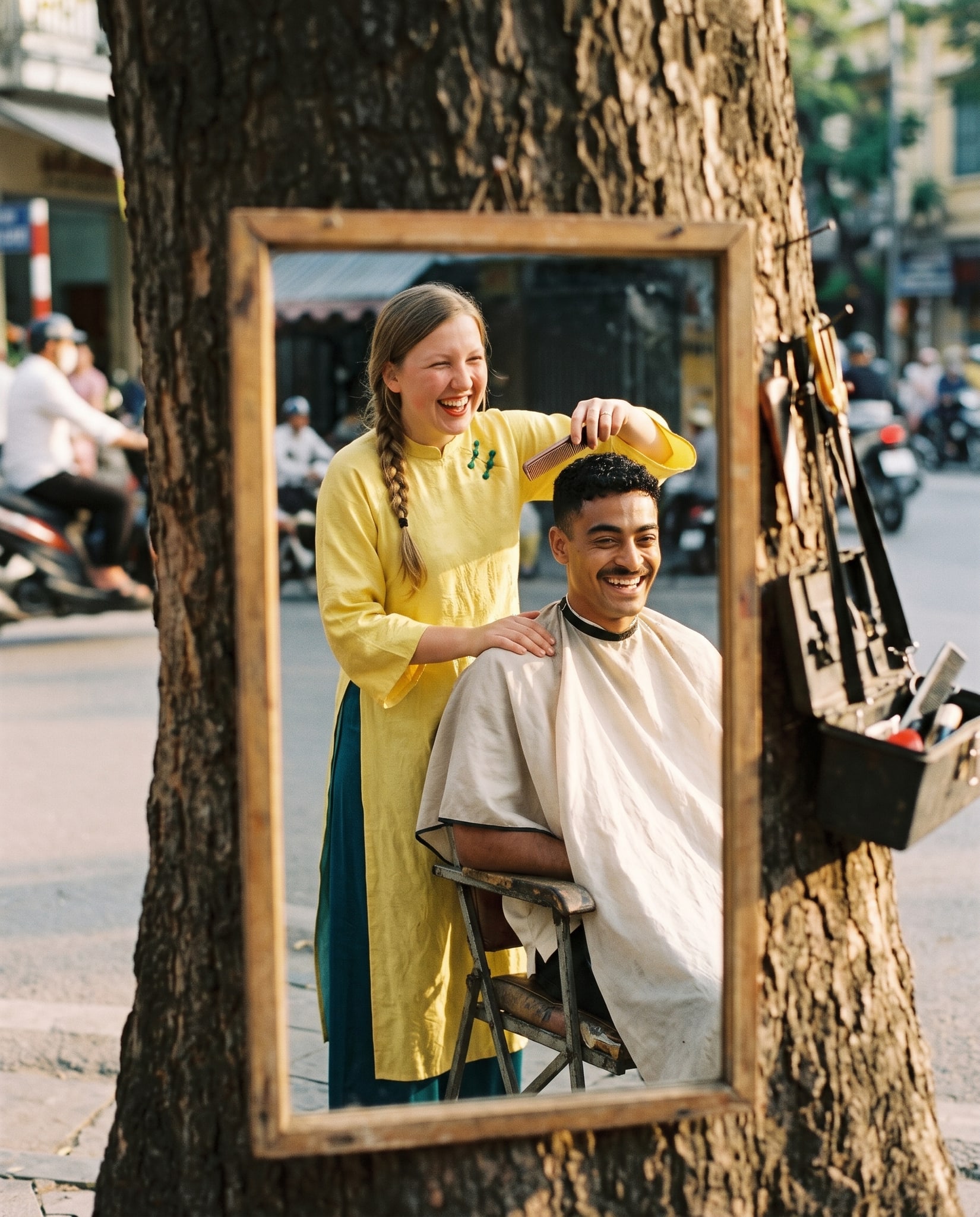
What should you check before booking a Thanh Ha pottery shoot with us?
First: confirm your ao dai or couple outfit choice, because pottery dust sticks to light fabrics and requires extra cleaning afterward—we always warn guests and usually schedule a quick in-studio touch-up shot for formal images. Second: agree on the backup plan in writing (via WhatsApp, which is how we confirm all session details). Third: confirm whether you want makeup and hair at your hotel beforehand or plan to arrive camera-ready to save morning time. Fourth: ask us which kiln-owners we have relationships with, because access varies by day and season—we don't just show up and shoot; we've built trust with three main workshops over two years of consistent permission-asking. Fifth: discuss whether you want a second location (the riverside footpath, the village edges) or concentrate all time in one courtyard for deeper storytelling. Our photographer always carries backup lenses for dust, and our makeup artist knows how to touch up powder after clay-yard walking.
When is the best season to shoot at Thanh Ha for couples?
November through February offers cool mornings, low humidity, and predictable light—our busiest season for Thanh Ha bookings. March–April heats up fast, and by May the monsoon arrives. We've shot in rain (moody, workable) and during heat-shimmer (requires shade and patience), but November–February light is forgiving. Winter also means fewer package-tour groups clogging the main paths, so we have quieter, more intimate access to workshops. Summer (June–August) is possible but requires 5 a.m. starts and afternoon breaks indoors. We always ask guests their top three preferred dates on WhatsApp and work backward from light quality, not just their schedule.
What to check before you book
- Outfit choice: Will you wear ao dai photoshoot attire or Western couple wear? Pottery dust requires care either way.
- Backup location: Confirm whether you want a second spot (riverside, old-town lantern alley) or stay concentrated in pottery-yard area.
- Makeup touch-up: Ask if you want in-studio touch-up after pottery-yard walking, or if you'll refresh makeup at your hotel beforehand.
- Permission confirmations: Trust our relationships with workshop-owners. We don't shoot on assumption—we've built access through repeats and respect.
- Rain contingency: Written agreement on indoor backup spots and timeline if weather changes within 2 hours of your session.
- Dress code for crew: Mention if you want our team to wear neutral tones to avoid distracting background reflections in tight workshop spaces.
More from our team
We've documented hundreds of couple sessions across Hoi An, Hanoi, and Saigon. Read our full pre-wedding photoshoot approach—we walk through how we plan these shoots hour by hour, what goes wrong on the day, and how we pivot. For couples interested in combining pottery with broader Hoi An culture, explore our couple photoshoot options. If you're planning an engagement or proposal moment at Thanh Ha, our proposal and anniversary package covers permission-scouting and intimate timing.
See packages and prices on vietnamphotoshoot.com
FAQ
Do we need permission to shoot in Thanh Ha pottery village?
Yes. We always ask kiln-owners or workshop staff before shooting. Most say yes if approached respectfully. We never assume public access. This is why we scout the day before and factor permission-time into your session timeline.
How much clay dust will get on our clothes, and how do we prevent damage?
Light fabrics will show dust marks after 45–60 minutes in active workshop areas. We recommend darker tones (charcoal, deep blue, black) for pottery-yard sections and switch to lighter outfits for riverside shots if you want variety. Bring a lint-roller or dry-change if you're concerned.
Can we shoot Thanh Ha if it's raining?
Gentle rain creates moody, atmospheric frames. Heavy rain closes workshop access and risks camera safety. We monitor forecasts and shift to covered kiln-porches or indoor studio interiors if rain intensifies. We'll confirm the backup plan with you 2 hours before start time.
What's the best time of day to arrive at Thanh Ha for couple shoots?
Arrive by 6:30–7 a.m. for cool, golden light and minimal crowds. If you prefer afternoon, aim for 4:30 p.m. onward. Midday (10 a.m.–3 p.m.) is too harsh; we don't book core shooting in that window.
Is Thanh Ha suitable for ao dai photography, or does the industrial setting clash?
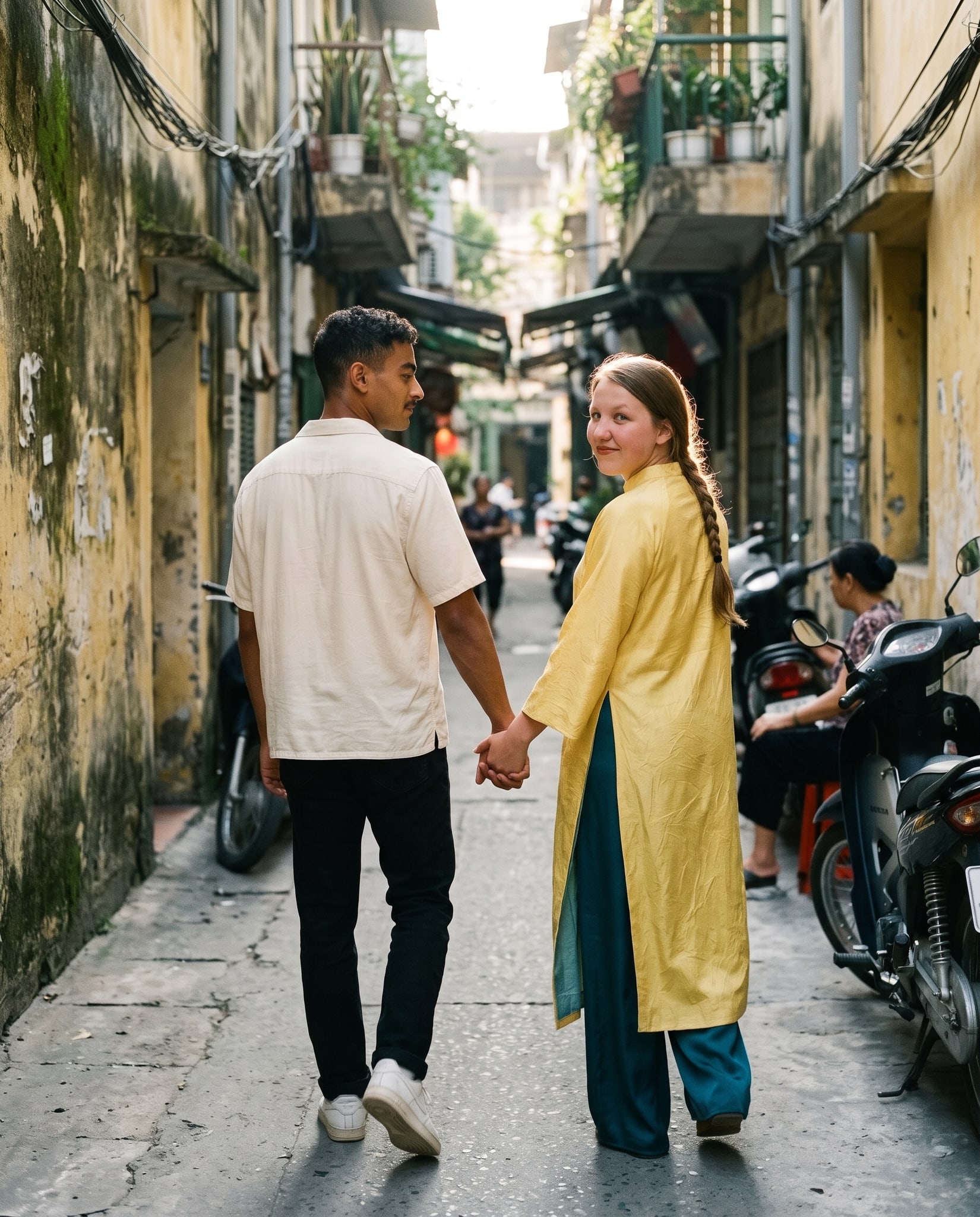
Ao dai and pottery are visual opposites—silk vs. clay, refined vs. raw—which creates striking contrast. Many couples love this juxtaposition. Our ao dai photoshoot package includes Thanh Ha as an option. Choose it if you want editorial, high-contrast storytelling.
How far is Thanh Ha from Hoi An's old town, and how much time do we need to travel between them?
Thanh Ha is 3 km west; travel time is 10–15 minutes by car or taxi. If you're combining pottery and old-town shots in one session, we allocate 30 minutes for travel and setup-time at the second location, so a full couple photoshoot runs 4–5 hours total.
Pre-Wedding & Elopement
Inclusions, prices and booking are on our booking site.
FAQ
Do we need permission to shoot in Thanh Ha pottery village?
Yes. We always ask kiln-owners or workshop staff before shooting. Most say yes if approached respectfully. We never assume public access. This is why we scout the day before and factor permission-time into your session timeline.
How much clay dust will get on our clothes, and how do we prevent damage?
Light fabrics will show dust marks after 45–60 minutes in active workshop areas. We recommend darker tones (charcoal, deep blue, black) for pottery-yard sections and switch to lighter outfits for riverside shots if you want variety. Bring a lint-roller or dry-change if you're concerned.
Can we shoot Thanh Ha if it's raining?
Gentle rain creates moody, atmospheric frames. Heavy rain closes workshop access and risks camera safety. We monitor forecasts and shift to covered kiln-porches or indoor studio interiors if rain intensifies. We'll confirm the backup plan with you 2 hours before start time.
What's the best time of day to arrive at Thanh Ha for couple shoots?
Arrive by 6:30–7 a.m. for cool, golden light and minimal crowds. If you prefer afternoon, aim for 4:30 p.m. onward. Midday (10 a.m.–3 p.m.) is too harsh; we don't book core shooting in that window.
Is Thanh Ha suitable for ao dai photography, or does the industrial setting clash?
Ao dai and pottery are visual opposites—silk vs. clay, refined vs. raw—which creates striking contrast. Many couples love this juxtaposition. Our [ao dai photoshoot](/go/ao-dai-photoshoot) package includes Thanh Ha as an option. Choose it if you want editorial, high-contrast storytelling.
How far is Thanh Ha from Hoi An's old town, and how much time do we need to travel between them?
Thanh Ha is 3 km west; travel time is 10–15 minutes by car or taxi. If you're combining pottery and old-town shots in one session, we allocate 30 minutes for travel and setup-time at the second location, so a full [couple photoshoot](/go/couple-photoshoot) runs 4–5 hours total.
More from the team
Boho pre-wedding photoshoot in Vietnam: Hanoi, Saigon, Hoi An
Boho pre-wedding shoots mix romantic, free-spirited aesthetics with Vietnam's landscapes and heritage sites. We run full-day sessions in three cities, handling styling, makeup, location scouts and edits.
Avoid crowds at Hoang Su Phi rice terraces: timing for wedding shoots
Hoang Su Phi's terraced landscape draws couples and tour buses in equal measure. We show how to shoot there alone, when to arrive, and what to arrange with us before you go.
Photography rules at Con Dao beaches: permits, drones and what to check
Con Dao's beaches demand prep before you shoot—permits, drone zones and tide timing all affect your day. We share what the Cáo Studio team verifies on every booking.