 Cáo Studio
Home › Blog › Pre-Wedding & Elopement
Hidden photo corners near Thap Doi Cham towers for couples
By the Cáo Studio team · Hanoi & Saigon · 2026-11-04
Thap Doi Cham towers sit in northern Ninh Binh province; the hidden spots we use lie in the surrounding rice fields, limestone paths, and village edges within 15–30 minutes' walk from the main towers. Best light falls between 06:00–09:00 and 16:00–17:30. For a pre-wedding photoshoot, we typically spend 3–4 hours on location to capture both tower backdrops and quieter corners. Couples book either our couple package or ao dai photoshoot formats; many combine both. Ask us for a quote on WhatsApp. Common mistakes: arriving after 10:00 when heat and crowds peak, wearing heavy fabrics in humidity, or ignoring local guides who know field access. We always scout 24 hours ahead and brief guests on footwear and hydration. Chat with us on WhatsApp
Which hidden corners do we actually use?
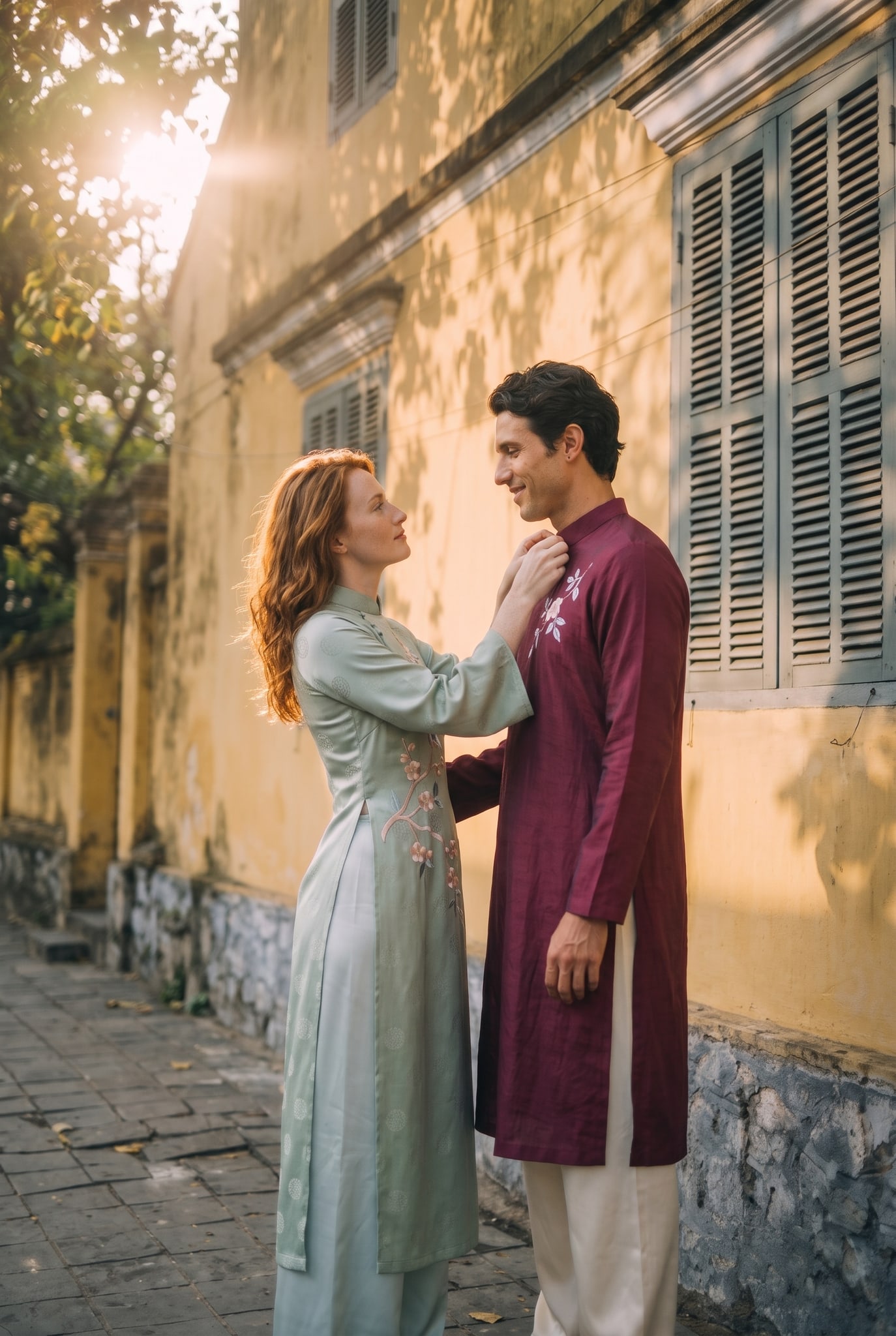
The five locations we return to have different moods. The eastern rice terrace (10 minutes from towers) floods November–May, creating mirror reflections at dawn—perfect for flowing ao dai. A limestone outcrop northwest offers dramatic shadow play mid-morning; we've shot 18 pre-wedding sessions there. The village path south has weathered stone walls and vine-covered fences; it reads authentic without feeling staged. The northern temple access road has mature trees creating dappled light; couples in formal wear photograph exceptionally well there. The western bamboo grove is hardest to reach but offers complete isolation; we use it when a couple wants zero bystanders. Each location changes character with season and time, which is why we visit the week before every shoot.
How early do we arrive, and what surprises happen?
We arrive 90 minutes before the couple to scout light, check paths after recent rain, and brief local guides. Rain is the biggest variable—the limestone paths become slippery within an hour of downpour, and we've aborted two sessions in July when sudden storms made field access unsafe. Heat is predictable; by 10:30, the rice fields radiate enough warmth that makeup runs and clothing sticks to skin. We've learned to carry towels, electrolyte water, and a compact umbrella for sun breaks. On one shoot in December, a local farmer was harvesting in "our" primary terrace; we pivoted to the temple road instead and actually got better light that day. Mosquitoes are worst June–August near water; we now provide insect repellent and time shoots for October–April when possible.
See packages and prices on vietnamphotoshoot.com
What does our stylist pack differently for Thap Doi Cham versus studio sessions?
Ao dai hemlines drag in mud; we carry quick-dry spray and fabric weights. Formal shoes sink into soft earth, so we bring backup flats for transitions. Hair clips need stronger hold because walking and wind destabilize updos we'd set in-studio—we now use gel lacquer instead of spray alone. Makeup touch-up takes 20 minutes in field humidity versus 5 in air-conditioning; we've reduced foundation coverage and switched to powder-based products. For couple photoshoots, grooms' pant legs often collect dust on the temple access road; we pack lint rollers and steamer cloths. We learned this through trial: on our third Thap Doi shoot (2023), the bride's ao dai hem was filthy by hour two, and we didn't have cleaning supplies. Now it's standard kit.
How do we time sessions to avoid crowds and poor light?
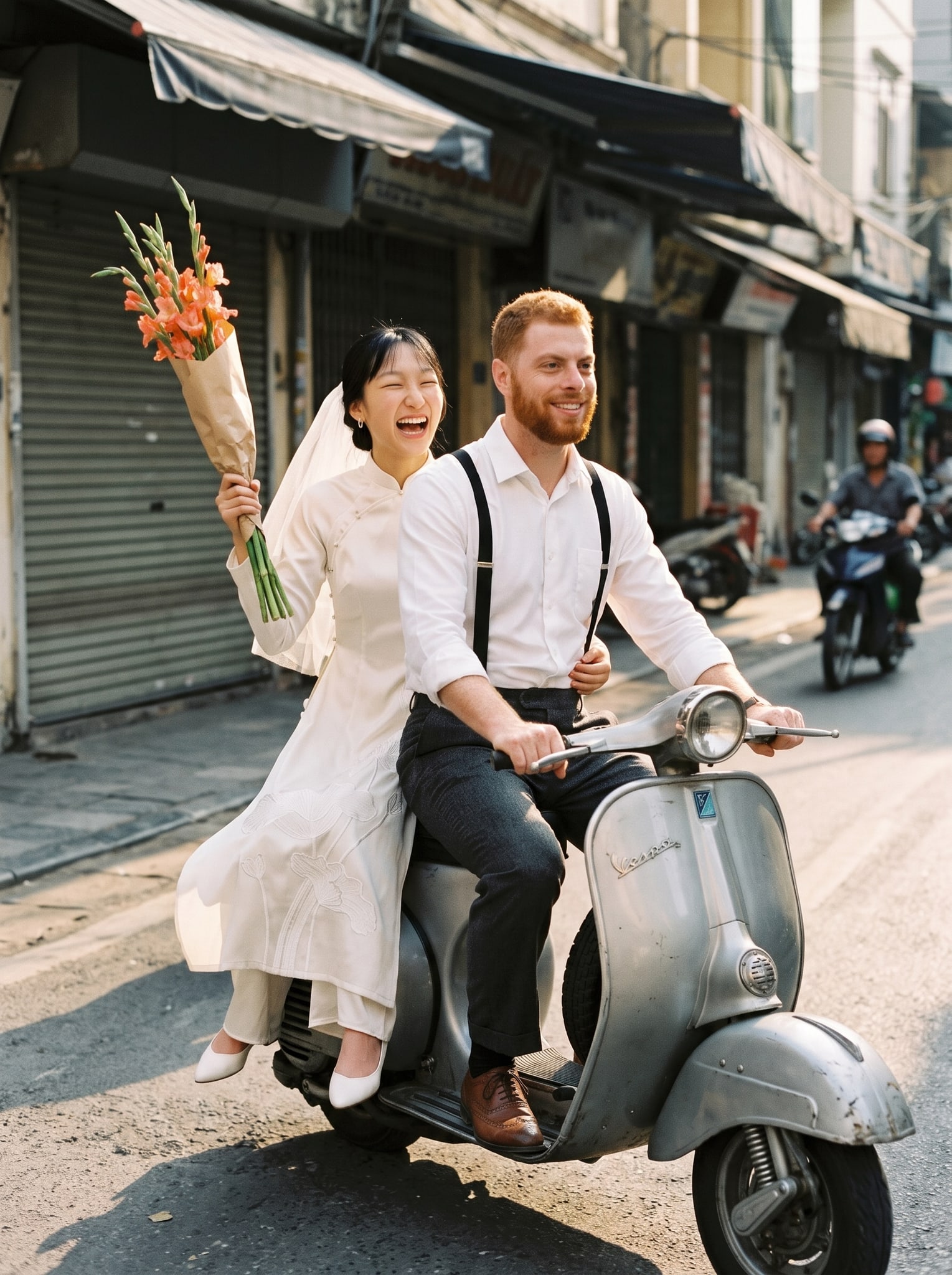
Morning shoots (06:00–08:30) deliver soft, directional light and almost no tourists—we've seen fewer than five people on location at 07:00. Couples get both the quiet terrace and a few frames with natural context as farmers arrive. Evening (16:00–17:45) produces golden-hour glow but competes with day-trippers heading back to town; we share space but light becomes unusable by 18:00. Midday is non-negotiable to avoid. Rainy season (May–September) means unpredictable schedules; we build a 2-hour weather buffer into every booking and have alternative indoor sessions at makeup and hair venues in Ninh Binh town if flooding occurs. Mid-October through mid-November is our sweet spot: clear skies, cool mornings, minimal rain risk, and light that stays usable until 17:45.
What do couples actually need to know before booking a shoot here?
Comparison: Thap Doi Cham hidden corners vs. studio and hotel shoots
| Location Type | Best For | Physical Demand | Light Predictability | Weather Risk |
|---|---|---|---|---|
| Rice terrace (Thap Doi sunrise) | Ao dai, romantic mood, mirror reflections | Walk 10 min each way, stand 2–3 hours | Excellent 06:00–08:30 | Low Nov–May |
| Temple access road | Formal couple, natural context, stone backdrops | Moderate walk, some uneven ground | Good 07:00–09:00 + 16:00–17:30 | Medium, muddy post-rain |
| Bamboo grove | Intimate, isolation, soft filtering | Steep walk 20 min, narrow paths | Variable, dense shade | Low, but remote |
| Studio or hotel suite | Controlled, rain-proof, makeup touch-up easy | Stationary | Consistent | None |
Couples choosing Thap Doi must commit to early wake-ups (car pickup often 05:00). Closed-toe, non-slip shoes are mandatory; many guests arrive in sandals and ask us for alternatives mid-shoot. Hydration is non-negotiable; we've had one guest experience mild dehydration at 08:45 despite warnings. Insect repellent should be applied before arrival, not on-site. Formal wear works, but lightweight, breathable fabrics (linen, silk) outperform heavy synthetics. The walk isn't strenuous, but uneven ground trips couples occasionally; we always offer an arm. Most importantly, book your pre-wedding photoshoot at least three weeks ahead so we can scout and coordinate with local guides.
What to check before you book
- Confirm your preferred shoot date 3 weeks ahead; we scout the week before to check path safety and light direction.
- Tell us if anyone in your party has mobility concerns; some hidden corners require confident footwork.
- Bring a second outfit if doing an ao dai photoshoot; we have backup hems and hemming supplies but prefer to avoid field repairs.
- Weather forecast: if heavy rain is predicted, contact us 48 hours prior; we offer alternative dates or special concept sessions.
- Arrive with sun protection (hat, sunscreen); we provide umbrellas and water but you'll be outside 3+ hours.
FAQ
What's the best time of year to shoot at Thap Doi Cham?
October through mid-November delivers cool mornings, clear skies, and golden evening light. May–September brings humidity, unpredictable rain, and heat that affects makeup and comfort. We can shoot year-round, but cool-season light is superior and guests handle outdoor time better.
How long does a typical Thap Doi session take?
We schedule 4 hours on-location including travel from Ninh Binh town (15–20 min each way). This covers two main locations, outfit changes, and buffer time for touch-ups. Some couples add an extra hour for a couple photoshoot at a third spot or in-town venue.
Can we do a shoot in rainy season?
Yes, but with caveats. Muddy paths limit locations, and sudden storms force shelter or rescheduling. We monitor forecasts and offer alternative dates within two weeks. Indoor sessions at hotel or studio venues are available if field conditions are unsafe.
Do we need to hire a local guide?
We coordinate guides as part of our booking process—they know access rules, land ownership, and safe paths. The cost is included in our package structure; ask us for details on WhatsApp.
What should we wear to avoid looking uncomfortable?
Lightweight, breathable fabrics (linen, cotton silk blends) outperform heavy synthetics. Closed-toe shoes with grip work best on stone paths. Avoid bright white (blown-out in morning sun) and overly loose fits (wind tangles fabric). We provide styling suggestions during our pre-shoot WhatsApp chat.
Pre-Wedding & Elopement
Inclusions, prices and booking are on our booking site.
FAQ
What's the best time of year to shoot at Thap Doi Cham?
October through mid-November delivers cool mornings, clear skies, and golden evening light. May–September brings humidity, unpredictable rain, and heat that affects makeup and comfort. We can shoot year-round, but cool-season light is superior and guests handle outdoor time better.
How long does a typical Thap Doi session take?
We schedule 4 hours on-location including travel from Ninh Binh town (15–20 min each way). This covers two main locations, outfit changes, and buffer time for touch-ups. Some couples add an extra hour for a [couple photoshoot](/go/couple-photoshoot) at a third spot or in-town venue.
Can we do a shoot in rainy season?
Yes, but with caveats. Muddy paths limit locations, and sudden storms force shelter or rescheduling. We monitor forecasts and offer alternative dates within two weeks. Indoor sessions at hotel or studio venues are available if field conditions are unsafe.
Do we need to hire a local guide?
We coordinate guides as part of our booking process—they know access rules, land ownership, and safe paths. The cost is included in our package structure; ask us for details on WhatsApp.
What should we wear to avoid looking uncomfortable?
Lightweight, breathable fabrics (linen, cotton silk blends) outperform heavy synthetics. Closed-toe shoes with grip work best on stone paths. Avoid bright white (blown-out in morning sun) and overly loose fits (wind tangles fabric). We provide styling suggestions during our pre-shoot WhatsApp chat.
More from the team
Pre-wedding photoshoot in Phu Quoc June: weather, light, crowds
June is Phu Quoc's monsoon season. Our studio has shot dozens of couples there in early summer—here's what weather and crowds really mean for your pre-wedding day.
Pre-wedding photoshoot in Phu Quoc July: weather, light, crowds
July is Phu Quoc's wet season, but it opens creative possibilities: moody skies, empty beaches after storms, and dramatic backlighting. We'll walk you through what happens on the ground.
Pre-wedding photoshoot in Phu Quoc November: weather, light, crowds
November is peak season for pre-wedding shoots in Phu Quoc: weather is stable, light is soft, but crowds peak mid-month. We share what our team sees on the ground.