 Cáo Studio
Home › Blog › Pre-Wedding & Elopement
Hoan Kiem Lake wedding photos: best light and timing
By the Cáo Studio team · Hanoi & Saigon · 2026-11-02
The Huc Bridge photographs best during golden hour: 06:00–07:30 AM or 16:30–18:00 PM, when the sun rakes across the red structure and water at low angles. Midday (10:00–14:00) produces harsh shadows that age skin and blow highlights on white áo dài; avoid it entirely for couple portraits. A pre-wedding session at Hoan Kiem typically runs 2–3 hours and covers multiple micro-locations (bridge entry, lakeside paths, temple gardens near Turtle Tower). Cáo Studio books these shoots year-round; we adjust timing by season—winter mornings are clearer, summer evenings cooler. Plan for either dawn or dusk, bring a light layer, and expect 50–80 keeper images. Light quality trumps equipment; a skilled photographer sees where shadows fall before you do. Chat with us on WhatsApp | See packages and prices on vietnamphotoshoot.com
Why does time of day matter more than location at Hoan Kiem?
Location is fixed; light changes every 15 minutes. The Huc Bridge's red lacquer surface reflects or absorbs light depending on angle and cloud cover. During golden hour, side-lit directional light sculpts faces and textures the bridge itself, creating dimension. Midday sun bleaches color and flattens features; couples look tired in post-processing no matter the setting. We've shot the same bridge at 07:00 AM and 12:00 PM on the same day—the morning frames are magazine-ready; the noon ones need heavy editing to rescue. Golden hour is non-negotiable for Hanoi's humidity and high UV; it hides skin texture and forgives sweat.
What happens when you arrive at dawn—and when to pad your timeline?
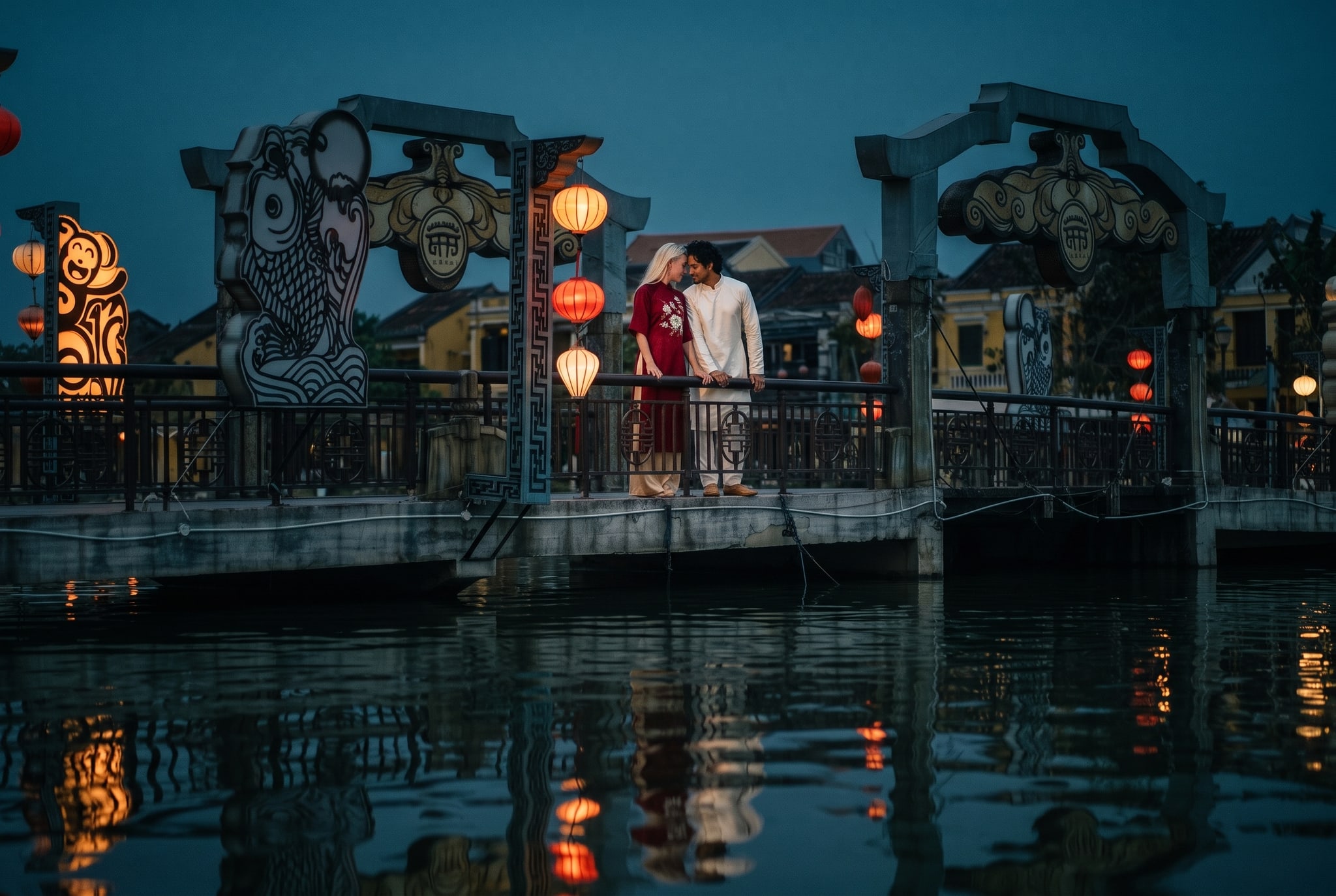
We tell guests to arrive 15–20 minutes early. The Huc Bridge area opens around 05:30 AM; early light at 06:00 is soft and nearly shadowless, ideal for soft-focus couple portraits. By 07:00, the sun clears the eastern roofline, and contrast sharpens—great for detail shots of rings, fabric, and The Huc's architecture. We start framing shots while light is flat, then move closer to the bridge as the sun rises and creates rim light on hair and jewelry. One common miss: guests underestimate foot traffic. By 07:30 AM on weekends, local joggers, tai chi groups, and early tourists flood the paths. We position the couple between these crowds, but timing shifts if you're strict about emptiness. Winter (November–January) is clearer and less crowded; June–August feels muggy and busy by 07:15.
How does weather on the day override your "best time" plan?
Clouds are a gift, not a curse—we reframe them as natural diffusion. If dawn arrives overcast, we extend the session into 08:00–09:00 AM because soft, directional light still reaches the bridge under thin cloud cover. Heavy cloud (Hanoi rain season: May–September) flattens light entirely; we shift to afternoon (15:00–17:00) to catch side-lit detail before the day ends. Humidity creates haze, which softens distant backgrounds—useful for isolating the couple. We've never cancelled for weather; we adapt timing and pose selection. Bring umbrellas not for rain, but for sun-shading the couple's face during setup. Wet pavement after rain? Golden for reflections—we shoot low angles and catch light bouncing from stone.
| Season | Best morning start | Best evening start | Light quality | Crowds |
|---|---|---|---|---|
| Nov–Jan (winter) | 06:30 AM | 16:45 PM | Clear, warm | Low |
| Feb–Apr (spring) | 06:00 AM | 17:00 PM | Hazy, humid | Medium |
| May–Sep (monsoon) | Shift to 15:00 PM onwards | 17:30 PM | Diffuse, unpredictable | High |
| Oct (autumn) | 06:15 AM | 17:15 PM | Crisp, golden | Medium |
How do we use micro-locations within Hoan Kiem to extend a 2-hour shoot?
The Huc Bridge is one frame; the lake is five. We arrive at the bridge for first light (20 mins), then move to Turtle Tower's eastern shore for side-lit reflections (25 mins), walk the west path near the old French villas for soft ambient light through trees (30 mins), and shoot closer detail under the bridge's overhang where light bounces (15 mins). Each spot has a different light angle and background. The bridge opens and isolates the couple; the lake's open water gives breathing room; tree-lined paths add texture and diffuse harsh light. We walk, not sit—movement keeps energy high and lets us test angles without resetting the couple. A guest might think we're "just moving around," but each location change is timed to light shift. By 08:00 AM we've covered six very different frames; the couple looks fresh and the album reads like multiple sessions.
What should you wear, and when does fabric choice affect your light timing?
White and cream áo dài are brilliant—they catch and hold golden light like a reflector. At 06:30 AM, white bounces warm light onto the couple's faces; at 12:00 PM, it burns and requires fill flash or a reflector, and looks blown in post. Darker áo dài (navy, burgundy, black) forgive harsh midday light but vanish into shadow at dawn unless you lift exposure, losing skin detail. Sequined or embroidered details pop during golden hour when light rakes across texture; under flat midday light, they look flat. For pre-wedding photoshoot sessions, we advise clients to confirm their áo dài color during booking so we can brief timing expectations. Silk and satin are more reflective—they glow in golden light and glare in noon sun. Cotton and matte finishes hide sweat better in humidity but absorb light rather than reflect it. Bring a second outfit if you're shooting both dawn and dusk; fabric choice changes which time of day suits it best.
What happens in post-processing when light timing goes wrong—and what we advise?
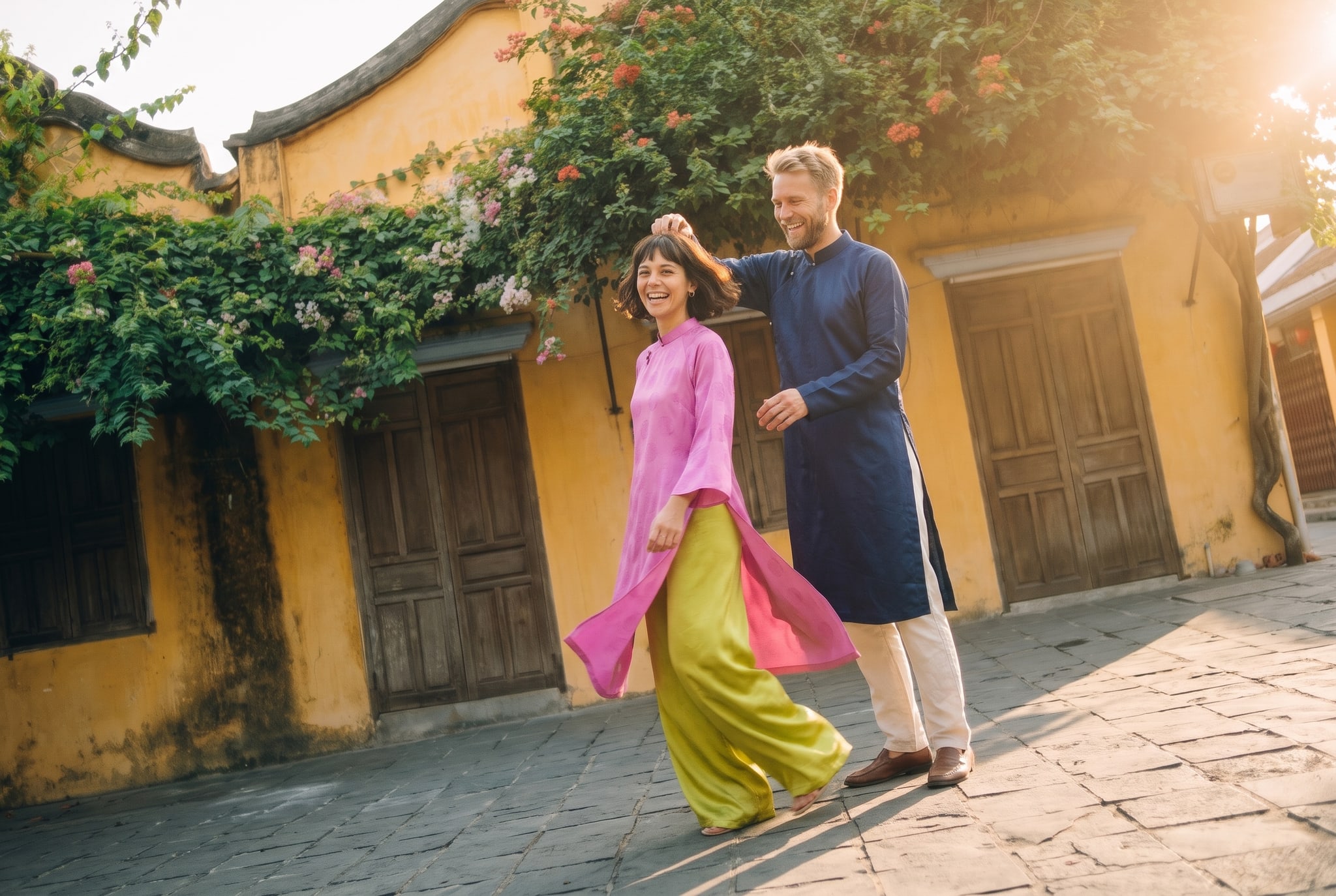
If a couple insists on 11:00 AM, we shoot it, but we know we're spending 1–2 extra hours in Lightroom recovering contrast, desaturating blown highlights on skin, and adding fill light. Midday images need frequency separation (separating color from texture) to smooth skin without losing detail. We're honest: "We can fix it, but golden hour is why your friends' wedding albums looked better without editing." This is why we include timing guidance in our booking process. We've never overridden a couple's schedule preference—it's their day—but we always warn of the trade-off. Overexposure on white fabric is almost impossible to recover; underexposure on dark áo dài is easier. So if you must shoot midday, wear darker fabrics and skip the purest white. For couple photoshoot packages, timing is listed as a choice, not a default; the couple books, and we confirm light expectations in a WhatsApp message 2 days before.
What to check before you book a Hoan Kiem Lake pre-wedding session
- Light timing preference: Confirm you want golden hour (06:00–07:30 AM or 16:30–18:00 PM) and understand the trade-off if you choose midday.
- Áo dài color and fabric: Tell us during booking so we can brief photographer and stylist on how it interacts with your preferred time.
- Weather flexibility: Accept that we may shift timing if monsoon clouds arrive; trust us to adapt.
- Number of locations: A 2-hour session covers the bridge plus 2–3 other spots; a 3-hour session adds The Huc's interior and Turtle Tower gardens.
- Crowd tolerance: If you need emptiness, morning wins; if you want bustling city energy, late afternoon works.
- Editing style: Let us know if you prefer natural color or warm-toned "golden hour" enhancement in post.
How Cáo Studio syncs timing with other services on your shoot day
Many couples pair a pre-wedding photoshoot with makeup and hair at your hotel. If you're shooting at 06:00 AM, hair and makeup must wrap by 05:15 AM; this means an early hotel arrival (our stylist comes to your room at 04:00 or 04:30). We've learned that 4 hours is minimum for áo dài setup, light makeup touch-ups, and transport. If you skip hotel service and do your own makeup, you have more flexibility but often arrive at the bridge still pinning jewelry or straightening fabric. For proposal and anniversary package sessions (often surprise shoots), timing is more fluid because the couple doesn't know; we scout at different light hours and return for the actual surprise during optimal light.
Chat with us on WhatsApp | See packages and prices on vietnamphotoshoot.com
Golden hour by the numbers: what we actually see in light meters and processing time
At 06:30 AM during winter, incident light at The Huc Bridge measures 1200–1600 lux (directional, warm 3500K); at 12:00 PM, it's 8500+ lux with mixed color temperature (cool overheads, warm ground bounces). The 6–7 stop difference forces us to either: expose for the couple's face and blow the bridge, or expose for the bridge and underexpose skin. Golden hour (1:1 ratio, warmer tone) eliminates the trade-off. In post, a midday image from Hoan Kiem takes 15–20 minutes per frame to recover detail; golden hour images take 5–8 minutes for color and clarity adjustments. Scaled across a 60-frame session, that's 1.5–2 hours of extra labor. This is why golden hour timing saves money in aggregate—fewer images need rescue editing.
When should you book—and how far ahead do we hold dates?
Hoan Kiem is a public location; we don't need permits. We hold dates 60–90 days out for pre-wedding sessions to ensure photographer availability and allow time for makeup/hair coordination. If you're booking within 30 days, we'll try to fit you if our team has slots, but you may not get your preferred photographer or the specific hair stylist you wanted. Peak season (September–November) fills 4–5 months ahead. Monsoon (June–August) has more availability because fewer couples book for humidity and unpredictable clouds. Off-season (January–February after Tet) is wide open and offers the clearest light—a hidden advantage. We recommend booking as soon as you confirm your áo dài is ready; the dress dictates timing more than the calendar.
See packages and prices on vietnamphotoshoot.com
FAQ
Can we shoot at both dawn and dusk in one pre-wedding session?
Yes, but you'll need a 4–5 hour session, which is exhausting and pushes into midday. Most couples choose one golden hour and one alternate time (late afternoon or early evening) instead. We've done both-sunrise-and-sunset bookings; the couple loves variety, but áo dài and makeup need refreshing mid-day, and fatigue shows by the second round.
Is The Huc Bridge interior worth shooting, or is the exterior enough?
The interior is beautiful—red wood, lanterns, and tight framing—but light is dim and controlled. If you only have 2 hours, prioritize the exterior and lakeside reflections; the interior is a bonus for 3+ hour sessions. The exterior is where 90% of iconic Hanoi images live.
What if we arrive and the light is worse than expected?
We adjust pose angle, add reflectors, move closer or farther from the bridge, and shift to micro-locations with better natural fill (tree shade). We've never cancelled or reshotted due to light alone; we adapt. Your images will still be strong because we meter for your face, not the background.
Do we need a second outfit, or does one áo dài work for both dawn and dusk timing?
One áo dài works for a single 2–3 hour session. If you're booking different days or a very long session (4+ hours), a second outfit breaks visual monotony and lets hair/makeup refresh. For most pre-wedding bookings, one áo dài suffices because light and poses change enough to feel like variety.
How far in advance do we need to confirm our áo dài color and details?
During booking (when you reserve the date), we ask for color and fabric type. This gives our photographer time to review how it plays with your chosen light timing. If you're still selecting the dress, book your session date first and confirm the áo dài 2 weeks before the shoot. Changes after that may affect timing advice.
What if it rains on the morning of our Hoan Kiem shoot?
Hanoi rain usually clears by 07:30–08:00 AM. We'll message you the night before if weather is severe and offer a reschedule to the following good-weather day or an afternoon shift. Wet ground and soft overcast light are actually valuable for reflection shots, so light rain doesn't ruin the session—heavy downpour does.
Pre-Wedding & Elopement
Inclusions, prices and booking are on our booking site.
FAQ
Can we shoot at both dawn and dusk in one pre-wedding session?
Yes, but you'll need a 4–5 hour session, which is exhausting and pushes into midday. Most couples choose one golden hour and one alternate time (late afternoon or early evening) instead. We've done both-sunrise-and-sunset bookings; the couple loves variety, but áo dài and makeup need refreshing mid-day, and fatigue shows by the second round.
Is The Huc Bridge interior worth shooting, or is the exterior enough?
The interior is beautiful—red wood, lanterns, and tight framing—but light is dim and controlled. If you only have 2 hours, prioritize the exterior and lakeside reflections; the interior is a bonus for 3+ hour sessions. The exterior is where 90% of iconic Hanoi images live.
What if we arrive and the light is worse than expected?
We adjust pose angle, add reflectors, move closer or farther from the bridge, and shift to micro-locations with better natural fill (tree shade). We've never cancelled or reshotted due to light alone; we adapt. Your images will still be strong because we meter for your face, not the background.
Do we need a second outfit, or does one áo dài work for both dawn and dusk timing?
One áo dài works for a single 2–3 hour session. If you're booking different days or a very long session (4+ hours), a second outfit breaks visual monotony and lets hair/makeup refresh. For most pre-wedding bookings, one áo dài suffices because light and poses change enough to feel like variety.
How far in advance do we need to confirm our áo dài color and details?
During booking (when you reserve the date), we ask for color and fabric type. This gives our photographer time to review how it plays with your chosen light timing. If you're still selecting the dress, book your session date first and confirm the áo dài 2 weeks before the shoot. Changes after that may affect timing advice.
What if it rains on the morning of our Hoan Kiem shoot?
Hanoi rain usually clears by 07:30–08:00 AM. We'll message you the night before if weather is severe and offer a reschedule to the following good-weather day or an afternoon shift. Wet ground and soft overcast light are actually valuable for reflection shots, so light rain doesn't ruin the session—heavy downpour does.
More from the team
Boho pre-wedding photoshoot in Vietnam: Hanoi, Saigon, Hoi An
Boho pre-wedding shoots mix romantic, free-spirited aesthetics with Vietnam's landscapes and heritage sites. We run full-day sessions in three cities, handling styling, makeup, location scouts and edits.
Avoid crowds at Hoang Su Phi rice terraces: timing for wedding shoots
Hoang Su Phi's terraced landscape draws couples and tour buses in equal measure. We show how to shoot there alone, when to arrive, and what to arrange with us before you go.
Photography rules at Con Dao beaches: permits, drones and what to check
Con Dao's beaches demand prep before you shoot—permits, drone zones and tide timing all affect your day. We share what the Cáo Studio team verifies on every booking.