 Cáo Studio
Home › Blog › Vacation & Solo Photoshoot
Hoi An Full Moon Lantern Festival Photoshoot: Team Guide
By the Cáo Studio team · Hanoi & Saigon · 2026-11-02
The Hoi An Full Moon Lantern Festival photoshoot is an evening session timed around the 14th lunar day when silk lanterns drift on the Thu Bon River. Cáo Studio books sessions starting two hours before sunset, positioning guests at the ancient bridge or riverside walkway where lantern light reflects strongest. A typical shoot runs 2–3 hours: we arrive early to secure positioning, capture the bridge crowd and lanterns in golden hour, then shoot after dark when electric lantern displays dominate. Sessions include professional styling (optional ao dai rental), location guidance, and on-site direction; no editing is included in the base package. Guests should book 3–4 weeks ahead during festival season (monthly, year-round) because riverside foot traffic peaks at dusk. Expect crowds, variable lighting, and possible rain; we brief guests via WhatsApp on contingency spots and what shoes to wear. Chat with us on WhatsApp
Why we start shooting two hours before the actual festival peak
Most travelers arrive at the bridge at 7 p.m. expecting lanterns; we shoot from 5 p.m. Because golden-hour light hits the ancient wooden bridge before crowds thicken, and because the river reflects amber tones that are gone by 8 p.m. We've learned that waiting for the "official" lantern lighting at 7–8 p.m. means fighting thirty tourists for frame space and shooting under flat, orange streetlight. By 5 p.m., the bridge is walkable, the water is mirror-smooth, and a solo traveler or couple can move freely. This timing advantage is why we confirm with guests by WhatsApp 24 hours before—we're watching the lunar calendar and river conditions, not a fixed event time.
Choosing between the Japanese Bridge, riverside walkway, and lantern release zone
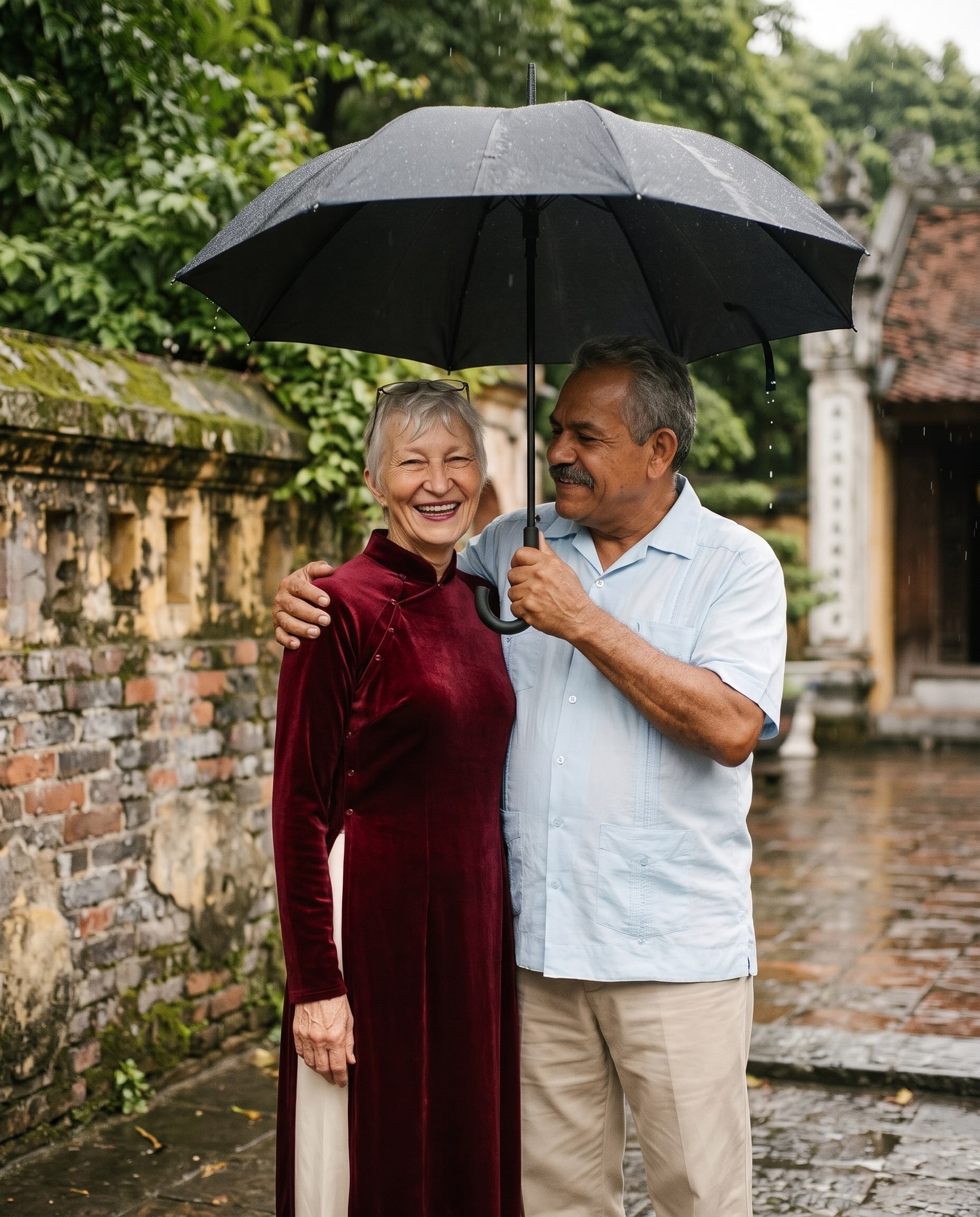
We offer three zones, each requiring different positioning. The Japanese Bridge (Cầu Nhật Bản) is the postcard shot—narrow, iconic, crowded by 6 p.m., best for solo portraits. The Thu Bon River walkway behind the market gives reflections and lantern context without the bridge crush. The lantern release zone near the south riverside pier is where guests rent and light their own lanterns; we position you waist-deep in the river crowd, which is chaotic, wet, and surprisingly intimate for couple shots. We survey the night before and decide on WhatsApp which zone suits your vibe (solo traveler = bridge, couples = walkway, groups = release zone). No two shoots use the same spot because the crowd changes by 15 minutes.
See packages and prices on vietnamphotoshoot.com
What happens to lighting when clouds roll in—and why we stay
Hoi An sits near the coast; humidity builds by late afternoon, and clouds are normal by 6:30 p.m. We don't pack up. Overcast skies actually flatten the harsh streetlight glare and soften the lantern glow, so some of our sharpest festival frames come in drizzle. What we avoid is rain on your camera phone (waterproofing) and on the ao dai (we bring a stylist's steamer to dry the hem). We brief guests: wear water-resistant shoes, carry a slim umbrella in your shot if you want, and trust that we've shot forty festival sessions and know how to expose for dim, wet conditions. If temperature drops below 15°C, we wrap; we've never cancelled for rain alone.
Timing the lantern floats and electric displays for different moods
The silk lanterns that drift on the river appear around 7 p.m. when locals and tour groups light them en masse; we catch those first. By 8 p.m., the bridge's electric lantern string lights come alive (warm LEDs, not candles). The market lanterns overhead glow steadily all evening. We tell guests: if you want the floating lantern moment (dreamiest), book a 5–7 p.m. slot. If you prefer the electric-light aesthetic (sharper, more colorful), book 7:30–9 p.m. If you want both, add 30 minutes and split time between zones. We adjust the shot list on arrival based on how many lanterns are actually on the water that night—some nights are windier, fewer floats; other nights are packed.
How we handle the competing interests of safety, photography, and crowd
We never ask you to stand on the bridge railing or wade past your waist. We've had guests slip on moss, twisted ankles on uneven riverbank stones, and one photographer who dropped their phone into the water trying to get a low-angle reflection. Our positioning rule: you stay where locals walk freely. We arrive with a stylist and photographer; the stylist watches your outfit and shoes while the photographer frames the shot. If the crowd surges (it does around 7:15 p.m.), we move you to a side lane or riverside alcove—you lose the ideal background, but you gain safety and comfort. This is where booking a couple photoshoot with two team members or a family photoshoot with a guide makes sense: one person manages logistics, the other shoots.
| Session type | Best for | Timing | Duration | Why choose it |
|---|---|---|---|---|
| Solo traveler portrait | First-time visitors, street togs | 5–6:30 p.m. | 90 min | Light, minimal crowd, your vibe |
| Couple or proposal | Partners, engagements, anniversaries | 6–8:30 p.m. | 2.5 hours | Lantern floats + electric lights, interaction shots |
| Family or group | Multigenerational, friends | 5–7 p.m. | 2 hours | Wider angles, group positioning, bridge walks |
| Lantern release + styling | Full experience seekers | 7–9:30 p.m. | 3 hours | Rent lantern, wear ao dai, float + portraits |
Styling choices: ao dai, casual, or hybrid
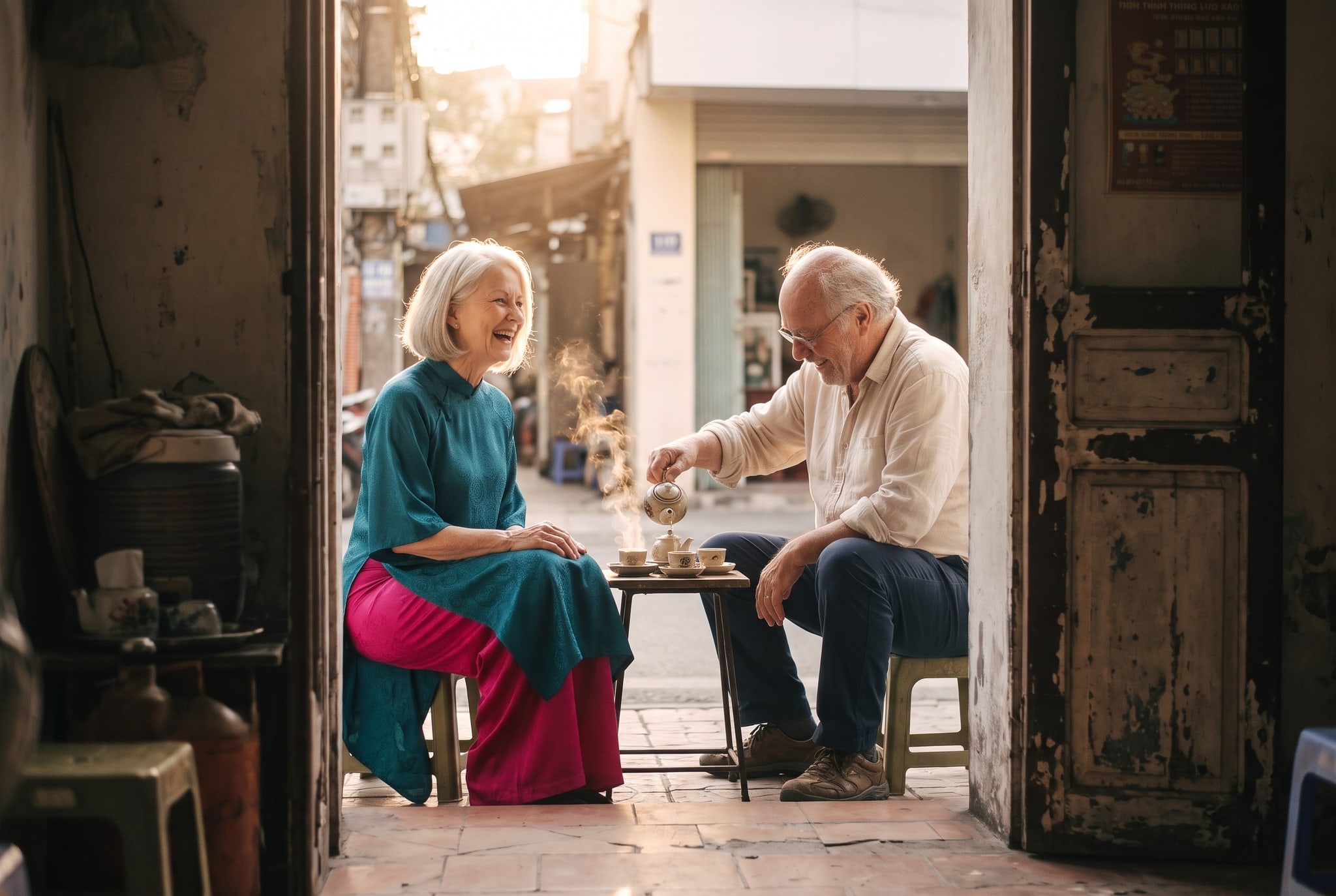
We rent ao dai (traditional tunic) in sizes XS–2XL; it's a festival classic. The color matters: deep indigo, burgundy, and cream photograph strongest in lantern light. White ao dai glows but reads flat under electric light. We've steered away from neon or metallic ao dai because the festival's warm glow overpowers bold saturation. Most travelers who've never worn ao dai rent it; it's layered enough that evening temperature feels right by 7 p.m. If you prefer casual (jeans, blouse), we work with that—Hoi An's aesthetic is mixed. The stylist arrives 30 minutes before the session to confirm fit, tie the scarf, and check your shoes. We've caught loose ao dai hems, misaligned scarves, and one guest whose ring was catching the fabric—all fixed on-site.
See packages and prices on vietnamphotoshoot.com
What to check before you commit to a festival session
Lunar calendar alignment: Confirm the session date is within 2–3 days of the 14th lunar day (full moon). If you're booking a regular date, ask us whether lanterns are floated that evening—not every night is a festival night. Crowd tolerance: The bridge is not solitary. By 7 p.m., you're in a river of tourists and locals. If you dislike crowds, we can shoot the market alleys or your hotel grounds instead and skip the bridge entirely. Outfit readiness: If renting ao dai, reserve 4–5 days before. If bringing your own outfit, confirm shoes are slip-resistant and fabrics are breathable (humidity is 80%+). Camera phone prep: Bring a waterproof case or cloth. The air moisture fogs lenses; we remind guests to let equipment acclimate for 10 minutes before shooting. Weather fallback: If rain becomes heavy (not drizzle—actual downpour), we can pivot to a lantern-themed shoot at your hotel with stylized lantern props, but confirm this in your pre-session call.
Real logistics: WhatsApp, arrival, and what we bring
We confirm all sessions by WhatsApp 48 hours and 24 hours before. The message includes: exact pickup time, meeting landmark (not just "Hoi An bridge"), weather forecast, and a photo of the riverbank condition that morning. You reply with your shoe type and any concerns. On arrival, the photographer and stylist meet you at a café or your hotel; we walk to the spot together (15 minutes from the center), reconnoiter the crowd level, and decide whether to start at the bridge or riverside walk. We bring: backup lighting (small LED ring for rescue fills), a fabric steamer, extra safety pins and clips, and an umbrella. We don't bring tripods—they're illegal on the bridge and too awkward in crowds. We shoot on mirrorless or phone, depending on the guest's preference.
When to book: high season vs. off-season realities
Lunar new year (late January–early February) and July full moons book out 6–8 weeks ahead. December–March is moderate; June and September are quietest because heat and rain drive fewer visitors. Booking during low season means smaller crowds and more flexibility for spontaneous retiming. We've had guests book a March session, then downpour forces a 45-minute reschedule, and we're all together at a lantern vendor's stall photographing the prep instead—those unplanned moments often become the favorite shots. High-season sessions are predictable and competitive; low-season sessions are intimate and adaptive.
Why we ask what you want the photos for
A traveler shooting for Instagram wants candids and moody reflections. A couple marking an anniversary wants posed interactions and the lantern in soft focus behind them. A family wants everyone visible and the bridge recognizable. Our photographer shapes the whole session around this: we'll spend 40 minutes on couple dancing-type poses if that's your goal, or 40 minutes on street-style candids if you're after editorial tones. This conversation happens in the WhatsApp pre-session call, not on the riverbank.
FAQ
Do I need to book the lantern festival session months in advance?
No, but within 3–4 weeks is smart. Hoi An's full moon is predictable (monthly), and we typically have 2–3 slots open per festival date. Last-minute bookings (under 10 days) are possible in off-season; high season fills 4–6 weeks ahead.
Can we bring our own lanterns to light during the shoot?
Yes. You can buy lanterns at the riverside market (they're cheap) and light them near the release zone around 7:30 p.m. We'll photograph you holding and releasing it. Budget an extra 20–30 minutes if you want full lantern-lighting shots plus bridge portraits.
What if rain is heavy that evening—do we reschedule?
We scout conditions by noon that day via WhatsApp. Light drizzle = we shoot (lantern glow is actually softer). Heavy rain = we offer a reschedule or a hotel-based alternative shoot with lantern styling. Rescheduling within 10 days is free; alternative shoots are negotiated on WhatsApp.
Should I rent the ao dai, or can I wear what I brought?
Both work. Ao dai photographs strongest in lantern light and is culturally fitting. If you brought outfit, confirm shoes are waterproof and colors are dark or jewel-toned (whites and neons compete with electric lights). We style whichever you choose.
How many photos do we receive, and when?
That depends on your package. Check vietnamphotoshoot.com for the edited-photo count and delivery timeline. Festival sessions typically include 30–60 edited images delivered within 5–7 days; we don't provide unedited RAWs.
Is the lantern festival only in Hoi An, or can you do it elsewhere?
Hoi An's full-moon lantern festival is the iconic event. Other towns (Huế, Da Nang) have lantern displays, but the Thu Bon River setting is unique to Hoi An. We're based in Hanoi and Saigon; Hoi An requires travel. Most guests build the session into a 2–3 day Hoi An trip, and we coordinate timing with their arrival.
Vacation & Solo Photoshoot
Inclusions, prices and booking are on our booking site.
FAQ
Do I need to book the lantern festival session months in advance?
No, but within 3–4 weeks is smart. Hoi An's full moon is predictable (monthly), and we typically have 2–3 slots open per festival date. Last-minute bookings (under 10 days) are possible in off-season; high season fills 4–6 weeks ahead.
Can we bring our own lanterns to light during the shoot?
Yes. You can buy lanterns at the riverside market (they're cheap) and light them near the release zone around 7:30 p.m. We'll photograph you holding and releasing it. Budget an extra 20–30 minutes if you want full lantern-lighting shots plus bridge portraits.
What if rain is heavy that evening—do we reschedule?
We scout conditions by noon that day via WhatsApp. Light drizzle = we shoot (lantern glow is actually softer). Heavy rain = we offer a reschedule or a hotel-based alternative shoot with lantern styling. Rescheduling within 10 days is free; alternative shoots are negotiated on WhatsApp.
Should I rent the ao dai, or can I wear what I brought?
Both work. Ao dai photographs strongest in lantern light and is culturally fitting. If you brought outfit, confirm shoes are waterproof and colors are dark or jewel-toned (whites and neons compete with electric lights). We style whichever you choose.
How many photos do we receive, and when?
That depends on your package. [Check vietnamphotoshoot.com](/go/vacation-photoshoot) for the edited-photo count and delivery timeline. Festival sessions typically include 30–60 edited images delivered within 5–7 days; we don't provide unedited RAWs.
Is the lantern festival only in Hoi An, or can you do it elsewhere?
Hoi An's full-moon lantern festival is the iconic event. Other towns (Huế, Da Nang) have lantern displays, but the Thu Bon River setting is unique to Hoi An. We're based in Hanoi and Saigon; Hoi An requires travel. Most guests build the session into a 2–3 day Hoi An trip, and we coordinate timing with their arrival.
More from the team
Honeymoon Photoshoot in Hoi An: What Our Team Sees on Set
Hoi An draws newlyweds for its lantern-lit old town and riverbank light. We've shot hundreds of couples there—here's what actually happens during your session, hour by hour, and how to choose between what we offer.
Nhat Tan Peach Blossom Gardens Photoshoot: What We Book
Nhat Tan peach blossoms peak for just three weeks each January–February. We run morning sessions there to beat tourist crowds and capture soft light—here's how our studio plans them and what actually happens on the ground.
Truc Bach Lake Photoshoot: What to Book at Cáo Studio
Truc Bach Lake is one of Hanoi's most photographed water landmarks. We run sessions there 3–4 times weekly, and share how to get the best light, what to wear, and what actually happens during a shoot.