 Cáo Studio
Home › Blog › Pre-Wedding & Elopement
Hoi An or Sapa for pre-wedding photos: Where to shoot
By the Cáo Studio team · Hanoi & Saigon · 2026-11-02
Hoi An suits couples wanting intimate, textured backdrops—narrow lanes, silk lanterns, yellow walls, ancient light. Sapa works for dramatic mountain scale, mist, and isolation. Both require different shot pacing, gear choices, and timing windows. Hoi An shoots run 4–6 hours with multiple location changes; Sapa needs early starts and weather contingency. Cáo Studio has teams in both regions and routes couples through a simple question: do you want the photograph to feel like stepping into a memory, or rising above the world? Hoi An costs less in travel time; Sapa demands higher logistics. Neither is objectively better—the choice depends on light preference, physical pace, and what emotion the couple wants frozen in the final frame.
What makes Hoi An different from Sapa for pre-wedding shoots?
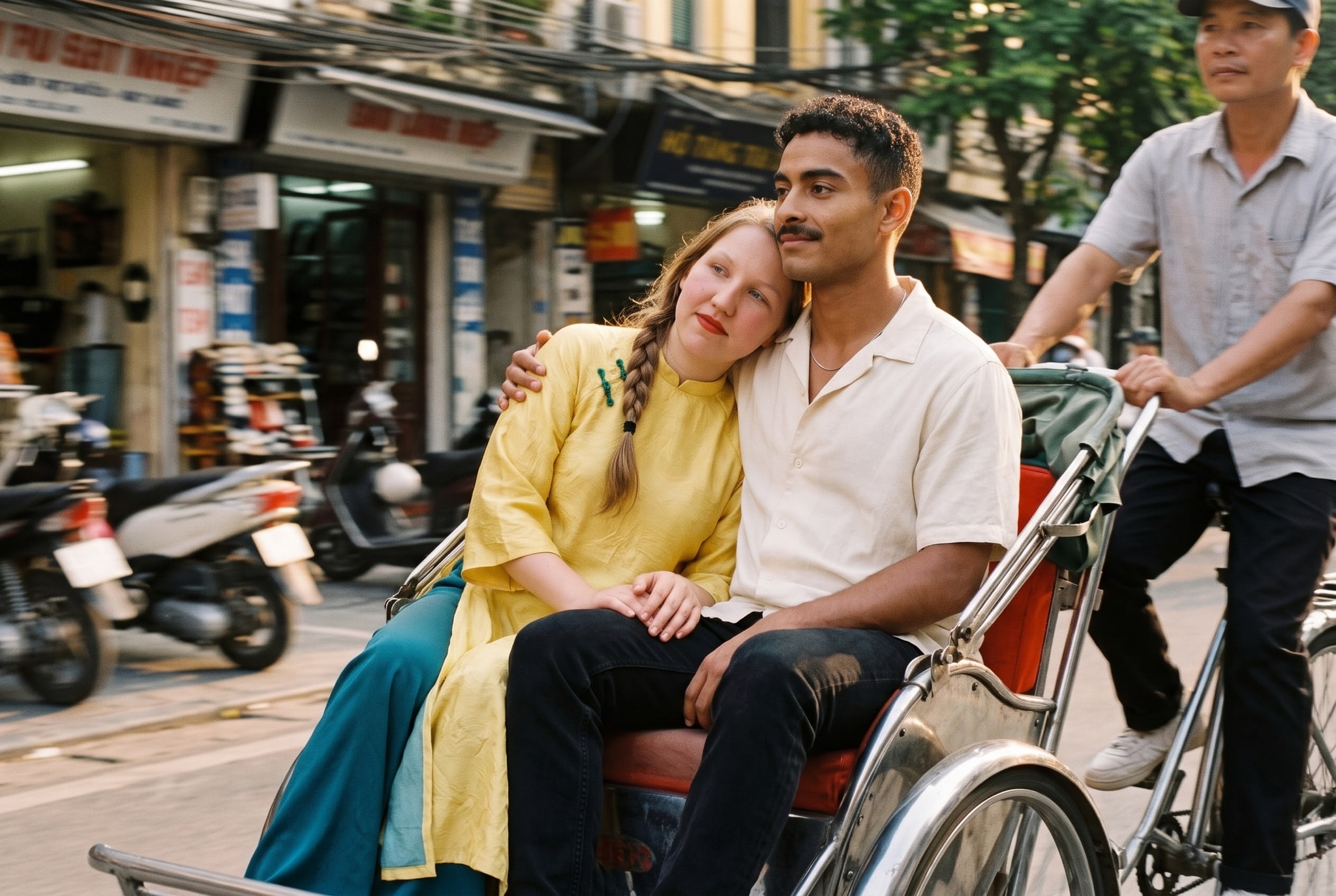
Hoi An's appeal lies in texture and story. The Old Town—UNESCO-listed, pedestrian-only after 4 p.m.—gives us narrow cobbled streets, warm ochre plaster, wrought-iron signs, and the Thu Bon River's soft reflection. Lantern light spills into alleyways by dusk. We find authentic backgrounds in places tourists haven't posed yet: the silk quarter on Tran Phu Street, water-edge gardens near Cua Dai, bridge shadows at An Hoi. Sapa offers scale—the Fansipan mountain looms 3,143 meters high, terraced rice fields slope away endlessly, and morning mist erases the middle ground entirely. One location in Sapa can yield fifty different framings. Hoi An is about layering; Sapa is about vastness. The emotional difference matters as much as the visual one.
How does weather change what we can shoot?
Hoi An's tropical monsoon climate means we watch the forecast intensely. Rainy season (September–December) brings dramatic cloud cover—beautiful for moody, intimate shots—but wet stones are slippery and logistics get unpredictable. We've scrapped entire afternoon blocks because a downpour flooded the lane we'd scouted. Dry season (January–August) is textbook: clear light, long golden hour, humidity that still makes makeup run. Sapa's weather is its own beast. The mountain traps clouds. June to September we shoot through mist deliberately—it's ethereal but we lose sharp detail fast. October to May is clearer, but early morning is essential; by noon, tourist buses clog the viewpoints. We've learned to start Sapa sessions at 5:30 a.m. to own a ridge alone. In Hoi An, we start at 10 a.m. and finish after dark. The locations dictate the schedule, not the other way around.
How long should a pre-wedding shoot take in each place?
In Hoi An, we block 5–6 hours. The couple moves between 4–5 locations—usually the Old Town core, the river, one heritage site (like the Japanese Bridge), and a quieter garden space. Walking between spots takes 15 minutes; we shoot for 45 minutes per location. Setup time matters: we position the couple, scout the light, adjust their pose, and shoot maybe 150–200 frames. One session rarely needs more because repetition kills spontaneity. In Sapa, we plan 4–5 hours on-mountain, but add 1.5 hours for minivan transfers from town. A couple might visit two ridgelines and a rice-field level. The altitude (1,600+ meters) exhausts people faster. We pace differently—shorter, more intense blocks with rest between. A Hoi An shoot feels like a walk through a gallery; a Sapa shoot feels like a climb with rewards at each switchback. If the couple gets tired easily, Hoi An wins. If they want to feel like they've traveled, Sapa delivers.
| Factor | Hoi An | Sapa | Winner For… |
|---|---|---|---|
| Setup time per location | 10–15 min | 20–30 min | Couples with 4 hours total |
| Physical exertion | Low | High | Anyone with mobility concerns |
| Light consistency | Predictable | Changes fast | Detail-focused couples |
| Unique backgrounds | Many | Few but dramatic | Those wanting variety |
| Weather predictability | Fair | Poor | Planning-focused couples |
| Muted, intimate mood | Yes | No | Quieter personalities |
| Epic, scale-driven mood | No | Yes | Adventure-minded couples |
| Local crowd management | Moderate | Intense | Those wanting solitude |
See packages and prices on vietnamphotoshoot.com
What mistakes do couples make when choosing between these locations?
The biggest mistake: picking based on Instagram alone. Hoi An's lantern photos look dreamy because they're shot with specific gear, at specific angles, in specific light. A couple who books expecting that exact shot for eight hours gets disappointed. We've had clients arrive thinking the entire Old Town is lantern-lit by day (it isn't; the lanterns light only after 5 p.m., and tourist density peaks then). For Sapa, the reverse happens: couples see a single mist-wrapped peak and assume all ridges look that way. We reach the summit at 6:30 a.m. and it's clear; by 10 a.m., clouds roll in. Timing within the season matters more than the season itself. Another error: not mentioning physical limits. Sapa requires walking uphill on rocky paths. We've had couples with bad knees who booked anyway and spent half the session in pain—that shows in the frames. In Hoi An, the challenge is pace: we move fast between locations, and some couples get overwhelmed by the transitions. Talk to us on WhatsApp before you decide. We ask questions: How do you want to feel in these photos? Do you hike regularly? What mood does your home need?
Which location works better with ao dai or traditional costume?
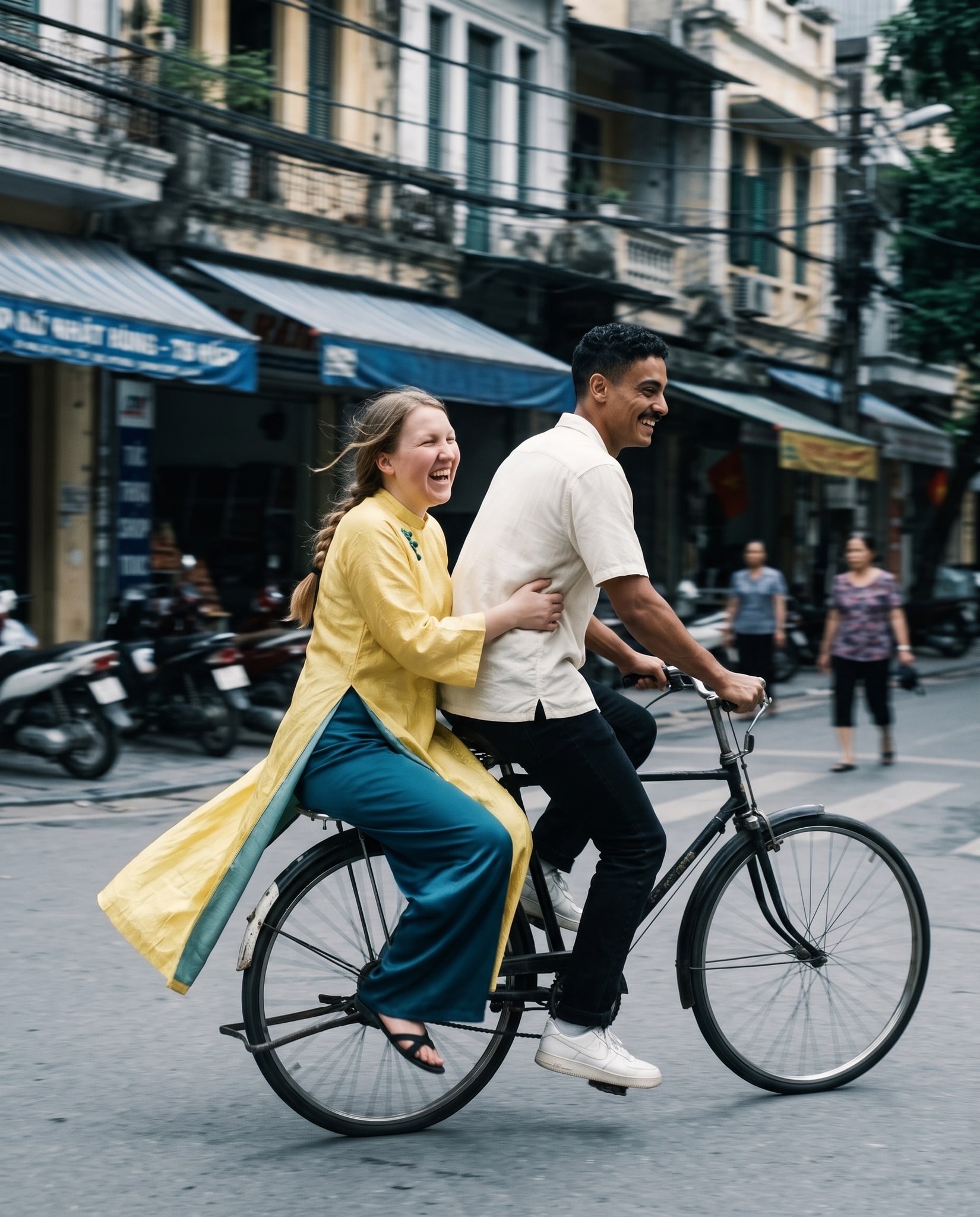
The ao dai—Vietnam's silk tunic dress—photographs differently in each setting. In Hoi An, it belongs. The yellow walls complement the deep jewel tones of traditional áo dài fabric. The lanterns catch the silk's sheen. The cobblestones ground the cloth. We shoot áo dài couples in the Old Town as a narrative: "They stepped out of history." The narrow lanes force intimate framing; the light is warm and forgiving to white fabrics. In Sapa, the ao dai can feel incongruous—a high-altitude mountain village doesn't have a tradition of silk tunics the way the Mekong Delta or Central Vietnam does. But that contrast is exactly why some couples choose it. The drama of a scarlet áo dài against grey mist and green rice is unmistakable. The challenge is logistics: wind at altitude catches the fabric, humidity isn't as gentle, and we need stronger anchor points for the tunic to drape cleanly. If the couple wants tradition and authenticity fused into the frame, Hoi An is the answer. If they want a bold reinterpretation, Sapa works. Our ao dai photoshoot package includes both location types; ask which one pairs with your vision.
What is the real cost difference between shooting in each location?
We can't quote prices here, but the logistics differ. Hoi An is compact. A couple flies into Da Nang (or drives 2 hours from Nha Trang), reaches the Old Town in 45 minutes, and we shoot in town. Accommodation and food are cheaper than Sapa. The session itself moves fast, so we don't charge for extended waiting or repositioning. Sapa requires a minivan up the mountain, often an overnight stay (the light is best early morning, so couples usually stay), and higher meal costs. Transportation to shooting locations adds time and complexity. Neither location is inherently cheaper for the photo session itself; the difference is in how the couple structures their trip. Some couples do a couple photoshoot in Hoi An as a day trip during a longer Saigon or Nha Trang holiday. Others dedicate a full two days to Sapa and make the pre-wedding shoot the centerpiece of their trip. Ask us for a quote on WhatsApp. We'll walk through what a day in each location actually includes—and help you calculate total trip cost, not just the photo fee.
What to check before you decide
- Light preference: Do you want golden-hour glow (Hoi An wins) or moody contrast (Sapa)?
- Pace: Can you walk for 30 minutes uphill in mountain heat? (Sapa requires yes; Hoi An is flexible.)
- Costume plans: Are you wearing traditional dress that needs still air and even terrain? (Hoi An is safer.)
- Solo travel or with entourage?: Hoi An accommodates makeup, wardrobe changes, and assistants easily. Sapa minivans get crowded.
- Weather flexibility: Do you have fixed dates or can you shift by a week if forecasts look bad? (Sapa sensitivity is higher.)
A decision framework we use with couples
We ask three questions in this order:
- What is the dominant mood of your relationship? — Quiet and observant → Hoi An. Adventurous and bold → Sapa.
- How much time do you have? — 4 hours → Hoi An. 6+ hours with a night stay → Sapa.
- What is your comfort with uncertainty? — I need predictability → Hoi An. I love surprise and spontaneity → Sapa.
If two of three point to the same location, book it. If all three split, you might actually want both—some couples do a one-day Hoi An shoot and add a Sapa day later, or vice versa.
See packages and prices on vietnamphotoshoot.com
For deeper location-scouting stories and what we've learned from dozens of sessions, read more from our team.
Cáo Studio has photographers and stylists in both places. We're not neutral—we'll tell you the truth about what works for your couple, not what sounds romantic in theory. Message us and describe what you're imagining. We'll be honest about whether that vision fits Hoi An, Sapa, or both.
FAQ
Can we do a pre-wedding shoot in both Hoi An and Sapa?
Yes. Some couples book a two-day trip: one day in Hoi An's Old Town, one day in Sapa mountains. This gives range across moods and seasons. Ask us on WhatsApp about combining locations into one pre-wedding package. We can coordinate both sites and stylists.
Which location is better if we're getting married soon and need photos fast?
Hoi An. It's closer to major airports (Da Nang is 45 minutes away), easier logistics, and shorter shoot times mean faster delivery. Sapa requires overnight travel, limiting same-week turnaround.
What happens if the weather is bad on our Sapa shoot day?
We scout alternative ridges and lower-altitude spots. Mist and drizzle can look beautiful if managed well. We don't cancel lightly, but if safety is compromised (lightning, flash-flood risk), we reschedule. Budget flexibility helps.
Do we need makeup and hair done professionally, or can we do it ourselves?
Professional makeup survives humidity, sun, and hours of shooting better. Both locations have moisture challenges. We offer makeup and hair at your hotel in both regions. This ensures you're camera-ready before we even start moving.
How many outfit changes is normal for a pre-wedding shoot?
Two to three is standard. Hoi An's varied backdrops suit 2–3 changes (áo dài, Western dress, casual). Sapa's expansive views can repeat the same outfit across locations because the backdrop changes so dramatically. Fewer outfit changes means faster sessions and less luggage stress.
What if we want to include our wedding guests in the pre-wedding photos?
That shifts toward a family photoshoot package or special concept shoot. Hoi An handles small groups (5–10 people) better than Sapa, where mountain access is tight. Tell us your group size and we'll design the best approach.
Pre-Wedding & Elopement
Inclusions, prices and booking are on our booking site.
FAQ
Can we do a pre-wedding shoot in both Hoi An and Sapa?
Yes. Some couples book a two-day trip: one day in Hoi An's Old Town, one day in Sapa mountains. This gives range across moods and seasons. Ask us on WhatsApp about combining locations into one [pre-wedding package](/go/pre-wedding-photoshoot). We can coordinate both sites and stylists.
Which location is better if we're getting married soon and need photos fast?
Hoi An. It's closer to major airports (Da Nang is 45 minutes away), easier logistics, and shorter shoot times mean faster delivery. Sapa requires overnight travel, limiting same-week turnaround.
What happens if the weather is bad on our Sapa shoot day?
We scout alternative ridges and lower-altitude spots. Mist and drizzle can look beautiful if managed well. We don't cancel lightly, but if safety is compromised (lightning, flash-flood risk), we reschedule. Budget flexibility helps.
Do we need makeup and hair done professionally, or can we do it ourselves?
Professional makeup survives humidity, sun, and hours of shooting better. Both locations have moisture challenges. We offer [makeup and hair at your hotel](/go/makeup-and-hair) in both regions. This ensures you're camera-ready before we even start moving.
How many outfit changes is normal for a pre-wedding shoot?
Two to three is standard. Hoi An's varied backdrops suit 2–3 changes (áo dài, Western dress, casual). Sapa's expansive views can repeat the same outfit across locations because the backdrop changes so dramatically. Fewer outfit changes means faster sessions and less luggage stress.
What if we want to include our wedding guests in the pre-wedding photos?
That shifts toward a [family photoshoot package](/go/family-photoshoot) or [special concept shoot](/go/special-concept). Hoi An handles small groups (5–10 people) better than Sapa, where mountain access is tight. Tell us your group size and we'll design the best approach.
More from the team
Boho pre-wedding photoshoot in Vietnam: Hanoi, Saigon, Hoi An
Boho pre-wedding shoots mix romantic, free-spirited aesthetics with Vietnam's landscapes and heritage sites. We run full-day sessions in three cities, handling styling, makeup, location scouts and edits.
Avoid crowds at Hoang Su Phi rice terraces: timing for wedding shoots
Hoang Su Phi's terraced landscape draws couples and tour buses in equal measure. We show how to shoot there alone, when to arrive, and what to arrange with us before you go.
Photography rules at Con Dao beaches: permits, drones and what to check
Con Dao's beaches demand prep before you shoot—permits, drone zones and tide timing all affect your day. We share what the Cáo Studio team verifies on every booking.