 Cáo Studio
Home › Blog › Pre-Wedding & Elopement
Hoi An rice paddies wedding photos: best time and light
By the Cáo Studio team · Hanoi & Saigon · 2026-11-02
Hoi An rice paddies photograph best in the hour before sunset (golden hour), April through October, when water reflects light and paddies are flooded or near harvest. Early morning (5:30–6:30 a.m.) works when skies are clear and mist rises from fields. Avoid midday overhead sun, which flattens colours and creates harsh shadows. At Cáo Studio, we scout the exact paddy and water level 1–2 days before your shoot, then adjust timing to the weather forecast. A pre-wedding photoshoot in Hoi An typically runs 3–4 hours and includes 50–80 edited images. We book shoots November–March for cooler comfort and sharper morning light, but spring paddies (April–May) offer greener backdrops if you accept midday repositioning. Cost and exact timing depend on your location and light preferences; ask us for a quote on WhatsApp. Chat with us on WhatsApp
Why does paddy water level change your light?
Water in Hoi An paddies is drained for harvest (August–October) or reflooded after planting (November–January). Flooded paddies reflect the sky—morning mist becomes silver, sunset becomes gold. Dry paddies show soil and give earthy tones but lose the mirror effect that makes couples' silhouettes pop. We always confirm the farming calendar for your chosen dates because a paddy drained three weeks early ruins the reflection you imagined. This is the difference between a photo where light surrounds you and one where it merely illuminates you.
What does our team do in the hour before your shoot?
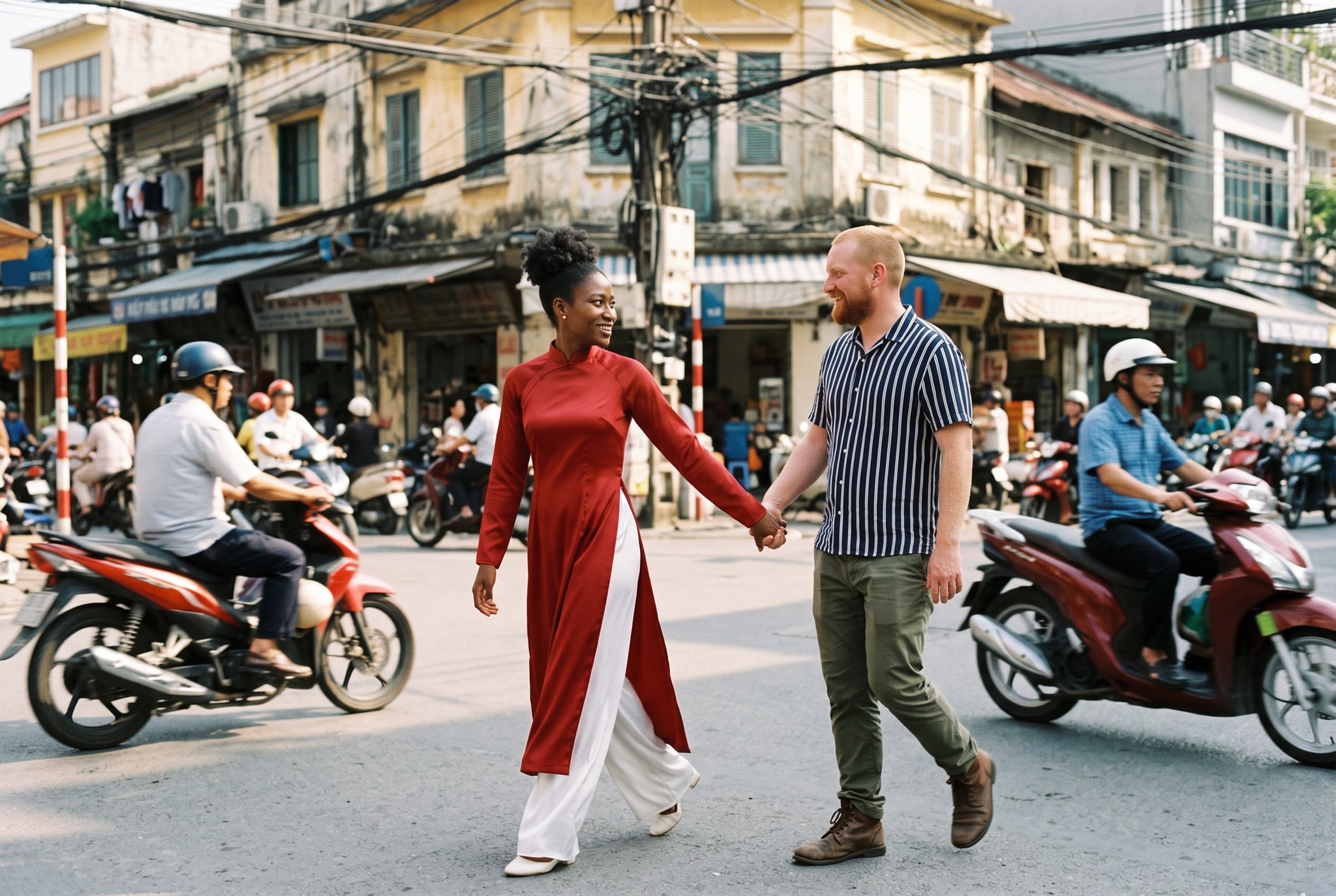
We arrive 45 minutes early to walk the paddy lanes, check water depth, test your shoe grip on mud, and spot the sun's position relative to your planned poses. If mist is heavier than forecast, we move east 200 metres to find clearer air. If clouds block the sun earlier than predicted, we shoot the couple's quiet moments in overcast light (which is soft and forgiving for faces), then reposition to a ridge facing west so the sun breaks through behind you for a backlit finale. We carry a reflector and scout a secondary paddy five minutes' walk away in case the primary location floods after rain. Couples rarely see this prep, but it's why golden-hour shots look intentional rather than lucky.
Morning mist or sunset gold—which light suits your aesthetic?
| Light type | Best for | Why choose it | What to prepare |
|---|---|---|---|
| Sunrise (5:30–6:30 a.m.) | Ethereal, moody, soft faces | Mist diffuses light; fewer tourists; cool air | Bring warm layer; arrive in Hoi An by 5 p.m. prior day |
| Golden hour (5–6 p.m.) | Romantic, warm skin, bold colours | Sun low; warm amber tones; easy logistics | Book shoot mid-afternoon; expect 20 min. travel to paddy |
| Overcast morning (7–9 a.m.) | Couple moments, candid smiles | Shadows vanish; skin looks even; no squinting | Plan for longer session; secondary location backup |
| Late afternoon (3–5 p.m.) | Backlit silhouettes, dreamy haze | Sun behind couple; rim-light effect; no heat | Confirm paddy faces west; bring eye shields |
Sunrise appeals to couples who want moody, intimate frames and don't mind an early start. Golden hour suits those who want vibrant colours and can manage a mid-afternoon timeline. Overcast light is often overlooked but gives the softest faces and works best for ao dai photoshoots where fabric texture and embroidery matter more than sky drama. Backlit poses are stunning but only work if the paddy has a clear western view and your ao dai or dress is lightweight enough that backlighting reads as romantic rather than silhouetting your features.
How does season affect what we actually find when we arrive?
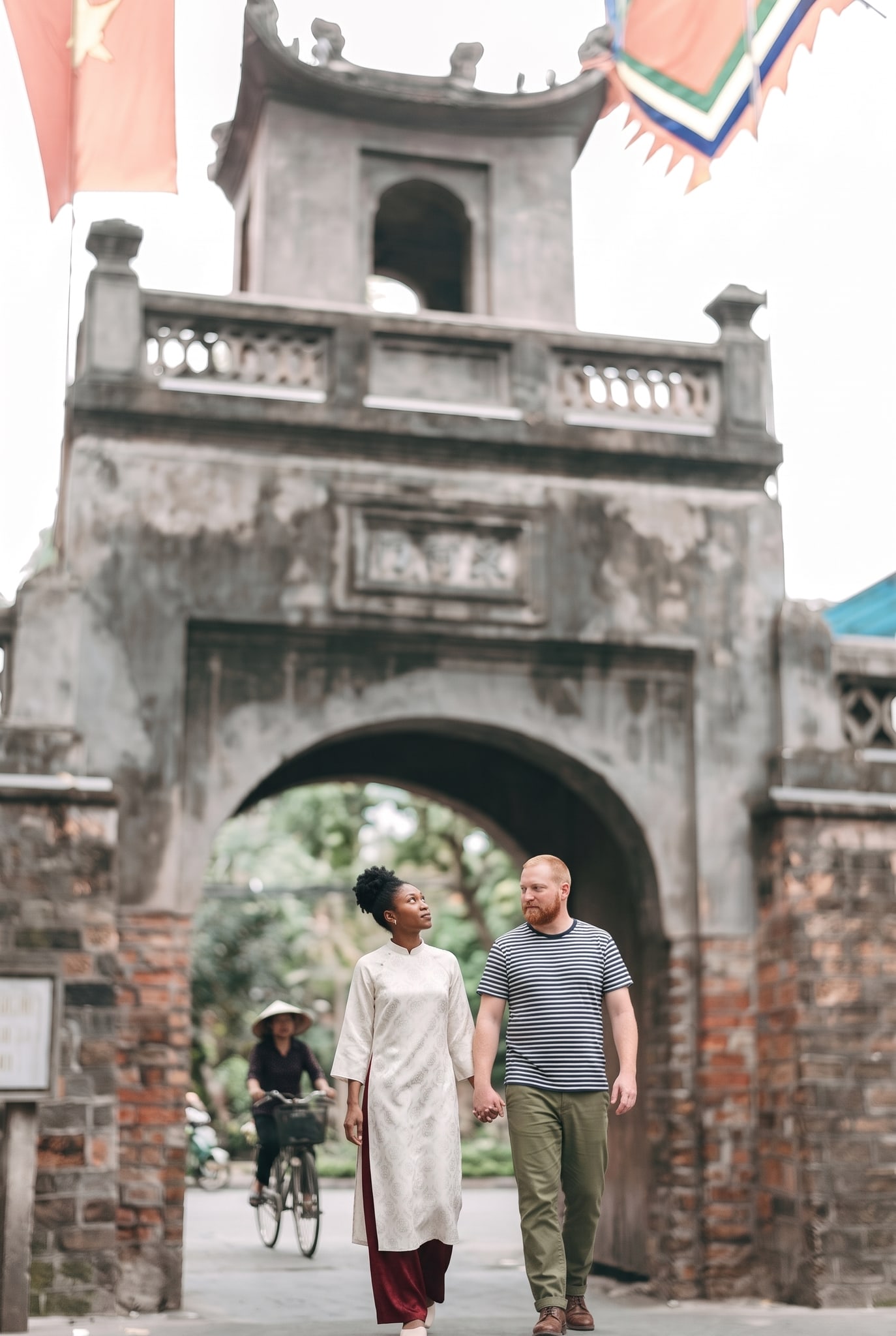
April–May paddies are brightest green but hotter; couples tire faster, makeup melts, and midday sun is unavoidable if you want green. June–September is monsoon; rain can be sudden, paddies are muddy, and low clouds often block any sunrise colour. October–November sees harvest (paddies emptying, stubble exposed) but clearer skies and cooler mornings. December–March is dry season ideal for comfort and light, but paddies may be empty or partially planted depending on the farmer's schedule. We've turned back 20 metres because a plot was suddenly harvested overnight, or repositioned because a neighbouring farmer flooded his field and altered the water table. Our pre-wedding and elopement package includes a scout visit 48 hours before your shoot so we can confirm real conditions versus your Pinterest mood board.
What goes wrong in paddy shoots and how we fix it?
Mud on shoes and ao dai hems is the first surprise. We carry a cloth and ask if you're comfortable with earth on fabric (it washes out; some couples love the texture). Second: the paddy nearest the road is always busier with farmers, so we wake early or walk deeper—shooting 500 metres into a field means fewer backgrounds with motorcycles. Third: afternoon light arrives 15 minutes earlier in October than April because the sun's angle flattens, so we never trust a seasonal time slot; we check the forecast and recalculate on the day. Fourth: ao dai fabric catches on harvested stubble or wet grass; we wrap the back panel and tie sleeves loosely so movement is easier. Fifth: midges swarm at sunrise in certain weeks; we bring bug spray and shoot into the mist where they're less active. The couple photoshoot package gives us flexibility to adjust poses, posture and framing in real time based on what the light and weather actually do, rather than what we planned.
See packages and prices on vietnamphotoshoot.com
What to check before you book a Hoi An paddy session
Confirm your travel dates first. Monsoon (June–September) is possible but requires rain contingencies. Dry season (December–March) is safest for light and comfort.
Choose your aesthetic. Sunrise means cold, early arrival, and soft mist. Golden hour means afternoon logistics but warmer tones. Overcast skies mean soft faces but less sky drama.
Decide on ao dai or dress. An ao dai in bright silk photographs best against green paddies and golden light; pastels work better in overcast conditions. Heavier fabrics catch on stubble more easily.
Book a scout or trust our experience. If you're flying in, we can visit the paddy alone and send you a video or photo showing real conditions. If you're in Hoi An, we can scout together and adjust the time or location based on what we find.
Plan for mud. Wear shoes you don't mind getting dirty, or bring a spare pair for the walk back. We carry a towel and can wash feet if needed.
Ask us for a quote on WhatsApp that includes the exact date, time window, and light preference. We'll confirm availability for your special concept shoot or standard pre-wedding session, and we'll tell you what to bring.
FAQ
Is sunrise or sunset better for Hoi An paddy photos?
Sunrise (5:30–6:30 a.m.) gives softer, mistier light and fewer tourists; sunset (5–6 p.m.) offers warmer tones and easier logistics. Both are equally beautiful. Choose based on your energy level and whether you prefer ethereal or golden mood. We scout ahead to confirm real conditions.
What month has the greenest paddies?
May and June offer the brightest green after planting, but June is monsoon season with cloud cover. April–May and September–October balance vibrant colour with clearer skies. December–March is dry but paddies may be empty or harvested. Check with us before booking.
Do we need to wear special shoes for muddy paddies?
Bring shoes you don't mind muddying or plan to remove them for shots. Most couples go barefoot or wear sandals they can clean later. Avoid white leather; earth stains are hard to remove. We carry a towel and water to rinse feet.
How long is a typical Hoi An paddy shoot?
Most pre-wedding photoshoots in paddies run 3–4 hours, including travel time from town, outfit changes, and repositioning for light. Sunrise shoots may end by 8 a.m.; golden hour shoots typically run 3–6 p.m.
Can we do a paddy shoot if it's cloudy?
Yes. Overcast light is soft and flattering for faces and ao dai detail. You'll lose sky drama but gain comfort and even skin tones. We often shoot couples' quiet moments in clouds, then wait for sun breaks for backlit finales.
What if we want both sunrise and sunset in one day?
A full-day couple photoshoot package can include early light, a midday outfit change in town, and golden hour in a second location. This is longer but gives variety. Ask us for a quote covering both sessions.
Pre-Wedding & Elopement
Inclusions, prices and booking are on our booking site.
FAQ
Is sunrise or sunset better for Hoi An paddy photos?
Sunrise (5:30–6:30 a.m.) gives softer, mistier light and fewer tourists; sunset (5–6 p.m.) offers warmer tones and easier logistics. Both are equally beautiful. Choose based on your energy level and whether you prefer ethereal or golden mood. We scout ahead to confirm real conditions.
What month has the greenest paddies?
May and June offer the brightest green after planting, but June is monsoon season with cloud cover. April–May and September–October balance vibrant colour with clearer skies. December–March is dry but paddies may be empty or harvested. Check with us before booking.
Do we need to wear special shoes for muddy paddies?
Bring shoes you don't mind muddying or plan to remove them for shots. Most couples go barefoot or wear sandals they can clean later. Avoid white leather; earth stains are hard to remove. We carry a towel and water to rinse feet.
How long is a typical Hoi An paddy shoot?
Most [pre-wedding photoshoots](/go/pre-wedding-photoshoot) in paddies run 3–4 hours, including travel time from town, outfit changes, and repositioning for light. Sunrise shoots may end by 8 a.m.; golden hour shoots typically run 3–6 p.m.
Can we do a paddy shoot if it's cloudy?
Yes. Overcast light is soft and flattering for faces and ao dai detail. You'll lose sky drama but gain comfort and even skin tones. We often shoot couples' quiet moments in clouds, then wait for sun breaks for backlit finales.
What if we want both sunrise and sunset in one day?
A full-day [couple photoshoot package](/go/couple-photoshoot) can include early light, a midday outfit change in town, and golden hour in a second location. This is longer but gives variety. Ask us for a quote covering both sessions.
More from the team
Boho pre-wedding photoshoot in Vietnam: Hanoi, Saigon, Hoi An
Boho pre-wedding shoots mix romantic, free-spirited aesthetics with Vietnam's landscapes and heritage sites. We run full-day sessions in three cities, handling styling, makeup, location scouts and edits.
Avoid crowds at Hoang Su Phi rice terraces: timing for wedding shoots
Hoang Su Phi's terraced landscape draws couples and tour buses in equal measure. We show how to shoot there alone, when to arrive, and what to arrange with us before you go.
Photography rules at Con Dao beaches: permits, drones and what to check
Con Dao's beaches demand prep before you shoot—permits, drone zones and tide timing all affect your day. We share what the Cáo Studio team verifies on every booking.