 Cáo Studio
Home › Blog › Pre-Wedding & Elopement
Hoi An wedding photos: golden hour and wet street light
By the Cáo Studio team · Hanoi & Saigon · 2026-11-04
Hoi An's best wedding light arrives in two windows: 06:30–07:30 for soft pre-dawn glow on empty lanes, and 17:00–18:30 when lanterns glow against fading sky. Rain-wet streets reflect lanterns and sky—we chase this after afternoon showers, usually 16:00–17:30 in monsoon months (May–Sept). At Cáo Studio, we schedule pre-wedding photoshoots three hours minimum in town to catch both dry and wet conditions. Avoid 11:00–15:00: hard shadows, tourist crowds, heat-haze over stone. Book between September and April for driest, most predictable light; monsoon season trades consistency for dramatic drama. Cost varies by session length and location—ask us for a quote on WhatsApp. Chat with us on WhatsApp
Why does golden hour trump midday in Hoi An?
Golden hour—the first 90 minutes after sunrise or last two before sunset—wraps subjects in warm, directional light that flatters skin tone and adds texture to the Old Town's weathered stone and wooden shutters. At midday, the sun sits overhead, erasing shadows and flattening the French colonial architecture that makes Hoi An distinct. We've shot dozens of couples here; the difference between a 07:00 start and a 13:00 start is a different story. Morning light also means empty streets—the town doesn't fill with tour groups until 08:30–09:00—so the couple gets solitude on the Japanese Covered Bridge and around Tan Ky House without waiting for crowds to clear. Afternoon golden hour (17:00–18:30) is warmer and richer but competing with tour-group cleanup and locals heading home; we get the magic in smaller pockets. Our conclusion: book sunrise if you want empty lanes and cool, clear skin tones; book sunset if you want drama and lantern glow together.
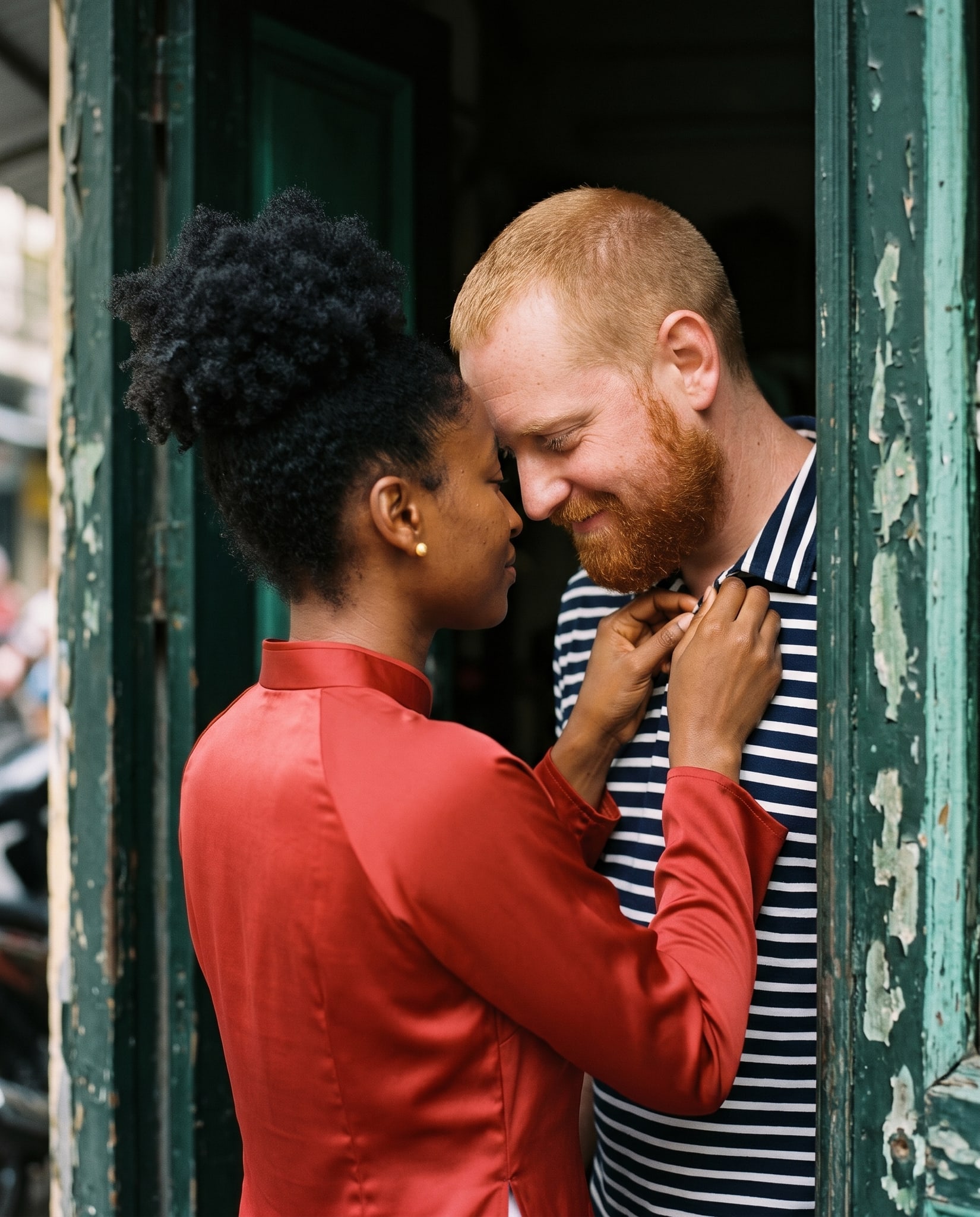
What happens when the street gets wet—and when should we schedule it?
Wet streets act like mirrors: they double lantern reflections, deepen colors, and add romance without extra styling. This is Hoi An's secret weapon, and we plan for it intentionally. In dry season (Oct–April), we watch weather forecasts and move shoots after afternoon rain—usually 14:00–17:00 on rain days, when clouds scatter but pavement stays wet. In monsoon (May–Sept), afternoon showers are almost guaranteed; we build rain shoots into itineraries and tell couples to expect damp, dramatic light. We've learned the hard way: wet-street sessions need 45 minutes post-rain for streets to stay gleaming without puddles that create safety hazards. Our team scouts locations after rain to avoid flooded alleys (Bach Dang Street floods first). The payoff: reflection shots that look unreal in edit, stone that glows darker and richer, and colors that pop without needing extra saturation. Our conclusion: if monsoon travel is non-negotiable, embrace rain as a creative asset—don't fight it.
See packages and prices on vietnamphotoshoot.com
How do lanterns change the look between 5 p.m. and dusk?
Lanterns in Hoi An begin glowing around 17:00 when merchants light them as daylight fades. At 17:00–17:30, they're subtle—the sky still holds blue, and lanterns read as warm accents on cool background. By 18:00–18:30, the sky darkens to deep orange or purple, and lanterns become the dominant light source—they backlight the couple or cast amber pools on stone. We time "lantern glow" shoots for 17:45–18:15, the sweet spot where natural sky light and artificial lantern light sit in balance. Shoot too early, lanterns fade into background; too late (after 18:30), ISO climbs and skin tones go orange. During monsoon, cloud cover extends the blue hour—we get richer purple sky and softer lantern punch until 18:45. Our conclusion: if lanterns are your main draw, arrive at location by 17:15 to scout framing, then shoot 17:45–18:15 for peak balance.
What's the trade-off: early morning solitude vs. afternoon lanterns and color?
| Session time | Light quality | Crowd level | Lantern glow | Skin tone | Cost | Best for |
|---|---|---|---|---|---|---|
| 06:30–08:00 (dawn) | Soft, cool, textured | Solo (before 08:30) | None (lights off) | Cool, flattering | Standard rate | Intimate, peaceful, empty-lane portraits |
| 17:00–18:30 (sunset) | Warm, directional, rich | Moderate (tour groups leaving) | Full glow 17:45+ | Warm, golden | Standard rate | Lantern backdrop, romantic mood, color-pop |
| 15:00–16:30 (monsoon rain window) | Dramatic, moody, wet reflections | Low (locals indoors) | Pre-glow (warming up) | Natural, shadow texture | Standard rate | Rain romance, reflection drama, mood shoot |
Each time slot serves different couple styles. Couples wanting zen and seclusion choose dawn; couples wanting story and atmosphere choose sunset. We've seen couples do both—3-hour shoots that hit 07:00–08:00, then return at 17:30 for lantern round. The trade-off is real: you cannot get empty streets AND full lantern glow in the same session. Our conclusion: choose one primary window, scout it on arrival day, then decide if a second session adds value to your story.
See our pre-wedding photoshoot packages
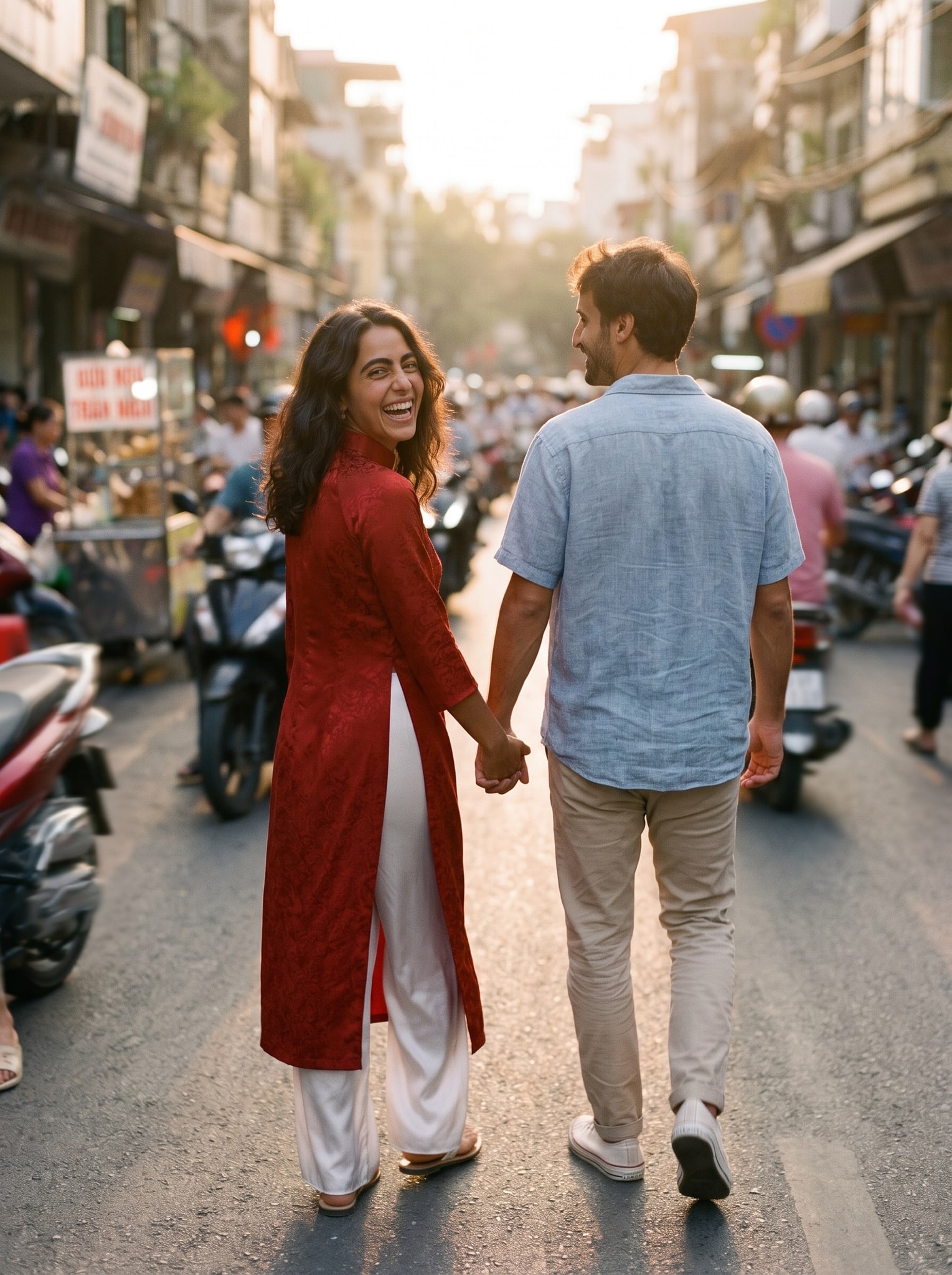
Which months give the most predictable light, and when should couples avoid?
September–April offers the driest, most consistent light for scheduling. October–November: clear skies, cool temperatures, lanterns glow sharp, crowds peak (book early). December–February: cool, occasional cloud cover, still dry, tourists thinner after Jan 1. March–April: heat rises, humidity builds, but light holds. May–June: monsoon ramp-up, afternoons uncertain, but dramatic potential. July–September: peak monsoon, afternoon rain guaranteed, clouds soften morning light, fewer tourists. January and early February book out fastest—many couples choose Tet-adjacent timing or cool-season holidays. We schedule around lunar dates: avoid Tet week itself (chaos, closures), but January shoots are smooth. Based on our shoot logs over three years, late-October and late-March offer the best blend: dry, warm, reasonable crowds, reliable light windows. Our conclusion: book Oct–Nov or March–April for predictable light; book May–Sept if you're committed to rain-drama; avoid Tet week (Jan 28–Feb 10 in 2026) and mid-Aug heat crush.
What to check before you book
- Exact date and season: Ask your photographer about typical weather patterns; we'll tell you rain odds and lantern glow start time for your dates.
- Sunrise vs. sunset: Commit to one primary window early. Changing your mind on-location costs time and light.
- Rain contingency: In monsoon, confirm your team has a backup indoor location (Tan Ky House, Assembly Hall) or a rain-shoot plan.
- Street access: Some sections of the Old Town close 07:00–08:00 for tourism prep. We scout current closures before each shoot.
- Couple energy: Early dawn needs rest beforehand; golden-hour sunset needs stamina for 3+ hours. Build in a cafe break if you're combining windows.
Pages from our team you may need
- ao dai photoshoot package
- couple photoshoot package
- makeup and hair at your hotel
- proposal and anniversary package
FAQ
Can we shoot during midday and still get good light in Hoi An?
Midday (11:00–15:00) creates harsh shadows, washed skin tone, and glare off wet stone. We avoid it. If schedule forces midday, we move into covered lanes (Nguyen Hue pedestrian zone, Assembly Hall courtyards) where shade softens light. Quality still lags sunrise or sunset; ask us for creative workarounds.
Does rain ruin the shoot, or does it help?
Rain creates wet-street reflections and moody drama—we plan for it in monsoon season. Active downpour stops work (safety, gear risk), but light showers and post-rain wetness are assets. Couples in May–Sept should expect rain and embrace it as part of the story, not a cancellation trigger.
How early do we need to arrive for a sunrise shoot?
We meet 06:15 for a 06:30 start. Hoi An Old Town opens gates around 06:00; we're inside and framing by 06:20. Sunrise itself peaks around 06:45 in winter, 05:50 in summer. Arriving earlier wastes your energy before the best light hits.
What if we want both dawn and lantern glow—can we do a full-day shoot?
Yes, many couples book 3–4 hours covering 07:00–08:00 and 17:30–18:45 with a cafe break in between. This captures empty lanes, cool tones, then warm lantern drama. Ask us for a quote on WhatsApp—we'll structure timing around light windows, not just clock hours.
Is October really the best month, or is that just tourism hype?
October is genuine peak: cool, dry, clear light, lanterns glow vivid against blue sky. December–January rivals it in dryness but brings more tourists and heat-of-booking stress. March–April offers equivalent light with fewer crowds and lower booking pressure. Choose based on your crowd tolerance, not just light.
Pre-Wedding & Elopement
Inclusions, prices and booking are on our booking site.
FAQ
Can we shoot during midday and still get good light in Hoi An?
Midday (11:00–15:00) creates harsh shadows, washed skin tone, and glare off wet stone. We avoid it. If schedule forces midday, we move into covered lanes (Nguyen Hue pedestrian zone, Assembly Hall courtyards) where shade softens light. Quality still lags sunrise or sunset; ask us for creative workarounds.
Does rain ruin the shoot, or does it help?
Rain creates wet-street reflections and moody drama—we plan for it in monsoon season. Active downpour stops work (safety, gear risk), but light showers and post-rain wetness are assets. Couples in May–Sept should expect rain and embrace it as part of the story, not a cancellation trigger.
How early do we need to arrive for a sunrise shoot?
We meet 06:15 for a 06:30 start. Hoi An Old Town opens gates around 06:00; we're inside and framing by 06:20. Sunrise itself peaks around 06:45 in winter, 05:50 in summer. Arriving earlier wastes your energy before the best light hits.
What if we want both dawn and lantern glow—can we do a full-day shoot?
Yes, many couples book 3–4 hours covering 07:00–08:00 and 17:30–18:45 with a cafe break in between. This captures empty lanes, cool tones, then warm lantern drama. Ask us for a quote on WhatsApp—we'll structure timing around light windows, not just clock hours.
Is October really the best month, or is that just tourism hype?
October is genuine peak: cool, dry, clear light, lanterns glow vivid against blue sky. December–January rivals it in dryness but brings more tourists and heat-of-booking stress. March–April offers equivalent light with fewer crowds and lower booking pressure. Choose based on your crowd tolerance, not just light.
More from the team
Photography rules at Ta Phin village: permits, drones and what to check
Ta Phin village in Sapa draws photographers for its Hmong culture and layered mountain light. We've shot dozens of sessions there—here's what actually works and what stops shoots cold.
Pre-Wedding Photo Ideas and Poses at O Quy Ho Pass
O Quy Ho Pass sits on the Hanoi–Sapa border at 1,200 metres. Our couples shoot there for its curves, mist and isolation—but the weather and logistics demand a different approach than valley shoots.
Is O Quy Ho Pass Good for Pre-Wedding Photos? Pros, Cons, Alternatives
O Quy Ho pass in Sapa draws couples seeking high-altitude drama, but tight timelines, unpredictable fog, and logistics make it risky for pre-wedding shoots. We've scouted it; here's what actually works. #