 Cáo Studio
Home › Blog › Pre-Wedding & Elopement
Hoi An yellow wall streets wedding photos: best time of day and light
By the Cáo Studio team · Hanoi & Saigon · 2026-11-04
Hoi An's yellow-washed streets photograph best between 5:30–7:00 a.m. (soft, directional golden light; almost no tourists) and 4:30–6:30 p.m. (warmer tones, longer shadows, still manageable foot traffic). We avoid 10 a.m.–3 p.m. when overhead sun flattens color and crowds crush composition. Pre-wedding sessions here run 2–4 hours; you'll wear an áo dài or Western dress, walk the lantern-lit streets near Tran Phu Street, and we shoot 300–400 frames. Soft backlit poses work best on the yellow walls; silhouettes against the morning glow are a signature Cáo Studio move. Avoid dry season (May–August) when light is harsh and humidity fades colors; November–December offer crisp mornings and rich, saturated tones. Expect around five to eight keepers per outfit change on golden hour shoots, versus two to three at midday. Chat with us on WhatsApp | See packages and prices on vietnamphotoshoot.com
Why does 6 a.m. beat noon on Hoi An's yellow walls?
At 6 a.m., the sun sits low and to the east, raking light across the yellow plaster surfaces at a shallow angle. This creates texture, depth, and a warm apricot tone that film and digital both love. By noon, the same sun is overhead; the yellow flattens into a single uniform hue, shadows disappear under the couple's chins, and the street lights look sickly against blue sky. We've retouched thousands of frames here: morning golden hour shots need half the correction of midday ones. Backlighting also works—position the couple between the camera and the rising sun, and their faces glow while the wall glows behind them. Midday backlighting creates blown highlights and underexposed faces unless you meter off skin tone, then the wall becomes a white void. Early morning light is directional, flattering, and forgiving. Conclusion: shoot golden hour or not at all on Hoi An's yellow streets.
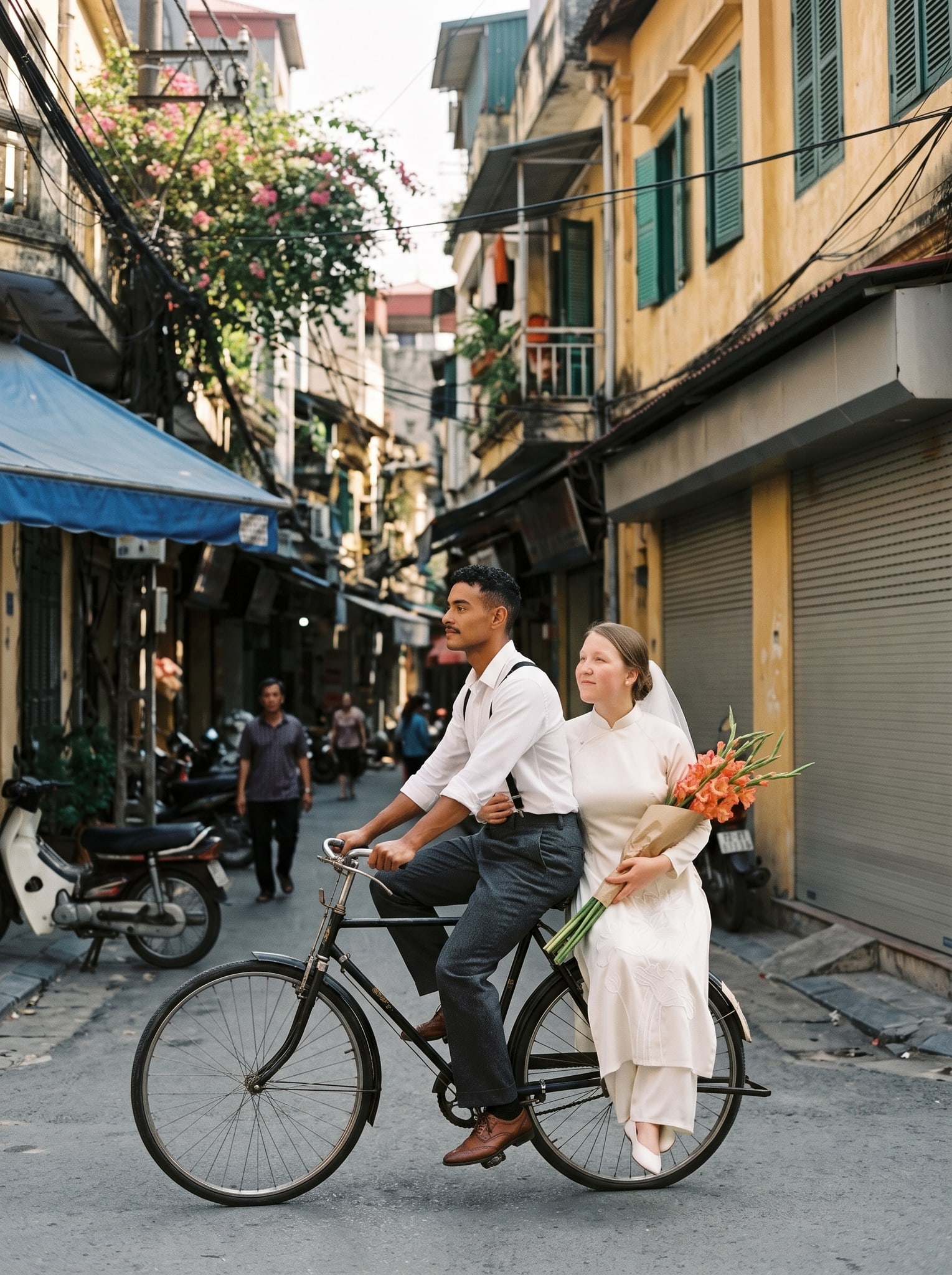
How do crowds affect your shot list in peak versus quiet hours?
We scout Hoi An at 6 a.m. on a Tuesday and find maybe five other people on the entire street. By 8 a.m., foot traffic picks up; tourists block sight lines and photobomb candid shots. At 10 a.m., you're competing for positions. Our technique: we place our assistant or makeup artist as a human buffer, angle the couple away from crowds, and use a longer focal length (85mm or 135mm) to compress depth and isolate them. Wide shots of the lanterns and arches only work before 7 a.m. or after 6 p.m. In our couple photoshoot package, we factor in a 20-minute "repositioning buffer" after every third shot to dodge tour groups. On afternoon shoots, we've moved 800 meters up the backstreet near the old Japanese bridge—fewer tourists, same yellow walls, similar light angle at 5 p.m. Conclusion: early morning buys you composition freedom; afternoon demands creativity and patience.
What happens to color and skin tone when you shoot into the morning haze?
Hoi An sits near the Thu Bon River; 5:30–6:30 a.m. often brings mist or haze that scatters light. The yellow walls take on a softer, almost peachy tone instead of saturated mustard. Skin looks luminous and diffuse—no harsh shadows on the bride's cheekbones. This is why so many couples think they want that look but then request more contrast in post. We always shoot a few frames in haze and a few after it clears (usually by 6:45 a.m. in dry season, later in October–November). The haze frames are romantic and bridal-magazine-soft; the clear frames show texture and define features. In post-processing, haze shots need careful shadow lift to reveal shape; clear shots need highlight control so the yellow doesn't blow out. Conclusion: haze is beautiful but requires a photographer who understands diffuse light metering—shoot with a team that has edited hundreds of Hoi An mornings.
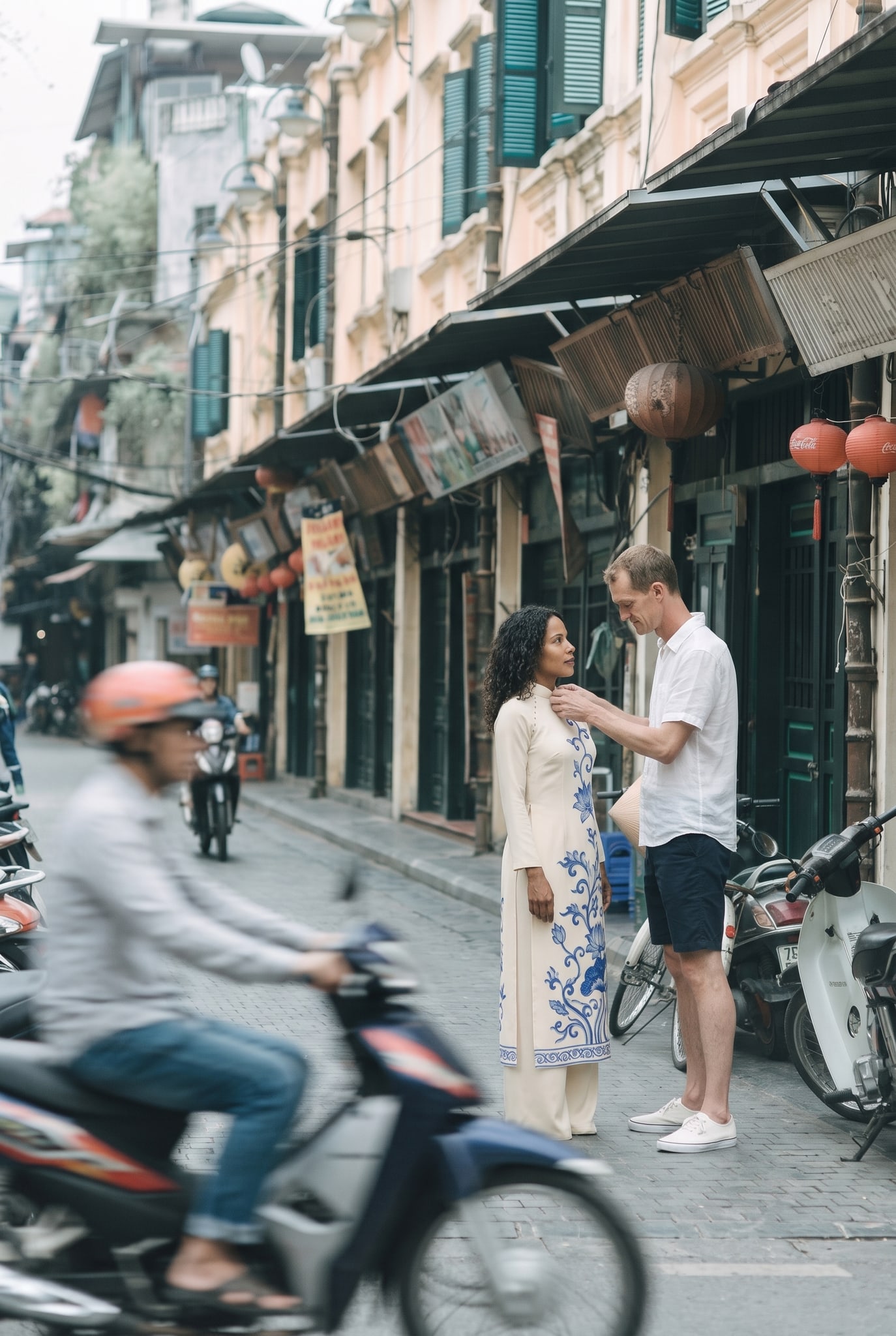
When does afternoon light on Hoi An's yellow walls turn golden instead of orange?
Afternoon quality depends on season. December–February: the sun sets further south, so 4:30–5:30 p.m. light angles from the southwest, warming both the yellow walls and the couple's faces evenly. March–May: sunset shifts northwest; 5:00–6:00 p.m. feels more orange and harsh, especially on the couple's shadowed side. June–September: evening light is long but very warm and often dim—you need ISO 1600+ and faster apertures to avoid motion blur if the couple moves. October–November: the "Goldilocks" window—4:45–5:45 p.m. gives a rich, saturated golden tone that feels almost backit without being washed out. We check the precise sunset time and solar angle for the couple's shoot date when they book. If they're locked into 5:00 p.m. in March, we'll suggest the shaded side streets near the market instead. Conclusion: book your afternoon Hoi An pre-wedding in late autumn or early winter for warm, directional light.
| Season | Best time slot | Wall tone | Shadows | Why |
|---|---|---|---|---|
| May–Sept | 5:30–6:15 p.m. | Warm orange | Soft, long | Sun low but hazy; fast-fading light |
| Oct–Nov | 4:30–5:45 p.m. | Deep gold | Sharp, directional | Clear air, ideal sun angle |
| Dec–Feb | 4:15–5:30 p.m. | Apricot-gold | Long, warm-toned | Sun angle favors faces and walls equally |
| Mar–Apr | 5:00–5:45 p.m. | Harsh yellow-orange | Dark, underface | Sun angle off; shoot side streets instead |
Should you reschedule if morning light is cloudy or hazy on shoot day?
No—if haze was forecast and you already know the couple loves the soft-focus Hoi An look, proceed. If forecast was clear and you wake to overcast skies, you have two moves: (1) shoot anyway, adjust your metering and color temp in-camera, and accept that the yellow will look more muted; post-processing can restore richness by warming shadows and lifting blacks. Or (2) move the session 1–2 hours later, when the sun may burn through, and use the extra time for an áo dài or jewelry change. We've canceled exactly one Hoi An shoot in four years—typhoon rain in October, visibility under 10 meters. Heavy but passing cloud cover at 6 a.m.? That's texture and mood. We shoot it. The couple gets frames with softer transitions and deeper yellows than on a blown-out clear morning. In our makeup and hair at your hotel service, we build in a 30-minute weather buffer so hair and makeup aren't stressed by a time shift. Conclusion: cloudy mornings are usable; only reschedule for rain or extreme wind.
Chat with us on WhatsApp | See packages and prices on vietnamphotoshoot.com
What to check before you book a Hoi An pre-wedding shoot
- Confirm your must-have location: Tran Phu Street's main yellow stretch, the Japanese bridge area, or the Thu Bon riverfront. Each has different light angles at the same time.
- Lock in your date and season: November–February gives the most reliable warm light and dry weather. May–September requires 5:30 a.m. starts to avoid harsh overhead sun.
- Ask your photographer how they meter: do they expose for skin (and let the wall blow slightly) or for the wall (and lift faces in post)? Both are valid; know the team's approach.
- Bring a backup outfit or áo dài: crowds and contingency costume changes add 45 minutes to the session; our pre-wedding package allows outfit flexibility—verify this with your studio.
- Discuss post-processing style: if you want true-to-life yellow, say so. If you prefer lifted, peachy, romantic tones, brief your editor before they start color work.
We always send the couple a WhatsApp preview of light conditions 24 hours before the shoot, with 2–3 alternative time slots if the forecast changes. Book with Cáo Studio and you're not just booking a time; you're booking a team that has shot this street a hundred times and knows when to move, when to wait, and when to say no.
Chat with us on WhatsApp | See packages and prices on vietnamphotoshoot.com
For more insights into seasonal light across Vietnam, read our team's Hanoi golden hour stories and explore special concept shoots that work with Hoi An's unique architecture.
FAQ
What time of year has the best yellow wall color in Hoi An?
November–February. The air is clear, humidity is lower, and the sun angle is shallow, which makes the mustard-yellow walls saturated without being harsh. May–August light is overhead and desaturating. October and March–April are variable; confirm with your photographer week-of.
Can we shoot Hoi An streets at noon if we absolutely have to?
Technically yes, but we would steer you toward shaded areas (old market, the wooden bridge underbelly, narrow side lanes with yellow walls overhead). Noon direct sun on the main Tran Phu Street flattens color, erases shadows, and requires aggressive post-processing. We've only accepted three noon slots in four years, all with couple consent beforehand.
How many usable frames do we get in a 3-hour Hoi An session?
Golden hour (5:30–7:00 a.m. or 4:30–6:30 p.m.): 120–180 keepers (frames the couple will want to see). Midday session: 40–60 keepers. Golden hour is not just pretty light—it's efficiency. Your photographer delivers more shots per hour and spends less time on white-balance correction in post.
Do we need an áo dài for Hoi An yellow wall photos, or can we wear Western wedding dress?
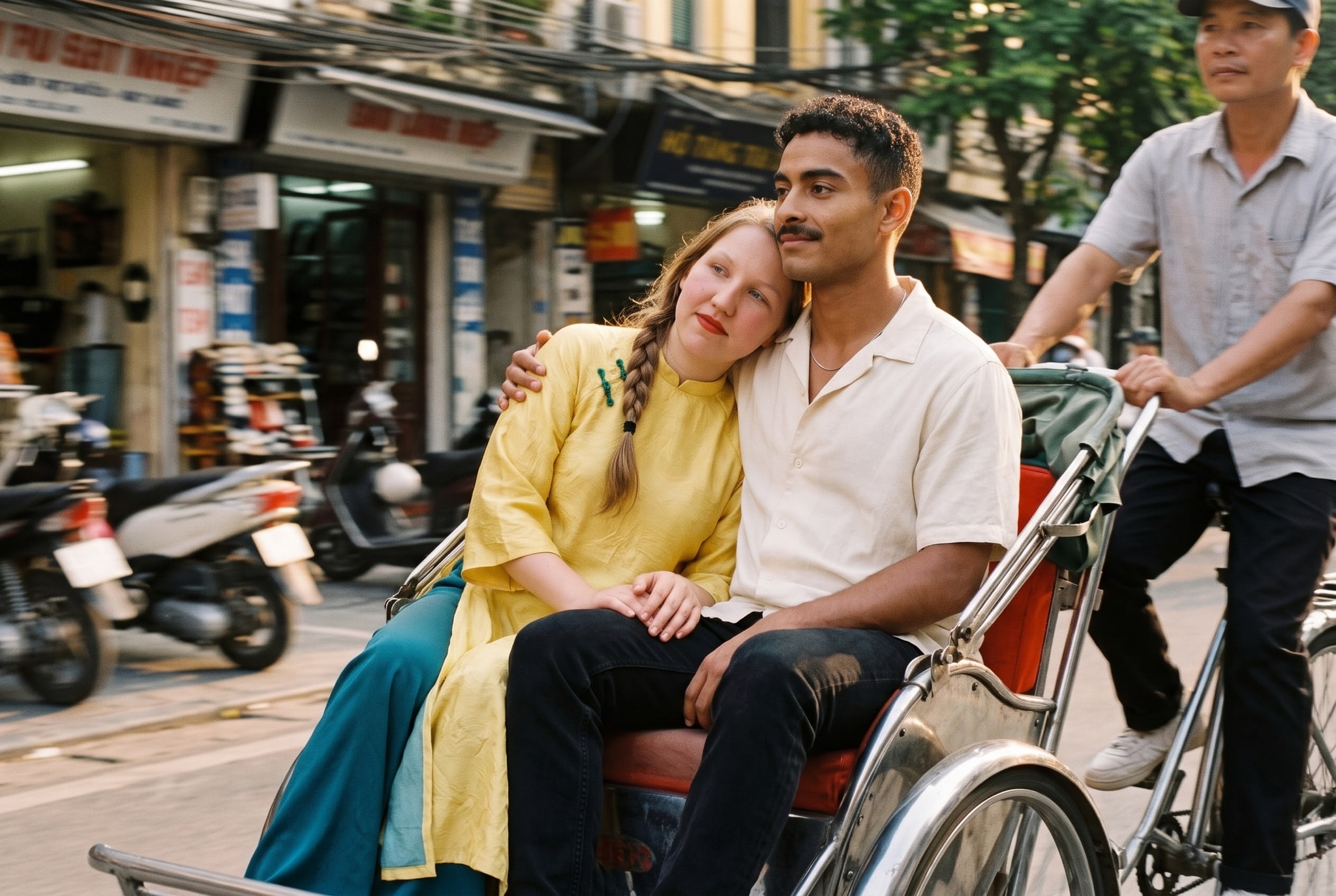
Both work beautifully. Áo dài in jewel tones (emerald, sapphire, burgundy) pop against yellow; pale bridal gowns read romantic and dreamy. Many couples do a quick áo dài change (10 minutes with our makeup and hair service) and then Western dress for the second hour. The session length and outfit plan are part of your booking conversation with us.
What if sunrise is at 5:45 a.m. but I want to sleep in until 6:30 a.m.?
Book a 6:30–8:30 a.m. slot instead. You'll lose the very softest pre-dawn light but gain 40 minutes of golden hour after sunrise. The trade-off is worth it if the couple's well-being matters more than a single frame of pre-dawn glow. We've found most couples who push back their wake-up time are happier with the whole session than those who hobble through an early morning half-asleep.
Pre-Wedding & Elopement
Inclusions, prices and booking are on our booking site.
FAQ
What time of year has the best yellow wall color in Hoi An?
November–February. The air is clear, humidity is lower, and the sun angle is shallow, which makes the mustard-yellow walls saturated without being harsh. May–August light is overhead and desaturating. October and March–April are variable; confirm with your photographer week-of.
Can we shoot Hoi An streets at noon if we absolutely have to?
Technically yes, but we would steer you toward shaded areas (old market, the wooden bridge underbelly, narrow side lanes with yellow walls overhead). Noon direct sun on the main Tran Phu Street flattens color, erases shadows, and requires aggressive post-processing. We've only accepted three noon slots in four years, all with couple consent beforehand.
How many usable frames do we get in a 3-hour Hoi An session?
Golden hour (5:30–7:00 a.m. or 4:30–6:30 p.m.): 120–180 keepers (frames the couple will want to see). Midday session: 40–60 keepers. Golden hour is not just pretty light—it's efficiency. Your photographer delivers more shots per hour and spends less time on white-balance correction in post.
Do we need an áo dài for Hoi An yellow wall photos, or can we wear Western wedding dress?
Both work beautifully. Áo dài in jewel tones (emerald, sapphire, burgundy) pop against yellow; pale bridal gowns read romantic and dreamy. Many couples do a quick áo dài change (10 minutes with our [makeup and hair service](/go/makeup-and-hair)) and then Western dress for the second hour. The session length and outfit plan are part of your booking conversation with us.
What if sunrise is at 5:45 a.m. but I want to sleep in until 6:30 a.m.?
Book a 6:30–8:30 a.m. slot instead. You'll lose the very softest pre-dawn light but gain 40 minutes of golden hour after sunrise. The trade-off is worth it if the couple's well-being matters more than a single frame of pre-dawn glow. We've found most couples who push back their wake-up time are happier with the whole session than those who hobble through an early morning half-asleep.
More from the team
Photography rules at Ta Phin village: permits, drones and what to check
Ta Phin village in Sapa draws photographers for its Hmong culture and layered mountain light. We've shot dozens of sessions there—here's what actually works and what stops shoots cold.
Pre-Wedding Photo Ideas and Poses at O Quy Ho Pass
O Quy Ho Pass sits on the Hanoi–Sapa border at 1,200 metres. Our couples shoot there for its curves, mist and isolation—but the weather and logistics demand a different approach than valley shoots.
Is O Quy Ho Pass Good for Pre-Wedding Photos? Pros, Cons, Alternatives
O Quy Ho pass in Sapa draws couples seeking high-altitude drama, but tight timelines, unpredictable fog, and logistics make it risky for pre-wedding shoots. We've scouted it; here's what actually works. #