 Cáo Studio
Home › Blog › Pre-Wedding & Elopement
Hon Chong Promontory Wedding Photos: Best Time & Light
By the Cáo Studio team · Hanoi & Saigon · 2026-11-02
Hon Chong Promontory near Ninh Binh offers soaring karst cliffs, tidal caves, and water reflections that reward careful timing. We've shot here 40+ times and learned: golden hour (5–6 p.m. October–March; 6–7 p.m. April–September) gives warm, directional light that sculpts the cliffs. Shoot on falling tide so the foreground mudflat becomes a mirror; arrive 3–4 hours before sunset. Low season (Sept–Oct, May) means fewer crowds and softer diffuse light. Spring (Feb–April) brings haze. High tide covers the flats, losing reflections. A full pre-wedding and elopement package with Cáo Studio typically includes location scouting, 4–6 hours on-site, and styled changes. Avoid midday hard shadows. Book 3–4 weeks ahead to confirm tide tables and secure guides. --- Chat with us on WhatsApp | See packages and prices on vietnamphotoshoot.com
Why does the time of day matter so much at Hon Chong?
Light at Hon Chong doesn't stay flattering for long. The cliffs face west and southwest; midday sun (10 a.m.–3 p.m.) comes from behind or above you, flattening the stone texture and casting harsh shadows across the water. By 4 p.m., sunlight angles lower and warmer. Golden hour (5–6:30 p.m. in winter; 6–7:30 p.m. in summer) wraps the limestone in amber, deepens the sky, and makes the water glow. We've noticed that even 20 minutes matters: arrive before 4:45 p.m., and you're still fighting glare; arrive after 6:15 p.m., and clouds or haze eat the color. The cliffs peak in beauty for roughly 90 minutes. Plan your styling changes and poses in reverse—kiss and formal shots last, movement and walking shots first—so the best light falls on the strongest images.
How does the tide affect your shot options?
The tidal flat below the cliffs transforms the shoot. On a falling tide (going out), the mudflat becomes a slick, reflective surface—couples stand waist-deep in water, cliffs doubling in the mirror below. This adds depth and romance to frames. On a rising tide or high tide, water covers the flats entirely. You lose the shallow-water poses, the reflection effect, and the sense of open space. We always check the Vietnam tide calendar before confirming dates. Ninh Binh's tidal range is roughly 1–1.5 meters. Plan your session 2–4 hours after high tide so the flat is exposed but still damp. If you book a multi-hour shoot, ask us to stagger your departure time; the first hour is for water and flat poses, the second for cliff-base and cave-mouth shots as the light shifts. Timing the tide wrong means losing your best anchor shots.
What's the difference between seasons at Hon Chong?
| Season | Light quality | Crowds | Tide predictability | Best for |
|---|---|---|---|---|
| Sept–Oct | Soft, diffuse; golden hour long | Fewest tourists | Stable, tidal range 1–1.2m | Raw, moody aesthetics |
| Nov–Jan | Sharp, warm; low sun angle | Moderate | Stable, range 1–1.5m | Classic romantic gold |
| Feb–April | Hazy, washed; high sun | Most crowds | Stable, range 1–1.4m | Soft, dreamy tones |
| May–Aug | Humid; brief golden hour; rain risk | Moderate | Variable, range 0.9–1.3m | Avoid; light is harsh |
We prefer September–October and November–January for Cáo Studio shoots. Spring haze softens detail (sometimes good for ethereal bridal looks), but color grading later becomes critical. Summer brings afternoon storms and brief windows. Our stylists know which seasons suit which ao dai colors and makeup finishes—autumn golds and jewel tones glow in Oct–Nov light, while soft pastels work best in Feb–April haze. Book 4 weeks ahead if you want October–November slots; that's our peak season here.
What should we wear to look best in the light?
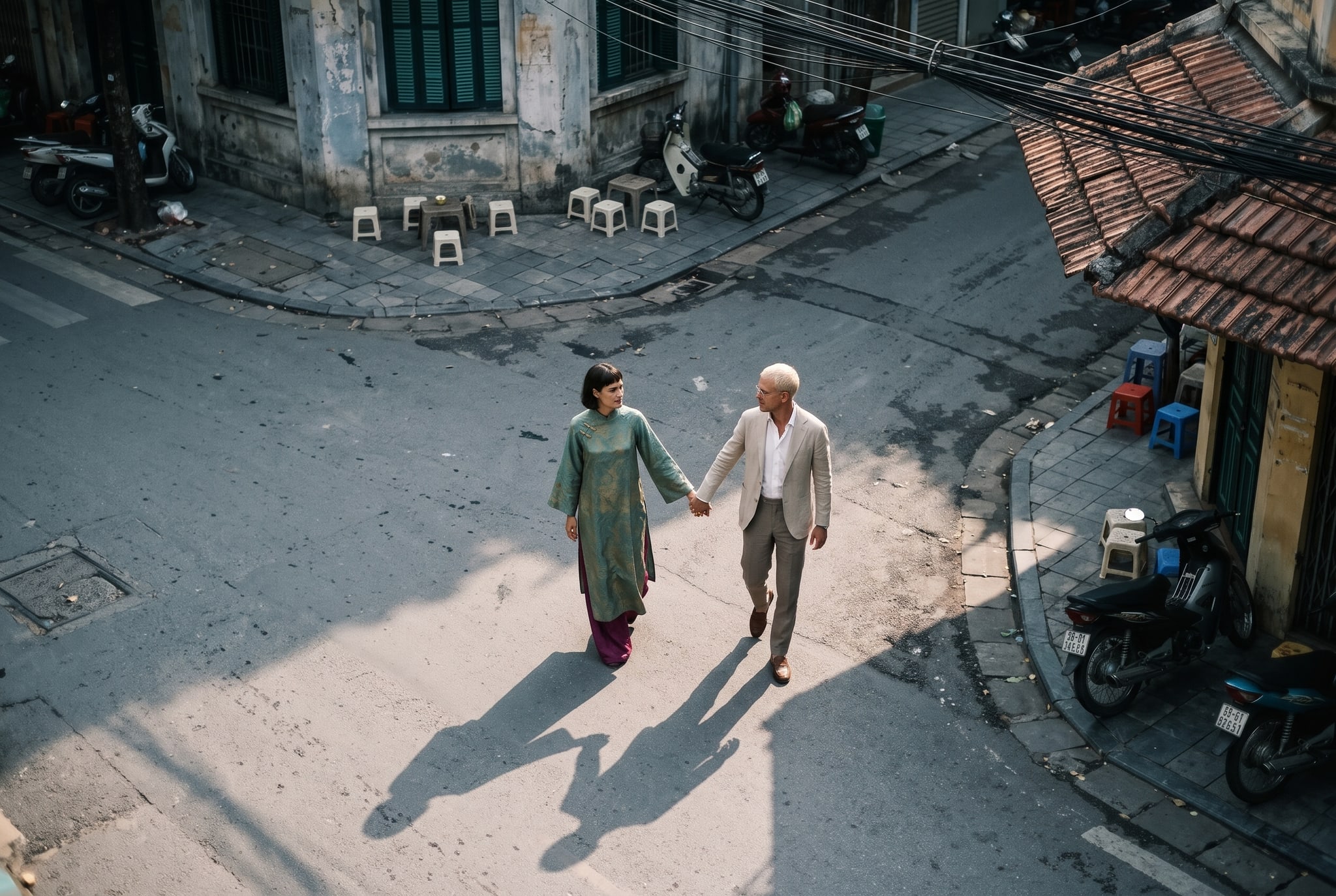
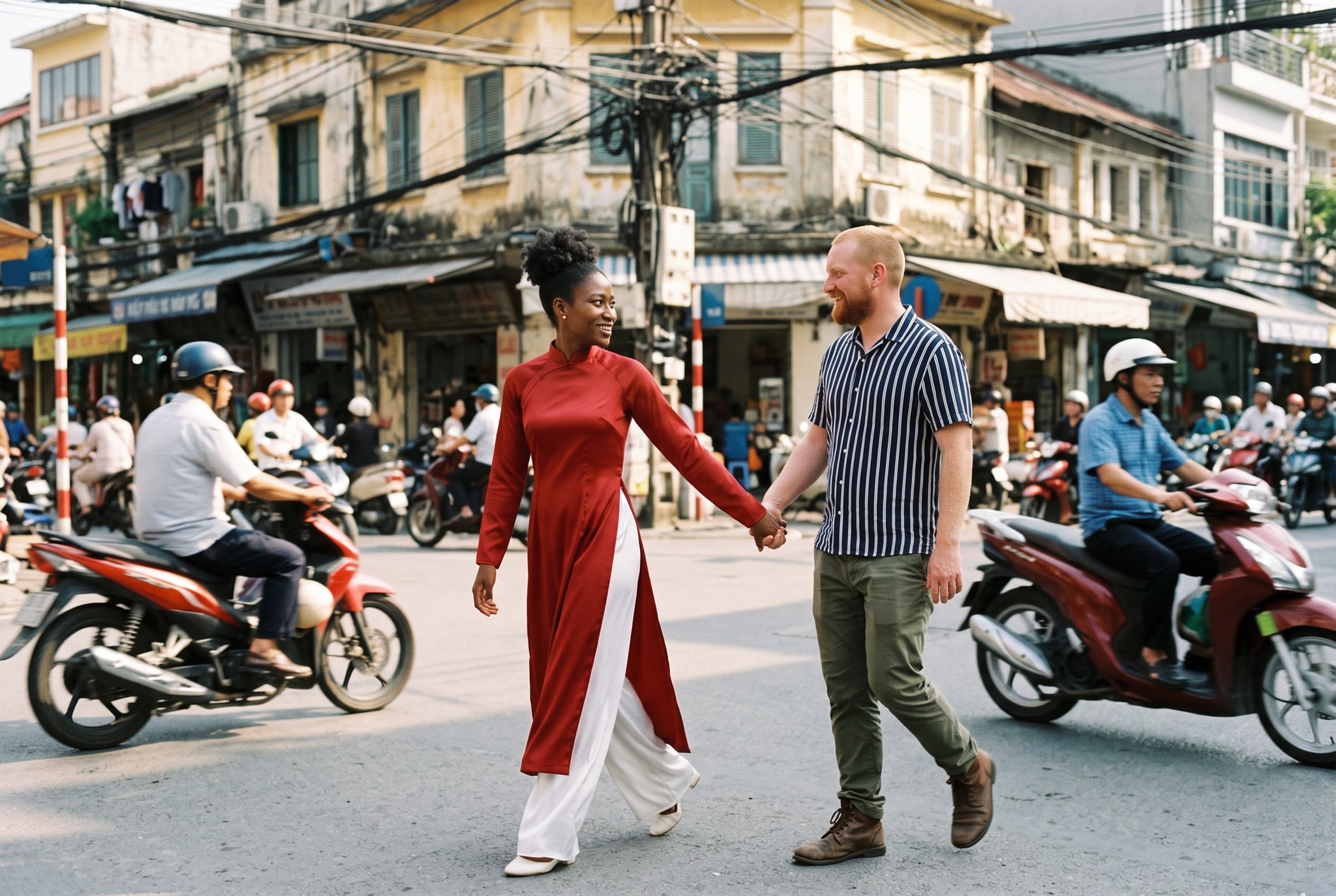
The golden hour light at Hon Chong is warm and directional. Pale, cool whites or silvers can look washed against the amber cliffs; jewel tones, golds, and warm creams photograph richer. Lace and fine fabric texture show beautifully in low-angle side light. If you're wearing an áo dài, deep reds, teals, or emeralds hold their color; pastels risk looking flat. Matte fabrics (silk, cotton blends) photograph more naturally than satin, which can blow out highlights in golden hour. We often recommend bringing two outfits: a light, flowing change for the reflective-water poses (where movement reads well), and a tailored or structured piece for the final hour when the light turns deep orange. Makeup should account for warm light—cool-toned blushes and contour can disappear; warm golds, corals, and bronze-browns stay visible. Our makeup and hair at your hotel artists plan around the time and location so your face reads true in the actual light, not studio lighting.
Chat with us on WhatsApp | See packages and prices on vietnamphotoshoot.com
How do we handle crowds and access on the day?
Hon Chong is public land; local tour groups and families visit year-round, especially 3–6 p.m. weekends. We've learned to arrive 30 minutes before your session start, scout clear sightlines, and confirm the guide's boat or cave access (a small fee paid on-site covers your private path). We work with the same three local guides to minimize delays. If crowds are heavy—more than 10 tourists visible—we shift to the back cave or upper cliff faces, which stay less trafficked. We've also learned to build in 10–15 minutes of "quiet time" after your session ends but before the main tourist rush (around 6:30 p.m.). If you're a slower mover or want intimate, unrushed poses, we recommend Tuesday–Thursday bookings; weekends are heavier. We brief you on WhatsApp 48 hours before: we'll tell you the exact tide times, any site maintenance, expected crowds, and what time our driver will pick you up from your Ninh Binh hotel. Our couple photoshoot package at Hon Chong includes this on-ground coordination; elopement clients sometimes add proposal and anniversary framing, which works beautifully here.
What goes wrong and how do we fix it on the day?
Clouds roll in 30 minutes before sunset—happens maybe 1 in 5 shoots in Feb–April. We've learned to shoot wider, faster, and trust diffuse light; a cloudy golden hour loses the sharp highlights but keeps warm tone. Moisture on the lens from the humid air near the water—we bring microfiber cloths and have a second photographer as backup. The mudflat is slicker than expected in certain tides, and couples slip—we carry microfiber towel wraps and advise water shoes or going barefoot. Heavy cloud cover that persists past 6:30 p.m. means we shift to backlit silhouette frames, which read beautifully here. A unexpected rain shower (May–August) shortens your session; we reschedule free of charge and stay flexible on dates. We've also missed prime light because a client's hair took longer than expected in their hotel; now we build 45 minutes extra into hair-and-makeup timing and remind guests 5 days before that we'll start mobile makeup at their lodging. Our pre-wedding and elopement package includes a weather buffer and location-scouting call so surprises are minimal.
What should you check before booking a Hon Chong shoot?
Confirm these before committing:
- Tide table alignment: Ask us for the falling-tide window on your date. Non-negotiable for water reflection shots.
- Light window: Know your actual sunset time (varies 40 minutes seasonally). Golden hour is roughly 60 minutes before sunset.
- Outfit changes: Plan 3–4 outfits if you want variety. Bring all of them to the hotel; changing on-site at Hon Chong is not practical.
- Footwear: Pack water shoes, flip-flops, and formal shoes. The flats are muddy below the water line, and the rocks are sharp.
- Backup date: Book with a rain clause. October–November is stable; May–August less so.
- Hotel distance: Ninh Binh town is 20–30 minutes from Hon Chong by car. If you're staying elsewhere (Hoi An, Hanoi), we'll coordinate pickup timing so you're relaxed, not rushed.
- Guide and boat: Confirm whether you want cave entry (requires a second fee, paid locally) or just the promontory. We arrange this in your pre-shoot call.
Ask us these questions on WhatsApp 2 weeks before your shoot. We'll send you a detailed day-of brief with exact times, weather forecast, and what to pack. No surprises.
Chat with us on WhatsApp | See packages and prices on vietnamphotoshoot.com
Why choose Cáo Studio for Hon Chong pre-wedding work?
We've shot Hon Chong in every season and every light condition. Our ao dai photoshoot package includes traditional áo dài styling and hair, which reads beautifully against the golden cliffs. We know the guides, the tidal rhythm, and the exact minutes when light peaks. We bring three cameras, two lenses each, and a backup phone for WhatsApp updates so you're never left wondering about timing. We've edited 300+ Hon Chong images, so we know how the light renders in post-processing. Our stylists have learned which fabrics and makeup finishes survive the humidity and salt spray here. We offer a special concept shoot option if you want thematic poses (vows renewal, cultural dress, couples' adventure) beyond standard bridal framing. Elopement clients also value our ability to coordinate with local vendors—we've worked with Ninh Binh hotel concierges to arrange transportation, storage for extra outfits, and quiet timing for intimate ceremonies at the cave mouth. We're not a one-off tourist photographer; we're a team that knows this location and will brief you thoroughly so the day unfolds calmly.
FAQ
What time should we arrive at Hon Chong for a golden-hour shoot?
Arrive 3–4 hours before sunset (e.g., 1:30 p.m. for a 5:30 p.m. sunset in winter). This gives us time for a location walk, styling adjustments, and initial poses in softer mid-afternoon light before the best 90 minutes begin.
Can we shoot Hon Chong in the morning instead?
Morning light faces east, hitting the cliff sides and backlit water. It's softer than midday but lacks the warm glow that makes the stone glow. Afternoon and golden hour are stronger. We only recommend early morning for moody, silhouette-focused shoots.
How wet will we actually get?
In shallow-water poses, you'll be knee- to waist-deep. Bring a robe or sarong to wrap after. Formal shoes stay on the dry flat; change into water shoes for poses. Most couples wear swimwear or slip dresses under their outfits, then change into full styling for final light.
Is Hon Chong accessible if I'm not comfortable in water?
Yes. You can stay on the dry mudflat, upper rocks, or inside the cave mouth. We'll frame shots that avoid water. The cave itself is warm, humid, and photogenic for intimate bridal portraits. Tell us your comfort level during the pre-shoot call.
Do you shoot Hon Chong year-round?
Yes, but September–October and November–January are optimal (stable tide, warm golden light, fewer crowds). May–August brings humidity, brief golden hour, and occasional afternoon storms. February–April is busy and hazy but workable for softer, dreamy aesthetics.
What's included in a Cáo Studio pre-wedding package at Hon Chong?
Location scouting, 4–6 hours on-site, full styling coordination, backup guide, two photographers, 300–400 final retouched images, and a detailed day-of brief with tide times and weather. Makeup and hair are included. Albums or prints are add-ons.
Pre-Wedding & Elopement
Inclusions, prices and booking are on our booking site.
FAQ
What time should we arrive at Hon Chong for a golden-hour shoot?
Arrive 3–4 hours before sunset (e.g., 1:30 p.m. for a 5:30 p.m. sunset in winter). This gives us time for a location walk, styling adjustments, and initial poses in softer mid-afternoon light before the best 90 minutes begin.
Can we shoot Hon Chong in the morning instead?
Morning light faces east, hitting the cliff sides and backlit water. It's softer than midday but lacks the warm glow that makes the stone glow. Afternoon and golden hour are stronger. We only recommend early morning for moody, silhouette-focused shoots.
How wet will we actually get?
In shallow-water poses, you'll be knee- to waist-deep. Bring a robe or sarong to wrap after. Formal shoes stay on the dry flat; change into water shoes for poses. Most couples wear swimwear or slip dresses under their outfits, then change into full styling for final light.
Is Hon Chong accessible if I'm not comfortable in water?
Yes. You can stay on the dry mudflat, upper rocks, or inside the cave mouth. We'll frame shots that avoid water. The cave itself is warm, humid, and photogenic for intimate bridal portraits. Tell us your comfort level during the pre-shoot call.
Do you shoot Hon Chong year-round?
Yes, but September–October and November–January are optimal (stable tide, warm golden light, fewer crowds). May–August brings humidity, brief golden hour, and occasional afternoon storms. February–April is busy and hazy but workable for softer, dreamy aesthetics.
What's included in a Cáo Studio pre-wedding package at Hon Chong?
Location scouting, 4–6 hours on-site, full styling coordination, backup guide, two photographers, 300–400 final retouched images, and a detailed day-of brief with tide times and weather. Makeup and hair are included. Albums or prints are add-ons.
More from the team
Boho pre-wedding photoshoot in Vietnam: Hanoi, Saigon, Hoi An
Boho pre-wedding shoots mix romantic, free-spirited aesthetics with Vietnam's landscapes and heritage sites. We run full-day sessions in three cities, handling styling, makeup, location scouts and edits.
Avoid crowds at Hoang Su Phi rice terraces: timing for wedding shoots
Hoang Su Phi's terraced landscape draws couples and tour buses in equal measure. We show how to shoot there alone, when to arrive, and what to arrange with us before you go.
Photography rules at Con Dao beaches: permits, drones and what to check
Con Dao's beaches demand prep before you shoot—permits, drone zones and tide timing all affect your day. We share what the Cáo Studio team verifies on every booking.