 Cáo Studio
Home › Blog › Ao Dai Photoshoot
How an áo dài should fit: the Cáo Studio guide
By the Cáo Studio team · Hanoi & Saigon · 2026-11-02
A well-fitted áo dài drapes smoothly from shoulder to ankle, skimming your frame without bunching or pulling. The neckline sits at your collarbone, sleeves end one finger-width above your wrist bone, and the front panels fall to mid-calf length. The back should be smooth with no wrinkles across the shoulders. Cáo Studio's team measures bust, waist, hip, and length at every fitting; we've learned that traditional tailoring often runs tight through the shoulders and chest for Western guests, and loose around the hip seam. Rental and tailored pieces fit differently—rentals assume "standard" proportions, while custom tailoring corrects fit within 2–3 weeks. For photoshoots, a slightly looser fit photographs better than snug, allowing fabric to move with you and showing the gown's true silhouette in images. Chat with us on WhatsApp
An áo dài fit determines whether the garment photographs like a dream or clings awkwardly in candid shots. We've dressed hundreds of guests for ao dai photoshoots across Hanoi and Saigon, and the difference between "close enough" and "perfect fit" shows up instantly in the frame. Here's what our styling team checks before the camera rolls.
Why do sleeve length and shoulder width matter most?
Sleeves ending at your wrist bone—not halfway up your hand—signal a properly cut áo dài. Shoulder seams should sit exactly where your natural shoulder ends; if they slip down your arm, the whole silhouette collapses. We've had guests arrive in rentals where sleeves fell 2 inches short, forcing us to pin them backstage with safety pins (not ideal). The shoulder width determines how the front and back panels hang, so even a one-inch difference changes how the fabric drapes over your arms. For photoshoots, this matters because loose shoulders let the camera see your collar and neck clearly, while tight shoulders bunch fabric around your underarms—visible in every shot. Measure from your shoulder point to your wrist bone, then verify that measurement with your tailor or rental shop before committing.
See packages and prices on vietnamphotoshoot.com
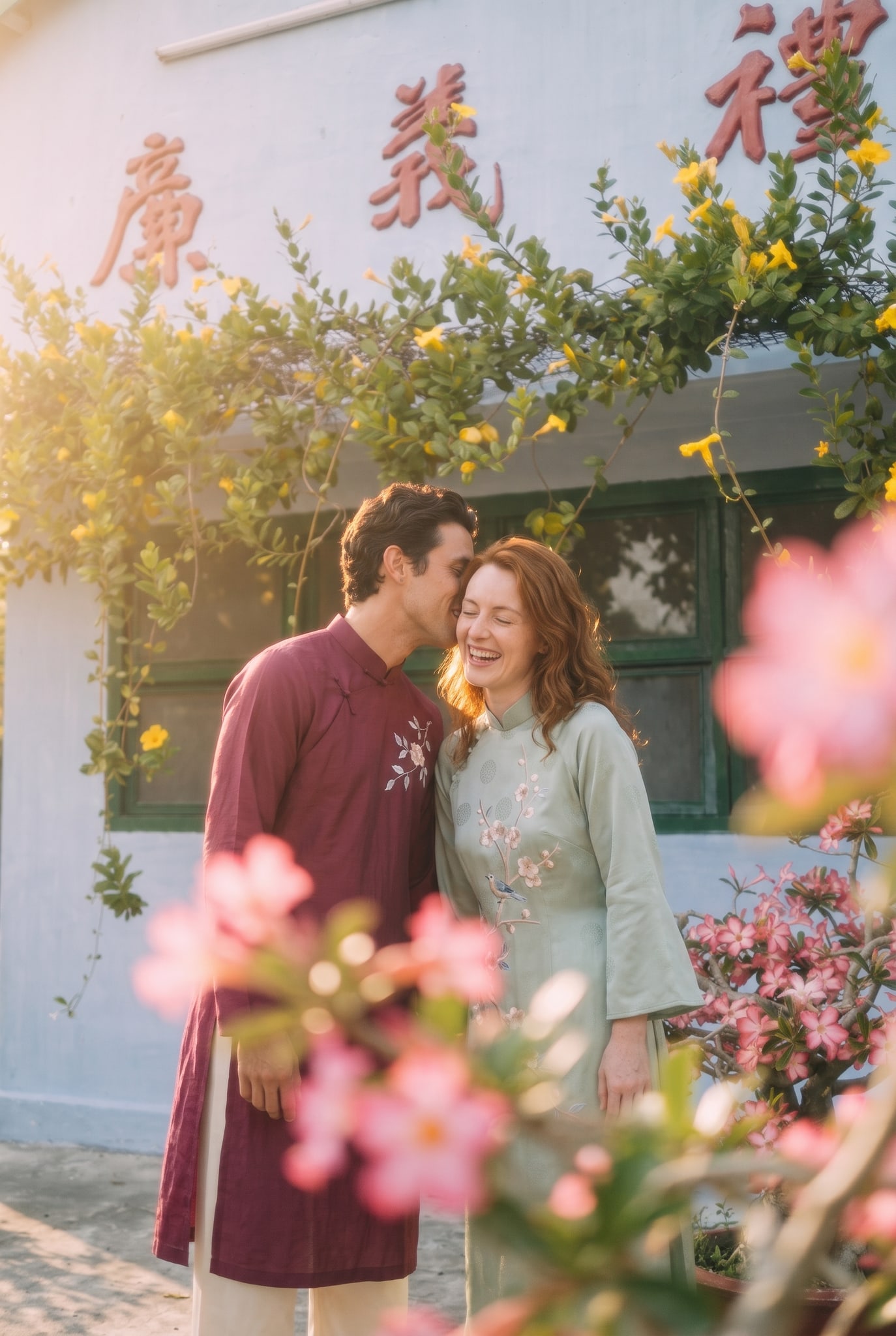
How do you know if the bust and waist fit correctly?
The bust panel should lie flat across your chest with no gaping at the buttons and no pulling. Run your hand down the front—you should fit one finger between the fabric and your body, not zero and not three. At the waist, the seam should sit at or slightly above your natural waist (not your hip); if it's riding down to your hip, the áo dài was cut for a different body shape. We use a fitted dress form in our Hanoi studio to check this before guests arrive: we compare their measurements to how the fabric actually sits on a torso. The back should be equally smooth; any diagonal wrinkles running from armpit to hip mean the side seam is pulling, usually because the waist is too narrow. Tailors can release side seams by ½ inch per side without losing the áo dài's shape—a five-minute fix that transforms the fit.
What length should an áo dài reach?
The front panels hit mid-calf, roughly 2–3 inches above your ankle bone. The back trains slightly longer, creating that iconic sweep visible in formal photos. Traditional Vietnamese tailors measure this from your shoulder to the floor, then subtract 1 inch for standard fit. For photoshoots where you'll be seated or moving, a slightly shorter length (hitting at the calf) prevents tripping and shows off your áo dài's hem detail. We've seen guests in overly long áo dài (reaching the ankle or beyond) struggle on stairs between studio locations, and the hem catches light in ways that distract from your face. Height alone doesn't determine correct length—proportions do. A 5'2" guest and a 5'10" guest both wear mid-calf, not the same absolute measurement. Ask your tailor to measure the full length on your body, standing straight, and note it before ordering.
Rental áo dài versus tailored: which fits better for a shoot?
Rental áo dài come in numbered sizes (S, M, L) and assume "standard" proportions—usually sized for Vietnamese women aged 25–35 with proportional bust, waist, and hip. Strengths: ready in 24–48 hours, costs less per use, wide color range. Weaknesses: never perfect; shoulders often run narrow, sleeves sometimes short, and hip seams create pulling if your hip is wider than 39 inches. Tailored áo dài are cut to your exact measurements and take 14–21 days to complete. Strengths: flawless fit, custom fabric choice, durable for multiple wears. Weaknesses: upfront investment, longer lead time, can't exchange easily. For our ao dai photoshoots team, we recommend: if you have 3+ weeks and plan to wear it beyond the shoot, tailor it; if you're visiting Vietnam for one week, rent and arrive 2 days early for a fitting adjustment. We've had guests rent an M in cotton and request the tailor add 1 inch at the side seams while they wait—a small cost that gave them perfect fit by shoot day.
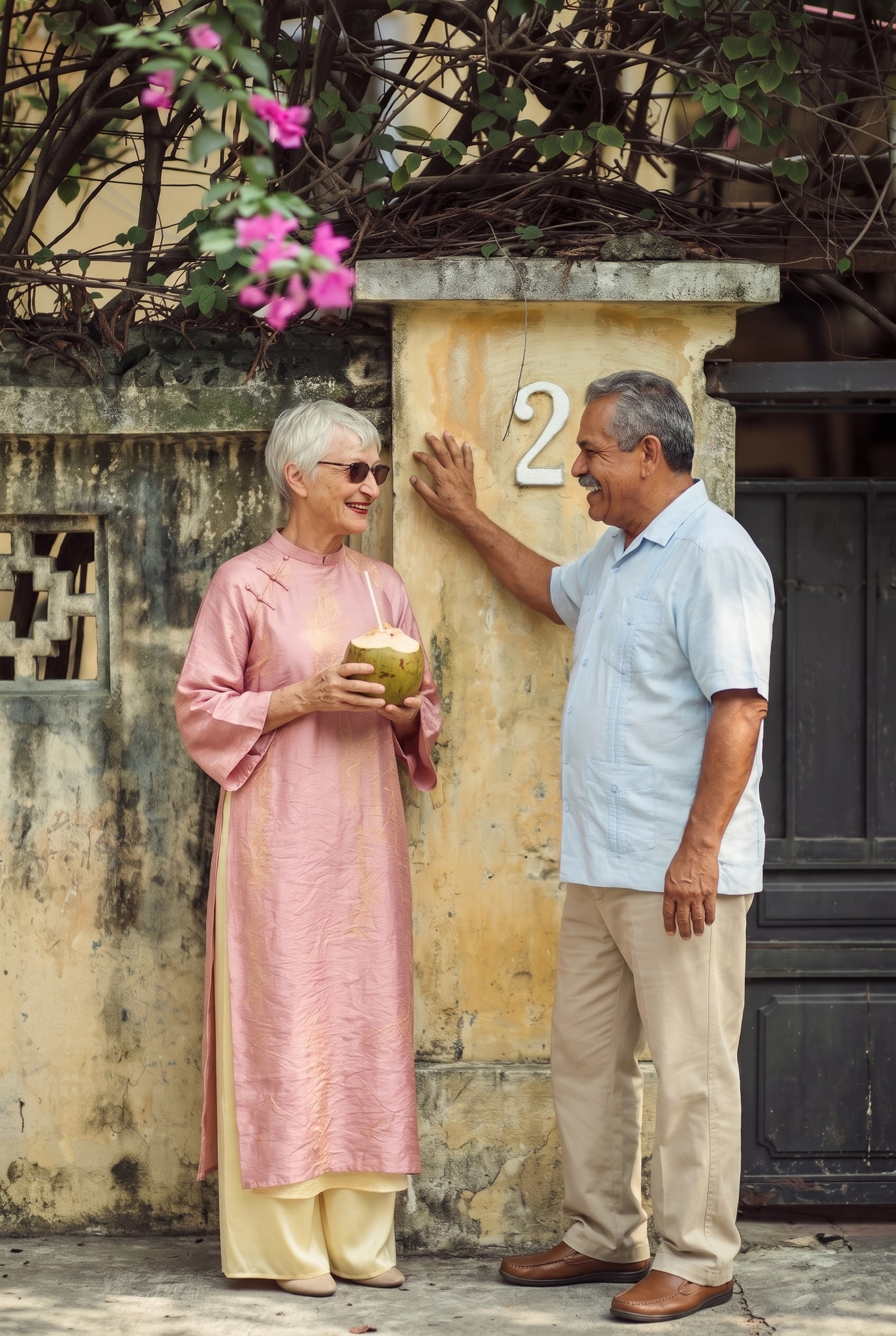
What common fit problems show up in photos?
Gaping buttons across the bust mean the tailor cut the button placket too far apart or the fabric shrunk. In photos, every gap catches light and draws the eye away from your face. Bunching at the armpit happens when sleeves are set too far forward; fabric gathers under your arm, visible from the side. Diagonal wrinkles from waist to hip signal a side seam that's too tight—the fabric twists as you move, creating stress lines that show clearly in candid shots. Loose, sagging back means the back panel was cut too long or the side seams are too loose; the fabric hangs shapeless, erasing your silhouette. Riding up at the front occurs when the waist seam is placed too high relative to your natural waist; the front panels shift up as you sit, exposing your knees. In our Saigon studio, we check all five of these within 60 seconds of having a guest try on an áo dài. If we spot any, we either adjust it same-day or swap it for a different size before the shoot starts.
| Fit Issue | What It Means | Fix Time | When to Check |
|---|---|---|---|
| Sleeves short | Wrist bone not covered | 30 min (hem alteration) | At rental pickup or 3 weeks before shoot |
| Bust gapping | Buttons don't close smoothly | 45 min (re-button, or tailor bust seam) | Same-day before shoot |
| Waist seam riding down | Sitting at hip, not waist | 60 min (raise seam or alter side seams) | During fitting, standing and sitting |
| Shoulder seams slipping | Seams beyond shoulder point | 90 min (tailor shoulders) | At first try-on; may need remake |
| Back wrinkles | Diagonal stress lines | 30–60 min (let out side seams or back seam) | In fitting room, check from behind |
How to measure yourself before ordering a tailored áo dài
Use a soft fabric tape and wear the undergarments you'll wear under the áo dài. Measure standing straight, relaxed (not sucking in). Bust: across the fullest part of your chest, tape parallel to ground. Waist: at your natural waist (usually 8–10 inches above your hip bone), where a string would naturally sit. Hip: at the fullest point of your hips, usually 8–10 inches below your waist. Full length: from the top of your shoulder (the bony point) straight down to the floor, then note that number. Shoulder width: from shoulder point to shoulder point across the back. Sleeve length: from your shoulder point down your arm to your wrist bone with arm relaxed at your side. Write all six measurements in centimeters (easier for Vietnamese tailors) and send them via WhatsApp to your tailor. Many tailors ask for a reference photo of an áo dài style you like; that helps them interpret proportions. We recommend adding ½ inch of ease (comfort room) to bust and hip measurements unless you prefer a very snug, formal fit for a special event like a proposal or anniversary shoot.
What to check before you buy or rent
Ask yourself:
- Can I wear this more than once? If no, rent it.
- Do I know my exact measurements? If no, measure yourself now and photograph the numbers.
- How many days before the shoot do I need it? If fewer than 14 days, rent or choose a ready-made option.
- Will I be sitting, standing, or moving for long periods? If sitting (like couple photoshoots), you need extra ease at the waist and hip.
- Is the fabric weight right for the season? Summer shoots need lightweight cotton; winter shoots allow heavier silk or thicker cotton blends.
When you contact a tailor or rental shop, share: your six measurements, the shoot date, what you'll be doing (posing standing, sitting, walking), and any reference photos. Request confirmation that they can deliver on time; we've had guests receive "finished" áo dài two days before the shoot, leaving zero time for fixes. Ask the tailor for their cancellation policy in writing. Most tailors in Hanoi and Hoi An will hold your measurements for 30 days; after that, you may pay a re-measurement fee. If you rent locally, pick up the áo dài at least one day before your session and try it on at home—not in a studio with your photographer waiting. Bring it back in clean condition; stains can incur cleaning fees.
See packages and prices on vietnamphotoshoot.com
When we style guests for couple photoshoots or pre-wedding sessions, we always build in 30 minutes for a full fitting check before we start shooting. That margin has saved dozens of shoots from fabric disasters. A perfectly fitted áo dài lets you forget about the garment and focus on the camera—and that ease shows in every photograph.
FAQ
Can I wear an áo dài if I'm not Vietnamese?
Yes. Áo dài are worn by visitors, international couples, and non-Vietnamese guests at our shoots regularly. Proper fit matters more than ethnicity. Rent or tailor one that matches your body proportions, and wear it with confidence.
What if my measurements fall between two rental sizes?
Choose the larger size. An áo dài that's slightly loose photographs better than one that's snug; it drapes smoothly and allows you to move freely. You can pin it tighter at the side seams if needed.
How long does a tailor take to finish an áo dài?
Standard tailoring takes 14–21 days. Rush orders (7–10 days) cost more and carry higher risk of errors. Plan at least 3 weeks if you want a tailored áo dài for your shoot.
Can a tailor fix an áo dài that's already too tight?
Yes, if seams allow it. Side seams can release by ½–¾ inch per side; shoulder seams require a full remake (expensive). Back seams can usually be let out 1 inch. Ask the tailor before you pay for alterations.
Should I have the tailor hem the áo dài before the shoot, or after?
Before. Hemming should be the last step after all other fit adjustments. If you tailor first, then adjust length, you pay twice. Request hemming as part of the final fitting, not before measuring.
What happens if an áo dài shrinks after I wear it?
Most cotton áo dài shrink slightly in warm water. Have it dry-cleaned, not hand-washed, to preserve fit. If you've tailored it and it shrinks, a tailor can usually adjust the hem by letting down the seam allowance, but they can't expand the bust or waist easily.
Ao Dai Photoshoot
Inclusions, prices and booking are on our booking site.
FAQ
Can I wear an áo dài if I'm not Vietnamese?
Yes. Áo dài are worn by visitors, international couples, and non-Vietnamese guests at our shoots regularly. Proper fit matters more than ethnicity. Rent or tailor one that matches your body proportions, and wear it with confidence.
What if my measurements fall between two rental sizes?
Choose the larger size. An áo dài that's slightly loose photographs better than one that's snug; it drapes smoothly and allows you to move freely. You can pin it tighter at the side seams if needed.
How long does a tailor take to finish an áo dài?
Standard tailoring takes 14–21 days. Rush orders (7–10 days) cost more and carry higher risk of errors. Plan at least 3 weeks if you want a tailored áo dài for your shoot.
Can a tailor fix an áo dài that's already too tight?
Yes, if seams allow it. Side seams can release by ½–¾ inch per side; shoulder seams require a full remake (expensive). Back seams can usually be let out 1 inch. Ask the tailor before you pay for alterations.
Should I have the tailor hem the áo dài before the shoot, or after?
Before. Hemming should be the last step after all other fit adjustments. If you tailor first, then adjust length, you pay twice. Request hemming as part of the final fitting, not before measuring.
What happens if an áo dài shrinks after I wear it?
Most cotton áo dài shrink slightly in warm water. Have it dry-cleaned, not hand-washed, to preserve fit. If you've tailored it and it shrinks, a tailor can usually adjust the hem by letting down the seam allowance, but they can't expand the bust or waist easily.
More from the team
Ao Dai Photos at Hoi An Lantern Street at Night
Hoi An Lantern Street (Nguyen Hoan) glows at dusk with silk lanterns and reflected light. Our team shoots ao dai here after dark, navigates tight vendor spaces, and handles the low-light challenge with experience from 100+ night sessions.
Ao dai for wedding photos in Quy Nhon: renting, fitting and styling
Quy Nhon's coastal backdrops pair beautifully with traditional ao dai. We walk through rental choices, fitting logistics and how our team coordinates styling on shoot day.
Vietnam Pre-Wedding Photoshoot: What We Book at Cáo Studio
Pre-wedding shoots in Vietnam mean morning light in Hoi An's Old Town, cyclos in Saigon, or terraced fields near Ninh Binh. We walk you through what a session actually costs, how we schedule it, and what goes wrong on the day.