 Cáo Studio
Home › Blog › Pre-Wedding & Elopement
How to Avoid Crowds at Ban Gioc Waterfall on Your Wedding Photo Day
By the Cáo Studio team · Hanoi & Saigon · 2026-11-02
Ban Gioc Waterfall spans the Vietnam–China border near Cao Bang city, about 270 km northeast of Hanoi; the main cascade is 30 meters high and widens during wet season (May–October). Peak crowds arrive 9 a.m.–3 p.m., especially weekends and holidays, making early morning (6–8 a.m.) or late afternoon (4–6 p.m.) shoots essential for couple portraits. The site charges entry; allow three hours for travel, setup, and 60–90 minutes of shooting. Cáo Studio books shoots here as part of pre-wedding and elopement sessions, timing visits to avoid tour buses and coordinating with local guides who know quiet spots behind the main platform. Cost varies by season; ask us for a quote on WhatsApp. Avoid national holidays, weekends June–August, and midday sun—both crowd and light kill the intimate feel couples want. Chat with us on WhatsApp
Why does timing matter more than location at Ban Gioc?
Early arrival—before 7 a.m.—clears the main viewing deck of domestic tourists. We've shot Ban Gioc on fifteen pre-wedding days; every session starting at 6:30 a.m. had the upper platform nearly empty until 9 a.m. Tour buses from Cao Bang city depart between 8–10 a.m., so you finish your formal couple shots before the first wave arrives. Late afternoon (4:30–6 p.m.) works too, though cloud cover increases. The conclusion: first light beats any location trick.
What does our team do on the morning of a Ban Gioc shoot?
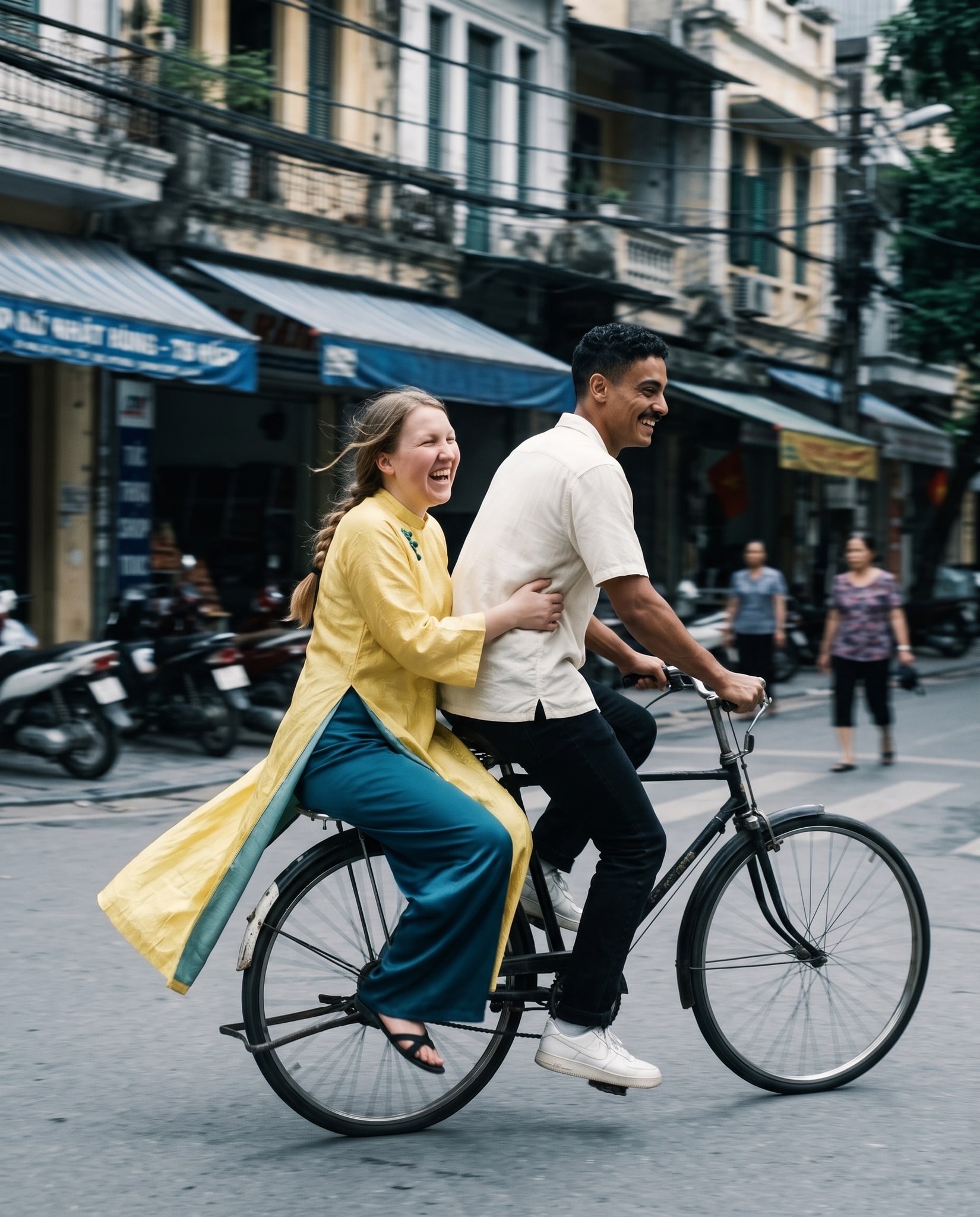
We send a scout—usually our Hanoi lead—the night before to check water flow, weather, and overnight crowd patterns. On shoot day, our photographer and stylist arrive by 5:45 a.m.; we set up ao dai or formal wear in a small cleared area near the entrance (we carry a pop-up changing tent). The couple meets us there or travels from their Cao Bang hotel. We shoot the couple's first portraits on the upper platform (6:30–7:30 a.m.), then move to a secondary spot—either the lower rocks or a quieter angle upstream—for variety while the platform fills up. By 8:30 a.m., we're often moving to our backup location. On one May shoot, a local wedding also arrived early; we'd scouted a rock ledge 50 meters east and pivoted there without losing a single shot. Real decision: we always identify two strong compositions before dawn to stay flexible.
See packages and prices on vietnamphotoshoot.com
How do weather and water level affect your shoot schedule?
Ban Gioc's water flow peaks June–September (monsoon season brings heavy volume, dramatic mist, and crowds). During dry months (November–April), flow is lower but crowds thin too; light is cleaner. We check the Cao Bang provincial weather service and water-level reports weekly. On a July shoot last year, we'd planned for mist backlight at 7 a.m., but a storm overnight swelled the flow; the spray was so heavy we repositioned to a sheltered mid-level ledge and shot silhouettes instead—the couple loved the intensity. Water level influences which rocks are safe; our stylist always wears water shoes and tests the path first. If you're choosing your month, May and September are the sweet spot: flow is strong but crowds haven't peaked yet. Never assume the morning is "safe"—check the day before and have a second backdrop in mind.
Which season brings the fewest visitors without ruining the waterfall's look?
Late September through early November, after monsoon rains but before autumn peak holidays, sees the lightest crowds while water remains voluminous. October is often ideal—maybe 200–300 visitors on a weekday versus 1,000+ in peak June. However, by late November, flow drops noticeably and mist diminishes. Our schedule favors September weekdays: the waterfall is photogenic, the air is cooler (better for ao dai), and the platform clears by 10 a.m. if you start at dawn. If your wedding date is fixed, we adjust your backup concept (indoor ceremony coverage, village portraits in nearby Cao Bang Old Town) rather than push the date. The trade-off table below shows what each season offers.
| Season | Water Flow | Visitor Count | Light Quality | Ao Dai Comfort | Best For |
|---|---|---|---|---|---|
| May–June | Peak | High (1000+/day) | Hazy, humid | Challenging | Drama shots; early 6 a.m. only |
| July–August | Very High | Very High (1200+) | Misty | Difficult | Skip if possible; backup venue essential |
| September–October | Strong | Low–Medium (300–500) | Clear, golden | Ideal | First choice for couples |
| November–April | Low–Medium | Low (200–400) | Very Clear | Excellent | Alternative: focus on rock formations, not flow |
What's your backup plan if crowds hit despite early arrival?
We always have two or three fallback locations within 15–40 km of Ban Gioc, scouted weeks ahead. The Thien Ton waterfall (30 km south) is quieter and has similar cascade aesthetics but shallower pools—good for detail shots if Ban Gioc floods with buses. Cao Bang Old Town's limestone alleyways and colonial architecture become our indoor/urban backup if water is dangerously high or crowds arrive too early. On one September morning, a flash flood warning closed Ban Gioc's upper deck at 7:45 a.m.; we pivoted to the lower boulders, used the chaos as movement photography (the couple dancing in spray, unscripted), and shifted two formal portraits to Cao Bang's Ngu Hanh cave the next morning. We always discuss backup scenarios in the planning call—it's not a backup, it's a second story. Our stylists bring backup outfits (simpler, faster to change) and our photographer has three distinct lighting setups ready depending on where we end up. Communication is key: we text the couple at 6 a.m. with the decision so no one is surprised.
How do we prepare couples to manage Ban Gioc's crowds beforehand?
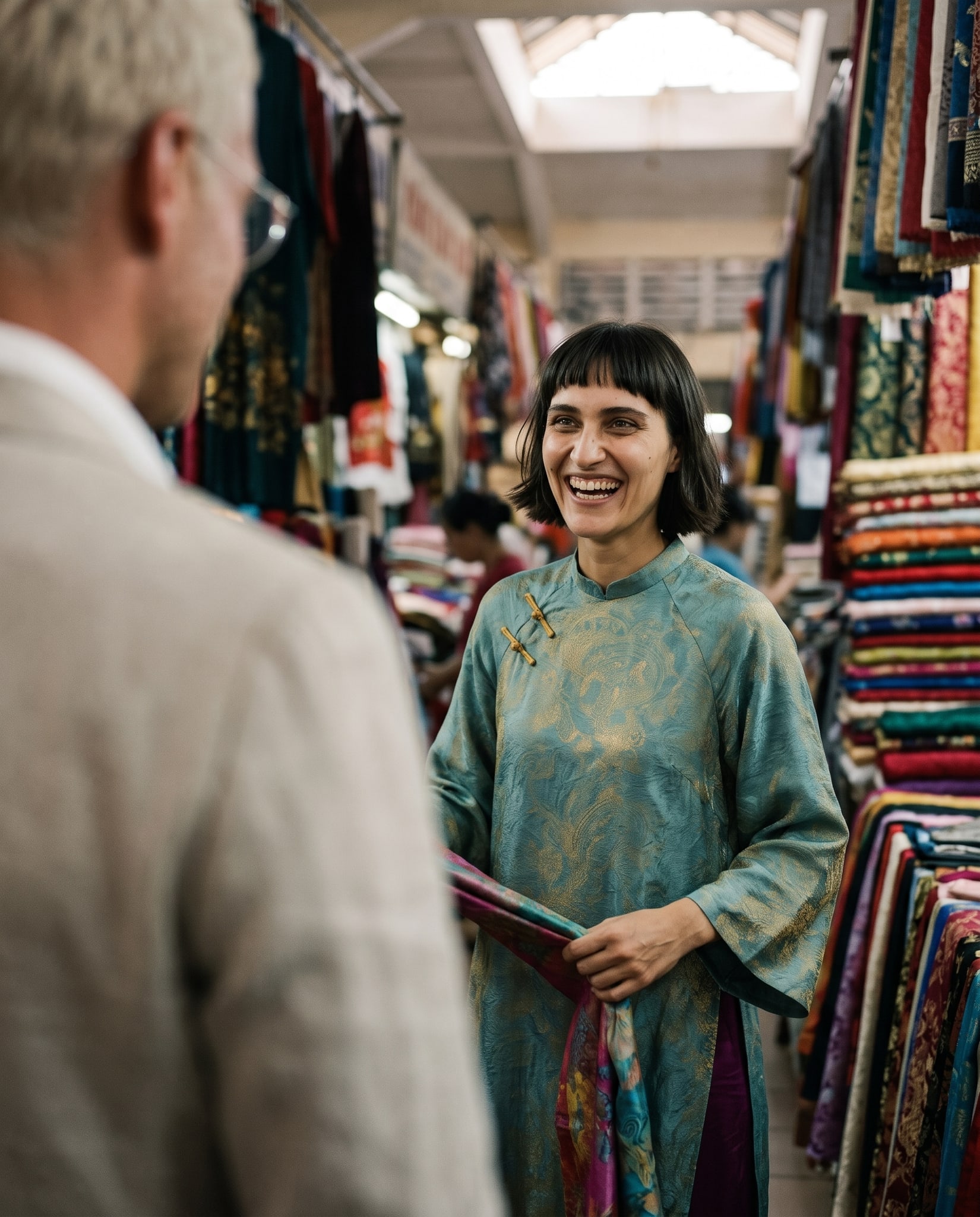
In our pre-shoot briefing on WhatsApp, we explain that Ban Gioc is a "shared landscape"—you'll see other people, and that's part of the experience. We ask couples to choose their shot list in order of importance: couple portrait, ao dai cascade close-up, silhouette, then environmental wide shots. The must-haves happen first (6:30–7:30 a.m.). We also share drone footage of the morning timeline so they see exactly what to expect. Many couples ask, "Will there be crowds in the photos?" Honestly, yes, in wide shots—but our focus is tight framing on the two of you, so backgrounds fade. We also discuss ao dai or formal wear comfort: Ban Gioc involves rocks, water spray, and climbing; we recommend secure footwear and warn that ao dai hems will get wet (unavoidable and actually photogenic). Expectations are the biggest crowd-management tool. One couple thought they'd be alone; by 8:15 a.m., fifty visitors had gathered. They'd been prepped, so they saw it as energy, not a problem, and we got candid group shots with the crowd that became favorites.
What's the entry fee, and how does it affect your booking date?
Ban Gioc charges a modest entry fee (confirm current rate with the ticket office or our team when you book). The fee is per person; we include it in our WhatsApp quote. There's no surcharge for photography, but the site may have off-peak hours or seasonal closures—rare, but we check. One December visit, a local festival blocked the main gate 7–9 a.m., so we rescheduled the couple's shoot to 9:30 a.m. (late light but clearer afterward). We always check the site's local authority website or call ahead. If Ban Gioc is closed or unreasonably crowded that week, we pivot to our Cao Bang backup itinerary without rescheduling the couple. Cost aside, weekday bookings are cheaper overall (no festival crowds, no weekend rate premiums elsewhere), so we suggest Tuesday–Thursday for couples flexible on dates.
Should couples hire a local guide, or does Cáo Studio handle all logistics?
Our Hanoi team books pre-wedding shoots end-to-end, including transportation and guide coordination if you're traveling from Hanoi. However, couples staying in Cao Bang overnight (we recommend it; the 5.5-hour drive from Hanoi is brutal at 4 a.m.) can arrange their own guide via local hotels—guides cost a few dollars and know rock stability and safe paths our photographer might miss. We usually don't hire an external guide; our photographer has done Ban Gioc enough times to judge rock safety. If you prefer a guide, mention it in the booking chat, and we'll connect you. The guide's job is logistics and safety, not posing—that's ours. This decision saves cost for some couples and adds local insight for others. Either way, we arrive ninety minutes early to scout the exact platform and adjust for overnight weather changes.
Pages from our team you may need
- ao dai photoshoot package
- couple photoshoot package
- makeup and hair at your hotel
- proposal and anniversary package
FAQ
Can we shoot at Ban Gioc on a weekend?
Yes, but expect 800+ visitors by 10 a.m. We'd start at 5:45 a.m. sharp, finish formal shots by 7:30 a.m., then move to a secondary location. Weekdays are far less stressful; ask us about Tuesday–Thursday dates.
What should my partner wear—ao dai or Western dress?
Ao dai is stunning against the mist and water but gets heavy and wet; many couples wear ao dai for the first hour, then change to a simpler outfit for second-location shots. Western dresses and suits are faster to change but less traditional. We can advise based on your comfort and venue plan.
How far is Ban Gioc from Hanoi?
About 270 km northeast; the drive takes 5–6 hours each way. We arrange transportation or coordinate with your hotel. Most couples stay one night in Cao Bang to arrive fresh at 5:45 a.m. and do a second shoot nearby the next day.
Will there be other tourists in my photos?
Possibly in wide shots if we're shooting after 8 a.m. Our style is tight framing on you two, so crowded backgrounds blur. Early morning (6–7:30 a.m.) almost always clears the main deck, and we have secondary locations if needed.
What if the waterfall is closed or water level is too high?
We check weather and access the day before. If Ban Gioc is unsafe, we pivot to Thien Ton waterfall or Cao Bang Old Town for your second session without extra cost. The backup is built into your package.
Can we do a Ban Gioc shoot during monsoon season (July–August)?
Water is dramatic, but crowds are heaviest and humidity challenges ao dai. September and October are better. If your wedding date is fixed in July–August, we'll do Ban Gioc early-morning only and double down on the Cao Bang Old Town session instead.
Pre-Wedding & Elopement
Inclusions, prices and booking are on our booking site.
FAQ
Can we shoot at Ban Gioc on a weekend?
Yes, but expect 800+ visitors by 10 a.m. We'd start at 5:45 a.m. sharp, finish formal shots by 7:30 a.m., then move to a secondary location. Weekdays are far less stressful; ask us about Tuesday–Thursday dates.
What should my partner wear—ao dai or Western dress?
Ao dai is stunning against the mist and water but gets heavy and wet; many couples wear ao dai for the first hour, then change to a simpler outfit for second-location shots. Western dresses and suits are faster to change but less traditional. We can advise based on your comfort and venue plan.
How far is Ban Gioc from Hanoi?
About 270 km northeast; the drive takes 5–6 hours each way. We arrange transportation or coordinate with your hotel. Most couples stay one night in Cao Bang to arrive fresh at 5:45 a.m. and do a second shoot nearby the next day.
Will there be other tourists in my photos?
Possibly in wide shots if we're shooting after 8 a.m. Our style is tight framing on you two, so crowded backgrounds blur. Early morning (6–7:30 a.m.) almost always clears the main deck, and we have secondary locations if needed.
What if the waterfall is closed or water level is too high?
We check weather and access the day before. If Ban Gioc is unsafe, we pivot to Thien Ton waterfall or Cao Bang Old Town for your second session without extra cost. The backup is built into your package.
Can we do a Ban Gioc shoot during monsoon season (July–August)?
Water is dramatic, but crowds are heaviest and humidity challenges ao dai. September and October are better. If your wedding date is fixed in July–August, we'll do Ban Gioc early-morning only and double down on the Cao Bang Old Town session instead.
More from the team
Boho pre-wedding photoshoot in Vietnam: Hanoi, Saigon, Hoi An
Boho pre-wedding shoots mix romantic, free-spirited aesthetics with Vietnam's landscapes and heritage sites. We run full-day sessions in three cities, handling styling, makeup, location scouts and edits.
Avoid crowds at Hoang Su Phi rice terraces: timing for wedding shoots
Hoang Su Phi's terraced landscape draws couples and tour buses in equal measure. We show how to shoot there alone, when to arrive, and what to arrange with us before you go.
Photography rules at Con Dao beaches: permits, drones and what to check
Con Dao's beaches demand prep before you shoot—permits, drone zones and tide timing all affect your day. We share what the Cáo Studio team verifies on every booking.