 Cáo Studio
Home › Blog › Pre-Wedding & Elopement
How to avoid crowds at Hanoi French Quarter on your wedding photo day
By the Cáo Studio team · Hanoi & Saigon · 2026-11-04
The Hanoi French Quarter—Hoan Kiem, Ba Trieu, Hang Trong—fills between 10 a.m. and 5 p.m. with tourists and motorbikes. We book pre-wedding shoots before 8 a.m. or after 6 p.m., scouting secondary streets (Ngo Gach alley, Hang Gai side lanes, Trang Tien back routes) instead of the main thoroughfares. A session takes 2–3 hours; we arrive 30 minutes early, watch foot traffic, and shift spots if a tour group clusters nearby. Sunrise sessions mean softer light and nearly empty streets; evening light bounces off stone facades. Avoid Saturdays, Sundays and Vietnamese public holidays when families and tour buses peak. Cost and logistics shift by season and timing—ask us for a quote on WhatsApp and we'll tailor your date and hour to empty streets. Chat with us on WhatsApp
Why does timing matter more than location in the French Quarter?
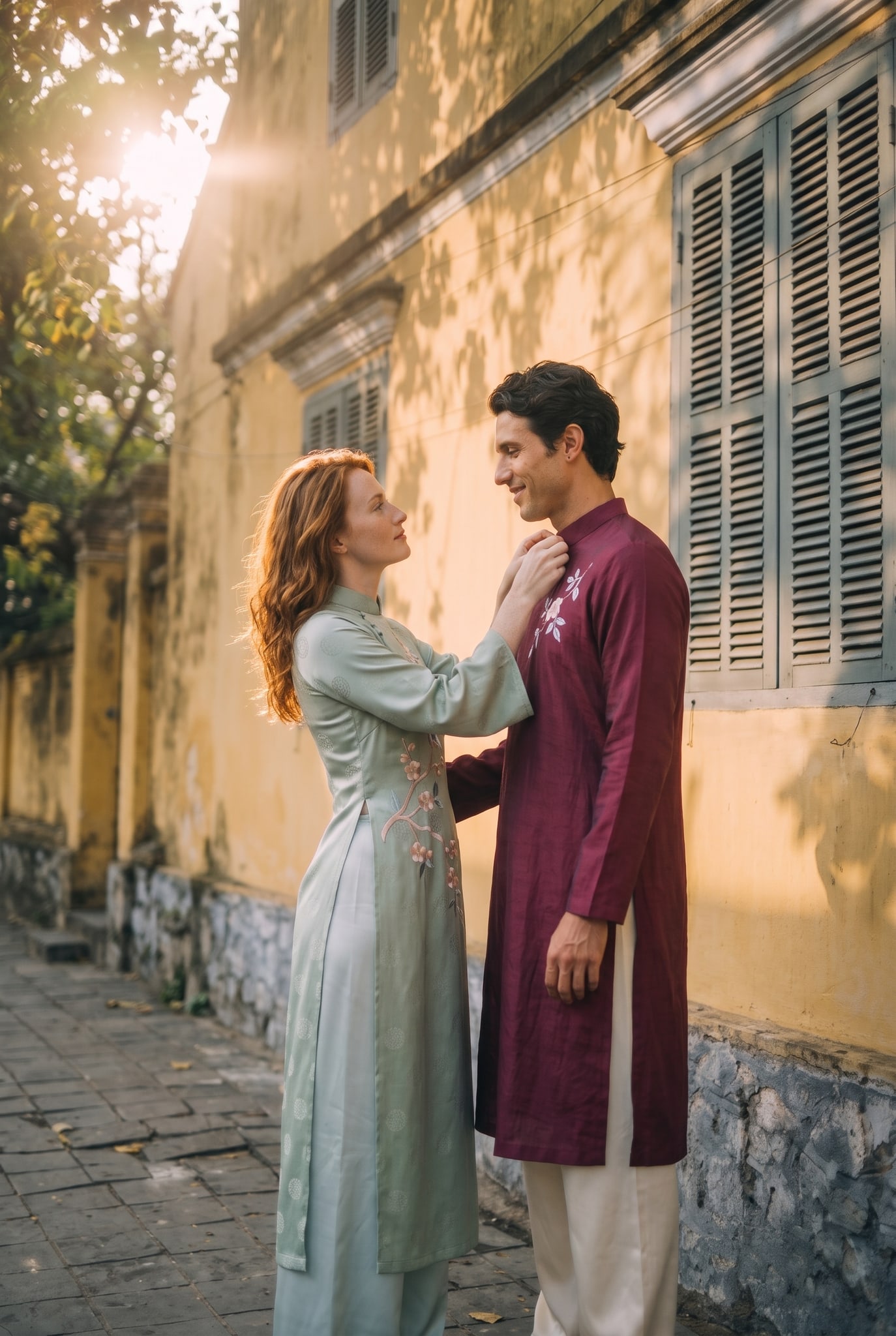
The Hanoi French Quarter isn't small—it spans 36 blocks—but its appeal is density: colonnaded streets, yellow walls, shuttered cafés. Between 10 a.m. and 4 p.m., tour groups cycle through in waves, especially around Hoan Kiem Lake's east side and the Saturday Walking Street. We've noticed that crowds bunch at landmark spots (the Old Gate, Hang Trong entrance, Trang Tien intersection) while parallel streets 20 meters away sit nearly empty. Morning light (6:30–8:30 a.m.) casts long shadows across stone and creates separation: your couple stands out without bystanders photobombing. Evening (6:30–8 p.m. May–September, 5–7 p.m. October–April) offers warm amber tones and fewer street vendors. The time of year matters too—Tet (late January/early February) and summer holidays (June–August) double foot traffic; October–November and March–April are sweetest.
See packages and prices on vietnamphotoshoot.com
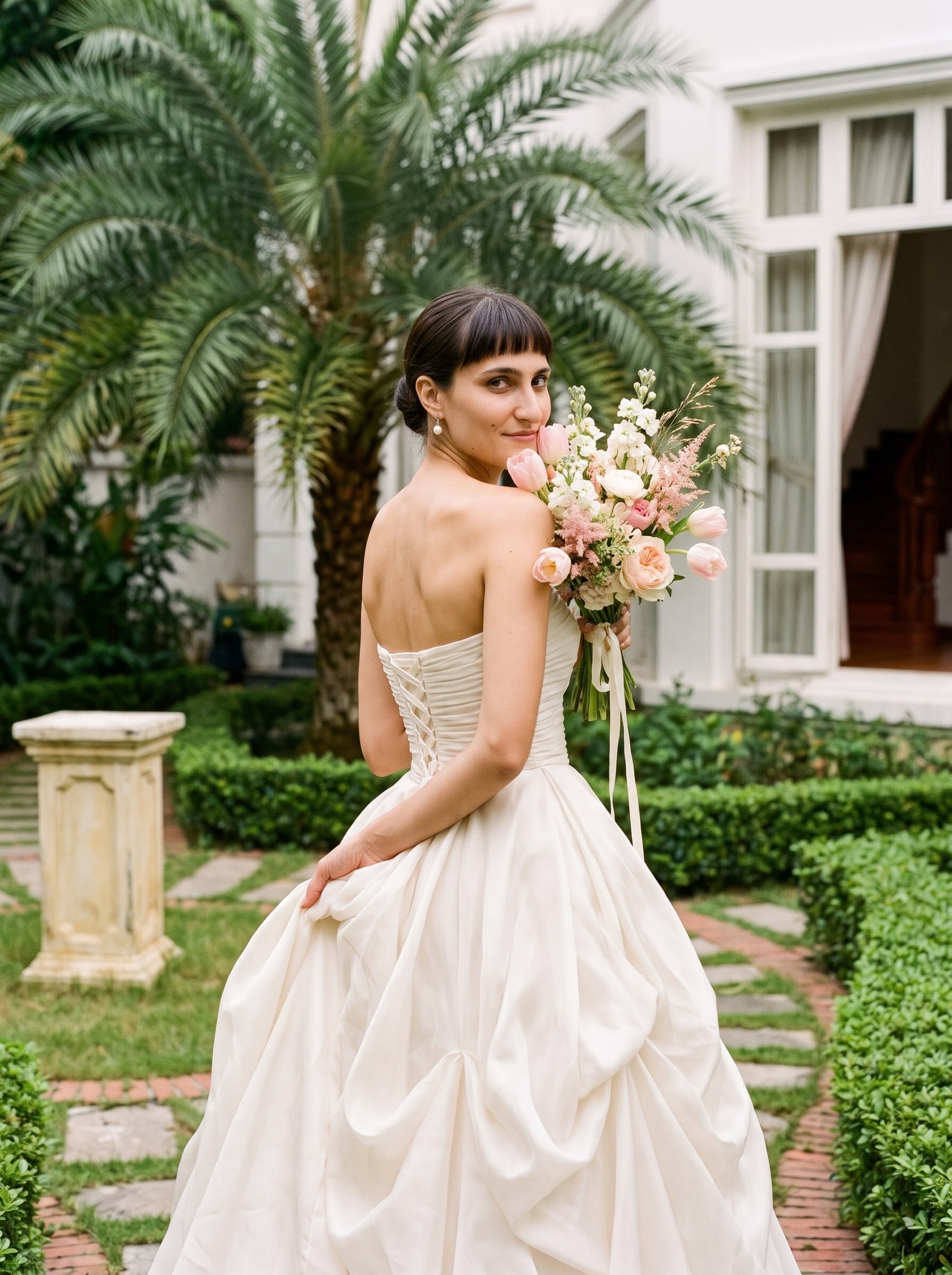
Which streets does our team use when the main lanes fill up?
We rotate through Ngo Gach (the narrow "tube street" with painted walls), Hang Gai (silk trade street, quieter east end), and Trang Tien back lanes for a reason: they're blocks away from tour-group routes but still hold colonial character. Hang Ma (lantern street) empties by 7 a.m. before vendors fully open. Trang Tien alley near the post office has arched windows and soft morning light—we use it when Hoan Kiem's main waterfront crawls. Ba Trieu has fewer cameras trained on it than Hang Trong. We also duck into courtyards and shophouse interiors; a few café owners let us shoot their vintage sitting areas for a small thank-you. The logic: tourists follow guidebook photos, so we shoot where guidebooks don't point. Our couple photoshoot team rotates 8–10 backup spots and decides the morning of, based on street vendors' setup and foot-traffic volume we scout in real time.
How do we work around motorbikes and street vendors when we can't avoid peak hours?
Some couples book midday for the yellow light or can't reschedule. We manage it by positioning and timing our shots between vendor setup (around 9 a.m.) and peak lunch rush (11:30 a.m.–1 p.m.). A stylist or photographer watches for gaps: when a motorbike stream clears for 10–15 seconds, we call the couple into frame. Post-processing removes stray bikes or people on the edges—we shoot 15–20 frames per setup and composite the cleanest elements. We also frame tighter: instead of wide architectural shots, we focus on the couple against a single yellow wall or doorway, which naturally crops out crowds. If a tour group approaches, we pause for 2–3 minutes rather than shoot through them. One trick: we book a car to park on a quiet side street as a private changing room and shade spot, which also gives us a semi-secure base. On crowded days, sessions run longer (add 30–45 minutes) because of stop-and-start pacing—discuss timing flexibility when you chat with us about your shoot.
What does our hour-by-hour timeline look like for a dawn shoot?
We meet at 6 a.m. at a café near Hoan Kiem (we coordinate the exact spot on WhatsApp the night before). Our photographer, stylist, and makeup artist arrive 30 minutes early to check light, meter the sun, and watch for police or street cleaning crews that sometimes restrict access at dawn. By 6:45 a.m., we do final hair and makeup touch-ups in the café or a nearby hotel lobby. Shooting starts 7 a.m., moving through 3–4 locations in 90 minutes before street vendors and early tourists arrive. We capture the couple's first look and full-length poses at each spot, then move. By 8:45 a.m., we're wrapping at a quieter café for coffee and final close-ups. The morning light—soft, directional, golden—peaks 7–8:15 a.m. We always have a backup indoor spot (a shophouse or boutique hotel lobby) in case rain or an unexpected event (construction, closed street) blocks our plan. Evening timelines compress: we start 5:30 p.m., shoot until 7:30 p.m., because dusk light fades fast. Ask us for the exact breakdown when you book.
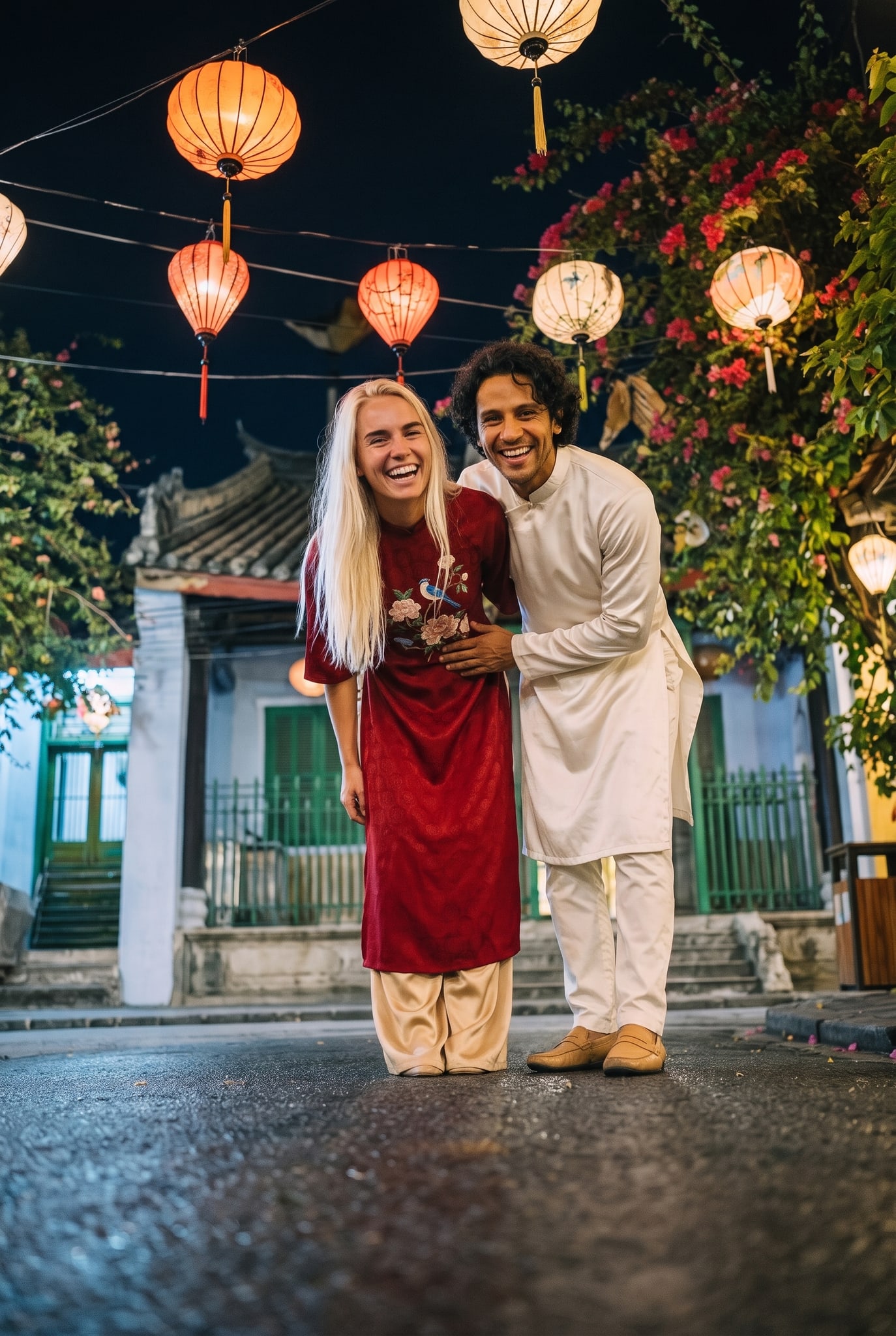
How do we help you choose between a dawn, evening, or multi-location pre-wedding day?
| Timing | Light quality | Crowd level | Best for | Stamina needed | Ask for details |
|---|---|---|---|---|---|
| Dawn (6:30–8:30 a.m.) | Soft gold, long shadows | Near zero | romantic, intimate vibes | early rise | shorter session OK |
| Midday (11 a.m.–2 p.m.) | Harsh, high contrast | heavy | colorful, bold energy if styled right | heat tolerance | fast-paced, fewer spots |
| Evening (5:30–8 p.m.) | Warm amber, diffused | light-to-moderate | golden, dreamy tones | comfortable pace | longer, multiple locations |
| Multi-session (2 days) | varies by time | lowest | all moods, multiple outfits | split effort | most flexibility |
The choice depends on your style, energy, and how you photograph. Couples who love soft, fairytale aesthetics choose dawn—light flatters skin and hair. Those wanting vibrant colors and dynamic energy book midday, accepting fewer location changes. Evening is the middle ground: light is forgiving, crowds are thinning, and you're not racing the sun. We've noticed that multi-session pre-wedding packages let couples hit both dawn and evening without fatigue, plus a separate indoor or concept shoot on another day. Each option shifts how long we spend at each spot, what styling works, and which backup locations we rely on. When you reach out, tell us your vibe—romantic, playful, bold, minimal—and we'll map the best timing and route. A few couples also ask about including makeup and hair refresh mid-session; that's possible if you book makeup and hair at your hotel as an add-on the morning of.
What does our scouting and insurance process look like before your shoot day?
We visit the French Quarter 2–3 days before your session, walking the exact route we plan, taking reference photos, and checking for construction, temporary closures, or special events. We test light angles at the booked time slot to ensure the sun position matches what we promised. We contact café owners and shopkeepers whose doorways or interiors we want to use, asking permission and confirming they're open. We check weather forecasts daily and confirm a rain backup plan with you 48 hours ahead. If streets are unexpectedly blocked or crowded, we pivot to our secondary locations and notify you immediately on WhatsApp. We carry permits for public photography (Vietnam's regulations are relaxed for small shoots, but we stay respectful and low-key). On the day, our team arrives early, reviews the light one more time, and discusses any last-minute changes with you before we start. This prep work is invisible to you but prevents the common disasters: missed light, angry shopkeepers, wrong expectations. All of this is baked into our pre-wedding and elopement package—no surprises.
What should you check before booking your French Quarter shoot?
Before confirming your date and time, verify:
- Your preferred timing: Do you prefer dawn calm, evening warmth, or midday energy? This locks the route and outfit.
- Weather flexibility: Can you reschedule if rain is heavy? Or do you want us to adapt on the day (fewer outdoor shots, more café or covered spots)?
- Outfit changes: How many outfits? Each change adds 15–20 minutes; multiple changes squeeze into evening shoots more easily than dawn.
- Mobility and comfort: Can you walk 1.5–2 km across uneven cobblestones in heels or formal wear? We can shorten the route or stay in a 2–3 block radius if needed.
- Photography style: Do you want wide architectural shots (we need emptier streets longer) or tight couple close-ups (we manage crowds better)?
- Language or vendor interactions: If you want to photograph inside a café or shophouse, we handle permissions; just confirm you're OK with us negotiating.
- Final delivery: Do you want digital galleries only, or printed albums? Editing and delivery timelines differ.
Most issues we troubleshoot come from unclear expectations about crowd levels or light—being specific upfront saves rescheduling stress.
See packages and prices on vietnamphotoshoot.com
FAQ
Can we shoot in the French Quarter year-round, or are some months too crowded?
October–April is peak tourist season but also has the most stable weather and best light; Tet (late January/February), summer holidays (June–August), and weekends see the worst crowds. We typically recommend booking Tuesday–Thursday, October–November or March–April for the sweet spot: fewer tourists, mild weather, warm afternoon light. If you're set on summer or Tet, dawn shoots become essential—we start 6 a.m. to beat the rush.
If we book a midday shoot and crowds are bad, can we reschedule the timing or location on the day?
Yes, within limits. We scout 48 hours ahead and give you a final time confirmation. On the day itself, if unexpected crowds hit (tour bus, street fair, police event), we shift to our backup route or pause for 10–15 minutes between clusters. If it's genuinely unmanageable, we can reschedule, but that's rare because we avoid peak hours by design. Discuss flexibility when you message us.
How much walking is involved in a typical French Quarter shoot, and can we stay in one spot if my shoes don't allow it?
A standard 2–3 hour session covers 4–6 locations across 1–2 kilometers of cobblestones. We can compress it to one street (Ba Trieu, Hang Gai, Trang Tien) if you prefer fewer moves or have mobility concerns. Heels and formal wear work but pick sturdy shoes; we've seen tears and twisted ankles on uneven lanes. Let us know your mobility needs when booking so we tailor the route.
Do we need a permit to shoot in the Hanoi French Quarter, or can we shoot freely?
Vietnam allows tourist photography freely in public spaces without permits for small, non-commercial shoots. Our team keeps a low profile, respects private property, and asks permission before photographing inside shops or cafés. We never use drones or professional lighting rigs that might trigger official attention. You're covered under our insurance and experience; we handle compliance.
What's the difference between shooting a dawn session versus an evening session in terms of the final photos?
Dawn light is soft, cool-toned (blues and golds), creates long romantic shadows, and feels intimate—fewer distractions, cleaner backgrounds. Evening light is warm (amber, orange), flatters skin tones, softens details, and works well for dreamy moods; crowds thin but dusk light fades fast (20–30 minute window). Midday is harsh, requires bold styling, and compresses the shoot duration. Ask us for sample galleries by time of day when you chat; we'll show you the difference.
Pre-Wedding & Elopement
Inclusions, prices and booking are on our booking site.
FAQ
Can we shoot in the French Quarter year-round, or are some months too crowded?
October–April is peak tourist season but also has the most stable weather and best light; Tet (late January/February), summer holidays (June–August), and weekends see the worst crowds. We typically recommend booking Tuesday–Thursday, October–November or March–April for the sweet spot: fewer tourists, mild weather, warm afternoon light. If you're set on summer or Tet, dawn shoots become essential—we start 6 a.m. to beat the rush.
If we book a midday shoot and crowds are bad, can we reschedule the timing or location on the day?
Yes, within limits. We scout 48 hours ahead and give you a final time confirmation. On the day itself, if unexpected crowds hit (tour bus, street fair, police event), we shift to our backup route or pause for 10–15 minutes between clusters. If it's genuinely unmanageable, we can reschedule, but that's rare because we avoid peak hours by design. Discuss flexibility when you message us.
How much walking is involved in a typical French Quarter shoot, and can we stay in one spot if my shoes don't allow it?
A standard 2–3 hour session covers 4–6 locations across 1–2 kilometers of cobblestones. We can compress it to one street (Ba Trieu, Hang Gai, Trang Tien) if you prefer fewer moves or have mobility concerns. Heels and formal wear work but pick sturdy shoes; we've seen tears and twisted ankles on uneven lanes. Let us know your mobility needs when booking so we tailor the route.
Do we need a permit to shoot in the Hanoi French Quarter, or can we shoot freely?
Vietnam allows tourist photography freely in public spaces without permits for small, non-commercial shoots. Our team keeps a low profile, respects private property, and asks permission before photographing inside shops or cafés. We never use drones or professional lighting rigs that might trigger official attention. You're covered under our insurance and experience; we handle compliance.
What's the difference between shooting a dawn session versus an evening session in terms of the final photos?
Dawn light is soft, cool-toned (blues and golds), creates long romantic shadows, and feels intimate—fewer distractions, cleaner backgrounds. Evening light is warm (amber, orange), flatters skin tones, softens details, and works well for dreamy moods; crowds thin but dusk light fades fast (20–30 minute window). Midday is harsh, requires bold styling, and compresses the shoot duration. Ask us for sample galleries by time of day when you chat; we'll show you the difference.
More from the team
Photography rules at Ta Phin village: permits, drones and what to check
Ta Phin village in Sapa draws photographers for its Hmong culture and layered mountain light. We've shot dozens of sessions there—here's what actually works and what stops shoots cold.
Pre-Wedding Photo Ideas and Poses at O Quy Ho Pass
O Quy Ho Pass sits on the Hanoi–Sapa border at 1,200 metres. Our couples shoot there for its curves, mist and isolation—but the weather and logistics demand a different approach than valley shoots.
Is O Quy Ho Pass Good for Pre-Wedding Photos? Pros, Cons, Alternatives
O Quy Ho pass in Sapa draws couples seeking high-altitude drama, but tight timelines, unpredictable fog, and logistics make it risky for pre-wedding shoots. We've scouted it; here's what actually works. #