 Cáo Studio
Home › Blog › Pre-Wedding & Elopement
How to avoid crowds at Hanoi Train Street on your wedding photo day
By the Cáo Studio team · Hanoi & Saigon · 2026-11-02
Train Street (Phố Ga) in Hanoi's Old Quarter is a working railway line where a narrow-gauge train passes twice daily through a colonial-era street lined with cafés and small shops. Most visitors cluster between 10 a.m. and 4 p.m., especially weekends and holidays. To shoot there for a pre-wedding session, you need timing: we book 6–8 a.m. slots before shops open and foot traffic peaks, and we coordinate with local guides who know the train schedule and street permits. A pre-wedding photoshoot at Train Street typically runs 2–3 hours, allowing us to capture outfit changes and light shifts before the crowds arrive. The street is free to walk but photographing there requires awareness of pedestrian flow, vendor patience, and the train's actual arrival (if you want it in frame, the 2–3 p.m. service is more predictable). Cáo Studio books these sessions year-round; we advise avoiding Tet holidays, weekends, and peak summer (June–August) unless you prefer controlled chaos. Ask us for a quote on WhatsApp and let us know your preferred dates—we'll tell you candidly whether a morning slot or evening return is realistic. Chat with us on WhatsApp
When does Train Street get quiet, and when should you avoid it?
Train Street is quietest between 6 and 8 a.m., before shops open and tourists arrive. After 9 a.m., foot traffic builds steadily; by noon, the narrow street is shoulder-to-shoulder, especially if groups are waiting for the afternoon train. Late evening (5–7 p.m.) can work if you've finished a daytime shoot elsewhere and want a second location, but you'll still encounter café crowds. We avoid booking midday weekend slots unless the couple specifically wants the living, chaotic energy as a backdrop. Tet (January/February), school holidays, and public holidays triple footfall. Off-season (September–November) and early mornings are your windows for calm, clean frames.
What we tell couples on WhatsApp: "Morning slot nets you 90 minutes of walkable space; afternoon means tight framing and constant crowd management."
Do you need a permit, and what happens if you don't have one?
Train Street runs through private property (the railway corridor) and residents' homes. A formal photo permit isn't legally required for a walk-through shoot, but photographing for commercial purposes—wedding, pre-wedding, promotional—sits in a gray zone. We don't conduct unpermitted shoots; instead, we coordinate with local community liaisons who understand the street's unwritten rules. These guides (not official government permits) smooth relations with shopkeepers and residents, who may otherwise ask you to stop or move. The guide fee is included in our location scouting during pre-wedding photoshoot planning. Without coordination, you risk rushed frames, unhappy shopkeepers, or asking permission mid-shoot—all kill the mood.
Real scenario: A couple once tried Train Street alone on a Saturday afternoon without warning locals. A vendor blocked their shot, and they lost 20 minutes relocating. Our guide prevented that with a 10-minute introduction the morning we scouted.
What should you wear to shoot there, and how many outfit changes fit in a morning?
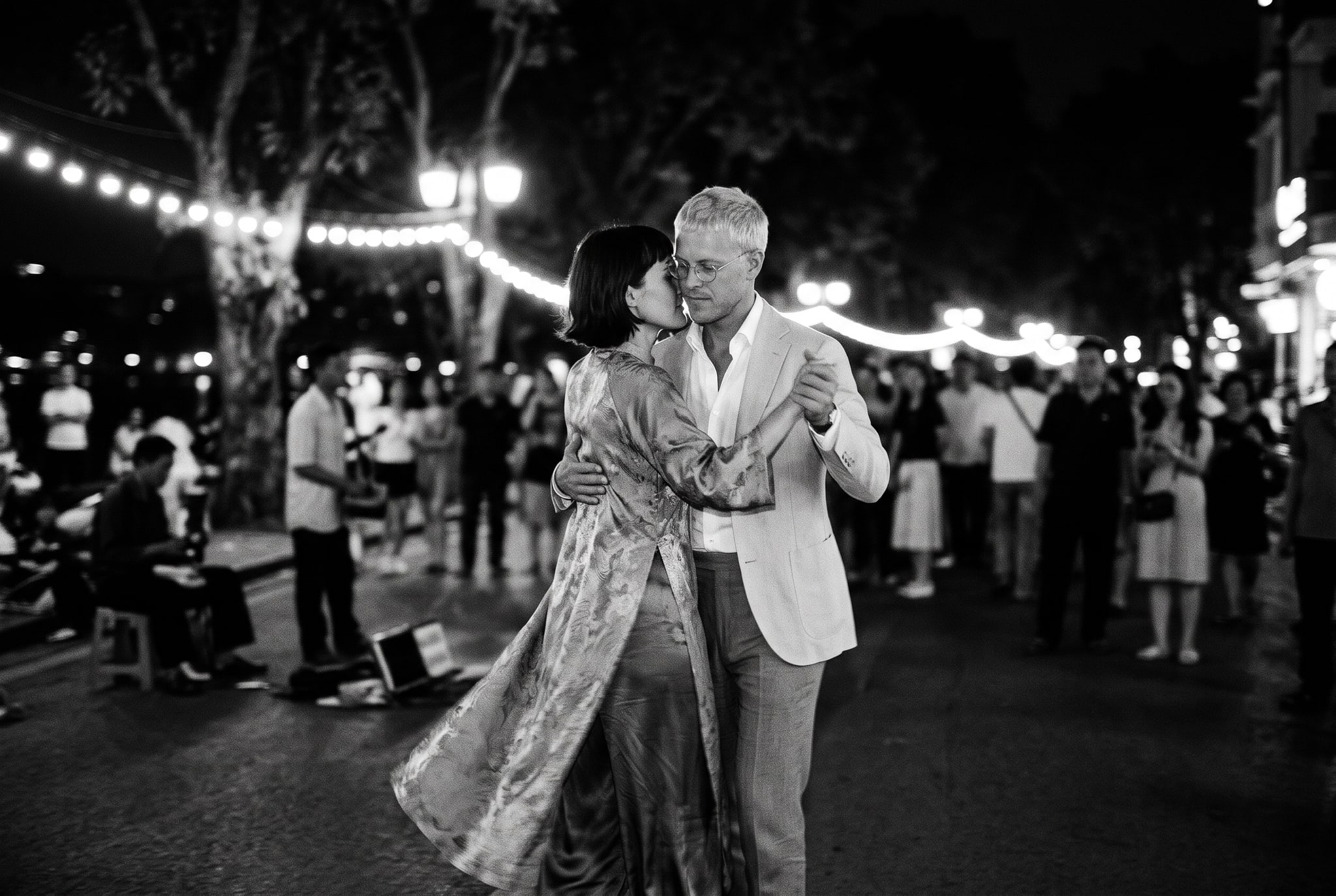
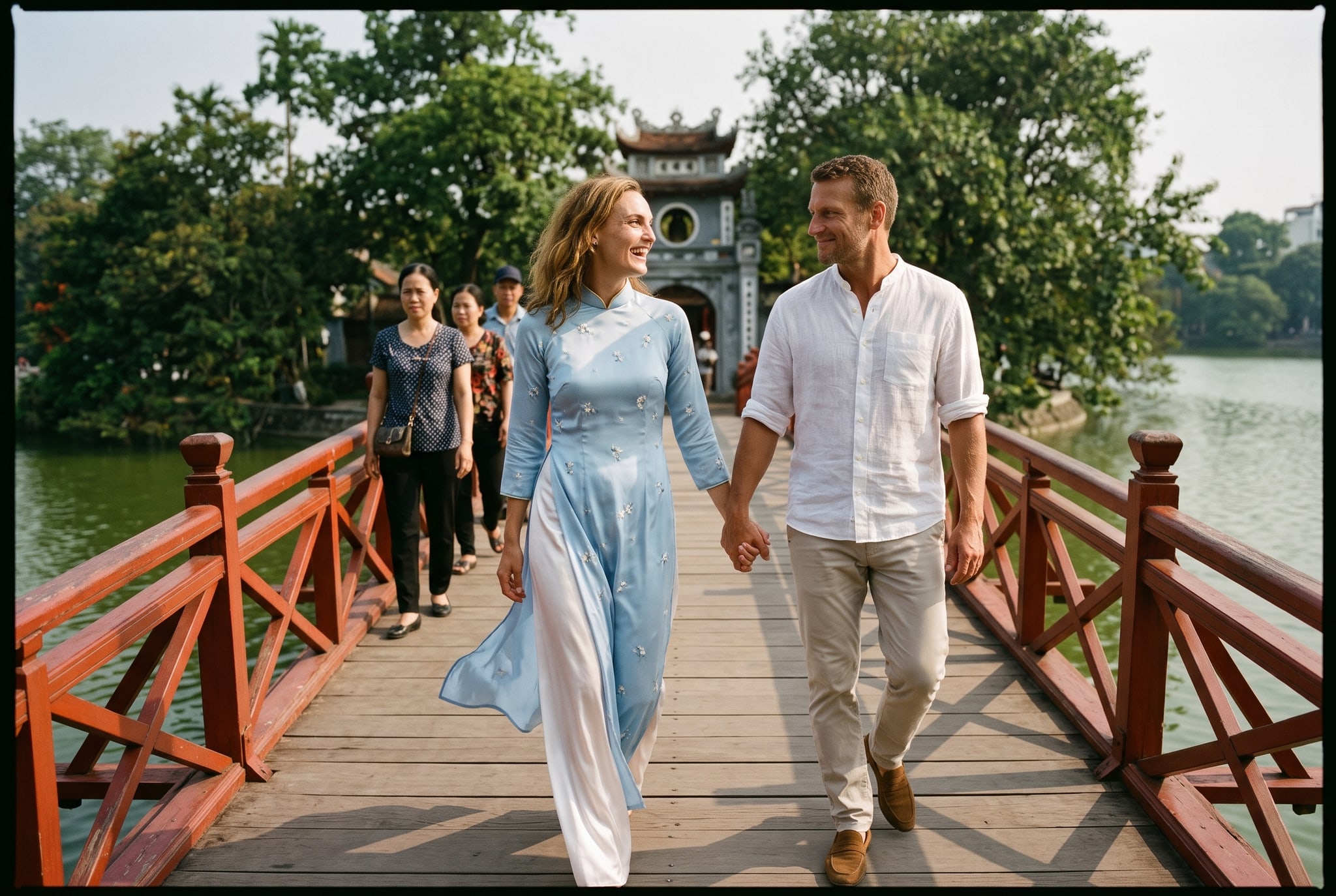
Train Street's colonial architecture, café signage, and train tracks suit romantic, period-inspired outfits: traditional áo dài, Western wedding whites, vintage-inspired dresses, or smart-casual couple looks. The narrow street and tight framing mean busy patterns and oversized shapes get lost; jewel tones, pastels, and structured silhouettes read best. We typically plan 2–3 outfits for a 3-hour session: an arrival outfit (shot on the street itself), a café interlude (for softer, seated frames), and an outfit change in a nearby hotel or café bathroom. Makeup and hair stability matter—early morning means less heat and sweat, so your look lasts longer. If you want áo dài, book ao dai photoshoot or add it as an add-on to a couple session; we'll arrange a dressing area and ensure hair and makeup reset between changes.
What goes wrong: One couple wore a full-length beaded gown for Train Street. By 9 a.m. the hem dragged, shoes chafed on uneven tracks, and sweat compromised makeup. We pivoted to a simpler dress, reshot, and learned to ask about footwear and comfort up front.
How do you manage the train itself in your shots?
The train passes Train Street twice daily: roughly 3:30 a.m. (early, unpredictable) and 2–3 p.m. (more reliable). Waiting for it in-frame means burning 30–60 minutes for 10 seconds of actual passage. We ask couples: do you want the train in the shot, or is the nostalgia and street vibe enough without it? Most choose the latter—moody, empty-street frames with romantic café lighting beat chaos. If you do want the train, we scout it the day before to confirm timing, position the couple safely off-rail, and brief them on the noise and vibration (it's surprisingly loud). A morning shoot avoids the 2 p.m. train entirely and lets you use the empty tracks as a compositional line without waiting.
Decision framework we use:
- Want the train? Afternoon session (2–3 p.m.), arrive early, accept 30+ minutes of crowd.
- Want peaceful frames? Early morning (6–8 a.m.), skip the train, focus on light and detail.
- Want both? Plan a scout visit the week before; we'll time your two separate sessions or advise if it's unrealistic.
How does season and weather change what you can capture there?
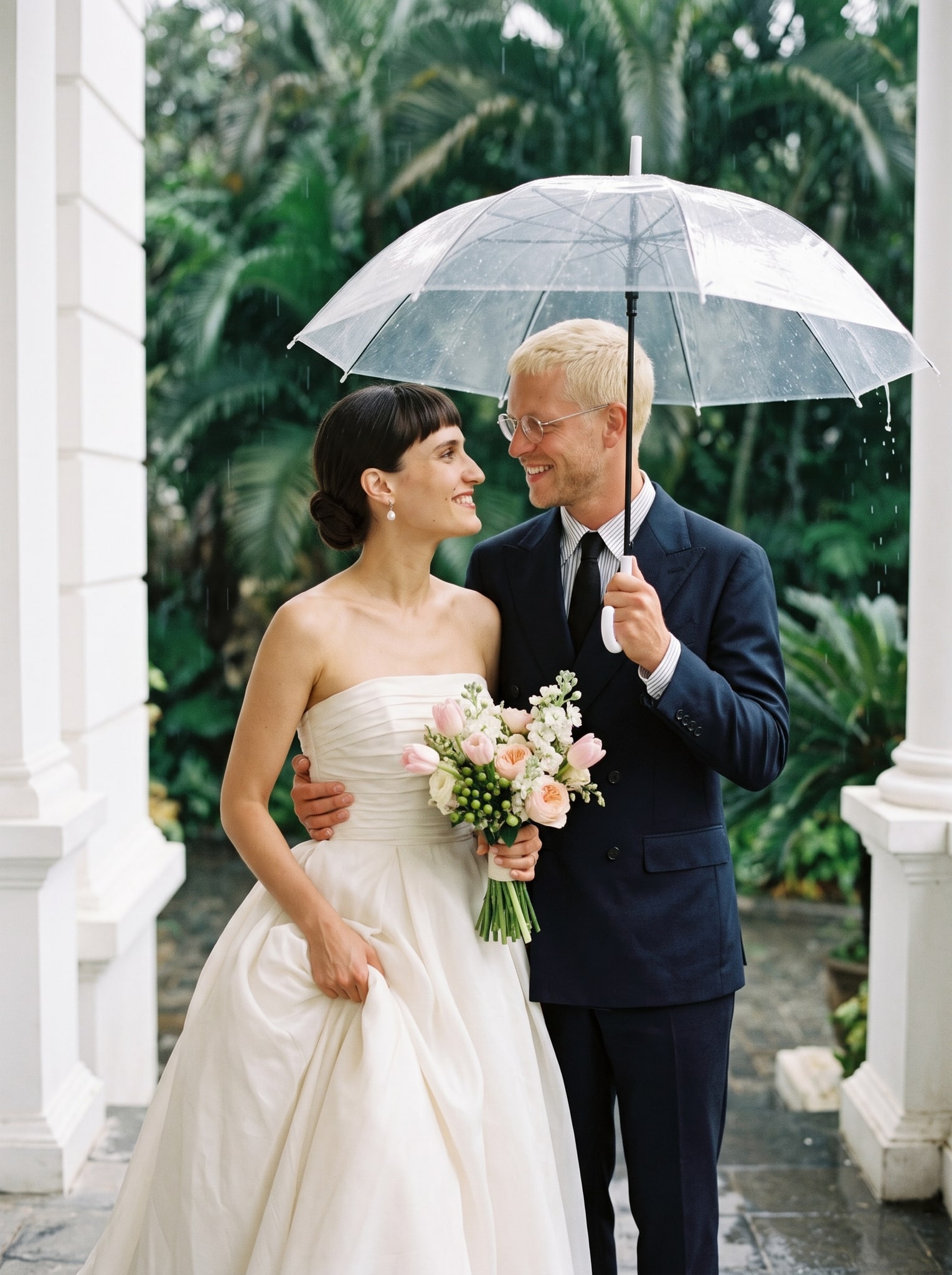
Hanoi's climate shapes Train Street shoots dramatically. Monsoon (May–September): Morning humidity is high, makeup melts, and afternoon rain is common—early shoots work better, but prepare for sweat and potential rescheduling. Autumn (September–November): Crisp mornings, soft golden light, minimal rain; this is peak season for us, though crowds aren't smaller. Winter (December–February, Tet): Cool and clear, but Tet brings massive holiday foot traffic; book early December or late February for calm. Spring (March–April): Warm and pollutant-heavy; your frames may have haze. We advise pre-wedding photoshoot bookings 2–3 months ahead to lock September–November dates. If you must book summer or Tet, we'll be honest: expect crowds, briefer windows, and potential reschedules due to rain or heat.
Table: Train Street shoot conditions by season
| Season | Best time | Crowd level | Light quality | Rain risk | Makeup durability | Our note |
|---|---|---|---|---|---|---|
| Sep–Nov | 6–8 a.m. | Low–med | Golden, soft | <10% | Excellent | Book first |
| Dec–Feb | 6–8 a.m. | High (Tet) | Clear, crisp | <15% | Good | Avoid Tet week |
| Mar–Apr | 6–7 a.m. | Med–high | Hazy | <20% | Fair | Pre-dawn better |
| May–Aug | 5:30–7 a.m. | High | Bright, heavy | >40% | Poor | Reschedule prep |
What to check before you book a Train Street pre-wedding session with us
1. Confirm your dates 8–12 weeks ahead. Early mornings fill fast; we hold slots for couples who commit first. If you're flexible on dates, we'll suggest the quietest weeks.
2. Decide on the train: In-frame or no? This determines session length and timing. Tell us your preference so we don't waste time waiting if you don't want it.
3. Plan outfits and comfort. Bring 2–3 changes if you want variety. Wear shoes you can walk in for 90 minutes on cobblestone and train tracks. Bring a change of shoes if your first pair isn't practical.
4. Arrange on-the-ground transportation. Train Street is in the Old Quarter; parking is nearly impossible. We'll advise on nearest motorbike taxi stand or arrange a ride. If you're staying at a hotel, we'll coordinate pickup.
5. Book makeup and hair if you want it done that morning. Our makeup and hair at your hotel team can meet you at your accommodation or a nearby café before the shoot. This saves you time and ensures fresher makeup for early light.
6. Understand what's included in our pre-wedding photoshoot package. Does it cover location scouting, guide coordination, outfit changes, or café café setups? Ask us on WhatsApp for your specific dates and vision—pricing and inclusions vary by session length and location complexity.
What happens on a real Train Street morning: hour by hour
5:45 a.m. We meet you at your hotel or the Old Quarter entrance. Our photographer and stylist arrive with a basic makeup touch-up kit and a small changing bag. Early arrivals let us scout for light and street setup.
6:15 a.m. You're on Train Street. The street is nearly empty; a few shop owners are sweeping. We position you, check the light on your outfit, and take 20–30 frames before the first café customers arrive. Our guide chats with locals—this goodwill pays off if we need to use a doorway or step into a shop for a protected shot.
6:50 a.m. First walking shots down the street, café interiors if a friendly owner allows us access, and detail frames of your rings, shoes, flowers against the old tiles and signage. Light is soft and golden.
7:20 a.m. You change into outfit two (café bathroom or nearby hotel suite if booked). Hair and makeup touch-up takes 10–15 minutes. We grab coffee and scout the next backdrop.
7:45 a.m. Second outfit on the street. By now, a handful of tourists and regular commuters appear, but it's still manageable. We aim for several full-length couple poses and candid interactions.
8:15 a.m. Foot traffic accelerates. We finish the final outfit change and capture a few more frames before moving to a secondary location (café interior, hidden alley corner) or wrapping.
8:45 a.m. Session ends. Most couples head to breakfast; we transfer images and chat through the day's top shots.
The variable: If you asked for the 2–3 p.m. train, we'd pause the shoot at 1:45 p.m., position you safely, brief you on noise, and shoot for 10–15 minutes around its passage. This adds unpredictability and waiting but delivers a unique element.
Real challenges we've solved on Train Street shoots
Challenge 1: A couple's dog was in their session. Dogs don't do well on train tracks (vibration, noise). Solution: We shot the dog in a separate café session earlier, reintroduced it for one final frame on the street once the couple was settled, then moved it to a quiet side street.
Challenge 2: Shop owner objected to us using their doorway. We hadn't coordinated with them beforehand. Solution: Our guide stepped in, explained the shoot, and the owner gave us 10 minutes. Next time, we contacted the owner the night before.
Challenge 3: Weather turned from clear to drizzle at 7:30 a.m. Makeup started to run; couple got cold. Solution: We pivoted to café interiors and covered shots under awnings, rescheduled the outdoor finale for the next morning at no extra cost.
Challenge 4: A second wedding couple showed up at the same time. Unexpected collision, both booked different photographers. Solution: We coordinated timing—one couple at 6–7 a.m., the other 7:15–8:45 a.m., no overlap, both got calm frames.
See packages and prices on vietnamphotoshoot.com
We also offer couple photoshoot packages that include Train Street as one of several Hanoi locations, and special concept shoot options if you want a thematic twist (vintage, romantic, editorial). For couples based in Saigon or Ninh Binh flying in for the shoot, we coordinate Cáo Studio Hanoi logistics and can arrange multi-day itineraries combining Train Street with Hoan Kiem Lake or the French Quarter. Read more of our insights from real shoots on the team blog.
FAQ
Can we shoot Train Street alone without booking a Cáo Studio session?
Yes, but you won't have a guide to smooth relations with locals, navigate permits, or ensure your frames aren't disrupted by foot traffic. Many couples try it, regret the chaos, and rebook with us for a second session.
What's the best time of year to shoot Train Street with minimal crowds?
September through November is quietest and has the best light. Avoid Tet (January/February), school holidays (June–July), and weekends if possible. Early mornings (6–8 a.m.) cut crowds by 80% compared to afternoon slots.
Do we need a professional photographer, or can a friend shoot us with a phone?
A friend can snap casual frames, but Train Street's narrow space, mixed lighting (café neon plus street daylight), and moving crowds demand technical skill. A professional frames you cleanly, manages depth, and captures moments your friend might miss while watching foot traffic.
How long does a Train Street pre-wedding shoot take?
Typically 2.5–3 hours, including outfit changes and café setups. If you want the train in-frame, add 30–60 minutes of waiting. We can shorten to 2 hours if you pick one outfit and skip the train.
What if it rains on our booked Train Street shoot morning?
We scout the weather forecast weekly and alert you 3–5 days before. Light drizzle? We shoot under café awnings and adapt frames. Heavy rain? We reschedule at no extra cost or move to an indoor venue like a café interior or hotel. Confirm your rescheduling policy when you book on WhatsApp.
Can we book Train Street plus other Hanoi locations in one day?
Yes. A typical pre-wedding photoshoot in Hanoi covers 2–3 locations in 4–5 hours: Train Street (early), Hoan Kiem Lake or the French Quarter (mid-morning), and a café or alley detail session (afternoon). We'll map this out during planning.
Is Train Street suitable for an áo dài shoot, or should we use a different Hanoi backdrop?
Train Street works beautifully for áo dài, especially the pale pastels and jewel tones that pop against the aged tiles and colonial architecture. If you want a pure ao dai photoshoot experience, we also offer Temple of Literature (more serene) and Hoan Kiem Lake (more iconic). Ask which suits your style on WhatsApp. Chat with us on WhatsApp
Pre-Wedding & Elopement
Inclusions, prices and booking are on our booking site.
FAQ
Can we shoot Train Street alone without booking a Cáo Studio session?
Yes, but you won't have a guide to smooth relations with locals, navigate permits, or ensure your frames aren't disrupted by foot traffic. Many couples try it, regret the chaos, and rebook with us for a second session.
What's the best time of year to shoot Train Street with minimal crowds?
September through November is quietest and has the best light. Avoid Tet (January/February), school holidays (June–July), and weekends if possible. Early mornings (6–8 a.m.) cut crowds by 80% compared to afternoon slots.
Do we need a professional photographer, or can a friend shoot us with a phone?
A friend can snap casual frames, but Train Street's narrow space, mixed lighting (café neon plus street daylight), and moving crowds demand technical skill. A professional frames you cleanly, manages depth, and captures moments your friend might miss while watching foot traffic.
How long does a Train Street pre-wedding shoot take?
Typically 2.5–3 hours, including outfit changes and café setups. If you want the train in-frame, add 30–60 minutes of waiting. We can shorten to 2 hours if you pick one outfit and skip the train.
What if it rains on our booked Train Street shoot morning?
We scout the weather forecast weekly and alert you 3–5 days before. Light drizzle? We shoot under café awnings and adapt frames. Heavy rain? We reschedule at no extra cost or move to an indoor venue like a café interior or hotel. Confirm your rescheduling policy when you book on WhatsApp.
Can we book Train Street plus other Hanoi locations in one day?
Yes. A typical [pre-wedding photoshoot](/go/pre-wedding-photoshoot) in Hanoi covers 2–3 locations in 4–5 hours: Train Street (early), Hoan Kiem Lake or the French Quarter (mid-morning), and a café or alley detail session (afternoon). We'll map this out during planning.
Is Train Street suitable for an áo dài shoot, or should we use a different Hanoi backdrop?
Train Street works beautifully for áo dài, especially the pale pastels and jewel tones that pop against the aged tiles and colonial architecture. If you want a pure [ao dai photoshoot](/go/ao-dai-photoshoot) experience, we also offer Temple of Literature (more serene) and Hoan Kiem Lake (more iconic). Ask which suits your style on WhatsApp. [📸 Chat with us on WhatsApp](https://wa.me/84338762340)
More from the team
Boho pre-wedding photoshoot in Vietnam: Hanoi, Saigon, Hoi An
Boho pre-wedding shoots mix romantic, free-spirited aesthetics with Vietnam's landscapes and heritage sites. We run full-day sessions in three cities, handling styling, makeup, location scouts and edits.
Avoid crowds at Hoang Su Phi rice terraces: timing for wedding shoots
Hoang Su Phi's terraced landscape draws couples and tour buses in equal measure. We show how to shoot there alone, when to arrive, and what to arrange with us before you go.
Photography rules at Con Dao beaches: permits, drones and what to check
Con Dao's beaches demand prep before you shoot—permits, drone zones and tide timing all affect your day. We share what the Cáo Studio team verifies on every booking.