 Cáo Studio
Home › Blog › Pre-Wedding & Elopement
How to avoid crowds at Long Bien Bridge on your wedding photo day
By the Cáo Studio team · Hanoi & Saigon · 2026-11-04
Long Bien Bridge—the iron lattice span completed in 1902, crossing the Red River in central Hanoi—attracts wedding photographers year-round, but crowds peak between 08:00–10:00 and 16:00–18:00. We avoid them by shooting 05:30–07:00 or 10:30–15:00, positioning ourselves on the east bank near Tran Quoc Pagoda or west bank by the old French quarter to catch light without competing for the main pedestrian walkway. A typical two-hour session with Cáo Studio includes scouting the least-congested angle, timing the light shift, and capturing 8–12 keeper frames across multiple outfit changes. Book our pre-wedding photoshoot package at least three weeks ahead so we can coordinate bridge access with your logistics. Avoid weekends (Saturday–Sunday draw twice the foot traffic) and national holidays; mid-week mornings give you near-solitude. Chat with us on WhatsApp
Why does Long Bien Bridge pull couples in despite the crowds?
The bridge carries massive symbolic weight: it survived French colonialism, war, and modernization. Couples see it as anchoring their story in Hanoi's real texture, not in staged studio backdrops. The iron latticework photographs in warm, repeating geometries at golden hour. Local legend says the bridge's two-tier design—roadway above, railway below—creates natural framing layers. We notice grooms and brides feel more grounded there than at sanitized wedding gardens. One couple told us afterward they wanted the bridge's "scars" to mirror their own journey. That emotional pull means you'll never have it alone, which is why timing strategy matters.
When should we arrive to actually see the bridge without 200 other people?
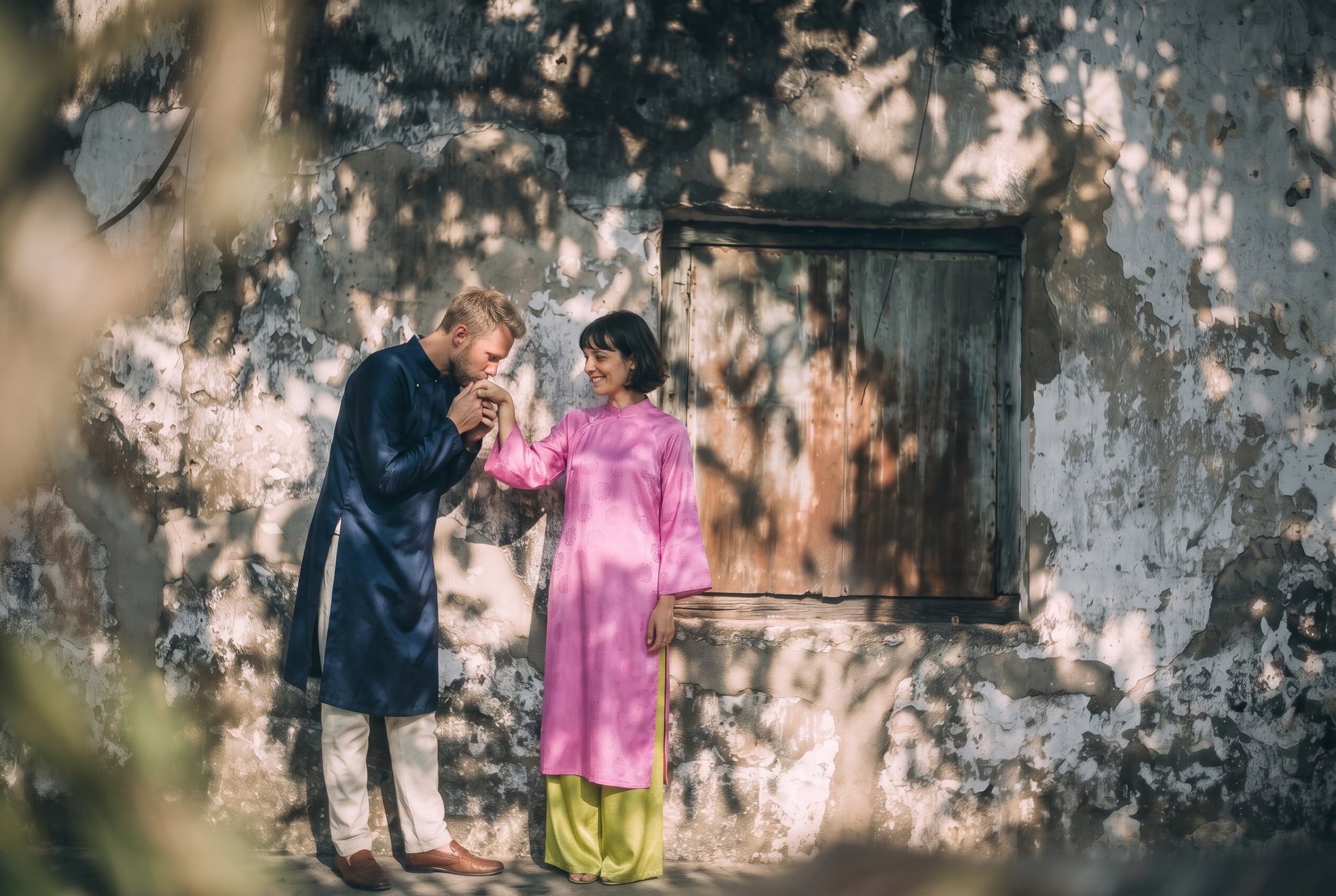
Our Hanoi team schedules Long Bien shoots for 05:45–07:15 or 11:00–13:30 on Tuesday through Thursday. Early morning wins: sunrise hits the iron structure in soft rose-gold, foot traffic is under 50 people per hour, and you'll rarely see other wedding groups. The trade-off is temperature (Hanoi mornings in November–February sit around 10–15°C; bring a wrap for between-frame moments). Midday avoids jetlag for international couples but requires a reflector or assistant to bounce harsh overhead light. We've abandoned the 16:00–18:00 "golden hour" slot entirely—it's now tourist-peak time, not romantic-window time. Park near the east entrance (Tran Quoc Pagoda side); the narrow west-bank lot fills by 08:00. Tell your driver to wait on Long Bien Street rather than blocking the pedestrian ramp.
See packages and prices on vietnamphotoshoot.com
What positions on the bridge actually work without photo-bombing by commuters?
We position couples on the east side of the bridge, approximately 40 meters from the Tran Quoc entrance, leaning into the iron railings where the morning light grazes the metal. This angle: keeps the Red River and old Hanoi skyline as backdrop, uses the railing as a natural frame-within-frame, and sits outside the main pedestrian flow. The west side near the French Quarter works if you're shooting after 13:00, when office workers have cleared the morning commute. We avoid the center span entirely—it's the taxi/motorbike throughway, and holding a pose there invites honking and unsafe framing. Sunset shoots require the west bank near Ba Tru Street; you'll catch the sun sinking over the French colonial district, but you're sharing the space with joggers and couples doing the same thing. Our photographer scouts the spot 30 minutes early to spot light obstacles—construction, flags, maintenance trucks—that shift weekly.
How does booking timing change your actual experience on the day?
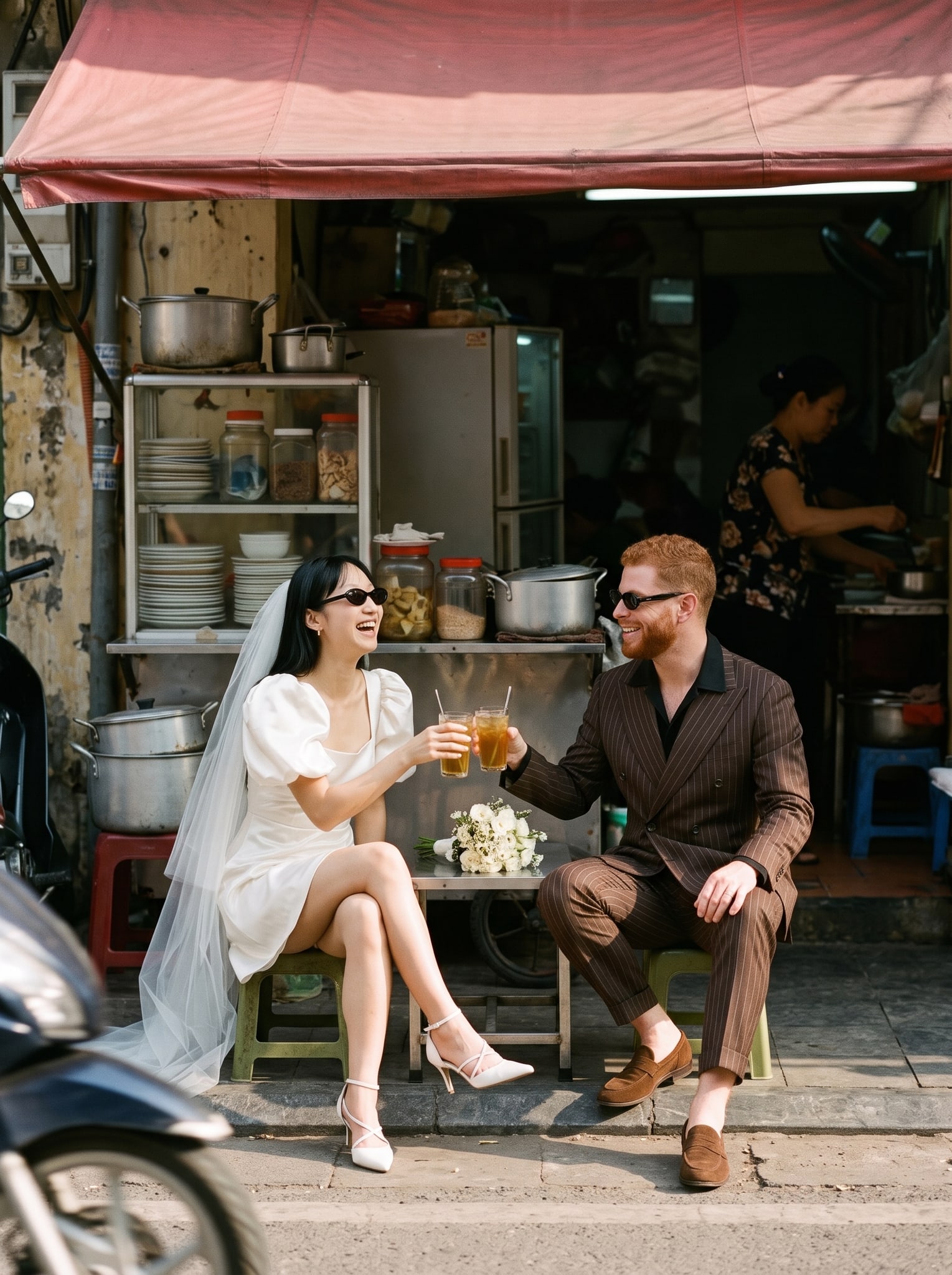
When you book four weeks ahead through vietnamphotoshoot.com, our team notifies you of that week's real conditions: Are there bridge repairs? Is there a festival nearby? What's the weather forecast? We then send a WhatsApp message suggesting a backup date. Two weeks out, we confirm your outfit colors and send you a mood board showing how they'll read in that week's light. One week before, we brief you on logistics: which entrance, where to park, what to expect weather-wise, and how long touch-ups take between outfit changes. On the morning itself, our makeup artist and photographer arrive 20 minutes early to check light and clear commuters from the immediate frame. We've had couples arrive late (traffic happens) and lose the 05:45 window entirely—we then pivot to a 10:30 start to salvage the shoot. This real-time flexibility is why booking through our studio beats DIY coordination.
What actually goes wrong at Long Bien Bridge, and how do we fix it?
We've seen: (1) Monsoon rain that floods the lower walkway—we pivot to the elevated roadway or reschedule. (2) Unexpected construction barriers that appeared overnight—we scout alternate positions or recommend the couple photoshoot package with a second location (Hoan Kiem Lake, Tran Quoc Pagoda courtyard). (3) Outfit continuity fails—synthetic fabrics wrinkle in humidity; we pack a steamer. (4) Bride's shoes slip on wet iron—we bring grip tape and advise flat soles for bridge shots. (5) Light shifts faster than expected in winter—we shoot 15 frames instead of 8 per outfit. (6) A second wedding crew shows up at the same time—we reschedule or offer them collaboration shots (one couple got stunning frame by standing on opposite railings). (7) International couples underestimate heat or cold—we keep emergency layers and water in the car. None of these kill a shoot; they just demand on-the-spot improvisation, which is why experience matters more than equipment.
| Factor | Early Morning (05:45–07:15) | Midday (11:00–13:30) | Sunset (16:00–18:00) |
|---|---|---|---|
| Crowd level | Minimal (under 50/hr) | Light (100–150/hr) | Peak (300+/hr) |
| Light quality | Rose-gold, soft, directional | Harsh, overhead, needs reflector | Golden, but competes with 50+ photographers |
| Temperature in Nov–Feb | 10–15°C (bring wrap) | 18–22°C (comfortable) | 15–18°C (cooling down) |
| Best for which outfits | Áo dài (drapes beautifully in gentle light) | Western dress (less shiny, handles flat light) | Both (saturated color, warm glow) |
| Logistics ease | Tight (sun waits for no one) | Flexible (multiple light options) | Chaotic (parking, commuters, other crews) |
| Who it's for | Couples wanting solitude, patient with cold | Families joining, international first-time visitors | Tradition-first couples accepting crowds |
What should you check before you book a bridge shoot with us?
Check these three things:
- Your outfit priorities. If you're wearing an áo dài (traditional Vietnamese dress), early morning light is non-negotiable—it drapes the silk beautifully. If you're in a Western wedding gown, you have more flexibility. Tell us your outfit choice when you inquire; we'll recommend the session time that flatters it most. Our makeup and hair at your hotel service means you can have your final touch done at your accommodation and arrive fresh to the bridge.
- Your weather tolerance. November through February mornings are chilly and sometimes drizzly. Bring a lightweight wrap, not bulky coats. March–May heat hits 28–32°C by noon, so early morning or very late afternoon only. June–September means monsoon risk—we'll monitor forecasts and offer reschedule options. October is ideal (20–25°C, low rain). Your booking confirmation will include that month's typical conditions.
- Your backup location. Long Bien is iconic but unpredictable. When you book, we'll suggest a second location—often Tran Quoc Pagoda (500 meters away, quieter grounds), Hoan Kiem Lake (romantic water reflections, easier parking), or the French Quarter streets (colonial architecture, atmospheric alleyways). If the bridge disappoints on the day, pivoting to a backup costs no extra time if we've prepped it.
We run pre-wedding photoshoots across Hanoi, and Long Bien is just one location in a broader story. Some couples pair the bridge with a special concept shoot—we've done "morning commute elopement" (faking a commuter look) and "bridge repair crew" (playful, nostalgic). Others book a family photoshoot to include parents for blessing shots near Tran Quoc. If you're not in Hanoi, our Saigon studio works with Saigon River backdrops (similar vibe, different architecture), and we have guides for each location.
The core rule: book early, arrive early, and let the bridge's geometry do half the work for you.
FAQ
Is it illegal to have a wedding shoot on Long Bien Bridge itself?
No formal prohibition exists for still photography on the public walkway. However, motorbike traffic is heavy, and positioning too far into the roadway is unsafe. We keep couples on the pedestrian railings and never block traffic flow. Always check current local notices when you book.
Can we hire security or police to hold the bridge clear?
Not through standard channels. Hanoi doesn't permit "clearing" public infrastructure for weddings. What we do instead: scout early-morning slots when it's naturally quiet, position carefully to avoid commuters, and shoot fast. This works better than trying to cordon off a 105-year-old public bridge.
What if rain happens on our scheduled day?
We'll contact you 48 hours before with a forecast. Light rain actually enhances iron reflections and mood—we often proceed. Heavy monsoon (June–September risk) or thunderstorms trigger automatic reschedule options. Your booking includes one free reschedule date; additional rescheduling can be arranged by contacting our team on WhatsApp.
Do we need permits to shoot with a professional photographer on the bridge?
Long Bien is a public space, so no permit is required for still photography. If you're using drones, a film crew, or blocking areas with equipment, contact Hanoi's Department of Tourism. For a standard couple shoot with one photographer and one assistant, no paperwork is needed.
How many outfit changes can we do in a two-hour slot?
Typically two: one áo dài or traditional dress, one Western gown or suit. Each change takes 8–12 minutes (we bring a small privacy screen or use the car). We shoot 8–12 frames per outfit. If you want three outfits, book a three-hour session and plan lighter fabrics that change faster.
What happens if another wedding crew arrives while we're shooting?
It's happened four times since 2023. We either share the bridge (stand at opposite railings, shoot simultaneously), or if both crews want the same angle, one reschedules to a different day or time. We'll offer the couple a priority booking for a specific time slot within two weeks as courtesy compensation.
Pre-Wedding & Elopement
Inclusions, prices and booking are on our booking site.
FAQ
Is it illegal to have a wedding shoot on Long Bien Bridge itself?
No formal prohibition exists for still photography on the public walkway. However, motorbike traffic is heavy, and positioning too far into the roadway is unsafe. We keep couples on the pedestrian railings and never block traffic flow. Always check current local notices when you book.
Can we hire security or police to hold the bridge clear?
Not through standard channels. Hanoi doesn't permit "clearing" public infrastructure for weddings. What we do instead: scout early-morning slots when it's naturally quiet, position carefully to avoid commuters, and shoot fast. This works better than trying to cordon off a 105-year-old public bridge.
What if rain happens on our scheduled day?
We'll contact you 48 hours before with a forecast. Light rain actually enhances iron reflections and mood—we often proceed. Heavy monsoon (June–September risk) or thunderstorms trigger automatic reschedule options. Your booking includes one free reschedule date; additional rescheduling can be arranged by contacting our team on WhatsApp.
Do we need permits to shoot with a professional photographer on the bridge?
Long Bien is a public space, so no permit is required for still photography. If you're using drones, a film crew, or blocking areas with equipment, contact Hanoi's Department of Tourism. For a standard couple shoot with one photographer and one assistant, no paperwork is needed.
How many outfit changes can we do in a two-hour slot?
Typically two: one áo dài or traditional dress, one Western gown or suit. Each change takes 8–12 minutes (we bring a small privacy screen or use the car). We shoot 8–12 frames per outfit. If you want three outfits, book a three-hour session and plan lighter fabrics that change faster.
What happens if another wedding crew arrives while we're shooting?
It's happened four times since 2023. We either share the bridge (stand at opposite railings, shoot simultaneously), or if both crews want the same angle, one reschedules to a different day or time. We'll offer the couple a priority booking for a specific time slot within two weeks as courtesy compensation.
More from the team
Elopement Photos at Mui Ne Fishing Village: What We Shoot
Mui Ne fishing village offers intimate sand dunes, colourful boats, and golden-hour light that feel timeless for elopement photography. We've shot dozens of couples there—here's what we learned.
Pre-wedding photoshoot in Hue in November: weather, light and crowds
November in Hue is one of Vietnam's most predictable months for outdoor photography. We've run dozens of sessions there and want to share what actually happens on the ground—the light, the crowds, and the decisions we make hour by hour.
Pre-wedding photoshoot in Hue in August: weather, light and crowds
August in Hue brings intense heat and unpredictable afternoon rain. We've run dozens of pre-wedding shoots there and learned what time of day works, which locations stay dry longest, and how to keep your hair and makeup perfect in the humidity.