Cáo Studio
Home › Blog › Ao Dai Photoshoot
How to Choose Your Ao Dai Color for Photos: Skin Tone, Location, Seaso
By the Cáo Studio team · Hanoi & Saigon · 2026-10-30
Ao dai color choice depends on three factors: your skin undertone (cool, warm, or neutral), the season you're shooting (spring pastels, summer jewel tones, autumn earth, winter rich hues), and your location's natural light and backdrop. Cool undertones suit blues, purples, and silvers; warm undertones shine in reds, oranges, golds, and creams; neutral undertones wear any color well. At Cáo Studio, we've shot thousands of ao dai photoshoots in Hanoi, Ho Chi Minh City, Hoi An, and Ninh Binh, and found that matching your tone to the season and light of your location—not just the ao dai itself—makes the difference between photos that feel forced and images where you genuinely glow. Book a consultation with our team to discuss your undertone and shoot date before selecting fabric. Chat with us on WhatsApp | See packages and prices on vietnamphotoshoot.com ---
How do I know if I have a cool, warm, or neutral undertone?
Your undertone is the hue beneath your skin surface, separate from how dark or light you are. Look at the veins on your wrist in natural sunlight: blue or purple veins suggest cool undertones; green or olive suggests warm; a mix suggests neutral. Another check: does gold or silver jewelry flatter you more? Gold favors warm, silver favors cool. Many people guess wrong here, so we often ask guests to send a wrist photo on WhatsApp before their shoot—it takes 30 seconds and prevents the frustration of a color clash in final images.
Cool undertones have pink, red, or bluish bases. They look best in jewel tones—sapphire blue, emerald green, plum, silver, cool pink, icy white. Warm undertones have yellow, golden, or peachy bases and shine in peach, coral, gold, rust, warm cream, terracotta. Neutral undertones sit between both, so you have the luxury of choosing from either palette without clashing, though one may still feel more "you." The difference is subtle but visible in prints—a cool-undertone person in a warm ao dai often looks washed out or yellow-tinted, while a warm-undertone person in a cool blue may appear drained.
See packages and prices on vietnamphotoshoot.com
Does the season really change which colors work?
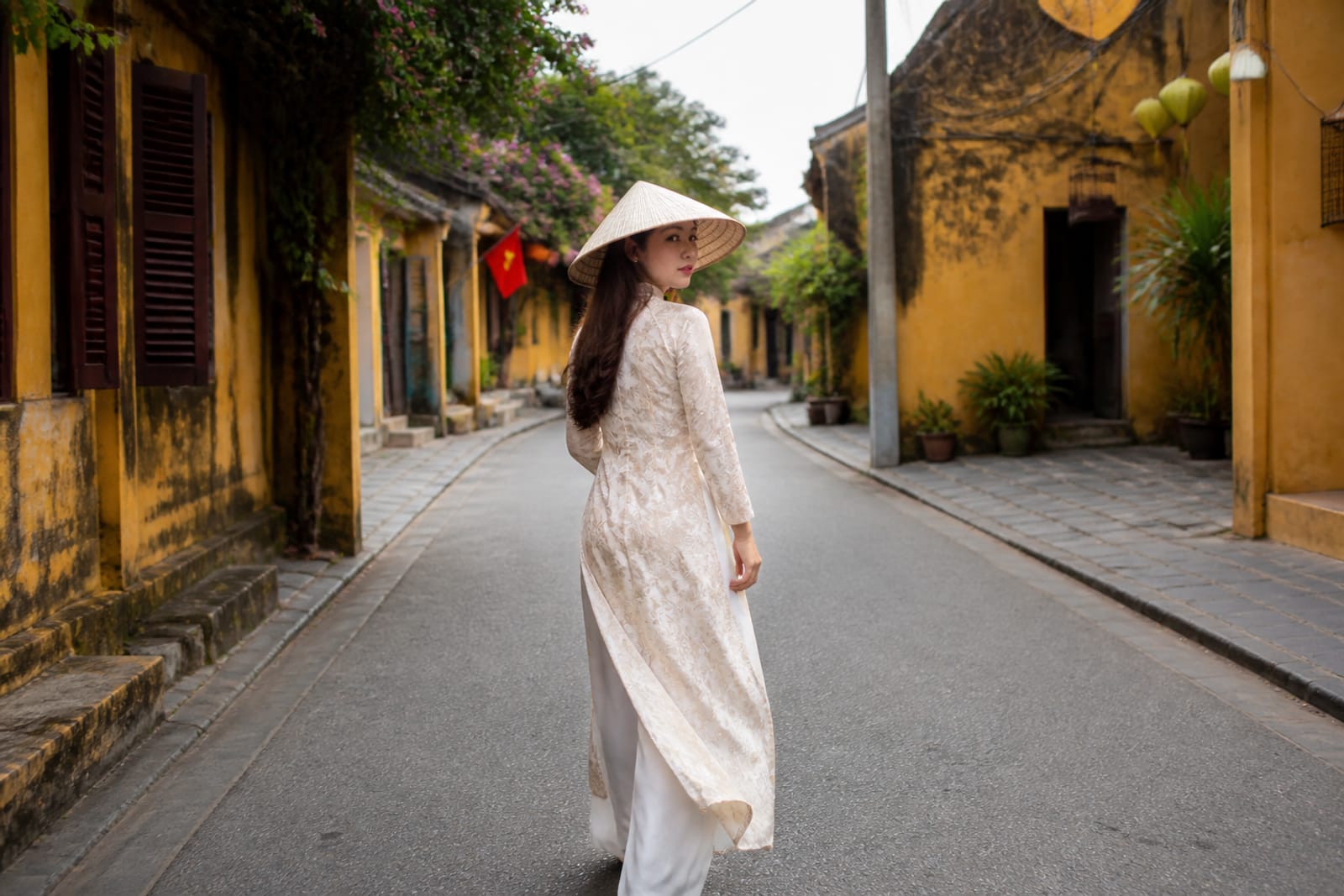
Yes. Spring light (February–April) is soft and diffuse, so pastels—pale pink, mint, soft blue, cream—photograph beautifully without oversaturation. Summer light (May–August) is intense and warm, washing out soft colors; jewel tones and saturated hues hold their depth and contrast well against bright backgrounds. Autumn light (September–November) in Vietnam is cleaner and more golden, so warm earth tones—terracotta, bronze, mustard, warm red—integrate seamlessly. Winter light (December–January) is cooler and shorter; deep, rich colors—navy, burgundy, forest green—photograph with drama and definition. We schedule most ao dai shoots in autumn and spring because the light is most forgiving, but if you're visiting in summer, choose a jewel tone or vibrant red instead of a pastel that will look faded in bright sun.
The location amplifies this. Hoi An's ancient town has warm-golden hour light in late afternoon; a gold or rust ao dai glows there, while a cool blue needs midday shooting to avoid looking muddy. Ninh Binh's karst landscape reflects green from the fields and water; warm tones and jewel greens integrate naturally, whereas pale pinks can look out of place. Ask yourself: am I shooting at golden hour (afternoon) or midday? Warm colors pop at golden hour; cool colors and neutrals work well midday.
What colors work best in Hanoi, Saigon, Hoi An, and Ninh Binh?
Hanoi (Old Quarter, French colonial streets, water views) has mixed light—urban gray stone, green trees, red-tiled roofs. Jewel tones (deep blue, emerald) and warm reds look grounded here. Pale pastels can look washed out against gray architecture. We often see guests in pale pink get overwhelmed by the urban backdrop; a saturated coral or blush works much better. Golden hour at Hoàn Kiếm Lake favors warm undertones in warm reds and golds.
Saigon (modern skyline, Saigon River, parks) mixes modern and colonial. Bright colors—red, fuchsia, jewel blue—stand out against glass and concrete. Pale colors disappear. The city heat is intense in summer, so light, breathable fabrics in jewel or warm tones work. We shoot often near the river at sunset; a warm-undertone guest in red or coral glows, while a cool undertone in blue or silver shines against the water's cool reflection.
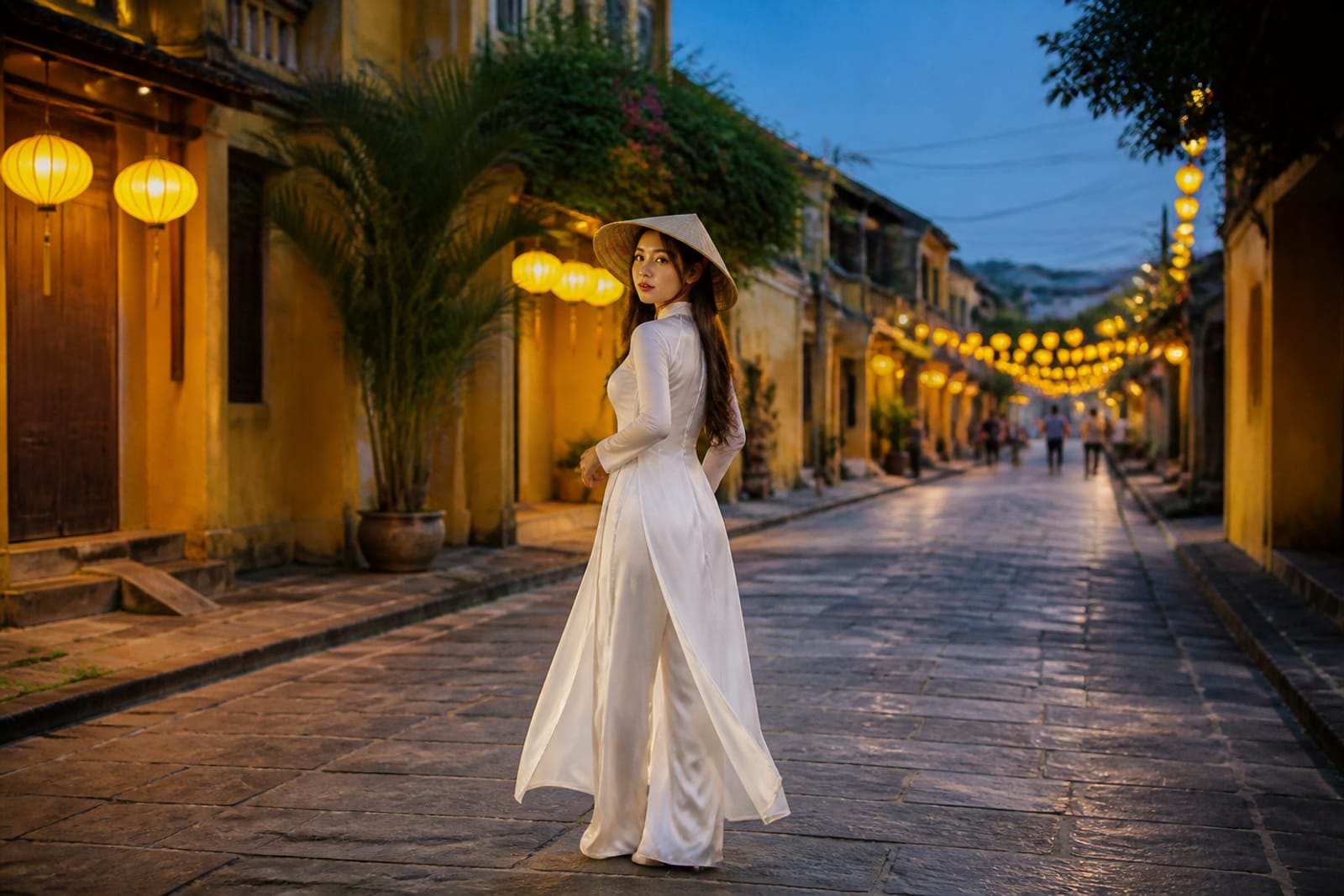
Hoi An (lanterns, ancient wooden buildings, riverside) is warm and golden. This is where warm-undertone guests truly excel. Reds, oranges, corals, golds, and warm creams sit naturally against yellow-wood buildings and lantern light. Cool colors—silvers, icy blues—feel out of place unless shot in bright midday sun away from buildings. We've noticed that in Hoi An, the location itself is so warm-toned that color choice matters less than undertone match—a warm-undertone guest in any warm color looks cohesive, while a cool-undertone guest needs a jewel tone or rich blue to feel grounded.
Ninh Binh (limestone cliffs, rice fields, water) is green and cool-toned by nature. Jewel greens, deep blues, and cool purples integrate seamlessly with the landscape. Warm reds and corals can look artificial here; we steer warm-undertone guests toward warm reds (burgundy, wine) rather than bright orange-reds, or suggest they choose a jewel tone instead. The water's cool reflection in late afternoon helps cool-undertone guests especially.
How do I choose between the main ao dai colors?
Here's a honest breakdown of what we see in real shoots:
| Color | Best Undertone | Best Season | Best Location | What Can Go Wrong |
|---|---|---|---|---|
| Red (bright, warm) | Warm | Spring, autumn, winter | Hanoi, Saigon, Hoi An | Overpowers fair skin; can look costume-y indoors |
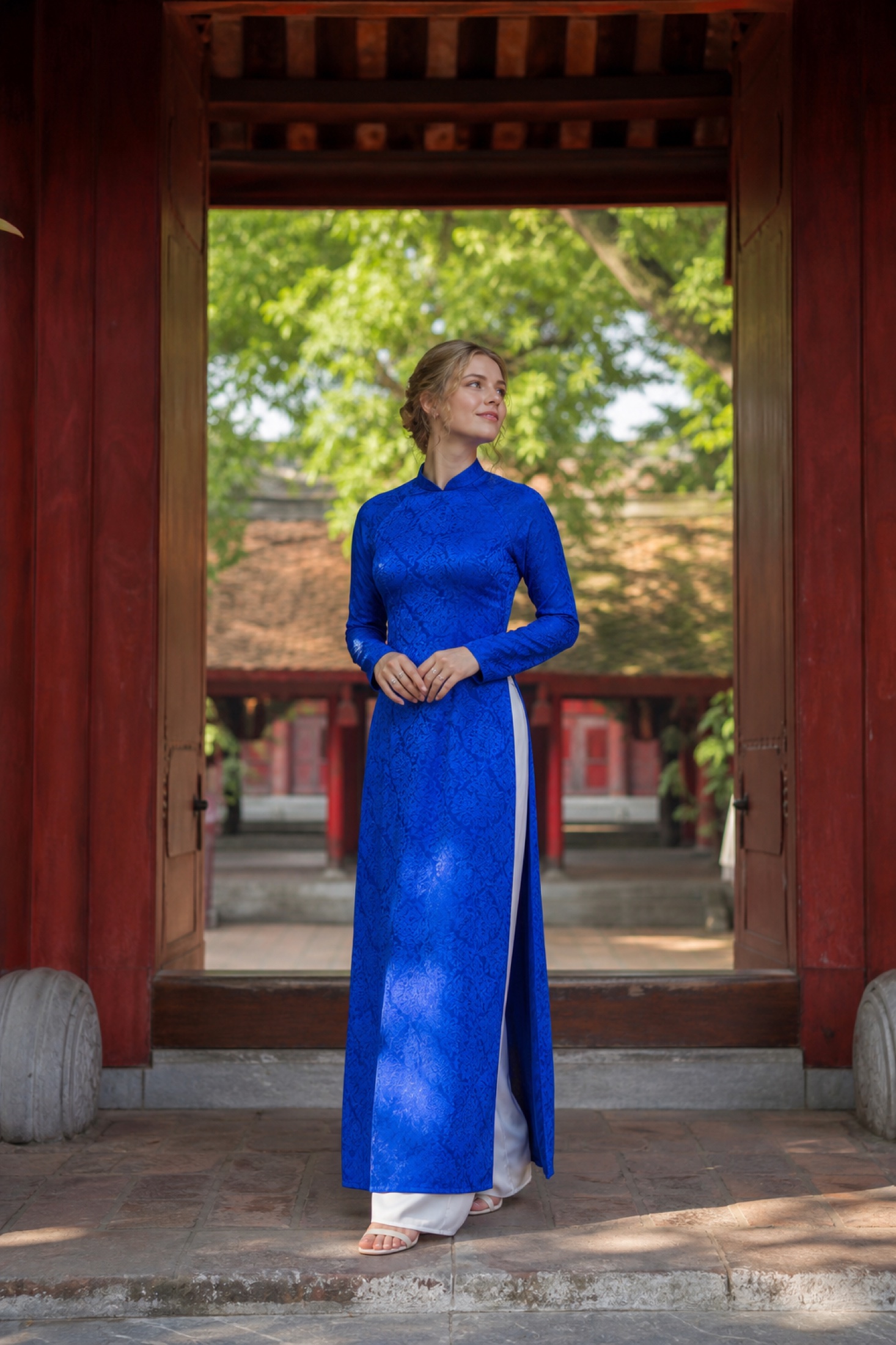
| Blue (jewel, navy, sapphire) | Cool | All seasons | All locations | Can feel cold on very fair warm-undertone skin; needs midday light |
| Green (emerald, forest) | Cool or neutral | Spring, autumn | Ninh Binh, Hoi An, parks | Pale green washes out; must be rich or jewel |
| Cream, ivory, pale pink | Warm | Spring, autumn | Hanoi indoors, studio | Stains easily; shows every camera imperfection; barely visible in bright sun |
| Peach, coral, gold | Warm | Spring, summer, autumn | Hoi An, Saigon, Hanoi | Can look washed out on cool undertones; fades in winter light |
| Purple, plum | Cool | Autumn, winter | Hanoi, Saigon | Can look theatrical; needs confident styling |
| White, off-white | Neutral | Summer, spring | Sunny locations | Shows every wrinkle and imperfection; avoid unless confident in skin texture |
The most common regret we hear: guests choose a color they love as a garment but that clashes with their undertone or the light. A cool-undertone guest in a bright warm orange ao dai in summer Hanoi sun often looks orange-tinted, not romantic. A warm-undertone guest in pale silver in winter Hanoi light looks gray and tired. The fix: choose a color you love and that matches your undertone and that suits the season and location light.
Chat with us on WhatsApp | See packages and prices on vietnamphotoshoot.com
What if my favorite color doesn't match my undertone or the season?
This is the honest answer: wear it anyway if it makes you feel confident, but book a shoot at the right time and place to make it work. If you're cool-undertone but love a warm coral, shoot in spring or autumn golden hour in Saigon or Hoi An, not in harsh summer midday sun. If you love pale pink but it's winter, shoot indoors with controlled studio lighting or at golden hour with makeup and styling that adds depth. We've pulled off "wrong" color choices dozens of times by adjusting location, time of day, or lighting setup—but it takes more skill and takes longer.
Alternatively, order two ao dai in similar styles but different colors and bring both. You'll save cost by mixing and matching across packages rather than booking two full shoots. Some guests choose red for Hanoi temple shoots and blue for river shoots in the same day—one session, two outfits, double the photos. If you're booking a couple photoshoot or pre-wedding session, this is especially smart because you want variety.
What should I check before I book?
Before you finalize your ao dai color choice and book with us, verify three things:
- Undertone match. Send us a wrist photo on WhatsApp in natural sunlight along with a photo of you in the color you're considering. Our stylists will tell you honestly if it works. This takes 2 minutes and prevents regret.
- Shoot timing. Tell us your shoot date and location (Hanoi, Saigon, Hoi An, Ninh Binh). We'll confirm whether your color will photograph well in that season and light. If it won't, we'll suggest an alternative or advise you to bring a second ao dai.
- Fabric quality and fit. Cheap or poorly tailored ao dai photographs worse than expected. Wrinkles, loose panels, and thin fabric show under camera lights. Invest in a reputable tailor or supplier. Your ao dai is the entire frame—it deserves the same attention as your makeup and hair.
If you're booking makeup and hair services with us, our stylists will see your ao dai on the day and can adjust makeup tone to complement it in real time—but color choice still matters most upfront.
---
FAQ
Can I wear the same ao dai color as my partner in a couple shoot?
Yes, if it flatters both undertones—rare but possible with jewel tones or rich reds. Most couples choose complementary colors (one warm, one cool, or one light, one dark) so they stand out individually in photos. Discuss this with our team when you book a couple photoshoot.
What if my ao dai color looks different in person than in photos?
Fabric dyes photograph differently under camera flash and natural light. Reds often look darker, blues cooler, and pastels more washed out. Always view ao dai in sunlight before purchase and take a test photo with your phone to see how it renders. If you're unsure, rent or buy locally in Vietnam so you can see it before your shoot date.
Should I match my ao dai color to my makeup or my location?
Match it to your undertone and location first; makeup adapts. A cool-undertone guest in sapphire blue will get cool-toned eyeshadow and lip color. A warm-undertone guest in red will get warm bronze and coral tones. Our makeup artists do this automatically during hotel makeup and hair services, but clarity upfront saves time.
Is there a color that works for all undertones and seasons?
Deep jewel tones—rich emerald, sapphire, and burgundy—are the most versatile because they're saturated enough to show depth in any season and complement cool undertones directly while working on warm undertones if they're rich enough. Avoid pale colors if versatility is your goal.
What's the most common ao dai color mistake you see?
Cool-undertone guests choosing warm colors because they love them as fashion items, or warm-undertone guests choosing pale colors because they think pastels are romantic. The result: they look drained in photos. Choose a color you love and that flatters you. If those conflict, prioritize undertone match and adjust styling or location instead.
Can I change my ao dai color the day of the shoot?
Only if you bring a second ao dai with you. We cannot source or alter color on shoot day. If you're uncertain, arrive early, review test shots with our team, and we'll advise on framing or lighting adjustments if needed.
Ao Dai Photoshoot
Inclusions, prices and booking are on our booking site.
FAQ
Can I wear the same ao dai color as my partner in a couple shoot?
Yes, if it flatters both undertones—rare but possible with jewel tones or rich reds. Most couples choose complementary colors (one warm, one cool, or one light, one dark) so they stand out individually in photos. Discuss this with our team when you book a [couple photoshoot](/go/couple-photoshoot).
What if my ao dai color looks different in person than in photos?
Fabric dyes photograph differently under camera flash and natural light. Reds often look darker, blues cooler, and pastels more washed out. Always view ao dai in sunlight before purchase and take a test photo with your phone to see how it renders. If you're unsure, rent or buy locally in Vietnam so you can see it before your shoot date.
Should I match my ao dai color to my makeup or my location?
Match it to your undertone and location first; makeup adapts. A cool-undertone guest in sapphire blue will get cool-toned eyeshadow and lip color. A warm-undertone guest in red will get warm bronze and coral tones. Our makeup artists do this automatically during [hotel makeup and hair services](/go/makeup-and-hair), but clarity upfront saves time.
Is there a color that works for all undertones and seasons?
Deep jewel tones—rich emerald, sapphire, and burgundy—are the most versatile because they're saturated enough to show depth in any season and complement cool undertones directly while working on warm undertones if they're rich enough. Avoid pale colors if versatility is your goal.
What's the most common ao dai color mistake you see?
Cool-undertone guests choosing warm colors because they love them as fashion items, or warm-undertone guests choosing pale colors because they think pastels are romantic. The result: they look drained in photos. Choose a color you love *and* that flatters you. If those conflict, prioritize undertone match and adjust styling or location instead.
Can I change my ao dai color the day of the shoot?
Only if you bring a second ao dai with you. We cannot source or alter color on shoot day. If you're uncertain, arrive early, review test shots with our team, and we'll advise on framing or lighting adjustments if needed.