 Cáo Studio
Home › Blog › Pre-Wedding & Elopement
How to Look Natural in Pre-Wedding Photos
By the Cáo Studio team · Hanoi & Saigon · 2026-11-01
Looking natural in pre-wedding photos means choosing soft makeup that reads on camera without feeling heavy, wearing clothes that fit your body honestly, and posing with intention rather than tension. Cáo Studio shoots in Hanoi, Saigon, Hoi An and Ninh Binh; we spend the first 15 minutes of every pre-wedding session talking through your comfort level, natural mannerisms and light-touch styling. Natural light, genuine emotion (often coaxed by having your partner make you laugh off-camera) and a photographer who knows where your angles live—not where Instagram angles live—matter most. Skip heavy contouring, mismatched foundation tone, and rigid poses borrowed from fashion editorials; instead, prep skin well, choose one or two accent colours that suit your undertone, wear fabrics that move, and stand in positions where your shoulders feel relaxed. Budget time for makeup and hair at your hotel if travel fatigue is a concern, because rushed preparation shows in the frame. Chat with us on WhatsApp
Why does heavy makeup ruin natural pre-wedding photos?
Camera sensors read foundation differently than mirrors do. Heavy or mismatched base reads flat, ages skin, and draws the eye to texture rather than expression. We ask couples to do a test shot indoors on their phone with their proposed makeup first: if you see a visible line at the jaw, if your skin looks plastic, or if pores disappear entirely, the camera will amplify that effect tenfold in natural light. Light coverage with skin-tinted concealer under the eyes and a cream blush (which photographs softer than powder) creates dimension that lasts through eight hours of shooting. On our Saigon shoots, humid air moves makeup; matte base separates by hour three. Dewy or satin finishes stay cohesive and photograph as "glowing" rather than "shiny" if you use a setting spray formulated for tropical climates. The conclusion: less base, better blending, and a finish that moves with your skin keeps you looking like yourself, not a studio version of yourself.
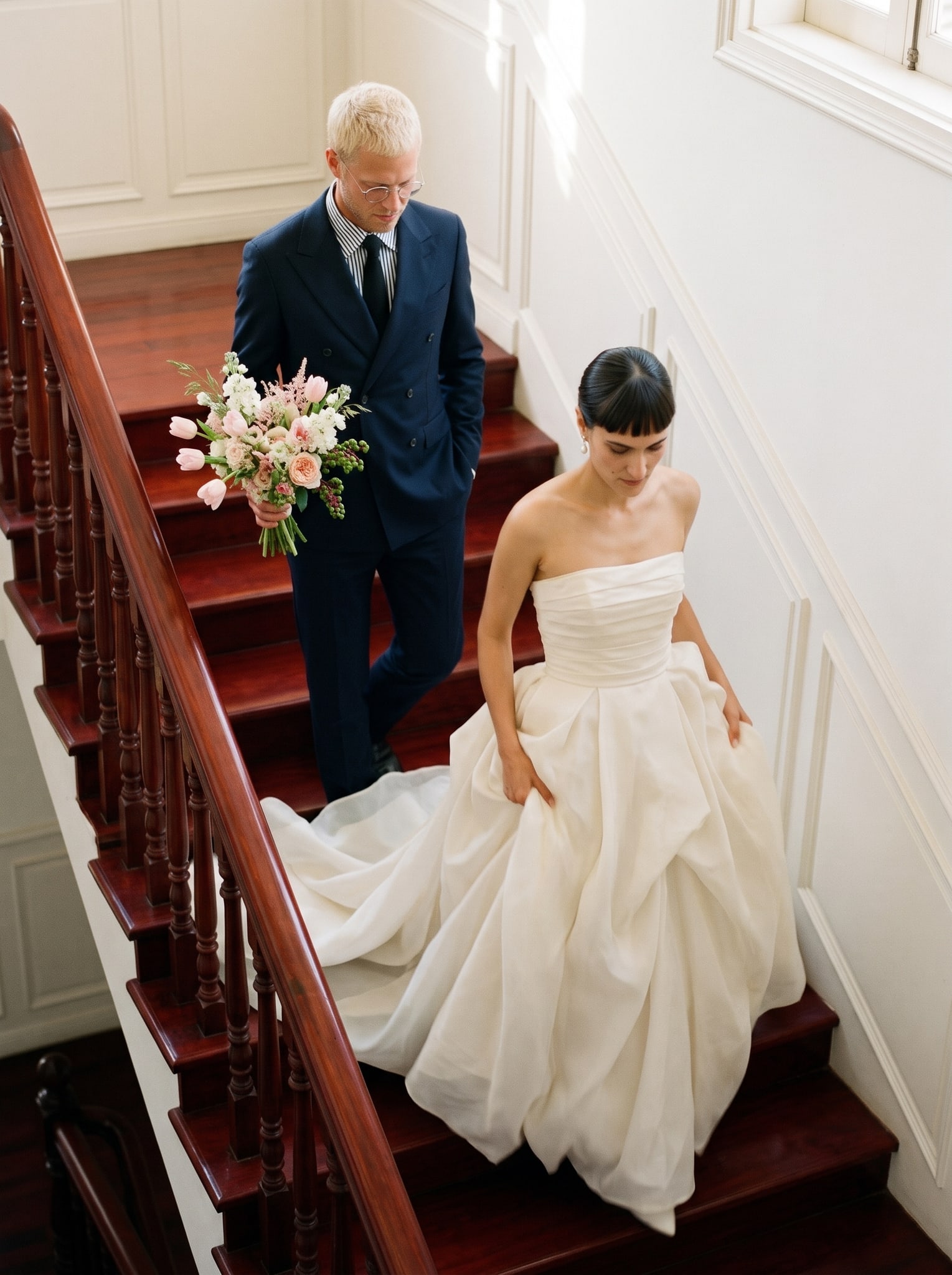
What skin prep happens before your session?
We tell clients: moisturise the morning of the shoot, exfoliate gently the night before, and skip active treatments (retinoids, acids, vitamin C serums) for three days prior. Red, irritated or over-treated skin photographs with a visible angry undertone that no concealer hides. Book makeup and hair services at least two hours before your first shot time so the artist can assess your skin in person—redness, dryness, breakouts or tension all shape the approach. Our Hanoi team carries hydrating primers and tinted moisturisers for clients whose skin reads dry on camera; if you arrive dehydrated, drink water for 30 minutes before makeup starts. Sunscreen applied four hours before shooting (not minutes before) settles into skin and won't cause flashback or white cast in photos. Clients who sleep poorly the night before have visible puffiness; ice-cold water on the face for two minutes before makeup application works, but the real fix is sleep two nights before, not one. Skin prep is invisible when done right; when skipped, it dominates every frame.
See packages and prices on vietnamphotoshoot.com
How should you position your body to avoid looking stiff?
Stiffness happens when you hold your breath or over-think angles. We cue couples to stand with one foot slightly forward (not both parallel), soften their knees, and rest their weight on their back foot; this posture looks relaxed in photos while elongating the torso. Hands matter: hands in pockets read casual, one hand on your partner's chest reads intimate, both hands at your sides reads formal. We ask couples to move between frames—walk, laugh, adjust each other's collar—rather than "hold this pose for ten shots." Movement feels natural because you are moving naturally. If you're uncomfortable with your profile, tell your photographer before the session; we'll favour your better angle without making it obvious. On our Ninh Binh shoots, we position couples with backlighting (the sun behind them) to avoid squinting and create a rim light that separates them from the background. Watch your shoulders: rolled back and down always, never hunched toward your ears. The conclusion: movement and honest posture photograph as relaxation, not perfection.
Which clothing choices photograph as natural rather than costume-like?
Fabrics that move—linen, cotton blends, silk—read alive on camera; stiff polyester reads costume. Fit matters more than label: clothes that fit your actual body (not one size too small to hide shape, not oversized to disguise it) photograph as confident. Neutral or jewel tones age better than neons; white reads pure but photographs with a blue cast if your camera doesn't white-balance correctly (test this). Avoid busy patterns (stripes, small checks, logos) which create moiré patterns on camera sensors and distract from your face. On our couple photoshoots, we ask partners to coordinate, not match: if one wears cream linen, the other might wear soft sage or warm beige. Layers (a lightweight overshirt, a scarf) give the photographer options and let you adjust comfort during the session. Shoes matter for sitting and walking shots; shoes that pinch show in your posture even if the frame cuts them off. Bring a backup outfit if you're unsure about a choice; a two-minute change mid-session costs nothing and gives you two different moods in your gallery. The conclusion: natural fabrics in colours you actually wear, fitted to your real body, photograph as timeless.
What expressions and emotions translate across the lens?
Smiles that feel genuine (often triggered by your partner's joke or the photographer asking "what made you two laugh the hardest this month?") read as joy, not performance. Closed-mouth smiles, slight smiles, and serious gazes all work if they're honest; forced teeth-baring reads false even in motion. We spend the first five minutes making couples comfortable—asking about how they met, what they're nervous about, what they're excited for—because the best frames come after conversation, not during it. Emotion follows focus: if you're thinking about how you look, that tension lives in your jaw and eyes. If you're thinking about your partner or a funny memory, that ease shows. Eyes matter most: eyes that crinkle slightly at the corners (genuine smile lines) photograph as warmth; eyes that are wide and staring photograph as anxiety. On location shoots in Hoi An's old town or Ninh Binh's limestone karsts, the environment itself softens couples; a beautiful backdrop gives your mind something to feel (awe, peace) rather than think (am I photogenic?). The conclusion: real emotion—laughter, tenderness, calm—photographs authentically because your face isn't fighting your feeling.
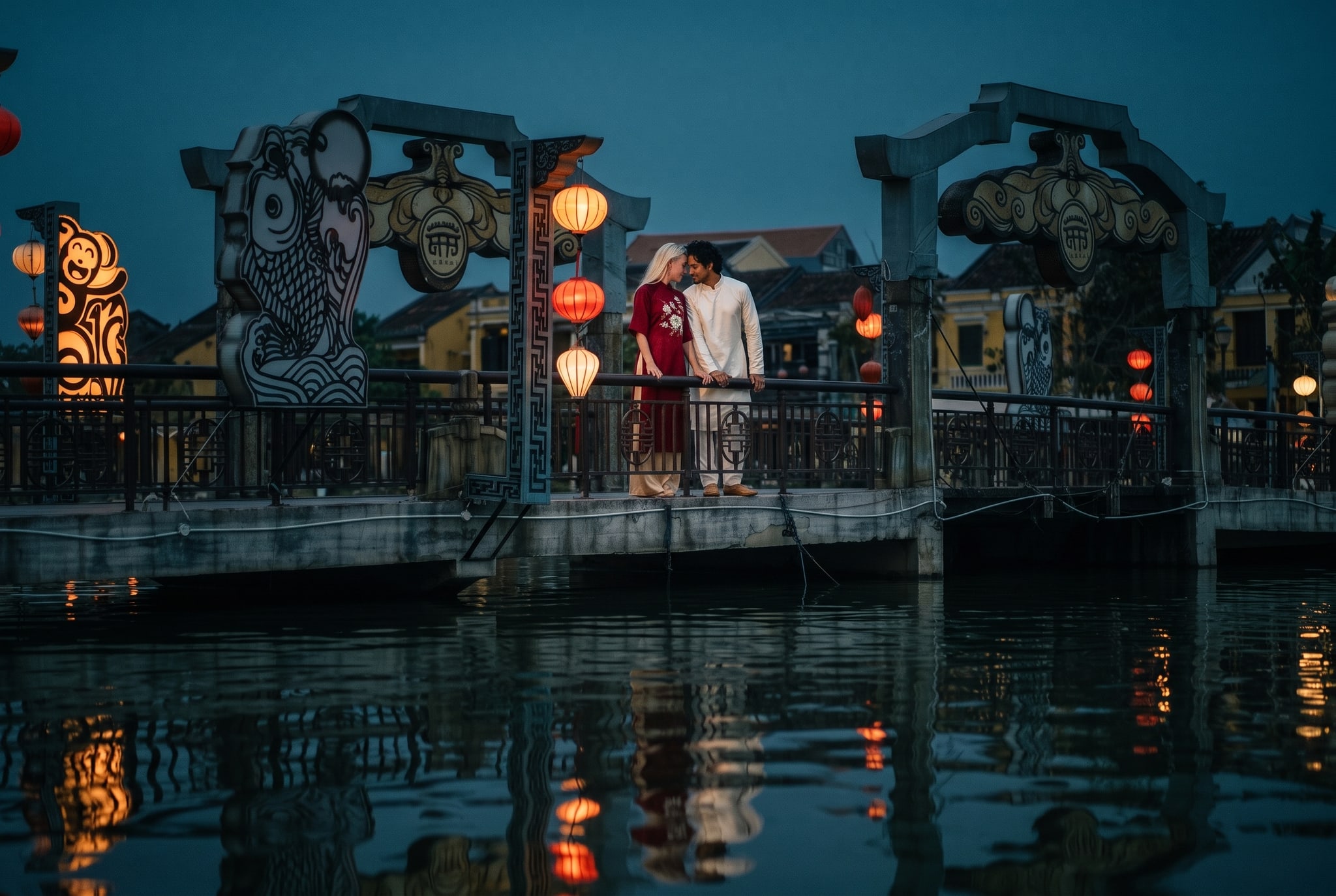
What's your honest pre-shoot checklist?
| Item | Why it matters | What to avoid |
|---|---|---|
| Hydration (water, not coffee) | Camera reads plump, glowing skin; dehydration reads dull, tired | Caffeine 90 min before; it tightens skin |
| Sleep (7+ hours, 2 nights prior) | Eyes are clear, skin is smooth, posture is upright | Late night touch-ups; fatigue shows in your face |
| Test makeup on camera | You see what the lens sees, not what the mirror shows | Guessing based on how makeup feels |
| Nail grooming (if hands visible) | Hands photograph sharply; chipped polish distracts | Overly long nails; they read costume-like in closeups |
| Hair wash 1–2 days prior | Texture and hold are natural, not freshly-styled stiff | Washing morning-of; wet hair is harder to style evenly |
| Moisturiser (no actives for 3 days) | Skin texture is even, pores are not inflamed | Trying new products day-before |
| Breakfast (balanced, light) | Blood sugar stability = steady posture and mood | Sugar crashes; they flatten your expression by hour two |
| Outfit try-on | You know fit, movement, and comfort before the session | Last-minute wardrobe panic |
| Sunscreen application (4+ hours before) | Settled into skin; no white cast or flashback | Fresh application; it creates visible sheen |
| Time buffer (arrive 20 min early) | Calm nervous system; photographer can assess lighting | Rushing; haste lives in your shoulders and jaw |
What goes wrong on set, and how do we fix it?
Makeup creases in hot weather: we carry blotting papers and a fine mist spray; a two-second touch-up between outfit changes keeps foundation seamless. Posture collapses after hour two: we remind couples to stand, shake out their legs, and take a five-minute break; sitting makes you slouch. Wind ruins hair: we pin, hairspray, and reframe—sometimes the windblown shot is the best one anyway. One partner looks more natural than the other: we adjust posing so the camera favours both equally, or we shoot one-on-one portraits first when you're fresh. Couple is nervous and stiff: we move the first 20 minutes to a quiet corner, do test shots they don't see, and save the scenic backdrop for when they're warmed up. Harsh midday light creates unflattering shadows: we shift to shade or reposition so backlighting works. On our Hanoi and Saigon shoots, we carry a small reflector to bounce light upward and soften shadows under the eyes. The lesson: things go wrong every session; a calm photographer and a flexible couple turn problems into the best frames.
What should you check before your booking?
Ask the studio whether they provide makeup and hair services or recommend a team. Clarify outfit count and location choices so you're prepared. Request a test shot (digital, nothing printed) to see how your skin tone, makeup and clothing photograph together. Confirm the photographer's style by looking at full galleries, not just highlight reels; if every photo looks identical, they're over-editing or forcing a look. Ask what happens if weather changes; studios in Hanoi and Saigon both have indoor backup spaces. Understand the timeline: first shot at 6am means you're in makeup by 5am, so book a makeup and hair session starting two hours before. Confirm whether retouching is included and how many final images you receive. Ask the photographer how they handle couples who are camera-shy; if they say "just relax," they haven't worked with nervous clients. The best studios (ours included) spend 15 minutes discussing comfort, posing fears, and what "natural" means to you, not what it means to them.
Pages from our team you may need
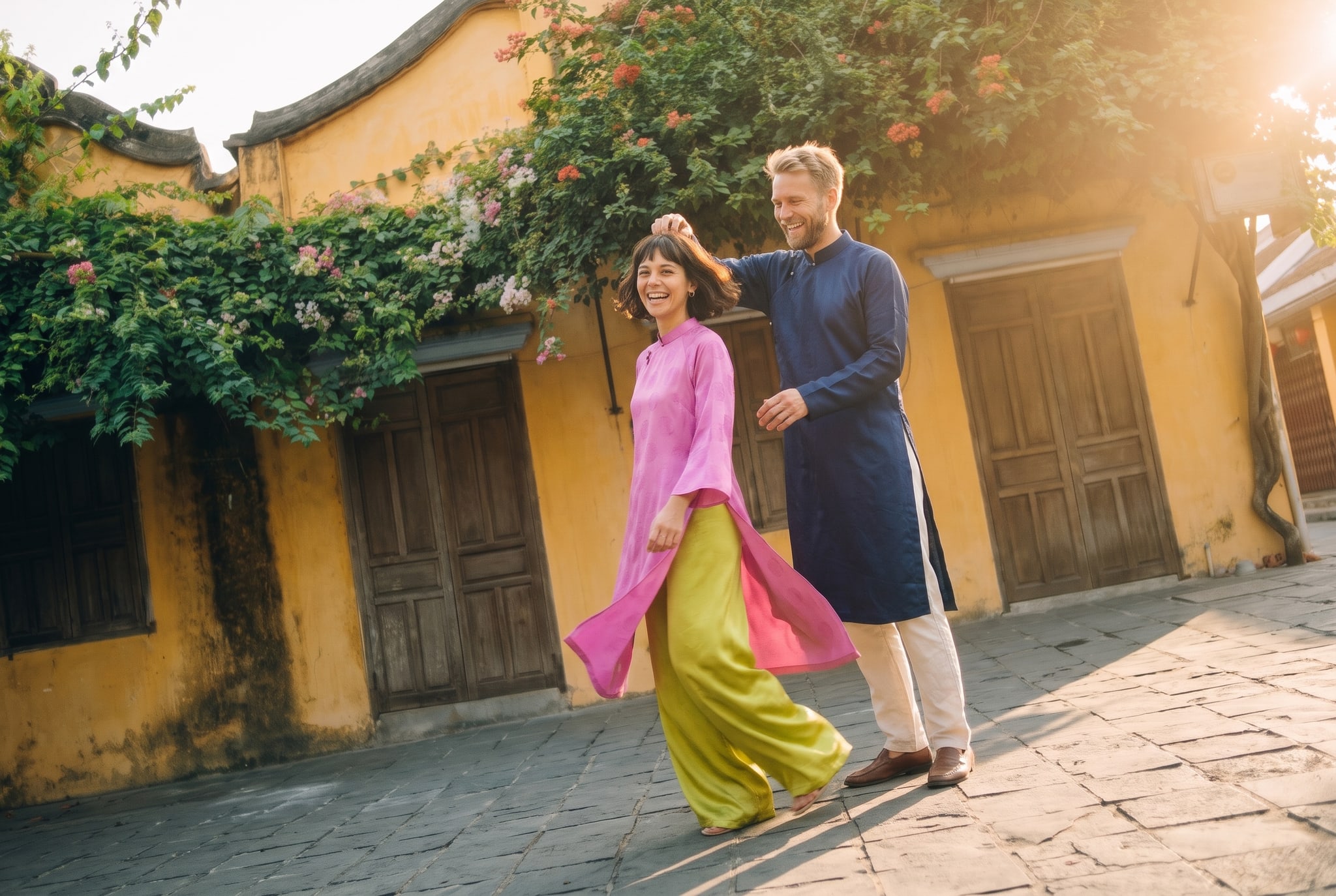
FAQ
Can I do my own makeup if I'm good at makeup normally?
Camera light behaves differently than bathroom light; foundation matches, highlight placement and colour saturation all shift. Try a test shot on your phone in natural light wearing your planned makeup. If the result looks like yourself, go for it. Most people find professional makeup on pre-wedding day removes one variable and lets them focus on being present. Our makeup team can do partial touch-ups only if you prefer, or handle the full session.
How much retouching is too much for natural-looking photos?
Retouching that removes blemishes, evens skin tone and softens pores is invisible and keeps your photos looking like you. Retouching that thins your face, changes your eye shape or removes texture entirely looks plasticky and ages poorly. Ask your photographer to show you before-and-after crops so you know their retouching philosophy before the session.
Should I tan before pre-wedding photos?
Only if you normally have a tan. Uneven or unfamiliar tan reads fake on camera and mismatches your neck or hands, which are harder to tan evenly. Your natural skin tone photographs beautifully with proper lighting and makeup; don't add complexity. If you want glow, a hydrating primer and cream blush work better than bronzer.
What if I'm camera-shy or hate how I look on camera?
Every couple we shoot says this. Tell your photographer on day one; they'll shoot more movement shots, fewer stares-at-camera frames, and position you in ways that feel comfortable. Movement-based posing (walking, laughing, adjusting each other) feels less exposed than standing still. Book a longer session so you have time to warm up before the main shots.
Can I wear something unconventional and still look natural?
Yes, if it's authentically you. Wear the outfit you'd choose for a special dinner with your partner, not an outfit you think you should wear. Unconventional reads as natural if it fits well and suits your style; it reads as costume if it's borrowed or oversized. Bring it to a test consultation so your photographer can advise on how it photographs.
How do I know if my chosen location will photograph well?
Visit it midday (or check Google Maps Street View and recent photos from other shoots). Look for even light, a background that's busy enough for depth but not so busy it competes with your faces, and space to move around safely. Ask your studio whether they've shot there before and what time of day works best. Both our Hanoi and Saigon teams know dozens of locations; we'll advise you on light and vibe during the planning call.
Pre-Wedding & Elopement
Inclusions, prices and booking are on our booking site.
FAQ
Can I do my own makeup if I'm good at makeup normally?
Camera light behaves differently than bathroom light; foundation matches, highlight placement and colour saturation all shift. Try a test shot on your phone in natural light wearing your planned makeup. If the result looks like yourself, go for it. Most people find professional makeup on pre-wedding day removes one variable and lets them focus on being present. [Our makeup team](/go/makeup-and-hair) can do partial touch-ups only if you prefer, or handle the full session.
How much retouching is too much for natural-looking photos?
Retouching that removes blemishes, evens skin tone and softens pores is invisible and keeps your photos looking like you. Retouching that thins your face, changes your eye shape or removes texture entirely looks plasticky and ages poorly. Ask your photographer to show you before-and-after crops so you know their retouching philosophy before the session.
Should I tan before pre-wedding photos?
Only if you normally have a tan. Uneven or unfamiliar tan reads fake on camera and mismatches your neck or hands, which are harder to tan evenly. Your natural skin tone photographs beautifully with proper lighting and makeup; don't add complexity. If you want glow, a hydrating primer and cream blush work better than bronzer.
What if I'm camera-shy or hate how I look on camera?
Every couple we shoot says this. Tell your photographer on day one; they'll shoot more movement shots, fewer stares-at-camera frames, and position you in ways that feel comfortable. Movement-based posing (walking, laughing, adjusting each other) feels less exposed than standing still. Book a longer session so you have time to warm up before the main shots.
Can I wear something unconventional and still look natural?
Yes, if it's authentically you. Wear the outfit you'd choose for a special dinner with your partner, not an outfit you think you *should* wear. Unconventional reads as natural if it fits well and suits your style; it reads as costume if it's borrowed or oversized. Bring it to a test consultation so your photographer can advise on how it photographs.
How do I know if my chosen location will photograph well?
Visit it midday (or check Google Maps Street View and recent photos from other shoots). Look for even light, a background that's busy enough for depth but not so busy it competes with your faces, and space to move around safely. Ask your studio whether they've shot there before and what time of day works best. Both our [Hanoi](/go/hanoi) and [Saigon](/go/saigon) teams know dozens of locations; we'll advise you on light and vibe during the planning call.
More from the team
Boho pre-wedding photoshoot in Vietnam: Hanoi, Saigon, Hoi An
Boho pre-wedding shoots mix romantic, free-spirited aesthetics with Vietnam's landscapes and heritage sites. We run full-day sessions in three cities, handling styling, makeup, location scouts and edits.
Avoid crowds at Hoang Su Phi rice terraces: timing for wedding shoots
Hoang Su Phi's terraced landscape draws couples and tour buses in equal measure. We show how to shoot there alone, when to arrive, and what to arrange with us before you go.
Photography rules at Con Dao beaches: permits, drones and what to check
Con Dao's beaches demand prep before you shoot—permits, drone zones and tide timing all affect your day. We share what the Cáo Studio team verifies on every booking.