 Cáo Studio
Home › Blog › Vacation & Solo Photoshoot
How to Look Natural in Travel Photos
By the Cáo Studio team · Hanoi & Saigon · 2026-11-01
Looking natural in travel photos means relaxing your face before the shutter opens, shifting your weight to one leg to avoid a flat stance, and letting your eyes move toward the light rather than staring into the lens. Cáo Studio runs vacation shoots across Hanoi, Saigon, Hoi An, and Ninh Binh where we spend 2–4 hours moving through a single location with you, shooting candid moments between posed frames. The difference between stiff and genuine comes down to breathing—we always ask guests to exhale, relax their jaw, and think of a specific memory rather than "smile for the camera." Your hands should move (holding a hat, touching fabric, walking naturally) because still hands draw attention. We avoid over-bright midday sun by timing shoots for early morning or late afternoon; if clouds roll in, we use them as a softbox. Packages include edited digital files within 7–10 days, and the team works one-on-one to show you micro-adjustments (chin angle, shoulder drop, head tilt) that feel invisible but transform the final image. Chat with us on WhatsApp
How do we position your body without looking posed?
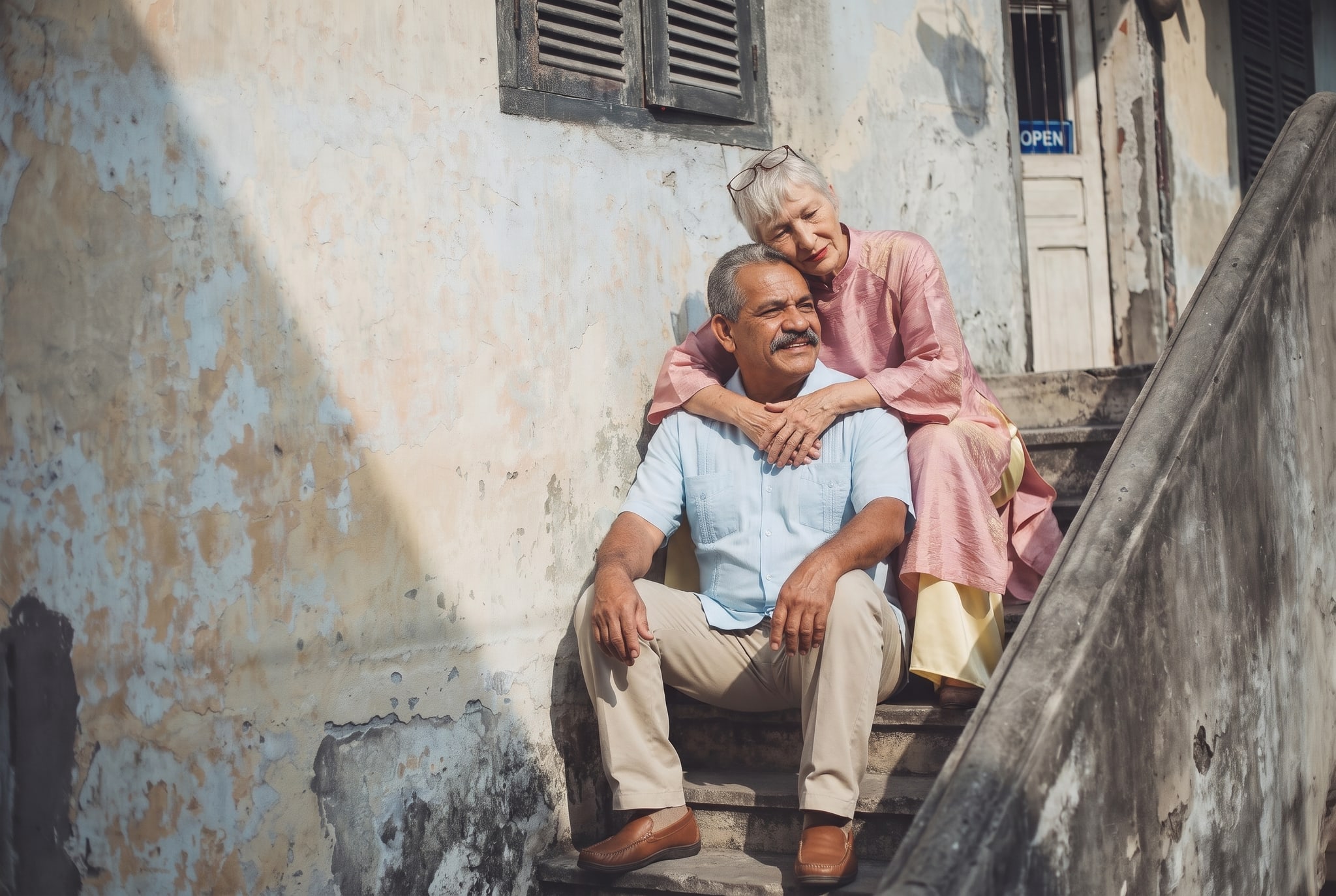
Weight shift is the invisible trick. We ask you to step slightly forward and place 70% of your weight on your back foot, letting your front knee relax. This creates a natural line from hip to shoulder and stops the "passport photo" flatness. Your shoulders should sit back and drop away from your ears—tension reads instantly on camera. When standing beside a friend or partner, we angle both of you toward the light source at 45 degrees rather than square to the camera; it slims the frame and feels less formal. If you're sitting, we ask you to perch on the edge of a chair or wall rather than settle into it, which opens your chest and lengthens your neck. Based on hundreds of shoots with international travelers, the moment someone stops thinking about their legs or stomach and starts thinking about their breath, the image shifts.
Why does natural light matter more than a perfect backdrop?
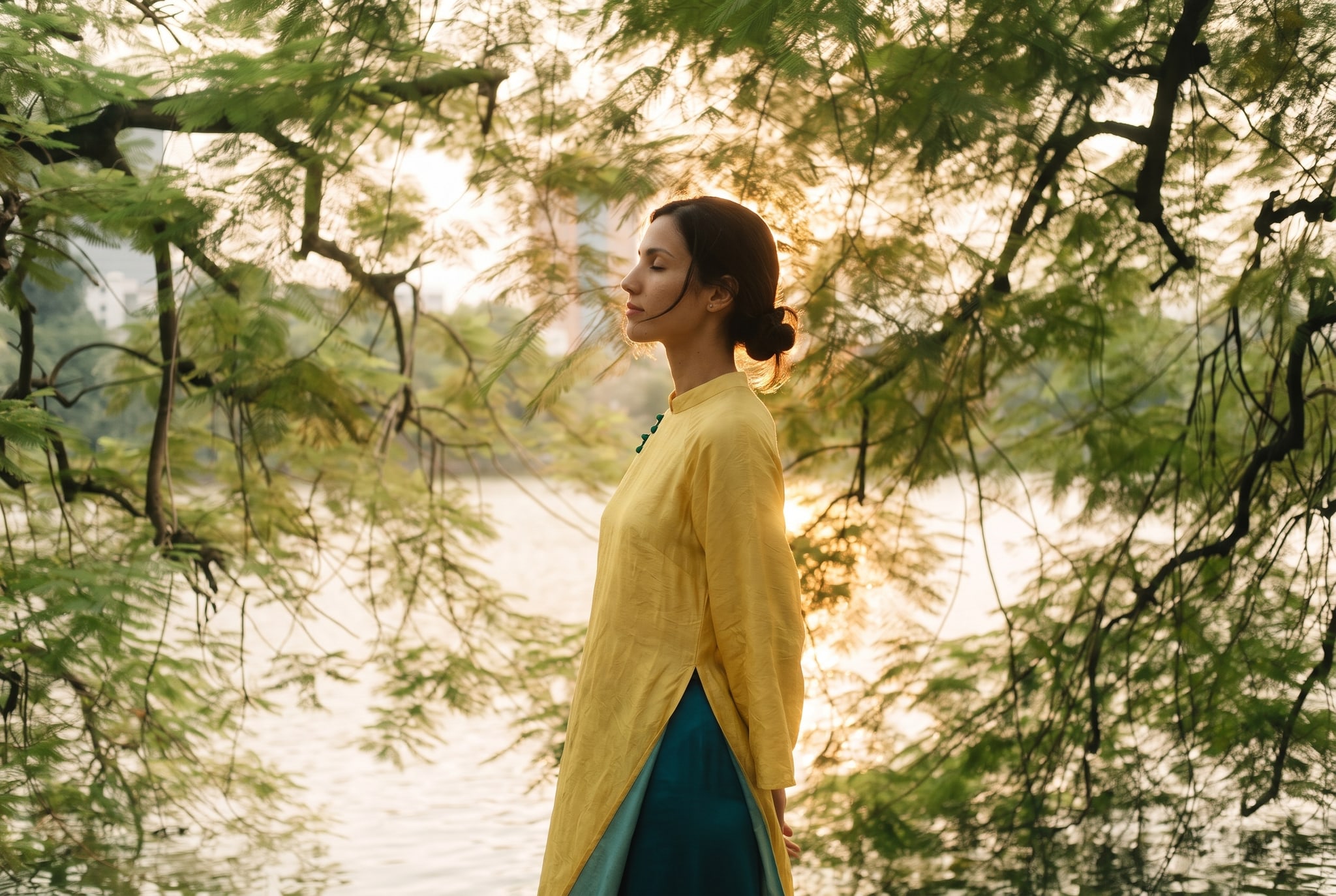
Bad light ruins a good location; good light saves a plain one. We choose shoot times (sunrise 6–7 a.m., golden hour 4–6 p.m.) because the sun sits low and wraps light around your face instead of flattening it from above. Harsh noon sun creates hard shadows under the eyes and nose; we solve this by moving into shade, using a building wall as a reflector, or waiting 90 minutes. Overcast days are a gift—clouds diffuse light evenly across your face, so no squinting, no shadows, and your skin looks even. We've shot in the rain on Lake Hoàn Kiếm and in harsh afternoon heat near the Hoan Kiem Lake area; the light direction and quality matter more than the weather. A mediocre location with directional morning light beats a famous spot at noon. We always ask guests to face the light source with the sun hitting one side of their face (not directly overhead), which defines your features and makes eyes sparkle naturally.
What do you do with your hands and why does it matter?
Still hands look uncertain. We give hands a job: hold a camera, adjust your áo dài fabric, touch a doorframe, walk while trailing fingers along a wall, or hold your partner's hand. These micro-actions make your posture confident and give your arms a natural place to be. Crossed arms feel defensive; hands in pockets hide half your silhouette. If you're standing, one hand can rest on your hip (elbow bent, not locked) or touch your collarbone—both open your chest. When sitting, hands in your lap feel heavy; instead, we rest one hand on your thigh or let it fall naturally beside you. The rule: if your hand isn't doing something, it looks like you don't know what to do with it. We've noticed guests from Australia, Canada, and the US often want to cross their arms for comfort—we remind them that crossed arms compress the torso and narrow the shoulders. A simple walk-and-talk moment (moving toward the camera while speaking) solves this instantly.
See packages and prices on vietnamphotoshoot.com
How do we handle difficult emotions and forced smiles?
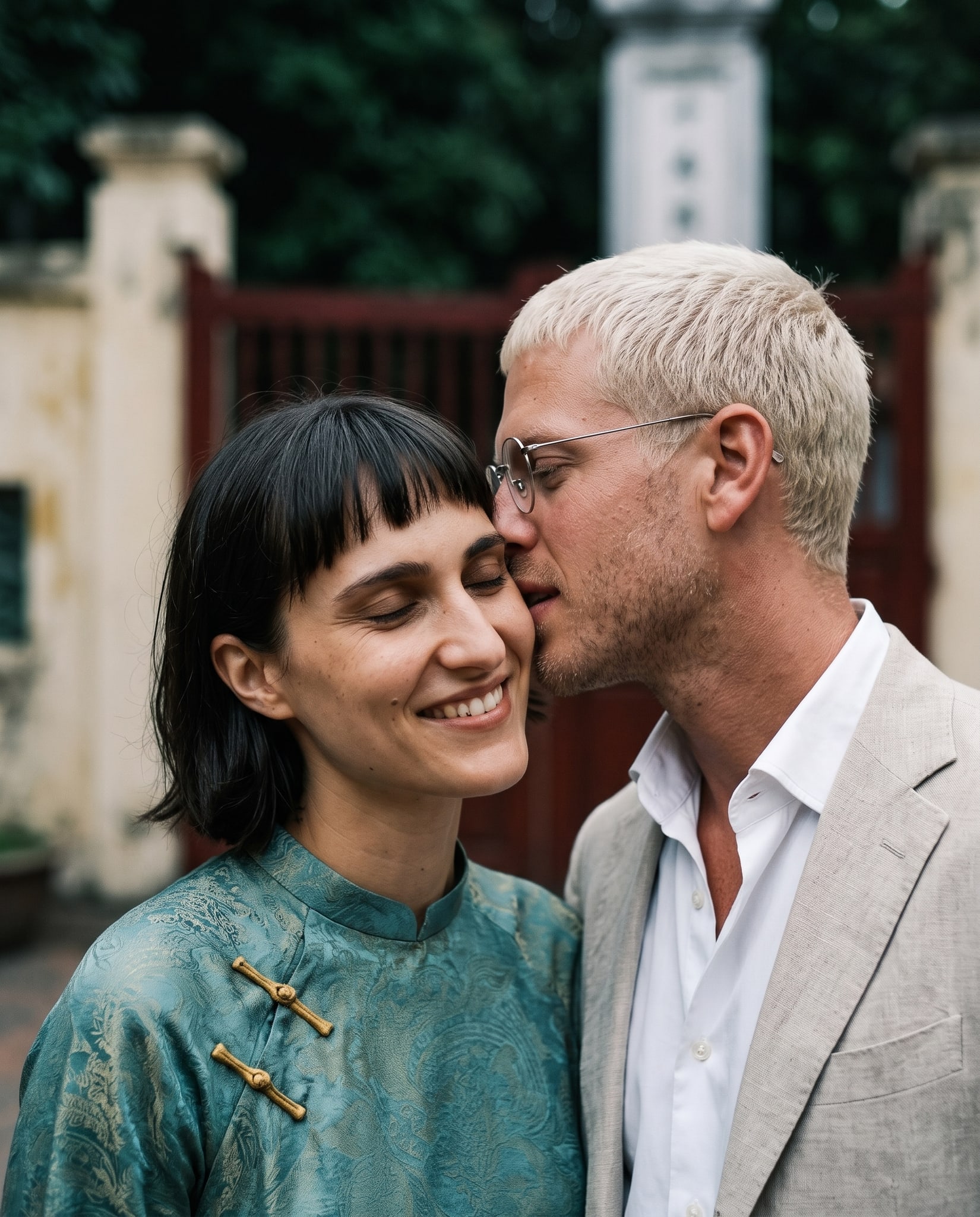
A smile held for 3 seconds reads as fake. We ask you to relax your mouth between shots, then give a real direction—"think of someone you love" or "remember a funny moment from this trip"—wait for the feeling to land, then shoot. The smile that arrives naturally, after emotion, lasts 2–3 frames and looks lived-in. If you're someone who doesn't smile wide (many guests aren't), we shoot more serious, pensive frames instead; a thoughtful gaze often photographs better than a grin. We've found that laughing—actual laughter, not posed—produces the best frames because your whole face moves and you can't fake the eye crinkle. During [couple photoshoot](link text) sessions, we create moments: hold hands and walk, look at each other and laugh, then look at the camera. The emotion builds naturally instead of starting from zero. If you're nervous, we shoot candid frames first (you don't even know we're shooting) so you relax into the camera before we ask for direct frames. This order—candid, then posed—flips the usual tension.
What changes when you shoot in different Vietnamese locations?
Hanoi's Old Quarter offers narrow streets, arched windows, and a grid pattern that frames subjects naturally; we shoot here early before crowds. Cáo Studio Hanoi starts shoots at 5:45 a.m. because motorbikes fill these streets by 7 a.m. Saigon's Ben Thanh Market and riverside (District 1) give us dense textures and water reflections; we've learned to position you between stalls or against the river so the background moves but doesn't compete. Hoi An's lantern-lit streets work magic at dusk—soft, warm light bounces off yellow walls, and tourists thin out by 6 p.m. Ninh Binh's limestone karsts (Tam Coc, Mua) offer dramatic vertical lines, but the midday heat is brutal; we always finish shoots by noon there. Each location has a "golden hour"—for water locations, 30 minutes before sunset when light sits just above the water. For mountain areas, early morning catches mist. We adjust poses based on geography: in tight alleys, we use depth (one person close, one distant) to add dimension; at open viewpoints, we frame smaller figures against big landscape. Your outfit color matters by region—bright colors pop against Hoi An's neutral walls; pastels fade into them.
Comparison table: When to book what type of shoot for natural results
| Shoot type | Who it's for | Duration | Best light window | Why it works for natural photos |
|---|---|---|---|---|
| Vacation photoshoot | Solo travelers, friends, first-time visitors | 2–4 hours | Early morning or late afternoon | One location, relaxed pace, candid + posed mix |
| Couple photoshoot | Partners, newlyweds, anniversary | 3–4 hours | Golden hour (4–6 p.m.) | Built-in interaction, emotion-led poses |
| Pre-wedding photoshoot | Engaged couples | 4–6 hours, two locations | Sunrise + golden hour | Story arc, outfit changes, authentic connection |
| Family photoshoot | Multi-generational groups | 2–3 hours | Mid-morning or late afternoon | Kids relax faster in shorter sessions; candid moments between family interactions |
| Makeup and hair at your hotel | Anyone wanting professional prep | 1.5–2 hours | Any time | Natural makeup enhances features without looking done; photos feel like "you, but better" |
What to check before you book your shoot
Location research. Visit your chosen spot at your planned shoot time. Watch shadows, foot traffic, and light angle. Send photos to our team on WhatsApp; we'll advise if timing is ideal or if we should shift 30 minutes earlier.
Outfit choice. Bring one neutral, one colorful, one outfit that means something to you (a dress from home, a family piece). Avoid bold logos, busy patterns, and all white (it overexposes). Layers give us options if weather shifts.
Arrival 15 minutes early. We use the first 10 minutes to scout angles, test light, and let you settle. Guests who rush feel it in frame one.
Bring backup shoes. Hanoi's Old Quarter has uneven tiles; Hoi An's streets flood in rain; Ninh Binh trails are muddy after weather. A second pair means we never lose momentum.
Hydration. Four hours of shooting in 30°C heat dehydrates fast. Carry water and electrolytes. A hydrated face photographs fresher; dehydration reads as exhaustion.
Hair and skin prep the night before. Wash hair 12 hours before the shoot so it's not greasy but still has natural body. Sunscreen daily for a week before (no tan lines, even tone). Moisturize morning-of so skin glows without shine.
See packages and prices on vietnamphotoshoot.com
FAQ
Why do some travelers' vacation photos look candid and others look stiff, even at the same location?
The difference is breathing and micro-movement. We ask guests to exhale before each shot, relax their jaw, and let their eyes shift naturally. Stiff shots come from holding your breath and staring. Candid light also matters—morning or late-day sun wraps around the face, making you look relaxed. Harsh noon light tenses everything.
How do you deal with people who say "I'm not photogenic"?
Almost no one is truly unphotogenic; they've just never been posed correctly. We shoot more candid frames first (you're not expecting the camera) and find your best angles: which side of your face catches light better, whether you're a closed-mouth or open-mouth smiler, if you photograph better when moving or still. By frame 50, you've relaxed and found your rhythm.
Should we smile big or keep a neutral expression?
Neither forced. A real smile (after a genuine thought or laugh) lasts 2–3 frames and looks alive. A forced smile holds too long and reads fake. Many guests photograph better with a soft, knowing expression—not stern, but not grinning. We shoot both and you choose in the edit.
How do outfit colors affect looking natural in photos?
Bright, saturated colors (jewel tones, primary colors) pop and feel intentional; pastels and neutrals feel softer and age-neutral. Avoid neons (they overexpose) and all white (camera struggles with exposure). For Hoi An's warm, neutral backdrops, vibrant colors sing. For modern urban areas, neutrals with one statement piece work. Layers let us adjust—remove a jacket to shift the color balance.
What's the biggest mistake travelers make when getting vacation photos taken?
Overthinking. The moment you start worrying about how you look, your shoulders tense, your smile dies, and your eyes stop connecting. We combat this by moving fast between frames, chatting about your trip, and shooting candids while you're in conversation. The best photos come when you've forgotten the camera is there.
Can professional makeup make vacation photos look more natural, not less?
Yes. Professional makeup enhances your features (smooths uneven skin, defines eyes, brings color to lips) without looking applied. We offer makeup and hair service at your hotel that takes 1.5–2 hours and uses Vietnamese makeup artists trained in subtle, travel-appropriate looks—no heavy foundation, no dramatic contouring, just you with better skin. You'll look like yourself, but rested and glowing.
Vacation & Solo Photoshoot
Inclusions, prices and booking are on our booking site.
FAQ
Why do some travelers' vacation photos look candid and others look stiff, even at the same location?
The difference is breathing and micro-movement. We ask guests to exhale before each shot, relax their jaw, and let their eyes shift naturally. Stiff shots come from holding your breath and staring. Candid light also matters—morning or late-day sun wraps around the face, making you look relaxed. Harsh noon light tenses everything.
How do you deal with people who say "I'm not photogenic"?
Almost no one is truly unphotogenic; they've just never been posed correctly. We shoot more candid frames first (you're not expecting the camera) and find your best angles: which side of your face catches light better, whether you're a closed-mouth or open-mouth smiler, if you photograph better when moving or still. By frame 50, you've relaxed and found your rhythm.
Should we smile big or keep a neutral expression?
Neither forced. A real smile (after a genuine thought or laugh) lasts 2–3 frames and looks alive. A forced smile holds too long and reads fake. Many guests photograph better with a soft, knowing expression—not stern, but not grinning. We shoot both and you choose in the edit.
How do outfit colors affect looking natural in photos?
Bright, saturated colors (jewel tones, primary colors) pop and feel intentional; pastels and neutrals feel softer and age-neutral. Avoid neons (they overexpose) and all white (camera struggles with exposure). For Hoi An's warm, neutral backdrops, vibrant colors sing. For modern urban areas, neutrals with one statement piece work. Layers let us adjust—remove a jacket to shift the color balance.
What's the biggest mistake travelers make when getting vacation photos taken?
Overthinking. The moment you start worrying about how you look, your shoulders tense, your smile dies, and your eyes stop connecting. We combat this by moving fast between frames, chatting about your trip, and shooting candids while you're in conversation. The best photos come when you've forgotten the camera is there.
Can professional makeup make vacation photos look more natural, not less?
Yes. Professional makeup enhances your features (smooths uneven skin, defines eyes, brings color to lips) without looking applied. We offer [makeup and hair service at your hotel](go/makeup-and-hair) that takes 1.5–2 hours and uses Vietnamese makeup artists trained in subtle, travel-appropriate looks—no heavy foundation, no dramatic contouring, just you with better skin. You'll look like yourself, but rested and glowing.
More from the team
Honeymoon Photoshoot in Hoi An: What Our Team Sees on Set
Hoi An draws newlyweds for its lantern-lit old town and riverbank light. We've shot hundreds of couples there—here's what actually happens during your session, hour by hour, and how to choose between what we offer.
Nhat Tan Peach Blossom Gardens Photoshoot: What We Book
Nhat Tan peach blossoms peak for just three weeks each January–February. We run morning sessions there to beat tourist crowds and capture soft light—here's how our studio plans them and what actually happens on the ground.
Truc Bach Lake Photoshoot: What to Book at Cáo Studio
Truc Bach Lake is one of Hanoi's most photographed water landmarks. We run sessions there 3–4 times weekly, and share how to get the best light, what to wear, and what actually happens during a shoot.