 Cáo Studio
Home › Blog › Pre-Wedding & Elopement
Is Cua Dai Beach good for pre-wedding photos? Pros, cons and alternatives
By the Cáo Studio team · Hanoi & Saigon · 2026-11-04
Cua Dai Beach, 5 km from Hoi An town, is good for pre-wedding photos if you shoot October to March during late afternoon (4–5:30 pm) when sunlight hits the water at 40–50° angle and coconut trees cast directional shade. The beach is tourist-heavy midday, crowds thin by 4 pm. Sand is compact, waves moderate. Rain risk rises June to September; November to February sees occasional rough swells that force cancellation. We shoot here 2–3 times per month as part of pre-wedding and elopement packages, but always have Cua Dai alternate beaches (An Bang, Non Nuoc) booked in case weather fails. Couples often add a second location—temple, rice field, lantern town—in the same day. Ask us for a quote on WhatsApp; typical combined sessions start at venue + beach combinations. Chat with us on WhatsApp
What does Cua Dai offer that other Hoi An beaches don't?
Cua Dai has two features most competitors lack: dense casuarina (pine-like) trees in a north-south line that create natural shade corridors, and gentle gradient sand that doesn't drop off sharply at the waterline. We use the trees for rim-lit backlit shots—couple silhouettes with tree canopy framing—which work best when sun is 30–40° above horizon (4–5 pm in dry season). Other Hoi An beaches (An Bang to the north, Non Nuoc further south) lack this tree geometry. But tree shadows also mean golden light is available for only 45–60 minutes; if you arrive at 4:45 pm instead of 4 pm, you miss the window. Monsoon months (May–September) bring 2–3 meter swells that churn sand and create unsafe currents, forcing us to reschedule entirely.
See packages and prices on vietnamphotoshoot.com
When does monsoon risk actually stop couples from shooting here?
June to September is high-season for the Indian Ocean monsoon on Hoi An's coast. Between mid-July and late August, wind gusts exceed 25 knots on average; waves regularly reach 1.5–2 meters. We check Windy.com and Surfline at 6 am the day before any Cua Dai booking—if swell forecast shows >1.5m waves at 8 am or wind >20 knots by 3 pm, we message the couple immediately and offer An Bang (slightly more sheltered) or Non Nuoc (further south, calmer). In 2024 and 2025, we had to reschedule 3 out of 12 monsoon-season Cua Dai sessions; all were rebooked within 5 days at the same location with better conditions. October through March, cancellations drop to 1 in 25 shoots. Spring (February–March) brings occasional overcast skies, but rarely blocks the session entirely.
How do we manage the crowd and tour-bus chaos?
Cua Dai gets 300–400 day-trippers on weekends, rising to 500+ during Vietnamese holidays. Most congregate between 9 am and 2 pm near the beach entrance. We always schedule couples for 4–5:30 pm (off-peak) and arrive by 3:45 pm to scout positions and watch light direction. By 4 pm, tour buses have left; the beach empties to 30–50 people. We position the couple 200–300 meters south of the main access point, using wide-angle framing so background bodies are small and soft-focused. On rare weekend mornings when a couple requests 10–11 am (because of flights or family schedules), we move to Non Nuoc Beach instead—it's 15 km from town, rarely crowded, but lacks Cua Dai's tree canopy. We've learned not to promise 100% empty-beach shots at Cua Dai during peak hours; honesty about trade-offs builds trust.
What's the real difference between Cua Dai, An Bang, and Non Nuoco for couples choosing locations?
| Beach | Best for | Crowd level 4–5 pm | Tree/shade | Season risk | Travel from Hoi An |
|---|---|---|---|---|---|
| Cua Dai | Rim-lit, backlit silhouettes; sunset drama | Low | Dense casuarina line | High Jun–Aug | 5 km, 10 min |
| An Bang | Soft golden reflections; fewer logistics | Very low | Scattered palms | Moderate Jun–Aug | 8 km, 15 min |
| Non Nuoc | Wide-angle landscape; minimalist feel | Minimal | None; open sand | Low Jun–Aug | 15 km, 25 min |
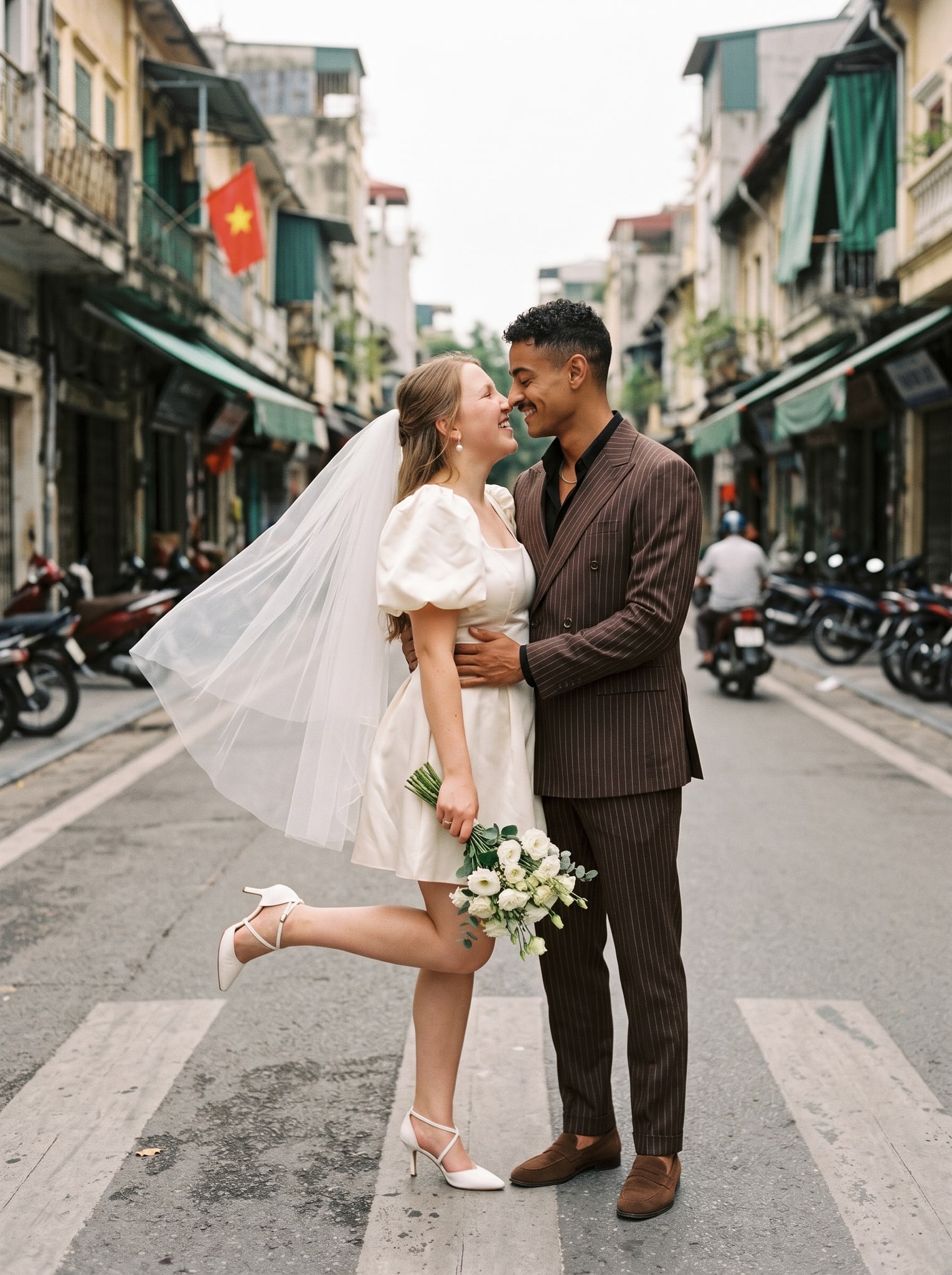
We suggest Cua Dai for couples who want moody, directional light and don't mind one-location depth; An Bang for couples who want a 2–3 location day (beach + temple + lantern town) without long travel; Non Nuoc for couples prioritizing seclusion and open-sky aesthetics. On package deals, many couples book pre-wedding packages that include two locations—e.g., 1.5 hours at Cua Dai beach, 1.5 hours at a lantern street in Hoi An old town—in one sunset session.
What happens on the day if weather goes wrong, and when do we cancel?
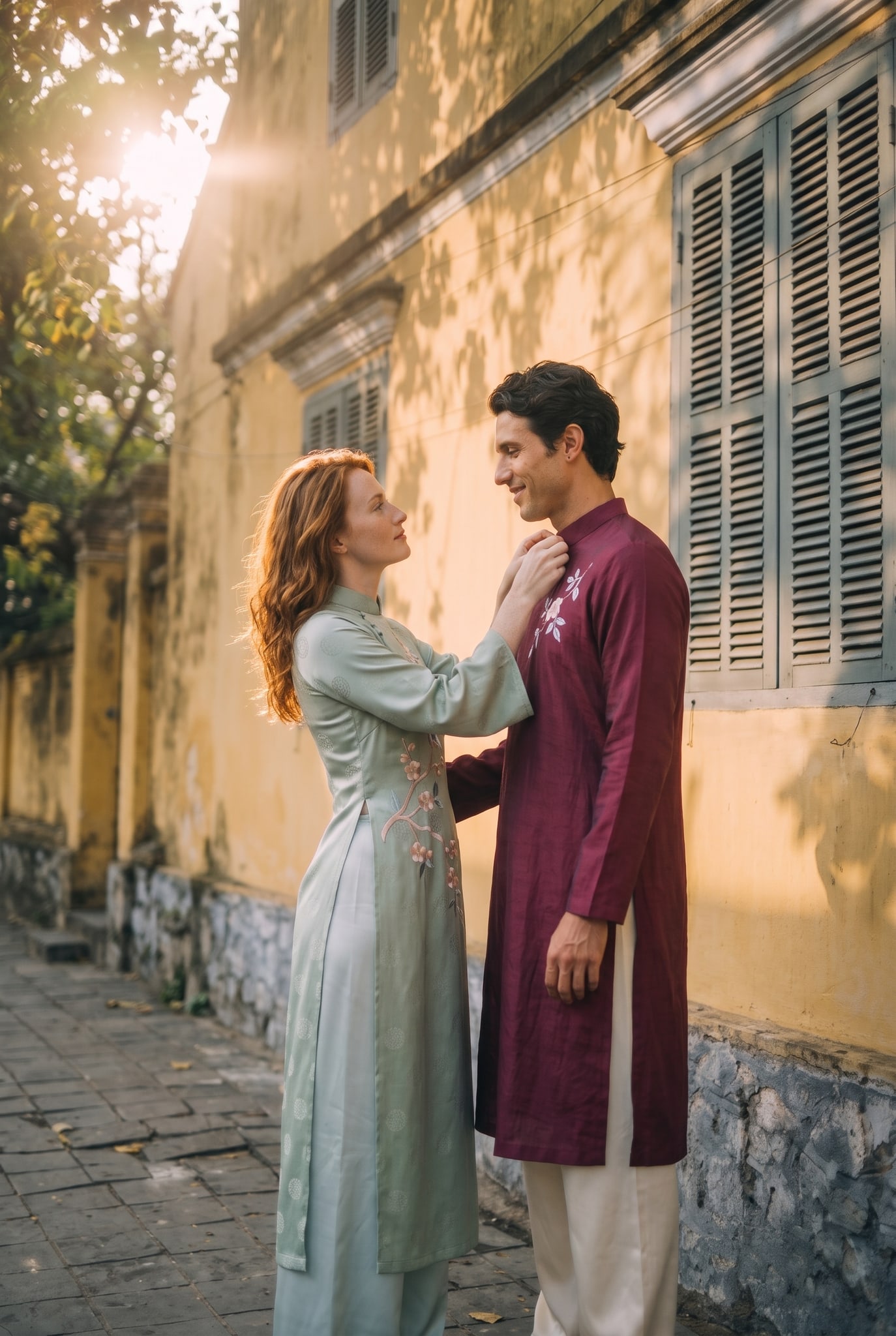
We shoot at Cua Dai roughly 14–16 times per month across our Hanoi and Saigon teams' combined bookings; about 12 are in dry season (October–March). Rain cancellation rate: <1%. Wind/swell cancellations: 4–6% in dry season, 15–20% in monsoon. Our process: we check the forecast at 6 am day-of and again at 2 pm. If wind is >25 knots or swell >1.5m at shoot time, we text the couple by noon with two options—reschedule to An Bang (same price, shorter trip) or move to a temple or rice-field concept shoot (different aesthetic, same timing). We do not charge a reshoot fee for weather cancellations. We've had couples ask us to shoot in rain; we ask them to reconsider—wet sand turns dark, reflections disappear, and it's unsafe for stylists and equipment. Once, a couple insisted; the couple's ao dai became waterlogged and the mood collapsed. We now show photos of rainy beach shots during the WhatsApp pre-call, and most decline.
Should we add other Hoi An locations to our pre-wedding day, or stay at the beach?
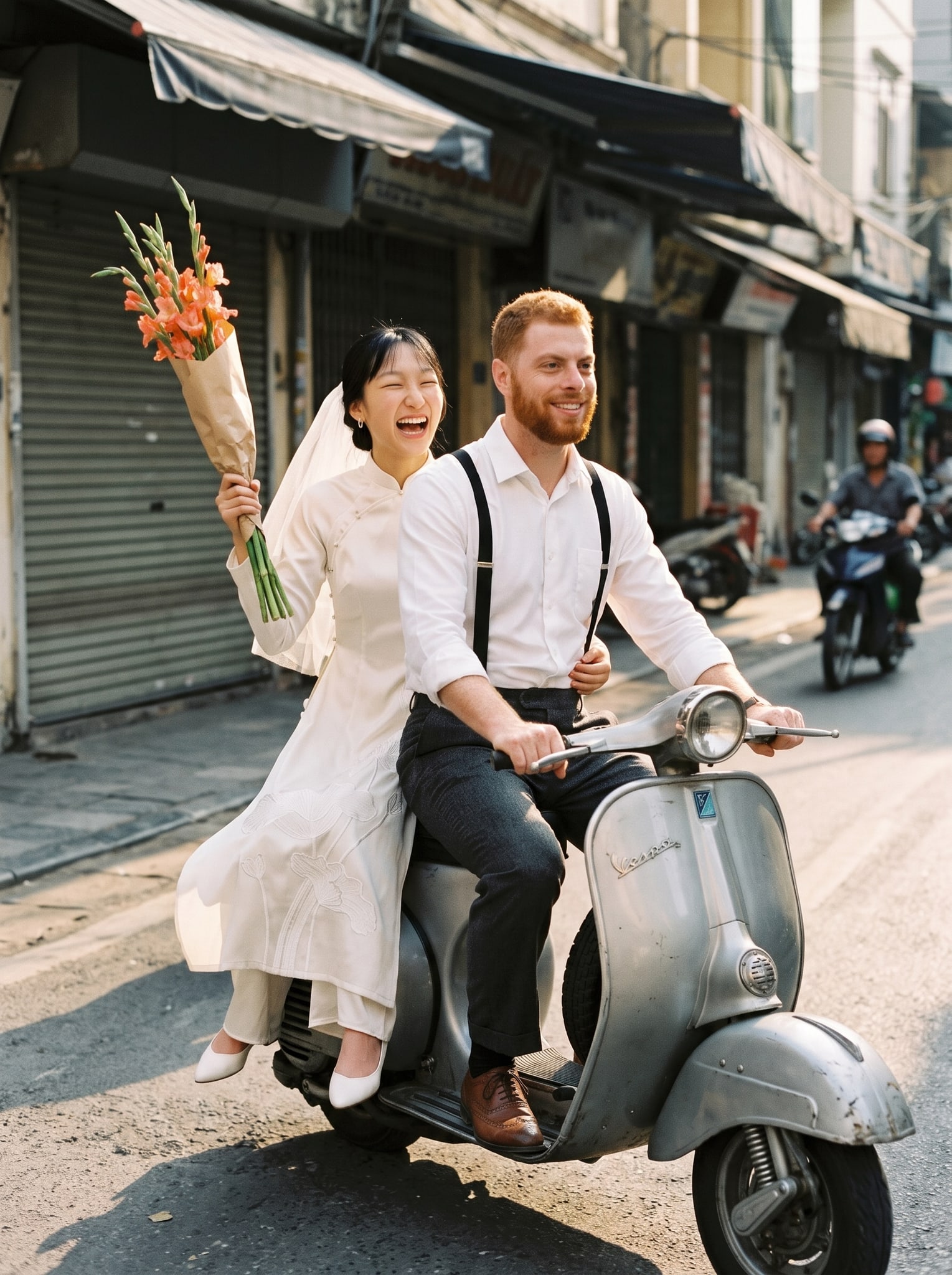
Most couples book 4–5 hours for a pre-wedding session; staying beach-only fills 2–2.5 hours with breaks. We recommend adding one secondary location: the Hoi An lantern town (1 km away, 10-min drive), rice paddies near Tra Que village (3 km, 15 min), or a temple courtyard. Couples with a couple photoshoot package often pair Cua Dai (3–5 pm, golden hour) with old-town streets (5:30–7 pm, lantern light). The cost stays the same because we're already on location; the variety in a 50–100-image final gallery increases depth. Some couples ask to do a full-day double session (8 hours, two shoots)—morning at a temple or market, afternoon at Cua Dai; those are customizable. We always ask: Why do you want Cua Dai specifically? If the answer is "we heard it's pretty," they often prefer a second-location strategy. If it's "we want sunset ocean light," Cua Dai alone works.
See packages and prices on vietnamphotoshoot.com
What to check before you book Cua Dai for your pre-wedding shoot
- Dates: If you're booking June–September, ask our team about cancellation policy and alternate dates; don't assume monsoon won't affect you.
- Time: Confirm you want 4–5 pm (golden light). If your flight leaves early or you prefer morning light, non-Cua Dai beaches may suit you better.
- Crowd tolerance: If you want to be alone, ask about visiting on a weekday; if you don't mind people, 4 pm is still quieter than 11 am.
- Styling: Cua Dai suits light, flowing ao dai and linen; dark or heavy fabrics risk overheating in the 30°C afternoon sun. Discuss this during makeup and hair consultation.
- Backup plan: Make sure the contract includes a named alternate beach (An Bang or Non Nuoc) if swell/wind cancels Cua Dai; don't accept "we'll find something."
- Equipment: Ask if the team brings reflectors and diffusers (we do); if not, harsh midday sun can ruin a 10 am session.
FAQ
Is Cua Dai Beach safe for couples in the water?
Yes, 4–5 pm in dry season (October–March). Currents are mild, sand slope is gentle. Avoid monsoon months (June–September) when swell can reach 2m and undertow rises. Always ask our team to check wave forecasts before your shoot.
Can we shoot at Cua Dai in the morning instead of sunset?
Yes, but light is harsh 9 am–2 pm unless it's heavily overcast. Morning shots work better at An Bang or Non Nuoc. Evening (4–5:30 pm) is why couples choose Cua Dai—soft, directional golden light reflects off wet sand and trees create shade geometry.
How many images do we get from a Cua Dai shoot?
Typical pre-wedding shoot at one beach is 40–80 edited images in 2–2.5 hours. Add a second location (old town, rice field, temple) and you get 70–120 images in 4–5 hours. Exact count depends on styling changes and couple energy.
What if it rains during our Cua Dai session?
We reschedule at no cost to a different date or move to a covered temple/old-town shoot the same afternoon. We don't shoot in heavy rain—it ruins ao dai, foils reflections, and poses safety risks to crew and equipment.
Do we need to hire a separate makeup artist for beach shoots, or is it included?
Makeup and hair are optional add-ons. Most couples book both; we apply beach-safe products (waterproof, salt-resistant) so makeup lasts through sand spray and humidity. Ask for a quote on WhatsApp if you want on-location styling.
Can we do both Cua Dai and An Bang in one pre-wedding session?
Yes. It's a 7 km drive (20 min with traffic) between them. A 5–6 hour package typically allows one main beach + one secondary location (old town, market, or temple). Beach-to-beach combos are possible but leave less time for styling and rest.
What's the best time of year to shoot at Cua Dai?
Late October through February—low wind, no swell, stable weather. November–December has the lowest cancellation rate. March is still good but occasional overcast days reduce golden-hour drama. June–September carry 15–20% reschedule risk due to monsoon swells.
Pre-Wedding & Elopement
Inclusions, prices and booking are on our booking site.
FAQ
Is Cua Dai Beach safe for couples in the water?
Yes, 4–5 pm in dry season (October–March). Currents are mild, sand slope is gentle. Avoid monsoon months (June–September) when swell can reach 2m and undertow rises. Always ask our team to check wave forecasts before your shoot.
Can we shoot at Cua Dai in the morning instead of sunset?
Yes, but light is harsh 9 am–2 pm unless it's heavily overcast. Morning shots work better at An Bang or Non Nuoc. Evening (4–5:30 pm) is why couples choose Cua Dai—soft, directional golden light reflects off wet sand and trees create shade geometry.
How many images do we get from a Cua Dai shoot?
Typical [pre-wedding shoot](/go/pre-wedding-photoshoot) at one beach is 40–80 edited images in 2–2.5 hours. Add a second location (old town, rice field, temple) and you get 70–120 images in 4–5 hours. Exact count depends on styling changes and couple energy.
What if it rains during our Cua Dai session?
We reschedule at no cost to a different date or move to a covered temple/old-town shoot the same afternoon. We don't shoot in heavy rain—it ruins ao dai, foils reflections, and poses safety risks to crew and equipment.
Do we need to hire a separate makeup artist for beach shoots, or is it included?
[Makeup and hair](/go/makeup-and-hair) are optional add-ons. Most couples book both; we apply beach-safe products (waterproof, salt-resistant) so makeup lasts through sand spray and humidity. Ask for a quote on WhatsApp if you want on-location styling.
Can we do both Cua Dai and An Bang in one pre-wedding session?
Yes. It's a 7 km drive (20 min with traffic) between them. A 5–6 hour package typically allows one main beach + one secondary location (old town, market, or temple). Beach-to-beach combos are possible but leave less time for styling and rest.
What's the best time of year to shoot at Cua Dai?
Late October through February—low wind, no swell, stable weather. November–December has the lowest cancellation rate. March is still good but occasional overcast days reduce golden-hour drama. June–September carry 15–20% reschedule risk due to monsoon swells.
More from the team
Photography rules at Ta Phin village: permits, drones and what to check
Ta Phin village in Sapa draws photographers for its Hmong culture and layered mountain light. We've shot dozens of sessions there—here's what actually works and what stops shoots cold.
Pre-Wedding Photo Ideas and Poses at O Quy Ho Pass
O Quy Ho Pass sits on the Hanoi–Sapa border at 1,200 metres. Our couples shoot there for its curves, mist and isolation—but the weather and logistics demand a different approach than valley shoots.
Is O Quy Ho Pass Good for Pre-Wedding Photos? Pros, Cons, Alternatives
O Quy Ho pass in Sapa draws couples seeking high-altitude drama, but tight timelines, unpredictable fog, and logistics make it risky for pre-wedding shoots. We've scouted it; here's what actually works. #