 Cáo Studio
Home › Blog › Pre-Wedding & Elopement
Is Japanese Covered Bridge good for pre-wedding photos?
By the Cáo Studio team · Hanoi & Saigon · 2026-11-02
Japanese Covered Bridge (Chùa Cầu) in Hoi An is a landmark pre-wedding location, famous for its timber arches and lantern-lit reflection in the Thu Bon River. Most couples shoot there early morning (5:30–7 AM) to avoid tour groups; a two-hour session typically runs before breakfast crowds. The bridge's warm wood tones and river backdrop suit romantic, timeless aesthetics, but the structure is narrow, foot traffic is constant even off-season, and the government restricts commercial tripods during peak hours. At Cáo Studio, we advise first-time shooters to pair it with backup indoor or garden locations; standalone bridge shoots often feel repetitive after 40 minutes. Ask us for a quote on WhatsApp to discuss timing, permits, and whether a second location fits your vision. Chat with us on WhatsApp
Does the Japanese Covered Bridge light work for your aesthetic?
The bridge's appeal hinges on golden-hour reflection and lantern detail. Soft morning light (6–7 AM) flatters skin and avoids harsh shadows that kill intimacy in afternoon frames. We've noticed couples in classic, minimalist áo dài thrive here; busy prints and bold colors drown in the architectural detail. If your vision is moody, film-like, or candid, the bridge's symmetry can feel constraining—you're always working within the same arch, same railing, same river line. One couple last year brought a makeup artist for touch-ups mid-shoot because the warm wood was clashing with their cool-toned lip choice. Ask yourself: do you want the landmark to be the subject, or a secondary frame for you two?
Conclusion: Bridge light suits romantic, understated aesthetics; avoid if you want drama or bold color dominance.
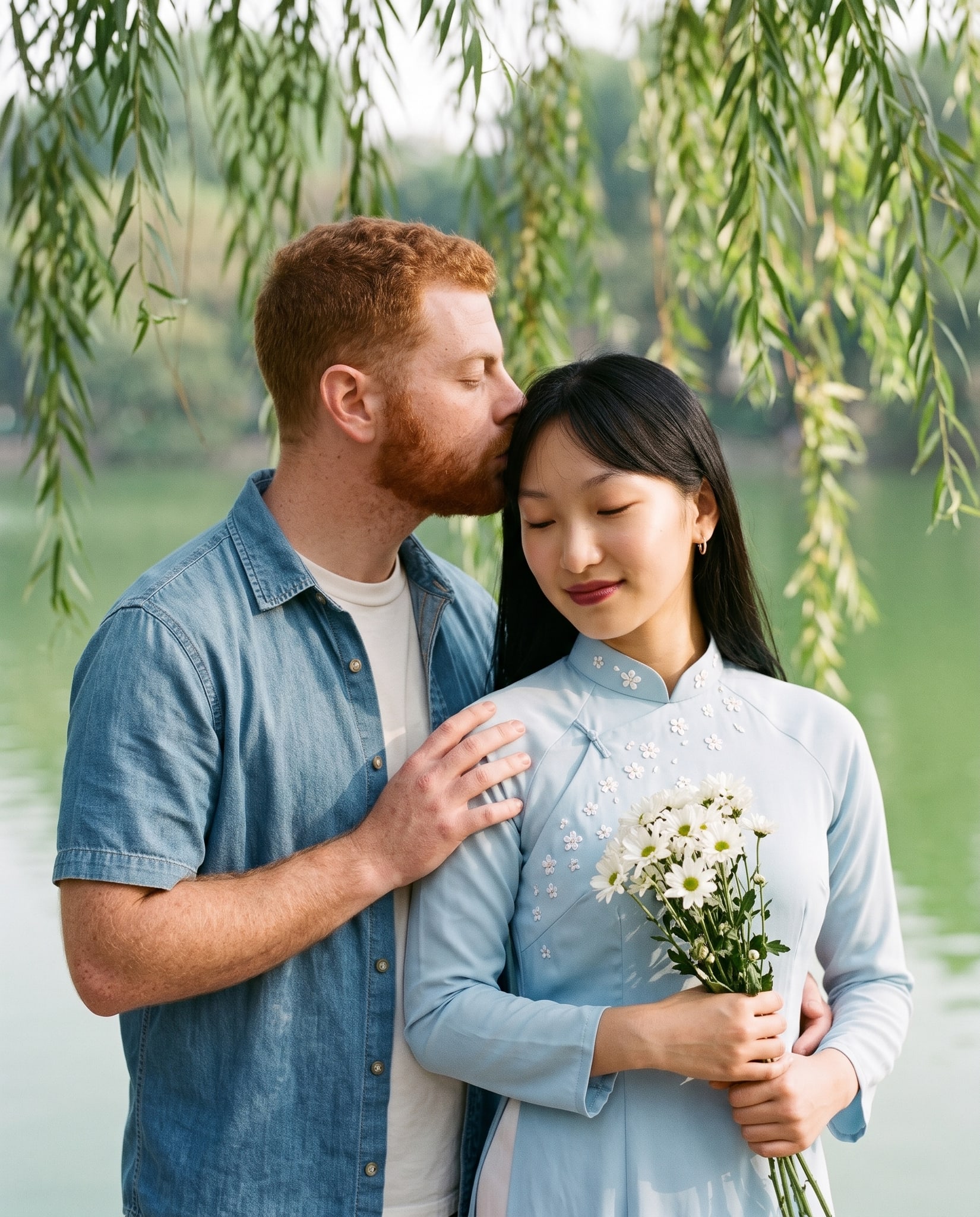
How crowded is it really, and when should you actually shoot?
Peak season (October–March) sees 500+ daily tourists by 8 AM. We've scheduled early shoots at 5:45 AM and still found two other groups setting up. Off-season (May–August) is quieter, but afternoon humidity spikes and light becomes flat. Government restrictions in 2024–2026 require permit approval for tripod use during 8 AM–5 PM weekdays; solo handheld work is unrestricted. We once arrived at 6 AM thinking we'd have the bridge alone and found a hotel wedding team already shooting their 4th couple of the morning. The Thu Bon River changes water level seasonally too—summer low water leaves muddy banks visible in reflections, which kills the "pristine" look in post-processing. If you're booking a couple photoshoot for December–February, expect to share the bridge for at least 20 minutes of your session.
Conclusion: Book 5:30–6:45 AM or negotiate permits; accept 15–25 minutes of background extras in final frames.
What does a typical Japanese Covered Bridge session look like hour by hour?
Our Hoi An team arrives 30 minutes early to scout light angles and brief you on the bridge's walking rhythm. Hours 1–0:40 (main bridge): we shoot from water level (requiring wading shoes), upper bank angles, and detail frames of lanterns and timber. By 0:40–1:00, foot traffic builds; we pivot to tighter two-person frames or move to quieter side arches. Most couples then transition to a secondary location—An Phu Garden or Hoi An Ancient Town's narrow lanes—to finish the two-hour block. We've learned not to extend bridge time hoping for "empty" moments; the crowds thin for only 5–10 minutes at dawn. Camera gear stays minimal (one body, two lenses) because the bridge's wooden railings are slick, especially after dawn dew. One team member scouts water depth and slippery stones daily; we've prevented three falls this year by insisting on proper footwear.
Conclusion: Structure shoots tightly; treat the bridge as a 40-minute opener, not a standalone session.
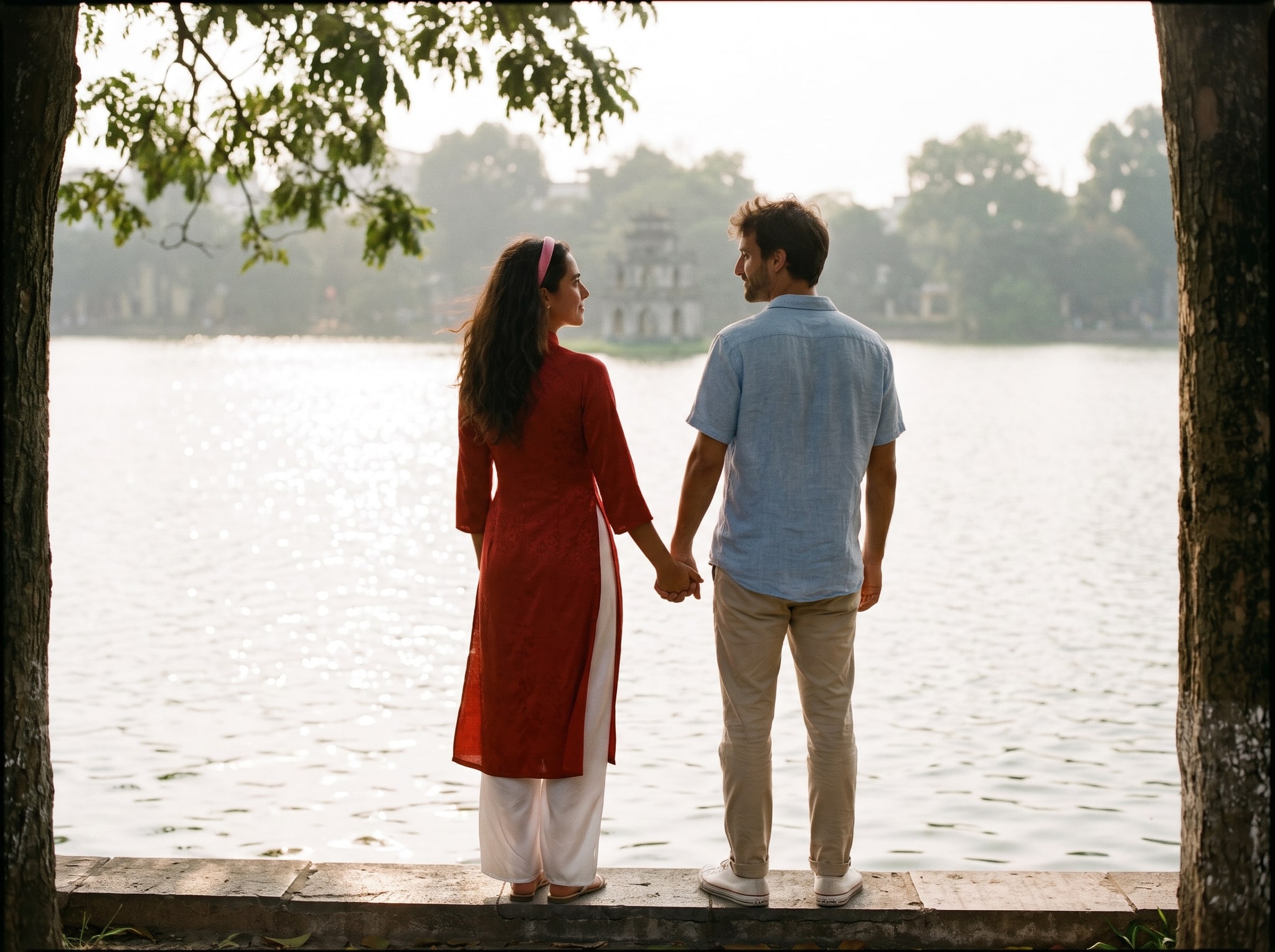
Bridge vs. Hoi An Ancient Town streets vs. river garden: which fit your story?
| Location | Best for | Light window | Crowd level | Permit needed? |
|---|---|---|---|---|
| Japanese Covered Bridge | Iconic romance, symmetry | 5:30–7:30 AM | High even early | Yes (tripod) |
| Hoi An Ancient Town (lanes) | Intimate, candid, detail | 6:00–8:00 AM or 4:30–6:30 PM | Medium (locals navigating) | No |
| An Phu Islet Garden | Soft, natural, garden flow | 6:30–8:30 AM or 5:00–6:00 PM | Very low, peaceful | No |
| Thu Bon riverside (north bank) | Cinematic, solo/reflective frames | 5:45–7:00 AM | Low except weekends | No |
We pair the bridge with Ancient Town lanes when couples want variety without relocating far; the narrow streets, vendor shutters, and lanterns offer a softer, less "famous" feeling. An Phu Garden suits quieter, nature-forward aesthetics and works better for family photoshoots if you're including relatives. If you're torn between locations, book a special concept shoot and let us design a custom route—we scout three stops and optimize timing to your vision, not the landmark calendar.
Conclusion: Bridge works best as part of a multi-location narrative; standalone shoots feel incomplete or repetitive.
What do we actually tell clients before they commit to this location?
We always WhatsApp a three-point checklist: first, confirm your aesthetic—send us inspo images so we're not surprised on shoot day if you hate how crowded it feels in real life (Instagram photos hide this). Second, agree on a backup location; we've rescheduled one sunrise shoot because a flood event closed the bridge access road, and another couple discovered their dress fabric was too delicate for the wet railings. Third, understand that the bridge's narrow structure means we can't shoot you walking toward camera or retreating into distance—you're always in close, two-person frames or detail shots. If you're imagining sweeping, wide, solitary walking shots, tell us now; we'll steer you toward vacation and solo photoshoots at open riverside locations or rice terraces in Ninh Binh instead. One client this year had their heart set on a "running hand-in-hand across the bridge" image; we politely explained the timber is too narrow and the railings too close. She adjusted her vision, and the final frames were stronger—intimate arch details and lantern reflections rather than movement.
Conclusion: Honesty upfront prevents disappointment; clarify if the bridge's constraints match your creative goal.
What to check before you book a pre-wedding shoot here
- Dress rehearsal: Have your stylist walk the bridge in your dress shoes; wet wood is slippery, trains catch railings, and heels are a no-go.
- Light forecast: Check weather for dawn haze or rain; overcast skies kill the golden-hour magic the bridge is famous for.
- Permit timing: If using tripod, confirm permit status with us 2 weeks prior; we handle paperwork, but delays do happen.
- Backup location: Agree on a second stop before shoot day; we don't improvise on the morning-of.
- Makeup durability: Early dawn + humidity + river spray = touch-ups needed by hour 1:30. Book makeup and hair at your hotel for a refresh kit or on-location artist.
See packages and prices on vietnamphotoshoot.com
FAQ
Can we get a full two-hour pre-wedding shoot entirely on the Japanese Covered Bridge?
Technically yes, but we don't recommend it. After 40 minutes, light and angles repeat, and foot traffic forces long waits. We always pair the bridge with a secondary location—Ancient Town, An Phu Garden, or riverside—to create narrative flow and use both light windows (dawn and late afternoon) efficiently.
Do we need a permit to photograph on the bridge with a camera?
Handheld camera work is unrestricted. Commercial tripod use requires a permit weekdays 8 AM–5 PM; we handle the application, but plan 2 weeks ahead. Early-morning shoots (before 8 AM) with tripod are often permit-free; confirm with us when booking.
How do you handle crowds if our session overlaps with tour groups?
We shoot tight, two-person frames and detail work (lanterns, hands, reflections) while groups move through; they rarely appear in well-composed close shots. If crowds spike unexpectedly, we pivot to side arches or move to the secondary location earlier. One backup plan is always in your shoot agreement.
What happens if the bridge is closed or flooded on our shoot date?
Flooding or maintenance closures are rare but possible June–September. We scout 3 days prior and notify you immediately if access is at risk. Your session either shifts to a backup date or relocates entirely to An Phu Garden or Hoi An Ancient Town at no extra cost; full details are in your contract.
Is the Japanese Covered Bridge better for traditional áo dài or Western wedding dress?
Both work, but aesthetics differ. Áo dài's long lines and warm colors complement the bridge's timber and lanterns beautifully. Western dresses suit the location too, but trains and lace catch railings—we advise bustling or a second dress if movement is your priority. Either way, the bridge's narrow structure means mostly close, romantic framing rather than walking-distance shots.
Pre-Wedding & Elopement
Inclusions, prices and booking are on our booking site.
FAQ
Can we get a full two-hour pre-wedding shoot entirely on the Japanese Covered Bridge?
Technically yes, but we don't recommend it. After 40 minutes, light and angles repeat, and foot traffic forces long waits. We always pair the bridge with a secondary location—Ancient Town, An Phu Garden, or riverside—to create narrative flow and use both light windows (dawn and late afternoon) efficiently.
Do we need a permit to photograph on the bridge with a camera?
Handheld camera work is unrestricted. Commercial tripod use requires a permit weekdays 8 AM–5 PM; we handle the application, but plan 2 weeks ahead. Early-morning shoots (before 8 AM) with tripod are often permit-free; confirm with us when booking.
How do you handle crowds if our session overlaps with tour groups?
We shoot tight, two-person frames and detail work (lanterns, hands, reflections) while groups move through; they rarely appear in well-composed close shots. If crowds spike unexpectedly, we pivot to side arches or move to the secondary location earlier. One backup plan is always in your shoot agreement.
What happens if the bridge is closed or flooded on our shoot date?
Flooding or maintenance closures are rare but possible June–September. We scout 3 days prior and notify you immediately if access is at risk. Your session either shifts to a backup date or relocates entirely to An Phu Garden or Hoi An Ancient Town at no extra cost; full details are in your contract.
Is the Japanese Covered Bridge better for traditional áo dài or Western wedding dress?
Both work, but aesthetics differ. Áo dài's long lines and warm colors complement the bridge's timber and lanterns beautifully. Western dresses suit the location too, but trains and lace catch railings—we advise bustling or a second dress if movement is your priority. Either way, the bridge's narrow structure means mostly close, romantic framing rather than walking-distance shots.
More from the team
Boho pre-wedding photoshoot in Vietnam: Hanoi, Saigon, Hoi An
Boho pre-wedding shoots mix romantic, free-spirited aesthetics with Vietnam's landscapes and heritage sites. We run full-day sessions in three cities, handling styling, makeup, location scouts and edits.
Avoid crowds at Hoang Su Phi rice terraces: timing for wedding shoots
Hoang Su Phi's terraced landscape draws couples and tour buses in equal measure. We show how to shoot there alone, when to arrive, and what to arrange with us before you go.
Photography rules at Con Dao beaches: permits, drones and what to check
Con Dao's beaches demand prep before you shoot—permits, drone zones and tide timing all affect your day. We share what the Cáo Studio team verifies on every booking.