 Cáo Studio
Home › Blog › Pre-Wedding & Elopement
Is Muong Hoa Valley Rice Terraces Good for Pre-Wedding Photos?
By the Cáo Studio team · Hanoi & Saigon · 2026-11-02
Muong Hoa Valley in Sapa delivers iconic layered landscapes and golden-hour drama, but logistics complicate shoots. The trek to viewpoints takes 1–2 hours on steep, muddy trails; weather shifts fast; peak seasons crowd the terraces. Cáo Studio has run sessions here and found success requires early starts, sturdy footwear, realistic outfit changes, and backup indoor or nearby locations. Cost-wise, location fees vary; your pre-wedding package covers our team's travel and equipment. Best for couples who hike regularly and accept weather risk. Alternatives—Ta Van, Tram Ton, or controlled garden venues—deliver similar aesthetics with fewer surprises. Chat with us on WhatsApp | See packages and prices on vietnamphotoshoot.com
What makes Muong Hoa Valley so popular for pre-wedding shoots?
The valley's terraced rice paddies stack like amphitheaters across steep slopes, especially golden between May and September when water reflects light. The scale feels cinematic—couples vanish into curves of emerald or bronze depending on season. We've shot here seven times; the frames feel different hour to hour as cloud shadows move across ridges. No other Sapa viewpoint offers this layering. The tradeoff is that beauty requires effort.
How hard is the hike, and will your outfit survive it?
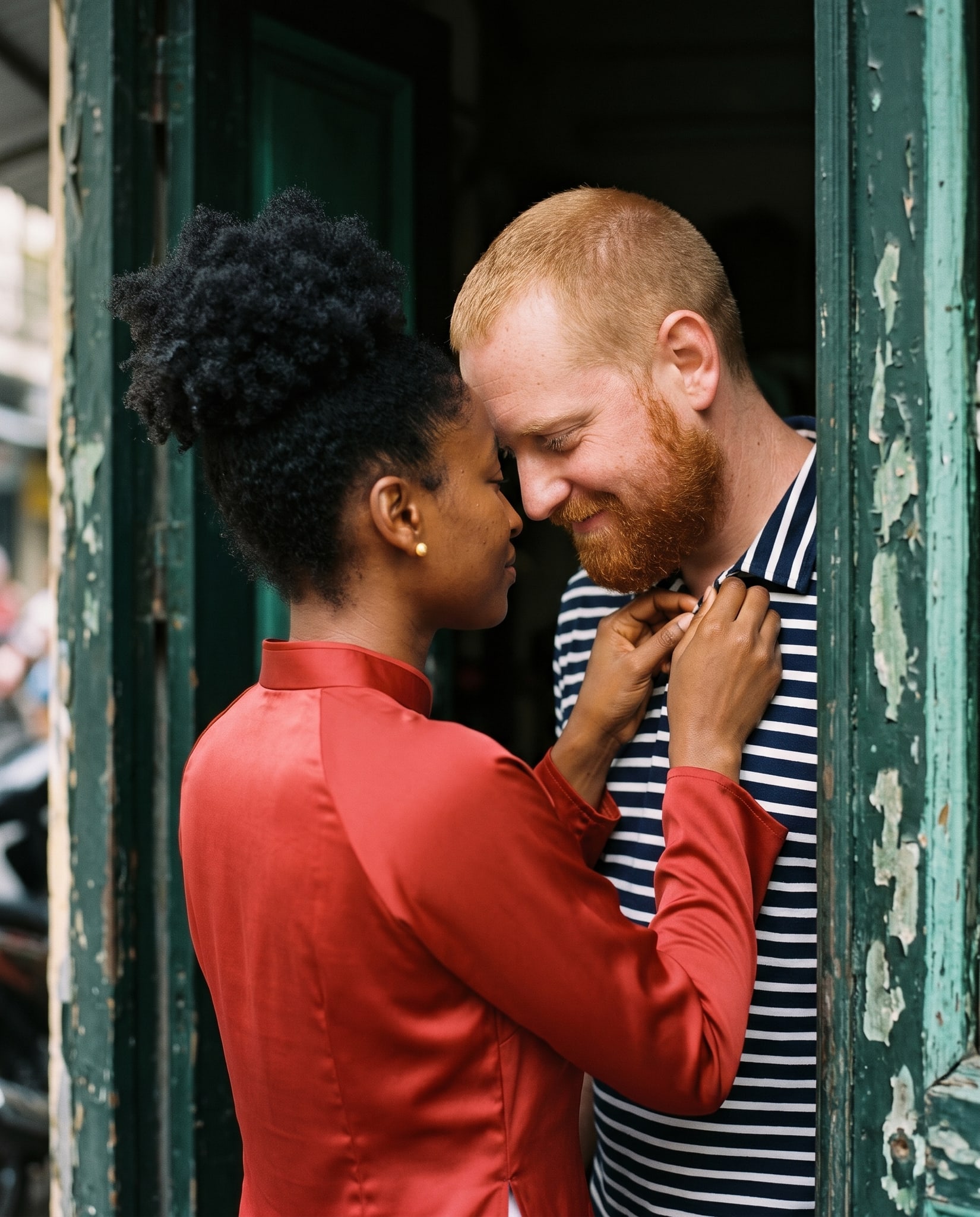
Most couples underestimate the trek. From Sapa town to the main Muong Hoa overlook, expect 45 minutes to 2 hours downhill on rough stone steps, streaming mud, narrow ledges, and exposed sections. Uphill return is slower. We've seen brides in heels turn back; one groom twisted his ankle at kilometer 0.3. Typical attire—ao dai, dress, suit—gets soaked, dusty, or snagged on vegetation. Our solution: carry two outfits. Shoot casual or heritage wear on the hike; change into formal pieces once you've reached a stable flat section (rare but they exist). Pack a dry bag, wear hiking shoes until the final 10 minutes, and accept that wind will dishevel hair. Your makeup and hair team should meet you on-site or arrive early enough to touch up after the climb.
When does weather actually ruin a Muong Hoa shoot?
May to September offers sun and water reflections, but fog rolls in unpredictably—sometimes clearing by 9 a.m., sometimes staying until noon. October to April is drier but clouds linger. We've had shoots where the valley disappeared behind white mist for 90 minutes while the town sat sunny 500 meters above. Rain turns the trail treacherous; we cancel if the forecast shows >30% precipitation the night before. Typhoon season (July–September) is risky. Book with flexibility: if mist dominates, we pivot to nearby Tram Ton pass or Silver Waterfall, both 20–30 minutes away and often clearer. Always agree with your team on a backup plan before arrival.
How does Muong Hoa compare to other Sapa pre-wedding locations?
| Location | Terrain | Effort (mins) | Weather Risk | Crowds | Vibe |
|---|---|---|---|---|---|
| Muong Hoa Valley | Steep terraces, slippery | 60–120 up | High | High (peak season) | Epic, cinematic |
| Tram Ton Pass | Open plateau, paved road | 10–20 | Moderate | Lower | Clear, minimalist |
| Ta Van | Forested trail, rice patches | 45 walk | Moderate | Moderate | Serene, intimate |
| Sapa town gardens | Flat, landscaped | 5–10 | Low | Low | Controlled, romantic |
| Silver Waterfall | Waterfall setting, short walk | 15–30 | Low | Moderate | Lush, dramatic |
Muong Hoa wins on drama and uniqueness; Tram Ton wins on reliability; Ta Van balances aesthetics and accessibility. Couples who prioritize iconic landscapes accept Muong Hoa's risks. Those with mobility limits or inflexible schedules should choose Tram Ton or Sapa town venues.
See packages and prices on vietnamphotoshoot.com
What problems do we solve on the day, and what can you prevent?
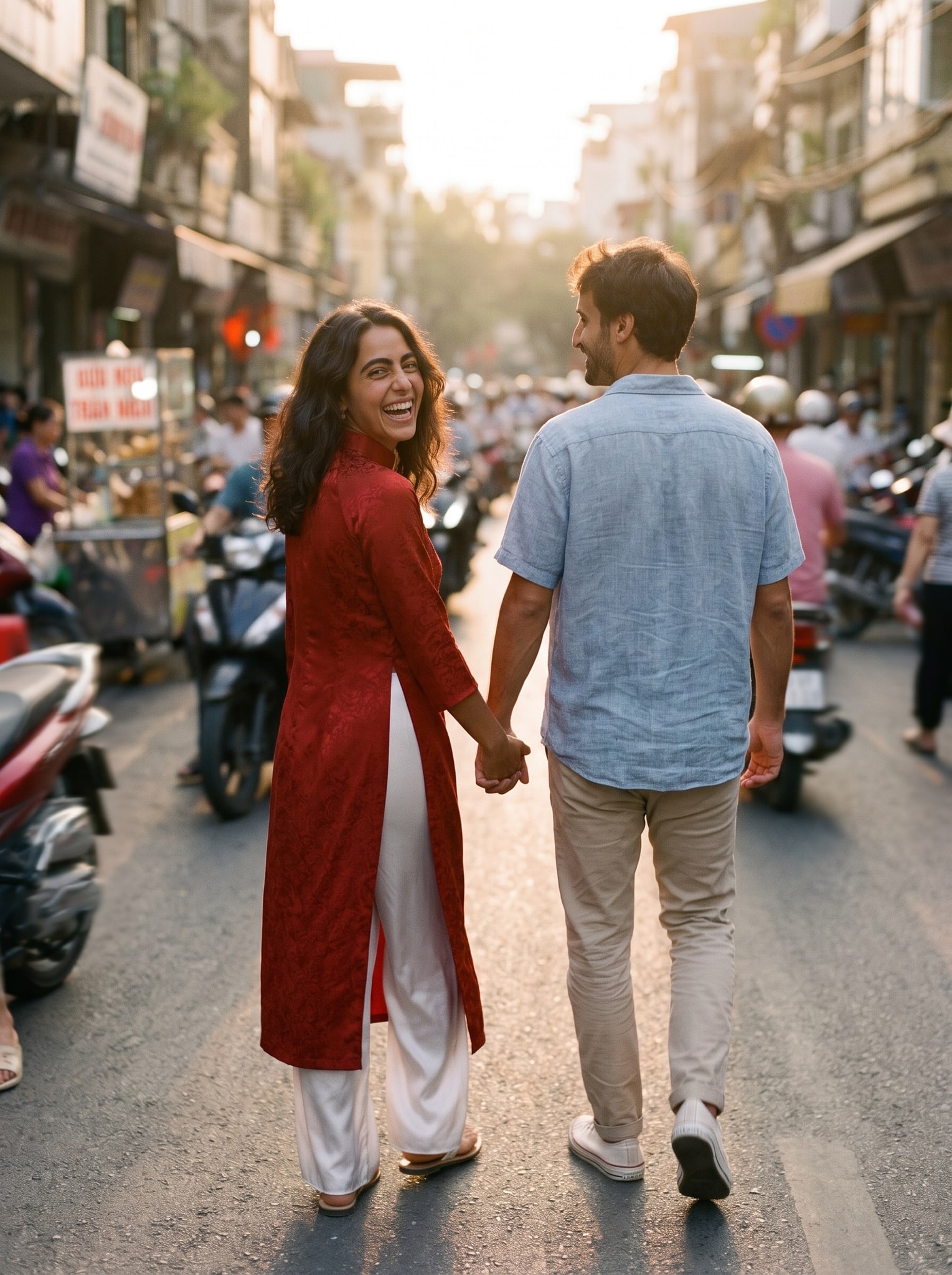
We've learned hard lessons. Couples arrive in wedding shoes (accident waiting to happen). Relatives decide to jump in shots at the cliff edge (safety conversation required). Phones die before we reach the peak (bring power banks). Ao dai hems catch on rocks (carry safety pins, wear trousers under). The 1-hour-before rain that local guides said "won't reach here" absolutely does. Our frame of reference: start shoots 5:30 or 6 a.m., hire local guides who know micro-weather, bring absorbent towels, pack a small first-aid kit, and set a hard turnaround time (we stop climbing at 9 a.m. if clouds thicken). Couples often push for "just one more viewpoint"—we say no. That discipline keeps people safe and images sharp.
Which couples should skip Muong Hoa and book alternatives instead?
If you're over 50, pregnant, have knee/ankle history, or wear formal shoes only, Tram Ton or a concept shoot in Hanoi's Old Quarter or Saigon's District 1 makes sense. If you're on a tight timeline and can't afford weather delays, book a controlled garden or hotel. If your timeline is under two weeks and weather can't be monitored in advance, choose reliability. If you love the idea but hate hiking, ask us about Sapa town venues—you'll get mountain air and heritage architecture without the vertical scramble. We've run pre-wedding sessions across northern Vietnam; each location trades something. Muong Hoa trades ease for unforgettable visuals.
What do you actually need to pack and prepare?
Bring two complete outfits (one hiking-friendly, one formal), waterproof bag, hiking boots broken in before arrival, extra socks, absorbent cloth, safety pins, phone power bank, insect repellent, and sunscreen. Eat a real breakfast beforehand (energy dips 90 minutes in). Tell your photographer your mobility level and any previous injuries—we'll adjust pacing and poses. Confirm meet time the evening before on WhatsApp; Sapa has patchy signal. If using hired ao dai, collect it two days early and test mobility. Your makeup artist needs to know the hike happens first; some teams apply heavy makeup at 6 a.m., which sweats away—waterproof, minimal looks work better. Ask whether your package includes a local guide (ours do for safety and navigation).
What to check before you book a Muong Hoa shoot:
- Fitness level: Can you walk uphill 60+ minutes at altitude?
- Outfit plan: Do you own hiking-appropriate shoes? Can a second outfit be transported safely?
- Weather flexibility: Are you okay rescheduling if conditions are unsafe?
- Budget: Does your pre-wedding package include location fees and local guide cost?
- Backup location: What happens if Muong Hoa is socked in by noon?
- Mobility concerns: Any injuries or age-related limits your team should know?
FAQ
Do we really need a guide, or can we self-navigate Muong Hoa Valley?
Navigation itself is straightforward, but guides know micro-weather, safe ledges, and best light angles. We include guides in our Sapa shoots for safety and logistics—they also help locals give you space rather than gathering for photos. Strongly recommended.
What time of year gives the best light and fewest tourists?
June–August offers water reflections but crowds peak July–August. May and September balance light and visitor volume. October–April is drier but foggier. Early morning (5:30–7:30 a.m.) beats midday any season.
If fog rolls in, can we still shoot, or should we reschedule?
Light fog creates moody, romantic frames. Thick fog kills detail and drama. We wait 60–90 minutes for clearing; if it doesn't, we pivot to a backup location or reschedule with a credit. Reschedule is often the better call.
Are there safer, easier pre-wedding locations in Sapa with similar looks?
Tram Ton Pass, 20 minutes from Muong Hoa, offers open plateau and terraced views with a paved-road walk. Ta Van village has gentler trails and rice patches. Both reduce injury risk and weather unpredictability while keeping the mountain aesthetic.
How do we protect our outfit from mud and water on the way down?
Pack a waterproof garment bag or dry bag; change into formal wear only after reaching a stable shooting spot, not the trail. Bring extra towels and a change of socks. Consider renting an ao dai on-site rather than shipping one—easier damage control.
Can we book a Muong Hoa shoot from abroad, and how do payments work?
Yes. We accept Visa, Mastercard, and online payment links from most countries, plus bank transfer. Confirm your package details and shoot date via WhatsApp; we coordinate timing and backup logistics before you arrive. Contact us to finalize.
Pre-Wedding & Elopement
Inclusions, prices and booking are on our booking site.
FAQ
Do we really need a guide, or can we self-navigate Muong Hoa Valley?
Navigation itself is straightforward, but guides know micro-weather, safe ledges, and best light angles. We include guides in our Sapa shoots for safety and logistics—they also help locals give you space rather than gathering for photos. Strongly recommended.
What time of year gives the best light and fewest tourists?
June–August offers water reflections but crowds peak July–August. May and September balance light and visitor volume. October–April is drier but foggier. Early morning (5:30–7:30 a.m.) beats midday any season.
If fog rolls in, can we still shoot, or should we reschedule?
Light fog creates moody, romantic frames. Thick fog kills detail and drama. We wait 60–90 minutes for clearing; if it doesn't, we pivot to a backup location or reschedule with a credit. Reschedule is often the better call.
Are there safer, easier pre-wedding locations in Sapa with similar looks?
Tram Ton Pass, 20 minutes from Muong Hoa, offers open plateau and terraced views with a paved-road walk. Ta Van village has gentler trails and rice patches. Both reduce injury risk and weather unpredictability while keeping the mountain aesthetic.
How do we protect our outfit from mud and water on the way down?
Pack a waterproof garment bag or dry bag; change into formal wear only after reaching a stable shooting spot, not the trail. Bring extra towels and a change of socks. Consider renting an ao dai on-site rather than shipping one—easier damage control.
Can we book a Muong Hoa shoot from abroad, and how do payments work?
Yes. We accept Visa, Mastercard, and online payment links from most countries, plus bank transfer. Confirm your package details and shoot date via WhatsApp; we coordinate timing and backup logistics before you arrive. Contact us to finalize.
More from the team
Boho pre-wedding photoshoot in Vietnam: Hanoi, Saigon, Hoi An
Boho pre-wedding shoots mix romantic, free-spirited aesthetics with Vietnam's landscapes and heritage sites. We run full-day sessions in three cities, handling styling, makeup, location scouts and edits.
Avoid crowds at Hoang Su Phi rice terraces: timing for wedding shoots
Hoang Su Phi's terraced landscape draws couples and tour buses in equal measure. We show how to shoot there alone, when to arrive, and what to arrange with us before you go.
Photography rules at Con Dao beaches: permits, drones and what to check
Con Dao's beaches demand prep before you shoot—permits, drone zones and tide timing all affect your day. We share what the Cáo Studio team verifies on every booking.