 Cáo Studio
Home › Blog › Pre-Wedding & Elopement
Is Ta Van village good for pre-wedding photos? Pros, cons and alternatives
By the Cáo Studio team · Hanoi & Saigon · 2026-11-02
Ta Van village (Sapa district, northwest Vietnam) is a homestay-based location with rice terrace backdrops and ethnic Dao architecture, popular for editorial pre-wedding shoots. The village sits at 1,400m elevation with limited vehicle access and basic infrastructure. Most couples spend 4–6 hours there with a guide; morning light is critical, and monsoon fog (May–September) often ruins visibility. Cáo Studio has shot Ta Van pre-weddings, but we consistently recommend it only for couples who prioritize authenticity over technical control, have flexible weather expectations, and don't need professional hair/makeup on-site. Cost and logistics make it less practical than our Hao An or Ninh Binh options for most travelers. Ask us for a detailed location brief on WhatsApp before committing. Chat with us on WhatsApp
Why couples choose Ta Van for pre-wedding shoots
Ta Van draws couples because the aesthetic feels untouched: wooden houses, water buffalo, layered green hills, and no crowds at dawn. The narrative appeals—young couple in rural Vietnam, family homestay as backdrop, morning mist creating mood. We see this appeal every year. But the reality is harder. The village has no paved roads fit for typical wedding transport; guests in heels sink into mud. There's one homestay that welcomes shoots; others don't. Mobile signal is weak, so coordinating with the team on the day becomes guesswork. Early arrival (5:00 am) means a 2.5-hour drive from Sapa town in the dark, on hairpin roads that make some couples car-sick before shooting even starts.
What light conditions actually look like in Ta Van
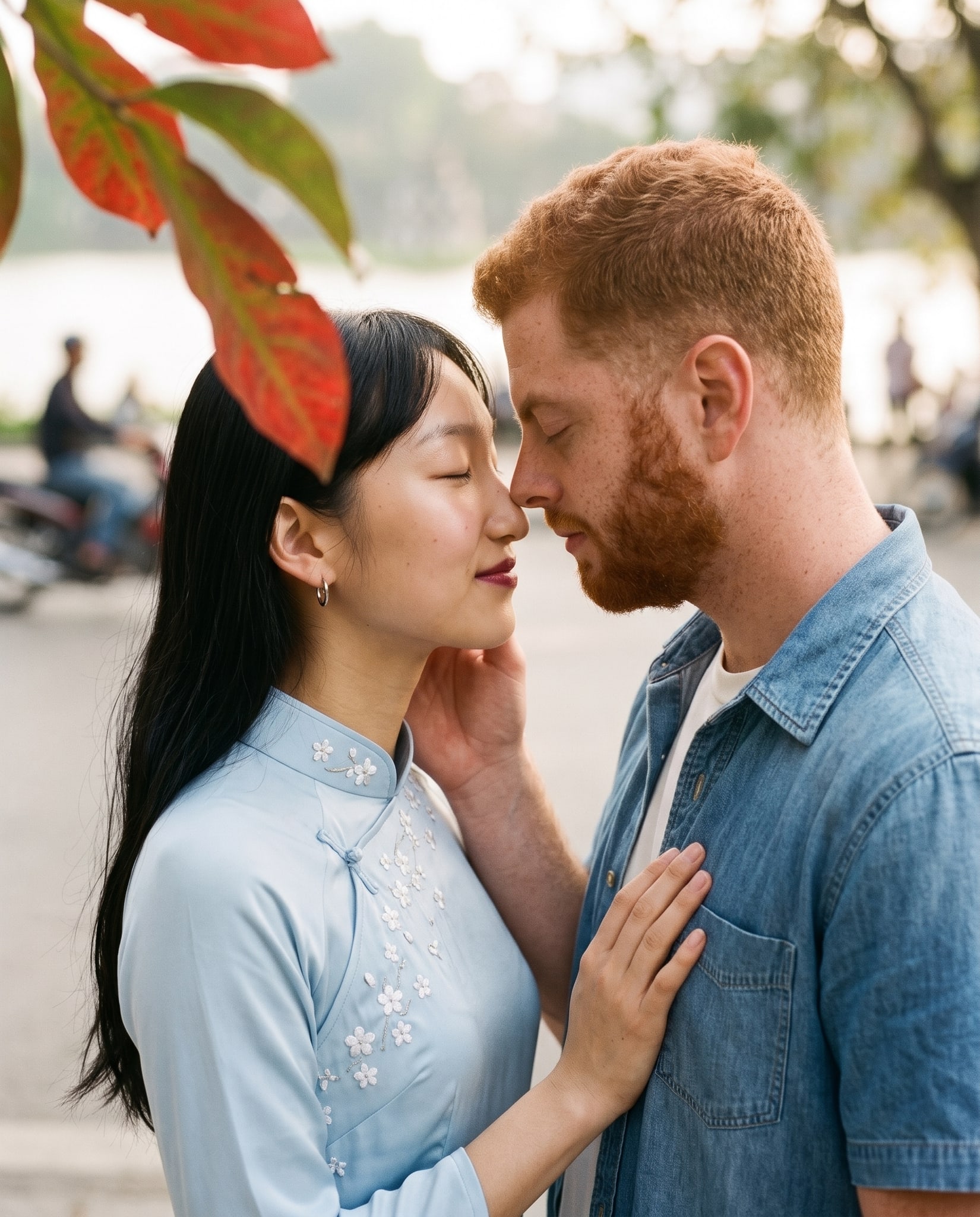
Our photographers have learned that Ta Van's altitude and valley position create two brutal light windows: 5:30–7:00 am (soft but fleeting) and 5:00–6:30 pm (backlit, harsh contours). By 8:00 am, sun hits the slopes and creates contrast so sharp that skin tone correction in post takes hours. Clouds roll in by 10:00 am most days, killing color and adding a flat, greenish cast that washes out dress details. If you shoot midday, expect grey, shadowless light—beautiful for moody editorial work, terrible for couple portraits where you need dimension on the face. Winter (November–February) gives clearer skies but colder hands and slower movement. Monsoon season brings daily fog that can obscure the entire backdrop by 9:00 am, leaving you with a white void behind the couple. Our team has scrapped entire morning sessions because visibility dropped to 50 meters.
See packages and prices on vietnamphotoshoot.com
How Ta Van compares to Hoi An, Ninh Binh and Hanoi
| Location | Best for | Light control | Transport access | Hair/makeup on-site | Backup venue nearby | Weather reliability |
|---|---|---|---|---|---|---|
| Ta Van | Editorial, editorial couples willing to reschedule | Low | Very difficult | No | No | Poor (monsoon) |
| Hoi An | Romantic, traditional, mixed light/architecture | Medium | Easy, town center | Yes, multiple stylists | Yes, old town alleys | Good (Nov–Jan) |
| Ninh Binh | Scenic, dramatic, limestone karst | Medium-high | Good, road access | Yes, nearby hotels | Yes, multiple sites | Good (Nov–Feb) |
| Hanoi | Urban, modern, cultural | High (urban control) | Excellent | Yes, studio base | Yes, 20+ locations | Good year-round |
Ta Van wins on raw authenticity and isolation—you won't see another couple or tourist. But the tradeoff is logistical fragility: one missed light window, one weather surprise, one transport delay, and your shoot collapses. Our Ninh Binh pre-wedding shoots give you dramatic landscape, multiple backup sites within 20 minutes, paved roads, and nearby hotels where we can do hair and makeup before you arrive. Hoi An offers romantic old-town architecture, reliable light in cooler months, and real infrastructure. Hanoi gives you complete control and year-round shooting. Each serves different couples and different visions.
Red flags we see when couples choose Ta Van for the wrong reasons
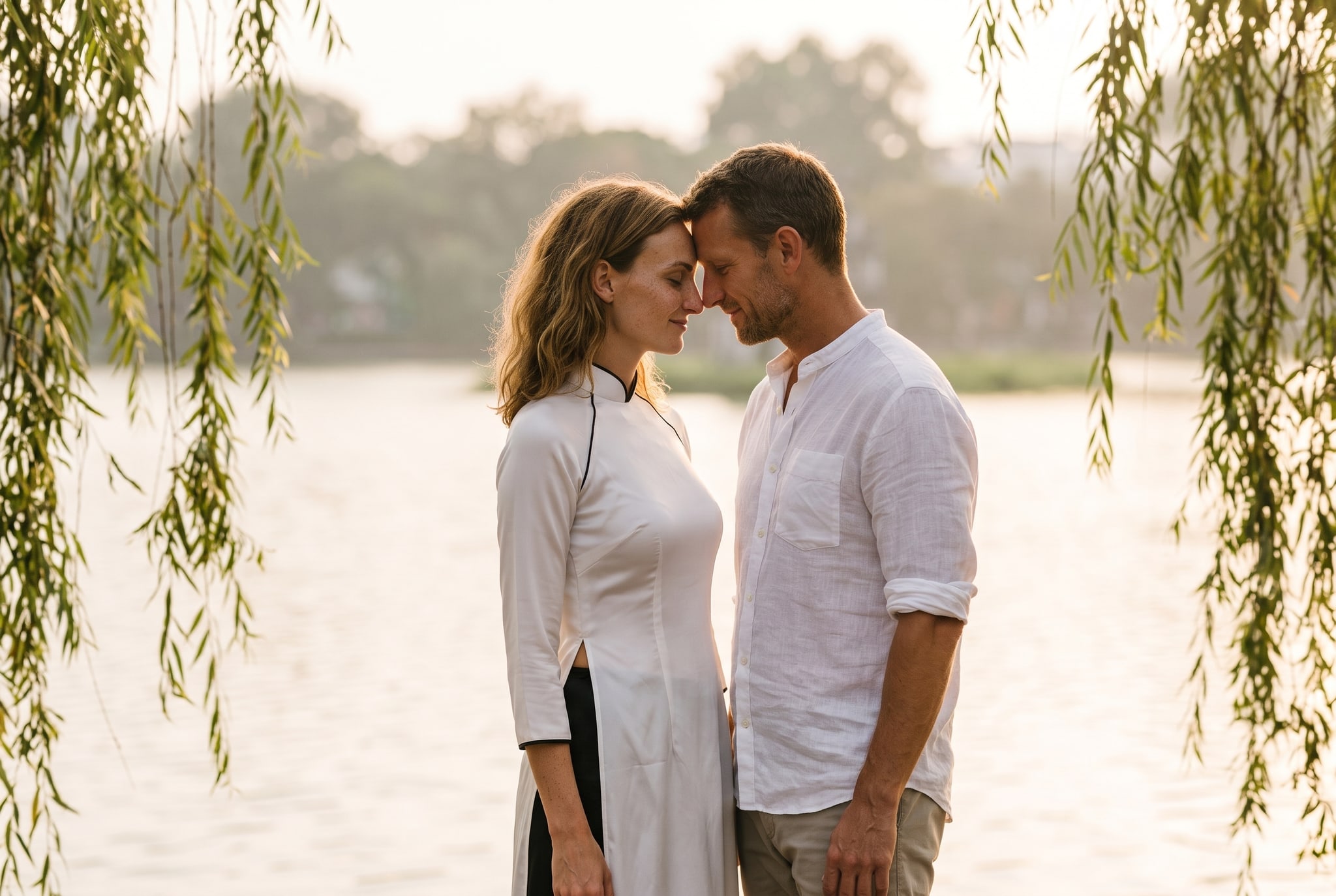
We've had couples book Ta Van thinking it's cheaper than Hoi An or a guaranteed cinematic backdrop. Neither is true. Transport logistics (guide hire, early vehicle, fuel for the 2.5-hour drive each way) actually make Ta Van more expensive than shooting in Saigon's hidden gems or Hanoi's temple gardens. And the cinematic backup is weather-dependent—you're essentially gambling on three hours of clear skies. Other couples underestimate physical demands: the walk from the homestay to the best terrace is steep, muddy in rainy season, and your dress hem will be wet and brown by shot three. We've had guests in imported heels get stuck, cry, and want to leave. Brides in heavy áo dài often slip and take 45 minutes to walk 200 meters. The homestay owner sometimes appears unexpectedly in the frame because they live there and are curious. No amount of direction changes that. If you're flying in from abroad with one shoot day, Ta Van is a risk we don't recommend.
When Ta Van actually works (and how to prepare)
Ta Van is worthwhile only if you have three conditions: flexibility on dates (so we can chase clear weather across a 7–10 day window), realistic expectations (moody and raw, not polished), and time (minimum 2 days, one for weather failure). Couples doing concept shoots or editorial work who want a specific story—"young farmers," "heritage and modernity," "family roots"—can nail it here because a single remarkable image justifies the logistics. We've shot stunning Ta Van pre-weddings, but always with a 50% reshoot clause and always combined with a backup location (usually Sapa town's market or a nearby ethnic village with easier access). The couple must wear practical clothes (no trailing trains, no heels), arrive acclimatized to altitude (day before), and be prepared to reschedule if weather is bad on day one. A local guide is non-negotiable: they know which homestays allow photos, where light is best by season, and how to navigate the mud.
Your checklist before confirming Ta Van
Before you commit to Ta Van with any team, verify these with us on WhatsApp:
- Weather forecast: Ask us for a 10-day outlook; if monsoon or typhoon season is predicted, pick different dates or location.
- Vehicle type and road condition: Confirm the drive is paved to Sapa town and what happens if the final village road floods (it does, August–September).
- Homestay permission: We contact the family in advance; if they say no (some do), there's no shoot venue.
- Your physical ability: Are you fit for a 30-minute uphill walk with a heavy dress? If no, don't choose Ta Van.
- Hair and makeup timing: These happen in Sapa town 1.5 hours before the shoot. You'll sit in a car on a winding road afterward—hair will move, makeup will shift.
- Backup location and reschedule clause: Insist on a written clause covering weather-day rescheduling and an alternative location (Sapa old town, nearby waterfall) if Ta Van is impossible.
- Total time commitment: Budget 2 full days minimum (one for Ta Van attempt, one for backup). One-day shoots in Ta Van have a 40% failure rate in our experience.
Ask us for a full location brief including current homestay contacts, seasonal light data, and real transport timings on WhatsApp before you book. We'll be honest: if Ta Van doesn't match your priorities, we'll recommend Hoi An, Ninh Binh, or a Hanoi concept shoot instead and show you why it's the better fit.
FAQ
Can we do hair and makeup in Ta Van village itself?
No. The homestays have no running water, mirrors, or power reliable enough for a professional setup. We do all hair and makeup in Sapa town, 45 minutes away, then drive to the village for photos. This adds time pressure and means you're in a car for 1.5 hours after styling.
What's the success rate for Ta Van shoots in our first attempt?
Based on our sessions 2023–2026, roughly 65% of first-day shoots yield usable images in terms of light and weather; 35% get clouded out or have fog by 8:00 am. That's why we recommend couples plan two days.
Is Ta Van cheaper than Hoi An or Ninh Binh?
No. Transport logistics (guide, vehicle, fuel, long hours) make it similar or higher cost. You're paying for isolation and authenticity, not budget savings. Ask us for a quote on WhatsApp for your specific package.
Can we reschedule if weather is bad on our Ta Van day?
Yes, if you've booked with a reschedule clause. Always confirm this in writing before you pay. We require flexibility on dates (at least a 5–7 day window) to chase good weather.
What do we wear that won't get ruined in Ta Van mud?
For the walk: flat shoes or boots, a shawl or light jacket, and a dress you don't mind getting wet at the hem. We usually suggest wearing a second outfit for the actual shoot (áo dài or a lighter dress) that you change into once you reach the terrace. Bring a plastic bag for dirty shoes.
Is Ta Van a good choice for a one-day international visit?
No. The drive alone is 5 hours round-trip, and weather risk is high. If you have one shoot day, choose Hoi An, Ninh Binh, or Hanoi. They're closer, more reliable, and you'll actually get a finished gallery instead of a weather-day reschedule.
Can we combine Ta Van with another location on the same day?
Not realistically. The drive, elevation adjustment, and light windows leave no time for a second location. Most couples either do a full Ta Van day or combine it with Sapa town (market, ethnic villages, waterfall) within the same region.
Pre-Wedding & Elopement
Inclusions, prices and booking are on our booking site.
FAQ
Can we do hair and makeup in Ta Van village itself?
No. The homestays have no running water, mirrors, or power reliable enough for a professional setup. We do all hair and makeup in Sapa town, 45 minutes away, then drive to the village for photos. This adds time pressure and means you're in a car for 1.5 hours after styling.
What's the success rate for Ta Van shoots in our first attempt?
Based on our sessions 2023–2026, roughly 65% of first-day shoots yield usable images in terms of light and weather; 35% get clouded out or have fog by 8:00 am. That's why we recommend couples plan two days.
Is Ta Van cheaper than Hoi An or Ninh Binh?
No. Transport logistics (guide, vehicle, fuel, long hours) make it similar or higher cost. You're paying for isolation and authenticity, not budget savings. Ask us for a quote on WhatsApp for your specific package.
Can we reschedule if weather is bad on our Ta Van day?
Yes, if you've booked with a reschedule clause. Always confirm this in writing before you pay. We require flexibility on dates (at least a 5–7 day window) to chase good weather.
What do we wear that won't get ruined in Ta Van mud?
For the walk: flat shoes or boots, a shawl or light jacket, and a dress you don't mind getting wet at the hem. We usually suggest wearing a second outfit for the actual shoot (áo dài or a lighter dress) that you change into once you reach the terrace. Bring a plastic bag for dirty shoes.
Is Ta Van a good choice for a one-day international visit?
No. The drive alone is 5 hours round-trip, and weather risk is high. If you have one shoot day, choose Hoi An, Ninh Binh, or Hanoi. They're closer, more reliable, and you'll actually get a finished gallery instead of a weather-day reschedule.
Can we combine Ta Van with another location on the same day?
Not realistically. The drive, elevation adjustment, and light windows leave no time for a second location. Most couples either do a full Ta Van day or combine it with Sapa town (market, ethnic villages, waterfall) within the same region.
More from the team
Boho pre-wedding photoshoot in Vietnam: Hanoi, Saigon, Hoi An
Boho pre-wedding shoots mix romantic, free-spirited aesthetics with Vietnam's landscapes and heritage sites. We run full-day sessions in three cities, handling styling, makeup, location scouts and edits.
Avoid crowds at Hoang Su Phi rice terraces: timing for wedding shoots
Hoang Su Phi's terraced landscape draws couples and tour buses in equal measure. We show how to shoot there alone, when to arrive, and what to arrange with us before you go.
Photography rules at Con Dao beaches: permits, drones and what to check
Con Dao's beaches demand prep before you shoot—permits, drone zones and tide timing all affect your day. We share what the Cáo Studio team verifies on every booking.