 Cáo Studio
Home › Blog › Vacation & Solo Photoshoot
Jade Emperor Pagoda Photoshoot: What We Shoot On-Site
By the Cáo Studio team · Hanoi & Saigon · 2026-11-02
A Jade Emperor Pagoda photoshoot with Cáo Studio is a 2–3 hour session in Hanoi's Old Quarter, capturing you in front of the temple's red-lacquered doors, incense smoke, and golden altar details. We arrive early (6–7 a.m.) to beat crowds, work with available light indoors, and use the narrow courtyard and decorated halls for variety. The location is free to enter but tight—we scout angles before guests arrive, adjust poses for low ceilings, and bring reflectors to lift shadows. This works best as part of a vacation photoshoot package that includes multiple Hanoi landmarks; solo temple shoots are possible but feel rushed because setup time eats your booking window. Budget 2–3 hours on-site, arrive in comfortable clothes you don't mind kneeling in (many shots involve the altar steps), and expect incense smell in your hair afterward—guests don't mind, and it's part of the memory. Chat with us on WhatsApp | See packages and prices on vietnamphotoshoot.com
What actually happens hour by hour at Jade Emperor Pagoda?
We arrive at Jade Emperor Pagoda before dawn because the space fills with worshippers and tourists by 8 a.m. Our photographer scouts the courtyard first—measuring ceiling height, checking where sunlight hits the red doors, finding spots where incense doesn't obscure your face. You'll spend 20–30 minutes changing outfits (áo dài, modern dress, or both) in a nearby hotel or café; we've learned never to change inside the temple. Next, we shoot the main altar room—tight, dim, jewel-box lighting—using a reflector and fast lens. Then the courtyard for wider shots against the gold-trimmed facade. By 9 a.m., tourists arrive; we pivot to close-ups, details (your hands near flowers, incense), and angles that frame you alone even when crowds build. The final 30 minutes often happen at a secondary temple entrance or nearby street if light changes. We wrap by 9:30–10 a.m., files shared within 48 hours.
See packages and prices on vietnamphotoshoot.com
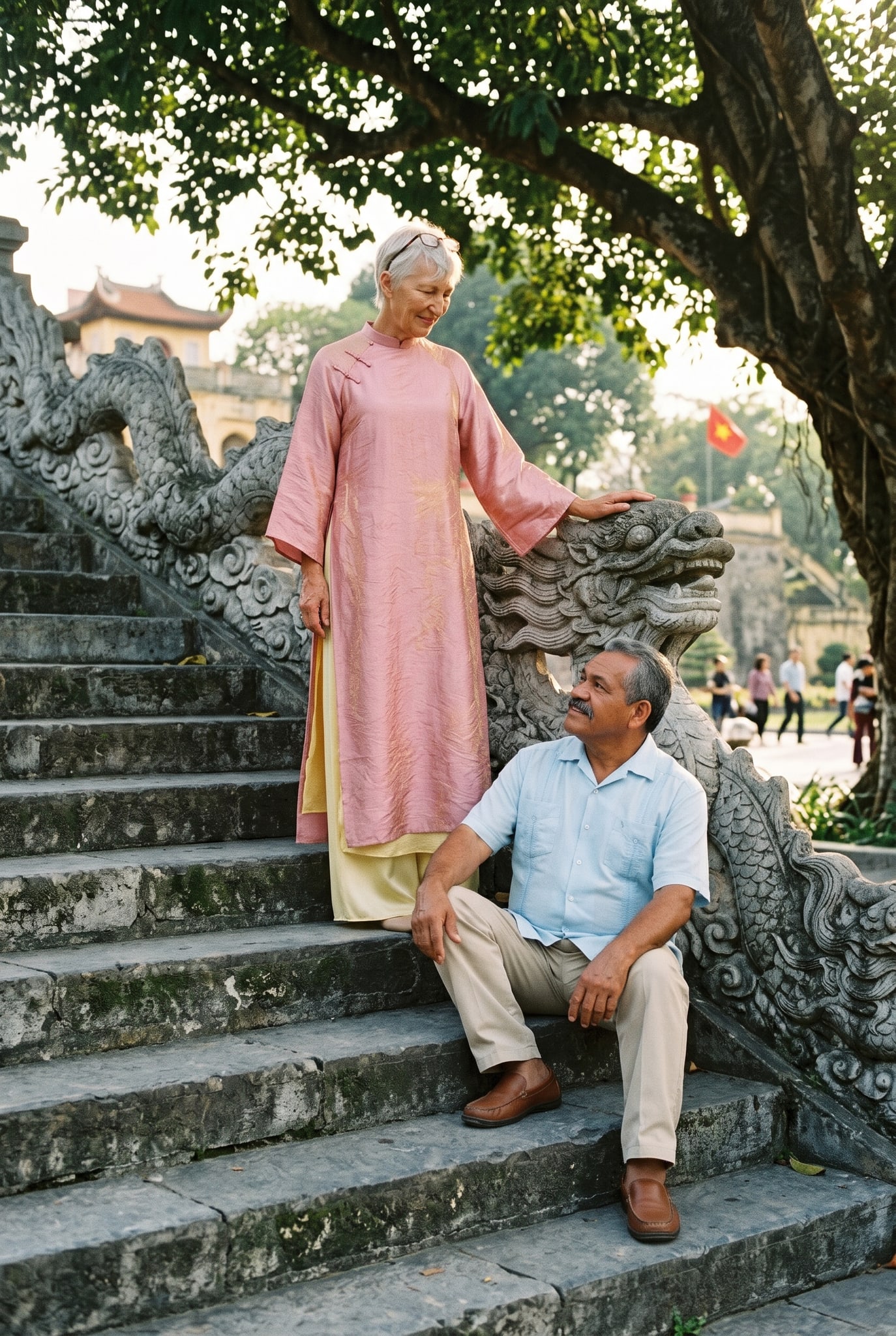
Why does the light inside Jade Emperor Pagoda betray every photographer?
Jade Emperor's interior is a jewel-box: dark wood beams, golden altar, red silk—and almost no daylight once you step past the entrance. Our team learned early that on-camera flash washes out the temple's color, so we use high ISO, f/2.0 lenses, and reflectors to bounce what little light exists. The red doors at the entrance photograph beautifully between 6:30–7:30 a.m., when horizontal sun turns them almost glowing; after 8 a.m., the sun climbs and the shot flattens. Inside, we position you near doorways or beside the altar's ornate carved panels so reflected light sculpts your face rather than flattening it. Incense smoke, which sounds atmospheric, actually diffuses light and creates haze—we work with it for mood, but it costs sharpness. What guests don't expect: the best portraits happen in the shadowed corners where the eye adjusts and gold leaf catches light subtly. Bring patience for longer exposures and trust our team to nail focus in low light.
Should Jade Emperor Pagoda be a standalone shoot or part of a bigger Hanoi itinerary?
Shooting only Jade Emperor Pagoda means 2 hours of content in a 2–3 hour booking—feels short. We almost always recommend pairing it with another Old Quarter temple (Ngoc Son, Bach Ma) or the street-level scenes around it: morning incense smoke rising from the alley, elderly worshippers in the courtyard, the narrow shopfronts next door that frame architectural shots. A vacation photoshoot that includes multiple locations gives you variety, avoids the boredom of one room, and uses travel time between sites productively. If you're flying in for one day, a half-day package covering 3–4 nearby landmarks (temple, Golden Hand Lake, Hoan Kiem waterfront) feels substantial. Standalone temple shoots work for elopements or concept series where you spend the full 3 hours styling, posing, and shooting from every angle—but most travelers prefer motion and new backgrounds.
What do our stylists notice about what works and what doesn't in this space?
Our makeup artists see that heavy, full-coverage makeup photographs flat under temple light—skin reads ashy instead of luminous. We shift toward cream blush, dewy base, and lighter brows so your face catches what light exists. Áo dài works beautifully because the silk drapes catch light and the color (jewel tones: emerald, sapphire, burgundy) complements the gold and red interior; pastels or white áo dài often blow out. Jewelry matters: gold pieces shine against the altar, but silver reads cold and gets lost. We ask guests to avoid very wide sleeves (get caught on incense racks and doorframes) and choose solid fabrics over busy patterns (they compete with the temple's carvings). Hair down photographs better than high updos—the temple's dark walls need softness in the frame, and pulled-back styles expose neck/shoulders, which jarring angles in the narrow space can't flatter. After three years of shoots here, we've learned that restraint in styling lets the location breathe.
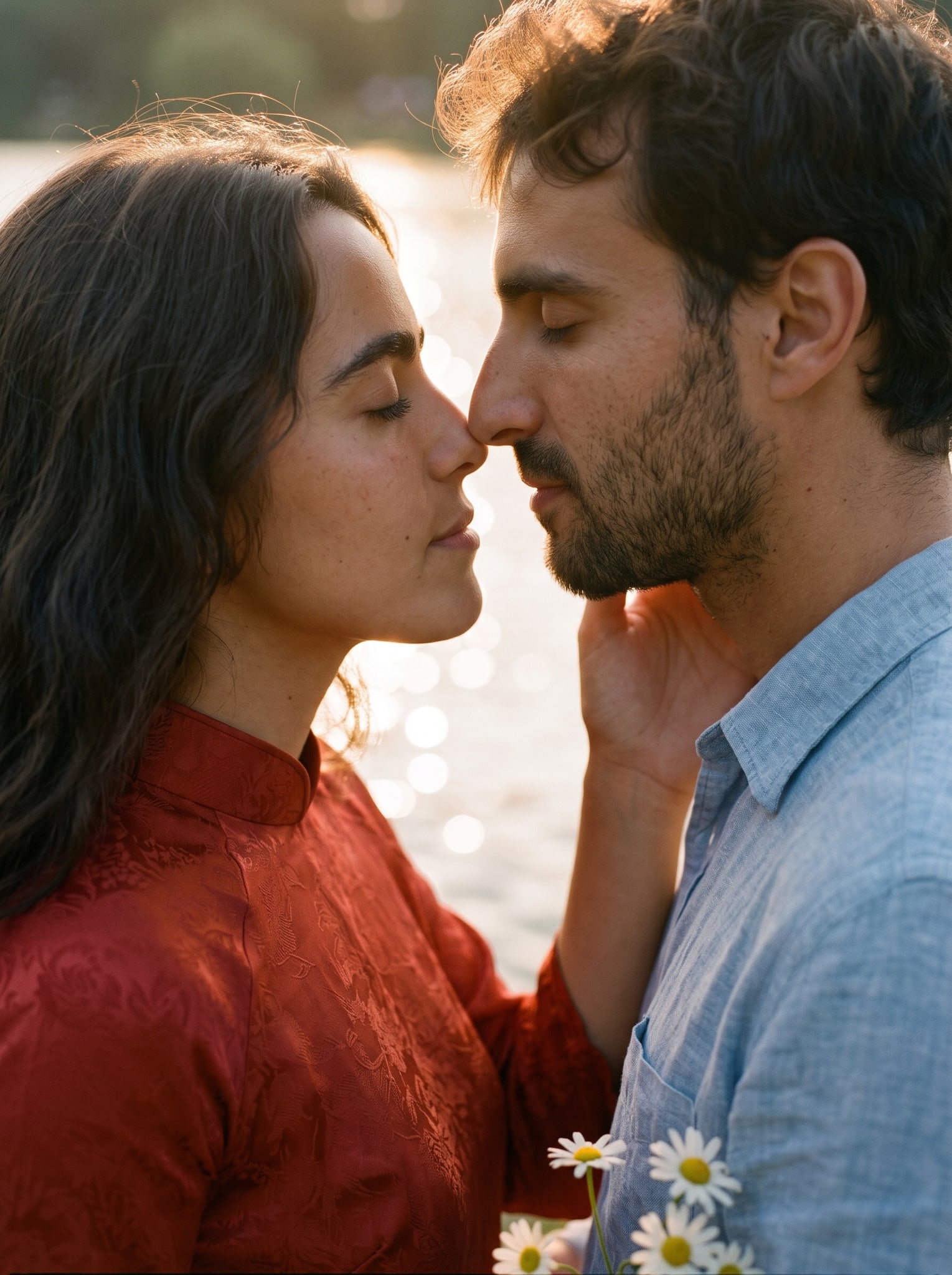
What to check before booking a Jade Emperor Pagoda session with us
Before you confirm, ask yourself:
- Are you flexible on start time? We need 6–7 a.m. for light; late sleepers feel rushed.
- Can you kneel or sit on the altar steps? Many of our best shots frame you low, surrounded by offerings.
- Do you have at least 2 hours available? Less than that and we're shooting against the clock before crowds arrive.
- Are you okay with incense smell lingering in clothes? (It washes out, but it's real.)
- Do you want áo dài or modern dress, or both? Changing twice means less time shooting; one outfit means less variety.
Check our vacation photoshoot packages to see which includes location scouting, styling advice, and how many outfit changes are built in. If you're planning a pre-wedding session or couple shoot with a temple component, those packages allow more time and professional styling. We also offer makeup and hair at your hotel if you're staying nearby—saves 30 minutes of travel.
How do we handle the crowds and the chaos?
By 8:30 a.m., Jade Emperor Pagoda has 20–30 people inside—worshippers, tour groups, solo travelers. We've developed a rhythm: we finish the main altar shots by 8 a.m., then pivot to detail work (incense, flowers, gold trim) and architectural framing that uses the crowd as texture rather than avoiding it. If a large tour group arrives, we step outside, shoot you against the facade or in the alley's morning light, and wait 15–20 minutes for them to leave. We've never had to reschedule because of crowds—temples have a flow, and we read it. What we don't do is ask worshippers to move or wait; this is their space first. Our photographer watches for moments when the courtyard empties naturally, and we're nimble enough to pivot if a ceremony begins (we've had 2 sessions shift to nearby Ngoc Son or Bach Ma when that happened). Guests appreciate the respect and almost always get the shots they wanted by adapting with us.
Comparison: Jade Emperor vs. Other Hanoi Temple Shoots
| Temple | Light | Crowds | Outfit Style | Best For | Session Type |
|---|---|---|---|---|---|
| Jade Emperor | Low indoors, gold tones | High after 8 a.m. | Áo dài, jewel tones | Intimate, cultural | Standalone or multi-location |
| Ngoc Son | Mixed (water + temple) | Moderate mornings | Áo dài, modern | Lakeside variety | Multi-location combo |
| Bach Ma | Bright, open courtyard | Low, less touristy | Any color | Wider shots, movement | Longer bookings |
Most guests choose Jade Emperor for its iconic red doors and altar detail, then add Bach Ma or Ngoc Son for open-air contrast. We've shot 40+ temple sessions in 2024–2025; the combos work better than single-temple bookings for pacing and final image diversity.
FAQ
Can we shoot at Jade Emperor Pagoda in the afternoon?
Possible, but light suffers indoors and crowds peak 10 a.m.–5 p.m. We've done sunset shots on the temple steps (6–7 p.m.) when tourist groups leave, but interior photos lose color. Early morning (6:30–8 a.m.) is our honest recommendation.
Do we need permission to photograph inside the temple?
No formal permission required, but be respectful of worshippers—never pose at the altar itself, and ask before photographing people in prayer. We handle this on your behalf during shoots.
What should we wear to avoid looking washed out in the low light?
Jewel tones (emerald, sapphire, burgundy, gold) photograph best. Pastels and white can blow out. If wearing áo dài, silk with depth reads richer than matte cotton. Our stylists help you choose—mention preferences when booking.
Is Jade Emperor Pagoda included in your vacation packages?
Jade Emperor isn't automatic; most vacation photoshoot packages are flexible itineraries. Tell us you want it, and we'll build it in. Multi-location bookings (3+ hours) work better than adding it alone.
How many outfit changes should we plan?
One outfit (áo dài or modern dress) fills 2.5 hours comfortably. Two outfits means less shooting time and rushed changes. For longer bookings, 2–3 changes work if you change off-site beforehand.
What happens if it rains early morning?
We reschedule or move to nearby covered temple areas. Rain on temple courtyard pavement photographs beautifully, but we won't shoot in you wet. Check the forecast 48 hours before; we're flexible with bookings.
Vacation & Solo Photoshoot
Inclusions, prices and booking are on our booking site.
FAQ
Can we shoot at Jade Emperor Pagoda in the afternoon?
Possible, but light suffers indoors and crowds peak 10 a.m.–5 p.m. We've done sunset shots on the temple steps (6–7 p.m.) when tourist groups leave, but interior photos lose color. Early morning (6:30–8 a.m.) is our honest recommendation.
Do we need permission to photograph inside the temple?
No formal permission required, but be respectful of worshippers—never pose at the altar itself, and ask before photographing people in prayer. We handle this on your behalf during shoots.
What should we wear to avoid looking washed out in the low light?
Jewel tones (emerald, sapphire, burgundy, gold) photograph best. Pastels and white can blow out. If wearing áo dài, silk with depth reads richer than matte cotton. Our stylists help you choose—mention preferences when booking.
Is Jade Emperor Pagoda included in your vacation packages?
Jade Emperor isn't automatic; most vacation photoshoot packages are flexible itineraries. Tell us you want it, and we'll build it in. Multi-location bookings (3+ hours) work better than adding it alone.
How many outfit changes should we plan?
One outfit (áo dài or modern dress) fills 2.5 hours comfortably. Two outfits means less shooting time and rushed changes. For longer bookings, 2–3 changes work if you change off-site beforehand.
What happens if it rains early morning?
We reschedule or move to nearby covered temple areas. Rain on temple courtyard pavement photographs beautifully, but we won't shoot in you wet. Check the forecast 48 hours before; we're flexible with bookings.
More from the team
Honeymoon Photoshoot in Hoi An: What Our Team Sees on Set
Hoi An draws newlyweds for its lantern-lit old town and riverbank light. We've shot hundreds of couples there—here's what actually happens during your session, hour by hour, and how to choose between what we offer.
Nhat Tan Peach Blossom Gardens Photoshoot: What We Book
Nhat Tan peach blossoms peak for just three weeks each January–February. We run morning sessions there to beat tourist crowds and capture soft light—here's how our studio plans them and what actually happens on the ground.
Truc Bach Lake Photoshoot: What to Book at Cáo Studio
Truc Bach Lake is one of Hanoi's most photographed water landmarks. We run sessions there 3–4 times weekly, and share how to get the best light, what to wear, and what actually happens during a shoot.