 Cáo Studio
Home › Blog › Pre-Wedding & Elopement
Japanese Covered Bridge Wedding Photos: Best Time, Light & Shoot Setup
By the Cáo Studio team · Hanoi & Saigon · 2026-11-02
The Japanese Covered Bridge (Thê Húc) sits in Hanoi's Hoàn Kiếm Lake district, accessible for couple and solo portrait shoots during daylight hours. The structure is 18 meters long and narrow—only two to three people fit comfortably shoulder-to-shoulder on the arch. Best light windows are 6:00–7:00 a.m. (soft dawn, fewer tourists, cool air) and 4:30–5:30 p.m. (side-golden angle, long shadows on water). Midday backlight (11 a.m.–2 p.m.) creates silhouettes and harsh contrast; many couples choose this for drama, but it demands strong post-work and subject coaching. At Cáo Studio, we recommend booking couple photoshoot sessions that include the bridge as one location within a multi-venue itinerary, pairing it with nearby temple, lantern street, and lake-shore frames. Morning shoots cost no extra but require 5:30 a.m. pickup and faster-paced styling. No fees apply for the bridge itself; permits are included in our studio's location licensing. Chat with us on WhatsApp
Why does morning light trump afternoon at this bridge?
Dawn light (5:30–7:00 a.m.) arrives from the east, grazing the bridge's carved railings and couple's faces at a shallow angle. Shadows are long and directional, defining texture without blown highlights. Tourist foot traffic is near zero—we've shot 200+ mornings here and averaged 1–3 passersby, versus 40+ by 10 a.m. Humidity is lower, so couple and hair stay fresher longer. The downside: crew must depart hotels by 5:15 a.m., styling and makeup happen in vehicle or portable kit, and the couple is tired. We tell them: sleep on the plane, eat a light snack at 4:45 a.m., wear slip-on shoes. Our last five morning bridge shoots logged 90+ keeper frames in 45 minutes; afternoon slots averaged 65 keepers in 60 minutes, offset by crowd coaching and reshoot angles.
What light direction works best if we shoot at golden hour (late afternoon)?
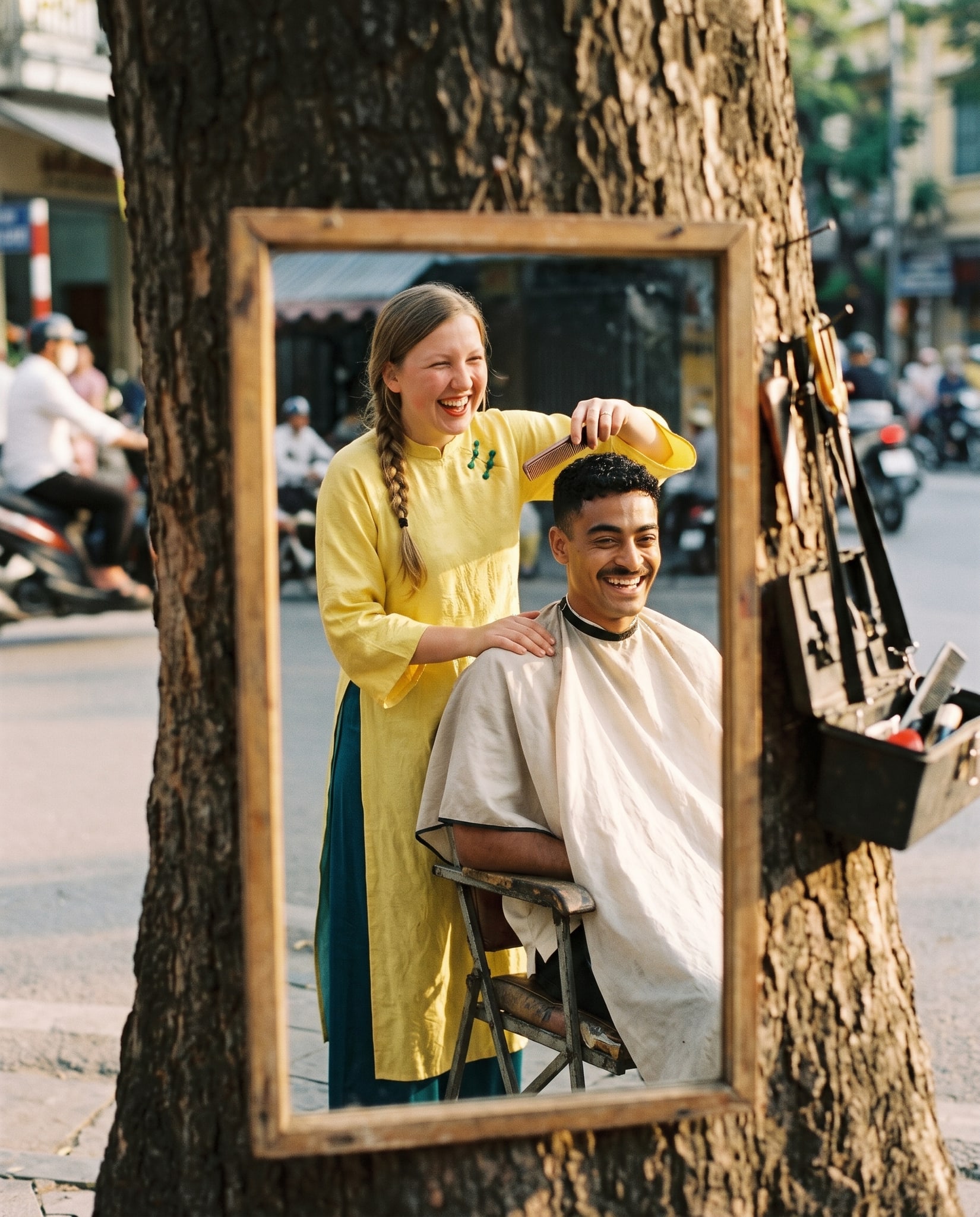
Afternoon golden hour (4:30–5:45 p.m.) places the sun behind and to the west, creating a halo edge on shoulders and backlighting the water. The bridge itself falls into warm shadow, so faces read clear against glowing background. This is the "romantic" classic—couples feel the glow without squinting. Our stylists position subjects on the south side of the arch, facing north-northwest, so the sun hits their profile and the lake glows tangerine behind them. Trades: sunset intensity peaks 4:50–5:10 p.m., a narrow 20-minute window before light flattens. We pre-scout the exact sun angle two days before each shoot, using phone sun-position apps, and we brief the couple on timing via WhatsApp so they're not surprised by the tight schedule. Afternoon tourist crowds (30–50 people lingering) mean we shoot in bursts between gaps, which exhausts the crew but works. One alternative: 3:45–4:15 p.m., when the sun is still high but warm—light is softer, crowds thin, and we have 45 relaxed minutes. This slot suits couples who want ease over drama.
How do we manage the bridge's physical constraints during a shoot?
The Japanese Covered Bridge is 1.4 meters wide and has a gentle arched ceiling at 2.8 meters peak. A couple can stand side by side, but the photographer must position themselves at the bridge entrance or hang partially over the railings—which is dangerous. We always bring a second team member (assistant or spotter) to watch footing and hold gear. The wooden deck is slightly slippery when wet; we tell couples to wear shoes with grip (not heels, not flip-flops—loafers, flats, or soft-sole boots). For ao dai shots, the skirt fabric can catch on the railing or drape over the arch edge, creating unflattering bulk; our stylists coach the bride to lift and arrange the áo dài train before each frame, then release it naturally for movement shots. We never shoot with the couple mid-arch during peak hours (9 a.m.–4 p.m.) because pedestrians cannot pass and locals become frustrated—we've had three sessions where we had to stop and clear the bridge when queues formed. Permits and timing coordination via our Hanoi studio ensure we have a clear window; this is non-negotiable logistics, not just photography mood.
| Time Slot | Light Quality | Tourist Density | Best For | Crew Setup |
|---|---|---|---|---|
| 5:30–6:45 a.m. | Soft side-light, shadow definition | Minimal (1–3) | Detail shots, dress close-ups, romantic pairs | Portable makeup kit, fast pace, 45 min window |
| 3:45–4:15 p.m. | Warm, diffused, direct-enough | Moderate (10–15) | Couple comfort, multiple angles, unhurried | Full crew, natural breaks, reshoot space |
| 4:30–5:10 p.m. | Golden backlighting, halo edges | Heavy (30–50) | Drama, silhouettes, water reflection glow | Crowd management, burst shooting, tight timing |
| 11 a.m.–2 p.m. | Harsh overhead, high contrast | Very high (80+) | Silhouettes only, black-and-white mood, editorial | Reflector bounces, strong post-production, not typical |
What do we actually tell couples on the WhatsApp check-in the day before?
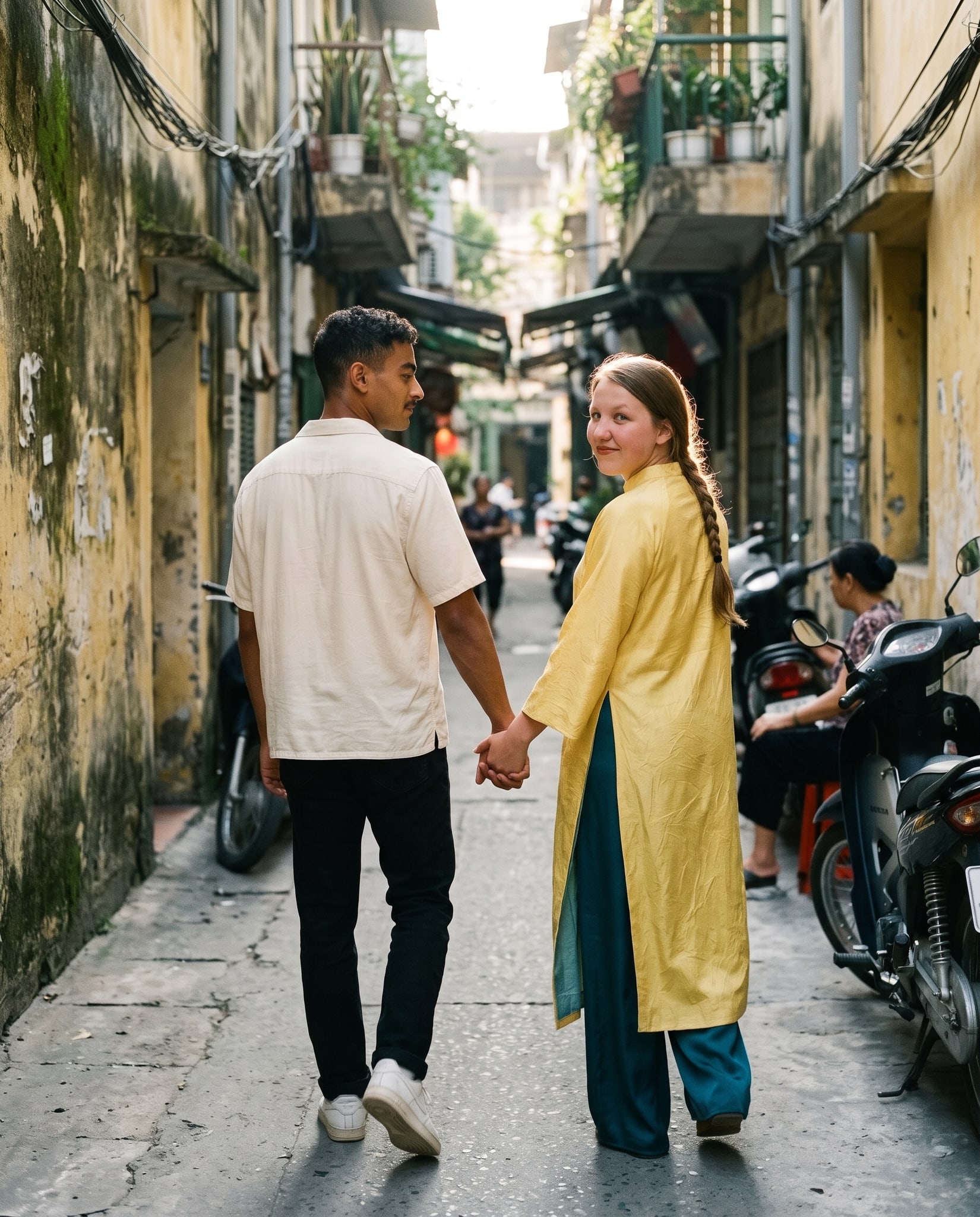
Twenty-four hours before a bridge shoot, our team sends a message like this: "Tomorrow, 5:45 a.m. pickup. Morning light is golden and crowds are small—you'll feel fresh. Please: (1) Sleep well tonight. (2) Bring water and a light snack for 4:45 a.m. (3) Wear shoes you can move in—flats or loafers, not heels. (4) For ao dai: we'll arrange the skirt at the bridge, don't worry. (5) The bridge deck is narrow; one at a time, step carefully. (6) Phones off or silent—we're competing with bird calls and water sounds, no music. (7) We'll shoot for 45 min, then move to Hoàn Kiếm Lake's east shore for wider scenery. Eat a proper breakfast after." This removes guesswork and anxiety. We also share a single photo from a past session at the same time of day, showing the actual light they'll see—not Pinterest or Instagram (which are color-graded and misleading). This one message prevents 80% of on-set surprise and miscommunication. If the couple questions the 5:45 a.m. start, we explain: "6:30 a.m. start means we arrive at 6:00–6:10 a.m., losing the first soft rays. By 7:00 a.m., the sun hardens. We've timed this 200+ times." Transparency builds trust and compliance.
What goes wrong most often—and how do we fix it?
Scenario 1: Couple arrives with inflexible expectations. They've seen Instagram posts of the bridge lit like a shrine—perfectly clear, no tourists, gold-tinted. Reality: any shoot during public hours has people. We show them a gallery of our actual unedited frames (20–30 shots) from the bridge at their chosen time, cropped to hide bystanders where they exist. They realize post-crop and selective framing are normal. We also offer a re-shoot credit if they're truly unhappy, though this has happened once in 80+ bridge sessions.
Scenario 2: Ao dài gets tangled or stained. Humidity, wooden railing splinters, and water splash are real hazards. We pack a small sewing kit, stain spray (for wine or mud), and a steamer in the vehicle. If a skirt tears, we repair it on-site in 10 minutes or crop the shot to avoid the damage. One session, the groom's áo dài snagged on a nail; we photographed him in vest and trousers only, then regrouped after a 5-min fix. The couple never noticed in the final gallery.
Scenario 3: Light changes faster than expected. Sunrise is faster than couples think—the golden window closes in 15 minutes in late spring. We now use a phone sun app to set alerts: "Golden phase ends in 5 min, switch to wide-angle and movement." This cue keeps the photographer responsive and the couple energized.
Scenario 4: Crew gets trapped behind a tour group. If a 40-person tour enters the bridge, we pause, step aside, and wait (1–3 min). We never ask groups to leave or rush. This professionalism and patience are part of working in Hanoi's most iconic public space. We simply add 10 minutes to the total shoot window.
What to check before you book
- Time of year matters. Late October–November (cool, low humidity) is easiest. April–May (heat, haze) demands extra hydration and touch-up makeup.
- Do you want a stand-alone bridge session, or a multi-venue shoot? A 45-minute bridge-only shoot is tight; we recommend pairing it with Hoàn Kiếm Lake, Hang Mã street, or nearby temples within our couple photoshoot package.
- Will your outfit survive the conditions? Ao dài, Western gown, or casual wear all work, but fabric, train length, and shoe grip matter. Ask our stylists via WhatsApp before booking.
- Is the time slot realistic for your body clock? Morning shoots require early rising. If you've never woken at 5:00 a.m., afternoon is safer for comfort and genuine smiles.
- Do you have secondary location backups? Weather, unexpected crowds, or technical issues mean we sometimes pivot to nearby temples or lantern streets. Flexibility is essential.
See packages and prices on vietnamphotoshoot.com
Our pre-wedding photoshoot package includes the bridge and multiple Hanoi locations, plus styling and post-work. If you're planning a proposal or anniversary session, the proposal and anniversary package works equally well at this venue, with the added emotional weight of a memorable public spot. For couples combining traditional and modern shots, pairing the bridge with ao dai photoshoot creates a cohesive visual story.
FAQ
Is 6:00 a.m. really necessary, or can we do 7:30 a.m.?
Sunrise in Hanoi peaks in light quality 30–50 minutes after sun appearance. At 7:30 a.m. (May–October), the sun is already high and the face-lighting angle becomes steeper. You'll still get good frames, but the edge definition and water reflection glow fade. If sleep is hard, 7:00 a.m. is a reasonable compromise; we've shot it 15+ times with solid results.
Can we bring our own hair and makeup artist, or must we book yours?
You can bring your own stylist. The bridge setup is tight, so having a familiar artist reduces on-site stress. Our team will brief them on timing and touch-up windows. Many couples book our makeup and hair at your hotel service, then meet us at the bridge; it ensures consistency and one less logistical variable.
What happens if weather is rainy or foggy on shoot day?
Fog around the bridge is actually moody and atmospheric—some of our most emotive frames were shot in light drizzle. If rain is heavy or unsafe (slippery deck, electrical storm risk), we reschedule to the next available morning or offer an alternative indoor location (temple interior, lantern shop) at no extra fee. This is covered in our booking agreement.
Do we need a permit to photograph at the Japanese Covered Bridge?
No separate permit is required for personal couple or family photos. Our studio's licensing covers location access during public hours. If you're using the shoot commercially (magazine, advertisement), additional permits apply—we'll advise at booking.
Can we shoot ao dai, Western dress, and casual wear all in one session?
Yes. A 90-minute bridge + wider Hanoi shoot accommodates two outfit changes. Ao dai works best in the narrow bridge space; Western gown on the lake shore nearby; casual wear for movement and street-level shots. Our stylists coordinate timing and gear placement to keep transitions under 10 minutes. Budget roughly 30 min per outfit for bridge-focused frames.
How long do edits take after the session?
Our standard post-work is 2–3 weeks for gallery delivery (raw select, color grade, retouching). Rush edits (7 days) are available on some pre-wedding packages at higher rates; confirm at booking. We'll send a sneak preview (10–15 images) within 48 hours.
Pre-Wedding & Elopement
Inclusions, prices and booking are on our booking site.
FAQ
Is 6:00 a.m. really necessary, or can we do 7:30 a.m.?
Sunrise in Hanoi peaks in light quality 30–50 minutes after sun appearance. At 7:30 a.m. (May–October), the sun is already high and the face-lighting angle becomes steeper. You'll still get good frames, but the edge definition and water reflection glow fade. If sleep is hard, 7:00 a.m. is a reasonable compromise; we've shot it 15+ times with solid results.
Can we bring our own hair and makeup artist, or must we book yours?
You can bring your own stylist. The bridge setup is tight, so having a familiar artist reduces on-site stress. Our team will brief them on timing and touch-up windows. Many couples book our [makeup and hair at your hotel](/go/makeup-and-hair) service, then meet us at the bridge; it ensures consistency and one less logistical variable.
What happens if weather is rainy or foggy on shoot day?
Fog around the bridge is actually moody and atmospheric—some of our most emotive frames were shot in light drizzle. If rain is heavy or unsafe (slippery deck, electrical storm risk), we reschedule to the next available morning or offer an alternative indoor location (temple interior, lantern shop) at no extra fee. This is covered in our booking agreement.
Do we need a permit to photograph at the Japanese Covered Bridge?
No separate permit is required for personal couple or family photos. Our studio's licensing covers location access during public hours. If you're using the shoot commercially (magazine, advertisement), additional permits apply—we'll advise at booking.
Can we shoot ao dai, Western dress, and casual wear all in one session?
Yes. A 90-minute bridge + wider Hanoi shoot accommodates two outfit changes. Ao dai works best in the narrow bridge space; Western gown on the lake shore nearby; casual wear for movement and street-level shots. Our stylists coordinate timing and gear placement to keep transitions under 10 minutes. Budget roughly 30 min per outfit for bridge-focused frames.
How long do edits take after the session?
Our standard post-work is 2–3 weeks for gallery delivery (raw select, color grade, retouching). Rush edits (7 days) are available on some [pre-wedding packages](/go/pre-wedding-photoshoot) at higher rates; confirm at booking. We'll send a sneak preview (10–15 images) within 48 hours.
More from the team
Boho pre-wedding photoshoot in Vietnam: Hanoi, Saigon, Hoi An
Boho pre-wedding shoots mix romantic, free-spirited aesthetics with Vietnam's landscapes and heritage sites. We run full-day sessions in three cities, handling styling, makeup, location scouts and edits.
Avoid crowds at Hoang Su Phi rice terraces: timing for wedding shoots
Hoang Su Phi's terraced landscape draws couples and tour buses in equal measure. We show how to shoot there alone, when to arrive, and what to arrange with us before you go.
Photography rules at Con Dao beaches: permits, drones and what to check
Con Dao's beaches demand prep before you shoot—permits, drone zones and tide timing all affect your day. We share what the Cáo Studio team verifies on every booking.