 Cáo Studio
Home › Blog › Vacation & Solo Photoshoot
Kim Bong Carpentry Village Photoshoot: What to Book
By the Cáo Studio team · Hanoi & Saigon · 2026-11-01
Kim Bong Carpentry Village sits on the banks of the Thu Bon River near Hoi An and attracts photographers for its golden-hour light filtering through open workshop doors, stacks of aged timber, and the presence of actual craftspeople shaping wood by hand. A typical Cáo Studio session here runs three to four hours, usually in late afternoon, and includes styled outfit changes, movement through the main workshop lanes, and candid moments at specific artisan stations we've built relationships with over years of shooting. The village charges a small entry fee (ask us for a quote), and you'll walk unpaved paths—wear shoes you don't mind dirtying. Sessions suit couples, solo travelers, pre-wedding pairs, and concept shoots; families with very young children find the uneven ground and long walking challenging. Our stylists coordinate with your outfit so colors read well against timber tones, and our photographers time shots around tour groups to keep the space feeling intimate.
Why does Kim Bong feel different from other Hoi An backdrops?
The village isn't a staged, tourist-only stage set. Real woodworkers—many families across three generations—still plane, carve, and assemble furniture inside these open-front shops. You're not posing in front of scenery; you're moving through an active craft quarter. When we scout a location at noon, we're checking which workshops have doors propped open, where sunlight hits the timber stacks at 5 p.m., and which artisans are relaxed about a photographer working quietly nearby. A bride in an áo dài standing beside a carpenter's lathe, sawdust catching late light—that's a Kim Bong shot. The village sits roughly eight kilometers from central Hoi An; most day-trippers arrive around 3 p.m., which means we often book sessions to wrap before the crowd peaks. The river walk at the village's edge gives us softer, waterside reflections we can't get in the town center.
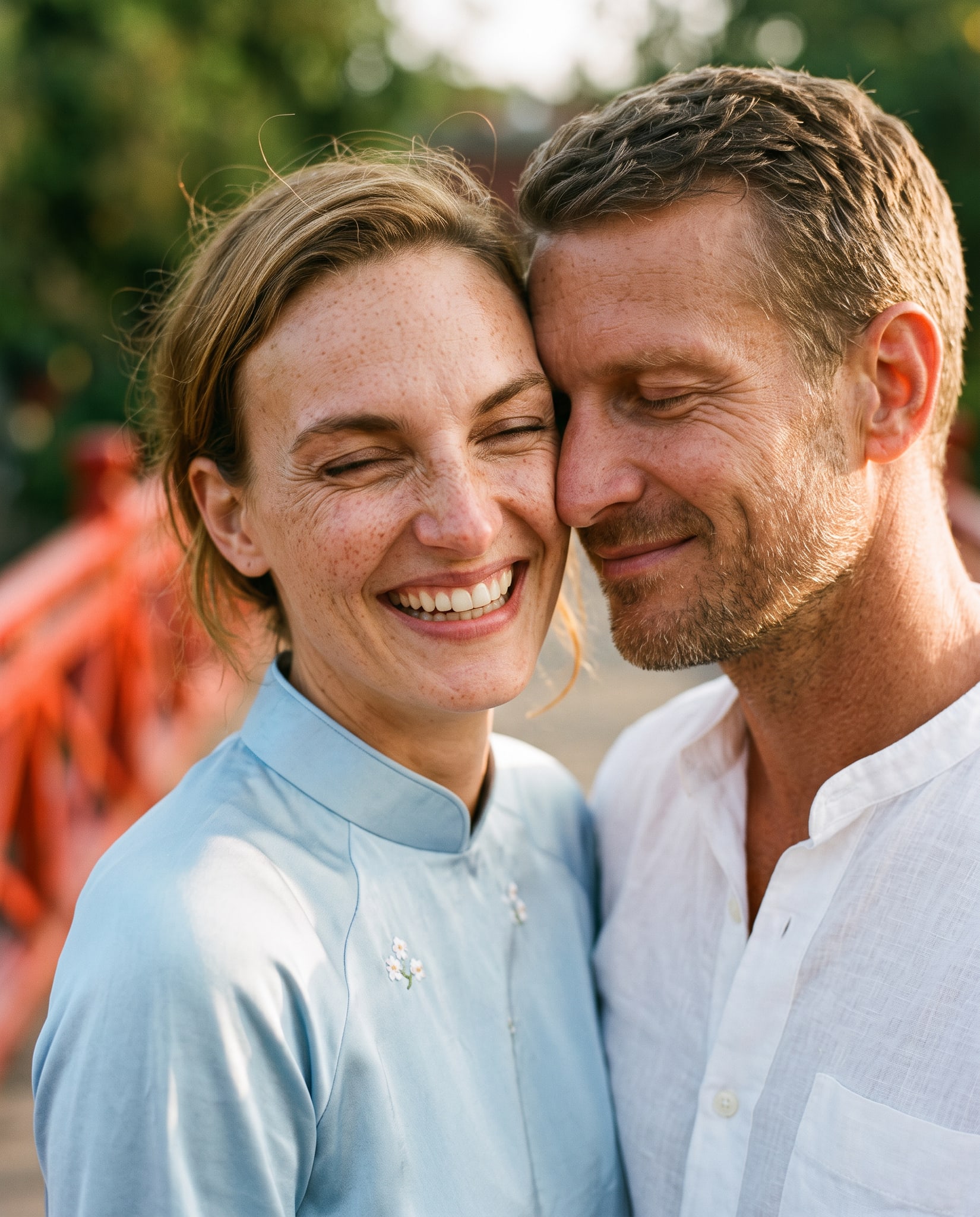
What outfit choices work best in a wood-working setting?
Neutral, earthy, and natural-fiber colors—cream, soft gray, terracotta, olive, navy—let you blend and contrast against timber in equal measure. Patterns read oddly in close-ups where sawdust and tool marks dominate the frame, so we steer clients toward solids or very subtle texture. Long fabrics (linen trousers, maxi skirts, silk scarves) move beautifully as you walk between stalls and catch air in the open doorways where light is strongest. If you're wearing an áo dài, we press for jewel-tone or muted silks that don't compete with the wood grain—a bright fuchsia áo dài will dominate the frame and pull focus from the environment that makes Kim Bong special. Our stylists on the Hoi An team spend the first 30 minutes of your session walking the village with you in proposed outfits, testing angles and light, and we've often asked clients to swap a top or add a scarf mid-shoot if the color isn't reading as we'd hoped. Footwear: closed shoes with grip (not slides or sandals), because paths are uneven and dusty. Jewelry should be minimal—delicate rings and earrings work; chunky bracelets catch wood dust and catch light in distracting ways. Sunglasses: leave them off for most shots, but they're useful between outfit changes if the afternoon sun is intense.
How do we handle the heat and dust on shoot day?
We always brief clients the week before on WhatsApp: bring a personal water bottle (refill stops are limited in the village), a small towel for wiping dust off shoes between setups, and a change of socks if you're self-conscious about dusty feet in photos. Our team carries extra water, touch-up powder for makeup, and a lint roller. The humidity in Hoi An (especially April through September) means foundation can slip; our makeup artists use setting spray twice during a four-hour session and build in a 10-minute rest break at the village's small cafe around the halfway mark—you sit, have iced tea, chat with us about shots we're planning, and makeup gets refreshed. Dust isn't a disaster; it's part of the aesthetic. We don't Photoshop out all of it; a little sawdust on a shoulder or fine dust in the air softens the frame and reads as "authentic location" rather than "studio." Where we're careful: eyes. If the wind kicks up wood particles, we stop, you blink several times facing away from the wind, and we resume in a sheltered spot. In our experience, about one session in every eight runs into afternoon rain (the village has limited shelter, and we reschedule rather than push through wet conditions).
See packages and prices on vietnamphotoshoot.com
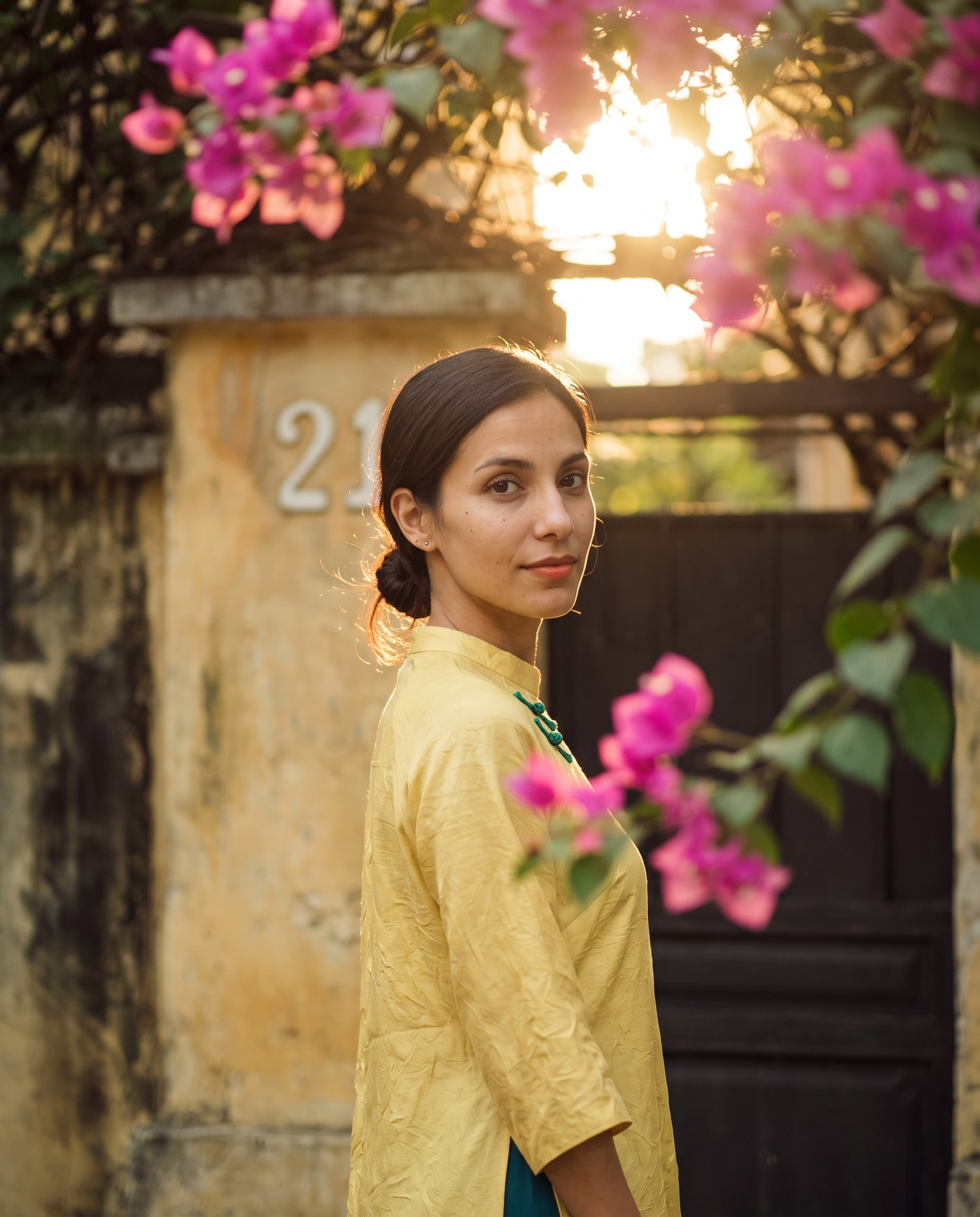
Which shoot packages pair best with a Kim Bong session?
| Package Type | Best For | Why It Works | When to Book |
|---|---|---|---|
| Vacation and solo photoshoot | Solo travelers, personal milestone | One photographer, 4 hours, includes outfit changes and candid moments in one location. | 2 weeks ahead; flexible on exact timing |
| Couple photoshoot | Dating or early-engagement pairs | Two outfits, natural light focus, movement through the village together. Photographer catches unscripted moments. | 3 weeks ahead |
| Pre-wedding and elopement | Engaged pairs, elopement ceremonies | Extended hours, two locations possible (Kim Bong + Hoi An old town), includes bride prep at hotel. | 6–8 weeks ahead for Vietnam travel timing |
| Proposal and anniversary | Surprise proposal, anniversary renewal | Candid surprise capture, one outfit, intimate pacing. Requires coordination with a local contact (we help). | Proposal: 1–2 weeks; anniversary: flexible |
| Concept shoot | Thematic, creative vision (e.g., artisan collaboration, vintage narrative) | Custom styling, extended creative direction, may include interaction with actual craftspeople (requires advance permission). | 4–6 weeks ahead |
Couples most often pair Kim Bong with an evening walk through Hoi An's lantern-lit streets afterward; solo travelers use it as the anchor for a one-day shoot (Kim Bong in late afternoon, then riverside at dusk). Pre-wedding clients sometimes do Kim Bong as a "concept" day separate from the main formal pre-wedding coverage, capturing a more candid, location-focused narrative. Hotel makeup and hair services can happen at your accommodation in Hoi An the morning of the shoot, so you arrive at the village camera-ready and don't waste daylight on setup.
What do we see photographers miss when they first visit Kim Bong?
The light quality shifts dramatically every 20 minutes. At 4 p.m., sun hits the river at the village's edge and bounces back into the workshop lanes—soft, directional, beautiful. By 5 p.m., the sun dips lower and sends shafts directly through the open doors, which is dramatic but harsh on faces if you're standing in the path. We book sessions to peak between 4:15 and 5:15 p.m. for this reason. Early visitors assume the center workshop lane (the main pedestrian path) is the best backdrop, but it's actually the secondary lanes and the river-facing side of the village where light diffuses better and foot traffic is lighter. We've learned not to shoot directly in front of a working lathe or saw—the craftsperson understandably tenses up and loses the ease that makes a candid shot work. Instead, we ask if we can position you nearby, not interrupting their work, and they relax. One detail many shooters overlook: the wooden signs and name plaques above workshop doors. Some are centuries old and frame beautifully if you position yourself correctly. We also notice that evening light (5:30–6:30 p.m.) shoots are quieter, emptier, but the sun is too low and orange unless you're shooting silhouettes or very warm-toned portraits. Our team's sweet spot is a late-afternoon session timed to wrap just as the tour groups thin out.
See packages and prices on vietnamphotoshoot.com
How do location logistics work on the day?
We arrange your arrival with a driver or guide (not included in photo packages; ask about local recommendations on WhatsApp). Our team meets you at the village entrance 15 minutes before your booked start time. We bring portable lighting (reflectors and diffusers) in case shadows become too stark, a small first-aid kit, and a tablet to show you shots in real-time so you know how frames are reading. The village entry process is simple: you pay a small fee at the entrance, and we proceed to the photographer's first scouted location. We shoot for about 90 minutes, then walk to a cafe for the break, and spend the final 90 minutes on a second outfit and secondary locations (often the river edge or quieter workshop lanes). Our photographer takes 400–600 images per session; our stylists and you discuss pacing and outfit timing between setups. If weather turns, we pivot: either move to a covered workshop (with the owner's permission) or reschedule. You receive edited images (digital files, color-corrected, typically 80–120 finalized photos) within 10 business days. If you're based in Hoi An for a pre-wedding photoshoot or longer stay, some clients book Kim Bong as a secondary "lifestyle" session after their main formal shoot day—more relaxed, less posing, deeper into the location's story.
What to Check Before You Book
Timing window. Kim Bong is busiest 3–5 p.m.; we book sessions for 2–6 p.m. start times to catch better light and fewer crowds. Ask us about sunset timing if you prefer very warm, orange-hour light.
Footwear and physical stamina. You'll walk 1.5–2 kilometers total, on uneven dirt paths. If you have mobility concerns, let us know when you inquire; we can shorten the route or focus on a smaller area.
Outfit practicality. Confirm with our Hoi An stylists that your planned outfits are washable or resistant to dust. Linen and cotton work; silk requires dry-cleaning after a village shoot.
Group size. Solo, couples, and pairs work smoothly. Groups larger than four become difficult to pose and light; if you're a larger group, discuss with us whether splitting into two sessions makes sense.
Budget for entry fee. The village entry is separate from your photo package cost; we'll confirm the current amount when you message us.
Cancellation policy. Check vietnamphotoshoot.com for weather-related reschedule terms when you book.
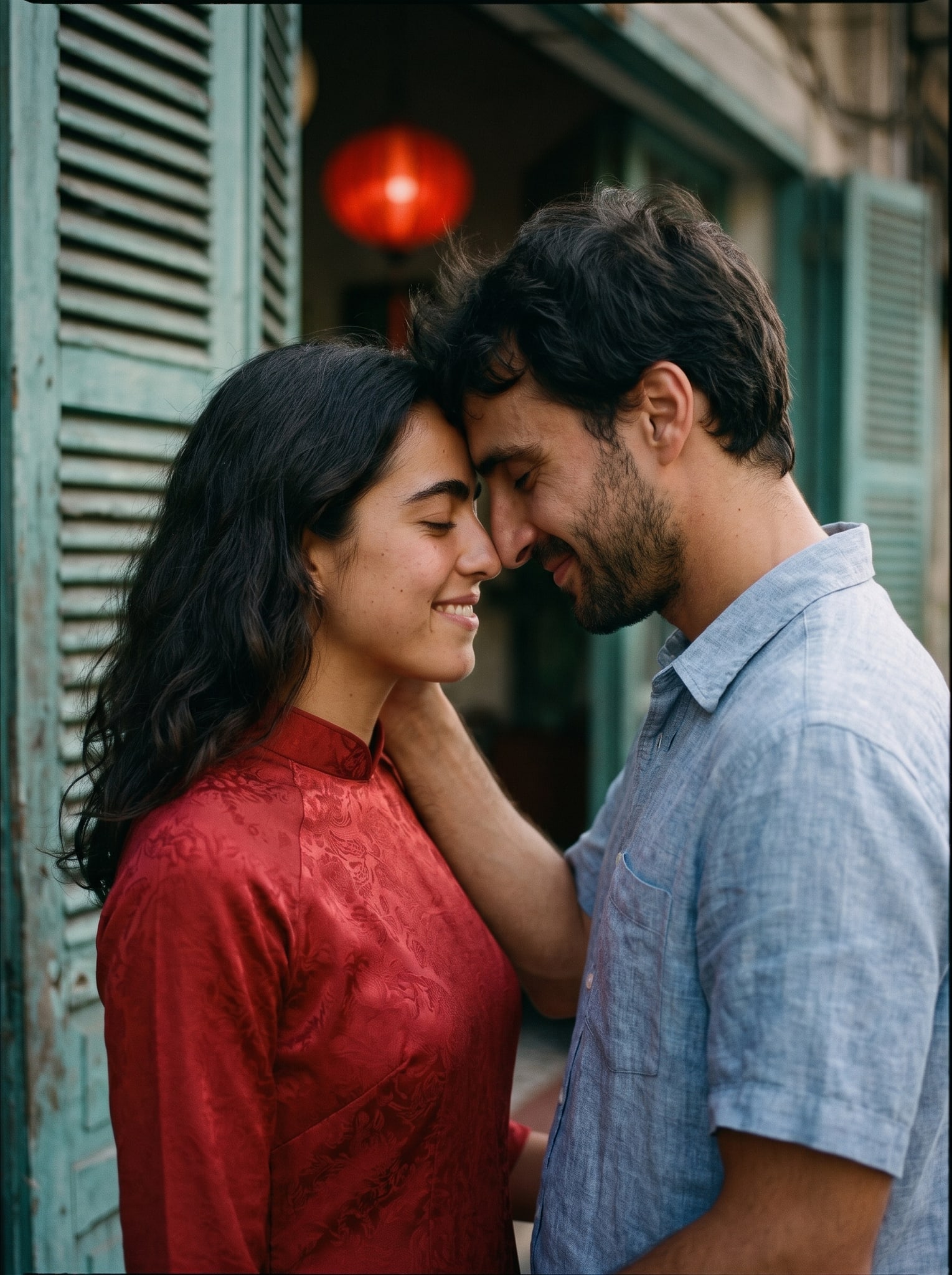
FAQ
Can we do a Kim Bong shoot in the morning instead of afternoon?
Morning light here is flat and uneven until 11 a.m., then too harsh and top-down until late afternoon. We don't recommend it. Late afternoon (2–6 p.m.) is when the village shows its best light. Ask us about alternative morning locations if you have a timing conflict.
Do we need to hire a guide or arrange transport ourselves?
Transport is your responsibility; we meet you at the village entrance. Local taxi apps (Grab) work reliably from Hoi An town center, about 20 minutes. We can suggest drivers we've worked with if you ask on WhatsApp.
How many outfit changes can we fit into a session?
Two comfortably. Three is possible if one is very quick (e.g., a swap of shoes or jacket, not a full change). More than three eats into location time, which defeats the purpose of being at Kim Bong.
What if it rains on the day?
We reschedule. Light rain doesn't stop us if you're comfortable; we work quickly and use covered spots. Heavy rain or storms mean rescheduling to another date at no extra cost (as per our package terms on vietnamphotoshoot.com).
Can we interact with the craftspeople or shoot them in the photos with us?
Brief, respectful interaction is fine—many artisans are used to curious visitors. Posing with them requires permission; we ask politely and many agree. It's authentic but not forced. For a formal "collaboration" concept shoot, let us know weeks ahead so we can coordinate properly.
Is Kim Bong suitable for a proposal?
Yes, for a quiet, intimate proposal. We'd coordinate with you beforehand on the moment and location within the village, position ourselves to capture the surprise, and keep it low-key. Proposal and anniversary packages work well here. Message us to discuss logistics.
Vacation & Solo Photoshoot
Inclusions, prices and booking are on our booking site.
FAQ
Can we do a Kim Bong shoot in the morning instead of afternoon?
Morning light here is flat and uneven until 11 a.m., then too harsh and top-down until late afternoon. We don't recommend it. Late afternoon (2–6 p.m.) is when the village shows its best light. Ask us about alternative morning locations if you have a timing conflict.
Do we need to hire a guide or arrange transport ourselves?
Transport is your responsibility; we meet you at the village entrance. Local taxi apps (Grab) work reliably from Hoi An town center, about 20 minutes. We can suggest drivers we've worked with if you ask on WhatsApp.
How many outfit changes can we fit into a session?
Two comfortably. Three is possible if one is very quick (e.g., a swap of shoes or jacket, not a full change). More than three eats into location time, which defeats the purpose of being at Kim Bong.
What if it rains on the day?
We reschedule. Light rain doesn't stop us if you're comfortable; we work quickly and use covered spots. Heavy rain or storms mean rescheduling to another date at no extra cost (as per our package terms on vietnamphotoshoot.com).
Can we interact with the craftspeople or shoot them in the photos with us?
Brief, respectful interaction is fine—many artisans are used to curious visitors. Posing with them requires permission; we ask politely and many agree. It's authentic but not forced. For a formal "collaboration" concept shoot, let us know weeks ahead so we can coordinate properly.
Is Kim Bong suitable for a proposal?
Yes, for a quiet, intimate proposal. We'd coordinate with you beforehand on the moment and location within the village, position ourselves to capture the surprise, and keep it low-key. [Proposal and anniversary packages](/go/proposal-and-anniversary) work well here. Message us to discuss logistics.
More from the team
Honeymoon Photoshoot in Hoi An: What Our Team Sees on Set
Hoi An draws newlyweds for its lantern-lit old town and riverbank light. We've shot hundreds of couples there—here's what actually happens during your session, hour by hour, and how to choose between what we offer.
Nhat Tan Peach Blossom Gardens Photoshoot: What We Book
Nhat Tan peach blossoms peak for just three weeks each January–February. We run morning sessions there to beat tourist crowds and capture soft light—here's how our studio plans them and what actually happens on the ground.
Truc Bach Lake Photoshoot: What to Book at Cáo Studio
Truc Bach Lake is one of Hanoi's most photographed water landmarks. We run sessions there 3–4 times weekly, and share how to get the best light, what to wear, and what actually happens during a shoot.