 Cáo Studio
Home › Blog › Pre-Wedding & Elopement
Kim Bong Carpentry Village Wedding Photos: Best Light Times
By the Cáo Studio team · Hanoi & Saigon · 2026-11-02
Kim Bong carpentry village, a 500-year-old woodworking settlement near Hoi An, offers warm golden timber, narrow lanes and a river backdrop that change dramatically across the day. Early morning (5:30–7:00 a.m.) brings soft, directional light without crowds; midday (10:00 a.m.–2:00 p.m.) floods the lanes in harsh brightness that flattens tones; golden hour (4:30–6:00 p.m.) saturates wooden surfaces and water in amber and turns uneven cobbles into texture. At Cáo Studio, we book 4–5 hours and split the shoot across two light windows—early morning for the village's quiet character, evening for warmth and romance. The village is free to enter; shooting permits cost us a small fee that we factor into your session rate. Ask us for a custom quote for your vision and preferred time windows.
Why does golden hour at Kim Bong feel different than in the city?
The village sits on the Thu Bon River with no tall buildings to block light direction. When sun hits water and wood together at low angles (4:30–6:00 p.m.), reflections bounce light back onto your faces, softening shadows. In Saigon or Hanoi, reflective surfaces are glass and metal. Here, wood absorbs and scatters warm tones. We've noticed that couples' skin tones and ao dai colors read richer in Kim Bong evening light than in studio settings, because the ambient warmth doesn't compete with flash. This is why the final hour before sunset is worth the early start to pre-position gear.
What happens if we shoot at noon, and how do we recover?
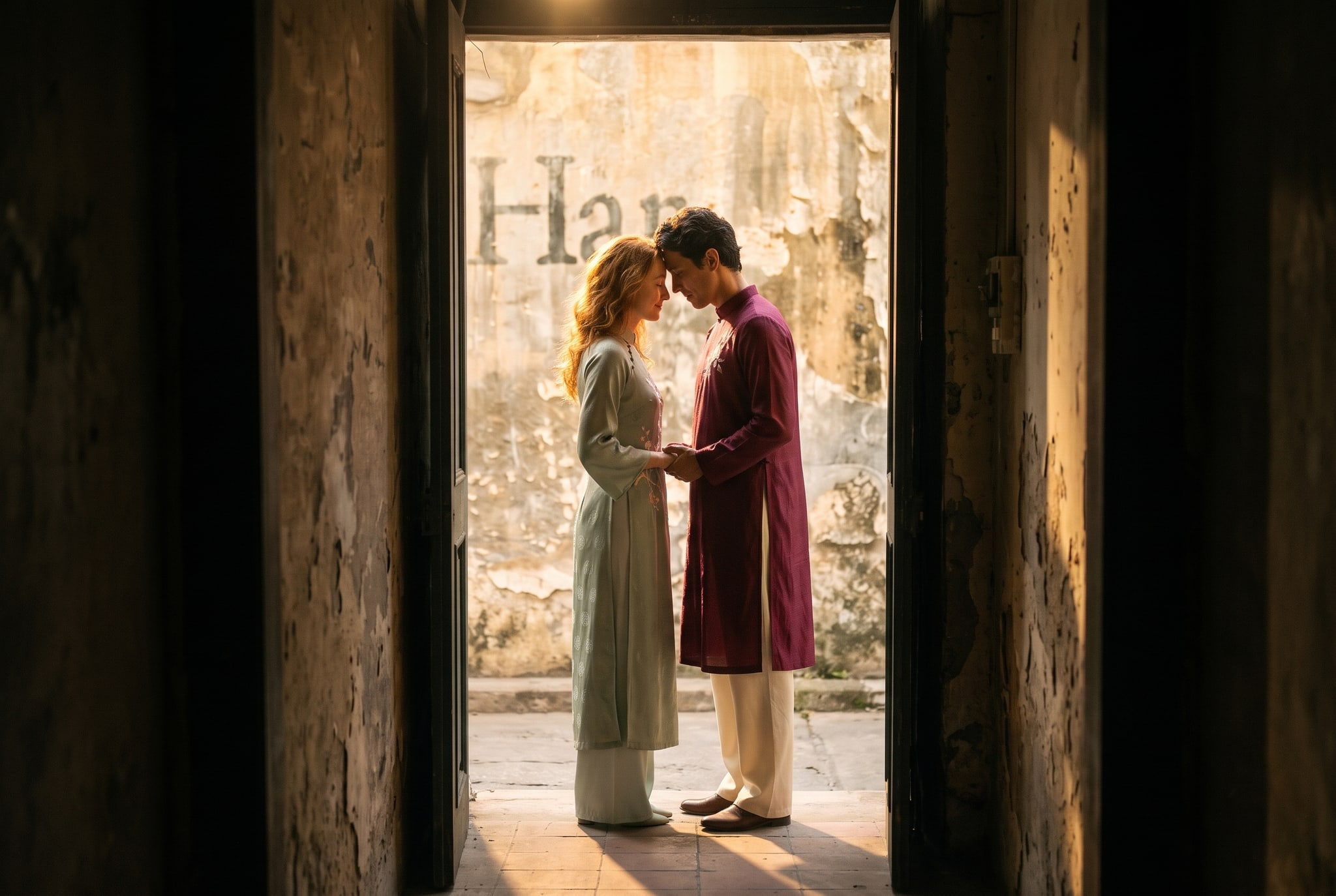
Direct overhead sun casts hard shadows under eyes, noses and chins, and turns wooden surfaces into a flat tan. We've shot midday sessions and had to compensate with reflectors (silver, white, or diffusion panels held between you and the sun), which adds 20 minutes of setup per location and exhausts your styling team in heat. The village footprint is only about 800 meters, so by noon you're revisiting the same backdrops we shot at sunrise. Instead of fighting it, we move to shadowed interiors—workshop spaces, covered walkways, shop doorways—where window light replaces sun. You lose the architectural context but keep intimate, flattering portraits. Honest advice: if you're set on noon, budget three hours minimum and build in a lunch break in air-conditioned restaurant. Most couples choose morning or evening, which is why our pre-wedding photoshoot packages often anchor to two light windows.
When does the river look best, and why does timing matter?
The Thu Bon River's surface is calmest around 5:00–5:45 p.m., when wind drops before dusk. Morning light reflects off water as silver or pale gold; evening light turns it amber or rose depending on cloud cover. A still surface reads texture; rippled water blurs reflections and loses depth. We've timed shots at 4:15 p.m. with rough water and regretted it—the reflections scattered, and the bride's dress detail in the frame competed with the chaos below. By 5:15 p.m., the same spot with the same dress looks serene. If river photos matter to your vision, tell us—we'll recommend 5:00–5:45 p.m. on your couple photoshoot package and position you on the riverbank or a wooden bridge where light and water align. Overcast evenings flatten the river into lead; clear skies saturate it. We check the weather forecast and adjust timing 2–3 days before your shoot.
How does light move through the wooden workshop lanes, and what does this mean for your shot list?
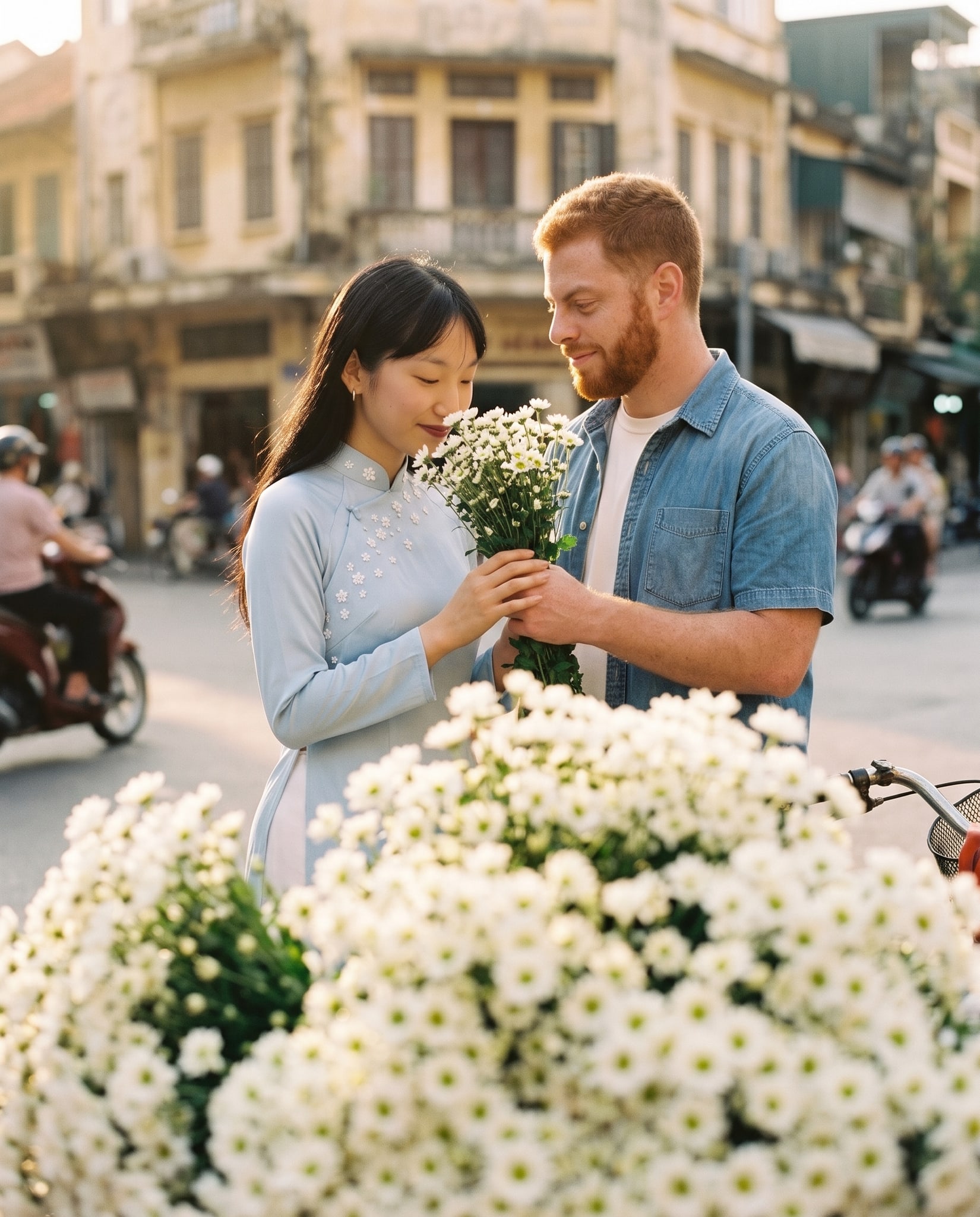
Kim Bong's lanes run roughly east-west, which means morning sun comes from the left (north), and evening sun from the right (south). Structures cast long shadows at both ends of the day, framing the walkways in a zebra pattern of light and dark. A couple standing in shadow has a natural frame; standing in light, they blend with the background. At 6:30 a.m., the east-facing workshop fronts glow soft pink, and the west side is cool gray—ideal for a single couple portrait on the bright side, with the village texture behind. By 5:30 p.m., that geometry flips: the west side glows, the east darkens. Knowing this, we assign two 90-minute blocks to Kim Bong (morning and evening) rather than one long session, so you're always shooting into directional light. If you're torn between morning or evening, morning offers you solitude and softer contrast; evening offers richer color and busier workshop activity (craftspeople finishing the day), which adds life to wider shots.
| Timing | Light Quality | Crowd Level | Backdrop Detail | Skin Tones | Best For |
|---|---|---|---|---|---|
| 5:30–7:00 a.m. | Soft, directional | Solo visitors | Sharp (high contrast) | Even, cool-tinted | Quiet, intimate, detail-focused |
| 10:00 a.m.–2:00 p.m. | Harsh, flat | Peak tourism | Washed out | Unflattering, hot | Avoid, or shoot interiors only |
| 4:30–6:00 p.m. | Rich, warm, low angle | Moderate | Saturated, shadowed | Warm, dimensional | Color, romance, river, emotion |
| 6:00–6:45 p.m. | Saturated gold/rose | Craftspeople visible | Deepest tones | Golden, soft | Lifestyle, workshop activity, final warmth |
See packages and prices on vietnamphotoshoot.com
What should we check before booking Kim Bong, and what surprises do couples face?
Surprise one: the village is accessible but narrow. If you're wearing a full train or an ao dai with stiff, wide sleeves, walking through workshop doors is tight. We've had to remove jewelry, hats, and hairpieces midshoot because they snagged on wooden frames. Tell us your outfit in advance—we'll scout clearances and may suggest a second outfit (lighter, more maneuverable) for action shots in the lanes. Surprise two: the river has a smell, especially after rain, when workshops drain into it. We shoot upwind or move earlier/later to avoid it in audio. Surprise three: craftspeople are working. You'll hear saws, chisels, and hammering. Some couples love the authenticity; others want silence. We can ask workers for 10-minute quiet windows, but we can't promise it—it's a living village, not a museum. Check before you book: Do you want the village quiet and empty (morning best), or alive with activity (evening best)? Do you have health concerns with sawdust, smells, or narrow spaces? Are you comfortable with locals in background frames? Knowing your answers helps us recommend the right timing and frame better shots.
We prepare every couple the same way: we send a WhatsApp mood board two weeks before, ask about outfit logistics and light preferences, and scout the village three days ahead if weather has changed. We bring backup reflectors, diffusers, and a backup camera in case a sudden sun shower floods the lanes. On the morning of your shoot, we text you the exact pickup time and remind you to bring sunscreen and water—the heat at dawn is deceptive, and by 6:30 a.m. you're moving fast between locations. If clouds roll in during your morning block, we stay flexible: we may extend evening time or return the next day if your schedule allows. Cáo Studio Hanoi books couples who drive or fly into Hoi An; some stay nearby and join us for a relaxed, two-day pre-wedding sequence. If you're combining Kim Bong with ao dai photoshoot sessions or special concept shoots, the village pairs beautifully with the Old Town or nearby rice fields at dusk. Ask us how to weave it into a larger story.
What does the booking and timing process look like from our side?
When you inquire about Kim Bong, we ask three questions: arrival date in Vietnam, available days, and whether you prefer morning, evening, or both. Most couples want both (we recommend 4–5 hours split across two windows). We then check our Hoi An-based photographer's calendar, the village's open days, and the weather forecast for that week. If your date is flexible, we steer you toward dates with clear skies and stable temperatures (late October to late February is ideal; March–May is hot; June–September is monsoon). We prep a detailed WhatsApp message with outfit suggestions, a village map marking photogenic spots, and a shot list (e.g., detail of your hands, walking the main lane, sitting by the river, portraits on the bridge). Three days before, we scout the village—we check which workshops are active, where trash bins are (we frame shots to avoid them), and which doors/corners have the best light at the time you've booked. On shoot day, we arrive 30 minutes early, set up reflectors, and walk you through the itinerary: "We'll start here in soft morning light, move to the bridge by 6:45, then break for breakfast. Back to evening setup by 4:00 p.m." This structure keeps you calm and the day feeling purposeful. We shoot in RAW, back up files to two drives, and send you a preview gallery within three days.
FAQ
Can we do a full pre-wedding shoot at Kim Bong, or is it just one location in a larger session?
Kim Bong works best as a 4–5 hour anchor using two light windows. If you want other locations (Hoi An Old Town, rice fields, beach), we'd split your day: Kim Bong morning, lunch, elsewhere evening. Ask us about combining it with our couple photoshoot package for a full pre-wedding story across multiple venues.
What's the risk of bad weather on the day, and do we reschedule?
Rain floods the lanes with muddy water and reduces light. We monitor the forecast weekly. If rain is predicted, we offer to reschedule to your next available day free of charge, or move the session indoors at a covered workshop. Heavy monsoon seasons (June–September) are less predictable; book outside that window if you want stability.
Do we need special permits, or can we just show up?
The village requires a small permit for commercial photography. We handle this for you and include it in your shoot quote. You don't pay separately. Without a permit, you risk being asked to leave mid-session—we've seen it happen. Never book through a third party claiming to skip this step.
Our ao dai is heavy and the lanes are narrow—will we struggle?
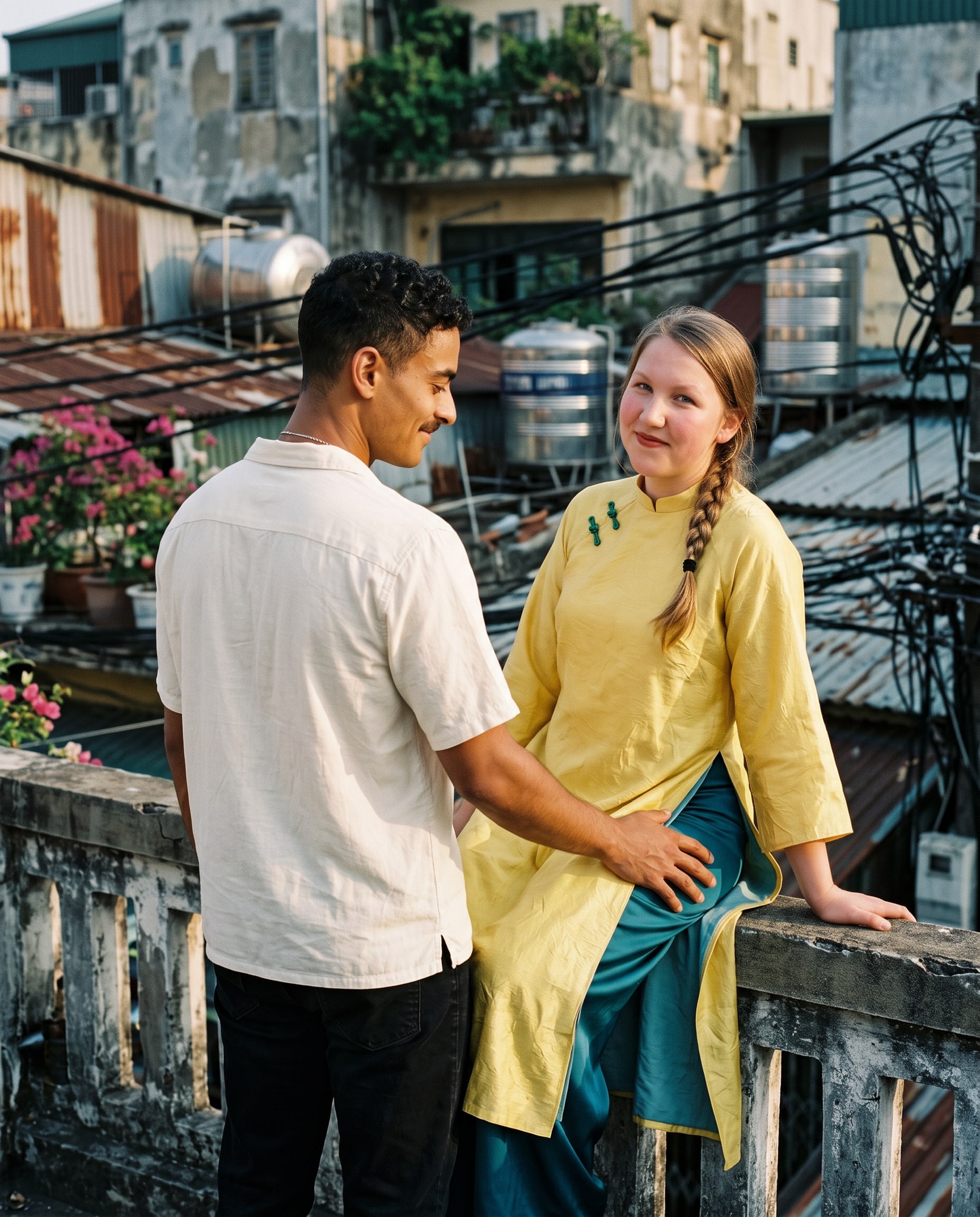
Yes. Tell us your ao dai details (fabric weight, sleeve style, train length) during booking. We'll scout doorways, choose wider pathways, and may suggest a second outfit for lane shots. Many couples wear their ao dai for river/bridge portraits (where space is open) and change for workshop interiors.
Can we bring our own photographer, or do we need to use your team?
Our packages include our photographer, lighting, and post-processing. If you want to bring a second photographer (family friend, second camera angle), let us know—we work alongside them smoothly. You pay only for our services through vietnamphotoshoot.com; your guest photographer brings their own gear.
How long until we see the edited photos, and what's included?
We deliver a preview gallery (10–15 selects) within three days. Full edited gallery (50–80 final images) takes 2–3 weeks, including color correction, retouching, and delivery as digital files. All images are yours to print and share; we retain copyright for portfolio use only.
Pre-Wedding & Elopement
Inclusions, prices and booking are on our booking site.
FAQ
Can we do a full pre-wedding shoot at Kim Bong, or is it just one location in a larger session?
Kim Bong works best as a 4–5 hour anchor using two light windows. If you want other locations (Hoi An Old Town, rice fields, beach), we'd split your day: Kim Bong morning, lunch, elsewhere evening. Ask us about combining it with our [couple photoshoot package](/go/couple-photoshoot) for a full pre-wedding story across multiple venues.
What's the risk of bad weather on the day, and do we reschedule?
Rain floods the lanes with muddy water and reduces light. We monitor the forecast weekly. If rain is predicted, we offer to reschedule to your next available day free of charge, or move the session indoors at a covered workshop. Heavy monsoon seasons (June–September) are less predictable; book outside that window if you want stability.
Do we need special permits, or can we just show up?
The village requires a small permit for commercial photography. We handle this for you and include it in your shoot quote. You don't pay separately. Without a permit, you risk being asked to leave mid-session—we've seen it happen. Never book through a third party claiming to skip this step.
Our ao dai is heavy and the lanes are narrow—will we struggle?
Yes. Tell us your ao dai details (fabric weight, sleeve style, train length) during booking. We'll scout doorways, choose wider pathways, and may suggest a second outfit for lane shots. Many couples wear their ao dai for river/bridge portraits (where space is open) and change for workshop interiors.
Can we bring our own photographer, or do we need to use your team?
Our packages include our photographer, lighting, and post-processing. If you want to bring a second photographer (family friend, second camera angle), let us know—we work alongside them smoothly. You pay only for our services through vietnamphotoshoot.com; your guest photographer brings their own gear.
How long until we see the edited photos, and what's included?
We deliver a preview gallery (10–15 selects) within three days. Full edited gallery (50–80 final images) takes 2–3 weeks, including color correction, retouching, and delivery as digital files. All images are yours to print and share; we retain copyright for portfolio use only.
More from the team
Boho pre-wedding photoshoot in Vietnam: Hanoi, Saigon, Hoi An
Boho pre-wedding shoots mix romantic, free-spirited aesthetics with Vietnam's landscapes and heritage sites. We run full-day sessions in three cities, handling styling, makeup, location scouts and edits.
Avoid crowds at Hoang Su Phi rice terraces: timing for wedding shoots
Hoang Su Phi's terraced landscape draws couples and tour buses in equal measure. We show how to shoot there alone, when to arrive, and what to arrange with us before you go.
Photography rules at Con Dao beaches: permits, drones and what to check
Con Dao's beaches demand prep before you shoot—permits, drone zones and tide timing all affect your day. We share what the Cáo Studio team verifies on every booking.