 Cáo Studio
Home › Blog › Pre-Wedding & Elopement
Ma Pi Leng Pass Wedding Photos: Best Time of Day and Light
By the Cáo Studio team · Hanoi & Saigon · 2026-11-04
Ma Pi Leng Pass, the dramatic limestone canyon road between Cao Bang and Ha Giang provinces, demands careful timing. Golden hour (6–7 a.m. or 4–5:30 p.m.) wraps the cliffs in warm amber and casts dimensional shadows; blue hour (just after sunset, 6–7 p.m.) creates moody, jewel-toned skies. Midday (10 a.m.–3 p.m.) flattens color and produces harsh shadows—avoid it. Our Cáo Studio team typically schedules pre-wedding shoots here for early morning or late afternoon, planning 2–3 hours on-site to capture the pass during 2–3 optimal light windows. Weather, road access, and permit requirements (guides often mandatory) add complexity. Choose your shoot window based on mood preference—soft and romantic, or bold and moody—then tell us on WhatsApp so we time crew arrival, hair and makeup, and travel from Cao Bang town accordingly. Chat with us on WhatsApp
When does golden hour actually hit Ma Pi Leng, and why does it matter most?
Golden hour at Ma Pi Leng arrives around 6–7 a.m. from the east and returns 4–5:30 p.m. from the west, depending on season and canyon orientation. We watch the sun position obsessively because the pass runs roughly north–south; morning light strikes the eastern cliff face, afternoon light the western one. The hour lasts only 60–90 minutes before color cools and shadows deepen. Most couples we shoot here prefer the afternoon window because the light angle flatters the main viewpoint and guests can start their day slower. Morning light appeals to adventure-focused pairs willing to drive from Cao Bang at 5 a.m.—it's colder, crisper, and fewer tourists crowd the road then. We've learned that afternoon golden hour also lets us time makeup and hair at your hotel in Cao Bang town without rushing. Golden hour is non-negotiable if you want that cinematic, magazine-cover glow.
See packages and prices on vietnamphotoshoot.com
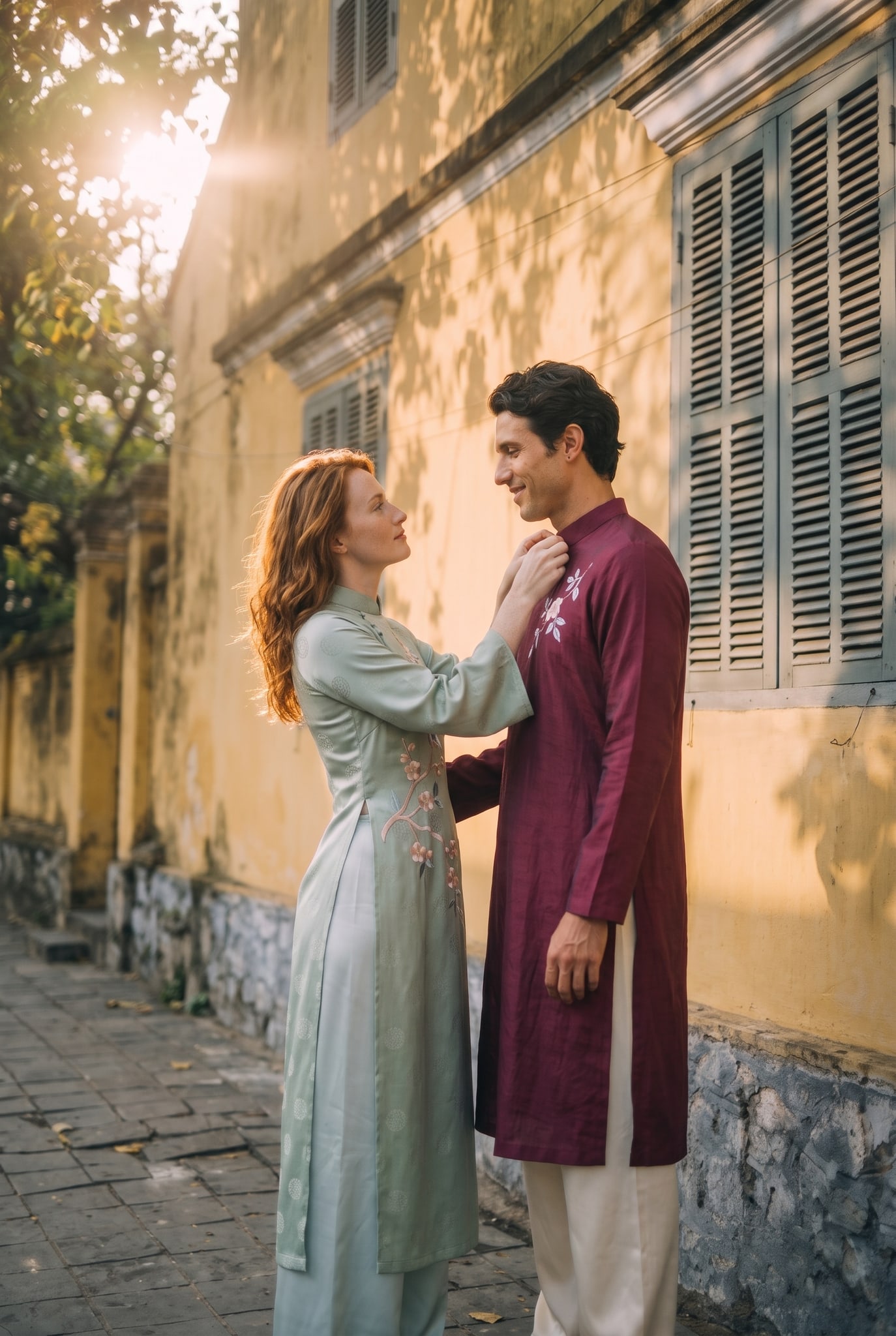
What happens to light at midday, and why do we tell clients to avoid it?
Between 10 a.m. and 3 p.m., the sun climbs nearly overhead. The canyon walls lose dimension—shadows flatten into gray bands, and colors desaturate under bright white sky. We've shot midday sessions here and found skin tones look washed out, fabric textures disappear, and the limestone cliffs blend into a single monochromatic wall. Direct overhead light also casts unflattering shadows under eyes and chins. If a couple insists on midday (bad planning or flight schedules), we shoot into shadowed canyon sections, use reflectors aggressively, and shift focus to movement and gesture rather than landscape drama. Honestly, we discourage it. The time penalty—losing half the visual impact—outweighs schedule convenience.
Why is blue hour worth staying later, and what does it cost in effort?
Blue hour spans the 30–60 minutes after sunset, when the sky holds deep indigo or purple but ground detail remains visible. At Ma Pi Leng around 6–7 p.m. (depending on season), the cliffs glow a cool lavender and the sky deepens to twilight navy. We love this window for moody, romantic portraits—couples look contemplative, and the ethereal light suits destination wedding aesthetics. The trade-off: we need fast lenses, higher ISO, and steady tripod work; shooting hand-held becomes risky. Road safety also tightens—tourism vehicles move less freely after dark, and our guide must navigate the canyon carefully. We budget an extra 30 minutes of setup time and charge accordingly for the extended crew hours. The results are arresting—but only for couples who prioritize mood over brightness and trust our technical execution. If you want sharp, lit details (rings, dress embroidery), skip blue hour and stick to golden hour.
How does season shift the optimal shooting window?
Ma Pi Leng's latitude (22.5°N) means sunrise and sunset times swing 60–90 minutes between December and June. Winter (December–February) sees sunrise around 6:45 a.m. and sunset near 5 p.m.—shorter golden hours but colder, clearer air. Summer (May–August) pushes sunrise to 5:30 a.m. and sunset to 6:45 p.m., giving longer windows but hotter midday heat and more haze. Monsoon season (May–September) adds cloud cover that can actually improve diffuse light—but visibility suffers. We plan shoots based on what we're hunting: winter clarity suits detail and texture; summer length suits couples wanting two separate light sessions in one day. Spring (March–April) and autumn (September–October) offer the sweet spot—mild temperature, reliable light, fewer tourist crowds. Ask us on WhatsApp what season you're booking so we time your pre-wedding session during the year's strongest light window.
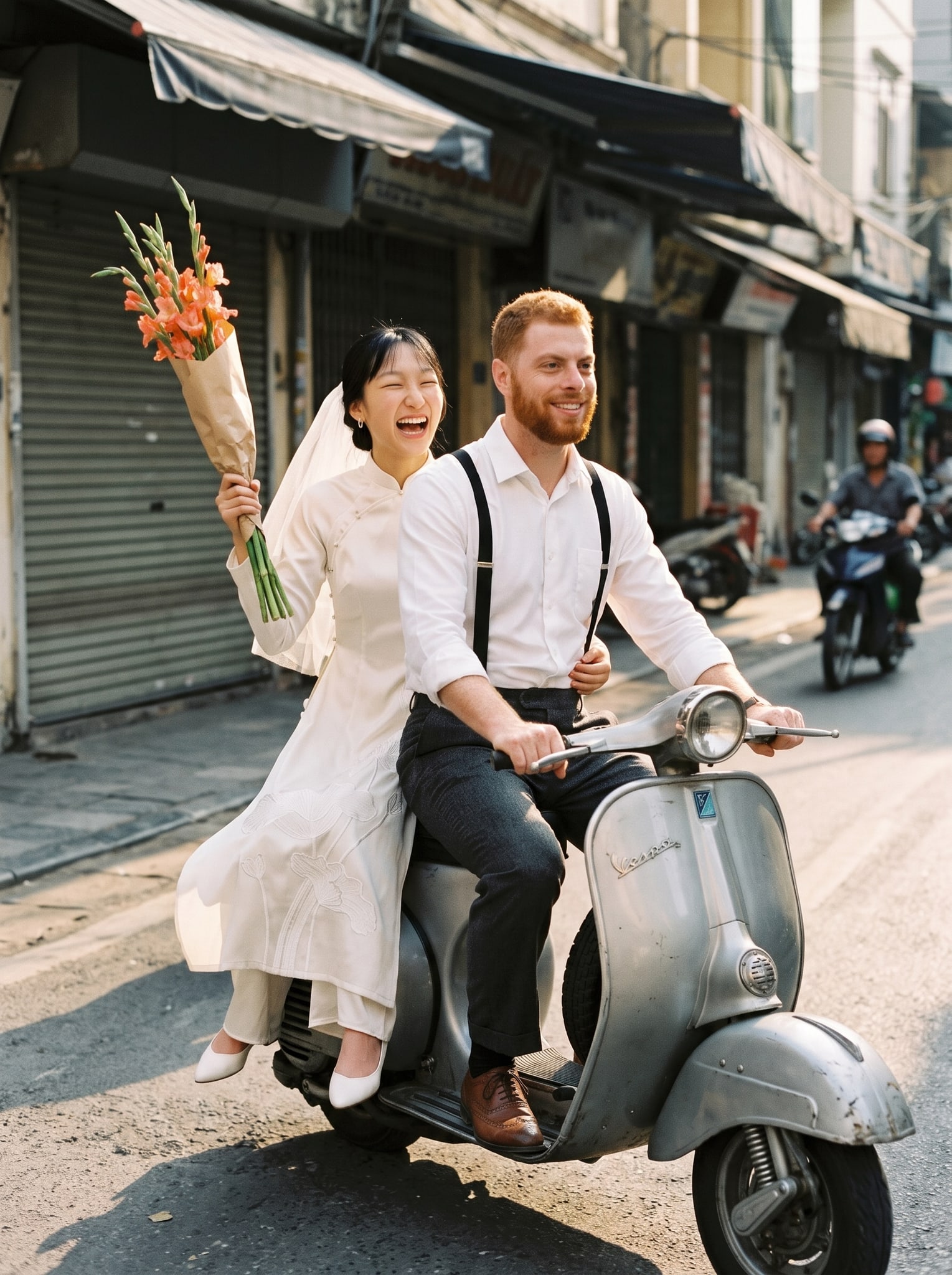
What's the real difference between early morning and late afternoon shoots for your style?
Early morning (5:30–7:30 a.m.) feels intimate—cool air, soft shadows, minimal crowds. Couples tend to be alert and energized (adrenaline + early wake-up). The light is diffuse, flattering, and casts shadows that emphasize the canyon's layers. Our stylist noticed that morning shoots suit more understated, minimalist aesthetics—simple ao dai, unadorned jewelry. Late afternoon (4–6 p.m.) carries more visual drama—longer shadows, warmer tones, and often cloud patterning that adds texture to the sky. Couples have energy fatigue by late afternoon, so poses feel more relaxed and natural. The light favors richer colors, ornate details, and bold styling. We typically ask during WhatsApp intake: Are you a sunrise person or a golden-sunset person? That answer shapes the entire shoot day—crew start time, styling direction, and which cliff sections we prioritize. Neither is objectively "best." The choice depends on your mood, your energy rhythm, and whether you love bold color or soft subtlety.
Comparison: Golden Hour vs. Blue Hour vs. Overcast Light at Ma Pi Leng
| Light Window | Time of Day | Best For | Technical Challenge | Who It Suits |
|---|---|---|---|---|
| Golden Hour (warm) | 5:30–7:30 a.m. or 4–6 p.m. | Warm skin, dimensional shadows, cinematic romance | Exact timing; light lasts ~90 min. | Couples who prioritize classic beauty |
| Blue Hour (cool) | 6–7:30 p.m. (post-sunset) | Moody, ethereal, editorial mood | High ISO; tripod mandatory; limited light | Adventurous couples; fine-art aesthetic |
| Overcast/Cloud (diffuse) | Any time (common in monsoon) | Even skin tone; no harsh shadows; detail sharpness | Flat color; gray sky; less drama | Detail-focused couples; traditional ao dai |
What to check before you book your Ma Pi Leng pre-wedding shoot
Light window preference. Ask yourself: Do I want warm, glowing light (golden hour) or cool, moody light (blue hour)? This shapes the entire day.
Season. Winter and spring offer the clearest skies; monsoon adds clouds that diffuse light but reduce visibility. Check our team's shot archive from your target month.
Energy and schedule. Early morning demands a 4:30 a.m. start from Cao Bang; late afternoon suits couples preferring a slower morning. Neither is inferior—it's a preference.
Backup conditions. Cloud cover shifts light quality fast. Ask us how we adapt if the forecast changes 24 hours before.
Access and permits. Ma Pi Leng often requires a local guide (mandatory in some seasons). We handle this—but confirm it's included in your package when you ask for a quote on WhatsApp.
Crew capacity. We bring a photographer, a stylist, and usually a videographer. Larger groups (family members, extra guests) affect movement and light management on narrow canyon sections.
If you're imagining your pre-wedding photoshoot in Ha Giang's most iconic landscape, we can walk you through the exact light conditions and timing. Tell us your mood preference, and we'll design the shoot day to capture it.
For shoots in other locations—Hanoi, Saigon, Hoi An—we have proven light-timing strategies too. Visit our vacation and solo photoshoot or couple photoshoot pages to explore packages in your chosen city.
See packages and prices on vietnamphotoshoot.com
FAQ
Can we shoot both golden hour and blue hour in the same day at Ma Pi Leng?
Yes, but it requires 12+ hours on-site and three separate light windows. We've done it for couples wanting variety—typically 6–7 a.m. (warm golden), 1–3 p.m. (overcast detail shots), and 5–7 p.m. (blue hour mood). It's exhausting for you and our team. Most couples prefer committing to one peak window and spending 2–3 focused hours there.
What if the weather forecast shows clouds the day of our shoot?
Cloud cover is unpredictable in Ha Giang. We monitor forecasts 48 hours out and adjust our light strategy. Light overcast actually improves skin detail and reduces harsh shadows. Heavy clouds flatten drama, but we pivot to narrative storytelling—movement, connection, gestures. We never cancel for clouds alone; we adapt.
Is there a "worst" time of day at Ma Pi Leng?
Yes—10 a.m. to 3 p.m. Overhead sun flattens the canyon and creates gray, featureless shadows. If you must shoot during this window, we shoot into shadow zones, use reflectors, and focus on close portraits rather than landscape drama. Ask us about the timing on WhatsApp if your schedule is tight.
How far in advance do we need to book to secure the light timing we want?
We typically schedule 2–3 months ahead for summer (high season) and 3–4 weeks for off-season. Crew availability and guide coordination in Ha Giang take time. Early booking also lets us monitor seasonal light patterns and weather forecasts with confidence.
Can we request a specific sunrise or sunset time based on the season?
Absolutely. Sunrise and sunset shift 60–90 minutes between winter and summer. When you contact us, tell us your preferred month and time of day. We'll confirm the exact light window for that date, arrange crew timing, and coordinate makeup and hair schedules around it.
Do you offer pre-wedding packages that include Ma Pi Leng?
Yes. Our pre-wedding photoshoot package includes destination location shoots. Ma Pi Leng is a premium add-on (involve travel, guide, extended crew hours). Ask us for a custom quote on WhatsApp and let us know your light preferences—golden hour, blue hour, or both.
Pre-Wedding & Elopement
Inclusions, prices and booking are on our booking site.
FAQ
Can we shoot both golden hour and blue hour in the same day at Ma Pi Leng?
Yes, but it requires 12+ hours on-site and three separate light windows. We've done it for couples wanting variety—typically 6–7 a.m. (warm golden), 1–3 p.m. (overcast detail shots), and 5–7 p.m. (blue hour mood). It's exhausting for you and our team. Most couples prefer committing to one peak window and spending 2–3 focused hours there.
What if the weather forecast shows clouds the day of our shoot?
Cloud cover is unpredictable in Ha Giang. We monitor forecasts 48 hours out and adjust our light strategy. Light overcast actually improves skin detail and reduces harsh shadows. Heavy clouds flatten drama, but we pivot to narrative storytelling—movement, connection, gestures. We never cancel for clouds alone; we adapt.
Is there a "worst" time of day at Ma Pi Leng?
Yes—10 a.m. to 3 p.m. Overhead sun flattens the canyon and creates gray, featureless shadows. If you must shoot during this window, we shoot into shadow zones, use reflectors, and focus on close portraits rather than landscape drama. Ask us about the timing on WhatsApp if your schedule is tight.
How far in advance do we need to book to secure the light timing we want?
We typically schedule 2–3 months ahead for summer (high season) and 3–4 weeks for off-season. Crew availability and guide coordination in Ha Giang take time. Early booking also lets us monitor seasonal light patterns and weather forecasts with confidence.
Can we request a specific sunrise or sunset time based on the season?
Absolutely. Sunrise and sunset shift 60–90 minutes between winter and summer. When you contact us, tell us your preferred month and time of day. We'll confirm the exact light window for that date, arrange crew timing, and coordinate [makeup and hair](/go/makeup-and-hair) schedules around it.
Do you offer pre-wedding packages that include Ma Pi Leng?
Yes. Our [pre-wedding photoshoot](/go/pre-wedding-photoshoot) package includes destination location shoots. Ma Pi Leng is a premium add-on (involve travel, guide, extended crew hours). Ask us for a custom quote on WhatsApp and let us know your light preferences—golden hour, blue hour, or both.
More from the team
Pre-wedding photoshoot in Phu Quoc June: weather, light, crowds
June is Phu Quoc's monsoon season. Our studio has shot dozens of couples there in early summer—here's what weather and crowds really mean for your pre-wedding day.
Pre-wedding photoshoot in Phu Quoc July: weather, light, crowds
July is Phu Quoc's wet season, but it opens creative possibilities: moody skies, empty beaches after storms, and dramatic backlighting. We'll walk you through what happens on the ground.
Pre-wedding photoshoot in Phu Quoc November: weather, light, crowds
November is peak season for pre-wedding shoots in Phu Quoc: weather is stable, light is soft, but crowds peak mid-month. We share what our team sees on the ground.