 Cáo Studio
Home › Blog › Couple Photoshoot
Mai Chau Couple Photoshoot Guide: What We Book on Location
By the Cáo Studio team · Hanoi & Saigon · 2026-11-02
A Mai Chau couple photoshoot means 4–6 hours on the valley floor between emerald rice paddies, typically departing Hanoi at dawn and returning by evening. Cáo Studio books shoots during May–September (wet-season green) or October–November (harvest gold); winter months bring fog that can hide terraces entirely. Most couples spend 2–3 hours in one or two terrace zones for outfit changes, plus 1–2 hours driving and location scouting. Cost depends on your package choice—ask us for a quote on WhatsApp. Bring comfortable walking shoes (paddies are muddy), two outfits (áo dài and Western wear), and expect heat and insects. We scout locations the morning of shoot; if weather turns, we pivot to village homestays or temple areas within the valley to salvage the day's light. Chat with us on WhatsApp
Why does season timing matter more in Mai Chau than a studio?
Mai Chau's appeal is the landscape, not the backdrop. May through September the paddies flood and reflect light like mirrors; by October, farmers harvest and the green fades to gold and stubble. A November shoot glows differently than a July one—neither is wrong, but the mood shifts entirely. We've shot couples in both seasons and see the same terraces photograph like two different places. Winter (December–February) brings persistent fog that sits in the valley until 10 a.m., often blocking the vista you came for. Spring (March–April) is drier and hazy; the paddies aren't fully flooded yet. Choose based on the color and mood you want in your final images, not just "when we're free."
See packages and prices on vietnamphotoshoot.com
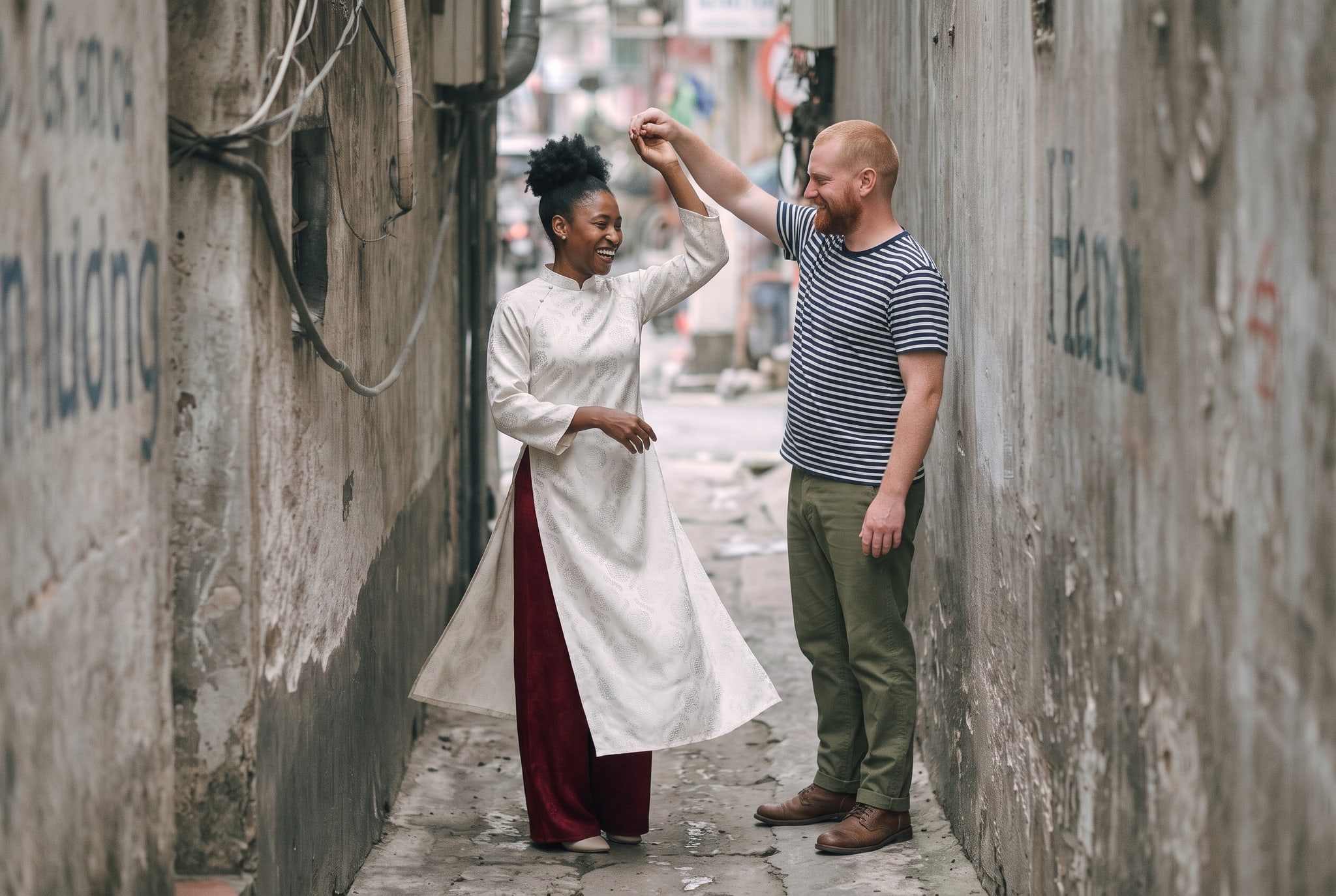
How do we plan a Mai Chau shoot hour by hour?
We meet clients at our Hanoi studio or hotel at 5:30 a.m. Stylists do final touch-ups (15–20 minutes) while the driver loads the van. We leave by 6 a.m. for the 2.5-hour drive to Mai Chau; sunrise happens around 6:45 a.m., and we want to be rolling by then so couples see the light change. Arrival is roughly 8:30–9 a.m. depending on traffic. By 9:15 a.m., we're scouting the exact paddies—we walk three or four nearby zones to pick one with foreground interest (a water buffalo, a farmer, a collapsed hut) and good light angle. We shoot the first outfit for 90 minutes (outfit 1 in the paddies, then a 10-minute walk to a temple or village lane for variety). Lunch break (30 minutes, usually packed or at a homestay) happens around 11 a.m. We shoot outfit 2 from 12:30–2 p.m. (often in a different zone of paddies or at a homestay interior). We wrap by 2:30–3 p.m. and drive back, arriving in Hanoi by 6 p.m. That timing works because midday light in the valley is actually strong and directional—it's not ideal for portraits (harsh shadows), but the landscape around the couple reads beautifully.
What outfit combinations work best in rice terraces?
Most couples bring an áo dài (traditional) and Western wear (casual dress, suit, or streetwear). The paddies are muddy and uneven, so heels don't work; we always tell clients "bring walking shoes you don't mind getting wet." Áo dài photographs dramatically against the green—the silk catches light and the fabric drapes over the muddy ground in ways that look intentional, almost ethereal. For the second outfit, we've noticed Western casual (linen shirt, jeans, sneakers) blends more naturally into the farmer landscape; it reads as "a couple on an adventure" rather than a studio moment. One couple brought a formal Western outfit (wedding suit and dress) and it felt out of place—too formal for a working farm at midday. Another pair wore matching linen and looked cohesive. The terrace itself is the statement; keep clothing tones neutral or jewel-toned to contrast the green. We've also shot couples in a second áo dài outfit (different color) and that works well for variety without tone confusion. White, cream, teal, burgundy, and navy all stand out; pale gray or beige can wash out against the landscape.
How do location changes affect the day's pacing and shot variety?
Mai Chau's valley is roughly 12 kilometers long with paddies at different elevations and angles. We typically shoot in one main zone for 60–90 minutes, then move to a second zone (5–15 minutes' drive away) for outfit 2. The move breaks up the day and gives you two distinct backdrops without exhaustion. Some couples ask to stay in one zone the whole time; that works if you want deep immersion in a single landscape, but you lose the contrast a second location brings. We've also had weather force a move—on one shoot, wind and sudden cloud cover killed the light in our first zone, so we shifted downhill into a lower paddy with a more protected angle and caught softer, more directional light. The drive between zones is built into our timing; we're not rushing. A couple might ask, "Can we shoot three locations?" and the answer is no—that would mean 2 hours of movement time instead of shooting time. The terrace system is vast but we've learned which zones photograph best together, which ones have tree cover for shade between shots, and which ones have foot access that's passable in wet season. We scout fresh each shoot because water levels, crop stages, and farmer activity change week to week.
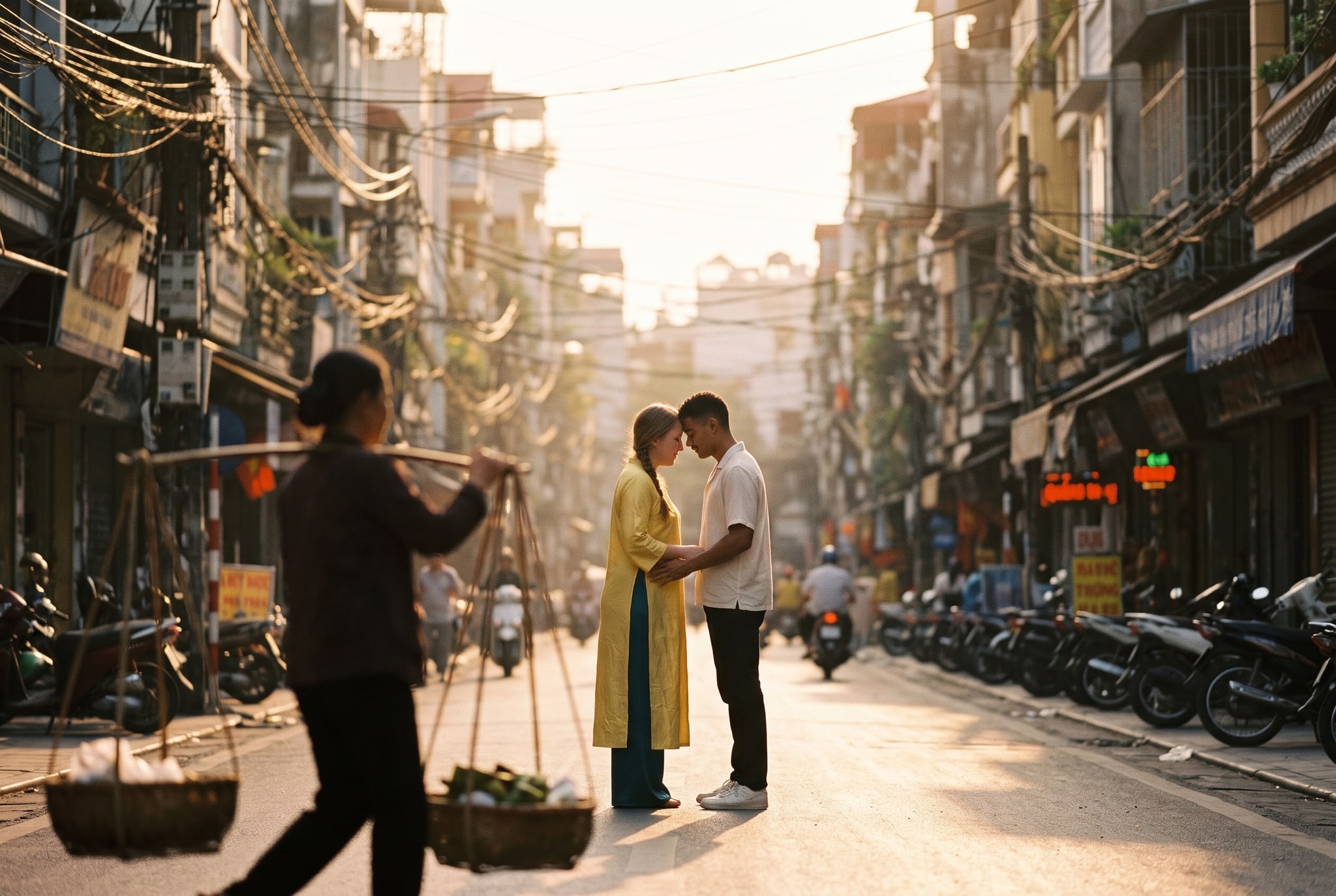
What weather problems do we run into, and how do we salvage a shoot?
Heavy rain in the morning is the main risk during May–September. We monitor forecasts and contact clients the evening before if rain looks likely; most choose to reschedule, but some say "we're here, let's try." In rain, the paddies are slippery and unsafe; we pivot to homestays (photographing couples on wooden porches or in homestay gardens with valley views behind them) or we shoot in the village of Ban Lac itself, where narrow lanes, wooden houses, and morning mist create a moody alternative. We've had shoots where the sun didn't break through until 1 p.m.—by then, the couple was tired, but the light was finally clean, and we got their best images between 1 and 2 p.m. Fog in winter is less predictable; we've waited it out (it lifts by 10–11 a.m.), and we've shot through it (soft, diffused light works for some couples). We always carry reflectors and diffusers in the van; if the light is too harsh at midday, we use a diffuser to soften it. On hot days (September–October), we schedule longer breaks in the shade and ensure couples hydrate. Insects (mosquitoes, particularly) are worst in May–July just after rain; we tell clients to wear long layers or bring bug spray. One couple got sunburned because we were focused on the light and didn't remind them about SPF; now we mention it during the WhatsApp planning chat.
Comparing Mai Chau to other couple shoot locations near Hanoi
| Location | Shoot Length | Best Season | Travel Time | Vibe | Who It's For |
|---|---|---|---|---|---|
| Mai Chau terraces | 4–6 hours | May–Nov | 2.5 hrs from Hanoi | Vast, pastoral, working landscape | Couples wanting drama and green |
| Hoi An old town | 3–4 hours | Sept–Mar | 3 hrs by flight + drive | Lanterns, cobblestone, yellow walls | Couples preferring architecture |
| Ninh Binh limestone | 4–5 hours | Sept–May | 2 hrs from Hanoi | Karst cliffs, river, temples | Couples wanting grandeur and water |
| Hanoi urban/studio | 2–3 hours | Any | 0 | Controlled, predictable, polished | Couples wanting zero risk |
Each location suits different priorities. Mai Chau wins on landscape authenticity and the feeling of being genuinely away; Hoi An offers cultural richness and heritage; Ninh Binh delivers epic geology. Our couple photoshoot package can anchor in any of these; ask us which fits your vision.
What to check before booking a Mai Chau couple shoot with us
Confirm your arrival date in Hanoi. If you're arriving the day of the shoot, fatigue and jet lag will show. Plan for the day after arrival minimum.
Check visa and passport validity. Hanoi to Mai Chau is domestic travel in Vietnam; no visa needed if you're already in-country, but confirm with immigration.
Discuss outfit plans over WhatsApp. Send photos of your áo dài (if bringing one) and your second outfit. We'll say whether colors and fit read well for the landscape.
Ask about weather and backup plan. Get our forecast comment 2–3 days before; know what happens if rain forces a pivot.
Confirm your mobility and comfort level. The paddies involve 1–2 hours of walking on uneven, muddy ground. If you have mobility concerns, we can adjust zones to flatter areas or shoot more in the village.
Book transportation and accommodation in Hanoi separately. Our shoot includes the van and driver for the day; you arrange your hotel and any other transfers.
Plan for post-shoot tiredness. You'll be muddy, sun-exposed, and ready to sleep by 7 p.m. Don't book dinner or other activities that evening.
For a deeper dive into couple shoots in different settings, read about our pre-wedding and elopement options or proposal and anniversary shoots if you're celebrating a milestone. We also run family photoshoots if you want your parents or close people in a few frames. For styling and makeup on location, we offer hair and makeup at your hotel as an add-on to any shoot. And if you're based in Saigon, read how we operate from our Saigon studio and manage location shoots from the south.
FAQ
Is a Mai Chau shoot worth the 2.5-hour drive versus staying in Hanoi?
Yes, if you want landscape authenticity. Hanoi parks offer polish and control; Mai Chau offers rice terraces that exist nowhere else near the capital. The drive is part of the experience. Urban shoots feel different—less dramatic but easier on tired bodies.
Can we do a Mai Chau shoot in December, January, or February?
Yes, but expect fog morning until 10–11 a.m. and drier, less green terraces. It's quieter (fewer tourists, farmers), which some couples prefer. The light is softer. We can shoot, but the iconic "emerald paddy" look is less vivid.
What if my áo dài is too formal or uncomfortable for walking in paddies?
Wear it for 60–90 minutes in the flatter zone we scout, then change into Western wear. Or skip the áo dài and shoot both outfits in comfortable clothes. The choice is yours; we fit the day to your vision.
Do we need to hire a guide, or does Cáo Studio handle scouting?
We handle scouting and route-planning. You don't need a separate guide. We know the accessible zones and the farmer schedules. A guide adds cost and crowd; we work lean.
What time of year has the best light and fewest other tourists?
May–June and October–November have strong light and moderate crowds. July–September is lushest but hot and buggy. March–April is dry but hazy. December–February is emptiest but misty. Each has trade-offs; there's no "perfect" season, only your priority.
Can we add family or close friends to the shoot, or is it couple-only?
Couples are the focus of this package, but we can discuss adding a few family frames as an add-on. For a family-centered shoot, book our family photoshoot instead.
How muddy will our clothes get, and do we need to bring a change?
Very muddy. Áo dài and pants will be soaked from the knees down and stained brown. Bring a plastic bag for wet clothes or wear clothes you don't mind discarding. Some couples bring a change for the van ride home.
Couple Photoshoot
Inclusions, prices and booking are on our booking site.
FAQ
Is a Mai Chau shoot worth the 2.5-hour drive versus staying in Hanoi?
Yes, if you want landscape authenticity. Hanoi parks offer polish and control; Mai Chau offers rice terraces that exist nowhere else near the capital. The drive is part of the experience. Urban shoots feel different—less dramatic but easier on tired bodies.
Can we do a Mai Chau shoot in December, January, or February?
Yes, but expect fog morning until 10–11 a.m. and drier, less green terraces. It's quieter (fewer tourists, farmers), which some couples prefer. The light is softer. We can shoot, but the iconic "emerald paddy" look is less vivid.
What if my áo dài is too formal or uncomfortable for walking in paddies?
Wear it for 60–90 minutes in the flatter zone we scout, then change into Western wear. Or skip the áo dài and shoot both outfits in comfortable clothes. The choice is yours; we fit the day to your vision.
Do we need to hire a guide, or does Cáo Studio handle scouting?
We handle scouting and route-planning. You don't need a separate guide. We know the accessible zones and the farmer schedules. A guide adds cost and crowd; we work lean.
What time of year has the best light and fewest other tourists?
May–June and October–November have strong light and moderate crowds. July–September is lushest but hot and buggy. March–April is dry but hazy. December–February is emptiest but misty. Each has trade-offs; there's no "perfect" season, only your priority.
Can we add family or close friends to the shoot, or is it couple-only?
Couples are the focus of this package, but we can discuss adding a few family frames as an add-on. For a family-centered shoot, book our [family photoshoot](/go/family-photoshoot) instead.
How muddy will our clothes get, and do we need to bring a change?
Very muddy. Áo dài and pants will be soaked from the knees down and stained brown. Bring a plastic bag for wet clothes or wear clothes you don't mind discarding. Some couples bring a change for the van ride home.
More from the team
Maternity Photoshoot Hanoi: What to Expect From Our Studio
Maternity shoots in Hanoi capture your pregnancy glow in real locations and studio settings. We guide you hour-by-hour through prep, styling, timing, and what to bring so you walk away with images that honour this moment.
Vacation Photographer Hoi An: What Our Team Does On-Site
Our team shoots vacation portraits in Hoi An's UNESCO Old Town, riverside gardens and countryside. We manage timing, costume changes and light—you focus on the moment.
Family Photoshoot Ho Chi Minh City: What to Book & Why
A family photoshoot in Ho Chi Minh City with Cáo Studio means working with stylists, makeup artists and photographers who've shot hundreds of multi-generational sessions in Saigon's iconic locations. We'll walk you through what happens on the day, how to prepare, and which package type fits your gro