 Cáo Studio
Home › Blog › Pre-Wedding & Elopement
Marble Mountains wedding photos: best time, light and timing
By the Cáo Studio team · Hanoi & Saigon · 2026-11-02
The Marble Mountains (Ngu Hanh Son) sit 13 km south of Da Nang city center. For wedding photography, we shoot either 5:30–7:30 a.m. (sunrise, empty paths, soft overhead light) or 4:30–6:30 p.m. (golden hour, long shadows, warm tones). Morning avoids crowds and harsh midday sun; evening delivers the saturated amber light couples expect. Sessions run 90–120 minutes on-site. Cáo Studio books local guides, checks weather 48 hours ahead, and brings backup lighting for temple interiors. Morning shoots cost less in energy but require early hotel pickups; evening sessions risk rain in monsoon season (May–September). Both work—choose based on your schedule, venue logistics, and whether you want soft or dramatic light. Our pre-wedding and elopement package includes location scouting and two time-slot options. Chat with us on WhatsApp | See packages and prices on vietnamphotoshoot.com
Why morning light feels different at Marble Mountains
Morning shoots at Marble Mountains run 5:30–7:30 a.m., when the sun climbs east over the South China Sea. The light is soft, diffused, and flatters skin without harsh shadows under eyes or noses. We see couples' faces clearly in temple interiors where stone walls would otherwise eat flash. The carved Buddha niches and narrow staircases hold detail instead of blowing out. Crowds are near zero until 8 a.m., so your shot list—couple walking hand-in-hand down the main staircase, embracing at the summit pavilion—runs without photobombs. The trade-off: you leave your hotel by 4:45 a.m., and the light is cooler (slightly blue). We've noticed morning brides often wear white or cream áo dài, which photographs beautifully in that even, cool tone. This timing suits couples who want a serene, editorial feel and don't mind dawn wake-up calls. Chat with us on WhatsApp
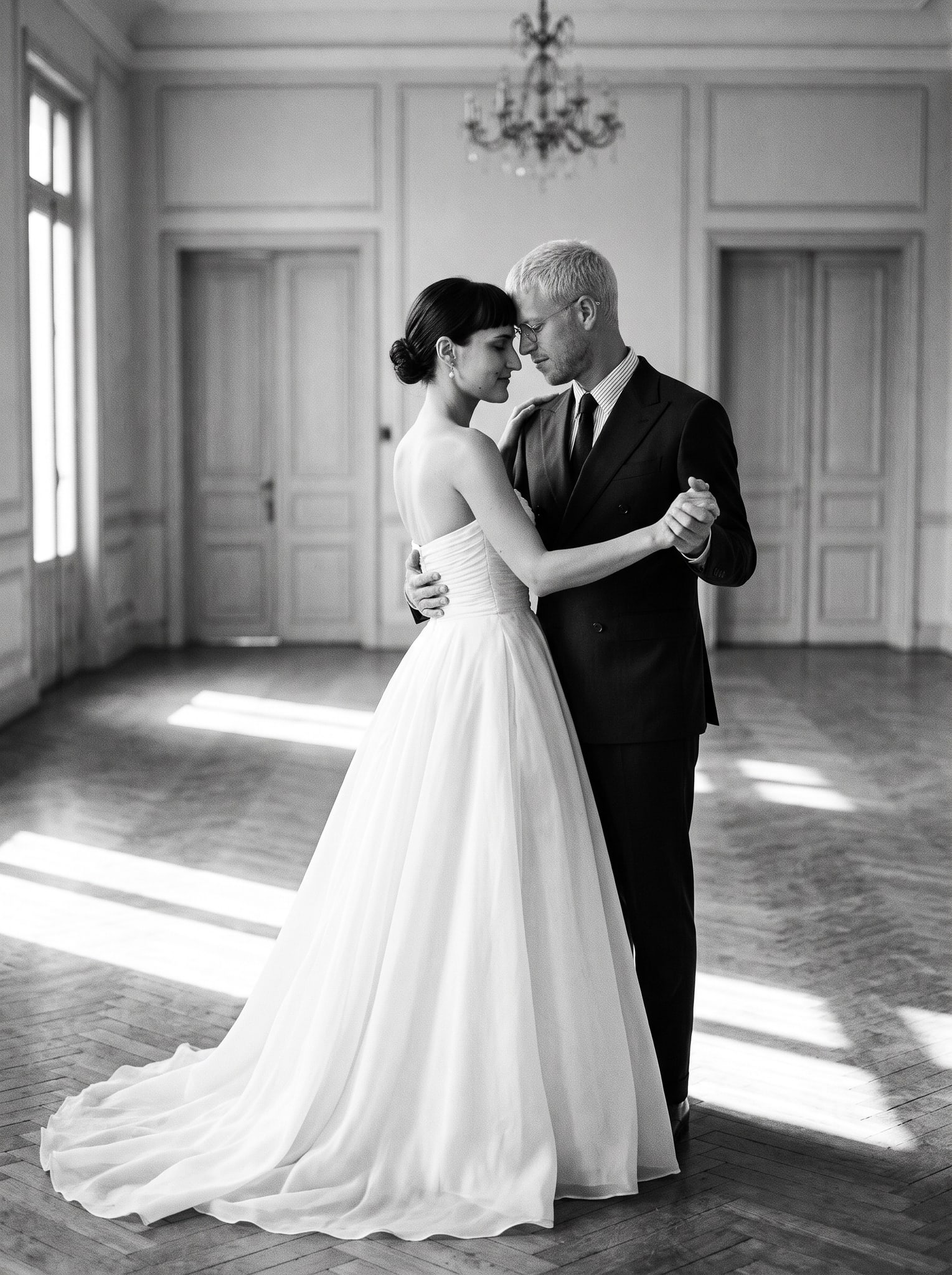
Golden hour at sunset: drama and warmth
Sunset sessions (4:30–6:30 p.m.) catch the sun low on the western horizon, wrapping the limestone in amber and rose. Shadows lengthen across stone steps, creating depth and movement in frames. The light turns skin warm and flatters most áo dài colors—burgundy, jade, gold, even navy pop against that glow. By 5:30 p.m., you'll see vendors packing up and tourist groups heading down; it's not empty, but quieter than noon. We position couples against the cliffs so the setting sun backlights their silhouettes or rims their hair. The risk: if clouds roll in (common in monsoon season), the magic vanishes in 10 minutes. Rain in June–August can spike to 80% likelihood by late afternoon. We always have an indoor backup plan—the marble carving shops near the base, or pivoting to a temple interior where we use reflectors and bounce flash. Sunset suits couples who want rich, romantic color and don't mind weather contingencies.
Temperature, monsoon season, and crew decisions
We schedule Marble Mountains shoots year-round, but the calendar shapes what we tell guests. November–April (dry season, 22–28 °C) offers clear skies 90% of the time; we book evening slots with confidence. May–September (monsoon, 28–32 °C, high humidity) brings afternoon rain 40–70% of the time; we shift toward morning shoots or book earlier sunset slots (4:00–5:30 p.m.) to finish before 5:45 p.m. cloud buildups. July–August are hottest; makeup melts, and couples tire faster. We brief guests: bring extra powder, skip heavy foundation, wear moisture-wicking undergarments. Morning shoots in hot months are gentler on everyone. Winter mornings (December–February) drop to 18–20 °C, so we add blankets and hot tea between setups. Our makeup artist plans for the temperature—cream products in heat, powder-heavy in cool and damp. This is why we lock timing 48 hours before, not weeks ahead.
| Timing | Light quality | Crowd level | Weather risk | Outfit color | Crew prep |
|---|---|---|---|---|---|
| 5:30–7:30 a.m. | Soft, cool, diffused | Zero tourists | Low (clear dawn) | White, cream, pastels | Early call, thermal drinks |
| 4:30–6:30 p.m. (Nov–Apr) | Golden, warm, dramatic | Medium (late groups) | Low (dry season) | Any—reds, golds pop | Backlight reflectors, flash |
| 4:00–5:30 p.m. (May–Sep) | Shorter golden window | Medium | High (60–70% rain) | Jewel tones, navy | Backup indoor set, mood flash |
| Midday (11:00–2:00) | Harsh, overhead | Peak tourists | Medium | Avoid—looks flat | Not recommended by Cáo |
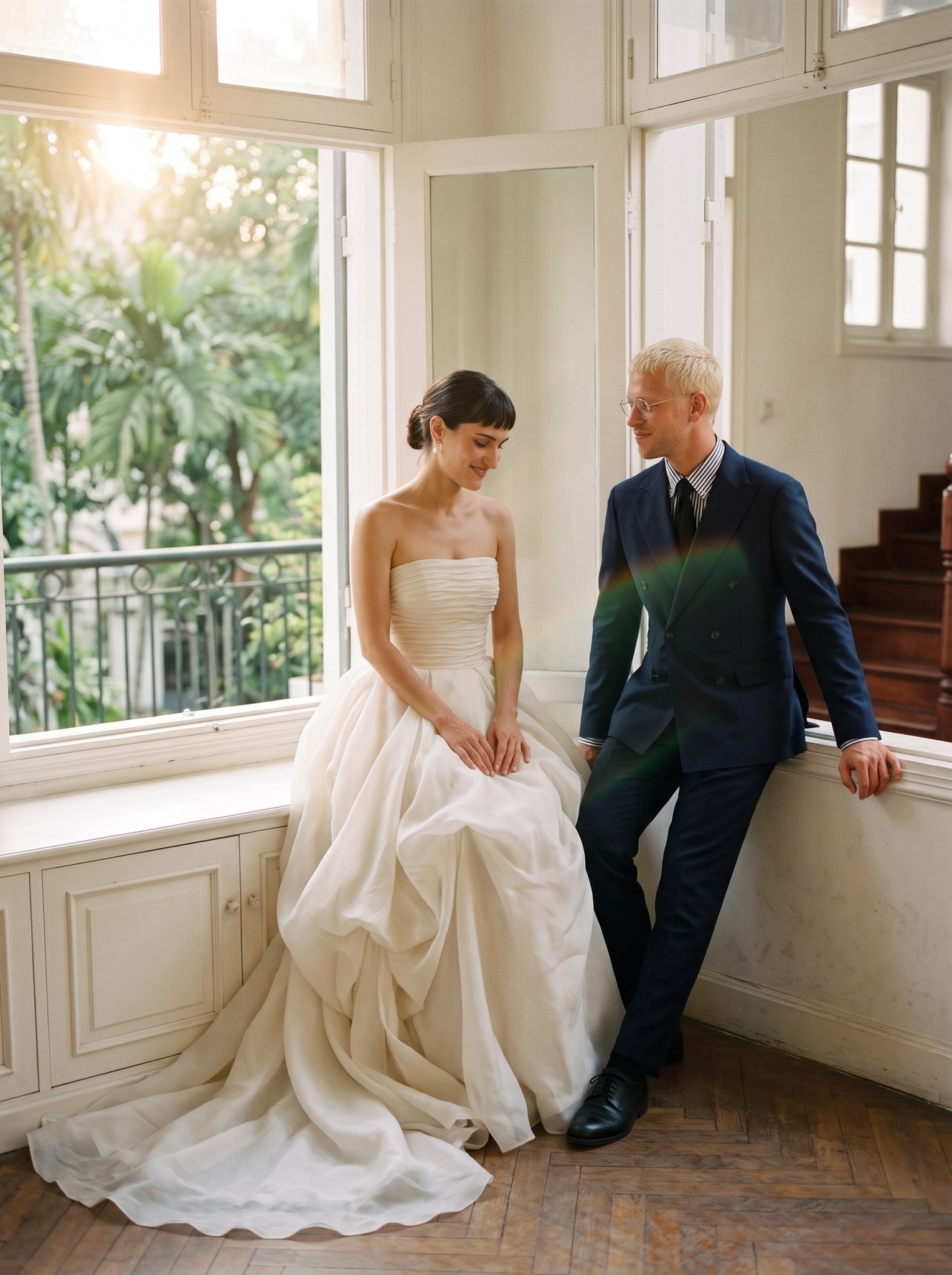
What we check before your Marble Mountains session
Our team runs through a 48-hour pre-shoot checklist so nothing surprises you on the day. Weather: we check a three-source forecast (local meteorology, tidal patterns, and our driver's observations from earlier jobs). If rain >60%, we ask you to confirm the indoor pivot or reschedule. Site access: Da Nang city authorities sometimes close upper pavilions for maintenance or events; we phone ahead. Crowds: tourist season (Dec–Jan, school holidays in Jul) peak 8 a.m.–4 p.m.; we squeeze you into the quiet slots. Makeup and hair: we discuss áo dài color, skin tone, and whether you prefer matte or dewy finish. Humid air makes matte last longer. Transport and timing: we confirm your hotel name and pickup time 24 hours before; no "we'll text you." Backup outfit: we ask for a second look (often a Western dress or formal wear for the base pavilion light, after the áo dài temple shots). Props and vows: if you're exchanging vows at the summit, we rehearse the framing—where you stand, where we position ourselves, who's holding the ring. Chat with us on WhatsApp
Why light matters more than the location itself
Couples sometimes assume Marble Mountains alone guarantees beautiful images. It doesn't. We've shot there at 1:30 p.m. with flat, washed-out light, and the limestone looked gray. Same location, wrong time = forgettable frames. We've also shot at dawn with thin, cool light and come away with ethereal, fashion-magazine frames. Light is 80% of the outcome; the Marble Mountains are the stage. This is why we own the timing conversation. When you book a pre-wedding and elopement package with Marble Mountains, we don't ask "what time suits you?" We say, "Here are two options—morning or evening—and here's what you'll get from each." Couples who choose based on light and crew readiness, not convenience, leave with images they never expected. We've photographed over a hundred sessions there, and the best ones almost always share one thing: the photographer and couple were both awake for the decision, not just showing up at a default time.
See packages and prices on vietnamphotoshoot.com
Our studio locations and Marble Mountains logistics
We have studios in Hanoi and Ho Chi Minh City, but Marble Mountains is 13 km outside Da Nang—a city 1.5 hours south of Hoi An. Most couples fly in or stay nearby. We coordinate with a local crew in Da Nang (driver, makeup artist on-site if needed, sometimes a local guide for temple protocols). If you're based in Cáo Studio Hanoi or Cáo Studio Saigon, we brief you on what to pack and book your Da Nang logistics via WhatsApp. The journey from your hotel to the base of Marble Mountains takes 15–25 minutes depending on which district you're in. We budget 2.5 hours total (travel, shooting, travel back) so you're back by 8:30 a.m. (morning) or 8:00 p.m. (evening). If you're combining Marble Mountains with a couple photoshoot elsewhere in Da Nang or Hoi An, we can chain sessions—Marble Mountains sunrise, breakfast, then a second location by 10:00 a.m. light.
FAQ
What is the best month for Marble Mountains wedding photos?
November–April (dry season, 22–28 °C, low rain risk). May–September monsoon brings 40–70% afternoon rain risk, pushing us toward early-morning shoots. December–February are coolest; July–August are hottest and most humid. Pick dry season if you want evening golden hour; pick monsoon if you like morning mist and soft light.
Do we need a permit to photograph at Marble Mountains?
No permit needed for couple or pre-wedding shoots on the public pathways and stairs. If you want exclusive access to the summit pavilion for a private ceremony or extended shoot, inform us—we arrange local liaison. Commercial/editorial work may need a site permit; we handle that.
How much time do we need for a Marble Mountains session?
90–120 minutes on-site (sunrise or sunset slot). Add 45 minutes for travel to and from your hotel. Total: 2.5–3 hours from pickup to drop-off. If you want two locations in one morning, we can do Marble Mountains (90 min) + Hoi An Ancient Town (90 min) = one 4-hour session.
What should we wear if we're shooting in July or August?
Morning (5:30–7:30 a.m.) for cooler air and soft light. Wear your áo dài in lighter fabrics (silk, cotton blend). Bring a second outfit in breathable material. We skip heavy foundation and rely on powder touch-ups every 20 minutes. Bring a hat and sunscreen for waiting periods. Hydrate constantly.
Can we reschedule if weather looks bad 48 hours before?
Yes. We check forecasts 48 hours ahead and give you a clear rain/no-rain call. If it's >60% rain, we offer to move to morning (if you booked evening), reschedule to the next good day, or pivot to an indoor backup location (temple interiors, marble carving shops, your hotel suite). See our makeup and hair at your hotel package if you want an indoor option.
What if clouds block the sunset on our evening shoot?
We use reflectors, off-camera flash, and repositioning to keep shooting. Cloudy golden hour still has warm tone—it's just softer. If heavy clouds roll in, we move to temple interiors (carved Buddha niches, stone passageways) where we use bounce flash and tungsten gels. Backups are part of our crew plan; you don't lose your session.
Pre-Wedding & Elopement
Inclusions, prices and booking are on our booking site.
FAQ
What is the best month for Marble Mountains wedding photos?
November–April (dry season, 22–28 °C, low rain risk). May–September monsoon brings 40–70% afternoon rain risk, pushing us toward early-morning shoots. December–February are coolest; July–August are hottest and most humid. Pick dry season if you want evening golden hour; pick monsoon if you like morning mist and soft light.
Do we need a permit to photograph at Marble Mountains?
No permit needed for couple or pre-wedding shoots on the public pathways and stairs. If you want exclusive access to the summit pavilion for a private ceremony or extended shoot, inform us—we arrange local liaison. Commercial/editorial work may need a site permit; we handle that.
How much time do we need for a Marble Mountains session?
90–120 minutes on-site (sunrise or sunset slot). Add 45 minutes for travel to and from your hotel. Total: 2.5–3 hours from pickup to drop-off. If you want two locations in one morning, we can do Marble Mountains (90 min) + Hoi An Ancient Town (90 min) = one 4-hour session.
What should we wear if we're shooting in July or August?
Morning (5:30–7:30 a.m.) for cooler air and soft light. Wear your áo dài in lighter fabrics (silk, cotton blend). Bring a second outfit in breathable material. We skip heavy foundation and rely on powder touch-ups every 20 minutes. Bring a hat and sunscreen for waiting periods. Hydrate constantly.
Can we reschedule if weather looks bad 48 hours before?
Yes. We check forecasts 48 hours ahead and give you a clear rain/no-rain call. If it's >60% rain, we offer to move to morning (if you booked evening), reschedule to the next good day, or pivot to an indoor backup location (temple interiors, marble carving shops, your hotel suite). See our [makeup and hair at your hotel](/go/makeup-and-hair) package if you want an indoor option.
What if clouds block the sunset on our evening shoot?
We use reflectors, off-camera flash, and repositioning to keep shooting. Cloudy golden hour still has warm tone—it's just softer. If heavy clouds roll in, we move to temple interiors (carved Buddha niches, stone passageways) where we use bounce flash and tungsten gels. Backups are part of our crew plan; you don't lose your session.
More from the team
Boho pre-wedding photoshoot in Vietnam: Hanoi, Saigon, Hoi An
Boho pre-wedding shoots mix romantic, free-spirited aesthetics with Vietnam's landscapes and heritage sites. We run full-day sessions in three cities, handling styling, makeup, location scouts and edits.
Avoid crowds at Hoang Su Phi rice terraces: timing for wedding shoots
Hoang Su Phi's terraced landscape draws couples and tour buses in equal measure. We show how to shoot there alone, when to arrive, and what to arrange with us before you go.
Photography rules at Con Dao beaches: permits, drones and what to check
Con Dao's beaches demand prep before you shoot—permits, drone zones and tide timing all affect your day. We share what the Cáo Studio team verifies on every booking.