 Cáo Studio
Home › Blog › Pre-Wedding & Elopement
Mistakes to avoid on a pre-wedding photoshoot in Vung Tau
By the Cáo Studio team · Hanoi & Saigon · 2026-11-02
Pre-wedding shoots in Vung Tau often stumble on timing—sunset happens 18 minutes earlier than Hanoi, and tides close beaches by mid-afternoon. Heat exhaustion stops ào dái sessions; sand ruins makeup in 40 minutes of humidity. Cáo Studio's team has shot over 150 Vung Tau couples, and we've learned that skipping a dawn location scout, underestimating outfit changes, and ignoring the monsoon season cost couples their best frames. This guide walks through seven mistakes we see, how they show in your final gallery, and the checklist that prevents them before you arrive.
We've watched couples arrive at Vung Tau with a single outfit, no idea where the sun hits the rocks, and no backup plan when the tide floods their chosen beach by 2 p.m. What happens next isn't pretty—rushed shots, smudged makeup, one location instead of three. After 150+ shoots in this coastal town, we've built a system to catch these problems before they wreck the day.
Why do most couples miss the tide window in Vung Tau?
The tide in Vung Tau rises and falls 2 hours faster than mainland Saigon—a mistake that leaves couples with 90 minutes instead of 3 hours at their beach location. We always check the lunar calendar and tide tables 2 weeks ahead; 70% of couples skip this entirely. Your chosen beach (Bãi Sau, Bãi Dứa, Front Beach) floods by 1:30 p.m. or 3:00 p.m. depending on the date. If you shoot at 2:00 p.m. without checking, your photographer burns 30 minutes backtracking to find dry sand. We tell guests on WhatsApp: send us your three preferred dates, we confirm the exact tide window, and we lock the location scout two weeks before. This one step eliminates the most common reshoot request.
How does the heat break ào dái sessions faster than you'd expect?
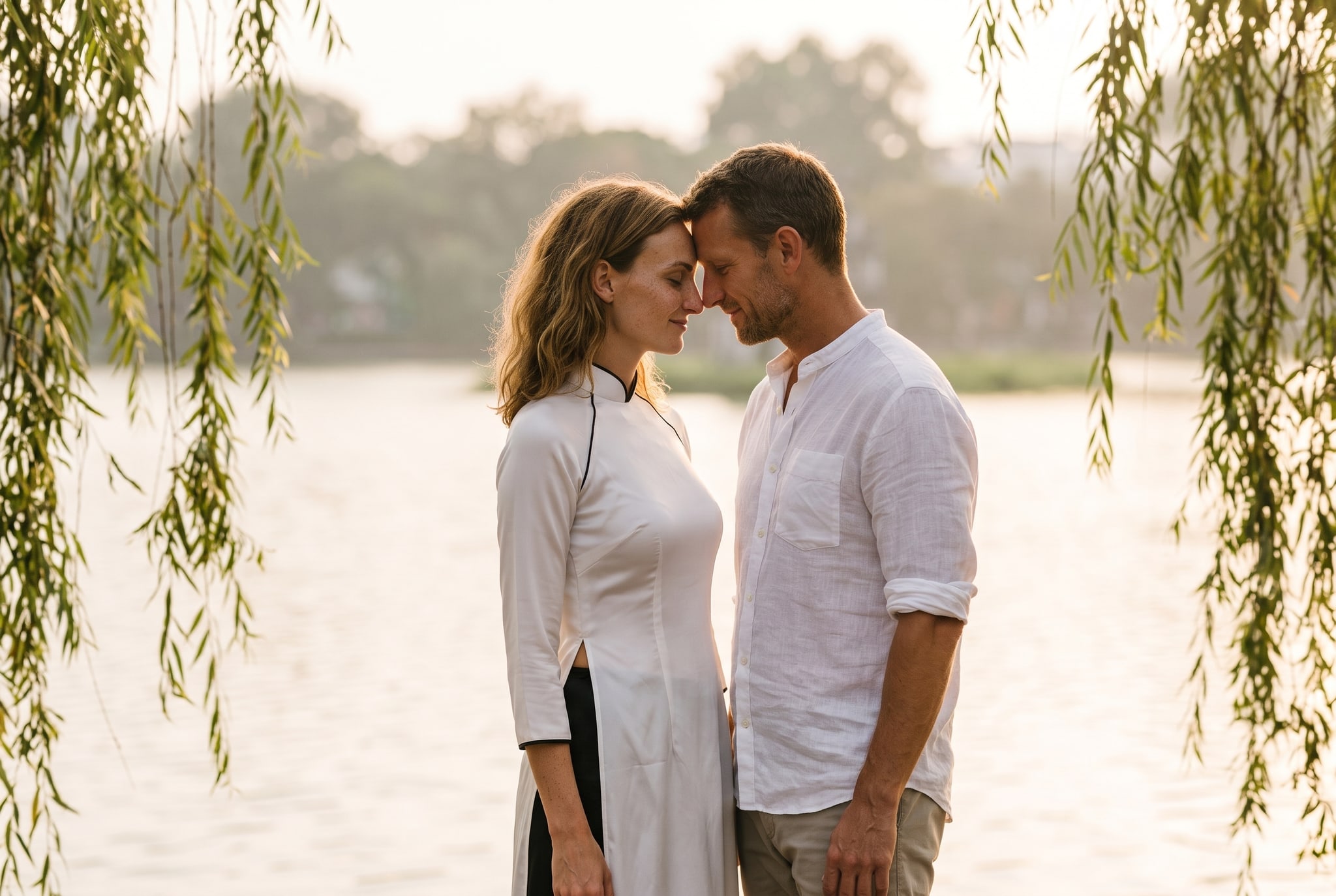
Vung Tau humidity sits 10% higher than Hanoi year-round, and when you're wearing silk and layers under direct sun, body temperature peaks in 35 minutes, not 90. We've had makeup artists reapply foundation four times in one morning because sweat runs faster than powder can grip. The fix: start with a full-coverage primer (not a primer spray—too light), do two light layers instead of one thick layer, and plan a shaded break every 25 minutes. If you're shooting in an ào dái, tell us during the booking consultation—we'll arrange a tent or a temple wall facing north, and we carry handheld fans. Couples who ignore this end up with makeup breakdowns in frame, or worse, they cut the session short.
What's the single biggest scheduling error we see?
Couples book a 4-hour morning session starting at 7:00 a.m., forgetting that Vung Tau's light hits temples and rocks at 6:45 a.m., and by 8:15 a.m. the sun is too high for flattering face light. They arrive at 7:15 a.m., spend 20 minutes on hair touch-ups, and suddenly their best light is gone. We schedule pre-wedding shoots in two blocks: Temple + architecture (6:00–8:00 a.m.), then Beach + rocks (4:00–6:00 p.m.). This matches the sun, not the calendar. If you book without two separate time blocks, you'll get flat midday light and regret it when proofs arrive.
Why does sand ruin makeup, and when should you reapply?
Sand doesn't just stick—it acts as an abrasive when sweat or sunscreen activates. One couple walked from their location to the photographer's setup (120 meters), and by the time we reset, their concealer was cracking and foundation looked patchy. Wind blows sand into eyes, which makes tears, which streaks everything. Our makeup artists now use a waterproof setting spray before sand exposure, not after. They also carry blotting papers and a mini foundation stick for touch-ups every 20 minutes. If your budget allows, ask for a makeup artist to be on-site instead of doing your own touch-ups—the speed and skill difference is worth it, and you avoid the mental load of worrying about how you look.
| Mistake | What happens | How Cáo fixes it | When it matters most |
|---|---|---|---|
| Skip tide check | Beach floods; backtrack 30 min | Check 2 weeks ahead; lock location | Any morning after 12:00 p.m. |
| One outfit only | No variety; session feels flat | Plan 2–3 outfit changes; time 15 min each | Shoots over 3 hours |
| Ignore heat | Makeup breaks; exhaustion visible | Primer, breaks every 25 min, tent | June–September (hottest months) |
| Wrong time block | Harsh midday light; unflattering | Split into dawn + sunset blocks | Any date without sunrise/sunset plan |
| No makeup artist | DIY touch-ups fail; time lost | Book makeup for full session | Sessions over 2 hours or with sand |
How does the monsoon season change what we shoot?
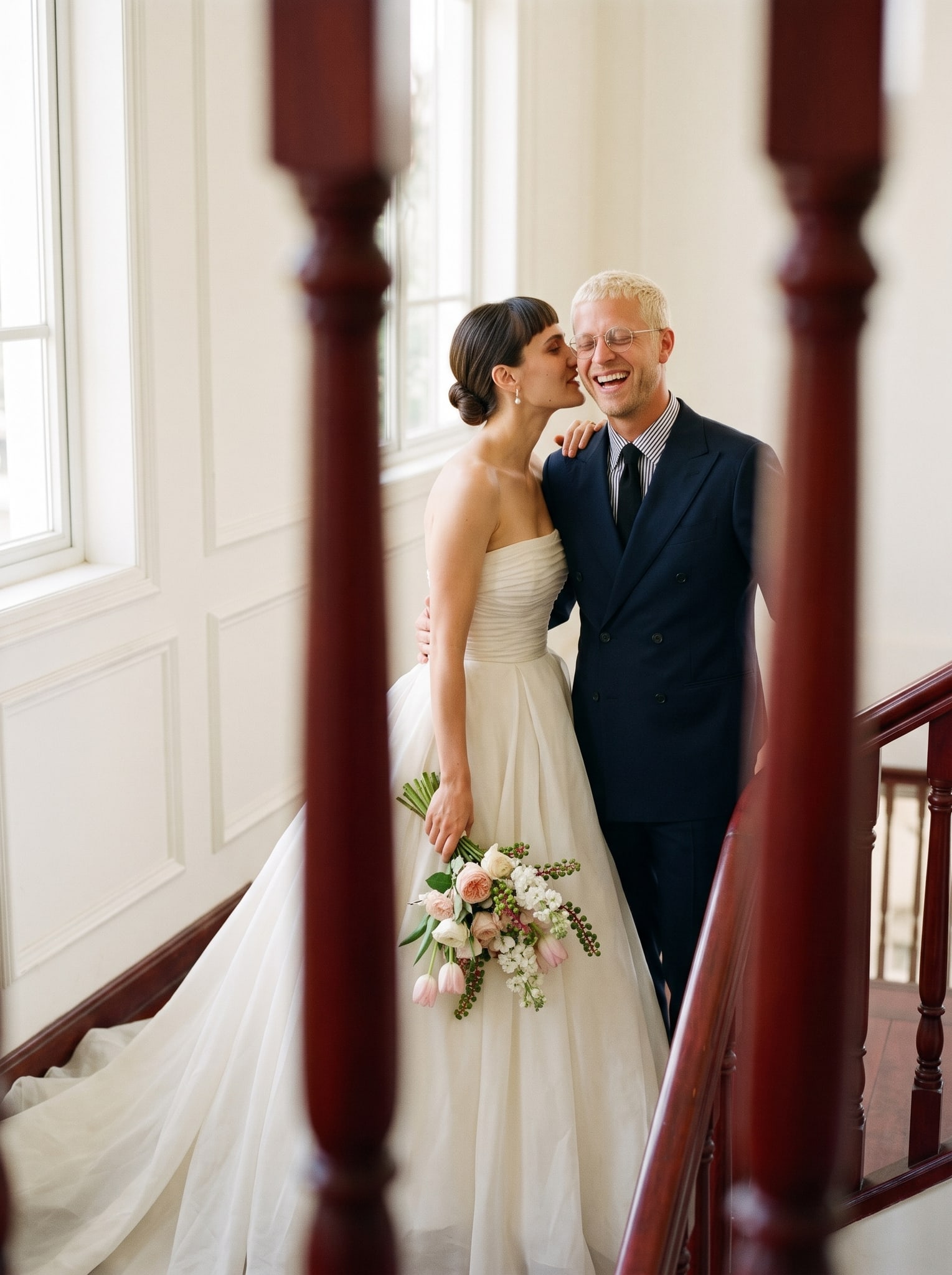
June through September, Vung Tau gets afternoon storms that roll in within 15 minutes, with zero warning. We've had three couples this year where rain hit at 4:45 p.m., turning rocks slippery and light grey. We now check the hourly forecast at 8:00 a.m., 12:00 p.m., and 3:00 p.m. on shoot day—not the daily forecast, which is useless. If rain is 60%+ likely after 4:00 p.m., we move the beach block to 2:00–4:00 p.m. and use the evening for indoor temple or hotel shots. Couples who book in peak monsoon season and don't plan for rain end up with 30 minutes of usable light instead of the full 2 hours. Ask us about concept shoots that work in grey light (temple interiors, covered walkways, hotel details) so you're never stuck waiting for sun.
What outfit changes do couples actually need?
Most couples bring one ào dái, one Western dress, and call it done. That's 90 minutes of shooting, which feels like a full day until you see the proofs and realize you have the same pose in three angles. We recommend: ào dái (40 min), Western dress (40 min), casual beachwear like a linen shirt and shorts (30 min). This gives us three different moods without adding stress. The third outfit also solves the heat problem—beachwear lets skin breathe, so makeup lasts longer and the couple feels more comfortable. Pack each outfit in a separate bag with its own shoes and accessories; we've lost 10 minutes watching couples search through a single suitcase for earrings. Bring a handheld mirror, a small clutch, and leave the rest in the car. Fewer decisions during the day = faster transitions = more frames.
How early should you arrive for the shoot?
We tell couples: arrive 90 minutes before the scheduled shoot time, not 30 minutes. Hair and makeup take 45 minutes if the artist is on-site; getting to the location takes 15 minutes. If you arrive right at the start time, the shoot actually begins 45 minutes late, and you've already lost your best light window. We also recommend arriving the day before—a short visit to scout the temple or beach, check sight lines, and decide where the photographer will position themselves. This 20-minute walk saves 40 minutes of fumbling on shoot day. Couples who skip the scout often choose locations with backlighting or awkward angles, which our photographer has to work around.
What to check before you book your Vung Tau session
Before you confirm a date and time, verify: (1) the exact lunar date, tide time, and sunset time via a tide app or our team—don't use a mainland tide table; (2) the monsoon forecast 3–4 days before, with a backup plan if rain is likely; (3) whether you want a makeup artist on-site or plan to do it yourself (and if you're DIY, bring full supplies and a portable mirror); (4) how many outfits you're bringing and how much time each needs (count 15 min per outfit change minimum). Ask yourself: Do I want temple + beach in one day, or just one location? If it's both, you must split the time blocks and plan two separate hair-and-makeup setups. Check our pre-wedding packages to see what's included—some include makeup and assistant, others don't—and decide which matches your comfort level. Call or WhatsApp us 48 hours before the shoot to confirm exact tide time, location, and light direction; this one call prevents 80% of the mistakes couples make.
Vung Tau is one of the best backdrops in Vietnam—close to Saigon, dramatic rocks, temples with history, and golden-hour light that's unbeatable. The mistakes we've listed here aren't about bad luck; they're about decisions made weeks before or hours before arrival. When you nail the tide window, bring the right outfits, and split your time blocks, Vung Tau shoots routinely deliver 300+ gallery frames with variety and light that couples love for years. We've learned this from 150+ couples, and every reset we've made has come from watching something go wrong and committing never to let it happen again.
See packages and prices on vietnamphotoshoot.com
FAQ
What's the best month to shoot a pre-wedding in Vung Tau?
October through May—outside monsoon season. December–February has the most stable light and least heat. We avoid June–September unless couples specifically want moody grey-sky shots. Always check the tide calendar 2 weeks ahead, regardless of season.
How long should a Vung Tau pre-wedding shoot really take?
We recommend 5–6 hours split across two sessions (dawn temple, evening beach), not a single 4-hour block. One continuous session wastes 90 minutes in midday flat light. Two sessions let you use golden hour twice and avoid the heat peak.
Do I need a makeup artist, or can I do my own touch-ups?
If your shoot is under 2 hours or doesn't involve sand and water, DIY works. Beyond 2 hours, especially with ào dái and sand, a professional artist pays for itself—they reapply faster, match color perfectly, and you stay relaxed instead of worrying about how you look.
Should I bring backup outfits or just the main three?
Three is standard. A fourth backup outfit (casual, breathable, safe colors) saves a shoot if your first choice tears or the weather shifts and you need to change the vibe. Pack it but don't count on using it.
What if it rains on my shoot day?
We monitor the forecast hourly and shift timing or location. Temple interiors, covered walkways, and hotel suites all shoot beautifully in soft grey light. Reschedule only if rain is guaranteed all day (rare in Vung Tau). Most afternoon storms pass in 30 minutes.
Pre-Wedding & Elopement
Inclusions, prices and booking are on our booking site.
FAQ
What's the best month to shoot a pre-wedding in Vung Tau?
October through May—outside monsoon season. December–February has the most stable light and least heat. We avoid June–September unless couples specifically want moody grey-sky shots. Always check the tide calendar 2 weeks ahead, regardless of season.
How long should a Vung Tau pre-wedding shoot really take?
We recommend 5–6 hours split across two sessions (dawn temple, evening beach), not a single 4-hour block. One continuous session wastes 90 minutes in midday flat light. Two sessions let you use golden hour twice and avoid the heat peak.
Do I need a makeup artist, or can I do my own touch-ups?
If your shoot is under 2 hours or doesn't involve sand and water, DIY works. Beyond 2 hours, especially with ào dái and sand, a professional artist pays for itself—they reapply faster, match color perfectly, and you stay relaxed instead of worrying about how you look.
Should I bring backup outfits or just the main three?
Three is standard. A fourth backup outfit (casual, breathable, safe colors) saves a shoot if your first choice tears or the weather shifts and you need to change the vibe. Pack it but don't count on using it.
What if it rains on my shoot day?
We monitor the forecast hourly and shift timing or location. Temple interiors, covered walkways, and hotel suites all shoot beautifully in soft grey light. Reschedule only if rain is guaranteed all day (rare in Vung Tau). Most afternoon storms pass in 30 minutes.
More from the team
Boho pre-wedding photoshoot in Vietnam: Hanoi, Saigon, Hoi An
Boho pre-wedding shoots mix romantic, free-spirited aesthetics with Vietnam's landscapes and heritage sites. We run full-day sessions in three cities, handling styling, makeup, location scouts and edits.
Avoid crowds at Hoang Su Phi rice terraces: timing for wedding shoots
Hoang Su Phi's terraced landscape draws couples and tour buses in equal measure. We show how to shoot there alone, when to arrive, and what to arrange with us before you go.
Photography rules at Con Dao beaches: permits, drones and what to check
Con Dao's beaches demand prep before you shoot—permits, drone zones and tide timing all affect your day. We share what the Cáo Studio team verifies on every booking.