 Cáo Studio
Home › Blog › Ao Dai Photoshoot
Mui Ne Ao Dai Photoshoot Guide: What We Tell Guests
By the Cáo Studio team · Hanoi & Saigon · 2026-11-02
A Mui Ne ao dai photoshoot means renting or bringing a traditional Vietnamese gown and posing across the town's iconic landscapes—red dunes at sunrise, golden-hour beaches, fishing boat harbors—over 2–4 hours. Cáo Studio brings a photographer, sometimes a stylist, and guides you through light changes and outfit swaps. You arrive in Mui Ne by coach or flight (4 hours from Saigon, 12 from Hanoi), book a session via our packages, and we handle location scouting, timing, and edits. Most guests spend one full day with us, 6am–2pm or 4pm–8pm. Costs vary by session length and team size—check our booking site for current packages. Avoid midday harsh sun (11am–3pm); bring water, sunscreen, and comfortable shoes for walking dunes. Chat with us on WhatsApp
What time of year do we actually shoot in Mui Ne?
We run Mui Ne shoots year-round, but the work changes season to season. December to February brings cool dry mornings and calm seas—our most popular window because guests don't overheat in layers of silk and embroidery. March to May gets hot and hazy; we shift to very early 5:30am starts and push hard into sunset. June to September brings rain, occasional landslides on dune roads, and a moody overcast light that some clients love for moodier tones. October to November is golden: warm but not brutal, clear skies, and the dunes photograph with rich color. We tell guests on WhatsApp: pick your season by comfort and aesthetic. Don't book a 2pm dune shoot in April expecting to feel good—we'll suggest dawn or dusk instead, and you'll understand why when you see the images.

How do we actually manage the dunes and your ao dai on the day?
The red dunes are soft, loose sand. Ao dai hem (the bottom panel) picks up grit instantly. We arrive with a stylist who carries tissues, a soft brush, and a spray bottle. Every 10–15 minutes of dune work, we stop and brush the hem and underskirt. Guests always ask: "Won't this take forever?" It doesn't—we build buffer time into our hourly plan. We also scout the exact dune slopes the afternoon before so we know which ones let you walk without sinking (firmer morning sand beats afternoon). We never suggest posing on the steepest faces unless you're comfortable with a stumble—one guest fell backward in March and the ao dai tore at the back seam. We learned to demo the slope first, barefoot, show safe footing, then move forward. Bring slip-on shoes or go barefoot; lace-ups jam with sand and slow everything down.
Which locations in Mui Ne translate best to the camera?
We rotate between five core spots. Red dune sunrise area (east side, off Nguyen Hue road) gives saturated burnt-orange backdrop and soft morning raking light—our workhorse. Ke Ga lighthouse on the southern point offers rocky foreground, blue-green water, and hard geometric lines that frame ao dai silhouette well; we shoot there when tide is low and rocks are exposed (check tide charts—we do, every session). Fishing village harbor (Mui Ne town center, early mornings) has moored boats, weathered nets, and a gritty human backdrop; crowds appear by 8am so we finish here first. Phan Thiet beach (west side) works for sunset and golden hour if winds are calm—ao dai fabric catches breeze and creates movement, but strong wind (over 20 km/h) flattens the fabric and tangles the hem. Ham Tien stream valley (inland, 20 minutes' drive) has freshwater palms, green terraces, and sand formations without the red-dune cliché—we book it for clients who want separation from other shoots. Each location works for 45–90 minutes depending on light window and crowd. We choose the sequence the night before based on tide tables, weather forecast, and whether you want color saturation (sunrise reds) or skin tone warmth (golden hour).
| Location | Best light window | Crowd risk | Ao dai advantage | Photoshoot fit |
|---|---|---|---|---|
| Red dune sunrise | 5:30–7:30am | None | Rich orange backdrop, soft edges | 60 min, warm tone |
| Ke Ga lighthouse | 7am or 4–6pm | Low | Dramatic lines, water reflections | 45 min, contrast |
| Fishing harbor | 5:30–7am | High by 8am | Authentic texture, story | 30–45 min, candid |
| Phan Thiet beach | 4–6:30pm | Medium | Fabric movement, warm skin | 45–60 min, dreamy |
| Ham Tien valley | 9–11am or 2–4pm | Minimal | Lush green, editorial feel | 60 min, color depth |
How long does a typical Mui Ne session with us actually take?
We plan in blocks, not strict timelines. A standard day runs: 5:30am pickup from your hotel (or you drive to our meeting point), 6–7:15am at red dunes (one outfit, three micro-locations within the area), 7:30–8:15am travel and outfit change (we do this in a small cafe or hotel), 8:30–9:15am fishing harbor, 9:30–10:15am Ke Ga lighthouse or alternate site, 10:30–11:15am beach and detail shots (hands, jewelry, close ao dai texture). By 11:30am we're done and you're back at your hotel by noon. We never push past midday heat unless you ask. Evening sessions run 4pm–7:30pm (dusk shoot at Phan Thiet or inland location). The photographer takes 300–450 images per session. We deliver edits (color-graded, retouched) within two weeks via online gallery. What causes delays: your outfit fits poorly or tears (we carry a needle kit but can't remake panels), you want unplanned extra locations (we fit them if daylight allows, sometimes it doesn't), or weather turns (sudden rain, harsh cloud break). We stay flexible—the day is yours, but we guide by light, not clock.
See packages and prices on vietnamphotoshoot.com
Do you rent ao dai or should we bring our own?
This is the biggest decision point for most guests. If you bring your own: you own the color, fit, and embroidery story—guests from overseas often wear family heirlooms or commission Hanoi tailors weeks ahead. Risk: airport luggage damage, wrinkles, poor fit on arrival. We steam and adjust on-site but can't alter in two hours. If you rent locally: Mui Ne has rental shops near Phan Thiet (budget-friendly, standard designs, quick pickup). Ninh Binh and Hanoi have premium ateliers with custom tailoring—we partner with studios in Hanoi and can coordinate fittings if you arrive early. Cost difference is significant; the booking site lists options per package tier. Most of our international guests choose rent-on-arrival or pre-order from a tailor—faster than shipping, no customs risk. One guest shipped an ao dai from the US and it arrived creased beyond steaming; she rented a backup on-site. Lesson: if you own the piece and it's delicate, hand-carry it, wear it on the plane, or ship it two weeks early via courier. We advise clients in WhatsApp chats case by case—message us your plan and we'll tell you the real risks.
What should you actually pack and wear to Mui Ne?
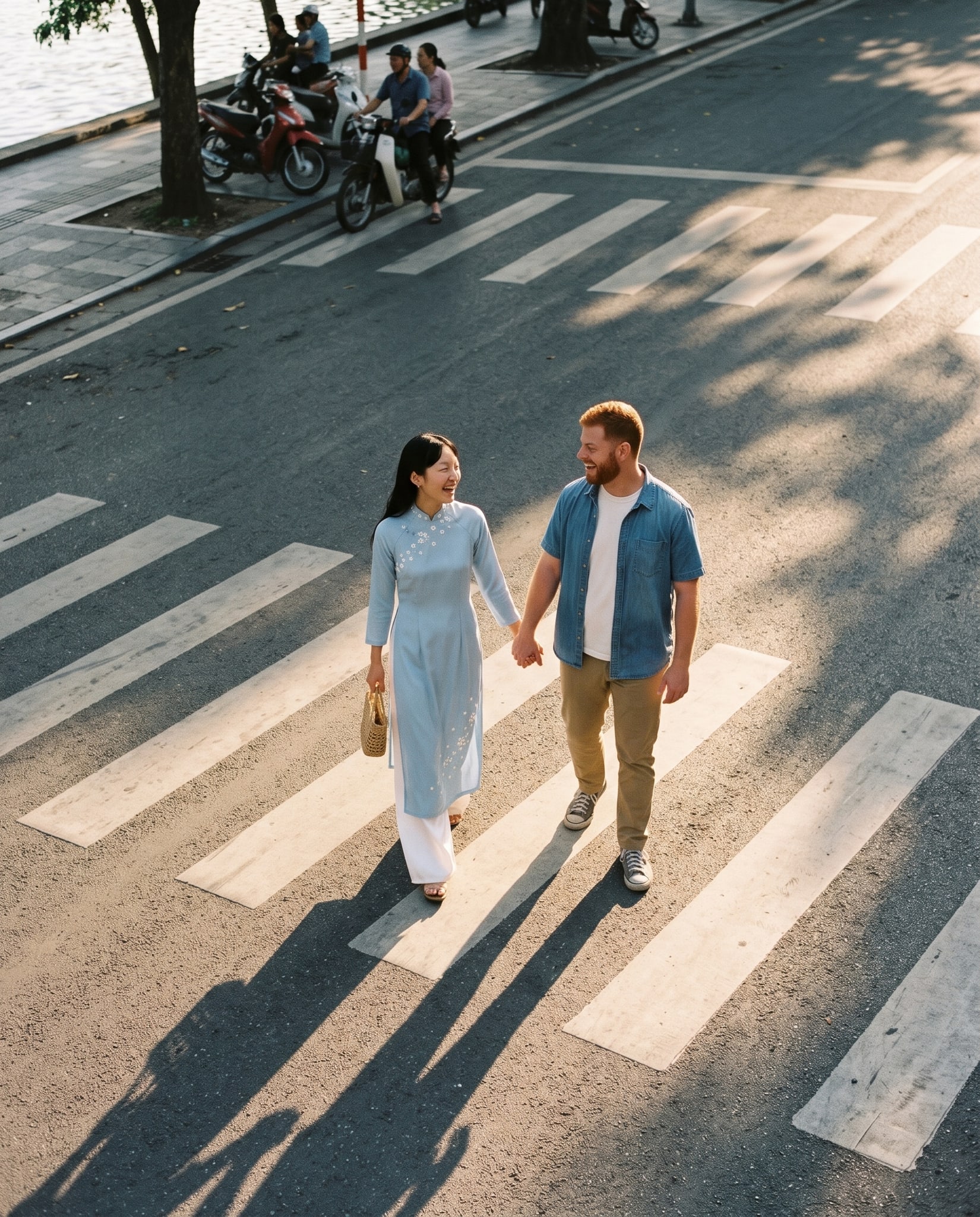
Beyond the ao dai: bring sunscreen SPF 50+ (reapply every 90 min; our stylist carries it but your skin is your call), a cap or hat for waiting moments (we take it off before shooting), slip-on sandals or water shoes (dunes + rocks = no laces), a light scarf or shawl (wind on dunes, also frames the gown in portraits), a small cross-body bag for phone and ID (we carry it if it's not in-frame), water bottle 1 liter minimum, light jacket or long-sleeve shirt for 5:30am chill (strip it before light gets warm), minimal jewelry (sand damages chains; stick to earrings and a ring or two). Don't wear: heavy makeup (it sweats and runs by hour two—we do touchups every 45 min), complicated undergarments (you're changing fast and tight bras show seams under silk), or nail polish you just applied (damp sand sticks and dulls it). One guest wore false nails, one popped off at the harbor and we spent 10 minutes searching. Bring a spare nail if yours are long. Wear plain cotton underwear; no patterns show through white ao dai. These small reads come from doing this weekly.
How do we handle rain and weather shifts?
Mui Ne has unpredictable wind and occasional showers, especially June–September. We check the forecast at 6pm the night before; if rain is >60% we message you to confirm or reschedule. Light drizzle we work through—some of our moodiest shots happen in overcast light, and the ao dai photographs beautifully against grey sky. Heavy rain (>10mm predicted) and we delay to afternoon or next day. Strong wind (>25 km/h) flattens the ao dai skirt and makes long shots look flat—we offer to shift to close-ups and detail work or wait for calmer hours. One session in July, a squall hit at the lighthouse. We sheltered under the structure, changed to indoor/sheltered shots, and the day became more intimate and textured than our original plan. Wind also creates ao dai movement—above 15 km/h, the fabric does a lot of work. Some guests love it; others find it chaotic for still portraits. We assess real-time and adjust poses and framing. Honestly: weather adds unpredictability. If you're flexible, it creates magic. If you need every shot pristine and controlled, book in December–February when Mui Ne is most stable.
What to check before you book a Mui Ne ao dai session with us
- Confirm session length and location count. Does your package include two locations or five? Is sunrise included or only golden hour? Check the package details or ask on WhatsApp—clarity here avoids disappointment on the day.
- Verify your ao dai status. Will you bring it, rent locally, or order from a tailor we recommend? If tailoring, order 4–6 weeks ahead; if renting, book 1 week before arrival. Let us know so we can help coordinate.
- Confirm pickup and timing. Where will we meet? What time? Early shoots mean 5:30am departure—some guests aren't ready for this and it throws the whole day. Honest conversation now prevents conflict.
- Ask about weather backup. What happens if it rains? Does your package include a rain date or partial refund? We're flexible but you should know our policy upfront.
- Understand what's included in edits. Do you get all 300+ images or a curated gallery? Color grading and retouching—how much? Prints, albums, or digital only? Ask before you pay.
- Discuss any physical limits. Dune walks are real walking—not strenuous, but 90 minutes of uneven sand. If you have knee or ankle concerns, tell us. We adjust locations or pacing without hesitation.
- Confirm payment and cancellation terms. The booking site outlines this, but ask questions. Can you pay via bank transfer or credit card from abroad? What's the cancellation window?
Should you book a Mui Ne shoot as a couple, family, or solo session?
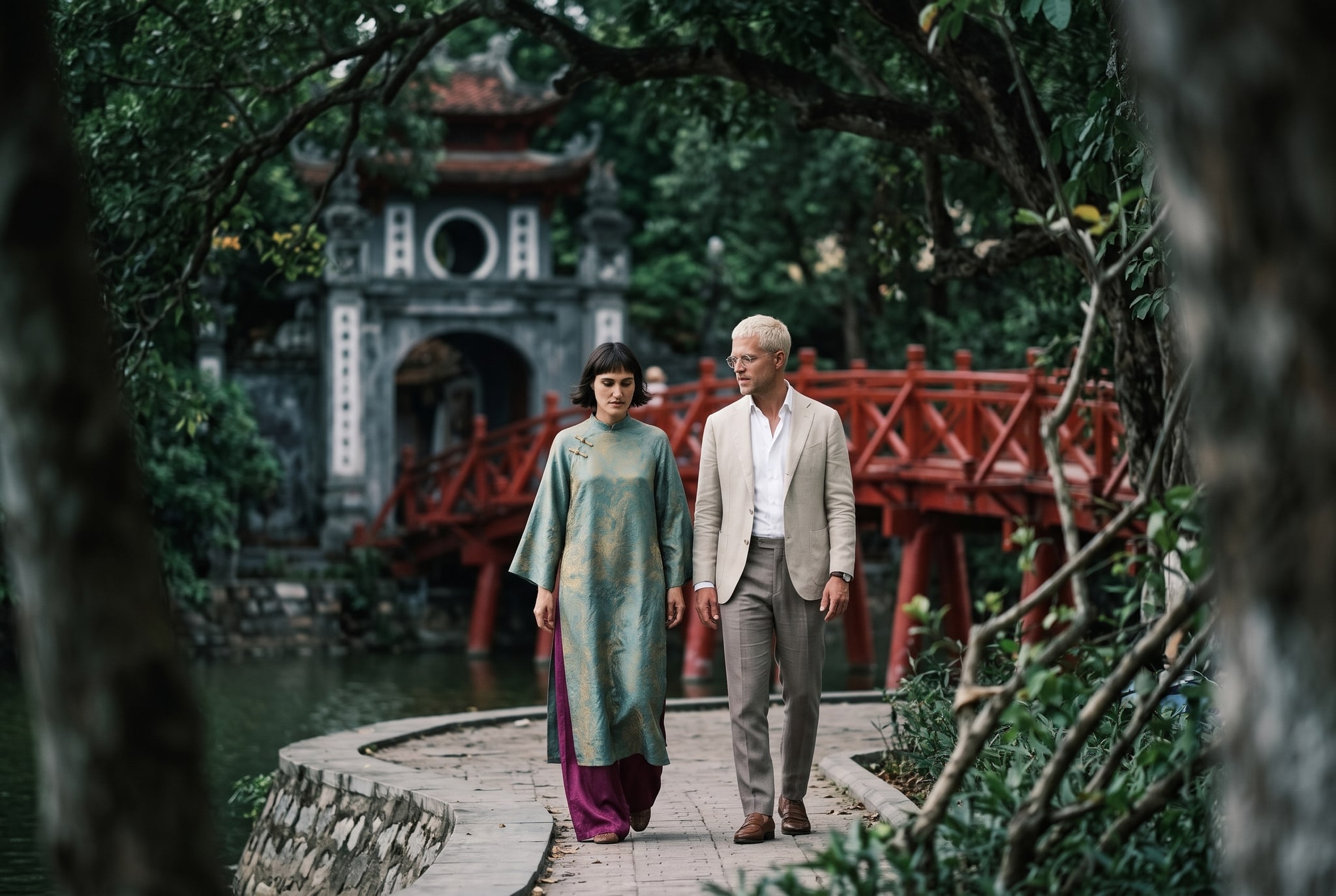
Couple shoots in Mui Ne are deeply popular—the romantic dune light and intimate coastal vibe work well for two people. We often build them into pre-wedding or elopement packages. Family photoshoots work if all members wear ao dai or coordinated dress; children get tired on dunes faster, so we choose shorter, lower-stakes locations. Solo sessions let you take your time with each pose and expression—some guests find the focused attention powerful. Solo also lets us linger longer at one location without feeling rushed. Ask yourself: are you telling a story with someone else, or documenting yourself in a place? The answer shapes which package fits and how we'll plan the day.
FAQ
Can we shoot ao dai in Mui Ne if we're not experienced with posing?
Absolutely. We guide every pose—how to stand on sand, angle your body, hold the ao dai hem, where to look. Most guests have never posed before. We'll place your hands, adjust your weight, and show you how the fabric moves. After shot one, it gets easier and faster. Many guests say they felt awkward for 10 minutes, then forgot the camera existed.
Is Mui Ne accessible from Saigon, or do we need to fly?
Four-hour bus or coach from Saigon (Phan Thiet is the town hub). Direct flight Saigon–Phan Thiet exists but is less common than the road route. Most guests bus or drive. If you arrive a day early, you can scout locations or rest—no pressure to shoot day one.
Will the ao dai get damaged on the dunes or rocks?
Minor wear is normal: tiny sand grains in the hem, light creasing, maybe a loose thread. We brush and steam as we go. Actual tears are rare—we've seen two in 100+ shoots, both from stumbles downhill. Wear slip-ons, go slowly, and let us know if you feel unbalanced. Rental ao dai are durable; they're built for events.
How many edits and which images do we get?
You receive a curated gallery (typically 80–120 best images) color-graded and retouched, delivered online. Not every frame—we edit for quality and story. If you want all raw images, ask upfront; some packages include them. Ask on WhatsApp what your specific tier includes.
Can we add a makeup artist to the session?
Yes. We offer hotel makeup and hair services that extend to on-location touch-ups. Let us know when you book and we'll add a stylist to your team. They'll refresh your face and ao dai between locations—especially useful for multi-hour shoots.
What's the weather risk in Mui Ne between June and September?
Rain is possible, especially afternoon showers. We reschedule sessions if heavy rain (>10mm) is forecast. Light drizzle and overcast conditions we work through—they create moody, textured light. Wind is the bigger variable: strong gusts flatten the ao dai silhouette. Book December–February if predictability matters most.
Ao Dai Photoshoot
Inclusions, prices and booking are on our booking site.
FAQ
Can we shoot ao dai in Mui Ne if we're not experienced with posing?
Absolutely. We guide every pose—how to stand on sand, angle your body, hold the ao dai hem, where to look. Most guests have never posed before. We'll place your hands, adjust your weight, and show you how the fabric moves. After shot one, it gets easier and faster. Many guests say they felt awkward for 10 minutes, then forgot the camera existed.
Is Mui Ne accessible from Saigon, or do we need to fly?
Four-hour bus or coach from Saigon (Phan Thiet is the town hub). Direct flight Saigon–Phan Thiet exists but is less common than the road route. Most guests bus or drive. If you arrive a day early, you can scout locations or rest—no pressure to shoot day one.
Will the ao dai get damaged on the dunes or rocks?
Minor wear is normal: tiny sand grains in the hem, light creasing, maybe a loose thread. We brush and steam as we go. Actual tears are rare—we've seen two in 100+ shoots, both from stumbles downhill. Wear slip-ons, go slowly, and let us know if you feel unbalanced. Rental ao dai are durable; they're built for events.
How many edits and which images do we get?
You receive a curated gallery (typically 80–120 best images) color-graded and retouched, delivered online. Not every frame—we edit for quality and story. If you want all raw images, ask upfront; some packages include them. Ask on WhatsApp what your specific tier includes.
Can we add a makeup artist to the session?
Yes. We offer [hotel makeup and hair services](/go/makeup-and-hair) that extend to on-location touch-ups. Let us know when you book and we'll add a stylist to your team. They'll refresh your face and ao dai between locations—especially useful for multi-hour shoots.
What's the weather risk in Mui Ne between June and September?
Rain is possible, especially afternoon showers. We reschedule sessions if heavy rain (>10mm) is forecast. Light drizzle and overcast conditions we work through—they create moody, textured light. Wind is the bigger variable: strong gusts flatten the ao dai silhouette. Book December–February if predictability matters most.
More from the team
Ao Dai Photos at Hoi An Lantern Street at Night
Hoi An Lantern Street (Nguyen Hoan) glows at dusk with silk lanterns and reflected light. Our team shoots ao dai here after dark, navigates tight vendor spaces, and handles the low-light challenge with experience from 100+ night sessions.
Ao dai for wedding photos in Quy Nhon: renting, fitting and styling
Quy Nhon's coastal backdrops pair beautifully with traditional ao dai. We walk through rental choices, fitting logistics and how our team coordinates styling on shoot day.
Vietnam Pre-Wedding Photoshoot: What We Book at Cáo Studio
Pre-wedding shoots in Vietnam mean morning light in Hoi An's Old Town, cyclos in Saigon, or terraced fields near Ninh Binh. We walk you through what a session actually costs, how we schedule it, and what goes wrong on the day.