 Cáo Studio
Home › Blog › Pre-Wedding & Elopement
Mui Ne fishing village wedding photos: best time of day and light
By the Cáo Studio team · Hanoi & Saigon · 2026-11-04
Mui Ne fishing village works best for pre-wedding shoots during early morning (5:30–7:30 a.m.) when boats return and side-light rakes across weathered hulls, or late afternoon (4:00–5:30 p.m.) in winter months when the sun angles low over the South China Sea. The village sits 230 km east of Ho Chi Minh City; a shoot takes 2–3 hours including travel and styling. We avoid midday glare and the May–September monsoon when rough seas scatter boats and humidity kills contrast. Cost varies by package—ask us for a quote on WhatsApp. Cáo Studio scouts the tide tables and boat schedules the week before each session to nail the composition. Bring lightweight, breathable ao dai or couple outfits; salt spray and sand are real hazards. Chat with us on WhatsApp
What time of morning do fishing boats actually leave Mui Ne village?
Boats depart between 5:00 and 7:00 a.m., clustering in the harbor for 90 minutes before sailing. We've learned that 5:45 a.m. is the sweet spot: enough light to work handheld, boats still tethered, fishermen not yet hostile to camera crews. By 8:00 a.m. the harbor empties and you're shooting empty racks. This requires a pre-dawn hotel pickup and a 45-minute drive from Saigon or Phan Thiết. The light at that hour is soft, directional, and casts long shadows across timber and rope—exactly what we want for intimate couple frames. Winter (November–February) gives us 90 minutes of usable light; summer (June–August) we're done by 6:30 because the sun rises higher and faster.
When does afternoon light work best at the harbor?
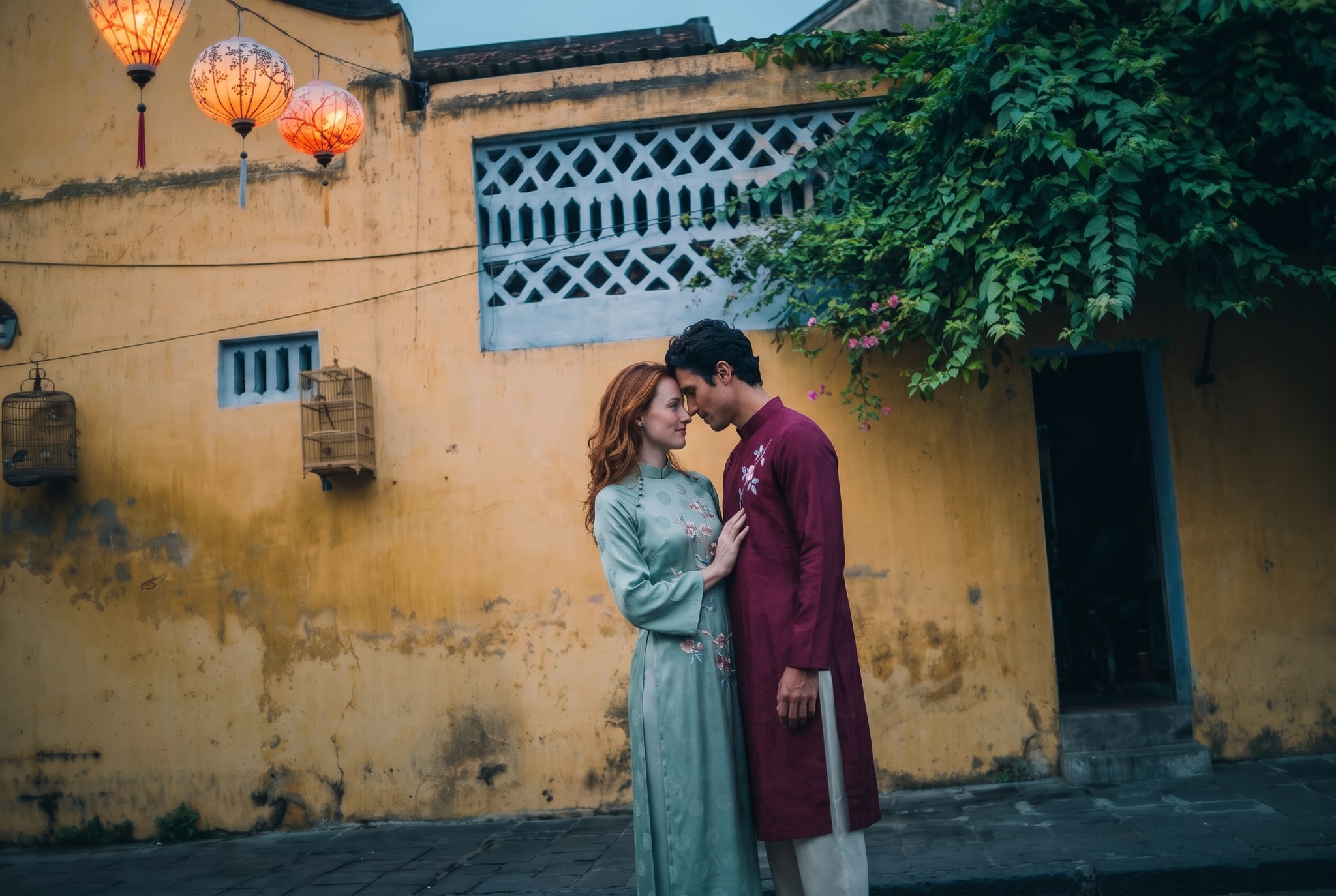
Late afternoon (4:00–5:30 p.m.) in dry months (October–April) delivers warm side-light that glints off water and makes faded paint glow. The sun at 20–25 degrees elevation skims across weathered wood and ropes without overexposing skin. We position couples facing the boats with the sun slightly behind them, creating rim light on hair and shoulders while their faces catch reflected bounce from the harbor. By 5:45 p.m. the light flattens and turns orange-yellow; it's beautiful but loses dimensionality. In May–September, afternoon heat and humidity create haze that dulls the whole scene—we've abandoned those months entirely after two disappointing sessions.
See our couple photoshoot packages
Why does monsoon season ruin Mui Ne fishing village shoots?
May through September brings 2–3 meter swells, overcast skies, and unpredictable rain. We've shown up twice to find the harbor nearly empty because boats didn't venture out. The few that stay are secured inland, robbing the scene of the visual drama—masts against sky, nets draped over hulls. Humidity sits at 80–95%, fogging lenses and creating flat, gray light that photographs as muddy and lifeless. A couple's makeup wilts within 30 minutes. We now black-out June–August entirely on our calendar and book only November–April shoots there. That window guarantees 85% clear skies and predictable tides, which our location scout checks three days before every session.
What should we wear to avoid damage from salt and sand?
Bring one outfit you're willing to sacrifice: lightweight ao dai in cotton or linen (not silk—salt stains it permanently), or simple couple shirts and trousers you own already. Avoid loose fabrics that catch on fishing hooks and ropes. Sand and salt spray settle on everything; we've seen expensive silk ao dai ruined in a 90-minute shoot. One couple wore a rental ao dai and faced cleaning fees later. Bring a dedicated footwear bag because sand clogs shoes and grit damages your car. We carry microfiber cloths, spray bottles, and a backup outfit in the van for touch-ups. If you're upgrading your wedding wardrobe for the shoot, book a styling consultation first—we'll show you which fabrics and colors survive salt air and can be cleaned afterward without damage.
Explore our ao dai photoshoot options
How far is Mui Ne from our Saigon studio, and what does a full session look like?
Mui Ne lies 230 km east of Saigon; the drive is 3.5–4 hours depending on traffic and weather. A typical morning shoot runs: pickup at 3:30 a.m., styling and hair/makeup en route (we bring a makeup kit), 90 minutes at the harbor, lunch break, optional second location (sand dunes or beach), return by 7:00 p.m. Full-day shoots are exhausting but yield more variety. We've found that couples underestimate fatigue; hair and makeup begin to fail by hour 4, and patience wears thin in heat. We schedule breaks every 45 minutes, offer water and snacks, and pivot to shaded spots if anyone overheats. Winter shoots are easier because the drive is cooler and shooting windows longer. Ask us for a quote on WhatsApp if you're weighing a Mui Ne day-trip against a local couple photoshoot or pre-wedding package.
See packages and prices on vietnamphotoshoot.com
Comparison: Mui Ne village vs. other Saigon-area backdrops
| Backdrop | Light window | Effort | Monsoon risk | Best for |
|---|---|---|---|---|
| Mui Ne fishing village | 5:30–7:30 a.m.; 4:00–5:30 p.m. | 8-hour day, 4-hour drive | High (May–Sep) | Rustic, authentic, texture-rich frames |
| Saigon riverside (District 1) | 6:00–7:00 a.m.; 5:00–6:30 p.m. | 2–3 hours, 20-min travel | Low | Quick morning shoots, urban couples |
| Nha Be mangrove (40 km) | 6:30–8:00 a.m.; 4:30–5:45 p.m. | 5-hour day, 1.5-hour drive | Medium | Moody greenery, water reflections |
| Dalat mountains (300 km) | 6:00–8:00 a.m.; 3:30–5:00 p.m. | 2-day trip | Low (dry zone) | Cool air, mist, forest drama |
Mui Ne wins for raw, weathered character—if your couple wants boats, rope, and peeling paint. Mangrove is easier logistically but lacks that maritime grit. Dalat is moodier but less tied to working-life authenticity.
What to check before booking a Mui Ne fishing village shoot
Light timing: Confirm your preferred shoot window (early morning vs. late afternoon) and the month—monsoon season is off-limits. We decide together based on your energy level and the season's average conditions.
Travel tolerance: Four hours each way in a van is real. Couples with back issues or mobility challenges often prefer local locations instead. Be honest about this.
Clothing durability: Check your ao dai or outfit for loose seams and delicate fabrics. Salt and sand exploit weakness. Bring a backup or rent locally.
Tide and boat schedule: We scout the harbor three days prior and confirm boat activity with the harbormaster. If a storm hits or fishing conditions change, we pivot to a backup location. Have a Plan B in mind.
Makeup and hair resilience: Salt spray and humidity test every product. We use waterproof, long-wear formulas and expect to touch up every 45 minutes. Budget time for this.
Post-processing: Fishing village photos carry texture and imperfection—weathered wood, rust, frayed rope. Some couples want that grit; others want polish. Discuss your aesthetic before we shoot.
Chat with us on WhatsApp to lock in your date and review these details.
Why we've stopped shooting Mui Ne in summer
Two seasons ago we booked a couple for a June morning at Mui Ne. The drive was stifling; by the time we arrived at 6:00 a.m., both the couple and our makeup artist were dehydrated. The sky was gray-white from humidity haze. Boats were minimal because the sea was rough. We shot for 90 minutes and got maybe 15 usable frames—no depth, no color, no drama. The couple paid in full and tried to hide disappointment. We offered a reshoot in October at no extra charge, they accepted, and that session yielded 200+ keepers. Now we block June–August entirely and redirect summer couples to local Saigon locations or suggest upgrading to a two-day shoot in October. Honesty saves both sides heartache.
A note on working boats and cultural respect
Mui Ne harbor is a working fishing village, not a backdrop. We brief every couple: fishermen are busy, not extras. We don't interfere with boat operations, move gear quickly, keep noise low, and never photograph without asking permission. We've built relationships with a few boat owners who tolerate us because we respect their time and sometimes hire their boats for a few minutes of shooting. That goodwill is fragile. Couples who treat the village as a stage rather than a livelihood space are not welcome back. Cáo Studio includes this etiquette in every pre-shoot briefing.
FAQ
Can we shoot Mui Ne at midday?
Yes, but the light will be harsh, contrast will crush details, and heat will exhaust you both within two hours. We strongly advise morning or late afternoon only.
What if boats don't return on the morning we book?
Bad weather or fishing conditions can scatter boats. We scout three days prior and have a backup location (mangrove, beach, or nearby village) ready to go. You won't lose the shoot.
Is the drive worth it for just one session?
If you want Mui Ne's specific character—boats, salt, weathered texture—yes. If you're flexible on location, a local couple photoshoot in Saigon saves time and cost. Ask us to compare both options.
How much do outfits cost to replace if salt damage occurs?
Rental ao dai typically costa quoted priceper day; owned outfits cost what they cost to replace. We recommend rentals for Mui Ne to protect your investment. Salt stains are hard to remove once set.
Can we combine Mui Ne with another location in one day?
Yes—many couples do a 90-minute harbor session, lunch, then shoot sand dunes or a beach spot 15 minutes away. A full-day shoot costs more but gives variety. Ask us for a quote on WhatsApp.
What month is best for light quality at Mui Ne?
November through February. The sun is lower, humidity is lower, boats are reliable, and we have 90 minutes of golden light in the morning and 75 minutes in the afternoon. Peak booking window, so reserve early.
Pre-Wedding & Elopement
Inclusions, prices and booking are on our booking site.
FAQ
Can we shoot Mui Ne at midday?
Yes, but the light will be harsh, contrast will crush details, and heat will exhaust you both within two hours. We strongly advise morning or late afternoon only.
What if boats don't return on the morning we book?
Bad weather or fishing conditions can scatter boats. We scout three days prior and have a backup location (mangrove, beach, or nearby village) ready to go. You won't lose the shoot.
Is the drive worth it for just one session?
If you want Mui Ne's specific character—boats, salt, weathered texture—yes. If you're flexible on location, a local couple photoshoot in Saigon saves time and cost. Ask us to compare both options.
How much do outfits cost to replace if salt damage occurs?
Rental ao dai typically cost $15–25 per day; owned outfits cost what they cost to replace. We recommend rentals for Mui Ne to protect your investment. Salt stains are hard to remove once set.
Can we combine Mui Ne with another location in one day?
Yes—many couples do a 90-minute harbor session, lunch, then shoot sand dunes or a beach spot 15 minutes away. A full-day shoot costs more but gives variety. Ask us for a quote on WhatsApp.
What month is best for light quality at Mui Ne?
November through February. The sun is lower, humidity is lower, boats are reliable, and we have 90 minutes of golden light in the morning and 75 minutes in the afternoon. Peak booking window, so reserve early.
More from the team
Pre-wedding photoshoot in Phu Quoc June: weather, light, crowds
June is Phu Quoc's monsoon season. Our studio has shot dozens of couples there in early summer—here's what weather and crowds really mean for your pre-wedding day.
Pre-wedding photoshoot in Phu Quoc July: weather, light, crowds
July is Phu Quoc's wet season, but it opens creative possibilities: moody skies, empty beaches after storms, and dramatic backlighting. We'll walk you through what happens on the ground.
Pre-wedding photoshoot in Phu Quoc November: weather, light, crowds
November is peak season for pre-wedding shoots in Phu Quoc: weather is stable, light is soft, but crowds peak mid-month. We share what our team sees on the ground.