 Cáo Studio
Home › Blog › Pre-Wedding & Elopement
Mui Ne Red Sand Dunes Wedding Photos: Best Time & Light
By the Cáo Studio team · Hanoi & Saigon · 2026-11-04
Mui Ne's red sand dunes photograph best during golden hour: one hour before sunset through 30 minutes after. The low angle of sun turns the rust-red sand luminous while casting long shadows that sculpt the landscape. We typically arrive 90 minutes early to scout composition, adjust your outfit for the light direction, and position you so backlighting catches fabric movement. Morning (6:30–7:30 a.m.) works for softer, cooler tones but requires earlier pickup from your hotel. Midday shoots (11 a.m.–3 p.m.) flatten color and create harsh shadows unless you want a specific editorial effect. Cáo Studio books pre-wedding and elopement sessions here year-round; we handle permit logistics and know which dune zones avoid crowds. Expect 2–4 hours on-site. Avoid windy days (sand blows into eyes and gear) and bring water—dehydration hits fast under direct sun. Chat with us on WhatsApp
Why does golden hour matter more at Mui Ne than other beach locations?
Golden hour at Mui Ne isn't just flattering—it's transformative. The red iron oxide in the sand reflects warm light differently than yellow or white beaches. At 5 p.m., when sun sits 15–20 degrees above the horizon, that warmth turns the dunes almost glowing orange-red. Everywhere else fades to pink. We've noticed couples' skin tones also read warmer here, which pairs beautifully with traditional ao dai silhouettes. The downside: this magic window lasts only 45 minutes before the light shifts too cool or disappears entirely. We time arrivals precisely so you're positioned and ready when the best 20 minutes hit. Missing it means reshooting another evening or accepting compromised color grading later.
What changes between morning, noon and sunset shoots?
| Time Slot | Sand Color | Shadow Quality | Skin Tone | Comfort Level | Best For |
|---|---|---|---|---|---|
| 6:30–7:30 a.m. | Cool rose-beige | Long, defined | Pale, cool | Excellent (cooler air) | Romantic, soft aesthetic |
| 11 a.m.–2 p.m. | Flat tan-brown | Harsh, dark pools | Hot, reddened | Poor (40°C+, glare) | Editorial, high-contrast mood |
| 4:30–6:30 p.m. | Deep orange-red | Long, warm-toned | Warm, glowing | Good (cooling) | Traditional, warm tones |
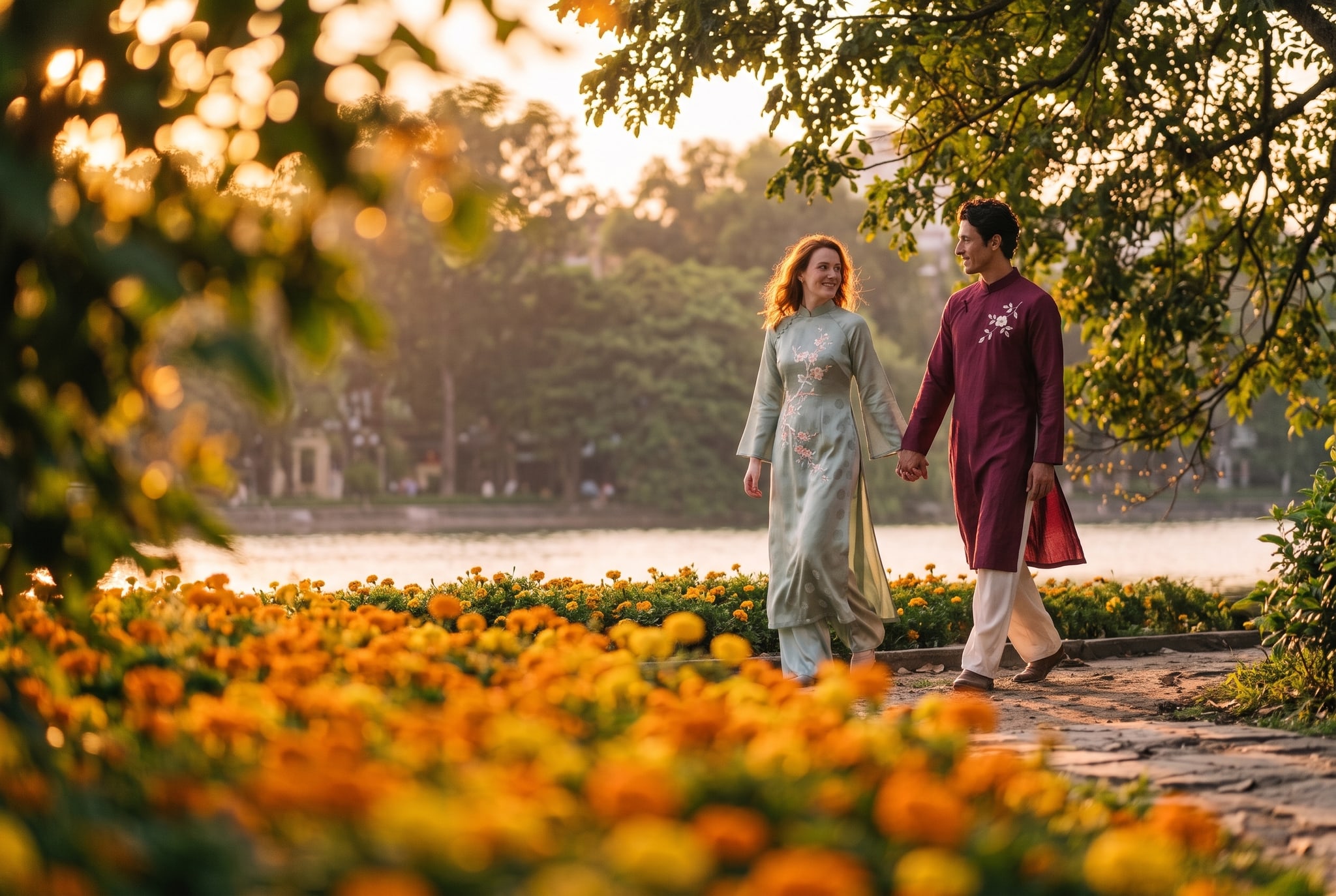
We've shot all three. Mornings suit couples wanting ethereal, pastel-graded looks; the air feels intimate and quieter. Noon is punishing unless you crave that sun-baked, high-fashion drama—it's rarely what couples expect. Sunset is our bread-and-butter here. Ninety percent of our Mui Ne bookings cluster 4:30–6:30 p.m. because the light feels inevitable, not forced. We tell clients: if you can only do one session, choose sunset.
See packages and prices on vietnamphotoshoot.com
How do we prepare your outfit and positioning for the dune light?
Two hours before the shoot, we ask: fabric type, color, and silhouette. Flowy materials (silk, chiffon, organza) catch light beautifully when backlit; heavy cotton flattens. Red, burgundy, and jewel tones pop against rust dunes; pastels can wash out unless shot in shade. We usually suggest one outfit change—traditional ao dai for the warm-light segment, then something bolder or contrasting for the final cooler shots. On arrival, we walk the chosen dune section and note where shadows pool. We position you so sun hits your face at a 45-degree angle (side-lit), never flat-on unless we're hunting silhouettes. We check wind direction too—if it's pushing sand toward the camera, we reposition 10 meters to the side. This takes 15 minutes but saves an hour of post-production dust removal. Many couples don't realize we're doing this; they think we're just chatting. We are—while solving light, shadow, and wind problems simultaneously.
Can afternoon or overcast days work for Mui Ne dune shoots?
Overcast days (rare here but happen June–September) flatten dune texture completely—the red looks muddy brown, and separation between you and the background vanishes. We've cancelled two shoots due to heavy cloud cover and rescheduled; couples understood. Afternoon (2–4 p.m.) is doable if you want a specific moody, contrasty look—sun overhead creates rim lighting off dust particles, and shadows become geometric sculptures. It's not romantic; it's cinematic and tough. Most couples don't choose it intentionally. If you're locked into afternoon due to flight schedules or family timing, we shoot it but warn you the color grade will need heavy lifting to match typical Mui Ne warmth. We then offer a sunset reshoot as part of couple photoshoot sessions so you have both palettes to choose from. We've learned it's better to deliver two aesthetics than one compromised version.
What logistics do we handle so you just focus on the moment?
We arrange arrival with your hotel pickup (usually 3 p.m. for a 5 p.m. shoot), coordinate with local guides to access the best dune zones, and carry permits. Sand gets everywhere—inside camera seals, between shutter blades—so we bring air blowers and sensor cleaning kits on every Mui Ne session. We also pack extra water (2 liters minimum), electrolyte powder, and sunscreen because couples often underestimate dehydration stress. Shoes are tricky: many couples go barefoot (stunning for photos, brutal on feet after 20 minutes). We bring cloth slippers and suggest a light wrap for the 6 p.m. temperature drop. Regarding the shoot itself, we're not just photographing; we're adjusting your stance for light continuity, coaching breathing so shoulders don't tense, and watching for sand in your eyes. If wind kicks up, we pause, you turn away, we wipe your face with a soft cloth. This isn't mentioned in packages—it's standard care. By hour two, you're tired; we take a 10-minute break in a shaded shelter and review images so you see progress and feel confident about the remaining time.
See packages and prices on vietnamphotoshoot.com
What to check before booking a Mui Ne dune shoot
- Light direction preference: Do you want warm (sunset) or cool (morning) tones? State this clearly on inquiry so we pre-scout.
- Physical comfort: Can you walk sandy terrain in your chosen outfit? We can adapt, but tell us constraints early.
- Outfit fabrics: Flowy materials photograph better in wind; confirm with us if you're unsure about your dress weight and movement.
- Wind tolerance: Check weather forecast for your date. Windy days shift our schedule or suggest alternative locations (White Sand Dune, less exposed).
- Timing flexibility: Locked into a specific hour, or can you move your session 20 minutes if light isn't perfect? Flexibility lets us chase the best moment.
What happens if the light doesn't cooperate on the day?
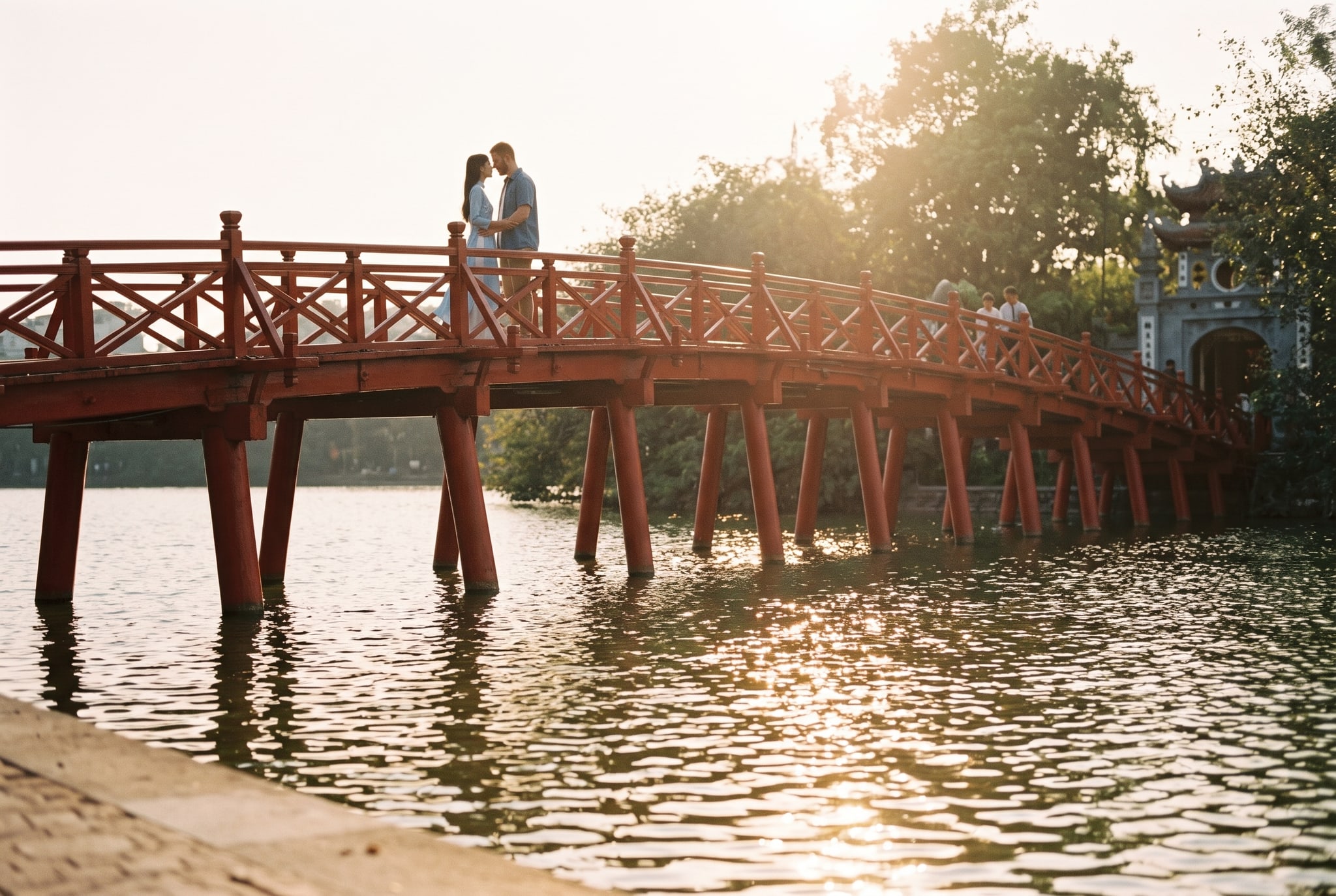
We've had cloud cover roll in 30 minutes before a shoot. We don't panic—we pivot. We either shift location to a more sheltered dune, adjust our angle to work with diffused light, or (if it clears in 15 minutes) wait and compress the session tighter. We don't charge for rescheduling if weather is objectively bad. We also shoot extra frames during the first 20 minutes to build a safety net; if light dims unexpectedly, we already have strong images. Most importantly, we communicate. At 4:45 p.m., if clouds are thickening, we text and give you the choice: proceed now with softer light, wait 10 minutes, or reschedule. We don't decide alone. Mui Ne's weather is generally stable, but we've learned to respect the ocean—it sends surprises. Special concept shoots here sometimes account for this by booking a 4-hour window instead of a fixed 2-hour block, giving us runway to adapt.
How do couple dynamics shift under Mui Ne's heat and light?
After two decades of shoots here, we notice couples become more genuine under sun and fatigue. The pressure to "perform" drops; instead, you're focused on not squinting or overheating, which ironically makes you more natural in frames. We also see that partners touch more—holding steady on sand requires balance, so hands find each other. The light is relentless, which means no hiding; your connection reads in every shot or doesn't. Some couples mention they felt more seen by each other during the Mui Ne shoot than they expected. This isn't a marketing claim—it's a side effect of the environment. We lean into it by suggesting fewer "posed" moments and more walks, whispers, and genuine laughter. Mui Ne dunes, because they're exposed and vast, seem to strip pretense. Couple photoshoot sessions here consistently yield the most-loved images in our archive.
Should you do Mui Ne dunes or another location in the same region?
Mui Ne itself: Red dunes, iconic, warm color, crowded at sunset (you'll see 15–20 tourists), 90-minute drive from Phan Thiết city.
White Sand Dunes (Bàu Trắng): Softer light, less iconic backdrop, whiter sand reflects heat and glare harder, cooler aesthetic, fewer crowds, slightly further.
Fairy Stream (Suối Tiên): Smaller, mossy red rocks, water element, intimate, good for morning soft light, only 30 minutes on-site max.
Beach near Mũi Né town: Less dramatic, fewer tourists, better for relaxed couple moments, simpler logistics.
We recommend red dunes for first-time visitors seeking that "Mui Ne moment." Couples return ask for alternatives to avoid the tourist backdrop, so we offer White Sand Dunes or a combination shoot (dunes + beach + stream). Each changes the feel. Ask us which suits your vibe when you inquire. Pre-wedding sessions here can be extended to include multiple locations in one long day if you want variety.
How does Cáo Studio's Hanoi and Saigon team coordinate Mui Ne shoots?
We're based in Hanoi and Saigon, so Mui Ne is a destination we travel to. This means we book Mui Ne sessions in clusters—typically 2–3 couples per weekend—to justify the 4-hour drive and manage logistics efficiently. When you book, we match you with a photographer and stylist from whichever studio is closer to your start point. Hanoi couples usually connect with our Hanoi team (they drive down Friday, return Sunday). Saigon couples work with our Saigon team. This coordination matters because your photographer knows your face, your partner's energy, and your story before the shoot—no cold onboarding. We also carry consistent equipment and backup gear across both studios, so quality doesn't vary. If something breaks in Mui Ne (it hasn't, but risk exists), we have a second camera and lens within minutes.
What's the real time commitment for a full Mui Ne dune session?
- 3 p.m.: Hotel pickup, 60-minute drive to Mui Ne.
- 4 p.m.: Arrive, scout location, outfit adjustments, brief.
- 4:30–6:30 p.m.: Active shoot (two outfits, multiple dune sections, outfit change).
- 6:45 p.m.: Begin return drive.
- 7:45 p.m.: Drop-off at hotel.
- Total: 4.75 hours on-site and transit.
If you're on a tight schedule or staying outside Phan Thiết, travel time eats into shoot time. We sometimes suggest vacation and solo photoshoots or couple sessions in a closer location (Saigon's parks, Hanoi's Temple of Literature, Hoi An's old town) to maximize image time. Mui Ne is worth the drive, but plan accordingly. Some couples fly into Phan Thiết a day early specifically to do a Mui Ne sunset shoot without rushing.
FAQ
What's the best month to shoot at Mui Ne dunes?
October to April offers clear skies and warm light. May to September is monsoon season—less predictable but still possible. Avoid typhoon watches (typically September–early October). We check forecasts weekly and communicate risk early.
Do we need permits to shoot on Mui Ne dunes?
Technically, certain dune areas are protected. We handle liaison with local guides and authorities so you don't worry. It's included in pre-wedding packages.
Can we shoot twice—morning and sunset—in one day?
Yes, but it's intense. You'd need 10+ hours including travel, two outfit changes, and significant fatigue. Most couples do one strong session. We recommend this only if you're staying locally and committed to both aesthetics.
What if we hate sand in our photos?
We can shoot Mui Ne's beach (smoother, fewer loose grains) or pivot to special concept shoots elsewhere. Tell us your concern upfront and we adapt.
How long until we see edited images?
Typically 2–3 weeks for Mui Ne shoots. Sand contamination sometimes requires extra retouching, adding a few days. We provide a preview gallery by week one.
Should we hire makeup and hair services for a dune shoot?
Yes. Sun, wind, and sand stress makeup and hair. We offer makeup and hair services at your hotel 90 minutes before pickup; this ensures everything is fresh and secure for the 4-hour shoot window.
Pre-Wedding & Elopement
Inclusions, prices and booking are on our booking site.
FAQ
What's the best month to shoot at Mui Ne dunes?
October to April offers clear skies and warm light. May to September is monsoon season—less predictable but still possible. Avoid typhoon watches (typically September–early October). We check forecasts weekly and communicate risk early.
Do we need permits to shoot on Mui Ne dunes?
Technically, certain dune areas are protected. We handle liaison with local guides and authorities so you don't worry. It's included in [pre-wedding packages](/go/pre-wedding-photoshoot).
Can we shoot twice—morning and sunset—in one day?
Yes, but it's intense. You'd need 10+ hours including travel, two outfit changes, and significant fatigue. Most couples do one strong session. We recommend this only if you're staying locally and committed to both aesthetics.
What if we hate sand in our photos?
We can shoot Mui Ne's beach (smoother, fewer loose grains) or pivot to [special concept shoots](/go/special-concept) elsewhere. Tell us your concern upfront and we adapt.
How long until we see edited images?
Typically 2–3 weeks for Mui Ne shoots. Sand contamination sometimes requires extra retouching, adding a few days. We provide a preview gallery by week one.
Should we hire makeup and hair services for a dune shoot?
Yes. Sun, wind, and sand stress makeup and hair. We offer [makeup and hair services](/go/makeup-and-hair) at your hotel 90 minutes before pickup; this ensures everything is fresh and secure for the 4-hour shoot window.
More from the team
Pre-wedding photoshoot in Phu Quoc June: weather, light, crowds
June is Phu Quoc's monsoon season. Our studio has shot dozens of couples there in early summer—here's what weather and crowds really mean for your pre-wedding day.
Pre-wedding photoshoot in Phu Quoc July: weather, light, crowds
July is Phu Quoc's wet season, but it opens creative possibilities: moody skies, empty beaches after storms, and dramatic backlighting. We'll walk you through what happens on the ground.
Pre-wedding photoshoot in Phu Quoc November: weather, light, crowds
November is peak season for pre-wedding shoots in Phu Quoc: weather is stable, light is soft, but crowds peak mid-month. We share what our team sees on the ground.