 Cáo Studio
Home › Blog › Pre-Wedding & Elopement
Muong Hoa Valley Rice Terraces: Best Light for Wedding Photos
By the Cáo Studio team · Hanoi & Saigon · 2026-11-02
Muong Hoa Valley, near Sapa town in northern Vietnam (Lao Cai Province), is a 30-minute hike from the main ridge. The rice terraces photograph best in two windows: 06:00–09:00 (overcast or early-sun), and 16:30–sunset (side-lit, warm). We run pre-wedding shoots here; the terrain is steep, mud-prone in monsoon, and sunrise temperature drops to 8°C. Mist clears by late morning, flattening contrast. Afternoon light after 15:00 rakes across the steps, creating definition but harsh shadows on faces. Budget 4–6 hours on-site (including hike, outfit changes, rest stops); couples typically book a 2-day Sapa package. Ask us for a quote on WhatsApp—timing, season, and physical fitness all affect what's possible.
When does the mist lift, and why does it matter for your faces?
We arrive at Muong Hoa before 06:00 to catch the valley under low cloud. Mist hangs until 08:30–09:15 depending on season and weather systems rolling in from Tonkin Gulf. While it's there, the light is diffused—no harsh shadows under cheekbones, no blown-out skies. The fabric of your áo dài reads in color instead of glare. After mist burns off, direct sun hits the valley floor, and we've watched it happen: skin tones flatten, pupils shrink to pinpricks, the terraces lose that saturated green. Your makeup artist will tell you mist is a gift; bright sun at 10:00 is a headache. If you're set on midday, we place you in the tree-line shadow or ask you to turn away and shoot profiles. Conclusion: book a dawn start if your schedule allows.
Which season has the best rice growth stage for the backdrop?
Rice fills the terraces fully in August–October (after July transplant; before November harvest). June–July shows young green shoots—delicate but thin. January–April is harvest-to-fallow (brown, stubble, or flooded bare). We've shot weddings in all seasons; couples choosing October get the deepest green and the loudest color contrast with red áo dài or red shoes. In May, when monsoon rain is heavy, mist persists longer (sometimes into 11:00), which our makeup team prefers, but the mud thickens—waterproof shoes and extra towels become essential kit. Conclusion: October maximizes visual drama; monsoon season (May–June) extends the mist window but demands muddy-path tolerance.
How does afternoon light (16:30–sunset) compare to dawn for couple poses?
Golden hour (16:30–18:00, depending on season) produces warm, directional light that sculpts the side of your face and makes the terraces glow amber. We position you facing west or northwest so the sun hits your profile or three-quarter angle. Shadows deepen the valley geometry—each terrace step reads in relief. By contrast, dawn light is soft, even, and cool-toned (often blue-ish when cloud is still present). For classical couple portraits (both faces visible, gentle lighting), we prefer 06:30–08:00. For dramatic or editorial looks—groom's silhouette, bride backlit—afternoon wins. The hike down happens in twilight (18:30–19:00), which is safe but requires confidence on uneven stone steps. Many couples do a split session: couple shots at dawn, solo/detail shots at golden hour. Conclusion: afternoon light is more forgiving for texture and mood; dawn is more flattering for skin.
| Light window | Best for | Crew arrives | Hike difficulty | Key challenge |
|---|---|---|---|---|
| 06:00–09:00 (dawn) | Couple portraits, soft skin | 05:00 | Wet stone (slippery) | Mist clears by 09:30; limited re-shoots |
| 09:00–15:00 (midday) | Wide valley vistas, landscape | 08:00 | Dry, easy | Harsh shadows on faces; we avoid this |
| 16:30–18:30 (golden) | Solo poses, editorial, drama | 15:30 | Moderate (drying out) | Time pressure; sunset is hard deadline |
What do we actually do on the morning of a Muong Hoa shoot?
We arrive at your Sapa hotel at 04:45 to begin hair and makeup. Our makeup artist works in your room (or our studio in Sapa center—ask which is booked). By 05:30 you're dressed; we load the van and reach the valley trailhead by 05:50. The hike to the main terrace viewpoint takes 25 minutes at a steady pace. We scout angles for 10 minutes, position you by 06:15, and shoot until 08:45. In that window, mist clears incrementally; we shoot in reverse: softest light first (group shots, both-looking-camera poses), then as light hardens, we shift to directional portraits and detail frames (hands, shoes, flowers). Between sequences, you rest on a dry rock or terrace edge—the ground is muddy even after rain stops. By 08:45, the light is no longer cooperating; we call the primary shoot done. If the couple has energy, we'll move to a secondary location (tree-line, a quieter terrace section) for 30 minutes of candid / couple-walk shots. Downhill hike is 20 minutes. We're back at town by 10:00. Breakfast and rest until afternoon session (if booked). Conclusion: the on-site shooting window is tight; we don't waste light on setup chatter.
Why does weather the night before reshape your whole shoot?
Rain overnight saturates the clay and stone. The next morning, every step is slick; we've had couples slip and catch their dress hem. We provide walking poles and waterproof shoe covers. Mist also thickens after rain, which sounds good (more diffused light), but visibility can drop; we've had sessions where we couldn't see the far terraces, killing the backdrop depth. Conversely, clear, dry nights produce crisp, sharp mist that burns off on schedule. We check forecasts 5 days, 3 days, and 24 hours before. If heavy rain is in the window, we don't cancel—we shift start time later (06:30 instead of 06:00) to let the sun burn through faster, or we move the session forward or back a day. We once had a couple who refused to move their date; their dawn shoot had 50-meter visibility instead of 500 meters. The images are still beautiful—intimate, moody—but the valley-scape isn't visible. Conclusion: weather flexibility is your margin of safety.
Book a pre-wedding shoot in Sapa
What outfit transitions and backup styles work in this terrain?
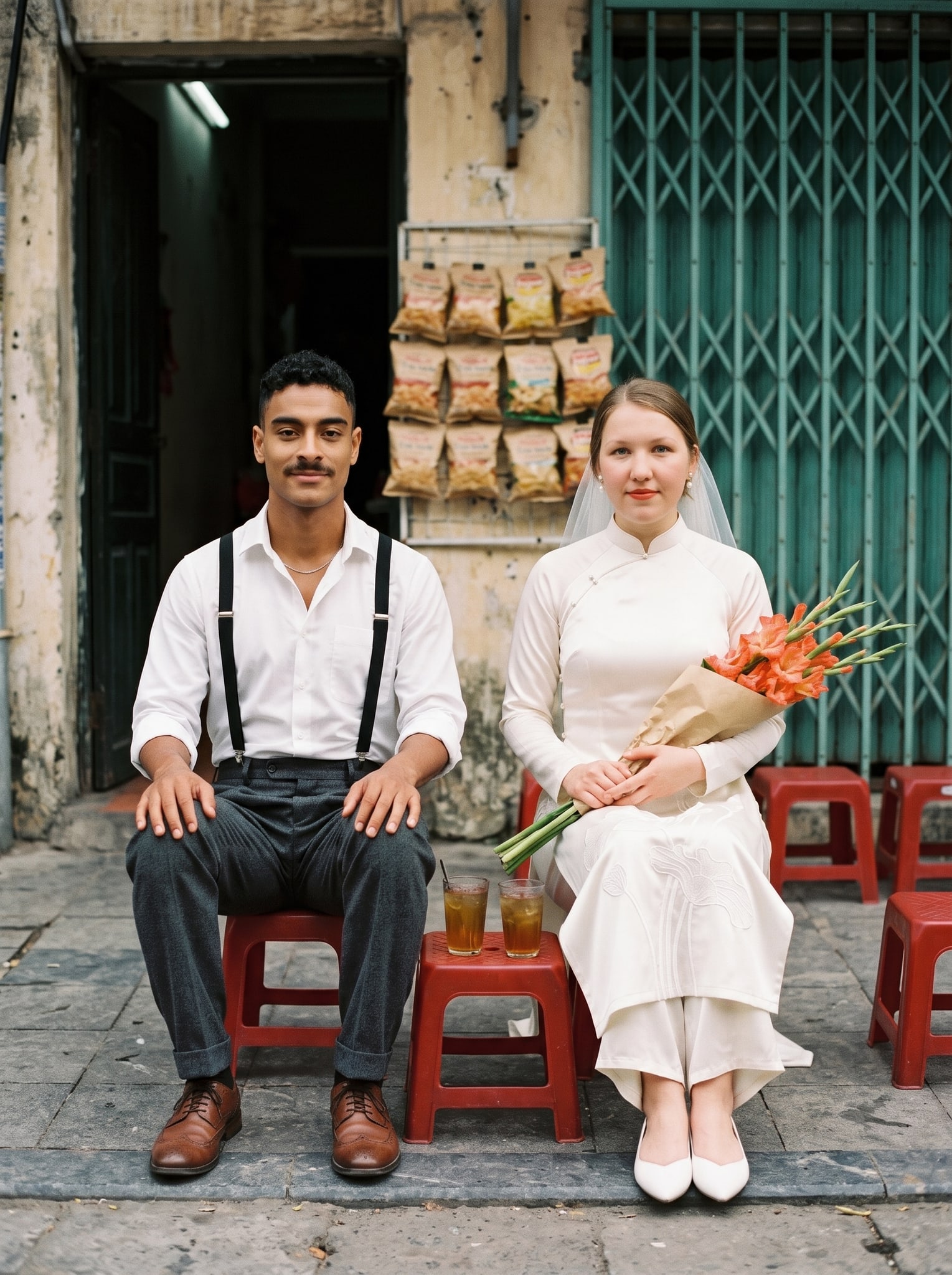
We typically plan 2–3 looks: áo dài (primary), Western wedding dress or groom suit (secondary), and sometimes a casual/adventure outfit (denim, boots—for golden hour editorial mood). Outfit changes happen at a sheltered spot halfway down; we've used a small pavilion, a waterproof tent, or even arranged privacy behind a large rock. Changing out of a wet áo dài hem into a dress takes 10 minutes plus a towel rub-down. Our styling team brings a compact kit (scissors, safety pins, wrinkle release spray, backup undergarments). We've learned to pack spare socks—muddy feet in formal shoes is a mood-killer. The second outfit usually shoots in golden hour (lighter logistics, time pressure) or as a secondary session. If weather turns severe, we pivot to portrait-only (no outfit changes) to maximize shooting and minimize exposure time. One couple brought a third outfit for solo shots; we shot those last, at dusk, with just the bride and one photographer while the groom rested. This works if you have flexibility and stamina. Conclusion: plan outfit transitions carefully; each change costs 15–20 minutes and energy.
How do we protect your makeup and hair across 6 hours of terrain?
Our makeup and hair team is trained in touch-ups: we carry full kits (powder, blush, lip, bobby pins, hairspray, concealer) in our crew bag. Mist and damp air don't ruin makeup if it's locked with setting spray; we apply it after the final brush stroke in the hotel room. Once on-site, we re-powder faces at 07:30 and 08:30 (every hour after heavy sweating or mist exposure). Hair pinned tight in a low bun or half-up style holds better than loose waves; the weight of a dress train or wind gusts can shift loose styles. We've had one bride's flower crown slip after the hike; our assistant re-pinned it in under 2 minutes while she sat. For golden hour shoots, sweat is less of a factor (shorter session, cooler evening), so touch-ups are minimal. One groom asked if he could wash his face halfway through; we said no (re-makeup takes 20 minutes), but offered a cool, damp towel instead. The lesson: plan for touch-ups as part of the shoot rhythm, not as an afterthought. Conclusion: locked makeup and pinned hair survive the hike; loose styles require frequent re-work.
What to check before you book a Muong Hoa session
- Fitness level: The hike involves uneven stone steps, no guardrails, and 300 meters of elevation change. Couples with knee or ankle issues should declare them early; we'll adjust the route or suggest an easier valley location (like Ta Phin or nearby viewpoints).
- Shoe grip: Wear hiking boots or trail shoes with deep tread. We've seen couples in formal heels on wet stone—dangerous and slow. Your áo dài hem gets muddy; that's normal and we manage it with careful stepping and post-shoot cleaning.
- Mist forecasting: Check 5-day and 1-day forecasts for Sapa. Mist is unpredictable (meteorologically complex, cold-air drainage plus monsoon systems), so we build in a 1-day flexibility window when booking.
- Darkness and cold: Dawn means 8–12°C. Bring a fleece or light jacket for the hike; we remove it before shooting. Darkness means headlamps for the crew; ensure your photographer has one.
- Duration: A full Muong Hoa session is 4–6 hours (including hike, setup, primary shoot, outfit change, secondary location, downhill). If you only have 2 hours on-site, we focus on one location and one outfit—possible, but narrower.
- Backup location: If weather is severe (heavy rain, zero visibility), we have a list of covered pavilion sites in Sapa town that offer terraces-adjacent backdrops with shelter. These shoot faster but lack the valley drama.
- Post-processing: Mist and cool tones require careful color grading. We warm tones slightly and lift shadows to preserve skin detail. This takes time; expect gallery delivery 2–3 weeks after the shoot.
Is Muong Hoa right for your wedding photos?
Muong Hoa Valley is ideal if you want landscape drama, don't mind early starts, and can handle muddy terrain. If you prefer convenience, predictable light, and dry feet, our pre-wedding shoots in central Hanoi or Hoi An ancient town are easier logistically. We also offer couple photoshoots in urban settings if mountain light feels too ambitious. Discuss your priorities with us on WhatsApp: stamina, light preference, outfit count, and backup-plan tolerance all shape the right location choice.
See packages and prices on vietnamphotoshoot.com
Pages from our team you may need

FAQ
What time should we arrive at the trailhead if we want the softest light?
We aim for 06:00–06:15 on-site (after a 25-minute hike from parking). Mist is thickest and light is coolest around 06:30–07:30. If you arrive later, mist is already lifting and light is warming. We calculate backwards from your hotel (add 15 min for pickup, 20 min for drive to trailhead, 25 min for hike).
Does rain the night before cancel the shoot?
No. Rain thickens mist (more diffusion) and muddies the path (extra caution, slip risk). We don't cancel; we shift timing or offer a 1-day postponement option. Heavy rain (overnight >50 mm) may push us to a covered backup location in Sapa town. Check our forecast review 24 hours before.
Can we do the shoot in afternoon only, skipping the early start?
Yes. Golden hour (16:30–18:30) produces warm, dramatic light. Trade-off: mist is gone, shadows are darker on faces, and time pressure increases (sunset is a hard deadline). Many couples split it (dawn couple shots + afternoon solo/editorial shots). Afternoon-only is faster (3 hours total) and suits couples prioritizing light texture over mist softness.
How muddy will our áo dài get?
The hem typically collects mud in the first 200 meters of the hike. We manage this by walking carefully, holding fabric above ankle level where possible, and cleaning with damp cloths between sequences. Dark áo dài (navy, black, deep green) hide mud better than white or pastels. Post-shoot cleaning takes 30 minutes; many venues offer laundry services, or our team can arrange it.
What if we're not fit enough for a steep hike?
Declare fitness concerns early. We offer a gentler route (longer, slower grade) or can suggest easier valley locations with terraces but less elevation change (Ta Phin, nearby viewpoints). Some couples hire a porter to carry the dress train. Alternatively, we can shoot in Sapa town and include terrace backdrops via a short 15-minute walk to a pavilion viewpoint.
When is the best month to shoot for green terraces and clear weather?
September–October offers full rice growth (deepest green) and the start of dry season (clearer skies, predictable mist). May–August has monsoon mist (extends the soft-light window but increases rain risk). November–April is post-harvest (brown/fallow terraces, drier, but thinner visual impact). October is the sweet spot for most couples.
Pre-Wedding & Elopement
Inclusions, prices and booking are on our booking site.
FAQ
What time should we arrive at the trailhead if we want the softest light?
We aim for 06:00–06:15 on-site (after a 25-minute hike from parking). Mist is thickest and light is coolest around 06:30–07:30. If you arrive later, mist is already lifting and light is warming. We calculate backwards from your hotel (add 15 min for pickup, 20 min for drive to trailhead, 25 min for hike).
Does rain the night before cancel the shoot?
No. Rain thickens mist (more diffusion) and muddies the path (extra caution, slip risk). We don't cancel; we shift timing or offer a 1-day postponement option. Heavy rain (overnight >50 mm) may push us to a covered backup location in Sapa town. Check our forecast review 24 hours before.
Can we do the shoot in afternoon only, skipping the early start?
Yes. Golden hour (16:30–18:30) produces warm, dramatic light. Trade-off: mist is gone, shadows are darker on faces, and time pressure increases (sunset is a hard deadline). Many couples split it (dawn couple shots + afternoon solo/editorial shots). Afternoon-only is faster (3 hours total) and suits couples prioritizing light texture over mist softness.
How muddy will our áo dài get?
The hem typically collects mud in the first 200 meters of the hike. We manage this by walking carefully, holding fabric above ankle level where possible, and cleaning with damp cloths between sequences. Dark áo dài (navy, black, deep green) hide mud better than white or pastels. Post-shoot cleaning takes 30 minutes; many venues offer laundry services, or our team can arrange it.
What if we're not fit enough for a steep hike?
Declare fitness concerns early. We offer a gentler route (longer, slower grade) or can suggest easier valley locations with terraces but less elevation change (Ta Phin, nearby viewpoints). Some couples hire a porter to carry the dress train. Alternatively, we can shoot in Sapa town and include terrace backdrops via a short 15-minute walk to a pavilion viewpoint.
When is the best month to shoot for green terraces and clear weather?
September–October offers full rice growth (deepest green) and the start of dry season (clearer skies, predictable mist). May–August has monsoon mist (extends the soft-light window but increases rain risk). November–April is post-harvest (brown/fallow terraces, drier, but thinner visual impact). October is the sweet spot for most couples.
More from the team
Boho pre-wedding photoshoot in Vietnam: Hanoi, Saigon, Hoi An
Boho pre-wedding shoots mix romantic, free-spirited aesthetics with Vietnam's landscapes and heritage sites. We run full-day sessions in three cities, handling styling, makeup, location scouts and edits.
Avoid crowds at Hoang Su Phi rice terraces: timing for wedding shoots
Hoang Su Phi's terraced landscape draws couples and tour buses in equal measure. We show how to shoot there alone, when to arrive, and what to arrange with us before you go.
Photography rules at Con Dao beaches: permits, drones and what to check
Con Dao's beaches demand prep before you shoot—permits, drone zones and tide timing all affect your day. We share what the Cáo Studio team verifies on every booking.