 Cáo Studio
Home › Blog › Pre-Wedding & Elopement
Nha Trang Beach Wedding Photos: Best Time and Light
By the Cáo Studio team · Hanoi & Saigon · 2026-11-02
Nha Trang beach delivers best light between 5–6:30 am (soft pre-dawn) and 4:30–6 pm (golden hour), when the sun hits the water at a shallow angle and skin tones warm naturally. The beach faces southeast; morning light is clean and direct, afternoon light bounces off the water and softens shadows on faces. Avoid 11 am–3 pm: harsh overhead sun creates dark eye sockets and blown-out sky. Afternoon high tide (usually 2–4 pm) can narrow the sand; low tide morning offers more space. Cáo Studio books Nha Trang pre-wedding sessions in these windows and scouts tides the week before. Cost varies by package length and location access; ask us for a quote on WhatsApp. Chat with us on WhatsApp
Nha Trang's beach faces southeast, which decides everything: when light hits the water, how shadows fall on a couple's faces, whether the sky burns white or glows gold. We've shot there in every season since 2021, and the hour you choose determines whether your photos feel romantic or overexposed.
Why does morning light feel so different from afternoon?
Morning light (5–6:30 am) is direct and cool-toned; it skims across the water and hasn't scattered through as much atmosphere. We position couples with the sun slightly behind them or to the side, so light wraps around their shoulders and faces without creating harsh shadows under the eyes. Afternoon light (4:30–6 pm) bounces off the water and comes from lower in the sky, which softens everything—skin looks forgiving, and the ocean turns gold. The trade-off: afternoon light is unpredictable if clouds roll in; morning is more stable but requires an early wake-up. We tell clients: morning = clarity and definition; afternoon = warmth and drama. Choose based on the aesthetic your couple photoshoot needs.
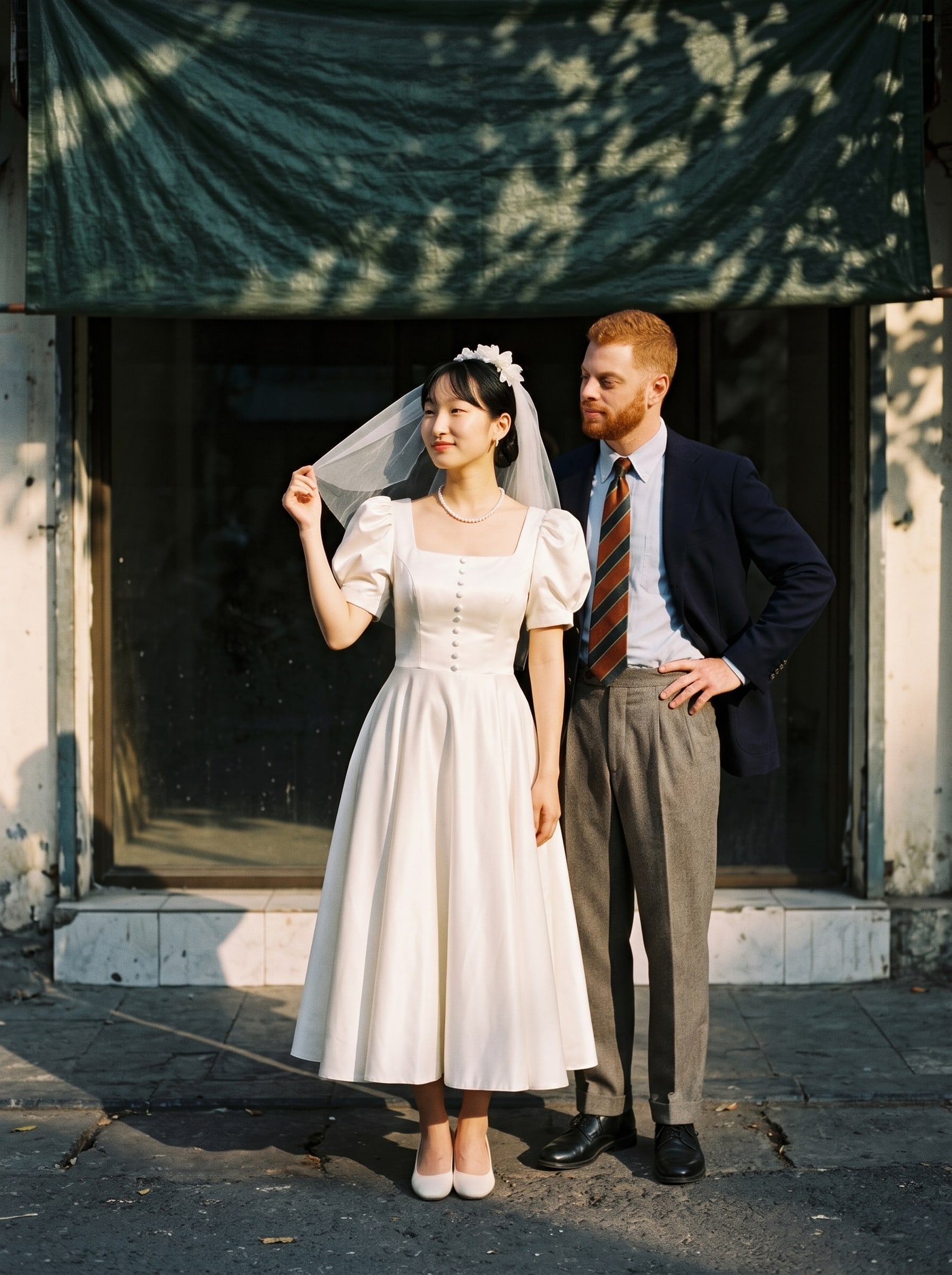
What happens to your skin when the sun is directly overhead?
At noon to 2 pm, the sun is near vertical. Light falls straight down onto the face, creating dark pools under the eyes, strong shadows under the nose, and unflattering contrast. The sky behind the couple blows out to pure white, and skin looks flat and washed-out in photos. We avoid this window entirely. If a couple insists on midday photos (rare, but it happens), we move to shade or use reflectors to bounce light back onto the face and lift shadows—a workaround that takes extra equipment and time. This is why we always suggest 5–6:30 am or after 4 pm on the booking confirmation we send via WhatsApp.
How does tide timing affect where you can shoot?
Nha Trang's tide swings 1–1.5 meters between high and low. High tide (roughly every 12 hours 25 minutes, predictable weeks ahead) narrows the beach to 5–8 meters of sand; low tide opens it to 20+ meters, giving you space to move and compose wider shots with the water behind. We check the tide chart for the couple's shoot date and time their session around low tide if they want expansive sand backgrounds. Morning low tide often falls 6–8 am (perfect for sunrise shoots); afternoon low tide varies by date. We've had shoots where a couple booked at 3 pm on a high-tide day and lost half the usable sand—we scrambled to reposition toward the rocks and water instead. Now we always text clients the tide times and ask: "Do you want more sand, or are you okay with water-focused shots?" This one detail shapes the entire shoot layout.
What's the difference between golden hour and blue hour, and which suits Nha Trang?
Golden hour (30 minutes before to 10 minutes after sunset) bathes the beach in warm, amber light—skin glows, the water reflects orange and pink, and the sky turns theatrical. For Nha Trang, golden hour is roughly 5–5:45 pm depending on season; in summer (May–September) it peaks earlier, around 5:15 pm. Blue hour (twilight, 10–30 minutes after sunset) offers cooler tones, a darker sky, and artificial light from beachside buildings—romantic but moody. We prefer golden hour for pre-wedding shots because the warmth reads joy. Blue hour works for concept or editorial styles, not traditional romance. The risk with golden hour: if clouds block the sun in the last 5 minutes, you lose the color. We always have a backup plan—move closer to the water, use the wet sand as a reflector, or pivot to silhouette shots where the sunset is the subject, not a modifier of the couple's faces.
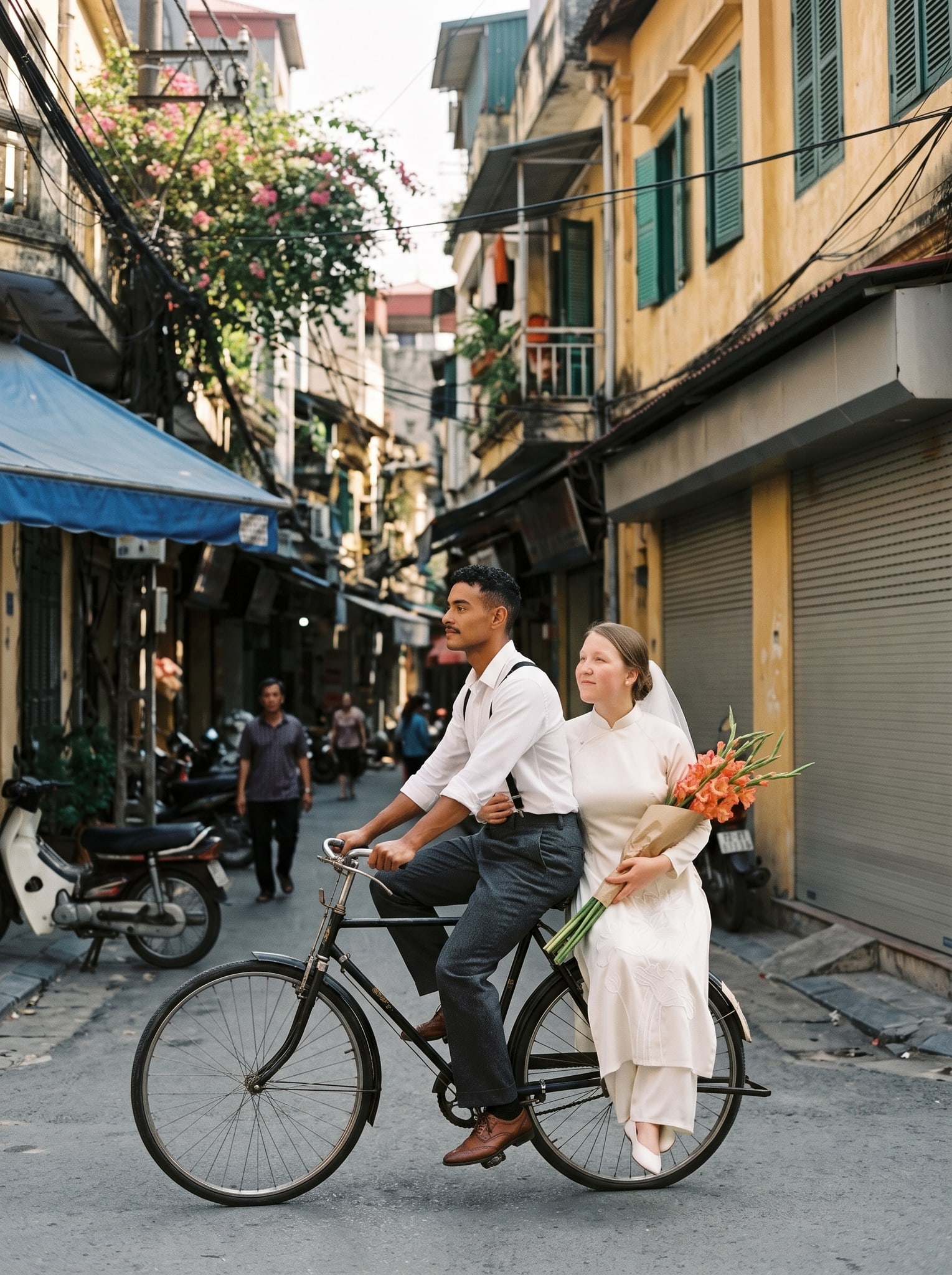
Should you shoot during the dry season or risk the monsoon?
Nha Trang's dry season (November–April) brings clear skies, calm water, and predictable light. We book 60–70% of Nha Trang sessions in these months because weather risk is low. Monsoon (May–October) brings afternoon downpours but often clear mornings; the sea can be choppy and less photogenic. During monsoon, we still shoot—we've done beautiful morning sessions—but we check the forecast 3 days out and offer rescheduling if heavy rain is predicted. Our decision framework: dry season = book now, no stress; monsoon = book with flexibility or accept a rain backup plan. The couple chooses based on their schedule. This affects package timing and any add-ons like hotel makeup and hair, which we coordinate based on weather certainty.
| Season | Light Quality | Water State | Rain Risk | Best Time Window |
|---|---|---|---|---|
| Nov–Apr | Clear, stable, predictable shadows | Calm, reflective | <5% any day | 5–6:30 am or 4:30–6 pm |
| May–Oct | Softer (haze), mornings clearer | Choppy, less reflective | 30–50% (afternoons) | 5–7 am only, skip afternoon |
What's the one mistake we see couples make with beach timing?
They book at 2 pm because it fits their schedule, arrive with high expectations, and find harsh shadows and blown-out sky. We now require a pre-shoot conversation: we send the tide times, the sunset time, and a simple visual showing where the sun will be at three time slots. Couples who see this almost always shift to 5 pm instead of 2 pm. A few insist on their original slot—we deliver the best photos possible, but we're honest: the 2 pm light is not forgiving, and no editing fully recovers blown highlights or shadow detail in a person's face. This honesty, sent early via WhatsApp, prevents disappointed clients. After the session, they often tell us they're glad they took our suggestion, or they understand why their 2 pm photos are softer-lit than they imagined.
What to check before you book your Nha Trang beach session
- Confirm your date's tide time. Ask us for the tide chart; choose low tide if you want sand, or accept a water-focused layout if high tide lands on your slot. Tide shifts by ~50 minutes daily, so the app you use at home might differ slightly—we'll verify locally.
- Pick your light window: morning or afternoon. Morning (5–6:30 am) requires early wake-up but guarantees stable light. Afternoon (4:30–6 pm) offers warmth but depends on cloud cover in the last hour. Text us your preference; we'll build the schedule around it.
- Check the season and weather forecast. Dry season (Nov–Apr) = shoot with confidence. Monsoon (May–Oct) = expect clarity in the morning, possible afternoon rain; request a rain clause or rescheduling option in your package.
- Know whether you want makeup and hair touch-ups. If yes, we'll coordinate timing so hair and makeup are fresh when light peaks. This adds 30–45 minutes to your morning or requires us to work in your hotel before the beach shoot.
- Decide on wide landscape shots versus close couple portraits. Sand width (tied to tide) affects this. Low tide favors expansive setups; high tide pushes us closer, making intimate portraits the focus.
Pages from our team you may need
FAQ
Is Nha Trang beach better for photos than Mui Ne or Phu Quoc?
Each beach has different light angles and water colors. Nha Trang's southeast-facing coast gives direct morning light and warm afternoon reflection. Mui Ne (southwest) flips the advantage to afternoon. Phu Quoc's longer coastline offers more flexibility. We recommend based on your couple's style and date. Ask us on WhatsApp which beach suits your vision.
What time of year has the brightest, most colorful sunset?
Nov–Feb sunsets are clearest and most vivid because the sky carries less haze. We see the most dramatic orange and pink tones in these months. May–Oct sunsets are softer, sometimes washed by humidity. Dry season = brighter colors; monsoon season = moodier tones.
Can we shoot during midday if we hire a professional team with reflectors?
Yes, we can work around noon with reflectors and side-lighting, but it's more technical and tiring. We bring extra equipment, use fill light, and position you in ways that reduce harsh shadows. Most couples find 4:30 pm easier and more naturally flattering without the added effort.
Do we need to book a longer session to capture good light, or is 1 hour enough?
One hour lets us catch one light window well (e.g., 5–6 pm golden hour). If you want variety—sunrise, midday outfit change, and sunset—book longer. Ask us for a quote on WhatsApp based on your vision.
Should we shoot on the day we arrive or wait a day to acclimate?
If you're flying in early morning and the beach session is that same evening, you'll be tired and may show it in photos. We recommend arriving a day early if possible, or shooting the next day. This gives you time to rest, explore, and arrive refreshed. Text us your travel plans; we'll help optimize.
Pre-Wedding & Elopement
Inclusions, prices and booking are on our booking site.
FAQ
Is Nha Trang beach better for photos than Mui Ne or Phu Quoc?
Each beach has different light angles and water colors. Nha Trang's southeast-facing coast gives direct morning light and warm afternoon reflection. Mui Ne (southwest) flips the advantage to afternoon. Phu Quoc's longer coastline offers more flexibility. We recommend based on your couple's style and date. Ask us on WhatsApp which beach suits your vision.
What time of year has the brightest, most colorful sunset?
Nov–Feb sunsets are clearest and most vivid because the sky carries less haze. We see the most dramatic orange and pink tones in these months. May–Oct sunsets are softer, sometimes washed by humidity. Dry season = brighter colors; monsoon season = moodier tones.
Can we shoot during midday if we hire a professional team with reflectors?
Yes, we can work around noon with reflectors and side-lighting, but it's more technical and tiring. We bring extra equipment, use fill light, and position you in ways that reduce harsh shadows. Most couples find 4:30 pm easier and more naturally flattering without the added effort.
Do we need to book a longer session to capture good light, or is 1 hour enough?
One hour lets us catch one light window well (e.g., 5–6 pm golden hour). If you want variety—sunrise, midday outfit change, and sunset—book longer. Ask us for a quote on WhatsApp based on your vision.
Should we shoot on the day we arrive or wait a day to acclimate?
If you're flying in early morning and the beach session is that same evening, you'll be tired and may show it in photos. We recommend arriving a day early if possible, or shooting the next day. This gives you time to rest, explore, and arrive refreshed. Text us your travel plans; we'll help optimize.
More from the team
Boho pre-wedding photoshoot in Vietnam: Hanoi, Saigon, Hoi An
Boho pre-wedding shoots mix romantic, free-spirited aesthetics with Vietnam's landscapes and heritage sites. We run full-day sessions in three cities, handling styling, makeup, location scouts and edits.
Avoid crowds at Hoang Su Phi rice terraces: timing for wedding shoots
Hoang Su Phi's terraced landscape draws couples and tour buses in equal measure. We show how to shoot there alone, when to arrive, and what to arrange with us before you go.
Photography rules at Con Dao beaches: permits, drones and what to check
Con Dao's beaches demand prep before you shoot—permits, drone zones and tide timing all affect your day. We share what the Cáo Studio team verifies on every booking.